
How to Feed a Cockatoo: Pellets, Portions, Schedule
This post contains affiliate links. As an Amazon Associate, we earn from qualifying purchases.
To feed a cockatoo, build the diet around a formulated pellet base at 75–80% of daily intake, add chopped fresh vegetables and a little fruit at 20–40%, and keep seed and nuts to treat-level moderation. Learning how to feed a cockatoo well means weighing portions on a kitchen scale rather than scooping, and converting seed-addicted birds slowly, over weeks or months.
That 75–80% pellet figure comes from VCA Animal Hospitals, and it sits in direct conflict with the manufacturer ration sheets that still treat seed as the foundation of a cockatoo’s daily bowl. The gap between those two positions is where most feeding problems start. A bird that fills up on seed eats less of everything else, and the research shows it.
What follows is a practical walk-through of that conflict: what the numbers actually say, how to weigh a portion that fits your bird’s species and weight, how to structure the daily bowl, and how to move a stubborn seed eater onto a better diet without a hunger strike.
Key Takeaways
- Pellets should make up 75–80% of the diet according to VCA Animal Hospitals, with produce capped at 20–40% and seed treated as a minority ingredient.
- Wombaroo’s own maintenance ration for an 800 g sulphur-crested cockatoo is 66 g/day, and 50 g of that is seed, a direct contradiction of the pellet-first target.
- Weigh portions on a gram scale; scooping by volume varies enough to matter, and the World Parrot Trust lists measured intake and regular weighing as core monitoring tools.
- VCA advises never offering grit or gravel, because cockatoos hull seeds before swallowing and over-consumption can cause life-threatening GI obstruction, though the Metro Toronto Zoo study made oyster shell available as a calcium source.
- Convert seed addicts slowly: VCA notes conversion can take days, weeks, or months, and seed should only be withdrawn after you have confirmed the bird is eating pellets.
What Do the Sources Actually Disagree About?
The first thing to understand is that the how to feed a cockatoo question does not have one universal answer. The sources split on the role of seed, and the split is wide enough that you need to see both sides before you pick a path.
Wombaroo, an Australian manufacturer with a species-specific ration sheet for the sulphur-crested cockatoo, lays out a 66 g daily maintenance ration for an 800 g adult. Of that 66 g, 50 g is small parrot seed mix, about five tablespoons. The rest is 10 g peas and corn mixed with 5 g Parrot Soft Food, plus 1 g of mealworms (roughly eight worms), with seeding grasses and other vegetation available free-choice.
VCA Animal Hospitals takes the opposite position. Their clinical guidance states that pellets should make up 75–80% of a cockatoo’s diet, and that commercial seed mixes fed as the only food “could ultimately lead to ill health and potentially shortened lifespan.” Pet Circle, an Australian retailer with veterinary editing, agrees: seed as the sole nutrition source is a poor diet, high in fat and low in vitamins and minerals, and seeds and nuts belong in strict moderation as treats.
A cockatoo’s digestive anatomy is built for hulling: the bird cracks the seed coat, discards the shell, and swallows only the kernel. That is why grit is unnecessary, and why a seed-heavy bowl delivers a concentrated fat load without the fiber and moisture of a formulated diet.
So which is right? For a pet bird in a living room, the veterinary position is the safer default. The Wombaroo sheet is a breeder and hand-rearing specification, and its seed-heavy ration reflects an Australian aviary context where birds burn more energy and where seed is the practical base. In a cage in a climate-controlled house, the bird’s energy expenditure is a fraction of that. The World Parrot Trust puts the captive-to-wild gap at 10 to 15 times less energy expenditure. A seed ration calibrated for an active aviary bird will overshoot a sedentary pet’s needs.
What Percentage of a Cockatoo’s Diet Should Be Pellets?
The short answer: 75–80% pellets, 20–40% fresh produce, and seed only as a treat or training reward. That is the VCA split, and it is the number to build around unless your avian veterinarian tells you otherwise for a specific bird.
The 20–40% produce figure is a cap, not a target to hit at the top of the range. Fruits are high in water and natural sugar, so they should be fed in smaller quantities than vegetables. Pale vegetables like iceberg lettuce and celery offer little nutritional value and should not be offered at all. Avocado and onion are potentially toxic and should never go in the bowl.
Here is where the two positions look side by side:
| Source | Seed’s Role | Pellet Role | Produce Cap |
|---|---|---|---|
| Wombaroo (sulphur-crested sheet) | 50 g of 66 g daily ration (base) | Not specified | Peas and corn, 10 g |
| VCA Animal Hospitals | Treat-level minority | 75–80% of diet | 20–40% of diet |
| World Parrot Trust | Not a base; variety is key | Formulated diet as foundation | Species-dependent |
| Pet Circle | Strict moderation, treats only | Recommended base | Fresh veg daily |
The table makes the conflict visible. Wombaroo’s sheet is not wrong for its context, but it is not the diet to copy for a pet bird in a house. Flip the bag over on any seed mix and read the guaranteed analysis: the fat number is high, and the vitamin and mineral panel is thin or absent. That is the practical reason the veterinary sources push pellets.
Here is the part the front never mentions: a seed mix can list ten different seeds on the label and still deliver a narrow nutrient profile, because the bird eats only the two or three it likes best. VCA notes cockatoos particularly love peanuts and sunflower seeds, which are high in fat and deficient in calcium and vitamin A.
How Much Food Does a Cockatoo Need Per Day?
Portion size depends on the bird’s weight and species, and when you compare a how to feed a cockatoo approach, the only reliable way to set it is to weigh the bird and weigh the food. An adult sulphur-crested cockatoo runs 800–950 g, smaller in northern populations. A 66 g daily ration is the Wombaroo figure for an 800 g bird, and that is a useful anchor even if you feed a pellet-based diet, because it tells you the total volume a bird of that size expects.
I used to tell people to feed by the scoop and eyeball it. Scooping by volume varies enough to matter, so weighing portions is more reliable. That is enough to push a bird over or under its needs for weeks before you notice. Now I weigh portions on a gram scale, and I weigh the bird monthly.
The World Parrot Trust recommends exactly this: measure the amounts, see how much the bird actually eats, and monitor weight. Those three data points tell you more than any feeding chart, because they account for the individual bird’s metabolism and activity level.
For a pellet-based diet, start with the total daily volume your bird’s weight suggests and adjust from there. A 66 g total is the Wombaroo figure for an 800 g bird. If your cockatoo is a smaller species, scale down proportionally and watch the weight trend.
Common mistake: Free-feeding pellets and topping up the bowl whenever it looks low. A bird that grazes all day eats more than it needs, and you lose the ability to notice a drop in appetite that signals illness. Measure the day’s portion, and remove what is left after the bird has had its feeding window.
What Does a Daily Feeding Schedule Look Like?
Cockatoos are ground-foraging birds in the wild. The World Parrot Trust notes that many cockatoo species spend most of their day foraging on the ground for seeds and may benefit from several smaller feeds spread across the day rather than one large bowl. That is a behavioral point as much as a nutritional one: a bird with nothing to do between meals will scream, pace, or over-groom.
A practical schedule for a pet cockatoo looks like this:
- Morning feed (7–9 a.m.): The main pellet portion, measured by weight. This is the meal the bird expects and the one to anchor the day around.
- Midday produce (around noon): Chopped vegetables and a little fruit, removed after a couple of hours. VCA warns that fresh food left longer than that can spoil, particularly in warm climates.
- Afternoon forage (2–4 p.m.): A small scatter of pellets or a foraging toy stuffed with a measured amount. This mimics the ground-foraging behavior the World Parrot Trust describes and keeps the bird active.
- Evening check: Remove any uneaten fresh food, wash the bowl, and note how much pellet was actually consumed. That note is your early warning system.
The Metro Toronto Zoo study used a single daily feed between 8:00 and 9:00 a.m., removed at 4:30 p.m. For a pet, the multiple-small-feeds approach is easier to implement and aligns better with natural foraging behavior.
If you want to build a fresh-food component that fits this schedule, making parrot chop in bulk and freezing it in daily portions saves time and keeps the produce consistent. The key is to measure the produce as part of the daily total, not to treat it as a free extra.
Which Foods Should Never Go in a Cockatoo’s Bowl?
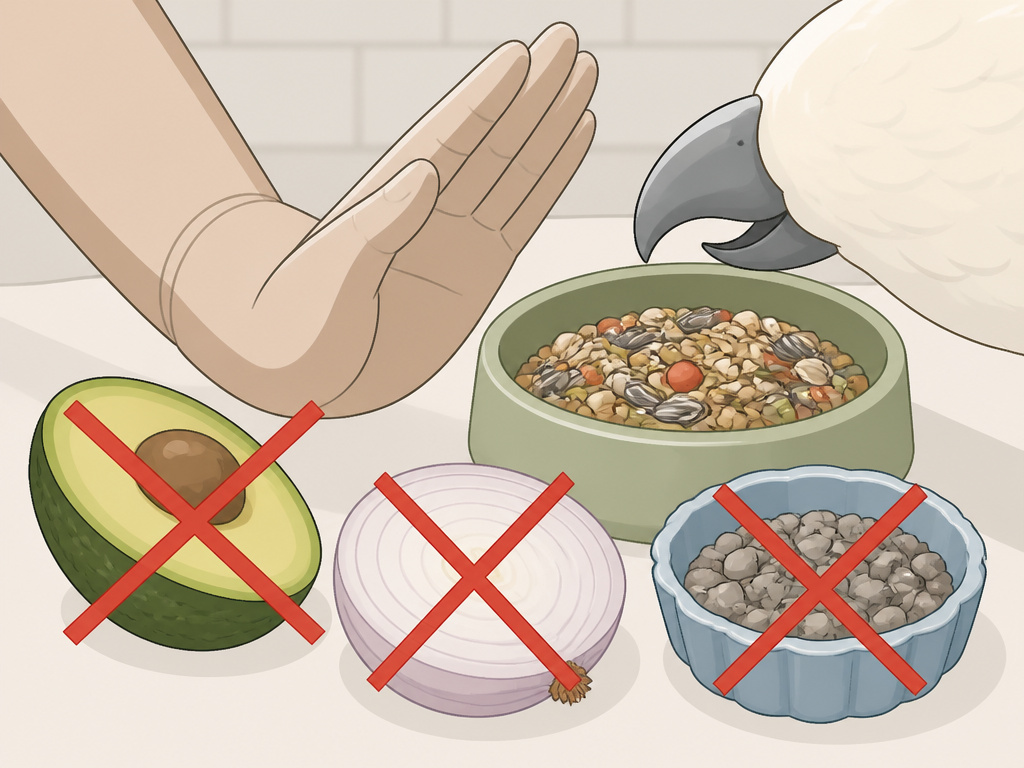
The avoid list is short and absolute. Avocado and onion are potentially toxic and should never be offered. Iceberg or head lettuce and celery offer little nutritional value and should not be offered. VCA says grit and gravel should not be offered at all, because cockatoos hull their seeds and do not need mechanical grinding aid, while the Metro Toronto Zoo study made oyster shell available as a calcium source.
The grit point is worth dwelling on because it is counterintuitive. Many bird owners grew up believing grit is necessary for digestion. VCA explains the mechanism: only birds like pigeons and doves, which swallow seeds whole, need gravel to grind them in the gizzard. Cockatoos remove the hull first. Offering grit to a cockatoo adds no benefit and carries a real risk, some birds over-consume it and develop gastrointestinal obstructions that are potentially life-threatening.
The Metro Toronto Zoo study complicates the picture slightly: oyster shell was available and the original diet called for occasional cuttle bones. Oyster shell is a calcium source, not grit in the digestive-aid sense, and the study authors do not present it as a grit recommendation. VCA says loose grit and gravel should stay out of the bowl, while the Metro Toronto Zoo study made oyster shell available as a calcium source.
Skip this if: Your bird is under veterinary care for a confirmed calcium deficiency. In that case, follow your veterinarian’s specific instruction on calcium supplementation rather than a general rule from an article.
How Do You Convert a Seed-Addicted Cockatoo to Pellets?
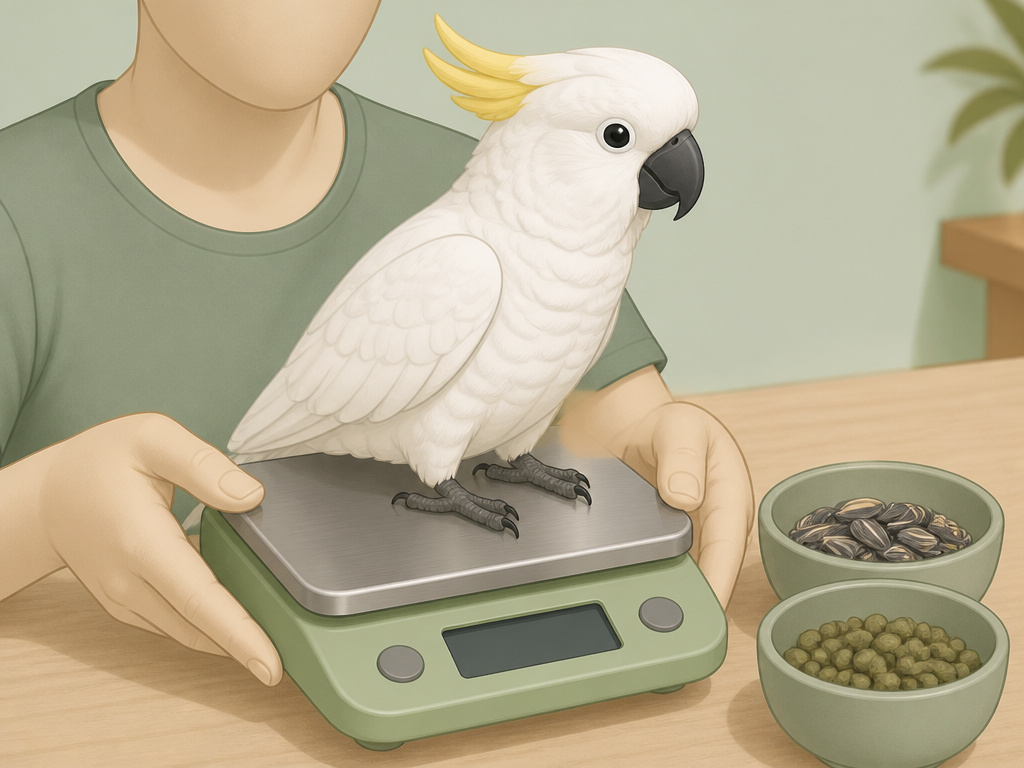
Slowly, and with a scale. VCA notes that mature cockatoos may be difficult to convert and that the process can take days, weeks, or months. The same source gives the critical safety rule: seed may be withdrawn only after you have confirmed the bird is eating pellets. Withdraw seed first and you risk a bird that refuses the new food and loses weight.
The Metro Toronto Zoo study adds a warning that undercuts the common conversion tactic of mixing seed and pellets in the same bowl. When seed was offered alongside pellets, the cockatoos consumed significantly less of the commercial pellets (p = 0.01). VCA allows mixing pellets and seeds during conversion, but the Metro Toronto Zoo study found cockatoos consumed significantly less of the commercial pellets when seed was offered (p = 0.01).
A conversion plan that respects both findings:
- Week 1–2: Weigh the bird at the start and end of each week. Offer the normal seed ration but reduce it by a small amount and add a measured portion of pellets in a separate bowl.
- Week 3–4: Continue reducing seed and increasing pellets. Watch which pellets disappear. If the bird ignores one pellet, try a different shape or size before switching entirely.
- Week 5 onward: Once you confirm pellet intake, not just pellet presence in the bowl, but actual consumption, begin withdrawing seed gradually. Keep weighing weekly. A drop of more than a few percent of body weight is a signal to slow down.
Worth knowing before you start: Plain pellet formulations come in multiple sizes, so a cockatoo that rejects one size may accept another. A cockatoo that rejects one size may accept another, and the ingredient panels are short enough to compare without a decoder ring.
The picky bird problem is real and worth planning for. A bird that has eaten seed for ten years has a strong preference, and the conversion is a behavior change as much as a dietary one. The feeding schedule matters here too: a hungry bird at the start of a meal is more likely to try something new than a bird that has been grazing all day.
Why Does Seed Presence Change Which Minerals Are Deficient?
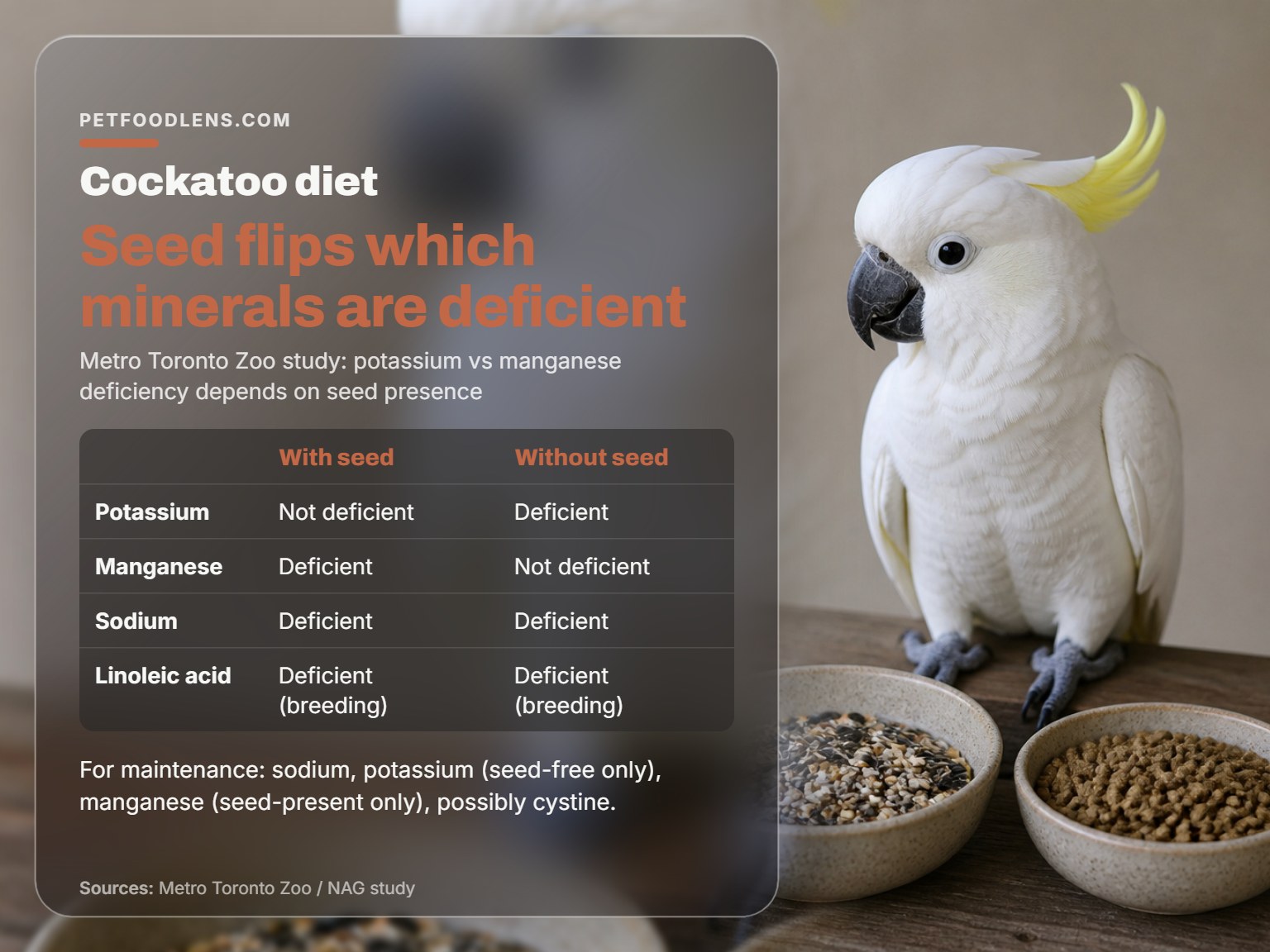
This is the most technically interesting finding in the research, and it has direct practical implications. The Metro Toronto Zoo study analyzed the diet in two configurations, with seed and without, and found that the deficiency pattern flipped depending on whether seed was present.
Potassium was deficient only when seed was absent. Manganese was deficient only when seed was present. The diet was deficient for breeding and growing birds in linoleic acid, arginine, lysine, methionine, threonine, possibly cystine, sodium, potassium, manganese, and copper. For maintenance, the deficiencies were sodium, potassium (seed-free only), manganese (seed-present only), and possibly cystine.
Here is the practical takeaway: there is no single “balanced diet” rule that covers both a seed-based bowl and a pellet-based bowl. The nutrient gaps move. That is why the balanced bird diet question cannot be answered with a percentage alone.
| Nutrient | Deficient With Seed | Deficient Without Seed |
|---|---|---|
| Potassium | No | Yes |
| Manganese | Yes | No |
| Sodium | Yes | Yes |
| Linoleic acid | Yes (breeding) | Yes (breeding) |
| Arginine, lysine, methionine | Yes (breeding) | Yes (breeding) |
The study also measured macronutrients. Crude protein came in at 24% when seed was excluded, which overshoots the 18% breeding optimum the authors cite. With seed included, protein fell below that optimum. Fat was 5.7% with seed versus 5% without. Neither configuration hit the target cleanly.
This is the kind of finding that should make any label-reader pause. VCA says pellets meet most of a bird’s nutritional needs, while the Metro Toronto Zoo study found the tested diet was deficient in at least nine nutrients for breeding birds even with a formulated pellet component. The pellets vs seed mix for birds comparison is not a simple binary, and the nutrient panel is where the real differences show up.
Frequently Asked Questions
Can I feed my cockatoo only seed?
No. VCA Animal Hospitals states that commercial seed mixes fed as the only food could lead to ill health and potentially shortened lifespan. Pet Circle adds that seed-only diets are high in fat but low in important vitamins and minerals, and that cockatoos are particularly prone to seed addiction. Seed belongs in the bowl as a treat or training reward, not as the base.
How much seed is too much for a cockatoo?
There is no single gram figure that applies to every bird, but the Wombaroo sheet’s 50 g of seed in a 66 g ration is a breeder-context number, not a pet-bird target. For a pet on a pellet-based diet, seed should be a small fraction of the daily total, a few seeds used for training, not a bowlful. If seed makes up a large share of the bowl, pellet intake will drop.
Do cockatoos need grit?
No. Cockatoos hull seeds before swallowing the kernel, so they do not need grit for mechanical digestion. VCA warns that some birds over-consume grit and develop life-threatening gastrointestinal obstructions. The Metro Toronto Zoo study made oyster shell available, and the original diet called for occasional cuttle bones.
How long does it take to switch a cockatoo from seed to pellets?
VCA notes that conversion can take days, weeks, or months, and that mature birds may be difficult to convert. The key safety rule is to withdraw seed only after you have confirmed the bird is eating pellets. Weigh the bird weekly during the transition and slow down if weight drops more than a few percent.
Can I mix pellets and seed in the same bowl during conversion?
The Metro Toronto Zoo study found that cockatoos consumed significantly less of the commercial pellets when seed was offered (p = 0.01). A bird will pick the seed and leave the pellets. Offer them in separate bowls so you can see what is actually being eaten.
What vegetables are safe for a cockatoo?
Dark leafy greens, carrots, peas, corn, and squash are all fine, washed thoroughly and cut small. Avoid avocado and onion, which VCA lists as potentially toxic. Iceberg lettuce and celery offer little nutritional value and should not be offered. Fruits are high in sugar and water, so keep them to a smaller portion than the vegetables.
The Bottom Line
The single most useful thing you can do this week is weigh your bird’s food instead of scooping it. Scooping by volume varies enough to distort the diet before you see it in the bird’s condition. Put a small kitchen scale next to the food bin and use it every day.
If your cockatoo is currently on a seed-heavy diet, do not dump the seed tomorrow. Start by measuring what the bird actually eats, add a separate bowl of pellets, and watch which one disappears. The conversion will take longer than you want. That is normal, and the bird’s weight is the number that tells you whether it is working.
And if you are choosing a pellet to start with, read the ingredient panel before the front of the bag. A short, plain formulation tells you more than a colorful blend with dried fruit and a parrot on the label. The bird does not care what the bag looks like.
