
How to Feed a Bird While on Vacation: Step-by-Step
This post contains affiliate links. As an Amazon Associate, we earn from qualifying purchases.
To feed a bird while on vacation, measure dry food and water for the exact days you’ll be gone, book at least one mid-trip visit, and skip fresh food and nectar entirely. Merck’s veterinary manual warns fresh food left in the cage spoils. No source gives a safe absence limit, so shorten the trip or book a sitter.
That missing absence limit is the whole problem, much like the gaps in the how to feed a bird while on vacation question. The sources that exist were written for two different jobs: Merck covers the cage, and the RSPB and BTO cover outdoor garden feeders. Neither one tells you how many days a budgie can be left alone.
What follows is the spoilage order, three vacation options ranked by risk, the water allowance from UC Davis, and the cleaning intervals where the experts flatly contradict each other.
Key Takeaways
- Dry food and water only for any absence you can’t cover with a visit. Fresh food and nectar come out of the cage the day you leave.
- Book at least one mid-trip visit. No source sets a safe number of days, so a check-in is the only control you actually have.
- Clean before you leave, not after you get back. RSPB says weekly, BirdNet says at least monthly (every two weeks if heavy debris or feces), UC Davis says weekly. Run the shortest interval.
- Nectar eaters need a sitter, full stop. Lorikeet food spoils fast and the iron rules block every dry fallback.
What Spoils First When You Walk Out the Door?
The order is predictable: fresh food, then nectar, then water, then the dry pellet at the bottom of the dish.
A pet bird’s fresh food and nectar are the first items to fail, because both carry moisture and neither is built to sit. Merck’s veterinary manual states fresh food should not be left too long in the cage because it can go bad, and nectar must be changed often because it spoils quickly.
A nectar cup that has turned smells like cheap white wine when you compare a how to feed a bird while on vacation. Long before it looks obviously wrong, the bird has stopped drinking from it.
Merck is blunt about fresh food: birds should have access all day, but it should not be left too long in the cage. That is a cage instruction, not a vacation instruction, and the manual gives no absence limit at all.
Water is the item people get wrong most often. Some birds dunk their food in the bowl and foul it within hours, which is exactly why Merck suggests a water bottle for those birds.
The part nobody mentions: A water bottle that has stopped flowing looks identical to a full one. Merck says to check that the bottle actually works, not just that it holds water, and to change the water daily.
Pellets are the one component that tolerates a wait. Merck describes pellets and crumbles as a complete diet with added vitamins and minerals.
Pick Your Option: Sitter, Boarding, or the Cage Alone
Three options exist, and they carry very different risk depending on what your bird eats and how long you are gone.
| Option | Best for | Main risk |
|---|---|---|
| Daily sitter visit | Most trips on a pellet diet | Overfeeding, missed water check |
| Boarding or a friend’s house | Nectar eaters, birds on medication | Appetite drop in a strange room |
| Cage left alone | Short trips, dry food only | Water fouls or the bottle jams |
When a Sitter Wins
For most birds on a pellet-based diet, a daily visit beats every alternative. The sitter’s job is small: fresh water, a portion of dry food, one look at the droppings.
Same key handover, same written instructions, same request for a photo.
When Boarding Wins
Nectar eaters, birds on medication, and any bird that has dropped weight in the past month belong in someone else’s care. Merck’s advice to have a bird checked by a vet if it isn’t eating well applies double before a trip.
A bird has no equivalent, because food left in a cage just gets soiled.
How Much Water Does Your Bird Actually Need per Day?
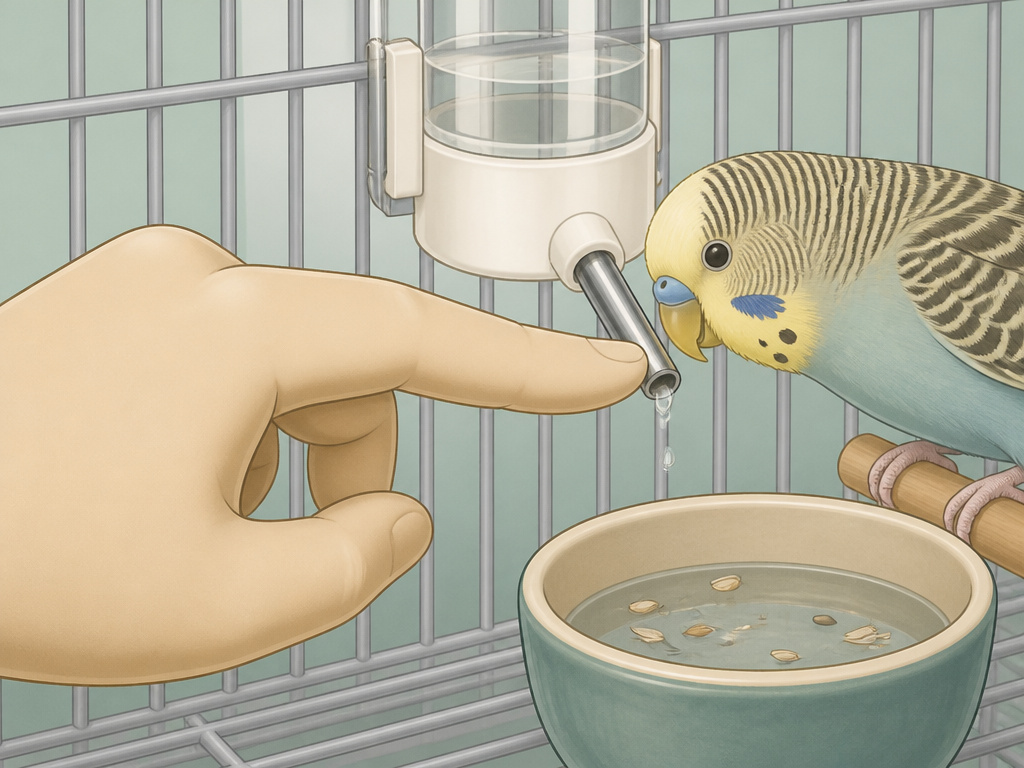
One ounce a day. That is the UC Davis figure for a parakeet or cockatiel, and it is less than most water bowls hold.
The UC Davis avian feeding guide puts parrots at 1 to 4 ounces per day and free-feeds both groups, meaning food sits out unlimited rather than in measured meals. Here is the math: multiply the daily allowance by the days you’re gone and you get a floor, not a target.
Three things wreck that floor in practice:
- A bowl gets dunked. Merck notes some birds dip food in their water and dirty it fast. That ounce is gone.
- A bottle jams. Silent failure, no warning.
- Heat. Water sitting in a warm room loses appeal and grows film.
If your bird is a bowl-dunker, a bottle is the better vacation setup, provided you test it before you leave.
How to Feed a Bird While on Vacation: The 6-Step Handover
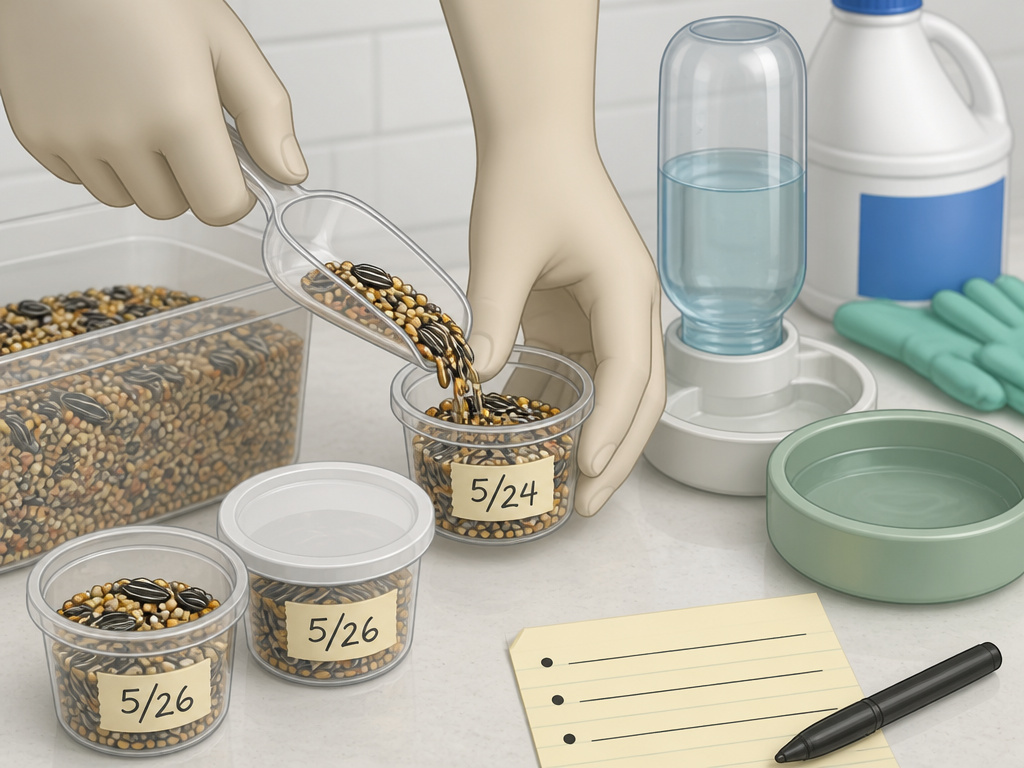
Run this the day before you leave, not the morning of.
Before you start: Bleach is the real hazard in this job. BirdNet’s feeder guidance calls for eye protection when working with bleach and washing in a well-ventilated area, ideally a deep utility sink or a large bucket outside. Never clean feeders or waterers in the kitchen or in a home dishwasher.
- Check the nutritional adequacy statement on the bag. I check that line on every label I review, and it takes seconds to tell you whether a food is complete and balanced or meant only as a supplement. A bird on a supplement-grade food has less margin when the routine changes.
- Portion the dry food into dated containers. Pre-measured portions stop a sitter from topping up a bowl that is already full, which is how birds get overfed.
- Scrub and disinfect every waterer and dish. Skip this and you are leaving a bacterial culture behind.
- Fill the water bottle and watch it for a full minute. Merck says to check that the bottle works and to change the water daily. A bottle that drips once and stops is a serious risk.
- Clear every scrap of fresh food and nectar. Merck’s warning about spoilage is the reason. Leave nothing that carries moisture.
- Write the note. Water check, food portion, one line on normal droppings, and your vet’s number. Sitters who don’t know what normal looks like can’t spot abnormal.
Cleaning Intervals: Where the Experts Genuinely Disagree
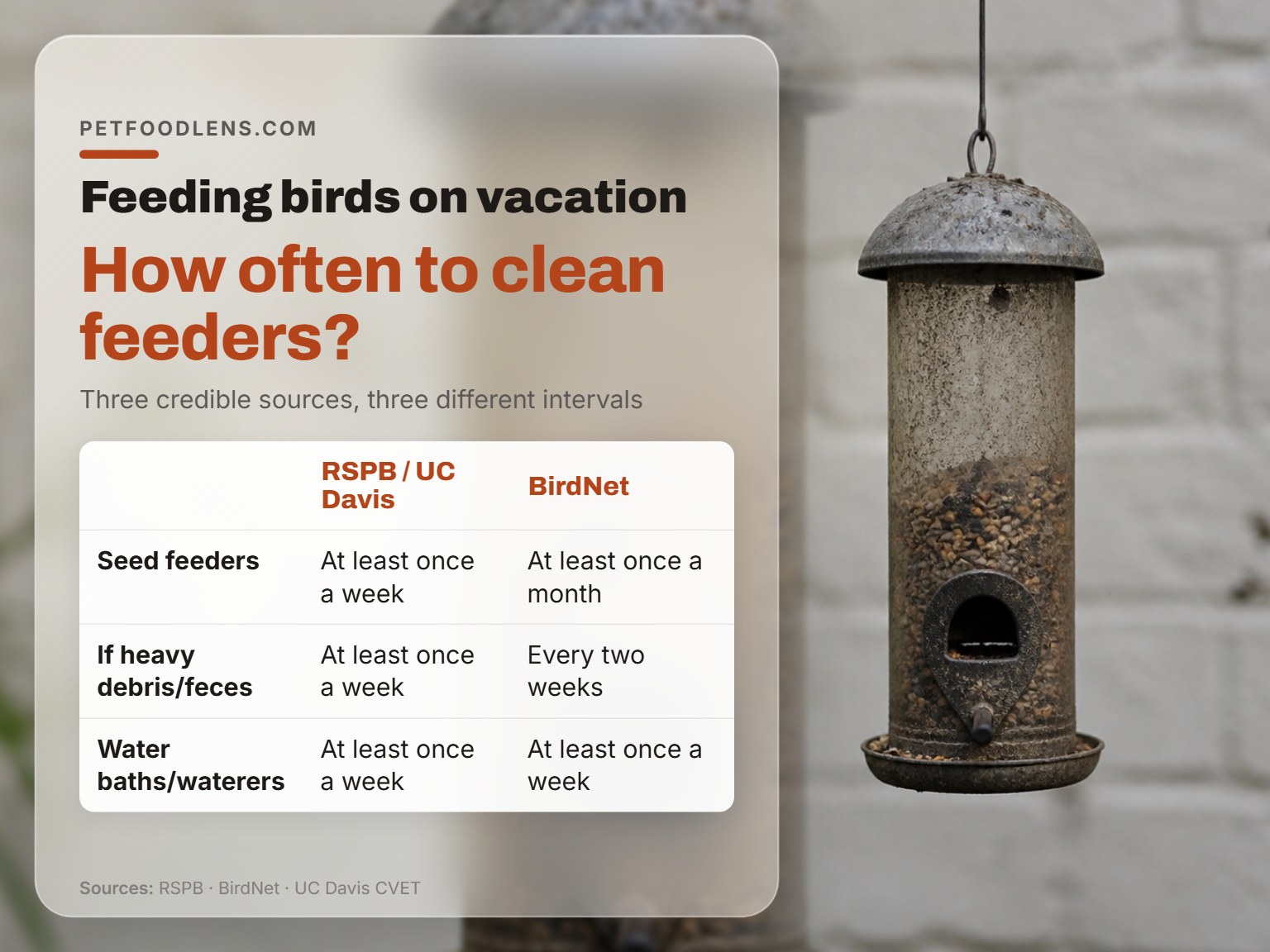
Three credible sources give three different answers, and none of them is obviously wrong.
| Source | Stated interval | Applies to |
|---|---|---|
| RSPB | At least once a week | Feeders and water baths |
| BirdNet / Ornithological Council | At least once a month, or every two weeks if heavy debris or feces | Seed feeders |
| UC Davis CVET | At least once a week | Coop, feeders, waterers |
The BirdNet wild bird feeder guidance is the outlier, and it is also the most detailed on method.
The disinfectant numbers disagree too, and more sharply. BirdNet specifies 10% bleach after a soap-and-water scrub. UC Davis gives 1 tablespoon of bleach per gallon of water, then a thorough rinse and full drying before birds go back in.
Those are not the same concentration. Pick one, follow it exactly, and rinse harder than you think you need to.
When two credible sources give different cleaning intervals for the same object, run the shorter one. A weekly scrub costs you time you already spend. A contaminated waterer costs you a vet visit.
Lorikeets and Nectar Eaters Break Every Rule Above
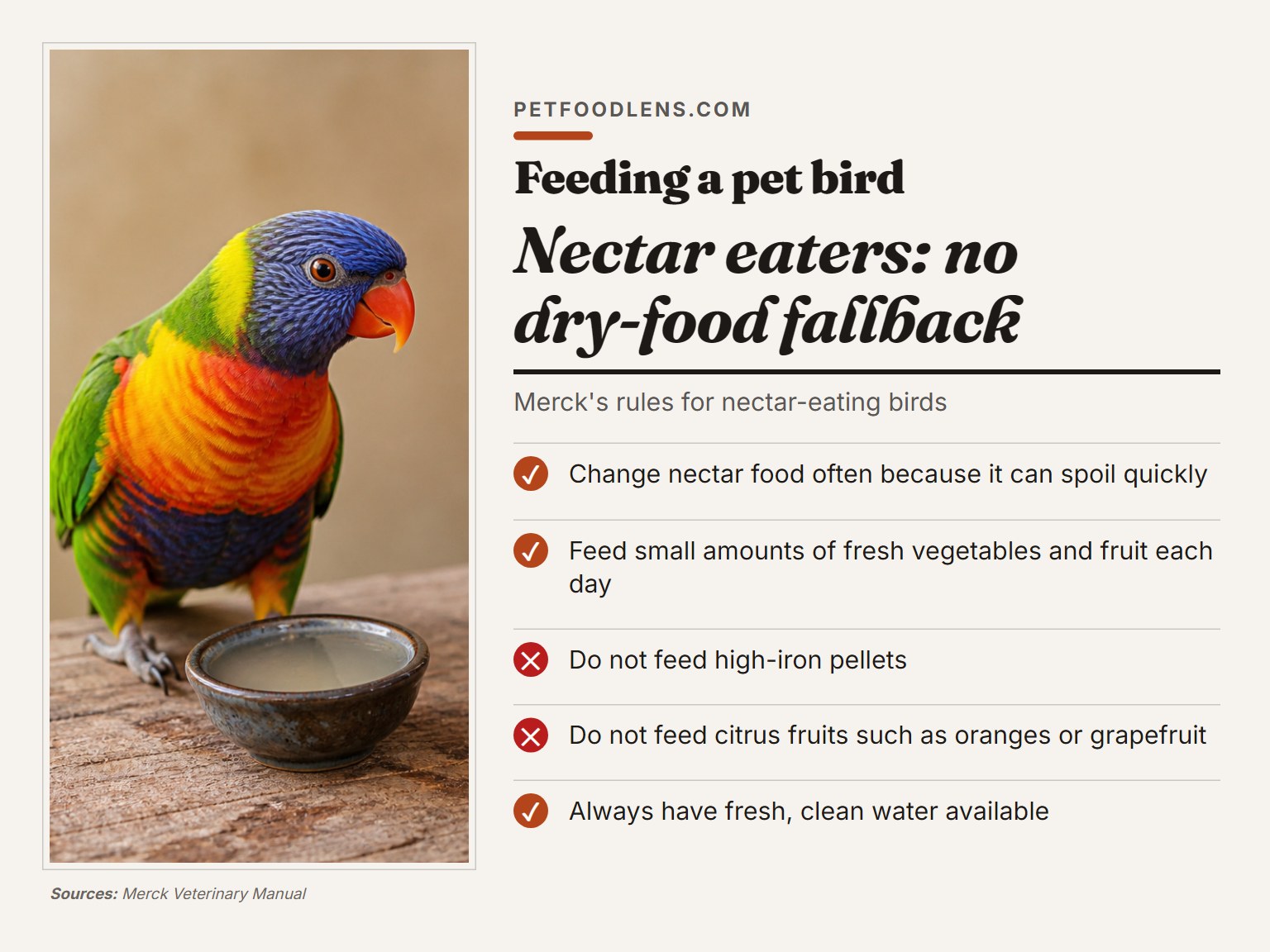
If your bird drinks nectar, the vacation plan changes completely.
Merck says to change nectar often because it spoils quickly, and to feed small amounts of fresh vegetables and fruit each day. It also flags the constraint most owners miss entirely.
The Iron Problem
Many nectar-eating birds are sensitive to iron. Merck specifically warns against high-iron pellets and against citrus fruits such as oranges and grapefruit, because those can cause iron to build up in the bird’s body.
That kills the obvious fallback. You cannot leave a lorikeet a bowl of pellets and hope for the best, because the pellets may be exactly the wrong food.
I would not leave a lorikeet for a weekend on a dry-food plan. Nectar is the whole diet, it spoils fast, and there is no dry fallback that clears the iron constraint. That is a boarding case, not a sitter case.
What to Do About Seeds, Peanuts, and the Seasonal Window
The RSPB and the BTO both publish a May to October pause on seeds and peanuts, and both replace them with something else rather than nothing, while BirdNet takes no seasonal pause position and focuses on hygiene instead.
RSPB guidance runs a full range of foods from 1 November to 30 April: mealworms, fat balls, suet, seeds and peanuts. From 1 May to 31 October, seeds and peanuts come out, while small amounts of mealworms, fat balls or suet stay in. The BTO garden bird feeding research lands in the same place, calling the pause a proportionate step against finch trichomonosis.
BirdNet takes no seasonal position at all and focuses on hygiene instead. That is a real disagreement, and it is worth knowing which one you are following.
One honest caveat: this is garden-bird guidance, written for outdoor feeders. It does not map cleanly onto a cage in a living room.
Suet splits the sources too. The BTO notes fat and suet products are generally less suitable in hot weather because of spoilage, while the RSPB still recommends small amounts year-round, so check our tips on feeding birds in summer.
For the cage itself, Merck’s line is the one that matters: seeds are fine occasionally, but they shouldn’t make up most of the bird’s diet. That holds whether you’re home or away.
Frequently Asked Questions
How long can I leave a pet bird alone?
No source in this research sets a safe number of days, and that silence is the answer. Merck gives daily feeding, watering and bowl-washing instructions with no absence protocol, so see our guide to how often to feed pet birds for the normal routine. Treat any specific day count you see online as someone’s opinion rather than a published limit, and book a mid-trip visit instead.
Can I use a vacation feeding block for a bird?
No. Blocks work for fish because they dissolve slowly in water, as covered in feeding fish while on vacation. A bird needs dry food that stays dry, and a block left in a cage just gets soiled. Merck’s spoilage warning about fresh food applies to anything moist you leave behind.
Should I leave a water bottle or a bowl while I’m away?
Bottle, if your bird will use one. Merck recommends bottles for birds that dunk food and foul their bowls, but adds that you must check the bottle works and change the water daily. A bottle you haven’t tested is worse than a bowl you have.
What if my bird stops eating while I’m away?
Merck’s guidance is to have a bird checked by a vet if it isn’t eating well, because poor intake can signal illness. That is why the sitter’s note matters. Ask for a daily line on how much was eaten and what the droppings look like.
Is bleach safe for cleaning bird dishes?
BirdNet gives 10%, and UC Davis gives 1 tablespoon per gallon. Whichever you use, rinse thoroughly and let everything dry completely before the bird goes back in.
The Bottom Line
Here is the practical takeaway. If your bird eats pellets and drinks from a bottle you have tested, a daily sitter visit covers almost any trip. If your bird eats nectar, or eats seeds as most of its diet, the same plan fails and boarding is the honest answer.
The trigger to watch for is the food itself. Flip the bag and read the nutritional adequacy statement. A food marked complete and balanced gives you a buffer when the routine breaks. A food meant as a supplement does not, and no sitter can fix that while you’re gone.
One concession: if you keep outdoor feeders alongside a cage bird, the seasonal guidance here comes from garden-bird organizations, not from cage-bird veterinary practice. Follow it for the feeders. Follow Merck for the bird in the cage.
