
How to Attract Woodpeckers to a Feeder: Food and Setup
This post contains affiliate links. As an Amazon Associate, we earn from qualifying purchases.
To attract woodpeckers to a feeder, offer suet or peanuts, hang the feeder well off the ground, and give the bird a surface it can brace its tail against. Woodpeckers supplement natural food at feeders, and feeders help most in winter when insects are scarce.
That brace point is the part most feeders get wrong when you compare a how to attract woodpeckers to a feeder. A woodpecker’s tail works like a kickstand, and a feeder without a solid bottom edge forces the bird to hang at an awkward angle. It will visit once and move on.
What follows covers the food that actually pulls them in, the placement question the sources argue about, and the feeder types that work for a Downy versus a Pileated.
Key Takeaways
- Suet and peanuts are the two foods woodpeckers hit hardest at backyard feeders.
- Hang suet at least five feet up, per Audubon, to keep dogs and squirrels out of reach, though WDFW’s plans state no minimum height.
- A tail-prop feeder is the difference between a Pileated visiting once and visiting daily.
- Skip the cheap blends. Milo, wheat, and oats are filler most birds ignore.
- Clean the feeder regularly, or you’re running a disease exchange.
How to Attract Woodpeckers to a Feeder: Why They Visit
Woodpeckers show up where the food matches what they’d eat in a dead tree. Carpenter ants, beetle larvae, termites, and suet are the natural menu.
More than 100 North American bird species supplement natural foods with birdseed, suet, fruit, and nectar from feeders. Feeders benefit birds most during winter, when natural food supplies are scarce. Suet feeders placed well off the ground serve woodpeckers, nuthatches, and chickadees, while hopper and tube feeders serve shrub and treetop species.
The species split matters more than most guides admit. Audubon puts woodpeckers, nuthatches, and chickadees in the tree-feeding group, which is why suet hung off the ground outperforms a ground-level tray every time. Sparrows and juncos want the tray. Woodpeckers want height and a vertical grip.
Chickadees and titmice usually arrive first, and the woodpeckers follow once the feeder is on their route, which is the how to attract woodpeckers to a feeder question in practice.
What Food Actually Pulls Woodpeckers In?
Suet is the single most effective food for woodpeckers. Peanuts, black-oil sunflower, and nut-and-dried-fruit blends fill out the rest of the menu.
Audubon’s guidance is specific on this. Mixtures of peanuts, nuts, and dried fruit are attractive to woodpeckers, nuthatches, and titmice. Black-oil sunflower appeals to the greatest number of birds overall. Suet with peanuts or mealworms makes a high-protein winter meal, which is why woodpecker traffic spikes when insects retreat.
| Food | Best For | Watch Out For |
|---|---|---|
| Suet cake | Woodpeckers, nuthatches, chickadees | Melts in warm weather; use no-melt cakes |
| Peanuts (shelled or in-shell) | Woodpeckers, titmice, jays | Larger birds empty it fast |
| Black-oil sunflower | Widest species range | Hull litter builds up under the feeder |
| Nut-and-fruit blend | Woodpeckers, titmice | Check ingredient order first |
| Nyjer | Goldfinches, siskins | Spoils fast in humid weather |
A suet feeder is the default purchase for most backyards. The cage style keeps the cake off the ground, forces the bird to cling, and works for every woodpecker except the Pileated.
Suet in Winter vs Summer
Audubon notes that ordinary suet melts in warm weather and that no-melt cakes are required once temperatures climb. Lyric’s guidance frames suet as a winter food, which lines up with the same seasonal reality. If you want to feed suet year-round, buy the no-melt version and skip the plain cakes in July.
Suet Placement: Where the Sources Don’t Agree
Audubon says five feet minimum. Washington’s wildlife department plans a suet feeder with no stated height at all. Both are credible, and the gap matters.
| Question | Audubon’s Position | WDFW’s Position |
|---|---|---|
| Suet height above ground | At least 5 feet | No minimum stated |
| Reason for the height | Keep out dogs and squirrels | Not addressed |
| Hanging method | Not specified | Chain or 30# nylon fishing line |
The WDFW suet feeder factsheet gives exact construction dimensions for three feeder designs but never specifies a clearance. Audubon’s five-foot floor is the more useful number for a backyard, because it’s the only one tied to a stated reason: dogs and squirrels.
I’d hang suet a foot above Audubon’s five-foot minimum. The extra foot keeps a determined Labrador from launching, and it puts the cage at eye level from my kitchen window. Audubon’s five-foot number is a floor, not a target.
If you’re working through bird feeder placement for the first time, use Audubon’s five-foot number as your minimum and adjust upward based on what’s actually getting to the cage, though WDFW’s plans state no minimum height.
Where this goes sideways: Hanging suet at four feet because the cage “looks high enough.” A determined squirrel clears four feet easily, and a dog can reach it standing.
Which Feeder Types Work for Which Woodpeckers
Tube, hopper, platform, suet cage, and tail-prop feeders all show up on woodpecker lists, but the species split matters.
Lyric’s guidance puts most tube, platform, and hopper feeders in the “works for smaller woodpeckers” category. The Pileated is the exception, and the fix is a tail prop.
- Suet cage: The default for Downy, Hairy, Red-bellied, and Northern Flicker.
- Tail-prop suet feeder: The one Pileateds actually commit to. Flat solid base with a foothold carved in.
- Tube feeder: Works for smaller woodpeckers, useless for a Pileated.
- Platform feeder: Fine for sunflower and nut blends, exposes suet to weather.
- Hopper feeder: Good for mixed seed, less useful for suet.
If you’re comparing bird feeder types from scratch, buy one suet cage and one tail-prop feeder. That pairing covers every woodpecker you’re likely to see in a North American backyard.
How Do You Get a Pileated Woodpecker to a Feeder?
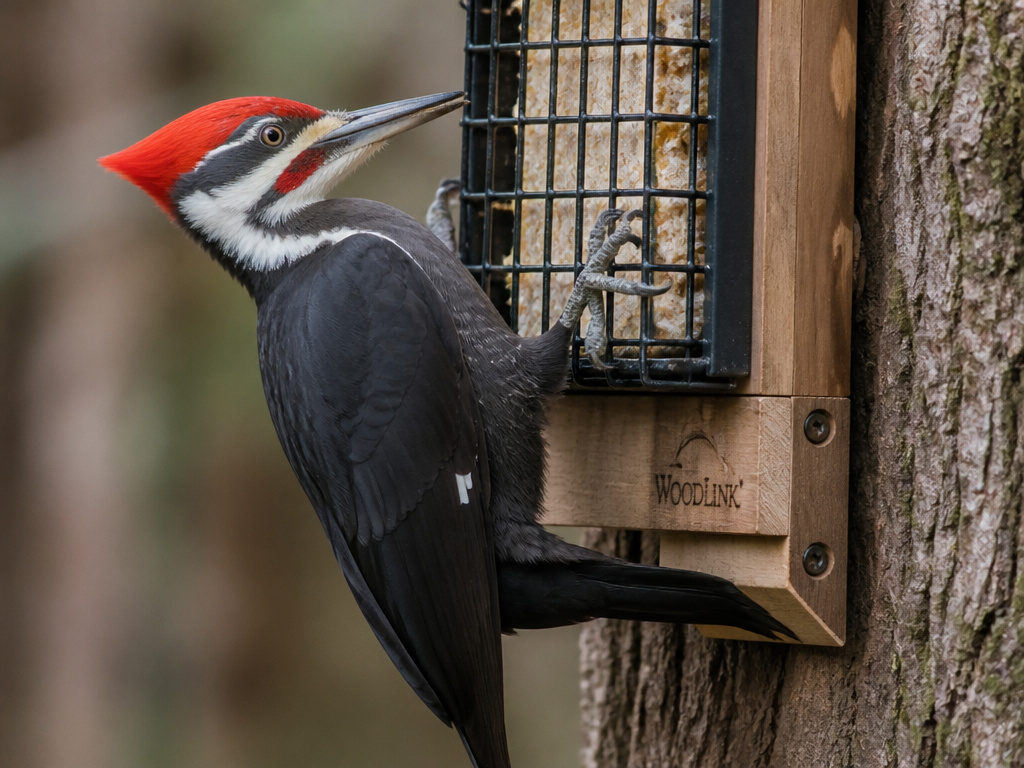
Pileated Woodpeckers are nearly the size of a crow, and they treat new feeders with suspicion.
Wild Birds Unlimited’s Barrie location describes them as surprisingly tentative at feeders, usually scouting from a nearby tree before coming in for a meal. They’re easily spooked by movement, even from inside the house. That’s the behavior to plan around.
The Cornell Lab Pileated Woodpecker profile and WBU both point to the same feeder answer: a large upright suet feeder with a tail prop. WBU adds that Pileateds are also comfortable on long wooden feeders, cylinder feeders, and backyard trees with Bark Butter.
The Tail-Prop Difference
A tail prop is a flat solid piece at the bottom of the feeder, usually with a foothold carved into it. The bird uses its tail for extra balance and stability, similar to how it clings to the side of a tree. Without that brace, a Pileated can’t feed comfortably for long.
Pileateds are usually heard before they’re seen. Their call carries through the trees well before the bird lands, and then it scouts from a nearby branch for a minute or more before committing.
If you’re shopping for woodpecker feeders specifically for Pileateds, the tail-prop suet feeder is the pick. Everything else is a compromise.
A Pileated that gets startled off a feeder may not come back for days. If one is scouting from a nearby tree, stay still until it commits. Sudden movement through a window is enough to spook it, per Wild Birds Unlimited.
Reading the Seed Bag Like an Ingredient Panel
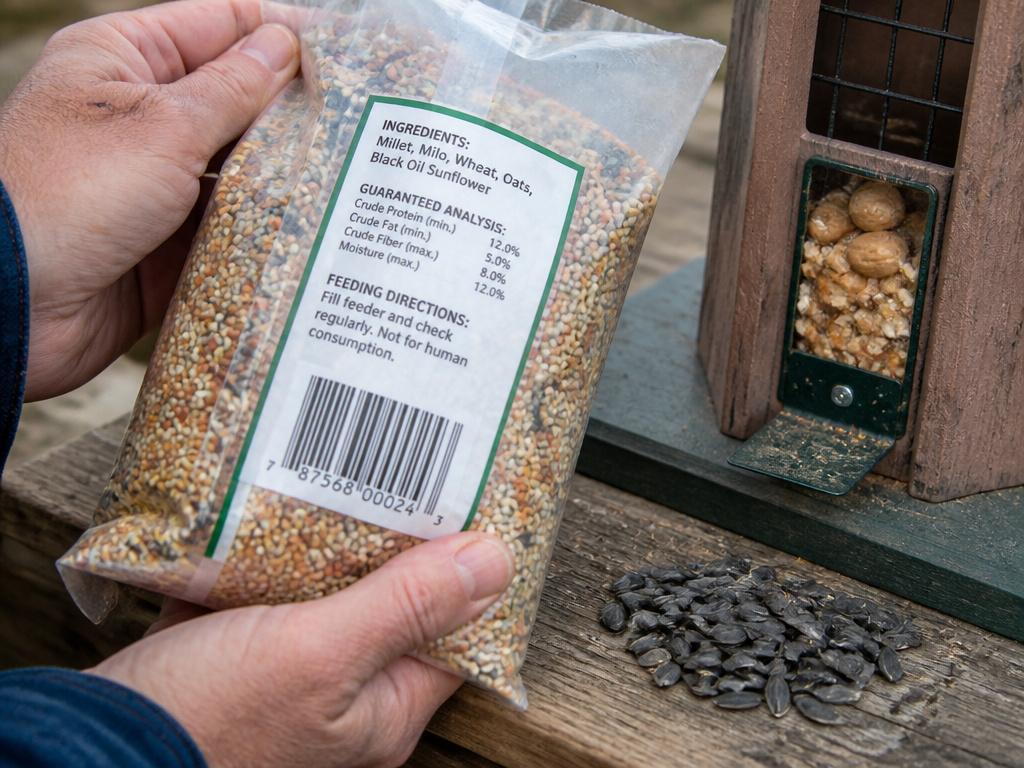
Picture two bags on a shelf. The front of one says “wild bird blend” with four birds on it. The back lists millet, milo, wheat, and oats in that order.
Read past the front of the bag. Audubon is direct about this: relatively few species prefer milo, wheat, and oats, which appear in less expensive blends. Black-oil sunflower appeals to the greatest number of birds.
I switched a test feeder to plain black-oil sunflower a while back. Before long, cardinals, chickadees, titmice, and a blue jay were all on the perches. The multi-species blend on the next pole had a longer ingredient list and fewer birds on it.
Flip the bag and check three things:
- First ingredient: Is it black-oil sunflower, or is it millet?
- Filler count: Milo, wheat, and oats in the top three are a red flag.
- Named ingredients: “Peanuts” beats “nut pieces” beats “mixed grain.”
If you want a shortcut, a straight mixed nut bird food beats a generic blend for woodpeckers every time. Peanuts, nuts, and dried fruit are exactly what Audubon says attracts woodpeckers, nuthatches, and titmice.
Nyjer goes clumpy faster than the bag suggests. In humid weather, a tube of it turns matted and dull, and goldfinches will visit and leave without eating much. That’s the seed telling you it’s done.
Common mistake: Topping off a feeder that still has old seed at the bottom. The fresh seed sits on top of damp, matted seed, and the whole column turns moldy.
How Long Before Woodpeckers Find a New Feeder?
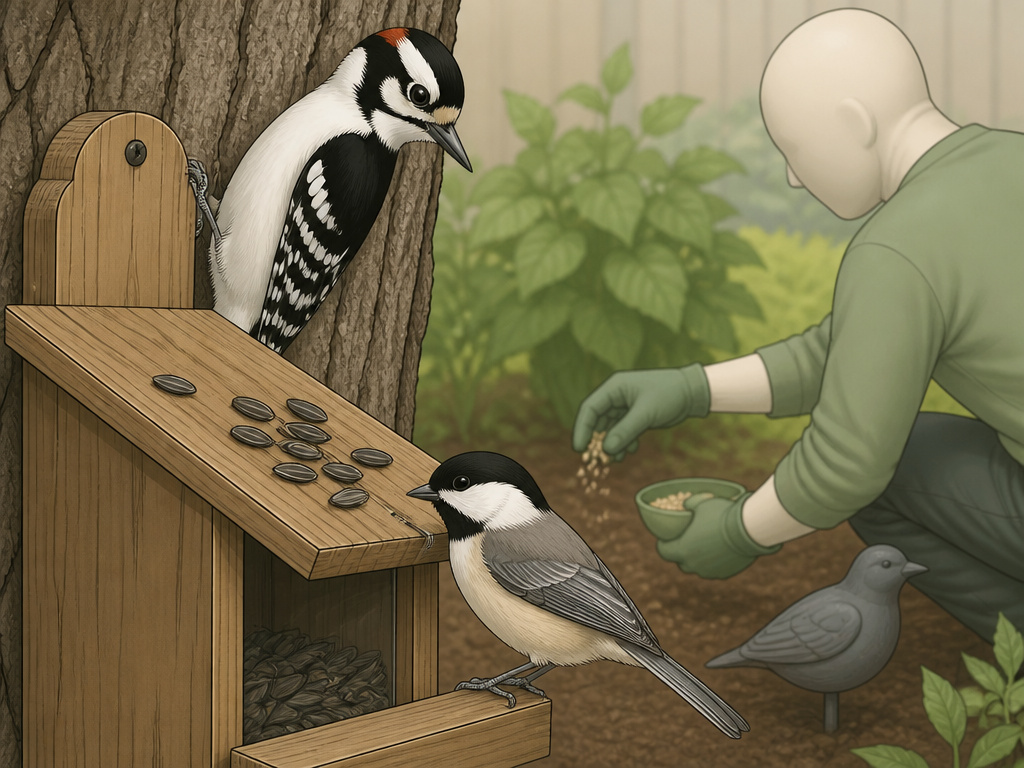
It may take hours. It may take weeks.
Audubon’s guidance is blunt about the range: discovery depends on the distance to bird habitat, the density of nearby feeders, and the kinds of birds that might chance on the new feeder. Chickadees, titmice, and House Sparrows are especially quick to locate a new food source.
If birds are slow to find it, scatter sunflower seeds on top of the feeder and on nearby surfaces such as bare soil. Bird decoys may help lure the first visitors, and other birds will soon notice the new food source.
A chickadee feeder setup is often the fastest way to seed a new feeding station, because chickadees are the scouts. The woodpeckers follow the activity.
One more thing Audubon notes: most species will not suffer if feeders go empty for days or even weeks at a time, since feeders only supplement natural foods. That takes the pressure off a slow start.
Keeping Starlings, Squirrels and Spoiled Suet Out
A feeder that feeds everything is a feeder that feeds nothing well.
For starlings, one fix is a bottom-access-only suet feeder. The federal For the Birds federal guide specifies this design because starlings are reluctant to perch upside down, while chickadees and woodpeckers aren’t, though Audubon instead recommends providing multiple feeder types at different levels to reduce crowding. Standard upright suet feeders fail against starlings.
For squirrels, the answer is height plus a squirrel-proof baffle. Audubon’s five-foot floor exists to keep out dogs and squirrels. A feeder at four feet is a squirrel feeder.
For everything else, the fix is cleaning.
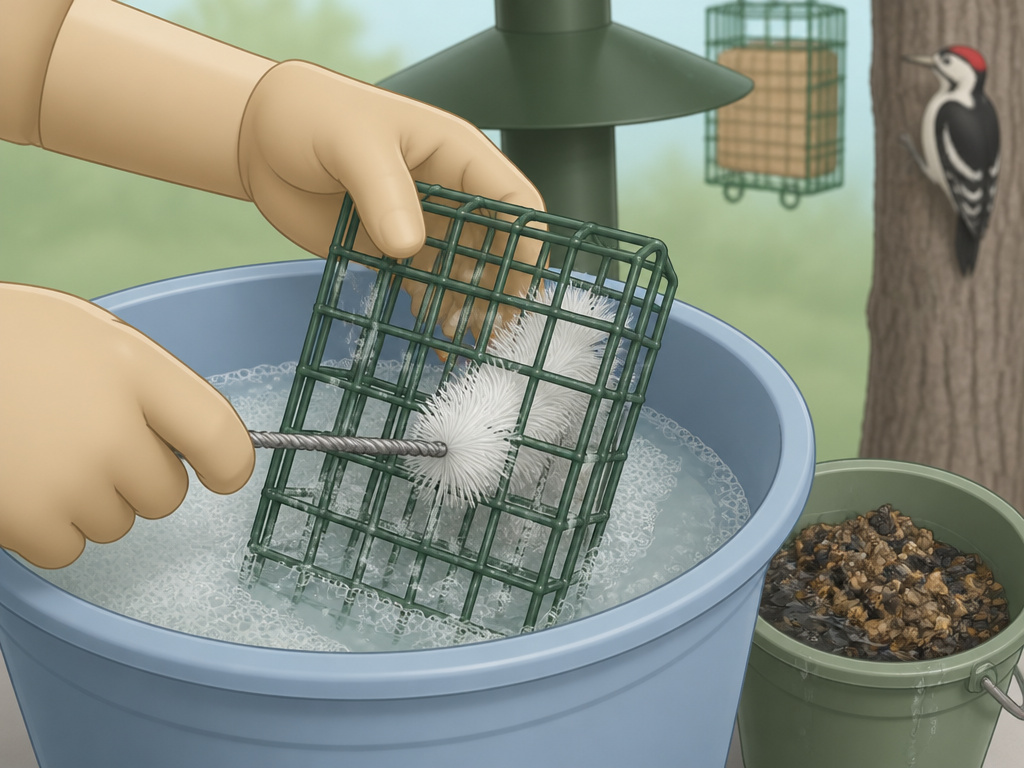
Before you start: A feeder that’s been sitting full of damp seed is a disease vector. Audubon flags feeders as a risk for disease exposure, along with window collisions and predation. Empty and scrub the feeder before refilling, and skip the top-off habit.
Here’s the routine I use:
- Empty the feeder completely into a bucket. Don’t top off.
- Scrub the cage or tube with a diluted bleach solution and a bottle brush.
- Rinse thoroughly and let it dry fully before refilling.
- Check the seed for clumping, mold, or a sour smell before it goes back in.
What to Do With a Feeder That’s Been Sitting
If a feeder has been full and untouched for a long time, dump the seed. Damp seed mats at the bottom of the column, and the mold that follows is what Audubon is warning about when it lists disease as a feeder risk. A fresh start costs less than a sick bird.
Frequently Asked Questions
What is the best food for attracting woodpeckers?
Suet is the single best option, especially in winter when insects are scarce. Peanuts, black-oil sunflower, and nut-and-dried-fruit blends are close seconds. Audubon specifically notes that mixtures of peanuts, nuts, and dried fruit attract woodpeckers, nuthatches, and titmice.
How high should I hang a suet feeder?
Audubon recommends at least five feet above the ground to keep out dogs and squirrels, while Washington’s wildlife department plans a suet feeder with no stated minimum height. Washington’s wildlife department plans a suet feeder with no stated minimum height. Five feet is the safer number for a backyard with either dogs or squirrels.
Will woodpeckers use a regular tube feeder?
Smaller woodpeckers will. Tube, platform, and hopper feeders work for Downy, Hairy, and Red-bellied Woodpeckers. A Pileated Woodpecker needs a large upright feeder with a tail prop, per Wild Birds Unlimited.
Do woodpeckers need water?
Yes, though they get much of it from insects and fruit. A clean bird bath helps, and Wild Birds Unlimited notes that heated birdbaths are especially useful in winter. Clean the bath regularly, since birds leave food and feathers behind.
How often should I clean a woodpecker feeder?
Clean the feeder regularly, and more often in humid weather. Audubon flags feeders as a disease risk, and damp seed at the bottom of a feeder is where the problem starts. Empty and scrub rather than topping off.
Why did a woodpecker visit once and never come back?
The feeder is usually the reason. A Pileated needs a tail prop, and a feeder without one forces an awkward angle that the bird won’t tolerate for long. Wild Birds Unlimited also notes that Pileateds are easily spooked by movement, even from inside the house.
The Bottom Line
If a woodpecker visits once and doesn’t return, the feeder is the problem, not the bird. Check three things in this order: is there suet in it, is it five feet up, and does it have a surface the bird can brace its tail against. Fix all three and the visits usually resume.
Your first move this week: hang one suet cage well off the ground and skip the seed blend entirely. A plain suet cake tells you whether woodpeckers are already on your route.
One concession worth stating. This all assumes a backyard with at least a few mature trees nearby. If you’re in a new subdivision with saplings and no dead wood, woodpeckers have nowhere to scout from, and no feeder design fixes that. Plant something native and wait.
Fair enough, but look at the order. Food first, height second, feeder type third. Get those right and the rest is patience.
