
Freeze-Dried Liver Treats for Dogs Pros and Cons
This post contains affiliate links. As an Amazon Associate, we earn from qualifying purchases.
Freeze-dried liver treats for dogs pros and cons balance out this way: you get a single-ingredient, high-value reward with a one-line ingredient list, and you accept a documented Salmonella recall history plus a calorie density that swings by brand. Muenster declares 55.0% protein and about 2 kcal per treat. Vetdiet declares 64% and about 5 kcal.
The freeze-dried liver treats for dogs pros and cons recall record is the part worth slowing down for. Freeze-dried beef products have been pulled for Salmonella, and in the 2002 dried-beef-treat outbreak documented in the veterinary literature, the humans got sick while the owners’ dogs tested negative.
What follows covers the guaranteed analyses on two real bags, the calorie math that decides whether a training session wrecks a diet, the recall lots you can check against your own pouch, and the handling routine that keeps the bacteria in the bag.
Key Takeaways
- A single ingredient is not a safety claim. Muenster and Stewart both list beef liver and nothing else; the FDA has still recalled finished freeze-dried beef products for Salmonella.
- Protein minimums differ by nine points. Vetdiet declares 64%, Muenster 55.0%, and neither number makes one bag better for every dog.
- Calories per treat differ by more than double. About 2 kcal for Muenster, about 5 kcal for Vetdiet.
- The AVMA-published review recommends avoiding raw diets in pets, a blanket position that does not carve out freeze-dried product.
- Handling is the documented human exposure route, so wash hands and bowls after every session rather than relying on the dog to show symptoms.
What Freeze-Dried Liver Treats for Dogs Actually Are
Beef liver, freeze-dried, one ingredient. That is the entire product in the Muenster 3 oz bag and in the Stewart 4 oz pouch.
Freeze-drying removes water from raw tissue by sublimation, moving the meat from frozen solid directly to vapor under vacuum. Finished morsels hold shape and retain most of the original nutrient profile at a moisture maximum of 5% to 7%, a range set by the brand’s declared guaranteed analysis rather than by any shared standard.
Muenster makes its version in Texas from USA-raised beef and sells it in 3 oz and 16 oz bags. Stewart describes a 4 oz resealable pouch holding up to 90 pieces, freeze-dried in small batches in Dayton, Ohio. Both are positioned for training rewards, everyday treating, and meal topping.
A morsel breaks into a dry, faintly greasy crumble between finger and thumb. It leaves a fine brown dust on whatever surface you set it down on.
Why the Ingredient List Is Only One Line
Liver is a co-product of beef processing, which is why a single-ingredient bag is possible at all. Nothing gets added because nothing needs to be. The organ meat in a freeze-dried liver bag is the whole formulation, not a flavoring.
That short list is genuinely useful if your dog reacts to chicken, corn, or wheat. Muenster markets its bag as poultry-free. Stewart’s listing calls its product grain-free, gluten-free, corn-free, wheat-free, and non-GMO.
If you want the broader version of this comparison across other proteins and formats, the freeze-dried dog food breakdown covers the category. For the one-ingredient angle specifically, there is a separate roundup of single-ingredient dog treats.
The Pros: Why a Liver Morsel Beats a Biscuit in a Training Session
Compliance is the whole job of a training treat. A biscuit that takes three chews and gets swallowed does not compete with a morsel that smells like an organ.
The aroma is blunt and organ-forward, strong enough that the pouch goes back into a zip bag between sessions. That is the point. Dogs key on it in a way they do not key on a kibble-shaped reward, which is why liver shows up in so many freeze-dried liver treats roundups.
Here is what actually earns the bag a spot in your training pouch:
- High hit rate on a distracted dog. Liver gets attention at a distance, which is what you need for recall work.
- One ingredient, so elimination trials stay clean. No guessing which of eleven items caused the itch.
- No grease, no melt. The morsel stays dry in a pocket through a full session, unlike a soft training treat.
- Breaks down small. You can pinch a piece into thirds for a puppy or a small breed.
- Doubles as a meal topper when a dog turns its nose up at dinner.
The mistake I see most is buying a high-value treat and then using it for behaviors the dog already knows. Save the liver for the thing you are actually struggling with. A dog that gets liver for sitting will not work harder for liver on a recall.
For the wider field of formats, the freeze-dried dog treats comparison covers texture and breakability across brands.
The Cons: Salmonella, Calories, and a Recall Record
Freeze-dried beef products have been pulled from shelves for Salmonella, and neither recall came with a reported illness.
What the Two Recalls Actually Said
The 2018 Carnivore Meat Company recall covered limited batches of Vital Essentials Freeze-Dried Beef Toppers, 6 oz poly bag, Lot #13815, with best-by dates of 06/01/2019, 06/04/19, or 06/20/19, UPC 033211006059. The same notice pulled Vital Essentials Frozen Beef Chub Entrée for Dogs, 5 lb, Lot #13816, best by 12/27/18, UPC 033211008817. Those products went out through independent retailers and online via Chewy.com and Amazon.com. The FDA told buyers to discard them in a covered trash receptacle.
The Foodynamics recall is smaller and stranger. It covered eight packages total, shipped from Wisconsin via UPS to retailers in Wisconsin, New York, and Florida. The lots included Raw Dog Barkery 16 oz packs marked 030527, Kanu Pets Freeze Dried Chicken Heart Raw Treats in 3 oz bags marked 031627, BellePepper Cats Freeze Dried Chicken Heart Slices in 3 oz bags marked 031627, and What’s In The Bowl packs in 3 oz and 16 oz marked 030527. FDA sampling triggered the recall. No adverse health effects were reported in pets or humans.
That pattern matters. The FDA Vital Essentials freeze-dried recall and the Foodynamics Salmonella contamination recall both document Salmonella in finished product. Neither documents a sick dog.
What the Contamination Numbers Look Like
KuKanich’s 2011 review in JAVMA is the number source worth knowing. One study it cites found 45% of commercial raw meat used in diets fed to Greyhounds tested positive for Salmonella, most often Salmonella Typhimurium. A US study found 41% of dog treats derived from pig ears and other animal parts, purchased from retail stores, were contaminated with Salmonella. Commercial raw diets containing chicken were five times as likely to be contaminated as raw diets without it.
Those figures come from raw and dried products generally, not from freeze-dried liver specifically. The Salmonella contamination of pet treats review is worth reading in full, because it also carries a recommendation that sits awkwardly next to every bag on the shelf.
The same review lists “avoid feeding raw food diets to pets” among its safety recommendations. It does not carve out freeze-dried product. Manufacturers market single-ingredient freeze-dried liver as a training reward anyway. Both positions are on the record, and you are the one who has to pick.
Easy to miss:
Where the sources split on who gets hurt: the 2002 dried beef treat outbreak described in the JAVMA review infected humans, with the owners’ pets culturing negative and no pet illness reported. The FDA and the Oregon VMA both warn that Salmonella can affect animals eating the product and poses a risk to humans handling it. The direction of harm is not consistent across incidents.
If you are weighing formats, the freeze-dried treats vs jerky treats comparison covers how drying method changes the risk profile.
Which Bag Has the Better Guaranteed Analysis?
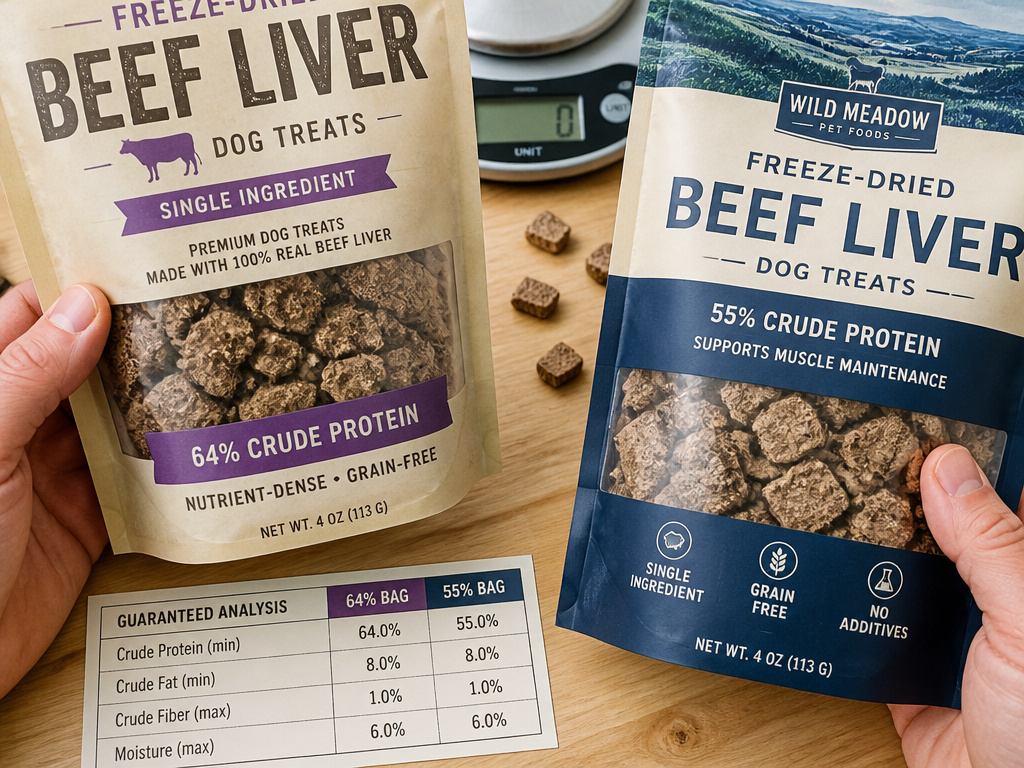
I once assumed the word “premium” on a bag meant some regulator had signed off on it. It doesn’t. I treat that word as decoration and read the guaranteed analysis instead.
Here is what two real bags actually declare.
| Declared value | Vetdiet | Muenster |
|---|---|---|
| Crude protein, min | 64% | 55.0% |
| Crude fat, min | 5% | 4.0% |
| Crude fiber, max | 1% | 1.0% |
| Moisture, max | 5% | 7.0% |
| Calorie density | 3,613 kcal/kg | 3,277 kcal/bag |
Both bags are single-ingredient beef liver. Both are freeze-dried. The protein gap is nine points, and the moisture gap is two points. Those are real differences in what the two manufacturers declare, not a rounding error in my reading.
Does the higher protein number win? Not automatically. A 64% minimum tells you the bag tested at least that high on protein, which is a quality-control floor rather than a nutritional ceiling. The number that decides whether a treat fits your dog is the calorie column, and I’ll get to that.
Why Water Activity Beats Moisture Percentage
Moisture maximum is the number printed on the bag. Water activity is the number that actually governs whether bacteria can grow, and no freeze-dried liver label I have seen discloses it.
That is the measurement that matters. A 5% moisture maximum and a 7.0% moisture maximum tell you how dry the bag was when it was sealed, not how stable the product stays once you open it.
For more on how liver fits against other options, there is a separate liver treats comparison. Labels typically say cool, dry, out of direct sunlight, reseal after opening. None of them give a post-opening shelf life in days.
How Many Calories Are You Actually Feeding?
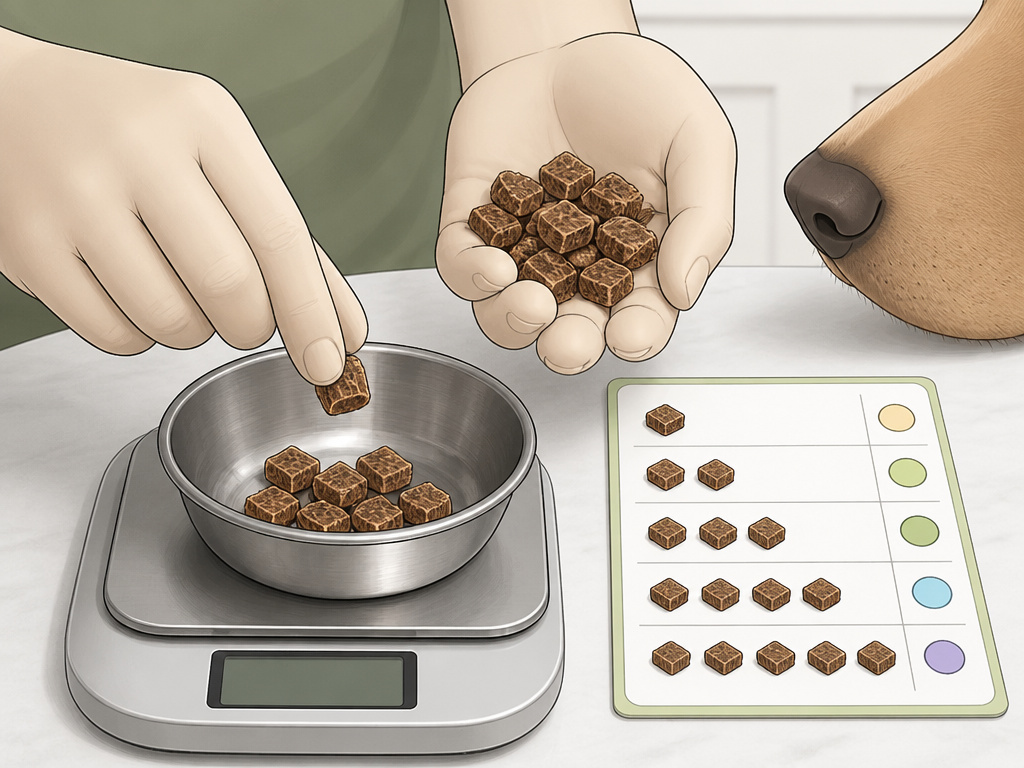
A handler runs a training session, hands over twenty morsels, and never counts a single one.
| Morsels fed | Muenster (~2 kcal each) | Vetdiet (~5 kcal each) |
|---|---|---|
| 5 | 10 kcal | 25 kcal |
| 10 | 20 kcal | 50 kcal |
| 20 | 40 kcal | 100 kcal |
Twenty morsels of Vetdiet is 100 kcal. That is a real number against a real daily allowance.
Take the daily calorie target off your dog’s food label or from your vet. Treats come out of that number, not alongside it. Vetdiet’s own guidance says to follow expert guidelines and treat responsibly without compromising health, which is about as specific as most bags get.
The part nobody mentions:
If you want to control the input entirely, homemade dehydrated liver treats let you set the piece size yourself.
How to Handle Freeze-Dried Liver Without Cross-Contaminating Your Kitchen
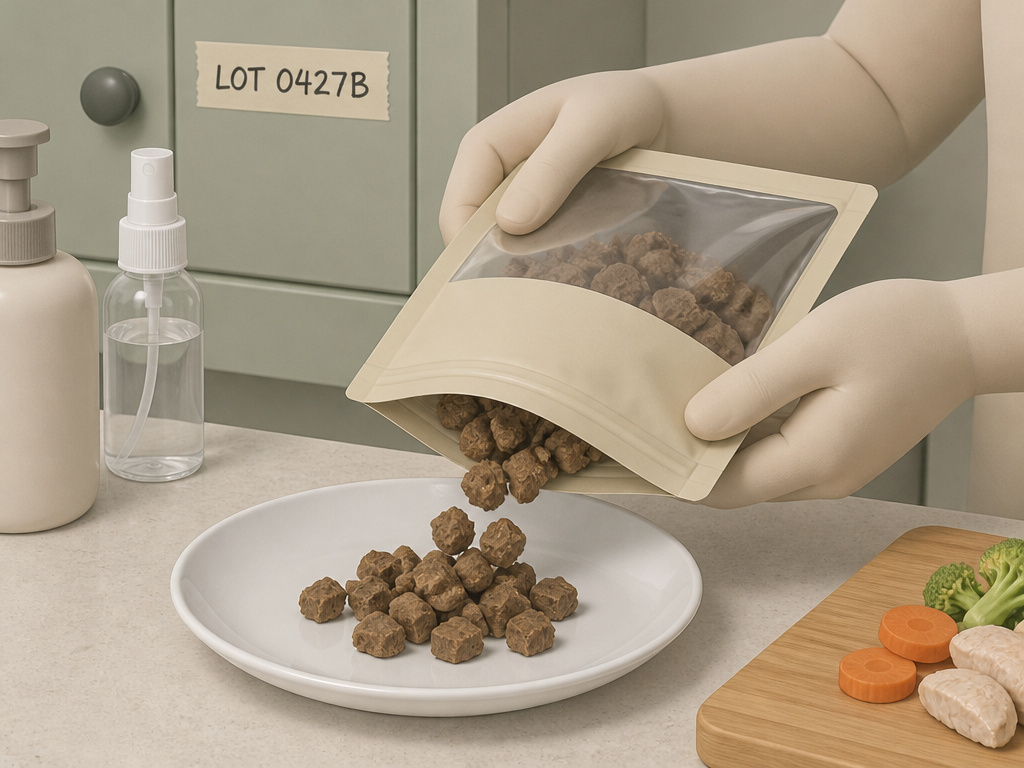
Where does the bag get opened in your house?
Before you start: Freeze-dried liver is raw tissue that has been dried, not cooked, so treat the pouch the way you would treat raw chicken. Keep it off the counters where you prep human food. Children, the elderly, and immunosuppressed people should not handle the bag, per the JAVMA review’s recommendations. If the bag has been recalled, do not donate it or sell it.
The 5-Step Handling Routine
- Open the pouch over a plate, not over the sink or the floor. A dropped morsel that rolls under the dishwasher gets found later by a dog, and you will not know it happened.
- Pour out what you need and reseal immediately. An open pouch pulls moisture from kitchen air, and the morsels can go soft and clump.
- Feed in a room other than the kitchen. The JAVMA review recommends this specifically to keep pet food and human food apart, and cites an outbreak review where children who fed a pet in the kitchen had higher illness risk than control children.
- Wash hands with soap after the session, then wipe the counter. Handling is the documented route for human exposure, and the dog may never show a symptom.
- Wash and sanitize bowls, cups, and storage containers that touched the product. Foodynamics asked buyers to do exactly that after its recall, along with washing any utensils and surfaces the product contacted.
One more habit worth building. Write the lot number from your current bag on a piece of tape and stick it inside the cupboard door. If a recall notice ever names that lot, you will know in seconds instead of digging through a trash bag for a label you threw out.
Frequently Asked Questions
Are freeze-dried liver treats safe for dogs?
They are legal to sell and widely fed, and the record is not clean. Freeze-dried beef products have been recalled for Salmonella, both without a reported illness. The JAVMA review lists “avoid feeding raw food diets to pets” among its recommendations without exempting freeze-dried product. Handle the bag as a raw product and the risk drops.
How many freeze-dried liver treats can I give a dog in a day?
There is no universal number, because it depends on your dog’s daily calorie target. Muenster runs about 2 kcal per treat and Vetdiet about 5 kcal, so twenty morsels is 40 kcal on one bag and 100 kcal on the other. Subtract treats from the daily allowance rather than adding them on top.
Is freeze-dried liver the same as raw liver?
It is raw tissue with the water removed by sublimation under vacuum, not cooked tissue. That distinction is why the handling advice mirrors raw meat handling. The FDA recalls document Salmonella surviving in finished freeze-dried product.
Do freeze-dried liver treats need refrigeration?
Labels typically call for cool, dry storage out of direct sunlight and resealing after opening. No source I found gives a post-opening shelf life in days or a humidity threshold. Keep the pouch sealed between sessions and use your nose as a check.
Can I feed freeze-dried liver to a dog with a beef allergy?
No. Stewart’s own listing states the product is not suitable for dogs with a beef allergy, and that logic applies to any single-ingredient beef liver bag. If you are running an elimination diet, this is the one protein you already know to avoid.
What is the difference between freeze-dried liver treats and jerky treats?
Both are dried, and neither is cooked. Jerky-style products are dried, while freeze-drying sublimates water from frozen tissue. Neither process is a sterilization step, which is why both categories show up in Salmonella recall notices.
The Bottom Line
Weighing the freeze-dried liver treats for dogs pros and cons honestly comes down to a household question, not a product question. If anyone in your home is a child, elderly, or on immunosuppressive medication, treat the pouch as raw meat and keep it off the counter entirely. That is a call about your kitchen, not a defect in the bag.
For everyone else, the first step this week is boring. Write the lot number from your current bag on tape and stick it inside the cupboard door. Recalls name lots, not brands, and the difference between a five-second check and a panicked search through the trash is whether you wrote it down.
