
8 Best Vet Cat Food in 2026
This post contains affiliate links. As an Amazon Associate, we earn from qualifying purchases.
The best vet cat food for most indoor adult cats is IAMS Proactive Health Indoor Dry Cat Food, thanks to its real poultry first ingredient and fiber blend for hairball control. For skin and coat support, Hill’s Science Diet Adult Dry Cat Food earns top marks, while Hill’s Science Diet Sensitive Stomach & Skin Dry Cat Food is the go-to for digestive comfort.
Every cat has a different health profile, and “vet cat food” covers a wide range of therapeutic and maintenance formulas. The real challenge is matching the right nutritional strategy to your cat’s specific needs, whether that’s urinary health, kidney function, stress management, or simple daily wellness.
We evaluated these eight picks by analyzing ingredient lists, manufacturer nutritional adequacy statements, expert round-ups, and patterns in owner-reported outcomes. This guide gives you the research-based context to make an informed choice without relying on marketing claims.
Top 8 Vet Cat Foods in the Market

Certain content that appears on this site comes from Amazon. This content is provided "as is" and is subject to change or removal at any time.
The Best Vet Cat Foods, Reviewed
IAMS Proactive Health Indoor Dry Cat Food

What We Like
- Real poultry as #1 ingredient
- Fiber blend for hairball control
- L-carnitine supports healthy weight
Trade-offs
- Contains grains, not for grain-free diets
- Formulated for indoor cats only
Real chicken and turkey as the first ingredient means this formula prioritizes animal protein over cheap fillers, which is exactly what I look for when scanning a dry food label. The proprietary fiber blend with beet pulp targets hairballs before they form, and L-carnitine is added to help indoor cats maintain a healthy weight while still getting energy from wholesome grains. For a cat that lives mostly inside, this recipe addresses hairball control and weight management as stated in the product’s features.
Hill's Science Diet Adult Dry Cat Food
What We Like
- Omega-6 & Vitamin E for skin and coat
- High-quality protein supports lean muscle
- Natural ingredients
- #1 Veterinarian Recommended
Trade-offs
- Only a single chicken recipe flavor
- Not formulated for kittens or senior cats
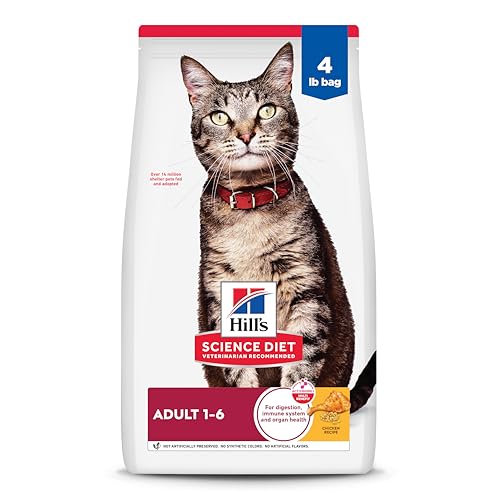
Omega-6 and Vitamin E support healthy skin and fur, while high-quality protein helps maintain lean muscle. This dry cat food is made with natural ingredients and produced in the USA with global ingredients you can trust. Hill’s Science Diet is the #1 veterinarian-recommended brand, so you’re getting a formula backed by veterinary expertise. It’s a straightforward recipe that delivers on its core promises without unnecessary extras.
The trade-off here is portion size: at 4 pounds, this bag is smaller than the 7-pound IAMS Proactive Health Indoor Dry Cat Food. That one also lists real chicken as the first ingredient and includes a fiber blend for digestion. If your cat eats a lot or you have multiple cats, you’ll be buying this bag more often. For a single adult cat with normal appetite, though, the smaller size keeps the food fresher before it’s finished.
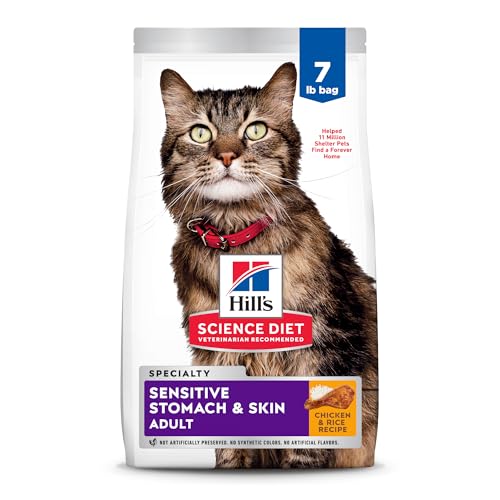
Hill's Science Diet Sensitive Stomach & Skin Dry Cat Food
What We Like
- Prebiotic fiber for gentle digestion
- Omega-3 & 6 for skin and coat
- Vitamin E and C for immune support
- Chicken is #1 ingredient
Trade-offs
- Chicken-based recipe not for poultry allergies
- Dry kibble only, no wet option in this line
A formula built around prebiotic fiber and omega-3 & 6 fatty acids means this food targets two problems at once: a sensitive stomach and a dull coat. The highly digestible chicken-and-rice base is designed to let adult cats absorb nutrients without the usual digestive drama, while the added Vitamin E and C support immune health. It suits owners who want a single bag that addresses both gut and skin issues without resorting to a prescription diet, especially if their cat has a history of loose stools or dry fur.
The #1 ingredient is high-quality chicken, so cats with poultry sensitivities won’t benefit from this formula. If your cat tolerates chicken and you want a veterinarian-recommended brand that supports both stomach and skin health in one kibble, this is a practical choice.
Hill's Prescription Diet k/d Kidney Care Wet Cat Food
What We Like
- Clinically proven to improve kidney function
- Reduced phosphorus and sodium levels
- ActivBiome+ prebiotics for gut-kidney axis
- Bite-sized chunks in gravy for picky eaters
Trade-offs
- Requires veterinary prescription to purchase
- Only available as wet food, not dry
- Limited to kidney care, not general nutrition
The reduced phosphorus and sodium levels help protect vital kidney function, and the formula includes ActivBiome+ Kidney Defense, a proprietary prebiotic blend that supports the gut microbiome to further protect kidney function. This wet cat food is backed by clinically proven nutrition to improve and lengthen quality of life. It’s a therapeutic diet formulated by Hill’s nutritionists and veterinarians, so it’s designed for cats with specific kidney needs.
This is a prescription diet, so you’ll need a vet’s okay to buy it. The wet food comes in tasty bite-sized chunks in gravy and is available in multiple forms and flavors to entice even picky eaters.
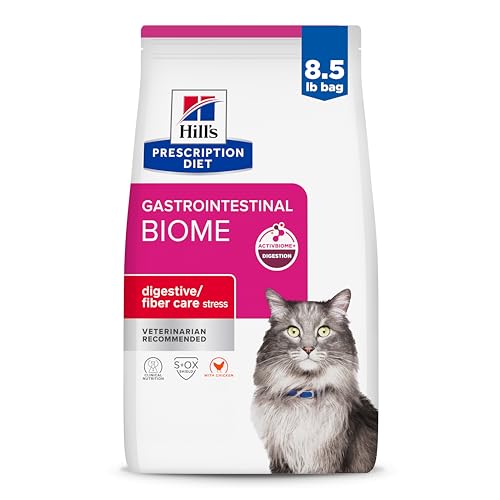
Hill's Prescription Diet GI Biome Stress Digestive Care Dry Cat Food
What We Like
- ActivBiome+ technology supports gut microbiome
- Reduces stress with hydrolyzed casein and L-tryptophan
- Promotes regular stool in as little as 24 hours
- High omega-3 fatty acids (DHA & EPA)
Trade-offs
- Requires veterinary prescription to purchase
- Not suitable for cats without a prescription
A proprietary ActivBiome+ ingredient technology targets beneficial gut bacteria directly, which means this food is engineered to shift your cat’s digestive health in as little as 24 hours. The addition of hydrolyzed casein and L-tryptophan isn’t just marketing fluff, those are clinically studied compounds that help dial down stress, a common trigger for GI upset in cats. If your cat’s digestive issues seem tied to anxiety or environmental changes, this formula addresses both at once, which is a more integrated approach than most digestive-care diets offer.
The trade-off is that this is a prescription-only product, so you’ll need a vet’s approval before you can even try it. That puts it in a different category from over-the-counter options like Hill’s Science Diet Sensitive Stomach & Skin, which you can grab without a consult. For cats with chronic or stress-linked digestive problems, the extra step is worth it; for a cat with mild, occasional sensitivity, the prescription requirement may feel like unnecessary bureaucracy.
Product photos
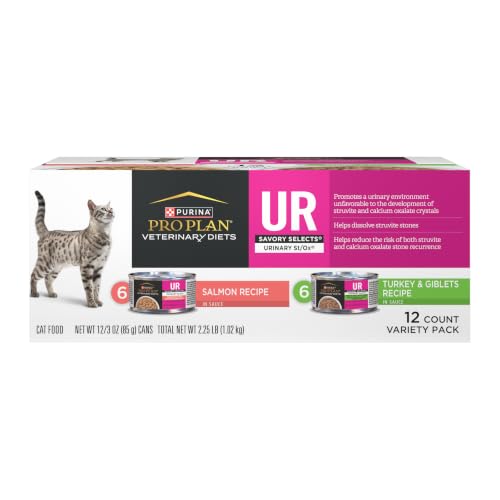
Pro Plan Veterinary Diets Purina Wet Cat Food Variety Pack
What We Like
- Dissolves existing struvite stones
- Reduces risk of both crystal types
- High-quality protein for muscle maintenance
- Contains antioxidants for immune support
Trade-offs
- Wet food requires refrigeration after opening
- Prescription diet needs veterinary authorization
- Limited to two protein flavors only
A formulation that actively dissolves struvite stones and creates a urinary environment unfavorable to both struvite and calcium oxalate crystals means this variety pack does more than just maintain urinary health, it tackles existing issues. The 12-can pack with salmon and turkey options gives you some variety while delivering high-quality protein and antioxidants. This is the kind of targeted nutrition that makes sense for cats with a history of urinary crystal problems, where the goal is to reduce recurrence without sacrificing palatability.
A vet’s approval is required to purchase this veterinary diet, and the wet food format means opened cans need to go straight to the fridge. For cats with a history of struvite or oxalate issues, the formula helps dissolve struvite stones and helps reduce the risk of both types of crystals recurring, which makes the extra steps worthwhile.
Product photos
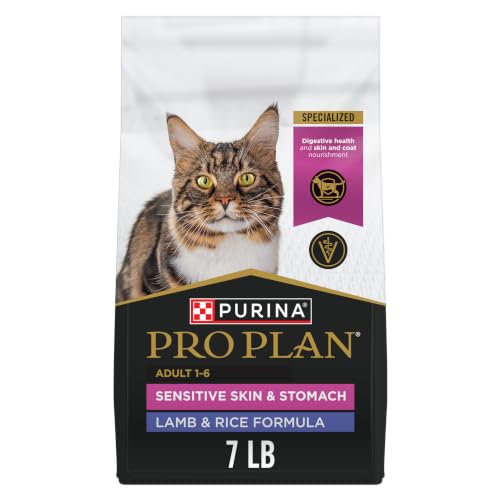
Purina Pro Plan Sensitive Skin & Stomach Dry Cat Food
What We Like
- Real lamb is the first ingredient
- Rice and oat meal for easy digestion
- Probiotics support digestive and immune health
- Omega-6 and vitamin A for skin and coat
Trade-offs
- Only 7 lb bag size limits bulk buying
- Grain-inclusive formula not for grain-free diets
Real lamb as the first ingredient gives this formula a protein base that’s both high-quality and less common in mass-market cat foods, which matters if your cat has shown sensitivity to chicken or fish. The rice and oat meal are explicitly chosen for digestibility, and the guaranteed live probiotics add a layer of digestive and immune support that goes beyond just avoiding irritants. Omega-6 fatty acids and vitamin A round out the recipe for skin and coat health, making this a targeted option for cats whose digestive or dermatological issues are tied to their diet.
This formula includes grains, so if you’re committed to a grain-free approach for your cat, the rice and oat meal here will rule it out. Compared to Hill’s Science Diet Sensitive Stomach & Skin, which uses chicken and rice, Purina Pro Plan leads with lamb instead, offering a different protein source for cats that may react to poultry. The 7 lb bag is a moderate size, so if you have multiple cats or a heavy eater, you’ll be reordering more often than with larger bags from other brands.
Product photos
Royal Canin Digestive Care Adult Dry Cat Food
What We Like
- Ring-shaped kibble slows eating
- Prebiotics and fiber support digestion
- 95% healthy stool in 10 days
- Pairs with wet food formulas
Trade-offs
- Only for adult cats with sensitive stomachs
- Requires 10 days for stool improvement
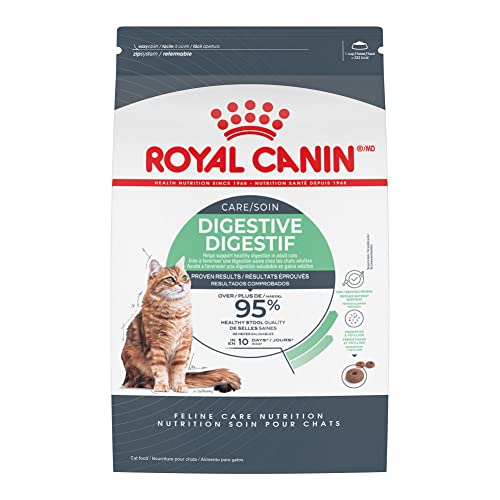
Over 95% healthy stool quality after 10 days is the kind of number that makes a label-reader pause and actually check the bag. Royal Canin backs that claim with an internal study, and the ring-shaped kibble is a clever mechanical trick to slow down cats who inhale their food. For a cat that regularly leaves loose or messy stools, this formula targets the digestive tract directly with prebiotics and dietary fiber rather than relying on a single protein source. It fits the adult cat with a genuinely finicky stomach, not just a picky eater.
This is a targeted solution, not an all-purpose maintenance food. If your cat has a broader sensitivity or needs kidney or urinary support, you would be better off with something like Hill’s Prescription Diet k/d Kidney Care. Royal Canin’s own wet food formulas can be mixed in, but the dry kibble alone is the core of the 10-day stool improvement plan. For the cat whose main issue is digestion and stool quality, this is a precise, data-backed option that does not pretend to be everything to every cat.
Product photos
How We Evaluated Vet Cat Foods
Our evaluation started with the ingredient panel and guaranteed analysis of each formula, cross-referencing manufacturer nutritional adequacy statements against AAFCO profiles. We then reviewed expert round-ups from veterinary nutritionists and patterns in owner-reported outcomes across large user communities.
The four criteria that mattered most were ingredient quality, therapeutic specificity, digestibility markers, and the presence of clinically studied ingredients. Ingredient quality means named protein sources and their position on the list. Therapeutic specificity targets a diagnosed condition or general maintenance. Digestibility markers include fiber type, prebiotic content, and stool quality claims. Clinically studied ingredients like ActivBiome+ or struvite-dissolving properties also matter.
A research-led evaluation has honest limits: we cannot replicate a veterinary exam or run feeding trials. We can, however, help you understand what a label actually says and how a formula compares to others in the same therapeutic category. For deeper context, our guide to veterinarian-recommended cat food brands covers the full landscape of options.
What To Look For In Vet Cat Food
Choosing a vet cat food means reading past the front-of-bag claims and focusing on the nutritional adequacy statement, ingredient sourcing, and whether the formula matches your cat’s specific life stage and health condition.
Look for a named protein as the first ingredient. Also check for a clear AAFCO statement for your cat’s life stage. Therapeutic ingredients like prebiotics, omega fatty acids, and controlled minerals should match your cat’s diagnosed or observed needs.
Protein Source and Ingredient Order
The first ingredient sets the nutritional tone. Real poultry, lamb, or fish should appear before any meat meal or grain. For cats with food sensitivities, a novel protein like lamb (as in Purina Pro Plan Sensitive Skin & Stomach) or a single-source chicken formula can reduce allergic reactions. Avoid vague terms like “meat by-products” when a named source is available.
Therapeutic Specificity
Over-the-counter maintenance foods differ sharply from prescription cat food designed for diagnosed conditions. Hill’s Prescription Diet k/d Kidney Care and Pro Plan Veterinary Diets Urinary require a vet’s authorization because they alter phosphorus, sodium, or mineral levels in ways that could harm a healthy cat. Match the therapeutic category, kidney, urinary, digestive, stress, to a confirmed need, not a guess.
Digestive Health Markers
Prebiotic fiber (inulin, beet pulp, or specific blends like ActivBiome+) supports stool quality and gut microbiome balance. Royal Canin Digestive Care claims 95% healthy stool in 10 days using a ring-shaped kibble that slows eating. Hill’s Sensitive Stomach uses prebiotic fiber alongside omega-3 and omega-6 for dual digestive and skin support. For cats with ongoing issues, a sensitive stomach food formula can make a noticeable difference.
- Check the AAFCO statement: does it say “complete and balanced” for your cat’s life stage?
- Verify the therapeutic claim: is it “clinically proven” or “formulated to support”? The former is stronger.
- Look for guaranteed minimums on omega fatty acids and taurine.
- Confirm the kibble size and shape if your cat is a fast eater.
- Note whether the food requires a prescription, if so, have your vet confirm the diagnosis first.
A food that manages one condition well may worsen another; always match the formula to the full health picture, not just the most obvious symptom.
Vet Cat Foods Compared
The table below compares all eight vet cat foods across their primary strengths, trade-offs, and best-use scenarios so you can quickly narrow your options.
| Product | Protein Source | Key Feature | Weight | Form |
|---|---|---|---|---|
| IAMS Proactive Health Indoor Dry Cat Food | Real Chicken & Turkey | Hairball Control | 7.0 pounds | Dry Cat Food |
| Hill's Science Diet Adult Dry Cat Food | Chicken Recipe | Omega-6 & Vitamin E | 4.0 lb | Dry Cat Food |
| Hill's Science Diet Sensitive Stomach & Skin Dry Cat Food | Chicken & Rice | 29 key nutrients | 7.0 pounds | Dry Cat Food |
| Hill's Prescription Diet k/d Kidney Care Wet Cat Food | Chicken & Vegetable Stew | Clinically proven kidney care | 4.3 pounds | Wet Cat Food |
| Hill's Prescription Diet GI Biome Stress Digestive Care Dry Cat Food | Chicken Recipe | Hydrolyzed casein, L-tryptophan, ActivBiome+ | 8.5 lb | Dry Cat Food |
| Pro Plan Veterinary Diets Purina Wet Cat Food Variety Pack | Salmon or Turkey | Dissolves struvite stones | 0.2 pounds | Wet Canned Food |
| Purina Pro Plan Sensitive Skin & Stomach Dry Cat Food | Real Lamb | Guaranteed live probiotics | 7 lb | Dry Cat Food |
| Royal Canin Digestive Care Adult Dry Cat Food | N/A | Prebiotics & dietary fiber | 6.0 pounds | Dry Cat Food |
Frequently Asked Questions
What is the best vet-recommended cat food for indoor cats?
The IAMS Proactive Health Indoor Dry Cat Food is formulated for indoor adult cats with real poultry as the first ingredient and a fiber blend for hairball control. It also includes L-carnitine to support healthy weight maintenance, which is a common concern for less active indoor cats.
Can I buy prescription cat food without a vet visit?
No. Hill’s Prescription Diet and Pro Plan Veterinary Diets formulas require veterinary authorization because they alter nutrient levels in ways that could be harmful to a cat without the diagnosed condition. Always consult your veterinarian before switching to a therapeutic food formula.
What is the difference between Hill’s Science Diet and Hill’s Prescription Diet?
Hill’s Science Diet is an over-the-counter maintenance food for general wellness, like skin and coat or sensitive stomach support. Hill’s Prescription Diet is a therapeutic line requiring a prescription, designed to manage specific conditions such as kidney disease, urinary issues, or stress-related digestive problems.
How do I choose between dry and wet vet cat food?
Dry food offers convenience and dental benefits, while wet food provides higher moisture content for urinary and kidney health. Hill’s Prescription Diet k/d Kidney Care is only available as wet food, and the Pro Plan Veterinary Diets Urinary variety pack is also wet-only. Many owners combine both formats for variety.
Is grain-free cat food better for my cat?
Not necessarily. Several top-performing vet cat foods in this guide contain grains like rice, oatmeal, and fiber sources. Grains provide digestible carbohydrates and fiber that support stool quality. A grain-free diet is only necessary if your cat has a confirmed grain allergy, which is relatively uncommon.
The Bottom Line
For most indoor adult cats, the IAMS Proactive Health Indoor Dry Cat Food delivers the best balance of real protein, hairball control, and weight management at a practical price point. It’s the straightforward choice when your cat doesn’t have a diagnosed medical condition but needs a reliable daily maintenance diet.
If your cat has a specific health issue, the award picks point you in the right direction. Hill’s Science Diet works for skin and coat, the Sensitive Stomach formula for digestive comfort, and the prescription lines for kidney, urinary, or stress-related conditions. Each is designed for a narrower purpose, so match the formula to the diagnosis.
The single most important buying factor is honesty about what your cat actually needs. A maintenance food won’t fix a urinary blockage, and a therapeutic diet can create problems if used unnecessarily. Read the label, check the AAFCO statement, and let your vet guide the prescription decisions.
