
9 Best Sensitive Cat Food in 2026
This post contains affiliate links. As an Amazon Associate, we earn from qualifying purchases.
For cats with delicate digestion, the KOHA Limited Ingredient Turkey Pate stands out as the best overall sensitive cat food thanks to its single meat protein and 96% meat content with no fillers. For budget-conscious owners, the Purina ONE Sensitive Stomach Dry Cat Food offers real turkey as the first ingredient, while the Hill’s Science Diet Sensitive Stomach Dry Cat Food is the best veterinarian-recommended option.
A sensitive stomach in cats can mean anything from occasional vomiting and loose stools to chronic digestive upset and skin issues. The real challenge is identifying whether the problem stems from a specific protein, grain, or food additive, which makes ingredient transparency the most critical factor in choosing the right food.
We evaluated these nine sensitive cat foods by analyzing manufacturer specifications, consulting expert round-ups from veterinary nutritionists, and studying patterns in owner feedback about digestive health outcomes. This guide gives you the specific criteria to match your cat’s needs to the right formula.
Top 9 Sensitive Cat Foods in the Market

Certain content that appears on this site comes from Amazon. This content is provided "as is" and is subject to change or removal at any time.
The Best Sensitive Cat Foods, Reviewed
KOHA Limited Ingredient Turkey Pate

What We Like
- Single meat protein for sensitivities
- 96% meat with no fillers
- Includes pumpkin for digestion
Trade-offs
- Only one protein option in this recipe
- Not suitable for cats that prefer dry kibble texture
A single meat protein formula means you can pinpoint exactly what your cat reacts to without guessing which ingredient set off the digestive upset. KOHA’s turkey pate hits 96% meat content, skipping the starches and gums that often sneak into limited-ingredient wet foods. The recipe includes pumpkin, cranberries, and New Zealand green-lipped mussel, ingredients some owners look for in a limited-ingredient diet. That makes this a straightforward choice for cats with known or suspected food sensitivities, especially when you want to start elimination trials with a clean slate.
The trade-off is that pate texture isn’t universally loved, some cats prefer shreds or chunks, and this is a smooth, uniform paste. If your cat is picky about mouthfeel, you might need to transition slowly or mix it with a topper. For a cat that tolerates pate and needs a simple, additive-free diet, this is where I’d start.
Product photos
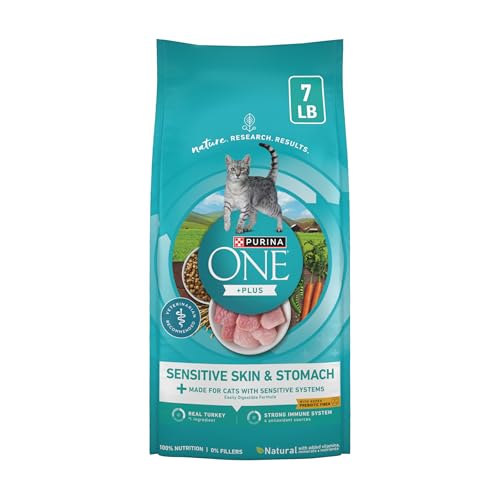
Purina ONE Sensitive Stomach Dry Cat Food
What We Like
- Real turkey as first ingredient
- Easily digestible with prebiotic fiber
- Supports strong teeth and gums
- No artificial flavors or preservatives
Trade-offs
- Not suitable for cats that need wet food moisture
- Contains no probiotics like some sensitive stomach formulas
Real turkey is the first ingredient, which gives this formula a solid protein foundation for maintaining muscle mass and a healthy heart in adult cats. The easily digestible recipe includes added prebiotic fiber to help settle sensitive systems, while calcium supports dental health and antioxidants back up the immune system. It’s a dry food made in Purina’s own U.S. facilities with no artificial flavors or preservatives, offering a straightforward approach to sensitive stomach nutrition.
Real turkey is the first ingredient in this high-protein dry cat food, which helps support strong muscles and a healthy heart in adult cats. The crunchy kibble also contains calcium for strong teeth and healthy gums, plus four antioxidant sources to support the immune system. Because it’s a dry food, cats that prefer wet food or need extra moisture may not take to it as readily.
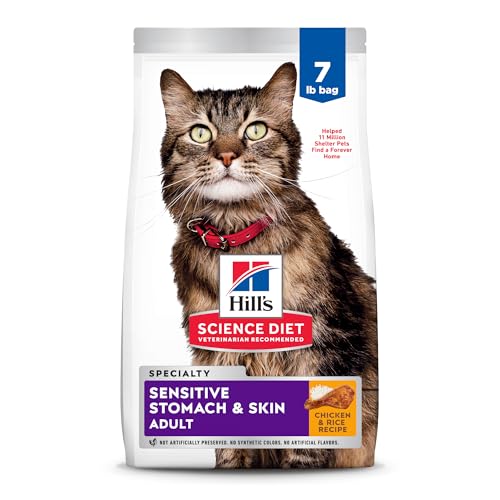
Hill's Science Diet Sensitive Stomach Dry Cat Food
What We Like
- Chicken is the #1 ingredient
- Prebiotic fiber for gentle digestion
- Omega-3 & 6 for skin and coat
- Antioxidants support immune health
Trade-offs
- Contains chicken, not for poultry-sensitive cats
- Dry kibble only, no wet option in this line
A 7-pound bag of dry food built around chicken as the first ingredient, with prebiotic fiber to ease digestion and omega fatty acids for skin and coat, this formula is recommended by veterinarians. It suits owners who want a complete, balanced adult diet backed by a recognizable brand and a clear ingredient list. The triple support for stomach, skin, and immune system means one bag covers the bases for a cat that tends to be finicky or prone to loose stools.
The trade-off: if your cat reacts to chicken or you prefer a limited-ingredient approach, this isn’t the bag to start with. For the typical cat with a touchy stomach, though, the veterinarian-recommended formulation and straightforward ingredient list make it a reliable first try.
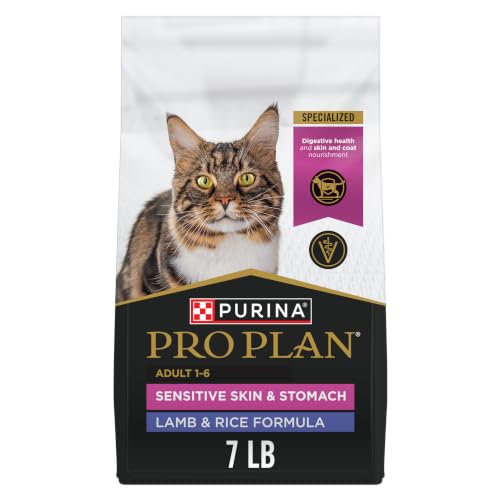
Purina Pro Plan Sensitive Skin & Stomach Dry Cat Food
What We Like
- Real lamb is first ingredient
- Contains live probiotics for digestive health
- Omega-6 and vitamin A support skin and coat
- Rice and oat meal are gentle on digestion
Trade-offs
- Not a limited ingredient diet
- Contains grains, not grain-free
A high-protein formula with real lamb as the first ingredient means this food prioritizes animal protein over cheap fillers, a solid start for a cat with skin sensitivities. The omega-6 fatty acids and vitamin A are directly aimed at nourishing skin and coat, while the rice and oat meal provide easily digestible carbohydrates that won’t upset a sensitive stomach. Live probiotics add another layer of digestive support, making this a well-rounded option for cats whose skin issues are tied to gut health. It’s best suited for owners who want a mainstream, widely available food that targets both skin and stomach without resorting to exotic proteins or grain-free gimmicks.
This formula isn’t a limited-ingredient diet, so if your cat has a specific protein or grain allergy, you’ll need to check the ingredient list more carefully. Compared to the Natural Balance Limited Ingredient Salmon Dry Cat Food, which uses a single animal protein and skips grains entirely, the Purina Pro Plan offers more variety in ingredients but less certainty for cats with true food allergies. For most cats with mild to moderate sensitivities, the combination of probiotics, digestible grains, and targeted skin nutrients makes this a practical daily food that addresses both skin and stomach issues without requiring a trip to a specialty pet store.
Natural Balance Limited Ingredient Salmon Dry Cat Food
What We Like
- Single animal protein for sensitive stomachs
- Grain-free recipe supports smooth digestion
- Includes green peas as natural fiber
- Vet-recommended brand
Trade-offs
- Only available in a 4 lb bag
- Not suitable for cats that need a wet food diet
Salmon as the single animal protein means this formula cuts out the guesswork for cats with food sensitivities. Natural Balance pairs that protein with green peas for natural fiber, aiming to support both digestion and immune health without grains, soy, or corn. That makes it a straightforward choice for owners who want a limited-ingredient dry food that still delivers complete adult nutrition. This is especially true if their cat has reacted poorly to multi-protein blends or grain-inclusive recipes in the past.
The trade-off here is the bag size: at 4 pounds, it’s a smaller package than many competitors like Hill’s Science Diet Sensitive Stomach, which comes in a 7 lb bag. That means more frequent repurchasing if you have multiple cats or a heavy eater. Still, for someone trying a limited-ingredient diet for the first time, the smaller bag is less of a commitment while you see how your cat handles the switch.
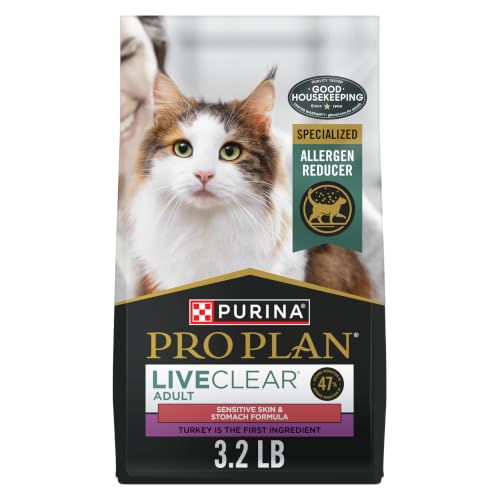
Purina Pro Plan LiveClear Sensitive Stomach Cat Food
What We Like
- Reduces major allergen Fel D 1
- Real turkey as first ingredient
- Contains prebiotic fiber and probiotics
- Made in Purina-owned US facilities
Trade-offs
- Results take until 3rd feeding week
- Results require waiting until the third feeding week
A 47 percent average reduction in the major allergen Fel D 1 starting in the third feeding week is the headline here. It comes from an egg-based protein that neutralizes the allergen at its source rather than just masking symptoms. That makes this dry food a practical option for households where someone is mildly allergic but doesn’t want to rehome the cat. Real turkey is the first ingredient, and the formula includes prebiotic fiber plus guaranteed live probiotics for digestive health. It suits owners who need a sensitive-stomach formula that also tackles dander, all backed by over a decade of research and made in Purina-owned US facilities.
The 3.2-pound bag is noticeably smaller than the 7-pound bags of Hill’s Science Diet Sensitive Stomach or the standard Purina Pro Plan Sensitive Skin & Stomach. That means you’ll be reordering more often if this is your cat’s main food. And while the allergen reduction is real, it doesn’t happen overnight; you’re waiting until week three to see the full effect. If you need immediate relief or a larger bag size for a multi-cat home, the standard Purina Pro Plan Sensitive Stomach offers probiotics and digestibility in a bigger package, though without the allergen-neutralizing egg protein.
Product photos
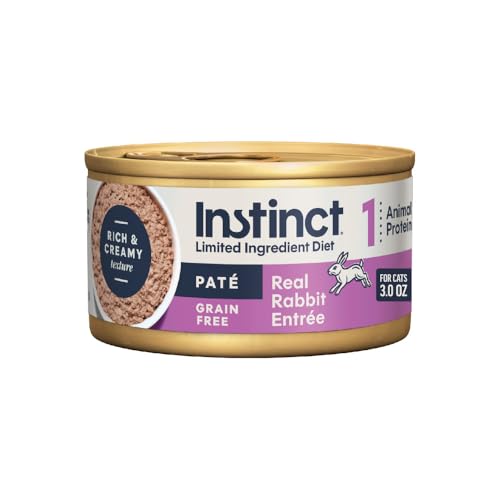
Instinct Limited Ingredient Rabbit Wet Cat Food
What We Like
- Single animal protein: rabbit
- No chicken, beef, fish, dairy, eggs
- No grain, potato, corn, wheat, soy
- No artificial colors or preservatives
Trade-offs
- Only one texture option: pate
- Limited to rabbit protein only
A single animal protein, rabbit, makes this wet food a straightforward option for cats with multiple food sensitivities. The ingredient list is about as short as it gets, with no chicken, beef, fish, dairy, eggs, grain, potato, corn, wheat, soy, by-product meals, artificial colors, or preservatives. That simplicity is exactly what you want when you’re trying to isolate what triggers your cat’s digestive issues. The pate texture is soft enough for picky eaters who prefer something they can lap up without chewing much.
You’re locked into rabbit as the sole protein, which works great if your cat tolerates it but limits variety if you need to rotate proteins. The KOHA Turkey Pate also uses a single meat source, so both are limited-ingredient options. If your cat does well with rabbit, this is a clean, no-fuss choice; if not, you’ll need to look elsewhere.
Product photos
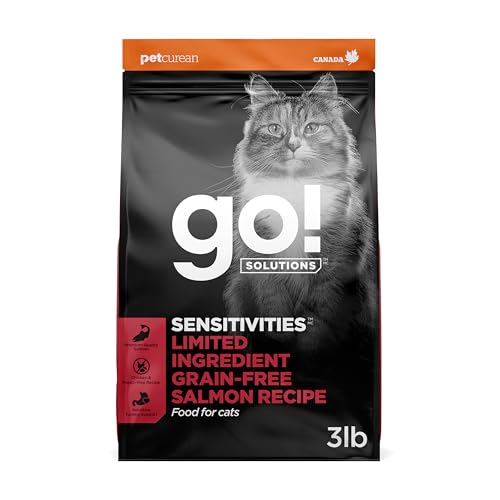
Go! Solutions Sensitivities Salmon Dry Cat Food
What We Like
- Limited ingredient recipe reduces allergen exposure
- Chicken-free and grain-free formulation
- Prebiotic fiber from dried chicory root
- Complete nutrition for all life stages
Trade-offs
- No wet food option for cats that prefer moisture-rich diets
A single animal protein, salmon, and the absence of chicken, grains, corn, and soy make this a targeted option for cats with food allergies. The prebiotic fiber from dried chicory root supports healthy digestion, which matters when a sensitive stomach is part of the picture. This recipe covers kittens, adults, and seniors, so you don’t need to switch foods as your cat ages. For owners dealing with a cat that reacts to common allergens, the ingredient list here is straightforward and avoids the usual triggers.
A single protein source limits variety, and the 3 lb bag is smaller than some alternatives. Purina ONE Sensitive Stomach, for instance, comes in a 7 lb bag. That means more frequent repurchasing if you have a multi-cat household or a hearty eater. But if your primary concern is pinpointing and avoiding allergens, the focused ingredient deck and lack of fillers make this a logical first stop.
Product photos
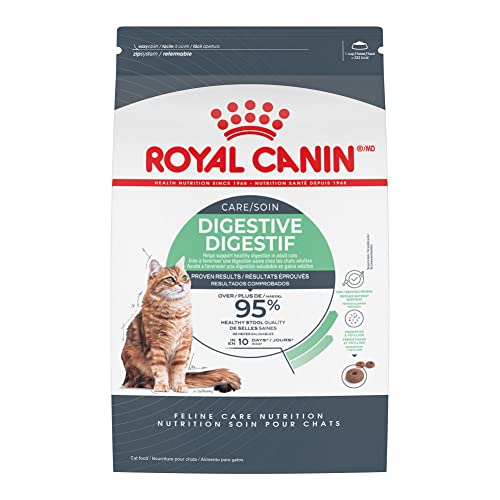
Royal Canin Digestive Care Dry Cat Food
What We Like
- Ring-shaped kibble slows eating
- Prebiotics and fiber for digestion
- Pairs with wet food formulas
Trade-offs
- Dry kibble only, no moisture content
- Single bag size limits variety
- Results require 10-day feeding period
Royal Canin builds this around a blend of prebiotics and dietary fiber, both of which feed the good bacteria in a cat’s gut. The ring-shaped kibble is a clever mechanical touch: it forces slower eating, which helps prevent gulping and the vomiting that often follows. This is a solid fit for a cat that has a truly sensitive stomach but no other dietary restrictions like protein allergies or grain sensitivities.
This is a dry-only formula, so you’ll need to provide moisture separately or pair it with the matching wet food. Compared to the KOHA Limited Ingredient Turkey Pate, which uses a single meat protein and no fillers, Royal Canin’s ingredient list is more complex. That matters if your cat has a confirmed food allergy. But for a cat whose only issue is occasional loose stool or a finicky digestion, the targeted fiber and prebiotic system here is more directly aimed at that problem than a general limited-ingredient diet would be.
Product photos
How We Evaluated Sensitive Cat Foods
We examined the ingredient lists and nutritional profiles of many sensitive stomach formulas. We compared manufacturer claims with expert recommendations from veterinary nutrition sources and looked at common patterns in owner-reported digestive health results. This is a research-based evaluation.
We focused on four criteria that matter most for sensitive cats. These include protein source and count, fiber type and content for digestive regularity, the presence or absence of common allergens like chicken and grains, and the moisture content of the food. A cat with a sensitive stomach needs a diet that minimizes variables while still delivering complete nutrition.
An honest limitation of this approach is that every cat’s digestive system is unique. What works for one may not work for another. We recommend starting with a sensitive stomach cat food that matches your cat’s specific symptom pattern and giving it at least two weeks before evaluating results.
What To Look For In Sensitive Cat Foods
Choosing the right food for a sensitive cat means reading past the marketing claims and looking at the actual ingredients. Here are the key criteria that separate a helpful formula from one that might cause more problems.
Look for a single, named protein source as the first ingredient, a short ingredient list, and a fiber source like pumpkin or prebiotics. Avoid vague terms like “meat meal” or “animal digest.”
Protein Source and Novelty
The most common food sensitivities in cats are to chicken, beef, and fish. A single protein source eliminates guesswork. If your cat has not eaten rabbit or salmon before, those are novel proteins less likely to trigger a reaction. The KOHA Limited Ingredient Turkey Pate uses one meat protein, while the Instinct Limited Ingredient Rabbit Wet Cat Food goes further with rabbit as a true novel protein.
For cats with multiple sensitivities, a limited ingredient wet food reduces the number of variables. The Natural Balance Limited Ingredient Salmon Dry Cat Food is another single-protein option for owners who prefer dry food.
Fiber and Digestive Support
Fiber regulates digestion by adding bulk to stool and slowing transit time. Prebiotic fibers like chicory root and pumpkin feed beneficial gut bacteria. The Royal Canin Digestive Care Dry Cat Food uses a ring-shaped kibble to slow eating, which helps cats that eat too fast and vomit afterward.
For cats dealing with loose stool, a cat food for diarrhea with added soluble fiber can help firm things up. The Purina ONE Sensitive Stomach formula includes prebiotic fiber for gentle digestion without probiotics.
Moisture Content and Texture
Wet food provides critical hydration for cats with sensitive stomachs, especially those prone to constipation or urinary issues. The KOHA Limited Ingredient Turkey Pate offers 96% meat with moisture from the cooking process. Dry food is more convenient but lacks the water content that supports digestive motility.
If your cat prefers wet food, look for a wet food for sensitive stomach that matches their texture preference. The Instinct Limited Ingredient Rabbit is a pate only, while some cats prefer shreds or chunks.
- Check the first three ingredients: they should be named proteins, not by-products or grains.
- Look for a single protein source if your cat has known allergies.
- Choose a fiber source like pumpkin, chicory root, or psyllium for digestive regularity.
- Match the texture to your cat’s preference to ensure they actually eat it.
- Avoid artificial colors, flavors, and preservatives that can trigger sensitivities.
Start with one new food and give it a full two-week transition period before evaluating results.
Sensitive Cat Foods Compared
The table below compares the nine sensitive cat foods across the criteria that matter most for digestive health, including protein source, fiber type, and moisture content.
| Product | Protein Source | Key Ingredients | Weight |
|---|---|---|---|
| KOHA Limited Ingredient Turkey Pate | Turkey | Pumpkin, Cranberries, Green Mussel | 0.2 pounds |
| Purina ONE Sensitive Stomach Dry Cat Food | Real turkey | Prebiotic fiber | 7.0 pounds |
| Hill's Science Diet Sensitive Stomach Dry Cat Food | Chicken (#1) | Prebiotic fiber, omega-3 & 6, Vitamin E, C | 7.0 pounds |
| Purina Pro Plan Sensitive Skin & Stomach Dry Cat Food | Real lamb | Omega-6, vitamin A, probiotics | 3.5 pounds |
| Natural Balance Limited Ingredient Salmon Dry Cat Food | Salmon | Green peas | 4.0 pounds |
| Purina Pro Plan LiveClear Sensitive Stomach Cat Food | Real turkey | Prebiotic fiber, live probiotics | 3.2 pounds |
| Instinct Limited Ingredient Rabbit Wet Cat Food | Rabbit | N/A | 4.5 pounds |
| Go! Solutions Sensitivities Salmon Dry Cat Food | Salmon | Prebiotic fiber | 3.0 pounds |
| Royal Canin Digestive Care Dry Cat Food | N/A | Prebiotics + dietary fiber | 6.0 pounds |
Frequently Asked Questions
What is the best cat food for a sensitive stomach?
The KOHA Limited Ingredient Turkey Pate is the best overall choice for sensitive stomachs due to its single meat protein, 96% meat content with no fillers, and added pumpkin for digestion. For dry food, the Hill’s Science Diet Sensitive Stomach Dry Cat Food is the top veterinarian-recommended option with prebiotic fiber and omega fatty acids.
How do I know if my cat has a food sensitivity?
Common signs include chronic vomiting, diarrhea, gas, bloating, and skin issues like itching or hair loss. A food elimination trial under veterinary guidance is the most reliable way to confirm a sensitivity. Switch to a single-protein, limited-ingredient diet for at least 8 weeks and track symptoms.
Is dry or wet cat food better for sensitive stomachs?
Wet food provides more moisture, which supports digestion and helps prevent constipation. Dry food is more convenient and can be better for dental health. The best choice depends on your cat’s specific symptoms. A sensitive stomach dry food works well for cats that tolerate kibble, while a sensitive stomach wet food is better for cats needing extra hydration.
Can a cat be allergic to chicken in cat food?
Yes, chicken is one of the most common food allergens in cats. Symptoms include digestive upset, skin irritation, and chronic ear infections. If you suspect a chicken allergy, try a novel protein like rabbit from the Instinct Limited Ingredient Rabbit Wet Cat Food or a salmon-based formula like the Go! Solutions Sensitivities Salmon Dry Cat Food.
How long does it take for a sensitive stomach cat food to work?
Most cats show improvement within 2 to 4 weeks of switching to an appropriate diet. For digestive health specifically, the Royal Canin Digestive Care formula recommends a 10-day feeding period to see stool quality improvement. Results vary by cat and the severity of the sensitivity.
The Bottom Line
For most cats with sensitive stomachs, the KOHA Limited Ingredient Turkey Pate offers the cleanest approach: one protein, minimal ingredients, and added digestive support from pumpkin. It is the best choice for owners who want to eliminate variables and see if a single-meat, high-moisture diet resolves their cat’s symptoms.
If your cat prefers dry food or you need a more budget-friendly option, the Purina ONE Sensitive Stomach Dry Cat Food delivers real turkey and prebiotic fiber without artificial additives. For cats with confirmed food allergies, the Go! Solutions Sensitivities Salmon Dry Cat Food or the Instinct Limited Ingredient Rabbit Wet Cat Food provide novel proteins that avoid common triggers.
The single most important factor in managing a sensitive stomach is ingredient simplicity. The shorter the ingredient list and the fewer the protein sources, the easier it is to identify what works and what does not. Start there, and your cat’s digestive health will thank you.
