
10 Best Oil For Dog Food in 2026
This post contains affiliate links. As an Amazon Associate, we earn from qualifying purchases.
The best overall oil for dog food is Nordic Naturals Omega-3 Pet Fish Oil. It uses the triglyceride form of omega-3s, which the body absorbs more easily than other types. The oil comes from wild-caught fish and contains non-GMO ingredients with clear sourcing. For owners focused specifically on skin and coat health, the Natural Dog Company Wild Alaskan Salmon Oil offers verified sourcing and a pump for easy dosing. The Pet Honesty Vet Recommended Salmon Oil is a strong choice for allergy itch relief.
Adding an oil to your dog’s bowl can feel like a guessing game of labels and marketing claims. Between fish sources, omega-3 concentrations, and different carrier forms, the real challenge is finding a supplement that your dog will actually eat and that delivers measurable benefits without unnecessary fillers.
We built this guide by digging into manufacturer specifications, sourcing claims, and certification details (like MSC and ORIVO) for each product. We also looked at patterns in owner feedback to understand what works in practice, so you can match an oil to your dog’s specific needs.
Top 10 Oils For Dog Food in the Market
Certain content that appears on this site comes from Amazon. This content is provided "as is" and is subject to change or removal at any time.
The Best Oils For Dog Food, Reviewed
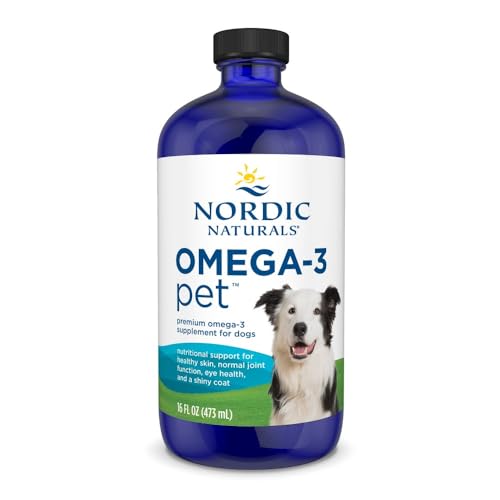
Nordic Naturals Omega-3 Pet Fish Oil
What We Like
- Triglyceride form for optimal absorption
- Non-GMO, gluten-free, dairy-free ingredients
- Wild-caught fish source
- Supports heart, skin, coat, immunity
Trade-offs
- Liquid form; not suitable for dogs that dislike oil on food
- Not suitable for cats or other pets
Every teaspoon delivers 1380 mg of omega-3s in the triglyceride form, the molecular structure naturally found in fish. That means your dog’s body can absorb more of the EPA and DHA compared to synthetic ethyl ester oils. That’s the kind of detail that matters if you’re reading the label instead of the marketing. Nordic Naturals starts with wild-caught fish, avoids artificial additives, and sticks to non-GMO, gluten-free, dairy-free ingredients, so you’re not paying for fillers. This makes it a straightforward choice for anyone who wants measurable omega-3 support for heart health, skin, coat, and immune function without guessing what else is in the bottle.
The trade-off is that this is a liquid oil, not a pump or capsule, so you’ll need to store it in the fridge after opening. That’s fine for a single medium dog, but if you have multiple dogs or a large breed that goes through oil quickly, the 64-ounce Zesty Paws option might mean fewer refills. Still, for the buyer who prioritizes absorption efficiency and ingredient transparency over convenience, the triglyceride form and wild-caught sourcing here are hard to beat.
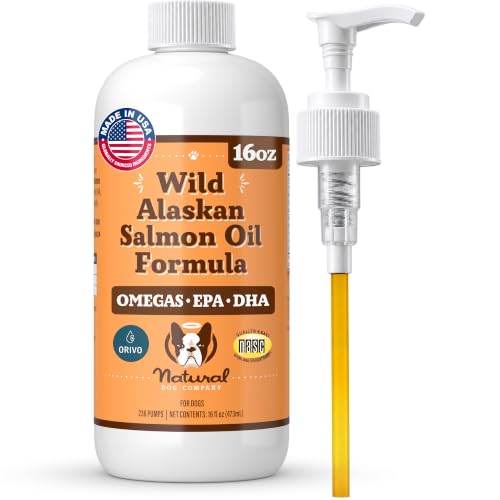
Natural Dog Company Wild Alaskan Salmon Oil
What We Like
- Wild-caught Alaskan salmon and pollock
- Pump dosing for easy portion control
- Orivo verified sourcing and species
- Supports skin, coat, joints, heart, immune
Trade-offs
- Blend includes pollock, not pure salmon
- Only one pump size per weight range
The Orivo verification on this bottle means you can trace the oil back to the specific wild Alaskan fish it came from, so you know exactly what you’re feeding your dog. That kind of transparency matters when you’re choosing a daily supplement. The blend of wild-caught Alaskan salmon and pollock oil delivers naturally occurring EPA and DHA without fillers or artificial additives. The pump dispenser gives you simple dosing: one pump for dogs up to 25 pounds, two for 26 to 75 pounds, and three for dogs over 75 pounds, which makes it easy to keep the routine consistent. Owners who want a straightforward, repeatable routine and ingredient transparency will appreciate this approach.
This is not a pure salmon oil. If you specifically want only salmon, the Pet Honesty Wild Alaskan Salmon Oil is a single-ingredient alternative. The 16-ounce bottle is a standard size for this type of supplement, and the pump design makes it easy to use consistently. For most dogs, the blend still delivers the same omega-3 benefits, and the verified sourcing removes the guesswork about where the oil comes from. It is a practical, no-nonsense supplement for daily use.
Product photos
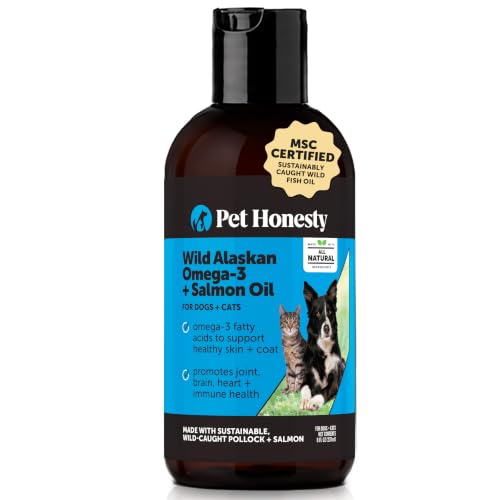
Pet Honesty Vet Recommended Salmon Oil
What We Like
- MSC-certified sustainable wild fish
- ORIVO verified for label accuracy
- Blends into food without pills
- Contains EPA and DHA for skin and joints
Trade-offs
- Not a single-ingredient oil; contains pollock oil blend
- Contains pollock oil, not just salmon oil.
This salmon oil is the only pick in this guide with both MSC and ORIVO certifications, which means the wild-caught fish is sustainably harvested and the omega-3 content matches what the label claims. That matters when you’re paying for a supplement that’s supposed to support skin, coat, heart, and joint health, you want to know the EPA and DHA are actually in the bottle. The liquid pump format makes it easy to add to kibble or wet food, so even a picky eater gets the benefit without fighting a pill.
Bottle size is the main consideration here: at 8 oz, this is a smaller volume than the 16 oz or 32 oz options from Natural Dog Company or the other Pet Honesty salmon oil. If you have a large dog or multiple pets, you’ll go through it faster. That said, the blend of salmon and pollock oils delivers omega-3s, and the certifications give you confidence in what you’re feeding. For owners who prioritize ingredient transparency and sustainability over raw volume, this is a focused, trustworthy choice.
Product photos
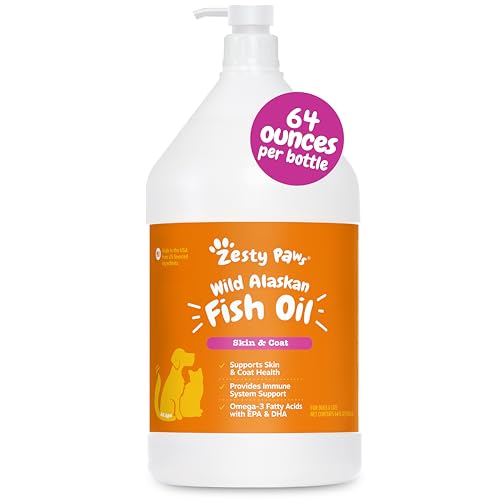
Zesty Paws Wild Alaskan Fish Oil
What We Like
- 64 oz bottle for multi-pet households
- Blend of Pollock and Salmon oils
- Supports skin, coat, and immune system
Trade-offs
- Only for pets that like fish flavor
- No joint support ingredients included
Sixty-four fluid ounces of fish oil is a lot of omega-3s, enough to supplement a large dog or multiple cats for weeks without reordering. Zesty Paws blends Alaska-sourced Pollock and Salmon oils to deliver EPA and DHA for skin, coat, and immune support, all in a flavor that’s supposed to be ‘pawsome’ rather than yucky. If you’re feeding more than one pet or a big breed, this bottle size cuts down on repurchase frequency and keeps the cost per dose low without sacrificing the fatty acid profile.
A jug this size demands commitment. You’ll need to store it somewhere cool and dark, and measure out servings daily. For anyone who wants a large-volume omega-3 supplement without frequent reordering, Zesty Paws answers that need directly. Just be ready for the bulk; the bottle holds 64 fluid ounces of oil.
Pet Honesty Wild Alaskan Salmon Oil
What We Like
- 100% pure wild-caught Alaskan sockeye salmon
- No fishy odor or aftertaste
- Supports skin, coat, joints, heart, brain, immune health
- Suitable for both dogs and cats
Trade-offs
- Requires daily pumping over food for results
- No per-serving omega-3 concentration listed on the label
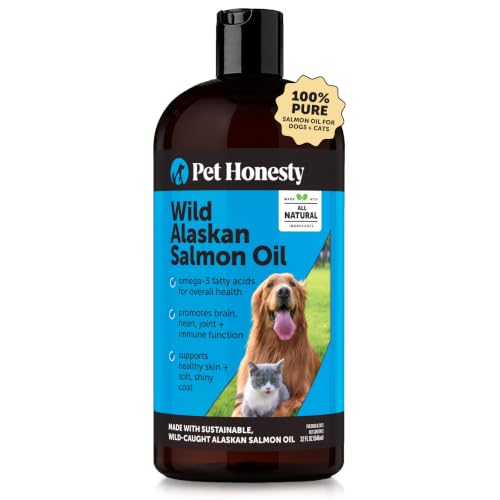
A 32-ounce bottle of 100% pure wild-caught Alaskan sockeye salmon oil means you get a single-ingredient omega-3 source with no fillers or farm-raised fish. For anyone who wants to support their dog’s skin, coat, joints, heart, brain, and immune health with one simple topper, this is the cleanest option in the guide. The concentrated EPA and DHA deliver whole-body benefits without the usual fishy odor, so picky pets and sensitive noses won’t object.
Owners who prioritize knowing exactly what goes into their pet’s bowl will appreciate a formula built around a single, traceable ingredient. The oil comes from wild-caught Alaskan sockeye salmon, a species recognized as one of the richest natural sources of omega-3s. There are no fillers, additives, or farm-raised fish in the bottle, so the only thing you’re adding to the food is pure salmon oil. A few pumps over a meal deliver EPA and DHA that support skin, coat, joints, brain, heart, and immune health for both dogs and cats. It’s a straightforward, no-fuss choice for owners who value ingredient transparency over precise supplementation.
Nature's Diet Norwegian Salmon Oil

What We Like
- Mess-free pump bottle dispenser
- Dye-free natural color
- Supports whole body health
- Appetite enhancer for picky pets
Trade-offs
- No specific EPA/DHA dosage per pump listed
- No dosage info for picky eaters with sensitive stomachs
A pump bottle that measures servings directly from the bottle means you don’t have to fish for a sticky measuring spoon or deal with a messy pour. That’s the core design advantage here, and for anyone who’s ever had salmon oil dribble down the side of a bottle, it’s a practical upgrade. The 32 oz size covers multiple pets or a large dog for weeks. The 100% Norwegian salmon source is sustainably raised off the coast of Norway, with a naturally vibrant orange color from healthy fish rather than artificial dyes. It’s a straightforward supplement for dogs and cats that supports skin, coat, joints, heart, brain, and immune function, and the palatable flavor works as an appetite enhancer for aging, sick, or picky animals.
Compared to the Grizzly Pollock Oil (also 32 oz with a pump), Nature’s Diet uses salmon rather than pollock and includes omega 6 and 9 alongside the usual omega 3s. But neither product lists a precise EPA/DHA dosage per pump, so you’re relying on the suggested serving size rather than a measured guarantee. This bottle is best for owners who prioritize convenience and a clean feeding routine over micromanaging exact fatty acid counts.
Product photos
Grizzly Wild Alaskan Salmon Oil
What We Like
- Third-party lab tested per batch
- Supports immune, heart, and organ health
- Wild-caught Alaskan salmon source
Trade-offs
- Not suitable for cats (dog-specific supplement).
- Pump can clog if not cleaned regularly.
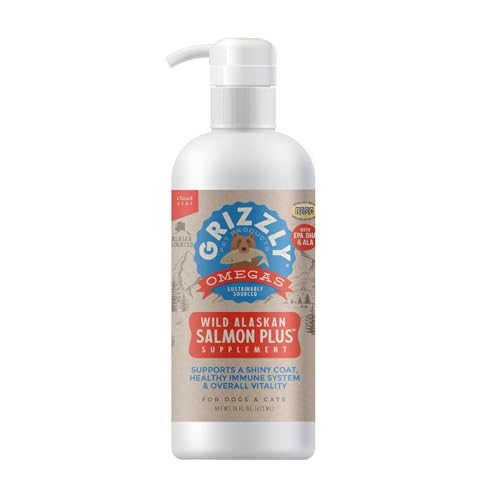
Compared to Nordic Naturals Omega-3 Pet Fish Oil, which also delivers a high omega-3 dose per teaspoon, Grizzly emphasizes whole-body support including immune system, heart, organ health, cognition, vision, fertility, nerve based functions, and a healthy skin and coat. The fish oil scent is real salmon, not deodorized, which some dogs love and others turn their nose at.
Product photos
JustFoodForDogs Omega 3 Oil
What We Like
- Vegan algae source skips fish entirely
- Supports skin, coat, joint health
- Human-grade supplement
Trade-offs
- Not suitable for dogs needing fish-based omega-3s
- Requires refrigeration after opening
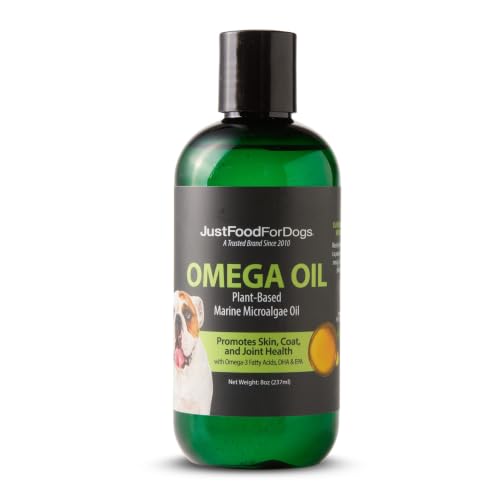
The body actually uses the active ingredients in this algae oil more effectively than fish or salmon oil, according to the manufacturer, so you get more omega-3 benefit per drop. That makes it a logical choice if you want a vegan, sustainable supplement without sacrificing the fatty acids linked to skin hydration, coat condition, and joint support. The 8-ounce bottle is compact, but the ingredient logic is clean: if you read labels like I do, you’ll appreciate that the omega-3 chain starts here, not in a fishery.
If you’re not committed to a plant-based approach, the smaller size might steer you toward a conventional salmon oil. But for owners who prioritize eco-friendly sourcing and want a direct, human-grade omega-3 source, this is the clear alternative.
Nordic Naturals Cod Liver Oil For Dogs
What We Like
- Triglyceride form for optimal absorption
- Sourced from 100% wild Arctic cod
- Non-GMO, gluten-free, dairy-free ingredients
- Supports skin, coat, brain, eye, immune health
Trade-offs
- Formulated only for medium to large breeds
- Requires refrigeration after opening
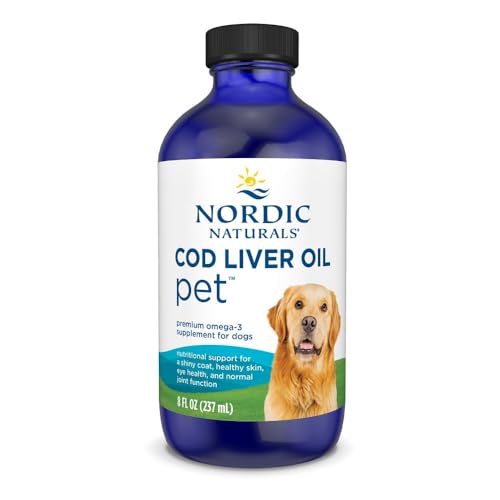
The 1048 mg of omega-3s per teaspoon comes from 100% wild Arctic cod and is delivered in the triglyceride molecular form, which is the form naturally found in fish for optimal absorption. That means your dog gets EPA and DHA ready to support skin, coat, brain, eye, and immune health as stated on the label. For owners who prioritize a pure, wild-caught source and a supplement that avoids synthetic forms, this cod liver oil delivers exactly what it promises.
The product is specifically formulated for medium to large breed dogs, so small-dog owners should check the dosing carefully or look at a product with a broader size range. For anyone who prioritizes ingredient purity and absorption efficiency, this cod liver oil delivers exactly what it promises.
Grizzly Pollock Oil Dog Food Supplement
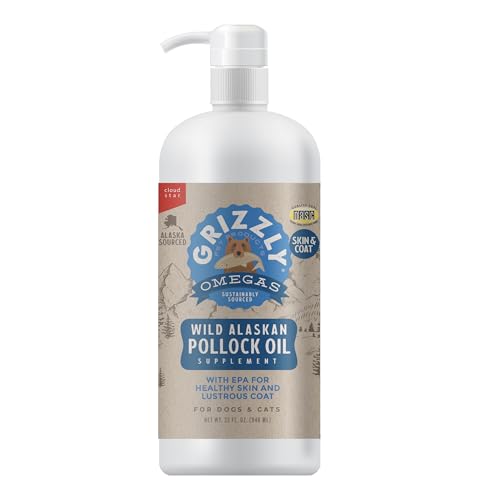
What We Like
- High EPA for skin and coat
- NASC Certified quality assurance
- Pump dispenser for easy dosing
- Made in the USA from wild Alaskan Pollock
Trade-offs
- Not ideal for joint or cognitive support
- Salmon oil products offer different omega profile
A pump dispenser that meters oil directly over kibble means you’re not wrestling with a sticky cap or measuring spoon at every meal. That convenience pairs with a high EPA content from wild Alaskan Pollock, a source chosen for its concentration of the fatty acid most directly linked to skin health and coat condition. For a dog whose main issue is dry, flaky skin or a dull coat, this formula targets that specific need more directly than a general omega-3 blend. The NASC Certification adds a layer of manufacturing oversight that a label-reader can appreciate.
For dogs with skin issues, the high EPA content in this supplement directly targets coat and skin health, so you are not paying for DHA that your dog does not need. If joint or cognitive support is the primary goal, a salmon-based product like the Grizzly Wild Alaskan Salmon Oil in the same lineup might be a better fit.
Product photos
How We Evaluated Oils For Dog Food
Our evaluation started with the ingredient list, not the front of the bottle. We compared each product’s omega-3 source (wild-caught fish, algae, or cod liver), its molecular form (triglyceride versus ethyl ester), and whether third-party certifications backed up the sourcing claims. We also checked for unnecessary additives, preservatives, and artificial flavors.
Three criteria mattered most: absorption form, because triglyceride oils are better utilized than ethyl esters. Sourcing transparency also mattered, since wild-caught fish from verified regions like Alaska carry lower contaminant risk. Dosing convenience was important too, because a product you can’t measure easily won’t get used consistently. We also weighed owner-reported palatability and any reported issues with odor or aftertaste.
We don’t claim to have tested these oils in a lab or fed them to dogs ourselves. We recommend checking any supplement with your veterinarian, especially if your dog has a known health condition or is on medication.
What To Look For In Oils For Dog Food
Choosing an oil for your dog’s food comes down to three things: the source of the omega-3s, the form they’re in, and how you’ll get them into the bowl every day.
Look for a triglyceride-form oil from a wild-caught, named fish source. A pump or dropper makes daily dosing easier. Ignore the “human-grade” label if the ingredient list doesn’t back it up.
Omega-3 Source and Sourcing Claims
The source determines both the fatty acid profile and the contaminant risk. Wild-caught Alaskan salmon and pollock are the most common and well-studied sources for dogs, offering a balanced ratio of EPA and DHA. Cod liver oil provides additional vitamins A and D but should be dosed carefully. Algae oil is a vegan alternative that skips the fish entirely. Look for third-party certifications like MSC (sustainable fisheries) or ORIVO (species and origin verification) to confirm the label isn’t just marketing.
Molecular Form: Triglyceride vs. Ethyl Ester
This is the detail most labels bury in fine print. Omega-3s in natural triglyceride form are absorbed significantly better than the synthetic ethyl ester form found in many cheaper supplements. If the label doesn’t specify the form, assume it’s ethyl ester. Our top pick uses triglyceride form, which means more of the omega-3s actually make it into your dog’s system rather than passing through.
Dosing and Palatability
The best oil is the one your dog will actually eat consistently. Some dogs turn up their nose at fishy-smelling oils, while others love the flavor. Pump bottles and droppers make dosing precise and less messy, but they can clog if not cleaned. A proper fish oil dosage depends on your dog’s weight and the oil’s concentration, always start low and increase gradually to avoid digestive upset.
- Check the label for a specific EPA/DHA amount per serving, not just total omega-3s.
- Look for a pump or dropper if you dislike messy pour spouts.
- Open the bottle and smell it before buying, strong rancid odors mean poor quality.
- Refrigerate after opening unless the label says otherwise (most fish oils need it).
- Start with half the recommended dose for the first week to test tolerance.
A good rule of thumb: if the ingredient list is longer than five items, you’re probably paying for fillers, not fish oil.
Oils For Dog Food Compared
The table below compares our top picks side by side, so you can see at a glance which oil fits your dog’s needs and your feeding routine.
| Product | Source | Key Fatty Acids | Size |
|---|---|---|---|
| Nordic Naturals Omega-3 Pet Fish Oil | Wild-caught fish | EPA & DHA | 16 oz |
| Natural Dog Company Wild Alaskan Salmon Oil | Wild Alaskan salmon & pollock | EPA & DHA | 16 oz |
| Pet Honesty Vet Recommended Salmon Oil | Wild Alaskan salmon & pollock | N/A | 8oz |
| Zesty Paws Wild Alaskan Fish Oil | Alaska Pollock & Salmon | EPA & DHA | 64 fl oz |
| Pet Honesty Wild Alaskan Salmon Oil | Wild-caught Alaskan sockeye salmon | EPA & DHA | 32 oz |
| Nature's Diet Norwegian Salmon Oil | 100% Norwegian Salmon | EPA & DHA | 32 oz |
| Grizzly Wild Alaskan Salmon Oil | Wild Alaskan Salmon | EPA & DHA | 16 oz |
| JustFoodForDogs Omega 3 Oil | Algae oil (vegan) | EPA & DHA | 8 oz |
| Nordic Naturals Cod Liver Oil For Dogs | 100% wild Arctic cod | EPA & DHA | 8 oz |
| Grizzly Pollock Oil Dog Food Supplement | Wild Alaskan Pollock | High EPA | 32 Ounce |
Frequently Asked Questions
How much fish oil should I give my dog daily?
The general guideline is a range of combined EPA and DHA per pound of body weight per day. A dog of average size would need an amount within that range. Always start with the lower end of the range and increase gradually.
Which oil is best for my dog’s dry skin and coat?
Oils high in EPA and DHA support skin barrier function and can reduce dryness and flakiness. The Natural Dog Company Wild Alaskan Salmon Oil is formulated specifically for skin and coat support with verified wild-caught fish. Pairing it with a food that supports coat health can amplify the results.
Can fish oil help with my dog’s joint pain?
Yes. Omega-3 fatty acids from fish oil have anti-inflammatory properties that can support joint comfort and mobility in dogs with arthritis or stiffness. For targeted support, look for a high-EPA formula like the Grizzly Pollock Oil. A complete food for joint health will also contribute to long-term joint care.
Will adding oil to my dog’s food help reduce shedding?
Omega-3s support skin health, which can reduce excessive shedding caused by dry or irritated skin. While no oil will stop normal seasonal shedding, a good supplement can make the coat healthier and less brittle. Pair it with a food that reduces shedding for the best results.
What’s the difference between salmon oil and cod liver oil?
Salmon oil is rich in EPA and DHA and is the most common choice for general skin, coat, and joint support. Cod liver oil also contains vitamins A and D, which can be beneficial but require careful dosing to avoid toxicity. Cod liver oil is generally better for medium and large breeds. Both can support healthy skin and coat when used appropriately.
The Bottom Line
The Nordic Naturals Omega-3 Pet Fish Oil earns the best overall spot because it uses the triglyceride form for optimal absorption and sources its fish from wild-caught populations with transparent, non-GMO ingredients. It’s the right choice for owners who want a clean, effective supplement without guessing what’s inside the bottle.
If your primary goal is a shinier coat and less scratching, the Natural Dog Company Wild Alaskan Salmon Oil gives you verified sourcing and a pump that makes dosing a no-brainer. For those managing a multi-pet household on a budget, the Zesty Paws Wild Alaskan Fish Oil delivers the largest volume at a reasonable cost per serving.
The single most important factor in choosing an oil is whether your dog will eat it consistently. A perfect supplement that sits in the pantry is worthless. Start with a small bottle, test the palatability, and only then commit to a larger size.
