
8 Best Microchip Cat Feeders in 2026
This post contains affiliate links. As an Amazon Associate, we earn from qualifying purchases.
For multi-pet households, the SureFlap SureFeed Microchip Pet Feeder is the best overall microchip cat feeder because it reads 9, 10, and 15-digit microchips and seals food freshness with a neoprene lid. The ePawDen Microchip Pet Feeder wins for rechargeable design, while the PawsPik Automatic Microchip RFID Cat Feeder offers the largest capacity for single-cat homes.
The real challenge isn’t finding any feeder, it’s finding one that reliably recognizes your cat’s specific microchip while blocking determined food thieves. Many feeders only work with their own collar tags or fail to seal out moisture, which matters when you’re feeding expensive prescription diets.
This guide is based on specifications, manufacturer documentation, and patterns in owner feedback across eight models. We focused on microchip compatibility, food freshness features, power reliability, and anti-theft effectiveness to help you match a feeder to your cat’s specific needs.
Top 8 Microchip Cat Feeders in the Market
Certain content that appears on this site comes from Amazon. This content is provided "as is" and is subject to change or removal at any time.
The Best Microchip Cat Feeders, Reviewed
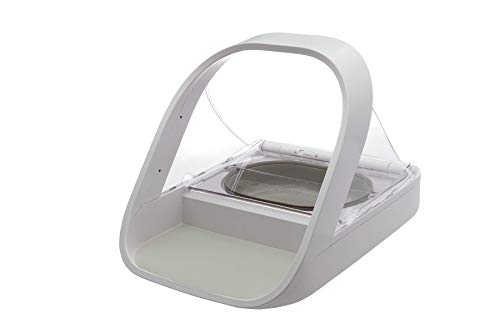
SureFlap SureFeed Microchip Pet Feeder
What We Like
- Works with 9, 10, 15 digit microchips
- Lid seals with neoprene for freshness
- Stores up to 32 microchip IDs
- Veterinarian recommended
Trade-offs
- At 3.3 lb, less portable than lighter feeders
- Heavier than some competing feeders at 3.3 lb
The 13.5 fl. oz capacity means this feeder handles both wet and dry prescription diets without forcing you to portion out tiny servings twice a day. That lid closes against a neoprene lip to hold moisture in, so wet food stays palatable longer than it would in an open bowl. For multi-pet homes where one cat needs a specific diet and the others don’t, the microchip recognition, compatible with 9, 10, and 15 digit chips, lets only the assigned pet access the bowl. It’s the kind of straightforward engineering that makes feeding time less of a negotiation.
The trade-off is weight: at 3.3 pounds, it’s heavier than the ePawDen Microchip Pet Feeder (2.4 pounds), so moving it between rooms or taking it on trips requires more effort. And while the lid seal helps keep food fresh, it’s not a full refrigerator, moist food left out for hours will still degrade. That said, the three-year warranty and veterinarian recommendation signal confidence in the build. If you need a feeder that prioritizes microchip reliability over portability, this is the one to start with.
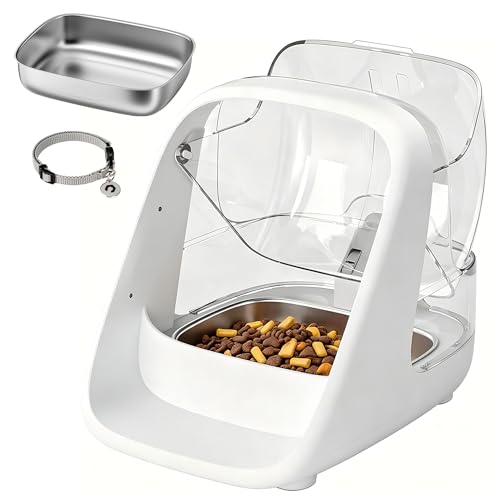
ePawDen Microchip Pet Feeder
What We Like
- USB-C rechargeable battery lasts 6 months
- Stainless steel bowl resists odors
- Works with wet and dry food
- No app needed for pairing
Trade-offs
- Lid seals but not refrigerated for wet food
- Bowl capacity is 500 ml, suitable for a single meal only
A single USB-C charge lasting up to six months means you can stop worrying about batteries dying mid-week. The 500 ml stainless steel bowl works with wet or dry food, and the sealed lid keeps moisture in and pests out. For multi-cat homes where each pet has a different diet, the dual microchip and RFID recognition supports up to 15 animals without any app or Bluetooth fuss. This is the feeder for someone who wants a set-it-and-forget-it solution that doesn’t tether to a phone or require constant battery swaps.
In multi-cat households, food stealing is a common frustration that this feeder directly addresses. The lid opens only for the registered pet and closes when they walk away, so each cat stays with their own meal. It works with both wet and dry food, and the sealed lid keeps wet food fresh while protecting dry food from moisture. The included stainless steel bowl holds up to 500 ml, enough for a full serving, and it is dishwasher safe for easy cleanup. Owners report that the one-button pairing makes setup simple without needing an app, and the rechargeable battery supports up to six months of daily use on a single charge.
Product photos
PawsPik Automatic Microchip RFID Cat Feeder

What We Like
- 16-cup capacity for multi-day feeding
- ISO microchip and RFID tag compatible
- App-controlled scheduling up to 10 meals
- Backup battery for power outages
Trade-offs
- One feeder works for only one pet
- Open mode requires unauthorized pets to wear tags
Sixteen cups of dry food capacity means this feeder can go days without a refill, which is a major convenience for single-cat households. It pairs with your cat’s existing ISO microchip or the included RFID tag, so only the authorized pet gets access. The app lets you schedule up to ten meals a day with precise portion sizes, and a backup battery keeps things running when the power goes out. For someone with a single cat who wants to minimize daily refills and maintain strict dietary control, this is a straightforward, high-capacity option.
Each feeder only works for one pet, so multi-cat households need one feeder per cat. That adds up in cost and counter space. The PawsPik is larger than the ePawDen feeder, but its capacity advantage is clear for those who want fewer refills. If you have one cat and hate filling a tiny hopper every morning, the capacity advantage is real.
Product photos
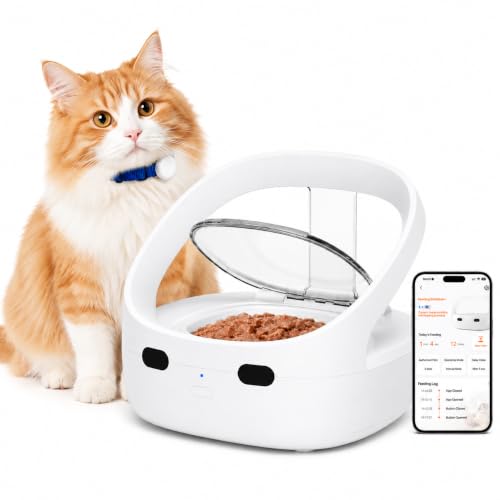
Vancpet Smart Pet Feeder RFID Bluetooth
What We Like
- Wet & dry food compatible
- Includes reusable ice packs
- Bluetooth feeding records
- Quiet, anti-pinch lid
Trade-offs
- 400ML capacity is small for multiple meals
- Requires Bluetooth connection for data sync
The 400ML bowl and included dual ice packs make this feeder one of the few designed specifically for wet food without needing a power outlet for refrigeration. That matters because wet food spoils faster than dry, and most microchip feeders only handle kibble well. It suits owners who want to serve chilled wet meals to a single cat on a special diet, with RFID-controlled access to keep other pets out. The Bluetooth app logs feeding times, though it syncs only when reconnected, so you won’t get real-time alerts if you’re away.
The bowl holds 400ML, enough for one wet meal but not for multiple cats or a full day of dry food. The SureFlap SureFeed holds about the same volume but lacks ice packs, so the Vancpet adds cooling but demands more frequent refills. If you need a feeder that works with wet and dry food for a multi-cat household, the ePawDen model offers a larger stainless steel bowl and rechargeable battery, though it doesn’t include ice packs. The Vancpet is best for owners prioritizing wet food freshness over capacity.
Product photos
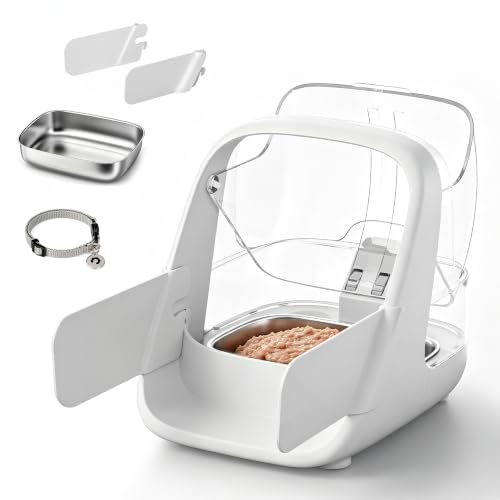
ePawDen Microchip Cat Feeder with Side Guards
What We Like
- Side guards block determined food thieves
- Rechargeable, no disposable batteries needed
- Two lid speeds for cat adjustment
- Stainless steel bowl for wet or dry food
Trade-offs
- Does not support 9- or 10-digit microchips
- Charging must be done away from wall adapters
The side guards and rear shield physically block access from the sides, helping prevent food stealing in multi-pet homes. That extra physical barrier, combined with RFID or microchip recognition, means you can manage prescription diets or weight-control meals without constant supervision. The rechargeable battery uses USB-C and no disposables, and two lid speeds help with cat acclimation, though owners report that charging may disrupt recognition if the feeder stays plugged in.
This feeder only works with 15-digit ISO FDX-B microchips, so if your cat has an older 9- or 10-digit chip, you’ll need to use the included RFID collar tag instead. The SureFlap SureFeed uses a similar recognition system, but the ePawDen includes side guards for added physical theft deterrence. For households where one cat is a determined food thief, the side guards help block access and keep meals separate.
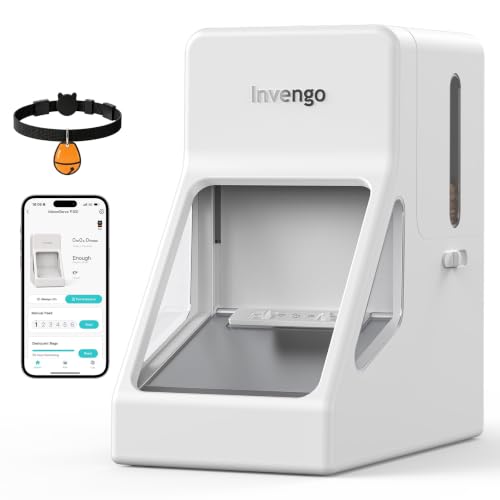
Invengo RFID Automatic Cat Feeder
What We Like
- RFID and microchip recognition stops food theft
- App logs who ate, when, and how much
- Dual anti-clog and level sensors with alerts
- Dual-band Wi-Fi for reliable connectivity
Trade-offs
- One feeder per paired cat limits multi-cat setup
- Requires app for full scheduling features
The Invengo RFID Automatic Cat Feeder uses dual-band Wi-Fi to keep the app connection steady even in crowded networks, so you get real-time feeding logs and alerts without lag. That app tracks exactly which cat ate, when, and how much, useful if you’re managing prescription diets or weight-control portions for a picky eater. The dual anti-clog and low-food sensors send push notifications before the bowl runs empty, which gives you actual peace of mind when you’re away for a shift or a weekend trip. This is the feeder to pick if you want data-driven insight into your cat’s eating habits and don’t mind relying on your phone to set schedules.
Each feeder is designed for one cat, so a multi-cat household will need a unit per pet. At 5.7 pounds and 13 inches tall, it’s a substantial piece of gear that demands more counter space than some alternatives. If you’re managing multiple special diets, plan your kitchen layout and budget accordingly, owners who value detailed feeding reports and remote control find it a capable tool.
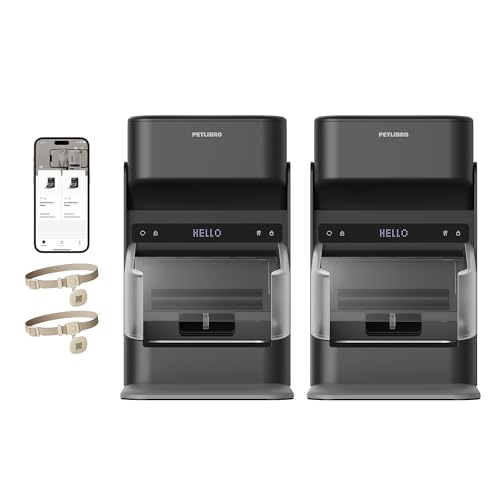
PETLIBRO RFID Cat Feeders for 2 Cats
What We Like
- RFID collar tags for each cat
- Anti-theft locking lid and bowl shield
- Real-time diet tracking via app
- 5-layer freshness protection
Trade-offs
- Only works with included RFID tags
- 15.4 lb pair is heavy to reposition
A matched pair of RFID-controlled feeders that each recognize only its assigned cat via collar tags means you can set separate meal plans for two cats without one sneaking the other’s dinner. The locking lid and bowl shield physically block access, so a prescription or weight-management diet stays where it belongs. Real-time diet tracking in the Petlibro app logs who ate what and when, which is useful if you’re monitoring intake for health reasons. The 5-layer freshness system, sealed lid, silicone gaskets, desiccant bags, airtight rotors, and the RFID lock, keeps kibble quality longer than a basic open bowl.
At 15.4 pounds for the pair, these feeders are built to stay put, not something you’ll move around daily. The system is locked to the included RFID tags, so if a cat loses its collar tag, you can’t substitute a microchip or a third-party tag. The SureFlap SureFeed Microchip Pet Feeder reads the cat’s implanted microchip, while the PETLIBRO relies on collar tags. For a two-cat household where both cats are on different dry diets and you want app-based scheduling and tracking, this pair covers that scenario directly.
Product photos
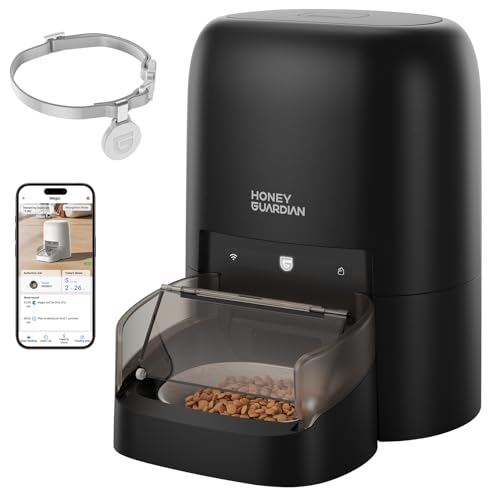
HoneyGuaridan RFID Automatic Cat Feeder
What We Like
- RFID collar tag prevents food theft
- Triple power modes for outage safety
- Dual-band Wi-Fi for reliable remote control
Trade-offs
- AA batteries alone disable Wi-Fi app control
- Lithium battery sold separately
- Only one collar tag included
A 19-cup / 4.6L hopper keeps one cat fed for about three weeks, so you are not refilling every few days. That large capacity, paired with RFID-controlled lid locking, makes this a practical pick for multi-pet homes where one cat needs a special diet or medication.
Power flexibility comes with a catch: using only AA batteries cuts off Wi-Fi and app scheduling, so you lose remote feeding and diet tracking unless you buy the optional lithium battery. The SureFlap SureFeed runs on batteries alone and offers no app control at all, so the HoneyGuaridan gives you more connectivity options, but you have to plan which power mode matches your setup.
Product photos
How We Evaluated Microchip Cat Feeders
We researched each feeder’s technical specifications, including microchip frequency compatibility (9, 10, 15, and 128 kHz ISO), bowl material and capacity, and power options. We also examined patterns in owner feedback regarding reliability and ease of setup.
Three criteria mattered most for this category. First, microchip compatibility: a feeder that doesn’t read your cat’s existing chip forces you to use a collar tag, which defeats the purpose. Second, food preservation: wet food requires a sealed lid and sometimes cooling packs, while dry food needs airtight storage. Third, anti-theft design: some cats will paw or push their way past a simple lid, requiring side guards or locking mechanisms.
A research-led evaluation has limits. We cannot verify battery life claims or lid seal effectiveness in real-world conditions. We also cannot assess how individual cats respond to different feeder designs, which varies widely. What we can do is compare the engineering choices each brand made and explain how those choices affect your cat’s feeding experience.
What To Look For In Microchip Cat Feeders
The right microchip feeder reads your cat’s existing chip, keeps food fresh, and blocks food theft without constant battery changes or app frustrations.
Microchip Compatibility
Not all feeders read every microchip. Some support 9, 10, and 15-digit chips, while others only work with 15-digit ISO chips or require their own RFID collar tags. If your cat already has a microchip, verify the feeder’s supported chip types before buying. The SureFlap SureFeed is one of the few that reads the widest range of chips. For cats without a microchip, many feeders include RFID collar tags that serve the same purpose, and you can read more about how these work in our guide to RFID cat feeders.
Food Freshness and Capacity
Wet food feeders need a sealed lid and often ice packs to keep food safe for hours. Dry food feeders need airtight storage to prevent staleness. Bowl capacity matters too: a 400 ml bowl works for a single meal, while a 16-cup hopper can last multiple days. The PawsPik offers the largest dry food capacity, while the Vancpet includes reusable ice packs for wet food. For households with more than one cat, consider whether the feeder’s capacity matches each cat’s portion size.
Power and Connectivity
Battery-powered feeders free you from cord placement, but not all batteries are equal. The ePawDen uses a USB-C rechargeable battery lasting up to six months, while others require disposable batteries that need replacement. App-controlled feeders offer scheduling and feeding logs but depend on Wi-Fi or Bluetooth reliability. Some feeders lose app functionality when running on batteries alone, so check power requirements carefully. For a broader look at options, our comprehensive guide to cat feeders covers both automatic and manual types.
Anti-Theft Design
A determined cat can defeat a simple lid. Look for side guards, locking mechanisms, or bowl shields that physically block access. The ePawDen with Side Guards adds physical barriers beyond the lid, while the PETLIBRO includes a bowl shield. Multi-cat homes especially benefit from these features, and our guide to feeding a multi-cat household offers strategies for managing multiple feeding stations.
- Verify the feeder reads your cat’s existing microchip model
- Measure the feeder’s footprint against your available counter space
- Check if the power backup works with app features
- Confirm bowl material is stainless steel for odor resistance
- Test lid seal tightness before leaving wet food for hours
A feeder that matches your cat’s microchip and your feeding schedule will save more frustration than any extra feature.
Microchip Cat Feeders Compared
The table below compares each feeder’s microchip compatibility, capacity, power type, and best-use scenario side by side.
| Product | Dimensions | Weight | Microchip Types |
|---|---|---|---|
| SureFlap SureFeed Microchip Pet Feeder | 12.9 x 7.8 x 10.2 inches | 3.3 pounds | 9, 10, 15 digit |
| ePawDen Microchip Pet Feeder | 9.7 x 7.6 x 8.5 inches | 2.4 pounds | Microchip + RFID |
| PawsPik Automatic Microchip RFID Cat Feeder | 14.4 x 9.1 x 12.6 in | N/A | ISO 15-digit |
| Vancpet Smart Pet Feeder RFID Bluetooth | 7.9 x 8.3 x 8.7 inches | N/A | RFID Tags |
| ePawDen Microchip Cat Feeder with Side Guards | 2.2 x 0.8 x 0.6 inches | 0.0 pounds | Microchip or RFID tag |
| Invengo RFID Automatic Cat Feeder | 13.0 x 7.7 x 13.1 inches | 5.7 pounds | 125kHz & 134.2kHz |
| PETLIBRO RFID Cat Feeders for 2 Cats | 10.4 x 9.4 x 17.1 inches | 15.4 pounds | RFID |
| HoneyGuaridan RFID Automatic Cat Feeder | 7.5 x 13.4 x 14.2 inches | 3.9 pounds | RFID |
Frequently Asked Questions
Can I use a microchip feeder with a cat that doesn’t have a microchip?
Yes. Most microchip feeders include RFID collar tags that work the same way. You attach the tag to your cat’s collar, and the feeder reads the tag instead of a microchip. This is a good option for kittens or cats without an existing chip.
Do microchip feeders work for wet food?
Some do, but not all. Feeders with a sealed lid and included ice packs, like the Vancpet, can safely hold wet food for several hours. Feeders without cooling features are best for dry food only. Always check the manufacturer’s wet food compatibility before filling.
How many cats can one microchip feeder handle?
Most feeders are designed for one cat per unit. The SureFlap SureFeed stores up to 32 microchip IDs, meaning multiple cats can share the same feeder if they each have a registered chip. Other models, like the PawsPik, restrict access to one pet per feeder. For two-cat homes, the PETLIBRO includes two feeders with separate RFID tags.
Will a microchip feeder work during a power outage?
It depends on the model. Some feeders have backup battery slots that keep the lid mechanism working during outages. Others lose functionality entirely without power. The PawsPik includes a backup battery, while the HoneyGuaridan offers triple power modes but requires a separate lithium battery for full app control during outages.
How do I clean a microchip cat feeder?
Most feeders have removable bowls and lids that are dishwasher-safe on the top rack. The base with electronics should be wiped clean with a damp cloth only. Stainless steel bowls resist odors and are easier to clean than plastic. The neoprene seal on the SureFlap SureFeed should be hand-washed to maintain its freshness seal.
The Bottom Line
The SureFlap SureFeed Microchip Pet Feeder is the best overall choice for multi-pet homes because it reads the widest range of microchips, stores up to 32 IDs, and seals food freshness with its neoprene lid. It is the most reliable option for owners feeding prescription or wet diets to multiple cats.
If you want a rechargeable, app-free feeder, the ePawDen Microchip Pet Feeder offers six-month battery life and a stainless steel bowl. For single-cat homes needing a large capacity, the PawsPik holds 16 cups and includes app-controlled scheduling. Budget-conscious buyers should consider the HoneyGuaridan RFID Feeder, which provides RFID theft protection at an affordable price point.
The single most important factor is microchip compatibility. A feeder that doesn’t read your cat’s chip forces you to use collar tags, which can be lost or removed. Confirm your cat’s chip type before buying, and you will save yourself the headache of returns and frustrated cats.
