
8 Best Kitten Food For Weaning in 2026
This post contains affiliate links. As an Amazon Associate, we earn from qualifying purchases.
The best overall choice for weaning kittens is Royal Canin Mother and Babycat Kitten Wet Food, thanks to its ultra-soft mousse texture that tiny mouths can lap up easily. For a smooth transition to solid food, Sheba Perfect Portions Kitten Pate offers a nutrient-dense option, while the Tiki Cat Baby Pate delivers a grain-free pate for sensitive stomachs.
The weaning period is a delicate shift from milk to solids, and a kitten’s digestive system is still developing. The wrong texture or an abrupt change can lead to refusal or stomach upset, making the choice of food as important as the timing.
This guide is based on a review of manufacturer specifications, ingredient lists, and patterns in owner feedback. We focus on texture, ingredient quality, and nutritional support to help you match a food to your kitten’s specific stage of weaning.
Top 8 Kitten Foods For Weaning in the Market
Certain content that appears on this site comes from Amazon. This content is provided "as is" and is subject to change or removal at any time.
The Best Kitten Foods For Weaning, Reviewed
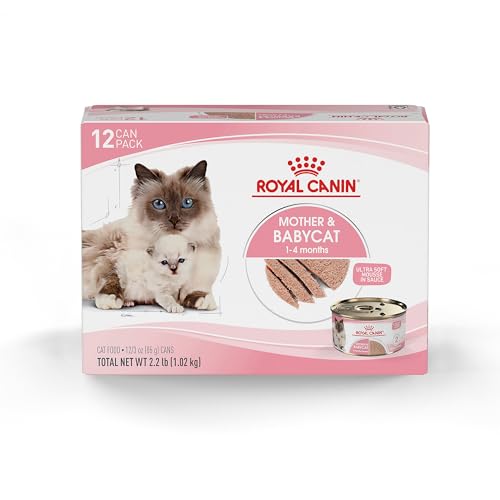
Royal Canin Mother and Babycat Kitten Wet Food
What We Like
- Ultra soft mousse for baby teeth
- Supports immune system development
- Prebiotics for digestive health
- Formulated for mother and kitten
Trade-offs
- Limited to kittens up to 4 months
- Wet food only, no dry texture variety
An ultra soft mousse texture makes this food easy for baby teeth to handle, which helps a weaning kitten move from milk to solid food. Royal Canin backs that with a blend of clinically proven antioxidants, including vitamins E and C, to support a developing immune system, plus prebiotics and highly digestible proteins aimed at keeping gut bacteria balanced. That combination of physical ease and nutritional targeting is why it’s a strong option for the earliest weeks of weaning. It’s designed for kittens from one to four months old, and the mother cat can eat it too, which simplifies feeding in a household with a nursing queen.
The trade-off is that this formula is intentionally short-term: it’s built for the weaning window only, not for a kitten’s full first year. If you want one food that carries your cat from weaning through the rest of kittenhood, you might consider a product like Tiki Cat Baby Pate, which includes DHA for brain development. But for the specific job of getting a four-week-old to reliably eat solid food, the mousse texture and immune support here are well suited. It’s a focused option for a narrow, critical phase.
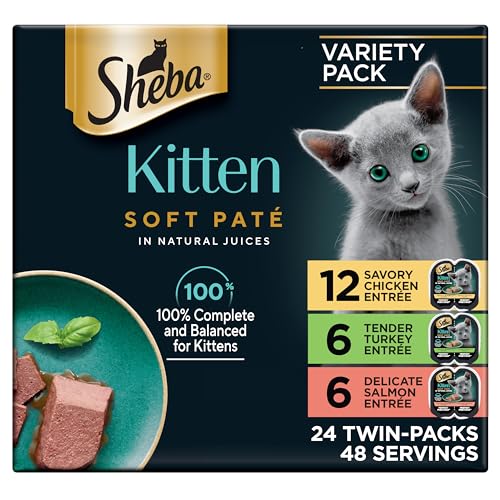
Sheba Perfect Portions Kitten Pate Wet Cat Food
What We Like
- Formulated with DHA for brain development
- Vitamin E supports immune health
- Easy-to-chew pate for small mouths
Trade-offs
- Only 2.6 oz per tray, small meal size
- Not suitable for adult cats
The 2.6 oz tray is designed for one meal, which means no leftovers to refrigerate and reheat, handy when you’re coaxing a kitten from milk to solids. The pate is soft enough for tiny mouths to gum, and the inclusion of DHA from real meat sources supports brain development during this critical growth window. For a kitten just learning to chew, the texture bridges the gap between liquid and chunkier foods without overwhelming them.
Portion size is the main consideration here: at 2.6 oz per tray, a growing kitten may need two servings a day, making the multipack go faster than a larger can format like Royal Canin Mother and Babycat’s 3 oz cans. If your kitten is a hearty eater or you prefer fewer packages to open, the smaller trays mean more waste per meal. But for the transition phase where you’re offering small, frequent meals, the pre-portioned trays keep things simple and consistent.
Tiki Cat Baby Pate Wet Kitten Food

What We Like
- Smooth pate texture for tiny mouths
- Contains DHA for brain development
- Grain and potato free formula
- Includes added taurine and prebiotics
Trade-offs
- Variety pack only, no single-protein option
- 2.4 oz cans are small for larger kittens
A 4-week age minimum means this pate is designed for the earliest weaning stage, when kittens are just starting to transition from milk to solids. The smooth, finely minced texture is easy on tiny tummies, and the inclusion of DHA, taurine, and prebiotics supports brain development and digestive health during that critical growth window. For a kitten that needs a gentle, nutrient-dense first food, this hits the mark without relying on grains or fillers.
You are limited to a variety pack, so if your kitten develops a preference for a single protein, you’ll end up with leftover cans of flavors they ignore. Compared to the Royal Canin Mother and Babycat, which offers a single ultra-soft mousse recipe, this Tiki Cat option gives more protein variety but less consistency. It works well for households with multiple kittens or owners who want to rotate proteins from the start.
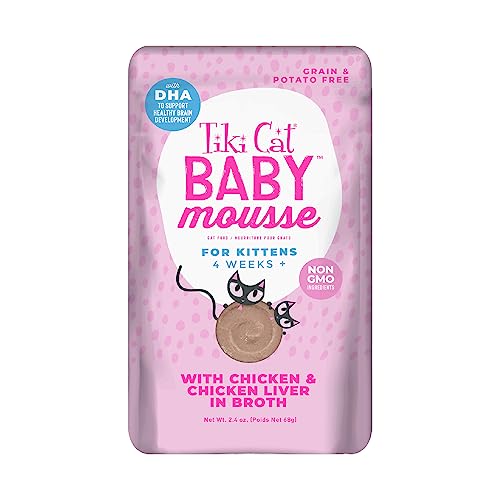
Tiki Cat Baby Mousse Kitten Food Chicken & Liver
What We Like
- Smooth mousse eases milk-to-food transition
- DHA and taurine for brain development
- Real chicken and liver as first ingredients
- Grain-free, no potatoes or GMOs
Trade-offs
- Liver flavor not preferred by all kittens
- Not suitable for adult cats
The 4-week age minimum means this mousse is designed for the exact moment kittens start moving away from mother’s milk. Real chicken broth, chicken, and liver come first in the ingredient list, so the protein base is straightforward and recognizable. DHA and supplemental taurine support brain and eye development during that critical growth window, and the smooth texture makes it easy for tiny mouths to lap up without chewing. This is a sensible pick for a caretaker who wants a wet food that mimics the softness of milk while delivering real meat nutrition.
The liver-forward flavor might not suit every picky palate. Compared to Royal Canin Mother and Babycat’s ultra-soft mousse, this Tiki Cat recipe skips the added milk proteins and focuses on organ meat for nutrient density. If your kitten tolerates liver well, this is a clean, grain-free way to bridge the gap from milk to solids without fillers or starches.
Tiki Cat Baby Kitten Food Mousse & Shreds

What We Like
- Delicate mousse & shreds for milk-to-food transition
- High protein from real poultry sources
- DHA supports brain development
- Added prebiotics aid gentle digestion
Trade-offs
- Only 3 cans per pack, limited quantity
- Not suitable for kittens under 4 weeks old
The dual mousse-and-shreds texture is the standout feature here, designed specifically to help kittens around four weeks old move from nursing to solid food. With real chicken, salmon, and chicken liver as the first ingredients, the protein is both high-quality and gentle on developing digestive systems. DHA for brain growth and prebiotics for digestion round out a formula that prioritizes early development without filler grains or potatoes.
Portion size is the main consideration: each can holds only 1.9 ounces, and you get three per pack, so you’ll be buying frequently if you have a hungry litter. But for owners who want a grain-free wet food with a texture that helps the weaning transition and a clean ingredient list, the extra trips to the store are a minor inconvenience against the nutritional focus.
Product photos
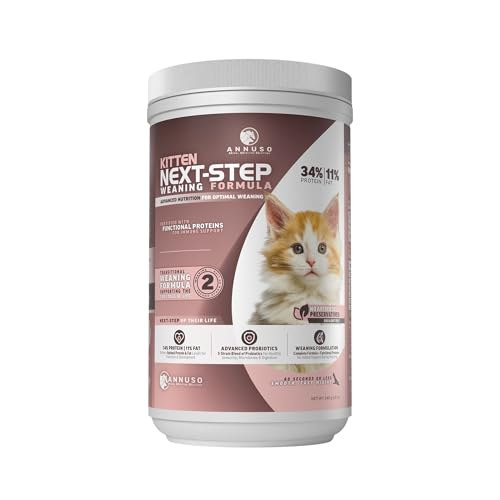
ANNUSO Kitten Next-Step Weaning Formula
What We Like
- 40% protein for growth
- 28% fat for energy
- 3-strain probiotic blend
- Fast-mix powder under 60 seconds
Trade-offs
- Requires mixing before feeding
- Not suitable for newborn kittens under 4 weeks
The 40% protein and 28% fat in this powder deliver the dense nutrition kittens need between four and eight weeks, when they’re growing fast and moving from milk to solids. Because it’s a powder, you can mix it to a thicker or thinner consistency, which helps ease the transition. The 3-strain probiotic blend supports digestion during that sensitive stage, and the formula stirs into a smooth oatmeal-like texture in warm water in under a minute. That makes it a practical option for gradually shifting a litter onto dry food without relying on wet food alone.
You have to mix it yourself, and the recommended oatmeal-like consistency won’t appeal to every kitten right away. Compared to Royal Canin’s wet food, which is ready to serve, this product requires a bit more hands-on effort. If you prefer a no-prep wet food, a pre-mixed option may be more convenient. For those who don’t mind whisking with warm water, this powder provides a targeted, high-protein transitional tool.
Product photos
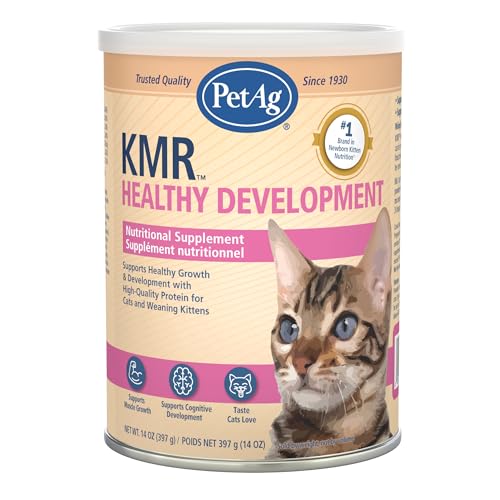
PetAg KMR Healthy Development Supplement
What We Like
- DHA supports cognitive development
- Omega 6 for skin and coat health
- Great taste for weaning kittens
- High-quality protein for growth
Trade-offs
- Powder requires mixing before feeding
- Not a complete meal, only a supplement
The powder format delivers DHA and Vitamin E, which the manufacturer links to visual and cognitive development, plus Omega 6 fatty acids for skin and coat health. That gives a weaning kitten targeted nutrients during a stage when growth is fast, and the high-quality protein supports healthy development overall. It works as a supplement to be mixed into or alongside other food, not as a standalone meal.
Because it is a supplement, you will need to mix it with other food rather than serve it straight from a container. Royal Canin Mother and Babycat Kitten Wet Food is a complete wet mousse that needs no preparation, so the PetAg powder adds an extra step. On the other hand, the powder lets you adjust the amount you add, which some owners prefer during the weaning transition.
Product photos
Pet-Ag PetLac Powder for Kittens

What We Like
- Complete nutrition for orphaned or weaning kittens
- Includes prebiotics and probiotics for digestion
- Easy-to-mix powder with clear directions
- Long shelf life when refrigerated or frozen
Trade-offs
- Requires mixing and warm water each feeding
- Not suitable for kittens over six weeks old
A 1-tablespoon-to-2-tablespoons-water ratio means you can whip up a fresh bottle in under a minute, which matters when a hungry kitten is mewing at your feet. PetLac Powder is formulated for kittens from newborn to six weeks old, covering the period when they need milk replacer most. The inclusion of prebiotics and probiotics targets the delicate digestive systems of orphaned or rejected kittens, reducing the risk of loose stools during transition. For anyone fostering a litter or helping a queen who can’t keep up, this powder provides complete, balanced nutrition without relying on a wet food texture that very young kittens can’t handle.
PetLac is a milk replacer for kittens from newborn to six weeks old, so it provides complete nutrition for that early stage. Unlike the ANNUSO Kitten Next-Step Weaning Formula, which targets 4-to-8-week-olds transitioning to solids, this powder stays in liquid form. Reviewers note it works well for orphaned or rejected kittens that need easy-to-digest nutrition.
Product photos
How We Evaluated Kitten Foods For Weaning
We looked at the nutritional profiles and physical textures of each formula, relying on manufacturer data and ingredient lists. The weaning process is short but critical, so we paid close attention to how each product supports that transition.
The three criteria that mattered most were texture, ingredient quality, and developmental support. A mousse or pate that requires no chewing is essential for kittens with baby teeth. We also prioritized formulas with DHA for brain development and prebiotics for gentle digestion.
A research-led evaluation has limits: we did not feed these foods to kittens ourselves. Our conclusions come from comparing specifications, reading expert round-ups, and identifying common themes in owner feedback. We encourage you to check the ingredient list on the bag in your own hands.
What To Look For In Kitten Foods For Weaning
The right food for weaning kittens balances an easy-to-eat texture with complete, balanced nutrition designed for growth. Here are the key factors to consider.
Choose a food with a smooth, soft texture that kittens can lap or gum, and check that it provides DHA for brain development and prebiotics for digestive health.
Texture and Consistency
The physical form of the food is the most important factor during weaning. Kittens at four weeks old cannot chew kibble or chunky shreds. Look for an ultra-soft mousse, pate, or smooth puree that mimics the consistency of milk. The soft kitten food options in this guide are designed specifically for this stage. Some formulas, like the Tiki Cat Baby Mousse, are so soft they can be mixed with a little warm water to create a slurry.
Nutritional Support for Growth
Weaning kittens need a diet rich in protein and fat for rapid growth, plus specific nutrients like DHA for cognitive development. DHA is a fatty acid found in mother’s milk that supports brain and eye development. Many of the top picks include added taurine for heart health and prebiotics to help settle a sensitive digestive system during the transition.
Ease of Preparation and Feeding
Some weaning foods are ready to serve, while others require mixing. Powdered supplements and milk replacers offer flexibility but demand more effort. Consider your daily routine and how much time you can spend preparing meals. A feeding schedule for kittens this young involves multiple small meals per day, so convenience matters.
- Check the age recommendation on the label, most weaning foods are suitable from four weeks.
- Look for a formula that lists a named protein source (chicken, liver) as the first ingredient.
- Consider whether you want a complete meal or a supplement to mix with another food.
- Choose a product that matches your kitten’s texture preference, some kittens reject pate but accept mousse.
A kitten that refuses food likely needs a softer texture or a different flavor, not a different brand.
Kitten Foods For Weaning Compared
The table below compares the key features of each product, including texture type, key nutrients, and the best stage of weaning for each formula.
| Product | Texture/Form | Age Range | Key Nutrients | Weight |
|---|---|---|---|---|
| Royal Canin Mother and Babycat Kitten Wet Food | Ultra soft mousse | 1-4 months | Antioxidants, prebiotics | 2.6 pounds |
| Sheba Perfect Portions Kitten Pate Wet Cat Food | Pate | N/A | DHA, Vitamin E, amino acids | 4.0 pounds |
| Tiki Cat Baby Pate Wet Kitten Food | Smooth pate | 4+ weeks old | DHA, taurine, prebiotics | 1.8 pounds |
| Tiki Cat Baby Mousse Kitten Food Chicken & Liver | Smooth Mousse | 4 Weeks + | DHA & Taurine | 1.8 pounds |
| Tiki Cat Baby Kitten Food Mousse & Shreds | Mousse & Shreds | 4 weeks+ | DHA, taurine, prebiotics | 0.4 pounds |
| ANNUSO Kitten Next-Step Weaning Formula | Powder | 4-8 weeks | N/A | 0.8 lb |
| PetAg KMR Healthy Development Supplement | Powder | Weaning to 6 years | DHA, Omega 6, Vitamin E | 1.1 pounds |
| Pet-Ag PetLac Powder for Kittens | Powder | Newborn to 6 weeks | Prebiotics & probiotics | 0.8 Pounds |
Frequently Asked Questions
When should I start weaning my kitten?
Weaning typically begins around four weeks of age. At this point, kittens start showing interest in their mother’s food and can begin lapping a soft mousse or slurry. The full transition usually takes two to four weeks.
What is the best texture for a weaning kitten?
The best texture is an ultra-soft mousse or smooth pate that requires no chewing. Kittens at this age have baby teeth that cannot break down kibble or shreds. A food that can be mixed with warm water into a thin slurry is ideal for the very first attempts.
Can I mix wet food with kitten milk replacer?
Yes, mixing a small amount of milk replacer with a soft wet food can help a reluctant kitten accept the new texture. This gradual approach mimics the familiar taste of milk while introducing solid food. The guide to weaning kittens covers this technique in more detail.
How often should I feed a weaning kitten?
Weaning kittens need four to six small meals per day. Their stomachs are tiny, and they burn energy quickly. A consistent schedule with fresh food at each meal helps maintain stable blood sugar and steady weight gain.
What should I do if my kitten refuses to eat solid food?
If a kitten refuses solid food, try warming the food slightly to enhance the aroma or mixing it with a familiar milk replacer. Some kittens prefer one texture over another; a soft food like a mousse may be more appealing than a pate. If refusal continues beyond 24 hours, consult a veterinarian.
The Bottom Line
For most kittens making their first move from milk to solids, the Royal Canin Mother and Babycat Kitten Wet Food is the best overall choice. Its ultra-soft mousse texture, prebiotics for gentle digestion, and immune-supporting formula address the two biggest concerns of weaning: texture acceptance and digestive sensitivity.
If you need a grain-free option or a specific texture your kitten prefers, the Tiki Cat Baby Pate or the Tiki Cat Baby Mousse are excellent alternatives. For caregivers who want a powdered supplement to mix with another food, the ANNUSO Kitten Next-Step Weaning Formula offers high protein and a probiotic blend.
The single most important factor in weaning is matching the food’s texture to your kitten’s developmental stage. A mousse or pate that requires no chewing and can be thinned with warm water will almost always succeed where a chunkier food fails.
