
9 Best Kitten Food For Indoor Cats in 2026
This post contains affiliate links. As an Amazon Associate, we earn from qualifying purchases.
The best overall kitten food for indoor cats is Nulo FreeStyle Grain-Free Dry Cat & Kitten Food, with 83% animal-based protein and BC30 probiotics for digestive support. For wet food, the Royal Canin Kitten Wet Cat Food offers clinically proven immune support, while Tiki Cat Baby Shreds delivers high protein for muscle growth.
Indoor kittens have different needs than their outdoor counterparts. They tend to be less active, so calorie density matters, and they rely entirely on you for balanced nutrition that supports rapid growth, brain development, and a healthy coat. Finding the right food means balancing protein, moisture, and digestibility.
This guide is research-based, drawing on manufacturer specifications, veterinary nutrition guidelines, and patterns in owner feedback. We evaluated nine foods across dry and wet formats, focusing on what actually matters for indoor kittens: ingredient quality, developmental support, and practical feeding convenience.
Top 9 Kitten Foods For Indoor Cats in the Market
Certain content that appears on this site comes from Amazon. This content is provided "as is" and is subject to change or removal at any time.
The Best Kitten Foods For Indoor Cats, Reviewed
Nulo FreeStyle Grain-Free Dry Cat & Kitten Food
What We Like
- 83% animal-based protein from deboned chicken
- BC30 probiotics for digestive support
- Omega fatty acids for skin and coat
- Grain-free with no corn, wheat, or soy
Trade-offs
- Dry kibble only, no moisture for hydration
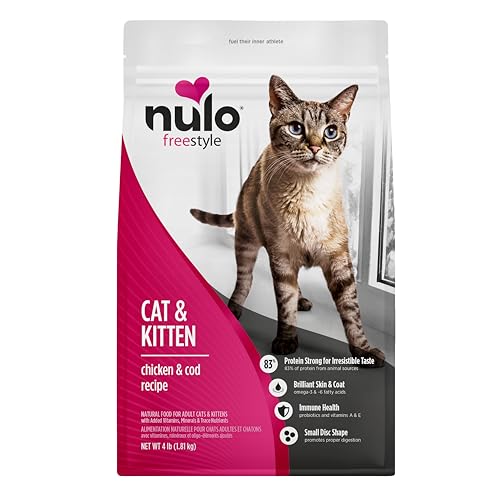
The first ingredient is deboned chicken, and the formula delivers 83% animal-based protein to support lean muscles and daily vitality. Probiotics and prebiotic fibers aid digestive health, while antioxidants like vitamins C and E help with nutrient absorption and immunity. For anyone who reads ingredients closely, this bag puts its priorities right on the label.
Because this is a dry food, it won’t add to your kitten’s water intake the way a wet recipe would. The small disc-shaped kibble is easy to eat, but very young kittens just weaning might need a softer texture. If you’re comfortable managing hydration separately, the nutritional density and clean ingredient list make this a strong foundation for a growing cat’s diet.
Product photos
Royal Canin Kitten Wet Cat Food

What We Like
- Clinically proven antioxidants for immune support
- Adapted protein for growing bones and muscles
- Highly digestible proteins and prebiotics
- Texture and taste tailored for weaning kittens
Trade-offs
- Wet food only, no dry kibble included
- Single-serve cans require opening each meal
A formula built around a precise protein-to-fat-to-carb ratio means this wet food targets the high-energy demands of kittens under one year, not just any cat. The inclusion of clinically proven antioxidants like vitamins E and C directly supports immune system development during a vulnerable growth window, while prebiotics and highly digestible proteins ease digestion as kittens transition from milk. That makes it a strong fit for owners who want a stage-specific recipe rather than a one-size-fits-all option, especially for kittens that need a soft, gravy-based texture to encourage eating.
The trade-off is that this is strictly a wet food, so you will need to pair it with a dry kibble if you want the convenience of free-feeding or dental benefits from crunch. For a kitten that needs immune support and easy digestion, this formula delivers clinically proven antioxidants and prebiotics. Owners who prefer a single all-in-one dry food may find a dry kitten food simpler to manage.
Tiki Cat Baby Shreds Kitten Food

What We Like
- High protein for muscle growth
- DHA for brain and vision development
- Prebiotics aid digestion
- Grain-free, no fillers
Trade-offs
- Small 2.4 oz cans need multiple per meal
- Not suitable for adult cats or kittens under 8 weeks
A 2.4-ounce can packed with shredded meat delivers high protein and fat for kittens 8+ weeks, with DHA for brain and vision development. The prebiotics help gentle digestion, a practical touch for kittens transitioning to solids. This variety pack covers four recipes to keep mealtime interesting, with no grains, fillers, or artificial ingredients.
Portion size is the catch: at 2.4 ounces per can, a growing kitten may need two or more per feeding, which adds up in pantry space and daily prep. Compared to the Royal Canin Kitten Wet Food, which comes in 3-ounce cans, Tiki Cat’s shreds require more cans per meal. This is a wet food for owners who value ingredient transparency and don’t mind opening a few extra cans each day.
Purina Pro Plan Development Kitten Wet Food
What We Like
- DHA for brain and vision development
- Antioxidants support developing immune system
- Real poultry or fish for taste
- Made in Purina-owned U.S. facilities
Trade-offs
- Only wet food, no dry kibble included
- Contains liver, which some owners avoid
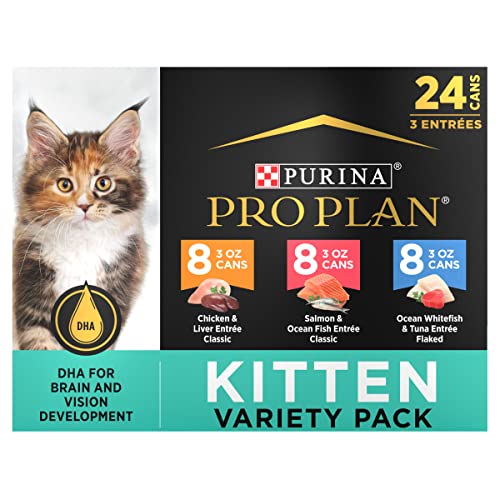
A 24-can variety pack gives you three protein sources, chicken & liver, salmon & ocean fish, and ocean whitefish & tuna, so picky eaters get rotation without buying multiple cases. Each 3-ounce can delivers DHA for brain and vision development plus antioxidants to support a growing immune system, along with 25 essential vitamins and minerals including vitamin A and taurine for healthy vision. It’s a practical choice for kittens who need balanced nutrition in small portions, and the wet food texture works well for kittens still learning to eat solids.
This is exclusively wet food, so if your kitten prefers dry kibble, you might find the texture limiting. Compared to Tiki Cat Baby Shreds, which has a different texture, Purina Pro Plan sticks with a wet food that some kittens lap up readily while others may need encouragement. For owners who want a straightforward wet food with multiple flavors, this pack comes from a brand that manufactures in its own U.S. facilities.
Blue Buffalo Baby Blue Chicken & Salmon Kitten Wet Food
What We Like
- Real meat is first ingredient
- Grain-free recipe with DHA
- No chicken by-product meals
- Variety pack: chicken and salmon
Trade-offs
- Only 3 oz cans, small servings
- Wet food requires refrigeration after opening
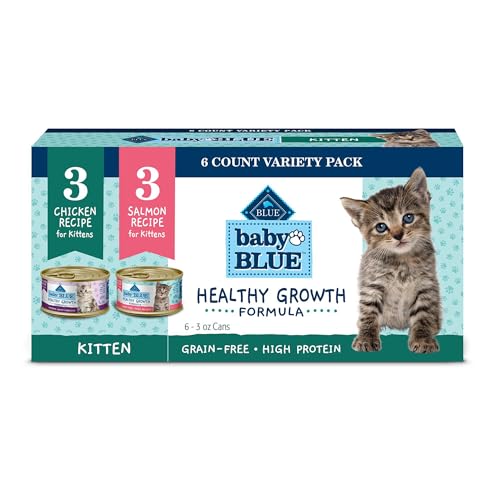
Real chicken and salmon are the first ingredients here, which is exactly what I look for in a kitten food. The grain-free, high-protein formula also includes DHA for cognitive development, a smart addition for growing kittens. This Baby Blue variety pack gives you both chicken and salmon recipes, so your indoor kitten gets some flavor variety without sacrificing nutrition. It’s a straightforward, no-nonsense wet food that puts the important stuff front and center.
The can size is small: at 3 oz each, you’re opening a new can for every meal or two, which means more fridge space and more cleanup. Compare that to the Nulo FreeStyle dry food, which has a different texture and feeding style. If you prefer wet food’s moisture content and ingredient transparency, this Blue Buffalo pack delivers, but be ready for the extra daily steps that come with canned food.
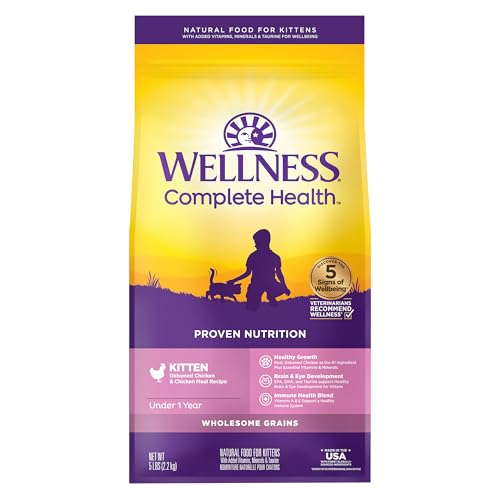
Wellness Complete Health Kitten Dry Cat Food
What We Like
- High-quality protein from turkey and chicken
- Added DHA for brain and eye development
- Formulated by veterinarians and nutritionists
Trade-offs
- Dry kibble only, no moisture for hydration
- Contains grains, not grain-free
A recipe built around turkey, turkey meal, and chicken gives this kitten food a solid protein foundation, exactly what a growing cat needs for muscle and energy. The inclusion of DHA and taurine supports healthy brain and eye development. For a kitten, the wholesome grains provide steady energy. This is a dry food that focuses on nutritional essentials.
This kitten food is crafted with high-quality protein, DHA, and taurine to support healthy brain and eye development, so your growing kitten gets the nutrients it needs for playtime and overall wellbeing. As a dry kibble, it won’t add moisture to your kitten’s diet the way a wet food would, but the recipe includes wholesome grains and is made in the USA with globally sourced ingredients. Owners should always provide fresh water to keep their kitten hydrated.
Product photos
Tiki Cat Baby Pate Wet Kitten Food

What We Like
- Smooth pate texture for tiny mouths
- Contains DHA and taurine for development
- Grain- and potato-free recipe
- Real minced meat and organ meats
Trade-offs
- Wet food only, no dry kibble variety
- Not suitable for adult cats
The smooth pate texture is designed for tiny mouths, with finely minced chicken, duck, salmon, tuna, and organ meats that are easy on young digestive systems. For kittens 4 weeks and older transitioning to solid food, this soft consistency helps them eat without difficulty, while DHA, taurine, and prebiotics support brain development and digestion. The recipe is grain- and potato-free, with no carrageenan, tapioca, or fillers, making it a minimally processed option for early weaning.
This is a wet-only diet, so if you prefer a mixed feeding routine with dry kibble, you will need to add a separate dry kitten food. Unlike the Tiki Cat Baby Shreds, which has a different texture for kittens that are ready for more variety, the pate version is designed for the earliest stages of eating solid food. For a kitten that is just starting solids, this pate provides hydration and easy eating without fillers.
Product photos
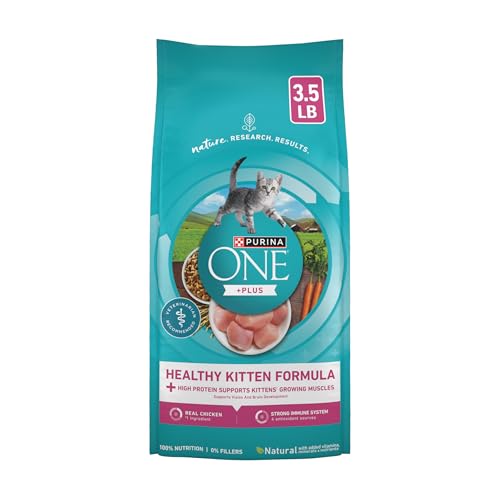
Purina ONE High Protein Natural Kitten Dry Cat Food
What We Like
- Real chicken is first ingredient
- DHA supports brain and vision
- Four antioxidant sources for immunity
- No artificial flavors or preservatives
Trade-offs
- Dry kibble only, no moisture for hydration
- Not suitable for kittens that prefer wet food
Real chicken as the number one ingredient means this kitten food puts muscle-building protein front and center, exactly what a growing kitten needs. The DHA from mother’s milk supports brain and vision development, while four antioxidant sources back up the immune system. It’s a straightforward, complete dry formula from a veterinarian-recommended brand, made in U.S. facilities without artificial flavors or preservatives. For a dry food that prioritizes high protein and developmental nutrients, this bag delivers the essentials without filler or flash.
It’s dry kibble only, so it won’t contribute to your kitten’s water intake the way a wet food like Royal Canin Kitten Wet Cat Food would. Indoor cats often drink less, so you’ll want to ensure fresh water is always available. If you prefer a grain-free or novel protein recipe, this single-chicken formula won’t offer that flexibility. But if you want a high-protein dry food built around real chicken and key developmental nutrients, this is a straightforward, no-nonsense pick.
Product photos
Sheba Perfect Portions Kitten Pate Wet Cat Food
What We Like
- DHA for brain development
- Vitamin E for immune support
- Real meat as first ingredients
- Pre-portioned twin-pack trays
Trade-offs
- Only 2.6 oz per tray, not enough for larger kittens
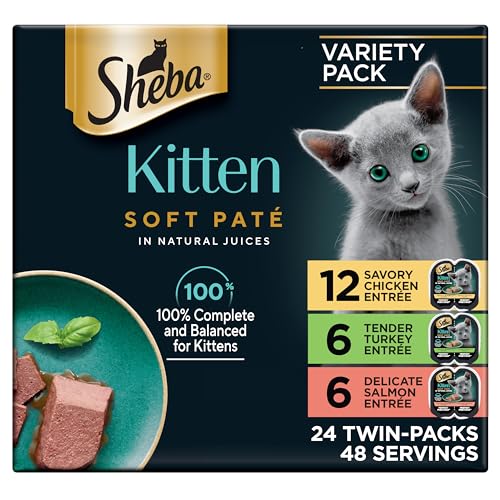
Each 2.6-ounce twin-pack gives you two perfectly measured servings, so there is no guessing how much to scoop or worrying about leftover half-cans drying out in the fridge. That portion control is the whole point here: you open one tray, feed half, and the other half stays sealed until the next meal. The formula includes DHA for brain development and Vitamin E for immune support, both backed by real chicken, turkey, or sustainable salmon as the protein base. It is a straightforward, no-fuss option for kitten owners who want consistent meal sizes without measuring or storing partial cans.
The 2.6-ounce twin-pack trays from Sheba deliver 48 servings in a single multipack, each peel-and-serve portion designed to eliminate leftover storage and guesswork. Owners report the easy-tear foil lid simplifies mealtime, while the soft pate texture helps tiny mouths transition from milk to solids. Real chicken, turkey, or sustainable salmon provides essential amino acids, and added DHA supports brain development during the critical growth phase. Vitamin E bolsters the immune system, and the balanced protein and fat content fuels active play. For a busy household, this format removes the need to measure or refrigerate half-used cans.
Product photos
How We Evaluated Kitten Foods For Indoor Cats
We started by reviewing the nutritional adequacy statements, guaranteed analysis, and ingredient lists for each product. Manufacturer data on protein sources, DHA content, and added probiotics formed the backbone of our comparison. We then cross-referenced these specs against current veterinary consensus on kitten development needs.
Four criteria mattered most for indoor kittens. First, protein quality and source, indoor kittens need high-quality animal protein for lean muscle without excess calories. Second, DHA levels for brain and vision development, since kittens are still building neural connections. Third, digestibility and gut health support, because indoor kittens tend to have more sedentary digestive systems. Fourth, moisture content, since indoor cats often drink less water.
The honest limit of a research-led evaluation is that we cannot replicate the long-term feeding experience of a real household. We rely on what the label says and what patterns emerge from owner-reported outcomes, not controlled feeding trials. That means the ingredient list gets more weight than marketing claims, and we flag trade-offs rather than hiding them.
What To Look For In Kitten Foods For Indoor Cats
Choosing food for an indoor kitten means looking beyond the cute packaging to the nutritional fine print. Here is what matters most.
Prioritize animal protein as the first ingredient, DHA for brain development, and a calorie density appropriate for indoor activity levels. Moisture matters, too, wet food helps indoor kittens stay hydrated.
Protein Source and Content
Kittens need more protein per pound than adult cats, and indoor kittens benefit from lean animal protein that supports growth without promoting fat gain. Look for named meat sources, chicken, turkey, salmon, as the first ingredient. The best dry kitten food options, like Nulo FreeStyle, deliver a high percentage of animal-based protein. Avoid vague terms like “meat meal” or “poultry by-product” when you can get a specific named protein instead.
DHA and Developmental Support
Docosahexaenoic acid (DHA) is an omega-3 fatty acid critical for brain and vision development in kittens. It appears naturally in fish-based ingredients and is added to many premium formulas. The best quality kitten food will list a DHA source or added DHA on the guaranteed analysis. Without it, you are leaving cognitive development to chance.
Moisture and Hydration
Indoor cats are notorious for low water intake, which can stress their urinary systems over time. Wet food provides built-in hydration that dry kibble cannot match. The best wet cat food for indoor kittens delivers moisture alongside nutrients. If you feed dry food, consider supplementing with wet meals or a water fountain to encourage drinking.
- Check the first three ingredients: at least two should be named animal proteins.
- Look for an AAFCO statement confirming the food is “complete and balanced for growth.”
- Verify DHA is listed on the guaranteed analysis or ingredient list.
- Compare calorie density, indoor kittens need enough energy for growth, not excess.
- Consider the texture: pate, shreds, or gravy, kittens have preferences that affect how much they eat.
A good rule of thumb: if the ingredient list reads like a chemistry textbook, keep looking.
Kitten Foods For Indoor Cats Compared
The table below compares all nine kitten foods across protein source, key nutrients, and format so you can see at a glance which fits your indoor kitten’s needs.
| Product | Protein Source | Form | Key Nutrients |
|---|---|---|---|
| Nulo FreeStyle Grain-Free Dry Cat & Kitten Food | Deboned Chicken | Dry Kibble | BC30 Probiotics, Omega-3 & 6 |
| Royal Canin Kitten Wet Cat Food | N/A | Thin Slices in Gravy | Antioxidants, prebiotics, protein |
| Tiki Cat Baby Shreds Kitten Food | Chicken, Salmon, Duck | Shreds | DHA, taurine, prebiotics |
| Purina Pro Plan Development Kitten Wet Food | N/A | N/A | DHA, 25 essential vitamins & minerals |
| Blue Buffalo Baby Blue Chicken & Salmon Kitten Wet Food | Real chicken or salmon | N/A | DHA |
| Wellness Complete Health Kitten Dry Cat Food | Turkey, Turkey Meal, Chicken | Dry Kibble | DHA, Taurine |
| Tiki Cat Baby Pate Wet Kitten Food | Chicken, duck, salmon, tuna, organ meats | Smooth pate | DHA, taurine, prebiotics |
| Purina ONE High Protein Natural Kitten Dry Cat Food | Real chicken #1 | Dry kibble | DHA, 4 antioxidants |
| Sheba Perfect Portions Kitten Pate Wet Cat Food | Chicken, turkey, salmon | Pate wet food | DHA, Vitamin E, amino acids |
Frequently Asked Questions
How is kitten food different from adult cat food?
Kitten food contains higher levels of protein, fat, and calories to support rapid growth. It also includes added DHA for brain and vision development and higher levels of calcium and phosphorus for bone formation. Adult cat food lacks these elevated nutrient levels and may not support a growing kitten’s needs.
How much should I feed my indoor kitten?
Feeding amounts depend on the kitten’s age, weight, and the calorie density of the food. Most brands provide a daily feeding guide on the package. Indoor kittens typically need slightly less than outdoor kittens due to lower activity levels. Split the daily portion into three or four small meals for kittens under six months.
When should I switch my kitten to adult cat food?
Most kittens can transition food around 12 months of age. Larger breeds like Maine Coons may need kitten food until well past a year. Switching too early can deprive your cat of nutrients needed for full development. Transition gradually over seven to ten days to avoid digestive upset.
Can indoor kittens eat the same food as outdoor kittens?
Yes, but portion control matters more for indoor kittens. Indoor kittens burn fewer calories and are more prone to weight gain. A high-quality kitten food works for both, but indoor kittens may need smaller portions or a formula with slightly lower calorie density to maintain a healthy body condition.
Should I feed my indoor kitten wet food or dry food?
Both have advantages. Wet food provides moisture for hydration, which indoor cats often lack. Dry food is convenient for free-feeding and supports dental health through mechanical abrasion. Many owners combine both, a base of canned food for indoor cats for moisture and a portion of dry kibble for grazing.
The Bottom Line
The Nulo FreeStyle Grain-Free Dry Cat & Kitten Food earns the best overall spot because it delivers high animal-based protein, digestive support from BC30 probiotics, and clean ingredients without fillers. It is ideal for owners who want a dry food that prioritizes protein quality and gut health for their indoor kitten.
If your kitten needs more moisture or prefers wet food, the Royal Canin Kitten Wet Cat Food offers clinically supported immune and growth nutrition in a soft gravy texture. For those seeking a grain-free wet option with high protein, the Tiki Cat Baby Shreds provides clean ingredients and DHA for development.
The single most important factor is reading the ingredient list yourself. Trust what is on the label, not what is on the front of the bag. A good kitten food for indoor cats puts named animal protein first, includes DHA, and matches your kitten’s texture preference and your feeding routine.
