
5 Best Food For Domestic Shorthair Cats in 2026
This post contains affiliate links. As an Amazon Associate, we earn from qualifying purchases.
The Purina Pro Plan High Protein Dry Cat Food earns the top spot because it leads with real salmon and includes prebiotic fiber for steady digestion. That makes it a strong all-around choice for active domestic shorthairs. For owners who prefer natural ingredients without artificial additives, the Purina Cat Chow Naturals delivers a complete vitamin-mineral profile. Budget-conscious shoppers should look to the Blue Buffalo Wilderness Indoor Chicken formula for grain-free nutrition tailored to cats that spend most of their time inside.
Domestic shorthairs are a mixed bag metabolically, some burn through calories like a furnace, others store every bite. Their short, dense coats mean less grooming than longhaired breeds, but they still need omega fatty acids for skin health and enough protein to maintain lean muscle. The real trick is matching the food’s calorie density and fiber content to your individual cat’s lifestyle.
This guide compares five dry foods using manufacturer specs, ingredient lists, and patterns in owner feedback. We focused on protein sources, fiber content, and whether the formula supports the specific needs of indoor and active domestic shorthairs. Each pick comes with clear trade-offs so you can match the bag to your cat, not the other way around.
Top 5 Foods For Domestic Shorthair Cats in the Market
Certain content that appears on this site comes from Amazon. This content is provided "as is" and is subject to change or removal at any time.
The Best Foods For Domestic Shorthair Cats, Reviewed
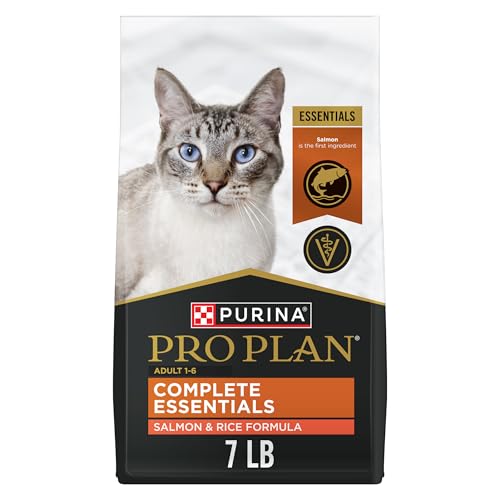
Purina Pro Plan High Protein Dry Cat Food
What We Like
- Real salmon is first ingredient
- Contains prebiotic fiber for digestion
Trade-offs
- Only 7 pounds per bag
- Not grain-free
The 7-pound bag is a standard size for this formula. If you prefer a grain-free option, other products like Blue Buffalo Wilderness Chicken are available, but this formula includes rice, which is fine for most cats. For a cat that does well on a salmon-based, probiotic-supported diet, this is a reliable everyday option.
Purina Cat Chow Naturals Dry Cat Food
What We Like
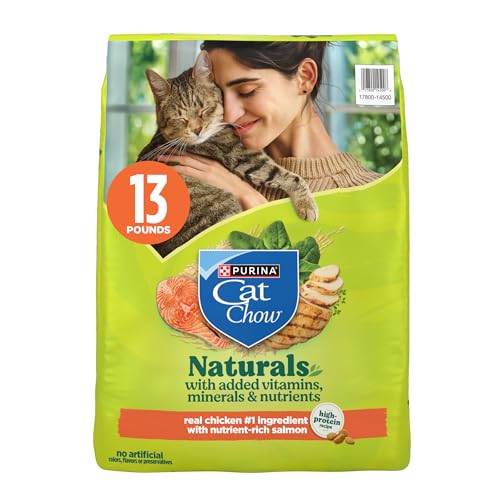
- Real chicken is #1 ingredient
- Includes real salmon for variety
- 25 essential vitamins and minerals
- No artificial flavors, preservatives, or colors
Trade-offs
- Contains whole grains, not grain-free
- Salmon is not the first ingredient
Real chicken is the number one ingredient, and real salmon is included, so the formula leads with named animal proteins rather than fillers. The 25 essential vitamins and minerals support overall health for cats of any age, and the omega-6 fatty acids target skin and coat health directly. This dry cat food skips artificial flavors, preservatives, and colors, making it a transparent option for owners who want natural nutrition.
The trade-off is that whole grains are included, so if your cat does better on a grain-free diet, you would want to look at something like the Blue Buffalo Wilderness Chicken formula instead. The 13-pound bag is a practical size for households with multiple cats. For someone who values real named proteins and a complete nutrient profile, this is a straightforward everyday choice from a brand with over 60 years of experience in pet nutrition.
Blue Buffalo Wilderness Chicken Dry Cat Food
What We Like
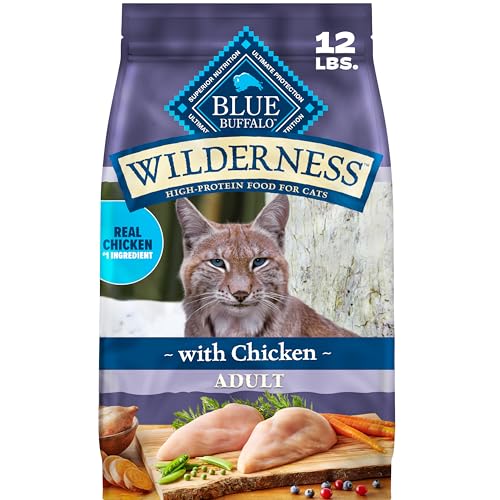
- Real chicken as first ingredient
- Grain-free with no corn, wheat, soy
- LifeSource Bits support immune health
- Omega 3 & 6 for skin and coat
Trade-offs
- No poultry by-product meals, but some cats prefer fish
- Not suitable for cats over 7 years old
Real chicken as the first ingredient means this recipe is built around animal protein, which aligns with a cat’s carnivorous biology. For a domestic shorthair, that translates to support for lean muscle mass and sustained energy. The grain-free formula, with no corn, wheat, or soy, also sidesteps common fillers that offer little nutritional value. If you’re looking for a high-protein dry food that prioritizes meat, this is a straightforward choice.
This protein-dense formula may be more than a sedentary indoor cat needs, especially if weight management is a concern. The 12-pound bag is the size offered, so it’s a standard bulk option. For an active adult cat, this is a solid nutritional foundation.
Product photos
Purina ONE Tender Selects Blend Dry Cat Food
What We Like
- Four antioxidant sources support immunity
- No artificial flavors or preservatives
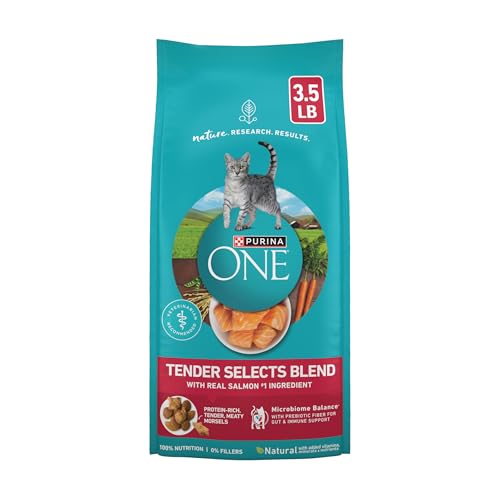
- Starts with real salmon
Trade-offs
- Contains grains, not suitable for grain-free diets
- Dry kibble does not add moisture to diet
The real salmon provides high protein for muscle maintenance, including the heart, while four antioxidant sources back the immune system. This is a straightforward, no-fuss dry food for owners who want digestive support without artificial additives, and it’s made in Purina-owned U.S. facilities, which adds a layer of traceability.
Because this is a dry kibble, it won’t contribute to your cat’s water intake the way wet food would. That’s something to keep in mind if your cat is prone to urinary issues. Compared to the Purina Pro Plan High Protein option, which also uses salmon and includes probiotics, the Tender Selects Blend focuses more on prebiotic fiber than on extra protein density. If your cat needs a grain-inclusive formula with gentle digestion support, this fits; if you’re avoiding grains entirely, the Blue Buffalo Wilderness line would be the direction to look.
Product photos
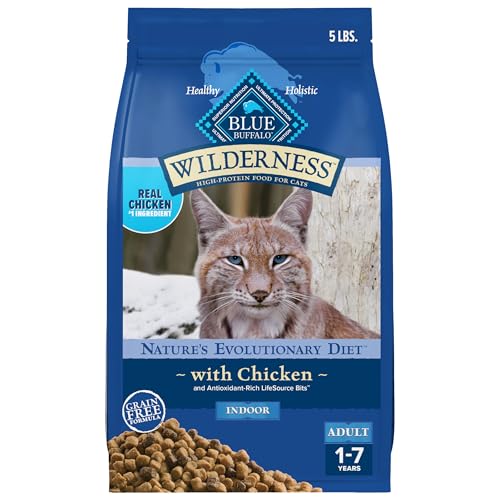
Blue Buffalo Wilderness Indoor Chicken Dry Cat Food
What We Like
- Real chicken as first ingredient
- Grain-free with fiber for digestion
- Omega 3 & 6 fatty acids for coat
- LifeSource Bits for immune support
Trade-offs
- 5 lb bag is small for multiple cats
- Indoor-only formula limits outdoor cat use
A 5-pound bag means this is a trial-size or single-cat portion, not a bulk buy for a multi-cat household. Blue Buffalo Wilderness Indoor Chicken puts real chicken first, no poultry by-product meals, no corn, wheat, or soy, and packs grain-free fiber sources to keep indoor digestion on track. The LifeSource Bits add a targeted antioxidant blend for immune health, which matters for cats that spend all day in a controlled environment. If you have one indoor shorthair and want a high-protein, grain-free option with clean ingredients, this fits the bill without the filler.
The 5-pound bag is a compact size, which means more frequent reordering compared to the 7-pound Purina Pro Plan Salmon & Rice bag. That Purina option starts with real salmon and includes probiotics, but it uses a different protein base and is not grain-free. For a single indoor cat that does well on chicken and needs grain-free digestion support, the Blue Buffalo Wilderness bag works. Just be aware that the bag size demands a steady supply run.
Product photos
How We Evaluated Foods For Domestic Shorthair Cats
We started by reading ingredient lists the way a skeptical label-reader would, first ingredient first, then the protein-to-filler ratio. Manufacturer nutritional data told us the guaranteed analysis and calorie counts. Expert round-ups from veterinary nutritionists and experienced owners helped us spot which formulas actually support coat condition, digestion, and steady energy in medium-activity cats.
Three criteria mattered most. Protein quality and placement in the ingredient list came first because domestic shorthairs are obligate carnivores with no biological need for corn or wheat. Fiber content and source came second, prebiotic fibers like chicory root support digestion without causing loose stools. Third, we looked at whether the formula included breed-appropriate fat and omega levels for skin health, since these cats have short coats that show dullness fast.
A research-led evaluation has limits. We didn’t feed these foods to a panel of cats, and individual tolerances vary, one cat’s perfect kibble is another’s gassy disaster. What we can do is show you exactly what’s in the bag and let you compare against your cat’s known sensitivities. We also linked our findings to broader guides on choosing healthy cat food and cat nutrition for deeper reading.
What To Look For In Foods For Domestic Shorthair Cats
The right food for a domestic shorthair balances high-quality animal protein with digestible fiber and controlled calorie density. What follows are the specific criteria that matter most for this common but variable breed.
Look for a named meat or fish as the first ingredient, moderate fat for indoor activity levels, and a fiber source that supports hairball passage without adding bulk that dilutes nutrition.
Protein Content and Source
Domestic shorthairs need a high-protein diet because their metabolism is built for meat, not grains. A named animal protein, chicken, salmon, turkey, should appear first on the ingredient list. Avoid vague terms like “poultry meal” or “meat meal” that hide species sources. For indoor cats that move less, look for a high protein level on a dry matter basis; active cats can handle the higher end.
Fiber for Digestion and Hairballs
Short coats shed less hair overall than longhaired breeds, but domestic shorthairs still groom themselves and swallow fur. Prebiotic fiber sources like dried chicory root or beet pulp help move that hair through the digestive tract without causing constipation. Avoid formulas that use cellulose or peanut hulls as cheap bulk, those add fiber with zero nutritional value. If your cat struggles with hairballs, consider a dedicated hairball control food as a complementary option.
Calorie Density and Weight Management
Indoor domestic shorthairs gain weight easily because they don’t burn calories the way outdoor cats do. A food with a moderate calorie count per cup is typical for moderately active indoor cats; anything higher risks gradual weight gain. Check the feeding guide on the bag and adjust based on your cat’s body condition. For cats already carrying extra weight, a weight management food may be necessary.
- Verify the first ingredient is a named animal protein (chicken, salmon, turkey).
- Check the fiber content, 3-5% crude fiber is a good range for digestion.
- Look for omega-3 and omega-6 fatty acids in the guaranteed analysis.
- Confirm the calorie count per cup matches your cat’s activity level.
- Avoid formulas with artificial colors, flavors, or preservatives.
A domestic shorthair’s ideal food is one you can read the ingredient list without a chemistry degree.
Foods For Domestic Shorthair Cats Compared
The table below lines up each pick’s protein source, fiber content, and best-use case so you can compare at a glance.
| Product | Protein Source | Omega Fatty Acids | Bag Size |
|---|---|---|---|
| Purina Pro Plan High Protein Dry Cat Food | Real salmon | Omega-6 fatty acids | 7 lb |
| Purina Cat Chow Naturals Dry Cat Food | Real chicken & salmon | Omega-6 fatty acids | 13 lb |
| Blue Buffalo Wilderness Chicken Dry Cat Food | Real Chicken #1 | Omega 3 & 6 | 12 lb |
| Purina ONE Tender Selects Blend Dry Cat Food | Real salmon | omega-6 fatty acids | 3.5 lb |
| Blue Buffalo Wilderness Indoor Chicken Dry Cat Food | Real Chicken #1 Ingredient | Omega 3 & 6 | 5 lb |
Frequently Asked Questions
What is the best food for a domestic shorthair cat?
The Purina Pro Plan High Protein Dry Cat Food is our top recommendation because it starts with real salmon and includes prebiotic fiber for digestive support. It suits the average domestic shorthair’s need for high-quality animal protein without unnecessary fillers.
How much protein does a domestic shorthair cat need?
Adult domestic shorthairs thrive on a diet with a high protein level on a dry matter basis, depending on activity level. Active cats need the higher end of that range, while less active indoor cats do fine around a moderate level. A named meat or fish should always be the first ingredient.
Is grain-free food better for domestic shorthair cats?
Not necessarily. Grain-free formulas benefit cats with grain sensitivities, but many domestic shorthairs digest whole grains like rice or barley without issues. The more important factor is whether the food provides high-quality animal protein and digestible fiber, not whether it contains grains.
Can domestic shorthair cats eat wet food instead of dry?
Yes, and many owners combine both. Wet food adds moisture to the diet, which supports urinary tract health. For a deeper look at wet options, our guide to wet cat food covers formulas that work well alongside dry kibble.
How do I transition my domestic shorthair to a new food?
Mix a small amount of new food with the old food for several days, then gradually increase the proportion of new food over the next several days, and finally feed only the new food. Watch for loose stools or reduced appetite during the switch. A sudden change can upset a domestic shorthair’s sensitive digestive system.
The Bottom Line
The Purina Pro Plan High Protein Dry Cat Food is the best overall choice for domestic shorthair cats because it combines real salmon as the first ingredient with prebiotic fiber for steady digestion. It works for most activity levels and doesn’t rely on artificial additives to boost its nutritional profile.
If your cat needs a grain-free formula, the Blue Buffalo Wilderness Chicken Dry Cat Food delivers high protein without corn, wheat, or soy. Owners who prefer natural ingredients with a complete vitamin profile will find the Purina Cat Chow Naturals a solid mid-range option that skips artificial colors and preservatives.
The single most important factor in choosing food for a domestic shorthair is reading the ingredient list with a skeptical eye, the first ingredient tells you more than the front-of-bag marketing ever will. Match the protein level and calorie density to your cat’s actual activity, not the picture on the bag.
