
10 Best Food For Bird Feeders in 2026
This post contains affiliate links. As an Amazon Associate, we earn from qualifying purchases.
The best food for bird feeders depends on which birds you want to attract and where you place the feeder. Morning Song Clean & Free No Mess Wild Bird Seed wins best overall because its 100% shell-free blend leaves no hulls under your feeder. That makes it ideal near patios and windows. For small-beaked birds, the Lyric Fine Tunes Wild Bird Seed Mix offers finely cut seeds, while the Audubon Park Cardinal Blend Wild Bird Food uses only sunflower and safflower to draw cardinals and deter squirrels.
A feeder full of cheap filler seed means more mess, more wasted food, and fewer birds at the perch. The real challenge is finding a blend that matches your feeder type, your local species, and your tolerance for hull cleanup. Ground-feeding birds need different ingredients than finches, and a bag that works in a tube feeder may not suit a tray.
We built this guide by reviewing manufacturer specifications, ingredient lists, and patterns in owner feedback across ten leading blends. We compared seed types, shell content, feeder compatibility, and the species each mix reliably attracts. The result is a clear breakdown of what each bag delivers, so you can match the right blend to your backyard setup.
Top 10 Foods For Bird Feeders in the Market
Certain content that appears on this site comes from Amazon. This content is provided "as is" and is subject to change or removal at any time.
The Best Foods For Bird Feeders, Reviewed
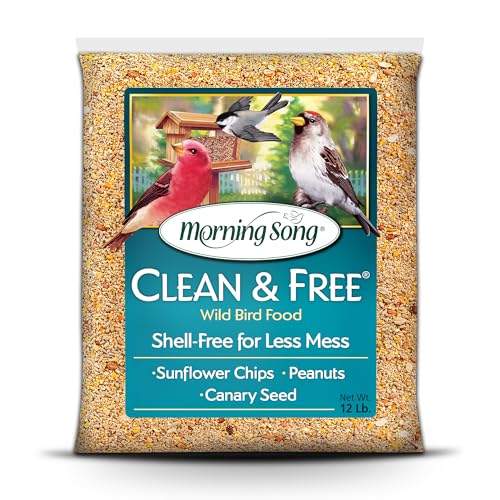
Morning Song Clean & Free No Mess Wild Bird Seed
What We Like
- 100% shell-free, no waste
- Includes high-energy peanuts and sunflower chips
- Attracts finches, chickadees, cardinals, nuthatches
- Works in tube, tray, hopper, platform feeders
Trade-offs
- 12 lb bag is smaller than many competitors
- No millet or cracked corn for ground-feeding birds
Every single ingredient in this bag is edible, so you get zero hulls piling up under your feeder. That means no sweeping, no raking, and no moldy seed husks sprouting in your flowerbeds. For anyone who hangs a feeder near a patio, deck, or window, that convenience alone makes this blend worth a close look. It draws a solid range of backyard birds, finches, chickadees, titmice, cardinals, nuthatches, and the sunflower chips and peanuts deliver protein that keeps them coming back even in colder months. If you want a tidy feeding station that still pulls in the usual suspects, this is the bag to grab.
Every ingredient in this 12-pound bag is edible, so there are no hulls to clean up under your feeder. That means you can place it on a patio or balcony without worrying about mess. The bag is lighter than the 15- or 16-pound bags from Lyric Fine Tunes or Wagner’s Greatest Variety, which makes it easier to handle when refilling a tube feeder. For a clean feeding experience that still attracts finches, chickadees, and cardinals, this mix delivers exactly what it promises.
Lyric Fine Tunes Wild Bird Seed Mix

What We Like
- 100% edible zero-waste mix
- Finely cut for small-beaked birds
- Includes seven different seed and nut types
- Oxygen scavenger keeps food fresh
Trade-offs
- Nuts and seeds can spoil if stored damp
Finely cut nuts, kernels, and seeds mean every piece is sized for birds with smaller beaks, think chickadees, goldfinches, and bluebirds. That way they aren’t left cracking oversized shells while jays clean up. The ingredient list reads like a nut shop shelf: peanut pieces, sunflower kernels, almond pieces, pistachio pieces, hulled white proso millet, pecan pieces, and shelled pumpkin seed pieces. Because it’s all edible with zero waste, nothing ends up as hulls on the ground, which keeps the area under your feeder cleaner and reduces the chance of attracting rodents. That oxygen scavenger packet in the bag also buys you a little extra shelf life if you don’t go through the whole 15 pounds quickly.
Audubon Park Cardinal Blend Wild Bird Food

What We Like
- No fillers, 100% sunflower and safflower
- Black oil sunflower for energy
- Safflower oil disliked by squirrels
- Works in hopper, tube, or platform feeders
Trade-offs
- 4-pound bag is smaller than many blends
- No shell-free seeds for mess-free feeding
This blend contains only two ingredients: black oil sunflower and safflower, with no fillers added. That means the birds you want, cardinals, titmice, chickadees, finches, grosbeaks, and more, get exactly what the label says. The safflower is noted as being disliked by squirrels, which can help keep your feeder from being raided as often.
The bag weighs 4 pounds, which is smaller than many other blends on the market, such as the 12-pound Morning Song or 15-pound Lyric mixes. If you have a single feeder or a small yard, this size may be convenient; if you fill multiple feeders or have many birds, you will need to buy more frequently. For someone who wants a simple, filler-free seed mix, this product delivers what the label promises.
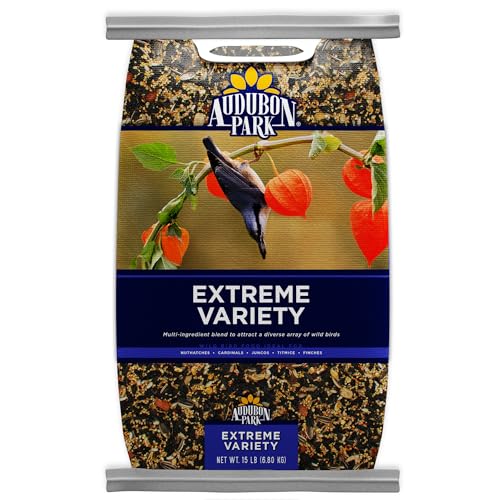
Audubon Park Extreme Variety Wild Bird Seed
What We Like
- Attracts nuthatches, cardinals, juncos, titmice, finches
- Includes raisins and tree nuts for variety
- Works in tube, hopper, or platform feeders
- Blend designed for all four seasons
Trade-offs
- Shells and hulls create debris under feeders
- Raisins can clump in damp conditions
This 15-pound bag of mixed sunflower seeds, peanuts, raisins, and tree nuts is formulated to attract a diverse array of wild birds, including nuthatches, cardinals, juncos, titmice, and finches. The blend works across tube, hopper, and platform feeders, making it a versatile option for year-round feeding. If your goal is to see many different bird species at your station without switching bags every season, this blend covers that ground in one purchase.
The trade-off is that this is not a no-mess blend. Shells and hulls will accumulate under your feeder, which means more sweeping or a tray to catch debris. The raisins and nuts also risk clumping in humid weather, so a dry, covered hopper feeder helps. For the birder who values species diversity over a tidy patio, this is the straightforward choice.
Wagner's Greatest Variety Blend Wild Bird Food

What We Like
- Works in tube, hopper, or platform feeders
- Made in the USA
- 11 different ingredients in the blend
Trade-offs
- 16-pound bag is heavy for small hoppers
- No shell-free option means hull cleanup
The ingredient list is the story here: 11 different components with 40% sunflower as the anchor. That sunflower percentage is the key number for anyone who wants a genuinely diverse feeder, and Wagner’s leads with it. The 16-pound bag is a practical size for a medium hopper or a tube feeder that gets regular traffic. The blend works across tube, hopper, or platform designs so you don’t have to buy a special feeder. It’s a straightforward, no-nonsense mix for someone who wants to see what shows up without overthinking the recipe.
Unlike the Morning Song Clean & Free No Mess blend, which strips out hulls entirely, Wagner’s includes whole seeds with shells, so you’ll get husk litter under the feeder. That’s fine if you’re feeding over a lawn or garden bed, but if you’re on a deck or patio, you’ll be sweeping. The 16-pound bag also means you’re committing to storage space. Best for the birder who values variety over cleanup convenience.
Product photos
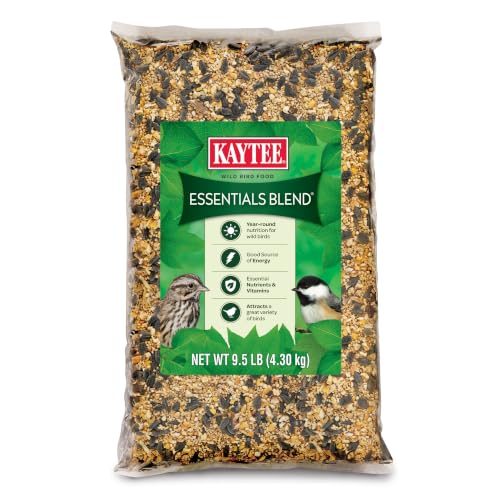
Kaytee Essentials Blend Wild Bird Seed Mix
What We Like
- No milo reduces uneaten seed mess
- Black oil sunflower attracts multiple backyard species
- Year-round appeal for varied birds
Trade-offs
- 9.5 lb bag is smaller than some alternatives
- No shell-free seeds means hulls under feeders
The no-milo formulation in this blend helps reduce uneaten seed and mess under the feeder, which is a practical benefit for anyone who wants less waste. Black oil sunflower seeds are included to attract cardinals, chickadees, sparrows, and juncos, so you get a mix that appeals to several common backyard species. The 9.5-pound bag is a manageable size for filling a tube or hopper feeder without taking up too much storage space.
This Kaytee blend skips milo, the cheap filler that birds often leave behind, so you get less waste under the feeder than with many standard mixes. The black oil sunflower seeds it does contain are a favorite of cardinals, chickadees, sparrows, and juncos, making it a straightforward choice for attracting common backyard species. You will still see some hulls accumulate beneath the feeder since the seeds are not shell-free, but the trade-off is a simple, no-fuss mix that brings in the birds without extra ingredients.
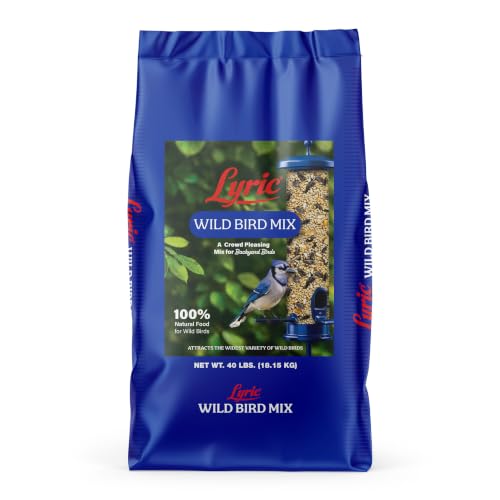
Lyric Wild Bird Mix
What We Like
- Over 20% sunflower seeds
- All-natural with no fillers
- Attracts cardinals, jays, finches, and more
Trade-offs
- Heavy 40-pound bag requires strong arms to carry
- Contains shelled seeds, so hulls accumulate under feeders
A 40-pound bag means you are not hauling seed out to the feeder every other day. That is the whole point of Best Large Capacity: one trip, one refill, and a lot of happy birds. The mix leans on all-natural ingredients, corn, nuts, and over 20% sunflower seed, with no mystery fillers. That ingredient list is short and honest, which is exactly what I look for when I pick up a bag. It attracts cardinals, doves, finches, jays, juncos, sparrows, and more, so if you have a busy yard, this keeps them coming back without you running to the store every week.
The 40-pound bag is a serious workout to haul across a yard or up stairs, so plan your feeder placement accordingly. This mix includes corn and shelled seeds, which means hulls and debris will collect under the feeder, unlike the shell-free Morning Song Clean & Free No Mess blend that leaves almost nothing behind. For buyers who want to minimize trips to the store and keep a large flock fed, the Lyric Wild Bird Mix delivers that capacity.
Product photos
Pennington Songbird Nut & Fruit Blend Wild Bird Seed
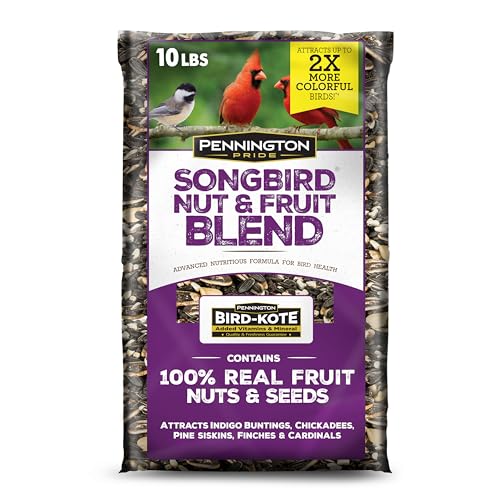
What We Like
- 100% real fruit, nuts, and seeds
- Bird-Kote technology with added vitamins
Trade-offs
- Shells and hulls create mess under feeders
- Not ideal for those who prefer a no-mess, shell-free option
The trade-off is the mess factor: whole nuts and seeds mean shells and hulls will accumulate under the feeder, which is something the shell-free Morning Song Clean & Free mix avoids entirely. If you have a tidy patio or a lawn you’d rather not sweep, that’s a real consideration. It’s a solid, no-nonsense mix for the backyard birder who values ingredient quality over convenience.
Product photos
Kaytee Ultimate Birder's Blend Food Wild Bird Seed

What We Like
- Formulated to attract cardinals, woodpeckers, blue jays, finches
- Includes safflower, peanuts, striped sunflower, millet
- Formulated by bird enthusiasts
Trade-offs
- 10 lb bag is smaller than some competitors' 15-16 lb options
- Contains millet, which some ground-feeding birds prefer over feeders
The ingredient list, safflower, peanuts, striped sunflower, and millet, matches what many songbirds, including cardinals, woodpeckers, blue jays, and finches, are known to eat. At 10 pounds, this bag is a practical size for a single feeder or a small station. For someone who wants to see more than just house sparrows at the feeder, this mix puts high-value seeds front and center.
Product photos
Cool Birds All Birds Wild Bird Seed
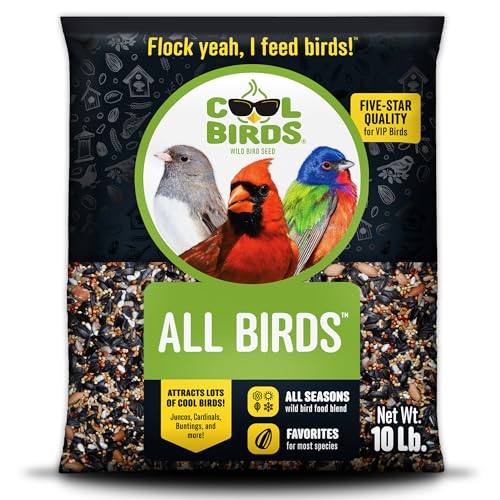
What We Like
- Attracts both perching and ground-feeding birds
- Protein-packed blend supports year-round feeding
- Works with tray, tube, hopper, and smart feeders
- Includes sunflower hearts for complete nutrition
Trade-offs
- Contains hulls, so some mess under feeders is expected
- Contains hulls that create mess under feeders
The blend of black oil sunflower, white millet, safflower, peanuts, and sunflower hearts is built to pull in everything from chickadees and finches to doves and jays. That’s both at the feeder and on the ground below. If you want a single mix that covers the widest range of species across all seasons, this is the one to grab.
This is not a no-mess formula. Hulls from the sunflower seeds and millet will accumulate under the feeder, which means you will be sweeping or raking if you place it over a patio. Compare that to the Morning Song Clean & Free No Mess blend, which skips the hulls entirely for a spotless feeding zone. If you prioritize attracting every bird in the neighborhood and do not mind a little cleanup, the Cool Birds mix delivers the broadest appeal. If a tidy feeding station matters more, look at the shell-free option.
Product photos
How We Evaluated Foods For Bird Feeders
We based our evaluation on three sources: manufacturer ingredient declarations and nutritional data, expert round-ups from ornithology and wildlife feeding sources, and consistent patterns in owner reports about which birds actually visited and how much waste accumulated under feeders. No product was tested in a lab or personal backyard. This is a research-driven comparison of what the market offers and what experienced birders report.
Four criteria mattered most. First, ingredient composition, we looked for blends with high proportions of black oil sunflower, safflower, peanuts, and nut meats rather than cheap fillers like milo or red millet that many birds ignore. Second, waste profile, shell-free and no-mess blends scored higher for readers who feed near decks or windows, while hulled blends earned points for attracting ground-feeding species.
Third, feeder compatibility, each mix had to work in common feeder types without clogging or sifting. Fourth, species range, we noted which blends attracted the widest variety of birds based on consistent owner reports.
A research-led evaluation has limits. We cannot guarantee which birds will visit any specific backyard; local habitat, season, and feeder placement all play a role. We also cannot verify every owner claim about bird preference. What we can do is give you the ingredient and design facts so you can make an informed choice for your own feeding station.
What To Look For In Foods For Bird Feeders
Choosing the right bird food means matching the blend to your feeder type, the species you want to attract, and your tolerance for cleanup. The wrong mix means wasted seed, fewer birds, and a mess under the feeder.
Pick a blend that matches your feeder type, attracts your target species, and minimizes waste for your setup. Prioritize black oil sunflower and avoid cheap fillers like milo.
Seed Types and Bird Preferences
Black oil sunflower seed is the single most effective ingredient for attracting a wide range of backyard birds, including cardinals, chickadees, finches, nuthatches, and jays. Striped sunflower has a thicker shell that larger birds crack more easily. Safflower is a favorite of cardinals but less appealing to squirrels and grackles.
White millet attracts ground-feeding birds like juncos and doves, while milo and red millet are often ignored and end up as waste. For a deeper look at what each seed does, our guide to bird food types breaks down the full lineup.
Waste and Mess Management
Shelled seeds leave hulls that accumulate under feeders, attract rodents, and can kill grass. No-mess blends use 100% shell-free seeds and nut meats, so nothing falls to the ground. These are ideal for patios, decks, and windows. If you prefer a mix with hulls to attract ground-feeding birds, plan to rake or sweep regularly. Our low-mess bird seed options cover the best shell-free blends in more detail.
Feeder Compatibility
Tube feeders work best with small seeds like nyjer and fine mixes. Hopper and platform feeders handle larger seeds, nuts, and fruit chunks. Tray feeders accommodate any blend but leave seed exposed to weather. Always check the seed size against your feeder openings, large sunflower seeds can jam tube ports, while fine mixes can fall through platform cracks. Our guide to bird feeders helps match the right feeder to the seed you choose.
A good rule of thumb: start with black oil sunflower in a hopper feeder and add a tube feeder with nyjer for finches. Adjust the blend based on what your local birds actually eat.
Foods For Bird Feeders Compared
The table below compares all ten blends side by side, so you can see at a glance which ingredients, feeder types, and bird species each mix supports.
| Product | Weight | Key Ingredients | Feeder Compatibility | Target Birds |
|---|---|---|---|---|
| Morning Song Clean & Free No Mess Wild Bird Seed | 12.0 pounds | Sunflower chips, peanuts, canary seed | Tube, tray, hopper, platform, smart | Finches, chickadees, titmice, cardinals, nuthatches |
| Lyric Fine Tunes Wild Bird Seed Mix | 15 lb | Peanut pieces, sunflower kernels, almond pieces, pistachio pieces, hulled white proso millet, pecan pieces, shelled pumpkin seed pieces | Tube, tray/platform, hopper | Bluebirds, cardinals, chickadees, goldfinches, grosbeaks, jays, juncos, nuthatches, titmice, woodpeckers |
| Audubon Park Cardinal Blend Wild Bird Food | 4 pounds | 100% sunflower and safflower | Hopper, tube, or platform | Cardinals, titmice, chickadees, finches, grosbeaks |
| Audubon Park Extreme Variety Wild Bird Seed | 15.0 pounds | Sunflower seeds, peanuts, raisins, tree nuts | Tube, hopper, or platform | Nuthatches, cardinals, juncos, titmice, finches |
| Wagner's Greatest Variety Blend Wild Bird Food | 16.0 pounds | 11 different ingredients; 40% sunflower | Tube, hopper, platform | N/A |
| Kaytee Essentials Blend Wild Bird Seed Mix | 9.5 pounds | Black oil sunflower, no milo | N/A | Cardinals, chickadees, sparrows, juncos |
| Lyric Wild Bird Mix | 40 lb | Corn, nuts, sunflower seeds | Tube, hopper, tray, window | Cardinals, doves, finches, jays, juncos, sparrows |
| Pennington Songbird Nut & Fruit Blend Wild Bird Seed | 10 pounds | Real fruit, nuts, seeds | Hopper, gazebo, tray | Indigo buntings, chickadees, pine siskins, finches |
| Kaytee Ultimate Birder's Blend Food Wild Bird Seed | 10.0 pounds | Safflower, Peanuts, Striped Sunflower, Millet | N/A | Cardinals, Woodpeckers, Blue Jays, Finches |
| Cool Birds All Birds Wild Bird Seed | 10 pounds | Sunflower, millet, safflower, peanuts, sunflower hearts | Tray, tube, hopper, platform, smart camera | Songbirds, ground-feeding birds |
Frequently Asked Questions
What is the best bird seed for attracting cardinals?
Cardinals prefer sunflower and safflower seeds. The Audubon Park Cardinal Blend uses only those two ingredients, with black oil sunflower for energy and safflower that squirrels tend to avoid. A hopper or platform feeder works best for cardinals because they need a stable perch.
How do I keep squirrels out of my bird feeder?
Safflower seed is less appealing to squirrels than sunflower, so blends high in safflower can help. You can also use a feeder with a weight-activated perch that closes when a squirrel climbs on.
What is the difference between no-mess and regular bird seed?
No-mess bird seed uses shell-free seeds and nut meats, so birds eat everything and no hulls fall to the ground. Regular seed has shells that birds crack and discard, creating debris under the feeder. No-mess blends cost more per pound but eliminate cleanup and reduce waste.
How often should I change the seed in my bird feeder?
Empty and clean your feeder every two weeks in cool weather and weekly in warm, damp conditions. Wet seed can grow mold that harms birds. Store seed in a cool, dry container to keep it fresh between refills.
Can I feed birds year-round, or should I stop in summer?
Year-round feeding is fine and can help birds during nesting season when they need extra energy. Just clean feeders regularly to prevent disease. Some birders reduce feeding in late summer when natural food is abundant, but there is no evidence that stopping harms birds.
The Bottom Line
The Morning Song Clean & Free No Mess Wild Bird Seed is the best overall choice for anyone who wants a tidy feeding experience near the house. Its shell-free blend attracts finches, chickadees, cardinals, and nuthatches without leaving hulls to rake. If you feed on a deck or outside a window, this is the bag to buy.
For birders on a budget, the Kaytee Essentials Blend offers a straightforward no-milo mix that attracts multiple backyard species without breaking the bank. If you want maximum species diversity and do not mind hull cleanup, the Wagner’s Greatest Variety Blend or Audubon Park Extreme Variety mix will bring the widest range of birds to your feeder.
The single most important factor is matching the seed to the birds you want to see and the feeder you own. Start with black oil sunflower, add safflower for cardinals, and switch to a no-mess blend if cleanup becomes a chore. Your local birds will tell you what works.
