
10 Best Dog Foods For Dogs With Skin Allergies in 2026
This post contains affiliate links. As an Amazon Associate, we earn from qualifying purchases.
For dogs with skin allergies, the right food can make the difference between constant scratching and a healthy, comfortable coat. Our best overall pick is Hill’s Prescription Diet z/d Skin/Food Sensitivities Dry Dog Food, which uses hydrolyzed proteins that avoid immune detection and includes an ActivBiome+ prebiotic blend to support gut health. We also cover the Blue Buffalo Basics Salmon for a strong limited-ingredient option and the SquarePet Hydrolyzed Protein formula for those who want a non-prescription value choice.
The challenge with skin allergies is that symptoms like itching, redness, and hot spots often stem from a food sensitivity that’s hard to pin down. Many dogs react to common proteins like chicken or beef, and finding a diet that eliminates triggers while still providing complete nutrition requires careful label reading.
This guide is based on research into manufacturer specifications, ingredient sourcing, and patterns in owner feedback for each formula. We looked at hydrolyzed proteins, limited-ingredient diets, novel protein sources, and the fatty acid profiles that support skin health. Here are the 10 best dog foods for dogs with skin allergies.
Top 10 Dog Foods For Dogs With Skin Allergies in the Market

Certain content that appears on this site comes from Amazon. This content is provided "as is" and is subject to change or removal at any time.
The Best Dog Foods For Dogs With Skin Allergies, Reviewed
Hill's Prescription Diet z/d Skin/Food Sensitivities Dry Dog Food

What We Like
- Hydrolyzed proteins avoid immune detection
- Clinically shown to firm loose stool in 3 days
- Omega-6 & 3 support skin health and regeneration
- ActivBiome+ prebiotic blend activates gut microbiome
Trade-offs
- Requires 30 days for visible skin and coat improvement
- Veterinary prescription required for purchase
A 25-pound bag of hydrolyzed chicken protein, broken down small enough to avoid detection by the immune system, is the central trick here. That means fewer skin flare-ups and digestive upsets from food reactions, backed by clinical data showing loose stool firms up in three days. The ActivBiome+ prebiotic blend adds gut support, while Omega-6 and 3 fatty acids work on skin repair. This diet is formulated to manage food sensitivities and support both skin and digestive health in dogs with confirmed issues.
The biggest thing to know is that this food is clinically proven to firm loose stool in just 3 days, so you’ll see digestive relief fast. But patience is still required for the full 30 days needed to see visible skin and coat improvement. Compared to the Royal Canin HP Hypoallergenic Hydrolyzed Protein formula, Hill’s comes in a larger 25-pound bag, while Royal Canin’s 7.7-pound bag is handier for small dogs or short elimination diets. The hydrolyzed chicken protein is broken down so tiny that the immune system can’t detect it, making it a safe option for most food sensitivities, though dogs with extreme poultry allergies might need a different hydrolyzed source.
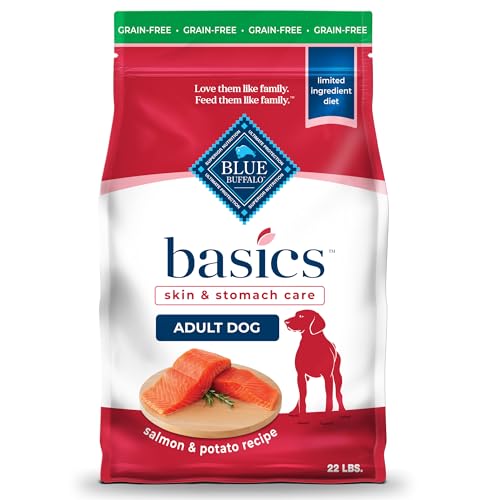
Blue Buffalo Basics Salmon Adult Grain-Free Dry Dog Food
What We Like
- Real salmon is first ingredient
- Grain-free with limited ingredients
- Omega 3 & 6 for skin and coat
- Antioxidant-rich LifeSource Bits
Trade-offs
- Not a hydrolyzed protein formula
- Not suitable for dogs needing hydrolyzed protein
This 22-pound bag of grain-free kibble lists real salmon as the first ingredient, so the protein source is clear and straightforward. The formula excludes chicken by-product meals, corn, wheat, and soy, which are common in many dog foods, and includes Omega 3 and 6 fatty acids along with antioxidant-rich LifeSource Bits. That combination makes it a sensible option for owners looking to avoid those specific ingredients while supporting skin and coat health through the added fatty acids.
If your dog has severe food sensitivities, this isn’t a hydrolyzed protein formula, so a prescription diet like Hill’s Prescription Diet z/d might be necessary. For milder cases, Blue Buffalo Basics offers a grain-free recipe with a single animal protein and no poultry by-products, making it a practical choice to test a limited diet without moving to a prescription option.
Wellness Simple Limited Ingredient Adult Dry Dog Food
What We Like
- Single source salmon protein
- Contains prebiotics for digestive health
- Omega fatty acids for skin and coat
- No corn, wheat, soy, or poultry by-products
Trade-offs
- Manufactured in facility that also processes grains
- Contains potatoes as carbohydrate source
A single source of salmon protein lets you see if fish is a trigger for your dog’s sensitivities, without guessing from a blend of meats. This limited ingredient recipe combines that salmon with potatoes, which are easily digestible carbohydrates, and adds prebiotics and omega fatty acids to support digestive health and coat condition. It’s a grain-free formula that avoids corn, wheat, and soy, and includes taurine for heart health. Made in the USA, it offers some reassurance about quality control.
The trade-off here is that the facility also processes grains, so if your dog has severe grain sensitivities, cross-contamination is a real possibility. Compared to Hill’s Prescription Diet z/d, which uses hydrolyzed chicken protein to virtually eliminate allergen recognition, this Wellness formula relies on intact salmon protein and a simpler ingredient deck. That makes it a better starting point for elimination diets than a prescription hydrolyzed option, but not the final answer for dogs that react to even trace grain exposure.
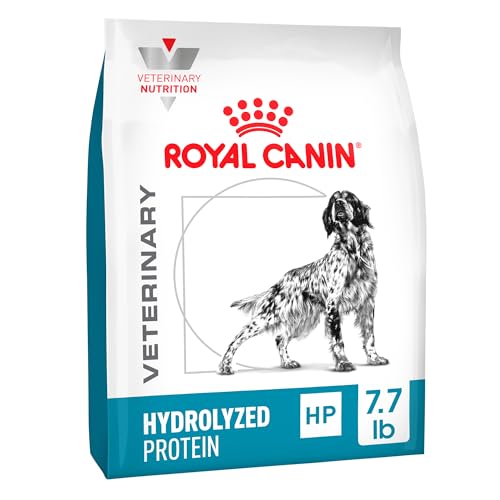
Royal Canin HP Hypoallergenic Hydrolyzed Protein Dog Food
What We Like
- Hydrolyzed soy protein for food sensitivities
- EPA and DHA support skin health
- Formulated to support skin barrier
- Helps regulate digestive transit
Trade-offs
- Not suitable for dogs with soy allergies
- Veterinary prescription required for purchase
Hydrolyzed soy protein broken into low molecular weight peptides makes this formula highly digestible for dogs with food sensitivities. The addition of EPA and DHA fatty acids targets skin and coat support directly, while the formulation also aims to reinforce the skin’s natural protective barrier. This is a precision tool for elimination diets and managing confirmed allergies, backed by Royal Canin’s veterinary-exclusive development process. It suits owners who need a controlled, single-protein approach and are willing to follow a veterinarian’s guidance closely.
The hydrolyzed soy protein in this formula is broken into low molecular weight peptides, making it highly digestible for dogs with food sensitivities, so it’s easier on the stomach than standard proteins. That precision comes with a catch: the bag holds 38 cups of food, which means more frequent reordering for larger dogs. For owners committed to a veterinary-supervised elimination diet, this is a tightly focused option; just plan for the smaller bag.
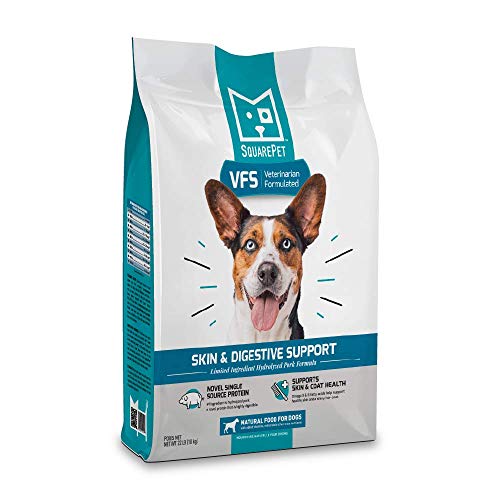
SquarePet Hydrolyzed Protein Skin and Digestive Support Dry Dog Food
What We Like
- Hydrolyzed protein limits allergic reactions
- Limited ingredient diet with single carb source
- Omega 3 & 6 for skin and coat health
- No chemical preservatives or fillers
Trade-offs
- 22 lb bag is heavy for small owners
- Not suitable for dogs with pork allergy
A no-prescription hydrolyzed protein diet gives owners a practical way to address food sensitivities without a vet visit. The hydrolyzed protein can help limit skin and digestive reactions, while the limited ingredient diet with one primary carbohydrate source reduces potential triggers. Added omega-3 and omega-6 fatty acids, including DHA and EPA, support healthy skin and coat, immune system, and brain function. For those who want the hydrolyzed approach without the prescription requirement, this is a straightforward option.
Compared to the Hill’s Prescription Diet z/d formula, which relies on hydrolyzed chicken and is a #1 veterinarian recommended option, SquarePet’s formula offers a no-prescription alternative. The 22-pound bag is manageable for most households, though the weight might be a bit much for someone who prefers smaller bags.
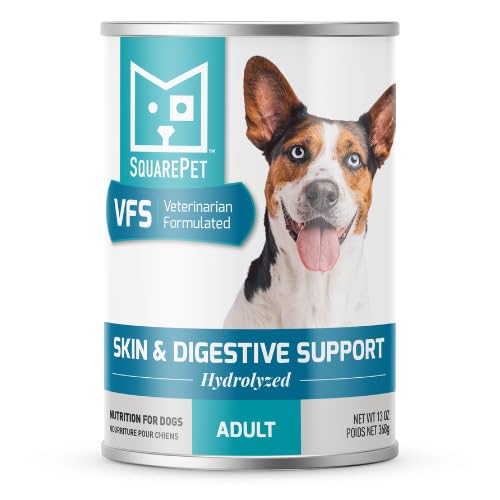
SquarePet VFS Skin & Digestive Support Wet Dog Food
What We Like
- Hydrolyzed single-source pork protein
- Omega-3 & 6 for skin and coat
- Limited ingredient formula
- All-natural, no artificial ingredients
Trade-offs
- Wet food only, not a dry kibble
- Requires refrigeration after opening
A hydrolyzed pork protein as the sole protein source means this wet food is designed to minimize allergic reactions in dogs with sensitive skin and digestive issues. Combined with omega-3 and omega-6 fatty acids, including DHA and EPA, this formula directly supports skin health and coat condition. It’s a targeted option for dogs who need a novel, easily digestible protein and a limited ingredient list without the fillers or artificial additives found in many mainstream wet foods.
This is a wet food only, so it won’t work for owners who prefer the convenience or dental benefits of dry kibble. Compared to the Hill’s Prescription Diet z/d dry food, which uses hydrolyzed chicken, SquarePet’s wet formula offers a different protein source (pork) and a more straightforward limited ingredient list. For dogs that tolerate pork well and need the moisture content of wet food for hydration or palatability, this is a specialist choice.
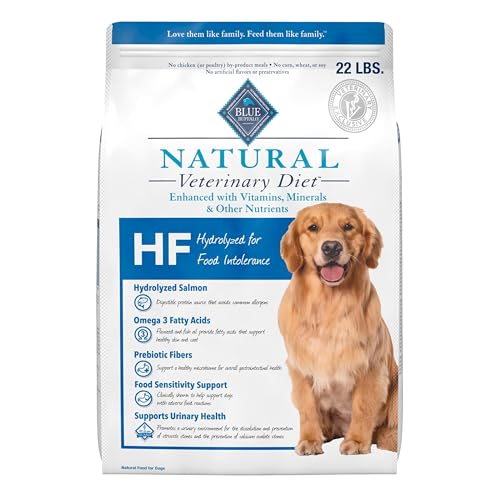
Blue Buffalo Natural Veterinary Diet Hydrolyzed Salmon Dry Dog Food
What We Like
- Hydrolyzed salmon as #1 ingredient
- Omega 3 from fish oil and flaxseed
- No chicken by-product meals
- No corn, wheat, or soy
Trade-offs
- Requires veterinary prescription
- Not suitable for dogs without diagnosed food sensitivities
A 22-pound bag of hydrolyzed salmon protein means the protein molecules are broken down small enough that most dogs with food sensitivities won’t react to them, that’s the whole point of a hydrolyzed diet. This Blue Buffalo formula uses hydrolyzed salmon as the #1 ingredient, then backs it with Omega 3 fatty acids from fish oil and flaxseed, which directly support skin and coat health. For a dog whose allergies show up as itchy skin or a dull coat, this is a targeted approach that skips the guesswork of limited-ingredient diets. It’s a veterinary-prescribed food, so it’s meant for dogs with diagnosed intolerances, not for casual trial-and-error feeding.
Because it’s a prescription diet, you’ll need a vet’s okay before buying, which adds a step. Compared to the Hill’s Prescription Diet z/d formula, which uses hydrolyzed chicken, this Blue Buffalo version offers a different protein base. For owners who have already ruled out salmon as an allergen, the hydrolyzed format and clean ingredient list may be worth considering.
Product photos
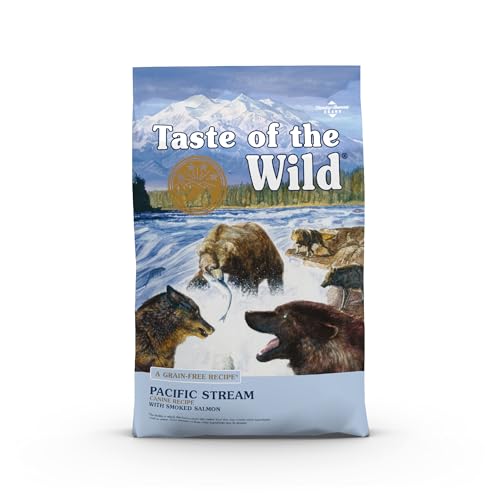
Taste of the Wild Pacific Stream Adult Dry Dog Food Salmon
What We Like
- Real fish is the #1 ingredient
- Omega fatty acids support skin and coat
- Includes proprietary probiotics for digestion
- Made in the USA by family-owned company
Trade-offs
- 5 lb bag is small for larger breeds
A 32% protein content with real fish as the first ingredient means this food is built around a single animal protein source, which can help narrow down triggers for dogs with skin allergies. The omega fatty acids help nourish the skin and coat, and the inclusion of species-specific K9 strain probiotics adds a digestive angle that matters when you’re already managing a sensitive system. This is a grain-free recipe, and the family-owned US production uses quality ingredients from trusted domestic and global sources.
Product photos
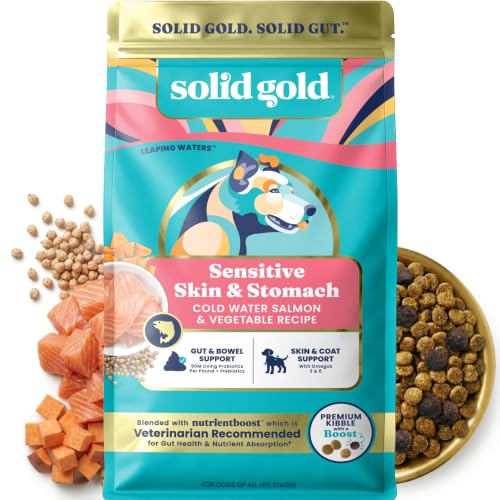
Solid Gold Salmon Dry Dog Food for Sensitive Stomach
What We Like
- 90 million probiotics per lb
- Grain-free with salmon & veggies
- Omega 3 & 6 from salmon oil
- No BHA, BHT, or carrageenan
Trade-offs
- Not a limited-ingredient diet
- Contains multiple superfoods, not for strict elimination diets
90 million probiotics per pound is a concrete number that sets this kibble apart for dogs whose skin allergies come with digestive sensitivity. The live cultures target gut balance directly, which often calms inflammation that shows up as itching or hot spots. Salmon as the main protein is easy to digest and pairs with omega 3 and 6 from salmon oil to promote a healthy skin and coat from the inside out. This is a grain-free, holistic formula that addresses both stomach trouble and allergy symptoms without resorting to a prescription diet.
The trade-off is that this isn’t a limited-ingredient or hydrolyzed protein food, so if your dog needs to avoid a broad range of potential triggers, you’ll want something like Hill’s Prescription Diet z/d instead. Solid Gold packs in superfoods and probiotics, which is great for general sensitivity but not for strict elimination trials. For a dog that just needs gentle digestion and skin support without the veterinary price tag, this bag delivers real probiotic density and clean ingredients.
Product photos
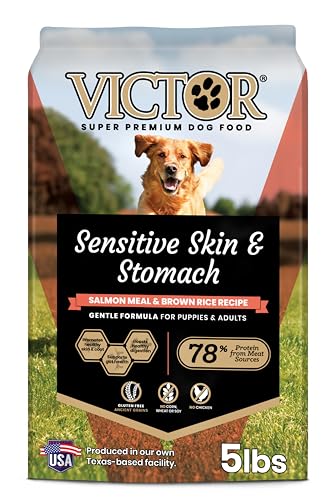
VICTOR Sensitive Skin & Stomach Salmon Meal & Brown Rice Dog Food
What We Like
- Salmon meal as first ingredient
- No chicken for allergy-prone dogs
- Prebiotics and probiotics for gut health
- Omega 3, 6, and Vitamin E for skin
Trade-offs
- Not suitable for dogs needing a grain-free diet
- Lacks a limited-ingredient formula for extreme sensitivities
The first ingredient is salmon meal, which provides a concentrated animal protein source without chicken, a common allergen for dogs with skin sensitivities. Combined with prebiotics and probiotics, this formula targets both the gut and the coat, since digestive health and skin condition are closely linked. Omega 3, Omega 6, and Vitamin E further support skin repair and reduce inflammation, making it a practical choice for dogs that react to poultry-based diets.
The VICTOR Sensitive Skin & Stomach Salmon Meal & Brown Rice Dog Food is formulated with high-quality salmon meal as the first ingredient, providing high amounts of animal protein to help build and maintain lean muscle and sustain energy for an active life. It includes prebiotics and probiotics to support gut health and a strong immune system, which are vital for overall health and longevity. This recipe is gluten-free and contains no chicken, making it a good option for dogs with common allergies, though it does include grains for those that tolerate them.
Product photos
How We Evaluated Dog Foods For Dogs With Skin Allergies
We built this guide by studying manufacturer ingredient lists, guaranteed analyses, and feeding guidelines, then cross-referencing those details with patterns reported by owners whose dogs have confirmed skin allergies. We also reviewed expert recommendations on hydrolyzed proteins, limited-ingredient diets, and the role of omega fatty acids in skin barrier function. For a deeper look at the underlying issue, our guide on skin conditions explains what makes a food suitable for allergy-prone dogs.
Three criteria mattered most. First, protein source and hydrolysis: hydrolyzed proteins are broken into fragments too small for the immune system to recognize, making them ideal for elimination diets. Second, ingredient count and novelty: limited-ingredient diets reduce the chance of triggering a reaction by using a single protein and carbohydrate source. Third, fatty acid content: omega-3 and omega-6 fatty acids support skin barrier repair and reduce inflammation.
A research-led evaluation has limits. We cannot predict how an individual dog will react to a specific protein or additive. The best approach is to work with your veterinarian to confirm the allergen, then choose a formula that avoids it entirely. Our guide on common food allergens can help you identify the ingredients most likely to cause issues.
What To Look For In Dog Foods For Dogs With Skin Allergies
Choosing a food for a dog with skin allergies means reading past the front-of-bag marketing and focusing on the protein source, fat profile, and carbohydrate base. The right formula eliminates triggers while supporting skin repair from the inside out.
Look for a single novel or hydrolyzed protein source, a limited carbohydrate list, and a guaranteed omega-3 and omega-6 content. Avoid foods with chicken, beef, dairy, or egg if those are known allergens for your dog. A veterinary elimination diet is the gold standard for identifying triggers.
Protein Source: Hydrolyzed vs. Novel vs. Limited
The protein is the most common allergen in dog food. Hydrolyzed proteins, like those in Hill’s z/d and Royal Canin HP, are broken down so the immune system cannot react to them. These are the safest choice for dogs with confirmed food allergies but require a veterinary prescription. If you want to avoid the prescription route, our guide on hypoallergenic dog food covers non-prescription hydrolyzed options like SquarePet.
Novel proteins — salmon, duck, venison, or kangaroo — work well if your dog has never eaten them before. Salmon appears in several of our picks, including Blue Buffalo Basics and Wellness Simple, because it is less likely to trigger a reaction than chicken or beef. Limited-ingredient diets use a single protein and a single carbohydrate, making it easier to isolate the cause of a reaction.
Fatty Acid Profile: Omega-3 and Omega-6
Omega-3 fatty acids (EPA and DHA from fish oil) reduce inflammation in the skin, while omega-6 supports the skin barrier. Look for a food that lists a specific fish oil source — salmon oil, menhaden fish oil, or flaxseed — rather than vague “animal fat.” The SquarePet Hydrolyzed formula and Solid Gold Salmon both include salmon oil for targeted skin support.
Carbohydrate Source and Additives
Grains like rice and oatmeal are less likely to cause allergies than corn or wheat, but some dogs react to grains entirely. Grain-free options like Taste of the Wild Pacific Stream use sweet potatoes or peas instead. Avoid foods with artificial preservatives (BHA, BHT), carrageenan, or propylene glycol, which can irritate sensitive digestive systems.
- Check the first five ingredients: the protein source should be the first or second ingredient.
- Confirm the food is free of the specific protein your dog reacts to (chicken, beef, dairy, egg).
- Look for a “manufactured in a facility that also processes” warning if your dog has severe allergies.
- Choose a bag size that matches your dog’s eating rate to avoid fat rancidity in large bags.
If your dog’s symptoms include ear infections, chronic licking, or anal gland issues, those are strong signs of a food allergy worth investigating with your vet.
Dog Foods For Dogs With Skin Allergies Compared
The table below compares the protein source, formula type, and key skin-supporting features of each pick so you can quickly match a food to your dog’s needs.
| Product | Protein Source | Key Fatty Acids | Made In |
|---|---|---|---|
| Hill's Prescription Diet z/d Skin/Food Sensitivities Dry Dog Food | Hydrolyzed Chicken | Omega-6 & 3 | N/A |
| Blue Buffalo Basics Salmon Adult Grain-Free Dry Dog Food | Real Salmon #1 | Omega 3 & 6 | N/A |
| Wellness Simple Limited Ingredient Adult Dry Dog Food | Salmon (single) | omega fatty acids | USA |
| Royal Canin HP Hypoallergenic Hydrolyzed Protein Dog Food | Hydrolyzed soy protein | EPA and DHA | N/A |
| SquarePet Hydrolyzed Protein Skin and Digestive Support Dry Dog Food | Hydrolyzed Pork | Omega 3 & 6 incl. DHA & EPA | USA |
| SquarePet VFS Skin & Digestive Support Wet Dog Food | Hydrolyzed pork | Omega-3 & 6 (DHA & EPA) | USA |
| Blue Buffalo Natural Veterinary Diet Hydrolyzed Salmon Dry Dog Food | Hydrolyzed Salmon | Omega 3 fatty acids | N/A |
| Taste of the Wild Pacific Stream Adult Dry Dog Food Salmon | N/A | Omega Fatty Acids | USA |
| Solid Gold Salmon Dry Dog Food for Sensitive Stomach | Salmon | omega 3 & 6 | USA |
| VICTOR Sensitive Skin & Stomach Salmon Meal & Brown Rice Dog Food | Salmon Meal (no chicken) | Omega 3, Omega 6 | USA |
Frequently Asked Questions
How do I know if my dog has a food allergy or environmental allergy?
Food allergies typically cause year-round itching, ear infections, and gastrointestinal issues like loose stools. Environmental allergies tend to be seasonal and cause paw licking and face rubbing. A veterinary elimination diet is the most reliable way to tell the difference. Our guide on identifying food allergies walks through the process step by step.
What is a hydrolyzed protein dog food?
Hydrolyzed protein is broken down into peptides too small for the dog’s immune system to recognize as an allergen. This makes it safe for dogs with confirmed food sensitivities because the body cannot mount an allergic response to it. These formulas require a veterinary prescription.
Can I switch my dog to a new food without a prescription?
Yes, if you choose a non-prescription limited-ingredient or novel protein formula. The SquarePet Hydrolyzed Protein and Blue Buffalo Basics are both available without a prescription. However, a prescription hydrolyzed diet is the safest option for dogs with severe or multiple allergies.
How long does it take to see improvement after changing food?
Most dogs show reduced itching and firmer stools within two to four weeks on a new diet. Hill’s z/d is clinically shown to firm loose stool in three days, but visible skin and coat improvement can take up to 30 days. Give a new food at least eight weeks before concluding it is not working.
Are grain-free diets better for dogs with skin allergies?
Not necessarily. True grain allergies are less common than protein allergies. Many dogs with skin allergies do fine on grain-inclusive foods like VICTOR Sensitive Skin & Stomach. A grain-free diet only helps if your dog has a confirmed grain sensitivity.
The Bottom Line
The best overall pick for dogs with skin allergies is Hill’s Prescription Diet z/d Skin/Food Sensitivities Dry Dog Food. It is ideal for dogs with confirmed food sensitivities that need a clinically proven hydrolyzed diet that supports both skin and digestive health. If you want to avoid the prescription route, the SquarePet Hydrolyzed Protein formula offers a similar approach without a vet visit.
For owners who prefer a limited-ingredient diet with a single novel protein, the Blue Buffalo Basics Salmon is a strong choice. And for dogs with chicken allergies who need gut and skin support, the VICTOR Sensitive Skin & Stomach delivers prebiotics and probiotics in a salmon-based formula.
The single most important factor is identifying the specific protein your dog reacts to and choosing a food that eliminates it completely. Work with your veterinarian to run an elimination diet, then use this guide to find a formula that fits your dog’s needs and your budget.
