
6 Best Dog Food To Help Gain Weight in 2026
This post contains affiliate links. As an Amazon Associate, we earn from qualifying purchases.
For dogs that need to put on pounds, the Bully Max Puppy Food Growth Formula earns our Best Overall spot. It has industry-leading calorie density per cup and a chicken-free lamb formula that works for sensitive stomachs. Owners of underweight dogs with food allergies should also consider the Best Wet Food For Underweight Dogs pick from Evanger’s, while active breeds that burn through calories fast may prefer the Best High Protein Dry Kibble from Victor.
The real challenge with weight gain isn’t just feeding more, it’s finding a food that delivers concentrated calories without triggering digestive upset or relying on cheap fillers. A dog that won’t eat, can’t digest, or reacts to common proteins will struggle to gain no matter how much you put in the bowl.
This guide is built from manufacturer specifications, ingredient disclosures, and patterns reported by owners of underweight dogs. We compared calorie density, protein-to-fat ratios, protein sources, and digestibility across six formulas to help you match the right food to your dog’s specific needs.
Top 6 Dog Foods To Help Gain Weight in the Market

Certain content that appears on this site comes from Amazon. This content is provided "as is" and is subject to change or removal at any time.
The Best Dog Foods To Help Gain Weight, Reviewed
Bully Max Puppy Food Growth Formula
What We Like
- Chicken-free lamb formula for sensitive stomachs
- Full ingredient disclosure for label readers
- Free from corn, soy, wheat, chemicals
Trade-offs
- 5 lb bag size limits bulk buying
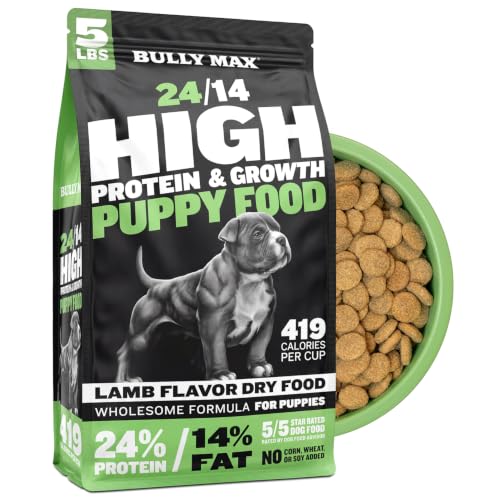
With lamb as the primary ingredient and brown rice for digestibility, this recipe skips chicken entirely, which many owners find helpful for puppies with sensitive stomachs. The 24% protein and 14% fat content supports steady growth without overloading the system. Each cup delivers 419 calories, providing enough fuel for energetic play sessions without requiring excessive portions. Omega fatty acids in the formula also promote healthy skin and can help relieve itching, addressing common concerns during a puppy’s development. This makes it a practical choice for breeds prone to food sensitivities, from French Bulldogs to German Shepherds.
The 5-pound bag means you’ll need to reorder more often than with larger bags like Victor Hi-Pro Plus’s 30-pound option. While the 14% fat content supports growth, it’s not the highest available, so some puppies may need additional calories from other sources. Still, for a single bag with clean ingredients and full transparency, this is a reliable choice for puppy nutrition.
Evanger's Heritage Classic Puppy and Underweight
What We Like
- Gluten-free recipe for sensitive dogs
- No grains, artificial additives, or fillers
- Versatile as meal or mix-in
Trade-offs
- Only one protein option (chicken)
- Canned format means less convenient storage than dry
A 12.8-ounce can of wet food packs enough moisture and protein to help underweight dogs gain weight without relying on fillers or grains. This chicken loaf recipe is designed for puppies and dogs that need extra meal support, with a texture that portions and mixes easily into a complete meal or a topper. The straightforward ingredient list, free from gluten, artificial additives, and grains, makes it a smart choice for dogs with food sensitivities or allergies, especially when following a vet-guided diet. For owners who value transparency and tradition, this formula traces back to Dr. Fred Evanger’s original recipe, trusted by dog sport champions for over 90 years.
This canned food uses only chicken as a protein source, so dogs with poultry sensitivities or owners wanting variety will need to look elsewhere. The loaf-style texture portions and mixes easily, making it a practical choice for dogs that need extra meal support. With straightforward, gluten-free ingredients and no artificial additives, it’s a smart option for dogs with food sensitivities or those following a vet-guided diet.
Victor Hi-Pro Plus Dry Dog Food

What We Like
- 30% protein from multiple meat meals
- Gluten free and super premium nutrition
- 20% fat content
Trade-offs
- No calorie-per-cup number listed for precise feeding
- Not suitable for large breed puppies over 70 lb adult weight
With 30% protein and 20% fat, this kibble packs the kind of calorie and protein density that underweight dogs need to rebuild muscle and put on pounds. The multi-meat formula, beef, chicken, pork, and fish meals, means a dog gets a variety of animal-based amino acids in every bowl, which is exactly what a high-energy or recovering dog requires. The VPRO blend of supplements is a nice touch for overall health, but the real draw here is the straightforward macronutrient profile: high protein, high fat, no gluten fillers.
The trade-off is that this isn’t a single-protein food, so if your dog has a known sensitivity to chicken or beef, you’ll need to read the ingredient list carefully. Compared to Purina Pro Plan Sport 30/20, which also hits 30/20 but uses chicken as the primary protein, Victor’s multi-meal approach offers more variety but less predictability for sensitive stomachs. It’s also not formulated for growth of large size dogs (70 lb. or more as an adult), so if you’re feeding a growing Great Dane, look elsewhere. For most active adult dogs, though, this is a straightforward, high-calorie option that delivers what the label promises.
Product photos
Purina Pro Plan Sport 30/20 Dry Dog Food

What We Like
- 30% protein and 20% fat
- Real chicken as first ingredient
- Optimizes oxygen metabolism for endurance
- Amino acids support muscle recovery
Trade-offs
- Chicken-based, not for chicken-sensitive dogs
- Not for dogs with chicken allergies
The 30/20 protein-to-fat ratio is the most decisive number here, 30% protein fuels lean muscle maintenance while 20% fat provides concentrated calories for active dogs who need to gain weight without losing condition. This formula is built for canine athletes, with real chicken as the first ingredient and added amino acids that support muscle recovery after exercise.
The 30% protein and 20% fat in this formula are designed to fuel metabolic needs and maintain lean muscle in canine athletes of all ages. This means it’s meant for dogs that are regularly working or competing. Compared to Bully Max Puppy Food’s 24/14 ratio, this is a higher-protein, higher-fat option that provides concentrated nutrition to optimize oxygen metabolism for increased endurance.
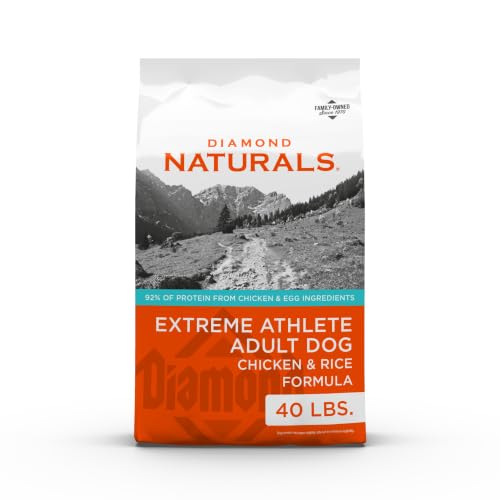
Diamond Naturals Extreme Athlete Dry Dog Food
What We Like
- 32% protein for active dogs
- Includes proprietary probiotics
- Omega fatty acids for skin and coat
Trade-offs
- Not formulated specifically for weight gain
- Large 40 lb bag requires storage space
With 32% protein and real chicken included, this food is built for dogs that burn serious calories, not for couch potatoes. The formula targets highly active and sporting breeds, so if your dog runs, hunts, or competes, the energy density and nutrient profile support that lifestyle without needing to overfeed. Superfoods like blueberries and oranges add antioxidants, and the species-specific probiotics aim to keep digestion on track even when activity levels spike.
The trade-off is that this isn’t a dedicated weight-gain formula, it’s a performance diet that maintains lean muscle rather than packing on pounds. Compared to Bully Max Puppy Food Growth Formula, which offers a higher calorie-per-cup count for puppies needing bulk, Diamond Naturals Extreme Athlete relies on activity level to drive results. For a sedentary dog that needs to gain weight, the high protein might not convert to mass efficiently, and the 40 lb bag demands a dedicated storage spot.
Product photos
Pedigree High Protein Wet Dog Food Beef & Bison
What We Like
- 40g+ protein per can
- Slow cooked with real beef & bison
- Fortified with vitamins & minerals
- Can serve as topper or complete meal
Trade-offs
- Wet food has lower calorie density than dry
- Requires refrigeration after opening
- Not a standalone high-calorie weight gain formula
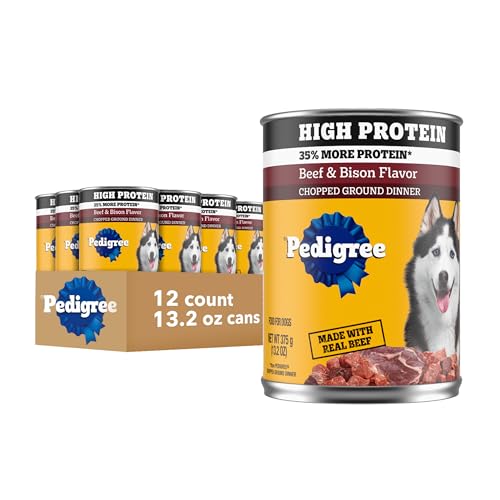
Forty grams of protein per can is the headline here, and for a wet topper that’s a serious number. The slow-cooked beef and bison provide real meat as the base, and the formula is fortified with vitamins and minerals to support immune health. This works best for dogs who need a protein boost in their meals, whether served as a topper or a complete meal.
With over 40 grams of protein per can, this Pedigree wet food is a high-protein option for adult dogs, slow-cooked with real beef and bison. It’s fortified with vitamins and minerals to support a healthy immune system, and you can serve it as a topper, mixed with dry kibble, or as a complete meal on its own. Because it’s wet food, it has a higher water content than dry kibble, so if your dog needs more calories per bite, a dry food like Victor Hi-Pro Plus might be a better fit.
Product photos
How We Evaluated Dog Foods To Help Gain Weight
Our evaluation started with the numbers that matter most for weight gain: calories per cup, protein percentage, and fat percentage. We pulled these from guaranteed analysis panels and feeding guides on every bag and can. When a manufacturer didn’t list calorie density, as with Victor Hi-Pro Plus, we noted that as a practical limitation for owners who need to measure precisely.
We ranked formulas by three criteria. Calorie density came first because a dog with a small appetite needs more energy per bite. Protein source and ingredient transparency came second, a food that triggers allergies or sensitivities won’t stay down long enough to help. Fat content came third, since dietary fat is the most concentrated energy source and supports healthy weight gain when balanced correctly.
This is a research-led comparison, not a feeding trial. We read labels, compared formulations, and cross-referenced owner reports of weight gain success and digestive tolerance. If you want to dig deeper into specific categories, our guides to dry dog food for weight gain and wet dog food for weight gain break down the options further.
What To Look For In Dog Foods To Help Gain Weight
Not all high-calorie dog foods are created equal. A bag that promises weight gain but relies on cheap carbohydrates will add fat without muscle. Here is what to check on the label.
Look for a food with high calorie density, protein from named animal sources, and moderate fat content. Avoid corn, soy, and wheat fillers that dilute nutrient density. Choose a protein your dog tolerates well; chicken is common but a leading allergen.
Calorie Density Per Cup
The most direct measure of a weight-gain food is how many calories fit in a single cup. A high-calorie dog food typically delivers more calories per cup than standard maintenance foods. This matters most for small-breed dogs or picky eaters who physically cannot eat large volumes. Bully Max’s Growth Formula leads this metric among our picks, packing more calories per cup than any other dry food we evaluated.
Protein Source and Digestibility
A food for underweight dogs must be digestible first. If the protein source triggers gas, loose stool, or vomiting, the calories never get absorbed. Novel proteins like lamb, bison, or fish are safer bets for dogs with unknown food sensitivities. Chicken is the most common protein in dog food and the most common allergen. If your dog has itchy skin or soft stool on chicken-based foods, switch to a novel protein before worrying about calorie content.
Fat Content and Fatty Acid Profile
Fat provides more than twice the calories of protein or carbohydrates by weight. A weight gain dog food should list at least moderate fat content, and ideally higher. Omega-3 and omega-6 fatty acids from fish oil or flaxseed also support skin health during rapid weight changes. Be cautious with very high fat percentages for dogs prone to pancreatitis; check with your veterinarian first.
- Compare calorie density across brands, not all cups are the same size or weight.
- Check the first three ingredients: they should be named animal proteins, not grains or by-products.
- Look for a guaranteed analysis that lists both minimum protein and minimum fat.
- Avoid foods with artificial preservatives like BHA, BHT, or ethoxyquin.
A rule of thumb: if the bag lists more than three grains or starches before the second protein source, the calorie density is coming from carbs, not meat.
Dog Foods To Help Gain Weight Compared
The table below compares the six foods side by side, focusing on the specs that matter most for weight gain: calorie density, protein, fat, and protein source.
| Product | Protein | Fat | Form |
|---|---|---|---|
| Bully Max Puppy Food Growth Formula | 24% | 14% | Dry |
| Evanger's Heritage Classic Puppy and Underweight | N/A | N/A | Canned wet food |
| Victor Hi-Pro Plus Dry Dog Food | 30% | 20% | Dry |
| Purina Pro Plan Sport 30/20 Dry Dog Food | 30% | 20% | Dry |
| Diamond Naturals Extreme Athlete Dry Dog Food | 32% | N/A | Dry |
| Pedigree High Protein Wet Dog Food Beef & Bison | N/A | N/A | Wet canned |
Frequently Asked Questions
How quickly can a dog gain weight on high-calorie food?
Most dogs show visible improvement within 2-4 weeks on a properly portioned food for gaining weight. Weight gain speed depends on the calorie deficit being filled, the dog’s metabolism, and consistency of feeding. A gain of 1-2% of body weight per week is considered safe.
Should I feed wet or dry food to help my dog gain weight?
Dry kibble for weight gain offers the highest calorie density per volume, making it the most efficient choice for most dogs. Wet food provides more moisture and can be easier to digest, but a canned food for weight gain alone may not deliver enough calories per can. Many owners combine a calorie-dense dry food with a wet topper to boost both calories and palatability.
What if my dog is underweight but won’t eat enough?
A picky eater may need a more palatable food or a different texture. Warming wet food, adding a small amount of warm water to kibble, or using a high-protein topper can stimulate appetite. If your dog consistently refuses food, rule out dental pain or medical issues with your veterinarian before switching foods.
Can I just feed more of my dog’s current food to help them gain weight?
Feeding larger portions of a standard maintenance food often leads to loose stool because the dog’s digestive system cannot handle the volume. A calorie-dense food lets you deliver more energy in a smaller portion. If you need to adjust portions for weight gain, increase gradually per week and monitor stool quality.
How do I know if my dog needs to gain weight?
You should be able to feel your dog’s ribs with a light touch of fat covering them. If ribs are easily visible, the waist is severely tucked, or the spine and hip bones protrude, your dog is underweight. Always consult a veterinarian before starting a weight gain program, especially if the weight loss was sudden or unexplained.
The Bottom Line
For most owners looking to put weight on an underweight dog, the Bully Max Puppy Food Growth Formula is the most efficient tool available. Its calorie density means you feed less volume for more energy, and the chicken-free lamb formula sidesteps the most common dietary sensitivities. It is the best starting point for any dog that needs to gain weight without digestive drama.
If your dog has known food allergies or refuses dry food, the Evanger’s Heritage Classic Puppy and Underweight wet food offers a gentle, grain-free alternative that works well as a complete meal or a mix-in. For active or working breeds that need to maintain muscle while gaining weight, the Victor Hi-Pro Plus Dry Dog Food delivers the highest protein-to-fat ratio of any pick here.
The single most important factor in successful weight gain is finding a food your dog will eat consistently and digest completely. Start with a novel protein, check the calorie density, and feed to condition rather than a bag recommendation. Your veterinarian can help you set a target weight and timeline.
