
10 Best Dog Food For Puppies To Gain Weight in 2026
This post contains affiliate links. As an Amazon Associate, we earn from qualifying purchases.
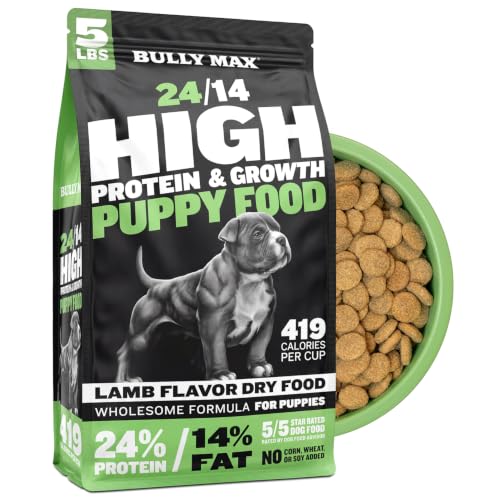
For puppies who need to gain weight, Bully Max Puppy Food High Protein Growth Formula is the best overall pick thanks to its lamb-based, chicken-free recipe with transparent ingredient sourcing and postbiotics for gut support. For large breed puppies, Diamond Naturals Large Breed Puppy Lamb & Rice delivers DHA and joint support, while Solid Gold High Calorie Chicken Wet Dog Food provides a soft, digestible option for sensitive stomachs.
A growing puppy that isn’t gaining weight raises real concern. The challenge is finding a formula that packs enough calories and protein without triggering digestive upset or using low-quality fillers. Puppy metabolism varies by breed and age, so the right food must match both energy needs and ingredient tolerances.
This guide is based on a careful review of manufacturer specifications, ingredient lists, expert nutrition round-ups, and patterns in owner feedback. We focused on calorie density, protein quality, breed-specific formulations, and digestive support to help you choose with confidence.
Top 10 Dog Foods For Puppies To Gain Weight in the Market
Certain content that appears on this site comes from Amazon. This content is provided "as is" and is subject to change or removal at any time.
The Best Dog Foods For Puppies To Gain Weight, Reviewed
Bully Max Puppy Food High Protein Growth Formula
What We Like
- Lamb-based, chicken-free recipe
- Includes postbiotics for gut support
- Full ingredient disclosure
Trade-offs
- Not formulated for large-breed sustained feeding
The lamb-and-rice formula keeps the protein at 24% and fat at 14%, a balanced ratio that avoids the digestive upset some high-fat blends cause. With postbiotics and a full ingredient list, it’s a straightforward choice for owners who want to know exactly what goes into the bowl.
Bully Max’s smaller package makes more sense for small or medium breeds or for owners who want to test the formula before committing to a larger volume. It’s a premium-calorie food in a modest bag, and that trade-off is worth weighing if your puppy is on the bigger side.
Purina Pro Plan Sport 30/20 High Protein

What We Like
- 30% protein and 20% fat for energy
- Real chicken is the first ingredient
- Amino acids support post-exercise muscle recovery
- Concentrated nutrition optimizes oxygen metabolism
Trade-offs
- Not formulated specifically for puppies needing weight gain
- Not suitable for small breed puppies or sensitive stomachs
With 30% protein and 20% fat, this formula provides concentrated nutrition that optimizes oxygen metabolism for increased endurance, making it a strong choice for active dogs who need sustained energy. Real chicken is the first ingredient, and the amino acid profile supports muscle recovery after exercise, which helps maintain lean muscle during prolonged activity. It suits owners who want a high-protein, high-fat kibble that fuels stamina rather than just adding weight.
The trade-off is that this formula prioritizes performance over puppy-specific weight gain. If your goal is steady weight gain for a growing pup rather than fueling an active adult, the Bully Max offers a more balanced calorie profile for that purpose.
VICTOR Hi-Pro Plus Dry Dog Food

What We Like
- Multi-meat formula with four protein sources
- Suitable for all life stages
- Made in USA facility
Trade-offs
- Contains chicken, beef, pork, and fish
- Not suitable for large breed puppies over 70 lbs
With 30% protein and 20% fat, this formula delivers a dense nutrient profile that supports muscle development and sustained energy for active dogs. The multi-meat blend of beef, chicken, pork, and fish meals provides a range of amino acids to help puppies grow steadily from weaning through adulthood. That makes it a practical choice for owners who want one bag that works for a pregnant dam, a litter of pups, and the family dog all at once.
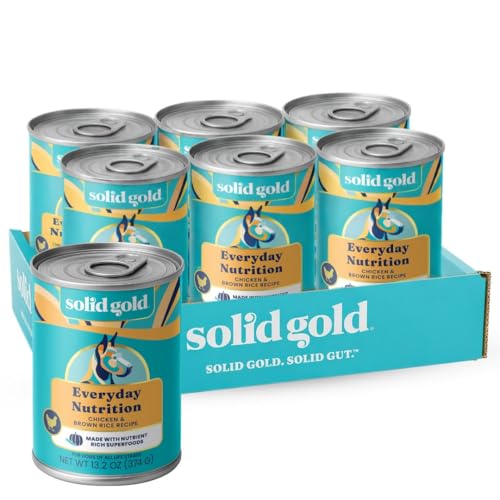
Solid Gold High Calorie Chicken Wet Dog Food
What We Like
- Chicken and whole grains for digestion
- High-protein formula supports lean muscle
- Soft pate texture easy to chew
- Can serve as meal or topper
Trade-offs
- Canned format adds weight per serving
- Not a dry kibble for free-feeding
This wet food packs chicken, brown rice, barley and flaxseed into a soft pate that supports gut health and digestion. The high-protein chicken fuels lean muscle development, while the whole grains and superfoods keep the digestive tract running smoothly. Because it’s a canned food, each serving delivers moisture and calories in a form that’s easy to chew and digest. That makes it a practical option for dogs who turn up their nose at dry kibble or have trouble chewing.
Canned food is heavier per serving than dry kibble, so you’ll go through more cans to match the caloric density of a dry formula. That means more cans to store. But for a dog that needs digestive support, the whole-grain and flaxseed ingredients here address gut health, which a high-calorie dry food alone might not provide.
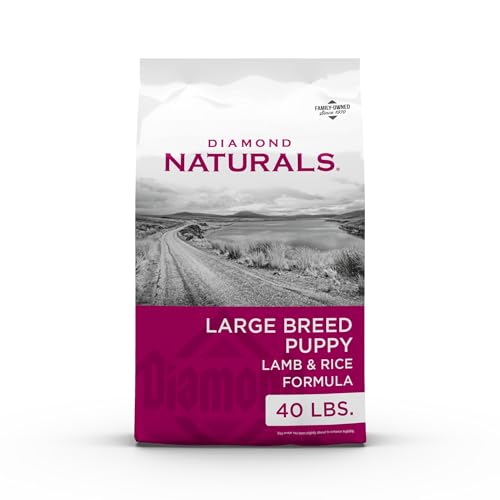
Diamond Naturals Large Breed Puppy Lamb & Rice
What We Like
- Real pasture-raised lamb first ingredient
- DHA for brain and vision development
- Formulated for large breed puppies
Trade-offs
- 40-pound bag is heavy to handle
- Not suitable for small or toy breed puppies
Real pasture-raised lamb is the first ingredient, so you’re getting a named protein source that’s clearly identified. The formula includes DHA for proper brain and vision development, which supports growing puppies. It’s designed with carefully determined protein and mineral levels to meet the needs of large breed puppies, who benefit from controlled growth rates to help avoid joint issues later on.
The 40-pound bag is heavy to handle, especially when carrying it from the car or storing it in a cabinet. Compared to the Bully Max Puppy Food, which comes in a 5-pound bag and provides 419 calories per cup, this Diamond Naturals formula is less calorie-dense. So you may need to feed a larger volume to achieve similar weight gain. That said, the breed-specific formulation and clear ingredient sourcing make it a practical choice for large breed owners who want a balanced diet without extra supplements.
Product photos
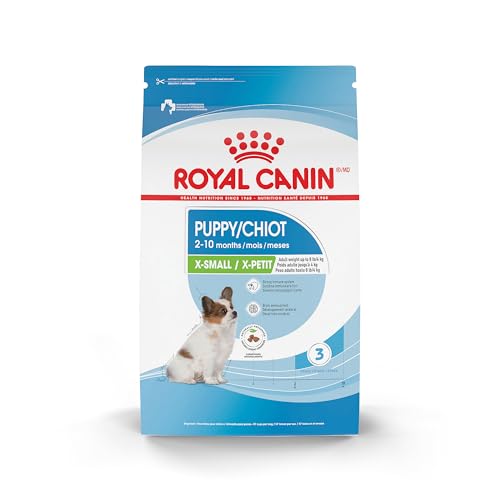
Royal Canin X-Small Puppy Dry Dog Food
What We Like
- Formulated for toy breeds ≤8 lbs
- Supports brain development and energy needs
- Antioxidants for immune support
- Prebiotics and proteins for gut health
Trade-offs
- Only 3 lb bag, small volume for weight gain
- Designed for tiny breeds, not larger puppies
This puppy food is built for toy breeds that will top out at 8 pounds as adults. That’s the decisive fact here: the formula is designed for puppies 2 to 10 months with an expected adult weight of no more than 8 lbs. If you have a Chihuahua, Yorkie, or Maltese under that weight, this formula delivers targeted brain development support during that critical window, plus antioxidants and prebiotics to keep a tiny digestive system running smoothly. It’s a precise tool for a narrow job.
At just 3 pounds, this bag is light enough for a toy breed puppy, but you’ll be reordering sooner than with larger bags. The crunchy kibble is simple to serve and pairs well with Royal Canin X-Small Puppy Thin Slices in Gravy wet food for a mixed meal. For a toy breed that needs to gain weight steadily, Royal Canin’s portion-controlled approach works, but you may need to pair it with the matching wet food to boost palatability and calories. It’s a specialist’s choice, not a generalist’s.
Purina ONE Plus Large Breed High Protein Puppy

What We Like
- Real chicken as first ingredient for muscle growth
- DHA supports vision and brain development
- Glucosamine for joint health in large breeds
- No artificial flavors or preservatives
Trade-offs
- Not suitable for small breed puppies
- Only for large breed puppies, not small breeds
This large breed puppy food leads with chicken, providing protein for growing muscles. The formula includes DHA, a nutrient found in mother’s milk, to support vision and brain development, plus glucosamine to help maintain an appropriate growth rate and support joint health. Four antioxidant sources back immune support, and there are no artificial flavors or preservatives. This combination makes it a straightforward choice for large breed puppies that need balanced nutrition without unnecessary extras.
This large breed puppy food leads with chicken, so you know your growing pup is getting the protein he needs for strong muscles and a healthy heart. It also includes DHA, a nutrient found in mother’s milk, to support vision and brain development, plus glucosamine to help maintain an appropriate growth rate and support joint health. The 31.1-pound bag is a practical size for a big dog’s appetite, and the formula is crafted in Purina-owned U.S. facilities with no artificial flavors or preservatives.
Product photos
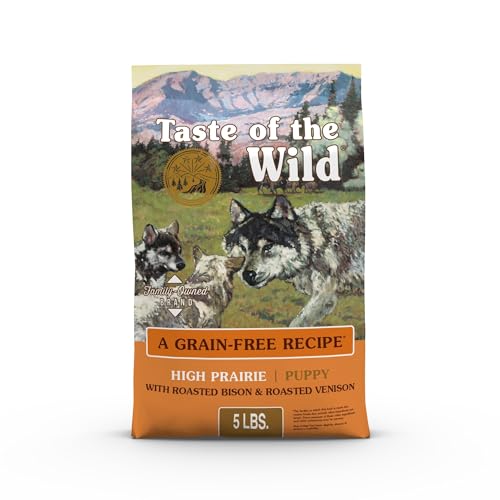
Taste of the Wild High Prairie Puppy Roasted Bison
What We Like
- Real roasted bison is first ingredient
- 28% protein supports lean muscle growth
- Probiotics aid digestive health
Trade-offs
- 5lb bag is small for weight gain plans
- 5lb bag requires frequent repurchase for growing puppies
28% protein from real roasted bison as the first ingredient gives this formula a clear edge for puppies who need to build lean muscle without unnecessary fillers. The proprietary K9 Strain probiotics help keep digestion on track when you’re increasing food intake. This recipe is designed for puppies and nursing or pregnant mothers, with omega fatty acids for healthy skin and coat.
A 5-pound bag means you’ll restock more often for a growing puppy, but the 28% protein from roasted bison and venison supports lean muscle development. Real meat is the first ingredient, and each serving delivers probiotics and omega fatty acids for digestion and coat health. Owners who prioritize a grain-free, high-protein diet with added digestive support will find this a practical choice.
Product photos
Blue Buffalo Baby BLUE Small Breed Puppy Chicken

What We Like
- Real chicken is first ingredient
- Includes DHA for brain development
- Antioxidant-rich LifeSource Bits
- No chicken by-product meals, corn, wheat, soy
Trade-offs
- Designed only for small breed puppies
- Contains chicken which some owners avoid
This small-breed puppy formula leads with chicken, a whole meat rather than a rendered meal. That matters for a growing puppy because whole muscle meat provides a more complete amino acid profile for building lean mass. The recipe also includes DHA to support cognitive development during the puppy stage. For owners of a Chihuahua, Yorkie, or similar tiny breed, the kibble size and nutrient density are calibrated to their smaller mouths and faster metabolisms. That way they get the energy they need without struggling to chew oversized pieces.
This bag is only 4 pounds, which for a small breed puppy might last a few weeks, but for a larger breed or a multi-dog household it would disappear fast. Compared to the Bully Max Puppy Food, which comes in a 5-pound bag, the Blue Buffalo formula is lighter on total volume. That makes it a better fit for owners who want a breed-specific recipe rather than a larger bag.
Product photos
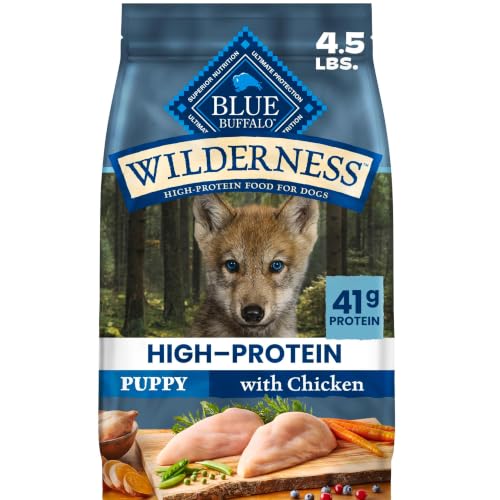
Blue Buffalo Wilderness Chicken Puppy Dry Food
What We Like
- DHA and ARA for brain and eyes
- Wholesome grains for steady energy
- Small-bite kibble helps tartar removal
Trade-offs
- Contains grains, not grain-free
- Not suitable for adult dogs
The inclusion of DHA and ARA fatty acids, along with choline, targets cognitive development and eye health, while the small-bite kibble is designed to help remove tartar during chewing. It suits puppy owners who want a high-protein diet that also provides steady energy from wholesome grains like oats, barley, and brown rice.
The trade-off here is that this product comes in a 4.5 lb bag, which may be less economical for owners of larger breeds or multiple puppies compared to something like Diamond Naturals Large Breed Puppy Lamb & Rice, which offers a 40 lb option. Additionally, if you prefer a grain-free diet, this formula includes grains, so it won’t fit that approach. For those who value a high-protein, grain-inclusive recipe with added cognitive support, this is a straightforward choice.
Product photos
How We Evaluated Dog Foods For Puppies To Gain Weight
We built this guide by cross-referencing manufacturer nutritional data, ingredient panels, and expert recommendations alongside common patterns reported by owners. No hands-on feeding trials were conducted; instead, we evaluated each formula against the specific needs of a puppy requiring weight gain.
The four criteria that mattered most were calorie density, protein source and percentage, breed appropriateness, and digestive safety. Calorie density asks whether a small serving can deliver meaningful energy. Protein source and percentage check if the first ingredient is a named animal protein and if the total supports lean muscle. Breed appropriateness considers kibble size and calcium-phosphorus ratios for large or toy breeds. Digestive safety looks for probiotics, prebiotics, or gentle grains to avoid loose stool during a calorie increase.
A research-led evaluation has limits. Owner-reported results vary with each puppy’s activity level, baseline health, and feeding consistency. We present what the data and ingredient labels show, not a guarantee for every individual dog. For a deeper look at the broader category, see our guide on the best puppy food for weight gain.
What To Look For In Dog Foods For Puppies To Gain Weight
Choosing a weight-gain food for a puppy means looking past the front-of-bag claims and reading the guaranteed analysis and ingredient list with a skeptical eye.
Look for a named animal protein as the first ingredient, a minimum of 28% protein, and a calorie density above 400 kcal per cup. Avoid vague “meat meal” and check for DHA, probiotics, or joint-support additives if your breed needs them.
Calorie Density and Fat Content
A puppy that needs to gain weight requires more calories per bite than a maintenance formula. Look for foods with at least 400 kilocalories per cup. Fat content should be high enough to support energy needs and healthy skin and coat during rapid growth. Many weight gain formulas use chicken fat or fish oil to boost calories without adding bulk.
Protein Source and Percentage
Protein is the building block for muscle, organs, and tissue. For weight gain, a minimum of 28% crude protein is a good baseline, with the first ingredient being a named animal protein like chicken, lamb, bison, or fish. Avoid generic “poultry meal” or “meat meal”, these can come from mixed sources. High-protein recipes support lean mass gain rather than just fat, which matters for a puppy’s developing frame. Our research into high-protein dog food for weight gain confirms that named proteins correlate with better owner-reported outcomes.
Breed-Specific Formulation
Not all puppies grow at the same rate. Large breed puppies need controlled calcium and phosphorus levels and glucosamine for joint health, while toy breeds require tiny kibble and higher calorie density per ounce. Feeding a large-breed formula to a Chihuahua puppy can lead to over-supplementation, and feeding a toy-breed formula to a Labrador can miss critical joint support. Always match the food to the puppy’s expected adult weight.
- Check the bag for a statement like “for large breed puppies” or “for toy breed puppies.”
- Verify kibble size: small breeds need pieces under 10 mm for safe chewing.
- Confirm that DHA is listed for brain and vision development.
- Look for added probiotics or postbiotics if your puppy has a sensitive stomach.
- Ensure the formula is complete and balanced for growth (AAFCO statement on the bag).
A puppy’s first year sets the foundation for lifelong health, the right food now prevents joint problems, digestive issues, and poor growth patterns later.
Dog Foods For Puppies To Gain Weight Compared
The table below compares each of the ten formulas side by side, highlighting calorie focus, protein source, and breed suitability so you can quickly narrow your choices.
| Product | Protein | Main Ingredient | Life Stage |
|---|---|---|---|
| Bully Max Puppy Food High Protein Growth Formula | 24% | Lamb | Puppy |
| Purina Pro Plan Sport 30/20 High Protein | 30% | Real Chicken | All ages |
| VICTOR Hi-Pro Plus Dry Dog Food | 30% | Beef, chicken, pork, fish meals | All life stages |
| Solid Gold High Calorie Chicken Wet Dog Food | N/A | Chicken | All Ages |
| Diamond Naturals Large Breed Puppy Lamb & Rice | N/A | Pasture-raised lamb | Puppy |
| Royal Canin X-Small Puppy Dry Dog Food | N/A | N/A | Puppy |
| Purina ONE Plus Large Breed High Protein Puppy | N/A | Real chicken #1 ingredient | Puppy |
| Taste of the Wild High Prairie Puppy Roasted Bison | 28% | Roasted Bison | Puppy, Adult, Senior |
| Blue Buffalo Baby BLUE Small Breed Puppy Chicken | N/A | Chicken (#1 ingredient) | Puppy |
| Blue Buffalo Wilderness Chicken Puppy Dry Food | N/A | Real Chicken | Puppy |
Frequently Asked Questions
How can I help my underweight puppy gain weight safely?
Start by switching to a calorie-dense puppy formula with at least 28% protein and adequate fat. Feed three to four small meals per day rather than one or two large ones to aid digestion. Always transition gradually over several days to avoid stomach upset. If your puppy isn’t gaining after two weeks on a high-calorie food, consult your veterinarian to rule out parasites or underlying health issues. For more on this approach, see our guide on helping underweight dogs.
What is the best dog food for a puppy that won’t eat enough?
A highly palatable wet food or a kibble with a strong meat-first flavor often works better for picky puppies. Solid Gold High Calorie Chicken Wet Dog Food offers a soft pate texture that is easy to chew and digest. It can be served as a meal or a topper over dry kibble. Warming the food slightly or adding a splash of warm water can also increase aroma and appeal.
How much should I feed a puppy that needs to gain weight?
Feeding amounts depend on the puppy’s current weight, age, and the calorie density of the food. Most bags provide a range based on expected adult weight, start at the high end of that range for weight gain. Monitor body condition weekly: you should be able to feel ribs with a light layer of fat, not see them. For detailed guidance, review our guide on how much to feed a puppy by age and breed size.
Is wet or dry food better for puppy weight gain?
Both can work, but they serve different purposes. Dry kibble is more calorie-dense by volume and easier to free-feed, making it convenient for steady weight gain. Wet food has higher moisture content and fewer calories per gram, but it is often more palatable and easier to digest for puppies with sensitive stomachs or dental issues.
Many owners use a combination, dry food for base calories and wet food as a topper for extra flavor and moisture. Our research on high-calorie wet food shows it can be especially helpful for underweight puppies.
When should I switch my puppy from weight-gain food to a maintenance formula?
Switch when your puppy reaches a healthy body condition score of 4 or 5 out of 9, ribs should be easily felt with a slight fat cover, and the waist should be visible from above. For most puppies, this happens between 6 and 12 months of age, though large and giant breeds may need the growth formula until 18 to 24 months. Transition gradually over a week to avoid digestive upset.
The Bottom Line
For most puppy owners, Bully Max Puppy Food High Protein Growth Formula is the best overall choice. Its lamb-based, chicken-free recipe provides high calorie density with full ingredient transparency and postbiotics for digestive support. It works well for puppies of most breeds, though large-breed owners should note it isn’t formulated for sustained large-breed feeding.
If you have a large breed puppy, Diamond Naturals Large Breed Puppy Lamb & Rice offers DHA for brain development and a pasture-raised lamb first ingredient in a 40-pound bag. For toy breeds under 8 pounds, Royal Canin X-Small Puppy Dry Dog Food provides breed-specific nutrition with tiny kibble and prebiotics. Budget-conscious owners should consider VICTOR Hi-Pro Plus Dry Dog Food, an all-life-stages formula with four protein sources made in a USA facility.
The single most important factor in puppy weight gain is matching the food’s calorie density and protein quality to your puppy’s specific breed size and digestive tolerance. Read the ingredient list, not the front of the bag, and adjust portions based on body condition, not the feeding chart alone.
