
6 Best Dog Food For Liver Problems in 2026
This post contains affiliate links. As an Amazon Associate, we earn from qualifying purchases.
The best overall choice for dogs with liver problems is Hill’s Prescription Diet l/d Liver Care Dry Dog Food. It’s formulated by Hill’s nutritionists and veterinarians to reduce liver workload with controlled protein and low copper. For dogs that prefer wet food, the Royal Canin Veterinary Hepatic Adult Wet Dog Food offers similar targeted support, while the Hill’s Prescription Diet Multi-Organ Complex Support Wet Dog Food covers dogs with additional organ concerns.
Feeding a dog with liver disease means balancing protein levels, restricting copper, and supporting organ function without overloading the system. Owners often face conflicting advice about protein quality, phosphorus content, and whether to choose dry kibble or wet food. Getting the diet right directly affects how well a dog manages its condition.
This guide is based on a review of manufacturer specifications, veterinary nutrition guidelines, and patterns in owner feedback for prescription and therapeutic diets. We focused on protein control, copper content, phosphorus levels, and digestibility to identify six formulas that meet the specific needs of dogs with liver problems.
Top 6 Dog Foods For Liver Problems in the Market

Certain content that appears on this site comes from Amazon. This content is provided "as is" and is subject to change or removal at any time.
The Best Dog Foods For Liver Problems, Reviewed
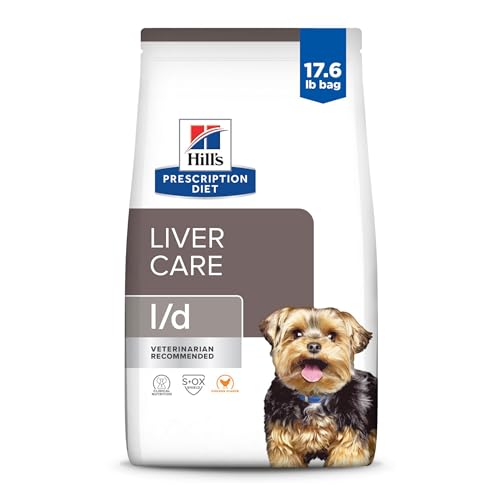
Hill's Prescription Diet l/d Liver Care Dry Dog Food
What We Like
- Formulated by Hill's nutritionists and veterinarians
- Controlled protein reduces liver workload
- Low copper minimizes liver accumulation
- Clinically proven antioxidants support immune system
Trade-offs
- Requires veterinary prescription to purchase
- Only available in dry formula, no wet option
A 17.6-pound bag of dry food built around controlled, highly digestible protein levels that directly reduce the liver’s workload, that’s the core engineering here. The low copper content is another deliberate design choice to minimize mineral buildup in an already compromised organ, and the clinically proven antioxidants add immune support where it’s most needed. This is the formula for owners who want a straightforward dry food that tackles the metabolic demands of liver disease without guesswork.
The trade-off is that you can’t just grab this off the shelf; a vet’s prescription is required, which adds a step but also ensures it’s used under professional guidance. Compared to the Royal Canin Hepatic wet food, this Hill’s dry formula offers a different texture and feeding experience. Some dogs may prefer the wet food’s palatability, but the dry kibble is easier to portion and store. For a dog that needs consistent, targeted liver support in a shelf-stable format, this is the most complete dry option available.
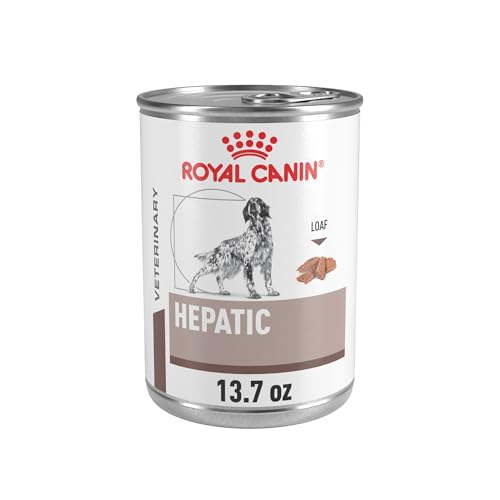
Royal Canin Veterinary Hepatic Adult Wet Dog Food
What We Like
- Low copper to protect liver cells
- Highly digestible proteins support liver function
- Antioxidant blend supports immune system
- Prebiotics help maintain healthy gut microbiome
Trade-offs
- Wet food only, no dry kibble option
- Designed specifically for liver support, not general nutrition
Low copper content is the single most decisive feature here: it helps minimize copper accumulation in liver cells, which is critical for dogs with compromised livers that can’t process excess minerals. That makes this wet food a targeted tool for managing hepatic issues, not just another high-protein can with a health claim. The highly digestible proteins reduce the workload on the liver while still delivering essential amino acids, and the adapted energy content keeps meal volumes smaller so the digestive system isn’t overloaded. It’s formulated for dogs that need precise nutritional support rather than broad-spectrum maintenance.
If your dog needs strict copper management, this wet food delivers exactly what the label promises. Low copper levels help minimize accumulation in liver cells, with adapted energy to reduce meal volume and ease digestion. Hill’s Prescription Diet l/d Liver Care is a dry alternative for liver support, but its listed features don’t mention copper control. For dogs that tolerate wet food well, this formula provides targeted nutrition without extra fuss.
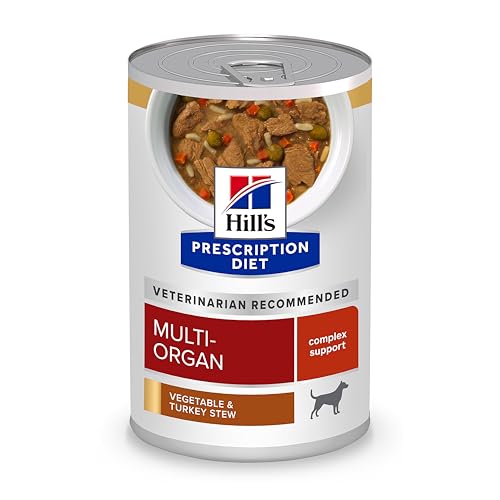
Hill's Prescription Diet Multi-Organ Complex Support Wet Dog Food
What We Like
- Formulated for multiple organ support
- Controlled phosphorus, sodium, protein, fat
- #1 US Vet Recommended therapeutic food
- Suitable for dogs with fat sensitivity
Trade-offs
- Wet food means shorter shelf life after opening
- Not a single-organ liver-specific formula
The #1 US Vet Recommended therapeutic pet food, this stew balances controlled phosphorus, sodium, protein, and fat to support dogs with multiple health issues that may have conflicting nutritional needs. Hill’s nutritionists and veterinarians formulated it to help support vital organs including the kidneys, pancreas, heart, liver, and bladder. It’s also appropriate for dogs with sensitivity to dietary fat, so owners can feed one can that covers several bases without worrying about overloading any single system.
This isn’t a laser-focused liver-only diet. If your dog’s main problem is strictly hepatic, a dedicated liver formula like Hill’s Prescription Diet l/d Liver Care might dial in more precisely on that single organ. But when the vet says the kidneys or pancreas need watching too, this stew gives you a broader safety net in a single can, no mixing or guessing ratios.
Product photos
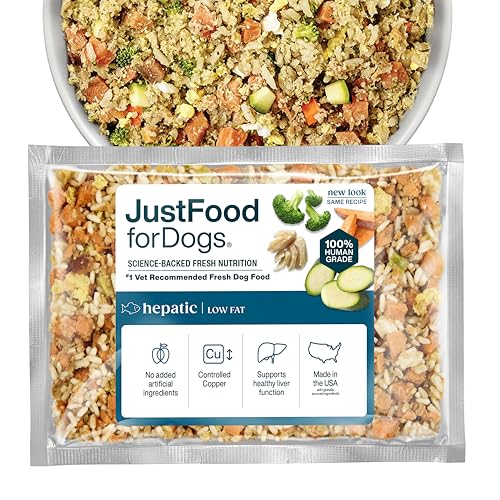
JustFoodForDogs Frozen Fresh Prescription Dog Food Liver Hepatic
What We Like
- 100% human-grade whole food ingredients
- Vet-developed with board-certified nutritionist
- No preservatives or growth hormones
- Can be used as meal or topper
Trade-offs
- Must be kept frozen until use
- Thawed food only lasts 4 days refrigerated
Feeding your dog ingredients you’d recognize from your own kitchen, not rendered by-products, is the core promise of this frozen fresh diet. That matters a lot when managing a condition like liver disease where every nutrient counts. The recipe was developed by a team that includes a board-certified nutritionist, toxicologist, and dermatologist, and is backed by independent science diet research from leading universities following AAFCO protocol. Owners who prioritize ingredient transparency will appreciate that this diet contains no additives, preservatives, or growth hormones, though they’ll need to trade some freezer space for that peace of mind.
The obvious trade-off is logistics: you need freezer storage, and once thawed you have four days to use it up for non-fish recipes (three days for fish-based ones). So it doesn’t suit a grab-and-feed routine. Compared to Hill’s Prescription Diet l/d Liver Care dry food, which is shelf-stable, this requires more planning. But if your dog has a reduced appetite, the high-calorie, fresh texture can make meals more appealing than a dry kibble, which is a real advantage for a dog that needs to eat enough to maintain weight.
Product photos
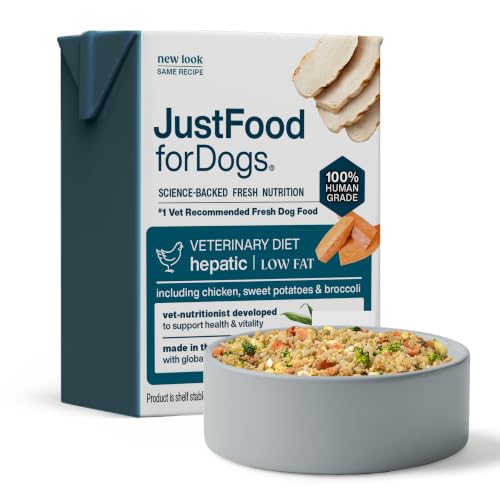
JustFoodForDogs Pantry Fresh Prescription Dog Food Liver Hepatic
What We Like
- 100% human grade ingredients
- Vet-recommended fresh food brand
- Low protein for liver support
Trade-offs
- Limited to prescription use only
- Requires veterinary prescription to purchase
If you want a fresh, human-grade wet food that stays on the shelf without freezing, this is the only option in this guide that offers that convenience. It’s a low-protein recipe developed by a team that includes a board-certified nutritionist, so the formulation is designed for long-term health management under veterinary supervision. For someone who reads labels carefully, the fact that it’s 100% human grade and made with fresh whole foods tells you a lot about the ingredient quality.
The biggest thing to know is that this is a prescription diet, so you’ll need a vet’s okay to buy it. The wet pouches aren’t as easy to portion or store as a dry kibble like Hill’s Prescription Diet l/d Liver Care. However, if you want a fresh, human-grade option that doesn’t require refrigeration, this product fits that need. Owners who value whole-food ingredients will appreciate what this offers, even if it means a little more effort at feeding time.
SquarePet VFS Low Phosphorus Dog Food Special Needs Formula
What We Like
- Low phosphorus for kidney support
- Vet-formulated by board-certified nutritionists
- USA-sourced beef and beef liver
- Antioxidant-fortified with Vitamins C & E
Trade-offs
- Wet food only, no dry option
- Not suitable for dogs needing a dry food diet
A low-phosphorus formula that keeps protein and sodium in check is the core of this canned dog food, and SquarePet delivers it without leaning on fillers or artificial additives. This wet food is built around USA-sourced beef and beef liver, with omega-3s from DHA and EPA plus antioxidant support from Vitamins C and E. It’s a straightforward, no-nonsense option for owners who want a vet-formulated wet food that keeps phosphorus, protein, and sodium in check. The ingredient list is short enough that you can actually read it without a chemistry degree.
One catch is that this is a wet food only, so if your dog prefers kibble or you need the convenience of a dry diet, you’re looking at a different product. The low protein level also means it’s not built for every dog’s needs, but for a dog that requires gentle nutritional support, the simplicity and targeted mineral control here are hard to argue with.
How We Evaluated Dog Foods For Liver Problems
Our evaluation started with the manufacturer’s guaranteed analysis and ingredient lists for each formula, cross-referencing them against veterinary recommendations for hepatic diets. We looked at clinical feeding studies and formulation rationale from brands like Hill’s, Royal Canin, and JustFoodForDogs to understand how each product was designed to support liver function. Owner feedback patterns helped us identify which dogs accepted the food readily and which had trouble transitioning.
The four criteria that mattered most were protein content and source, copper levels, phosphorus concentration, and overall digestibility. A diet for liver disease must provide enough high-quality protein to maintain muscle mass without overwhelming the liver’s ability to process nitrogenous waste. Copper restriction is critical because damaged livers cannot excrete copper efficiently, leading to accumulation and further injury. Low phosphorus matters when liver disease coincides with kidney strain, and highly digestible ingredients reduce the digestive workload on the entire system.
A research-led evaluation has limits: we did not conduct feeding trials or bloodwork analysis, and individual dogs may respond differently to the same formula. We prioritized products with published formulation rationale and board-certified veterinary nutritionist involvement, but a veterinarian should always confirm the final choice based on your dog’s specific lab values and condition.
What To Look For In Dog Foods For Liver Problems
Choosing a food for a dog with liver problems means reading past the front-of-bag marketing and checking the numbers that matter for hepatic health. Here is what to prioritize.
Look for controlled, high-quality protein (not necessarily low protein), minimal copper content, moderate phosphorus, and highly digestible ingredients. A veterinary prescription diet is usually the safest starting point because it is formulated to these exact specifications.
Protein Quality and Quantity
Dogs with liver disease need protein, but the liver’s ability to process ammonia and other byproducts is compromised. The goal is not a low-protein diet but a controlled level of highly digestible, high-biological-value protein that produces less metabolic waste. Hill’s l/d and Royal Canin Hepatic both use egg and poultry protein sources that are efficiently utilized.
Avoid foods with generic meat meals or high levels of plant protein concentrates, which can be harder for a damaged liver to process. A feeding guide from your veterinarian should set the exact protein target based on your dog’s blood work.
Copper Content
Copper accumulates in the liver when the biliary system is not clearing it properly, and many commercial dog foods contain levels that are safe for healthy dogs but problematic for those with liver disease. The therapeutic diets in this list are specifically formulated to be low in copper. Check the guaranteed analysis for copper content, a low copper diet typically provides less than a certain amount per a standard energy measure. Avoid foods that list liver (naturally high in copper) as a primary ingredient unless the overall formula is balanced for restriction.
Phosphorus and Fat Levels
Phosphorus restriction becomes important when liver disease is accompanied by kidney concerns, which is common in older dogs. The SquarePet VFS formula and the Hill’s Multi-Organ formula both control phosphorus specifically. Fat tolerance varies: some dogs with liver disease handle moderate fat well, while others with concurrent pancreatitis or fat sensitivity need a restricted fat level. A pancreatitis diet may be necessary if your dog has both conditions. Check the crude fat percentage and discuss with your vet whether your dog needs a low-fat formula.
- Check the copper content in the guaranteed analysis and compare it to the low copper benchmark.
- Look for a named animal protein source (chicken, egg, fish) rather than generic “meat meal.”
- Confirm the formula is complete and balanced for the life stage of your dog.
- Ask your veterinarian for the specific protein, phosphorus, and fat targets your dog needs.
A dog food label that does not list copper content in its guaranteed analysis may still contain meaningful levels, call the manufacturer if the number is not printed.
Dog Foods For Liver Problems Compared
The table below compares the six formulas side by side, focusing on the key criteria that matter for dogs with liver problems.
| Product | Form | Protein | Key Feature |
|---|---|---|---|
| Hill's Prescription Diet l/d Liver Care Dry Dog Food | Dry Dog Food | Controlled levels, highly digestible | Supports liver health |
| Royal Canin Veterinary Hepatic Adult Wet Dog Food | Wet dog food | Highly digestible proteins | LIVER SUPPORT |
| Hill's Prescription Diet Multi-Organ Complex Support Wet Dog Food | Wet stew | Controlled phosphorus, sodium, protein, fat | Multi-organ support |
| JustFoodForDogs Frozen Fresh Prescription Dog Food Liver Hepatic | Frozen fresh wet food | Limited ingredient, low fat | Dog Liver Support |
| JustFoodForDogs Pantry Fresh Prescription Dog Food Liver Hepatic | Wet food pouches | Low protein | Dog Liver Support |
| SquarePet VFS Low Phosphorus Dog Food Special Needs Formula | Wet, canned | Low | Low Phosphorus Formula |
Frequently Asked Questions
What should I feed a dog with high liver enzymes?
A dog with high liver enzymes needs a diet that reduces the liver’s workload while providing enough high-quality protein to maintain body condition. Prescription hepatic diets like Hill’s l/d or Royal Canin Hepatic are formulated specifically for this purpose. Your veterinarian should interpret the enzyme elevation, some causes are temporary and may not require a permanent diet change.
Is a low-protein diet always necessary for liver disease?
No. Dogs with liver disease need controlled levels of highly digestible protein, not necessarily low protein. Severely restricting protein can lead to muscle wasting and poor healing. The correct protein level depends on the type and stage of liver disease, your dog’s blood ammonia levels, and whether hepatic encephalopathy is present. A veterinary nutritionist can set the right target.
Can I feed a non-prescription dog food for liver problems?
Some non-prescription foods may have appropriate protein and copper levels for mild liver concerns, but most do not meet the strict formulation criteria needed for therapeutic use. A veterinary hepatic diet is designed with precise nutrient restrictions that are difficult to replicate with over-the-counter foods. Always check with your veterinarian before switching to a non-prescription option.
How do I transition my dog to a new liver support diet?
Transition gradually over about a week to ten days, mixing increasing amounts of the new food with decreasing amounts of the old food. Dogs with liver disease may have sensitive digestive systems, so a slower transition is better than a fast one. A detailed guide on feeding a dog with liver problems can help you plan the switch and monitor for any adverse reactions.
Should I choose dry food or wet food for a dog with liver disease?
Both formats can work, and the choice depends on your dog’s preference and any additional health needs. A kibble for liver problems is convenient and shelf-stable, while wet food provides higher moisture content that supports hydration and may be more palatable for dogs with reduced appetite. Some dogs do best on a combination of both.
The Bottom Line
The Hill’s Prescription Diet l/d Liver Care Dry Dog Food is the best overall choice for dogs with liver problems. It combines controlled protein, low copper, and clinically proven antioxidant support in a formula designed by veterinary nutritionists. It is the right starting point for most dogs that need a dry food and whose owners can obtain a veterinary prescription.
If your dog refuses dry kibble or needs extra moisture, the Royal Canin Veterinary Hepatic Adult Wet Dog Food offers the same targeted liver support in a wet format. For dogs with multiple organ concerns, the Hill’s Prescription Diet Multi-Organ Complex Support Wet Dog Food covers liver, kidney, and pancreas needs in one formula. Owners who want a fresh, human-grade diet should look at the JustFoodForDogs Frozen Fresh Prescription Dog Food Liver Hepatic or its shelf-stable Pantry Fresh version.
The single most important factor in choosing a food for liver disease is getting the protein and copper levels right for your dog’s specific condition. Work with your veterinarian to interpret lab results, set nutrient targets, and monitor your dog’s response to the new diet.
