
5 Best Dog Food For Heart Failure in 2026
This post contains affiliate links. As an Amazon Associate, we earn from qualifying purchases.
For dogs managing heart failure, the right nutrition can make a real difference. Our best overall pick is Dave’s Pet Food Low Sodium Chicken Pate, a grain-free wet food with chicken as the first ingredient. It has controlled sodium levels that support cardiac diets without requiring a prescription. We also highlight Royal Canin Veterinary Early Cardiac Dry Dog Food for those seeking a vet-formulated dry option and Purina Pro Plan Veterinary Diets CardioCare Wet Dog Food for dogs with diagnosed heart failure needing targeted prescription support.
Heart failure changes what a dog needs from its bowl. Sodium restriction becomes critical to reduce fluid buildup and ease the heart’s workload, while nutrients like taurine, L-carnitine, and omega-3 fatty acids support cardiac muscle function. But not every dog’s condition is the same, and the right food depends on whether your dog needs a veterinary prescription diet, a low-sodium over-the-counter option, or a formula that also addresses kidney concerns.
This guide is built from manufacturer specifications, veterinary nutritional guidelines, and patterns in owner feedback about palatability and health outcomes. We focused on sodium levels, key cardiac-support nutrients, and whether each food fits real-world feeding situations. You will find five carefully selected options that address different stages of heart disease and dietary needs.
Top 5 Dog Foods For Heart Failure in the Market
Certain content that appears on this site comes from Amazon. This content is provided "as is" and is subject to change or removal at any time.
The Best Dog Foods For Heart Failure, Reviewed
Dave's Pet Food Low Sodium Chicken Pate
What We Like
- Chicken is the #1 ingredient
- Low sodium for cardiac diets
- Grain free and carrageenan-free
- Added vitamins and minerals
Trade-offs
- Canned only, no dry option for convenience
- Single protein source limits variety
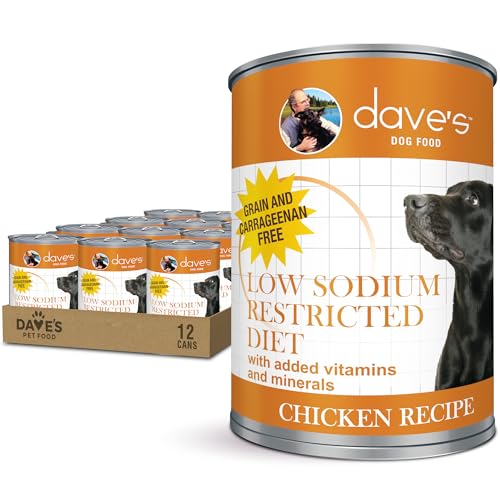
A 13.2-ounce can with chicken as the first ingredient gives you a protein-focused, low-sodium option that aligns with the core dietary restriction for heart failure. The grain-free and carrageenan-free formulation strips out two common fillers and stabilizers, which matters if you’re reading the label to avoid unnecessary additives. This suits someone who wants a straightforward, transparent wet food that follows a vet’s low-sodium recommendation without requiring a prescription.
This is a straightforward low-sodium wet food that follows a vet’s recommendation without requiring a prescription, but for dogs with more specific cardiac dietary needs, a veterinary diet product might be more appropriate. Dave’s keeps the ingredient list clean and the sodium low, which is the right starting point for most heart-conscious owners. Unlike the Purina Pro Plan Veterinary Diets CardioCare, this product isn’t specifically labeled for cardiac function support.
Royal Canin Veterinary Early Cardiac Dry Dog Food
What We Like
- Moderate sodium reduces heart workload
- Contains EPA and DHA omega-3s
- Includes arginine, carnitine, taurine
- Highly digestible and palatable formula
Trade-offs
- Targets early cardiac disease only
- Not suitable for dogs needing severe sodium restriction
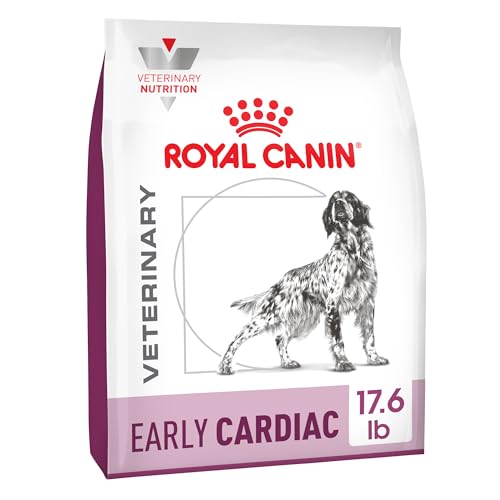
A 17.6-pound bag of dry kibble built around moderate sodium restriction and a targeted nutrient lineup. EPA, DHA, arginine, carnitine, and taurine, makes this a sensible choice for dogs in the early stages of heart disease or those at risk. The idea is to support cardiovascular function without the severe sodium crash that can make food unappealing, so a dog actually eats it day after day. That matters because a dog that won’t eat gets no benefit from any nutrient, no matter how carefully balanced. For owners catching the condition early and wanting a complete, balanced dry food that doesn’t rely on marketing fluff, the formulation here is straightforward and vet-designed.
Moderate sodium restriction is the key here, it reduces the workload on the heart without the severe limits that can put a dog off its food. That makes this dry kibble a practical choice for dogs in the early stages of cardiac disease or those at risk, as the formula includes EPA and DHA omega-3s to support cardiovascular function. It’s not a canned food like the Purina Pro Plan Veterinary Diets CardioCare, so if your dog has trouble chewing or swallowing dry kibble, you might need to look at a wet option. But for a dog that still eats well and needs steady heart support, this delivers the nutrients the bag promises.
Purina Pro Plan Veterinary Diets CardioCare Wet Dog Food
What We Like
- Cardiac Protection Blend includes omega-3s and MCTs
- Antioxidant vitamins A and E reduce oxidative stress
- High protein wet dog food formula
Trade-offs
- Requires veterinary authorization, not an over-the-counter food
- Wet food has shorter shelf life after opening than dry
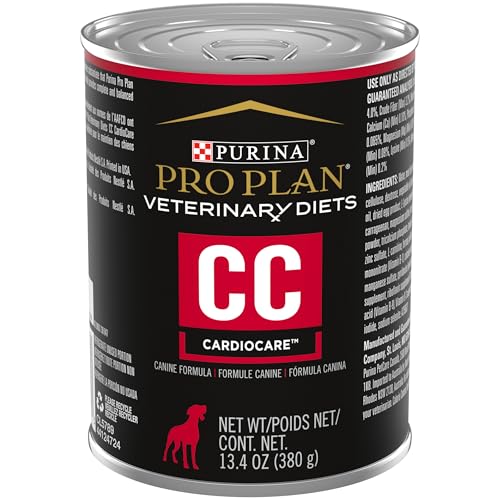
The Cardiac Protection Blend of amino acids, omega-3 fatty acids, medium-chain triglycerides, minerals, and vitamin E is designed to support both heart structure and function while reducing oxidative stress. This makes it a targeted option for dogs with cardiac concerns. The high protein wet food formula also provides a great taste that dogs enjoy.
The trade-off is that this is a veterinary diet, meaning you’ll need a prescription, it’s not something you grab off the shelf on a whim. Compared to Dave’s Pet Food Low Sodium Chicken Pate, which is a low-sodium option without the specific cardiac nutrient blend, Purina’s formula includes targeted support for heart structure and oxidative stress. If your dog’s condition requires more than just sodium restriction, the added amino acids and omega-3s in this formula may be beneficial. Just be ready for the vet visit and the shorter fridge life once you crack a can.
Product photos
Dave's Pet Food Kidney Care Dog Food Chicken Formula Crumble
What We Like
- Low phosphorus (0.4% max) for kidney support
- Low sodium for cardiac and renal health
- Omega-3 fatty acids (EPA, DHA) added
- Adjustable water ratio for hydration
Trade-offs
- Must be mixed with water before feeding
- Not a kibble; requires preparation
- 4 lb bag is small for large dogs
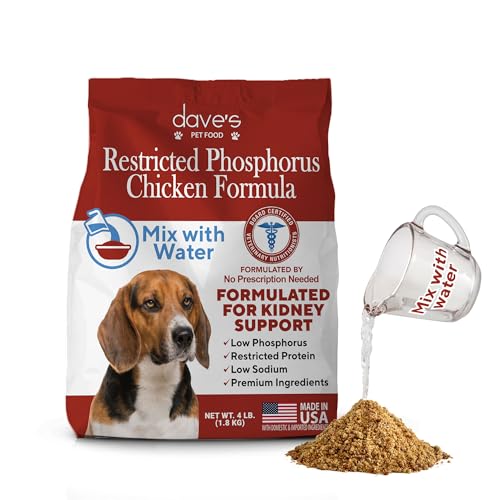
With a maximum phosphorus level of 0.4%, this crumble is built to reduce strain on compromised kidneys. Designed by board-certified veterinary nutritionists, it skips the prescription requirement while delivering low sodium and added omega-3s (EPA and DHA) that help replenish nutrients lost through increased urination. The adjustable water-to-food ratio lets you dial in a texture that encourages picky eaters to finish their bowl. The extra hydration from mixing is a practical bonus for dogs who don’t drink enough on their own. This makes it a sensible option for owners who want renal support without a vet visit.
The catch is that this is not a pour-and-go kibble. It must be mixed with water before feeding, which adds a step to mealtime and means you cannot leave it out for free-feeding. At 4 pounds per bag, the portion size is modest, so larger dogs will burn through it quickly. If you prefer a ready-to-serve wet food, the canned Dave’s Pet Food Low Sodium Chicken Pate skips the mixing step entirely. For owners who value precise phosphorus control and are willing to stir up each meal, this crumble delivers targeted renal support in a format that prioritizes hydration.
Product photos
Royal Canin Rottweiler Adult Dry Dog Food

What We Like
- Taurine, EPA, DHA for cardiac function
- L-carnitine supports muscle mass maintenance
- Unique kibble slows fast eating
- Formulated for large breed weight management
Trade-offs
- Designed only for Rottweilers, not general large breeds
- No low-sodium claim for heart failure management
- Dry kibble lacks moisture for reduced appetite
Taurine, EPA, and DHA are the three nutrients listed for heart health here, and they target cardiac function directly rather than just general wellness. This food is built for a purebred Rottweiler 18 months and older. The protein and L-carnitine levels aim to maintain the heavy muscle mass these dogs carry while also managing weight to reduce strain on the heart. The specialized kibble shape that slows eating is a practical bonus for a breed prone to gulping air and bloat.
The limitation here is that this is a breed-specific formula, not a cardiac formula. It does not claim low sodium, which is the first thing a veterinarian looks for in heart failure diets. Compare that to Royal Canin Veterinary Early Cardiac Dry Dog Food, which explicitly controls sodium and is designed for dogs with early-stage heart disease regardless of breed. If your Rottweiler has a confirmed cardiac diagnosis, the breed-specific nutrition here may not be restrictive enough on sodium. This food suits a Rottweiler that is still healthy but from a line with known heart risks, not one already managing congestive heart failure.
Product photos
How We Evaluated Dog Foods For Heart Failure
We evaluated these foods by examining ingredient lists, guaranteed analysis data, and manufacturer nutritional statements. Veterinary consensus on managing canine heart disease emphasizes moderate to severe sodium restriction, adequate protein to maintain muscle mass, and targeted nutrients such as taurine, L-carnitine, and omega-3 fatty acids. We also considered whether a food was formulated for a specific life stage or breed, as these details matter for dogs with compromised hearts. Understanding how to feed a dog with heart disease means balancing these factors with what a dog will actually eat.
The four criteria that mattered most were sodium content, cardiac-support nutrient profile, food form (wet versus dry), and whether the food required veterinary authorization. For dogs with congestive heart failure, sodium is the primary lever. We looked for foods that explicitly state low sodium or moderate sodium levels.
We checked for added EPA, DHA, taurine, carnitine, and arginine, as these nutrients support heart function and energy metabolism. Wet food often helps with hydration and appetite in sick dogs, while dry food offers convenience and dental benefits. Prescription diets offer targeted nutrient levels but require a vet’s okay, while over-the-counter options give owners more flexibility.
A research-led evaluation has limits. We relied on published nutritional data, veterinary guidelines, and what owners report about palatability and their dogs’ health markers. The best diet for congestive heart failure will always depend on your dog’s specific condition, and a veterinarian should guide any dietary change for a dog with heart disease.
What To Look For In Dog Foods For Heart Failure
Choosing a food for a dog with heart failure means reading past the front-of-bag marketing and focusing on the numbers and ingredients that matter for cardiac health.
Prioritize low sodium, adequate protein, and targeted cardiac nutrients like taurine, L-carnitine, and omega-3s. Check whether a food is a veterinary diet or an over-the-counter formula, and match the food form (wet or dry) to your dog’s appetite and hydration needs.
Sodium Content
Sodium is the single most important nutrient to control in a heart failure diet. Excess sodium causes fluid retention, which increases blood volume and forces the heart to work harder. For dogs with early cardiac disease, moderate sodium restriction may be enough.
For dogs with advanced congestive heart failure, severe sodium restriction is critical. Look for foods that state “low sodium” on the label or provide a specific sodium percentage in the guaranteed analysis. A reduced sodium dog food typically keeps sodium below a certain percentage on a dry matter basis, though your veterinarian can give you a target for your dog.
Cardiac-Support Nutrients
Beyond sodium, several nutrients directly support heart muscle function. Taurine is an amino acid essential for heart muscle contraction; some dog foods add it because certain breeds are prone to taurine deficiency. L-carnitine helps transport fatty acids into mitochondria for energy production, which supports heart muscle metabolism. Omega-3 fatty acids EPA and DHA reduce inflammation and may help stabilize heart rhythm. Arginine supports nitric oxide production for healthy blood vessel function. A food for heart disease should list these additions in the ingredient panel or guaranteed analysis.
Food Form and Prescription Status
Wet food offers higher moisture content, which helps maintain hydration in dogs that may drink less due to illness or medication. It also tends to be more palatable for dogs with reduced appetite. Dry food is more convenient, has a longer shelf life, and can help with dental health.
Some veterinary cardiac diets are available only with a prescription because they contain nutrient levels that require veterinary monitoring. Over-the-counter options like Dave’s Pet Food Low Sodium Chicken Pate give owners more flexibility but may not have the same targeted nutrient ratios. For dogs also managing kidney disease, a food with controlled phosphorus, like Dave’s Pet Food Kidney Care Dog Food Chicken Formula Crumble, may be appropriate.
- Check sodium content in the guaranteed analysis or manufacturer’s website.
- Look for added taurine, L-carnitine, EPA, and DHA in the ingredient list.
- Confirm whether the food requires veterinary authorization before purchase.
- Match the food form to your dog’s current appetite and hydration needs.
- For dogs with concurrent kidney issues, verify phosphorus levels as well.
If your dog has a confirmed heart condition, run any new food by your veterinarian before switching.
Dog Foods For Heart Failure Compared
The table below compares the five foods across the criteria that matter most for dogs with heart failure: sodium level, key cardiac nutrients, food form, and whether a prescription is needed.
| Product | Form | Key Nutrients | Sodium Strategy |
|---|---|---|---|
| Dave's Pet Food Low Sodium Chicken Pate | Canned Pate | N/A | Low Sodium |
| Royal Canin Veterinary Early Cardiac Dry Dog Food | Dry kibble | EPA, DHA, arginine, carnitine, taurine | Moderate restriction |
| Purina Pro Plan Veterinary Diets CardioCare Wet Dog Food | Wet | Amino acids, omega-3s, MCTs, minerals, vitamin E | N/A |
| Dave's Pet Food Kidney Care Dog Food Chicken Formula Crumble | Crumble | EPA, DHA | Low sodium |
| Royal Canin Rottweiler Adult Dry Dog Food | Dry kibble | Taurine, EPA, DHA, L-carnitine | N/A |
Frequently Asked Questions
What ingredients should I look for in dog food for heart failure?
Look for added taurine, L-carnitine, EPA, and DHA. These nutrients support heart muscle function, energy metabolism, and reduce inflammation. Arginine is also beneficial for blood vessel health. The food should be low in sodium and moderate to high in quality protein to help maintain muscle mass.
Is wet or dry food better for a dog with heart failure?
Wet food is often better for dogs with heart failure because the extra moisture supports hydration, and the texture is more palatable for dogs with reduced appetite. Dry food offers convenience and can be easier to store. Some dogs do well on a combination, but check the sodium content of both options.
Can I feed my dog over-the-counter food for heart failure?
Yes, if your dog is in early-stage cardiac disease and your veterinarian approves. Over-the-counter foods like Dave’s Pet Food Low Sodium Chicken Pate offer controlled sodium without requiring a prescription. For dogs with diagnosed heart failure, a veterinary diet with precisely balanced nutrients is typically recommended.
Do senior dogs need different heart-support nutrition?
Senior dogs often benefit from food formulated for older dogs, as they may have reduced kidney function or muscle mass loss alongside heart concerns. Look for a senior dog food with moderate sodium, added omega-3s, and easily digestible protein. Always check that the senior formula aligns with your dog’s cardiac needs.
What treats are safe for a dog with heart failure?
Look for low sodium treats or low-salt dog treats that do not exceed your dog’s daily sodium limit. Avoid high-salt items like cheese, deli meat, or commercial dog biscuits with added salt. Some owners use small pieces of the dog’s regular low-sodium food as treats to keep sodium intake consistent.
The Bottom Line
For most dogs with heart failure, Dave’s Pet Food Low Sodium Chicken Pate hits the right balance: low sodium, grain-free ingredients, and chicken as the first protein source, all without needing a prescription. It is ideal for owners who want an over-the-counter option that still supports a cardiac diet. If your dog has been diagnosed with heart failure and needs a prescription wet food with a targeted cardiac nutrient blend, the Purina Pro Plan Veterinary Diets CardioCare Wet Dog Food is the better fit.
For dogs in early cardiac disease that prefer dry kibble, Royal Canin Veterinary Early Cardiac Dry Dog Food offers moderate sodium with vet-formulated levels of EPA, DHA, arginine, carnitine, and taurine. Owners of large-breed dogs should consider Royal Canin Rottweiler Adult Dry Dog Food, though it is breed-specific and not a low-sodium therapeutic diet. Dogs needing both kidney and heart support will benefit from Dave’s Pet Food Kidney Care Dog Food Chicken Formula Crumble, which controls both phosphorus and sodium.
The single most important factor is sodium level. Work with your veterinarian to determine the right sodium target for your dog’s specific stage of heart disease, then match that to a food that also provides the cardiac-support nutrients your dog needs. A food that looks great on paper does nothing if your dog will not eat it, so consider palatability and texture when making your final choice.
