
9 Best Dog Food For Heart Disease in 2026
This post contains affiliate links. As an Amazon Associate, we earn from qualifying purchases.
For dogs with cardiac conditions, the right diet matters as much as medication. Our Best Overall pick, Purina Pro Plan Veterinary Diets CardioCare Dry Dog Food, combines a targeted Cardiac Protection Blend of amino acids and omega-3s with high vitamin E to reduce oxidative stress. We also recommend the Hill’s Prescription Diet h/d Heart Care for dogs on diuretics and the Royal Canin Veterinary Early Cardiac for dogs needing moderate sodium support.
Managing heart disease in dogs means balancing sodium, protein, and key nutrients like taurine and L-carnitine while avoiding ingredients that strain the heart. Owners face the challenge of finding a food that meets these medical needs without sacrificing palatability or convenience.
This guide is based on a thorough review of manufacturer specifications, veterinary nutrition guidelines, and patterns in owner feedback. We evaluated nine foods across prescription and over-the-counter options to help you find the right match for your dog’s specific stage of heart disease.
Top 9 Dog Foods For Heart Disease in the Market

Certain content that appears on this site comes from Amazon. This content is provided "as is" and is subject to change or removal at any time.
The Best Dog Foods For Heart Disease, Reviewed
Purina Pro Plan Veterinary Diets CardioCare Dry Dog Food

What We Like
- Cardiac Protection Blend of amino acids and omega-3s
- High vitamin E to reduce oxidative stress
- Antioxidant vitamins A and E for immune support
Trade-offs
- Veterinary diet requires prescription or vet consultation
- Not suitable for dogs without a cardiac condition
A Cardiac Protection Blend built from amino acids, omega-3 fatty acids, medium-chain triglycerides, magnesium, and vitamin E directly targets heart structure and function. That combination, alongside high protein and antioxidant support from vitamins A and E, makes this a formula designed for dogs already managing cardiac issues. It’s the kind of label-reading payoff that shows the manufacturer put the ingredient list where the marketing claims are. For owners who want a dry food that pulls multiple levers, oxidative stress, immune function, and heart muscle maintenance, this bag delivers on the specs it advertises.
The trade-off is that this is a veterinary diet, meaning you’ll need a vet’s guidance to get it. The dry kibble form won’t work for every dog, especially those with dental sensitivities or picky eating habits. If your dog can handle kibble and you’re after a multi-angle cardiac formula, this is the one to start with.
Product photos
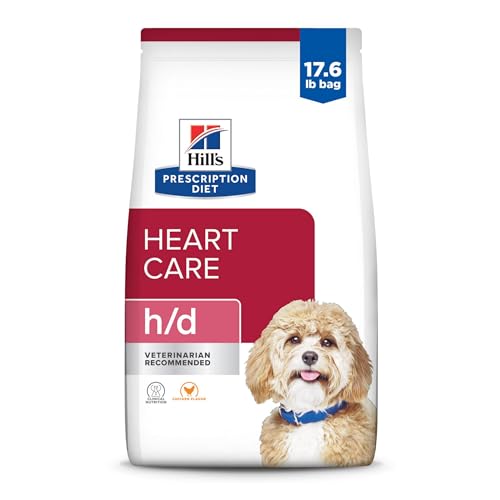
Hill's Prescription Diet h/d Heart Care Dry Dog Food
What We Like
- Formulated with high L-carnitine and taurine
- Reduced sodium helps maintain normal blood pressure
- Added potassium and magnesium for diuretic support
- Controlled protein and phosphorus for kidney and liver
Trade-offs
- Prescription required, not available over the counter
- Only available in one chicken recipe flavor
This formula includes high levels of L-carnitine and taurine to support overall heart health, along with reduced sodium to help maintain normal blood pressure and minimize fluid retention. Added potassium and magnesium help replenish nutrients lost when dogs are on diuretics, a common part of heart disease management. Hill’s Prescription Diet is the #1 US Vet Recommended therapeutic pet food, so your veterinarian is likely familiar with it for managing heart conditions.
This food requires a veterinarian’s prescription, so you’ll need a consultation before your first bag. It’s formulated to support overall heart health with high levels of L-carnitine and taurine, and it helps maintain normal blood pressure and minimize fluid retention with reduced sodium. For dogs on diuretics, the added potassium and magnesium help replenish lost nutrients, while controlled protein and phosphorus levels support liver and kidney function. If your vet is actively managing your dog’s heart disease, this is a targeted option.
Product photos
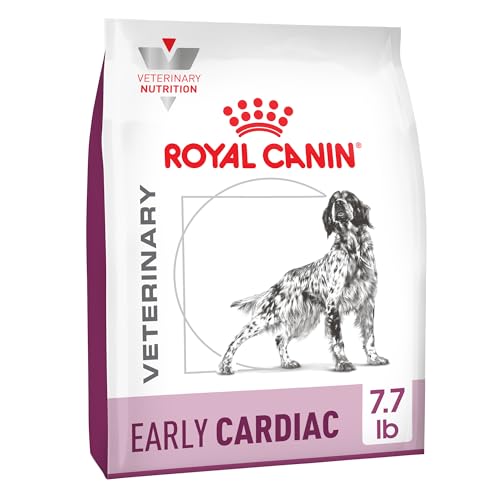
Royal Canin Veterinary Early Cardiac Adult Dry Dog Food
What We Like
- Contains EPA & DHA omega-3s
- Includes arginine, carnitine, taurine
- Moderate sodium to reduce heart workload
- Naturally preserved with mixed tocopherols
Trade-offs
- Not suitable for dogs needing severe sodium restriction
- Designed for cardiac disease, not other conditions
A 7.7-pound bag with 41 cups of kibble makes this a practical daily feed for dogs suffering from or at risk of cardiac disease, but the real story is in the formulation. Moderate sodium restriction reduces the workload on the heart while keeping the food palatable, and the inclusion of EPA and DHA omega-3s, along with arginine, carnitine, and taurine, directly supports cardiovascular function. Developed by veterinarians, this diet focuses on maintaining heart health, so you’re getting targeted nutrition rather than a one-size-fits-all approach.
The trade-off here is that this formula is designed specifically for dogs suffering from or at risk of cardiac disease, not for dogs needing severe sodium restriction. If your dog’s condition requires a different sodium profile, you might need to look at other options. But for a dog that’s been diagnosed or is at risk, the moderate sodium level and the omega-3s make this a smart starting point. The 7.7-pound bag is a practical size for daily feeding, and the concentrated nutrient profile means you’re getting targeted nutrition.
Product photos
SquarePet VFS Low Phosphorus Formula Dry Dog Food

What We Like
- Antioxidants vitamins E & C for immunity
- Low phosphorus for kidney health support
- Taurine for heart health and L-Carnitine for energy metabolism
Trade-offs
- Formulated for special needs dogs, not a general diet
- Small 4.4 lb bag for large dogs
The 4.4-pound bag is a small quantity compared to many competitors, so owners of larger dogs will need to reorder frequently. This size makes sense for testing the formula or for small breeds, but it’s not a bulk option. Because the food is formulated with targeted levels of protein, phosphorus, and sodium for special needs, it’s not a general-purpose diet, dogs without those requirements would be getting nutrients they don’t need.
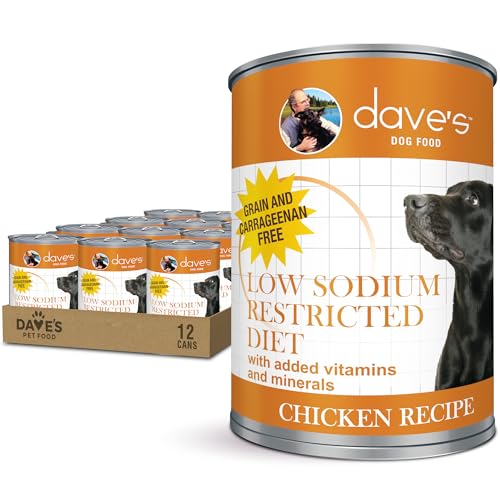
Dave's Pet Food Restricted Sodium Diet Dog Food
What We Like
- Chicken is the #1 ingredient
- Low sodium for heart diet
- Grain free and carrageenan-free
- No artificial flavors or fillers
Trade-offs
- Canned wet food, not shelf-stable after opening
- Higher moisture content means less calories per can
A low-sodium canned pate that lists chicken as the first ingredient gives you direct control over what goes into your dog’s bowl when managing heart disease. Dave’s Pet Food skips grains, carrageenan, artificial flavors, and fillers, so the ingredient list is short and readable. For dogs whose vet has recommended a restricted-sodium diet, this wet food delivers a straightforward protein-rich recipe. It works as a complete meal or a topper, which makes it flexible if your dog is picky about texture.
Chicken is the #1 ingredient in Dave’s Pet Food Restricted Sodium Diet Canned Dog Food, so your dog gets a protein-rich meal that supports strong muscles. This wet food is an excellent choice if your vet has recommended a low-sodium diet. It comes packed with added vitamins and minerals without any fillers or by-products. Compared to the Purina Pro Plan Veterinary Diets CardioCare dry kibble, Dave’s offers a simpler ingredient deck in a canned format, making it a practical option for owners who want a low-sodium wet food without the veterinary label, provided their dog tolerates chicken and does well on canned food.
Jinx Grass-Fed Beef Dry Dog Food
What We Like
- Real grass-fed beef as first ingredient
- Contains taurine for heart function
- Live probiotics for digestive support
- No corn, wheat, soy, or fillers
Trade-offs
- Only available in a 4 lb bag
- Not a veterinary-prescribed cardiac diet
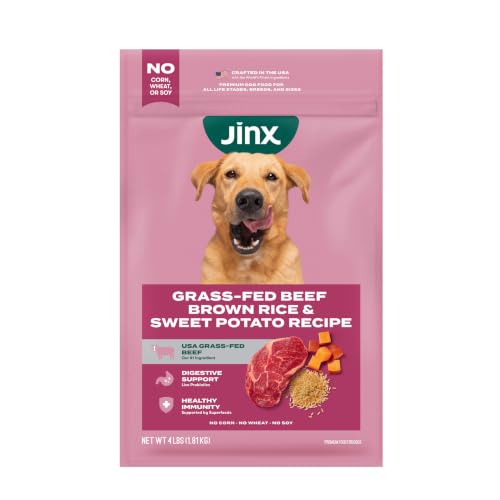
Real beef is the first ingredient in this kibble, providing protein to support lean muscle development. The recipe includes taurine, pumpkin, biotin, and fish oil, which are listed as nutrients that support heart function, healthy skin, and a shiny coat. Sweet potato and live probiotics target digestive health and immune support, making this a general wellness formula for dogs at all life stages.
Unlike veterinary therapeutic diets such as Purina Pro Plan Veterinary Diets CardioCare, which is formulated with a Cardiac Protection Blend for dogs with cardiac needs, Jinx Grass-Fed Beef Dry Dog Food relies on general ingredients like taurine and fish oil. It’s not a clinical formulation. If your vet has recommended a prescription cardiac diet, this bag won’t meet those specific requirements. It’s a nutrient-dense dry dog food for all life stages, but it’s not a replacement for a veterinary therapeutic diet.
Hill's Prescription Diet w/d Multi-Benefit Dry Dog Food
What We Like
- Helps manage glucose, weight, digestion, and urinary health
- Therapeutic L-carnitine levels for fat metabolism
- Optimal fiber blend for healthy weight maintenance
- Controlled magnesium and sodium for urinary tract health
Trade-offs
- Requires a veterinarian's prescription to purchase
- Not specifically formulated for cardiac function
The 27.5-pound bag of Hill’s Prescription Diet w/d Multi-Benefit is designed to manage multiple conditions at once. These include weight, glucose, digestion, and urinary health, thanks to a therapeutic L-carnitine level that helps metabolize fat and maintain lean muscle. The optimal blend of soluble and insoluble fiber keeps calories low while promoting a healthy weight, and the controlled magnesium and sodium support the urinary tract. This food is formulated for dogs that need help with these specific areas, but it is not intended for cardiac support.
The #1 US Vet recommended therapeutic dog food, Hill’s Prescription Diet w/d Multi-Benefit, is formulated to manage multiple conditions at once. Digestive issues, weight, glucose, and urinary health can all be addressed with this single bag if your dog has a combination of these. It’s not a cardiac-specific diet, but for dogs needing fiber, weight control, and urinary support, it covers several bases in one feeding routine.
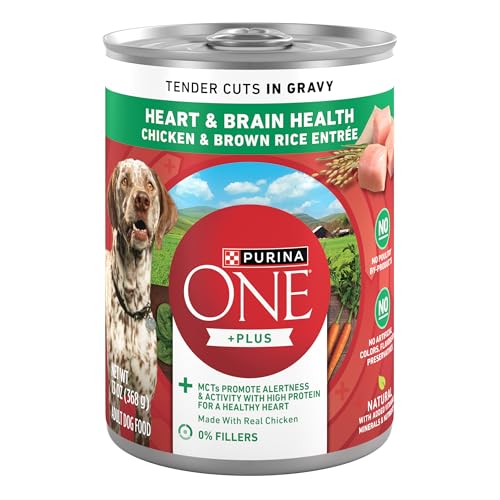
Purina ONE Tender Cuts Heart & Brain Health Wet Dog Food
What We Like
- Medium-chain triglycerides for alertness
- High protein supports heart health
- No poultry byproduct meal or artificial flavors
Trade-offs
- Not a prescription diet for advanced cardiac cases
- Not suitable for dogs requiring a prescription cardiac diet
A 13-ounce can of wet food made with real chicken and a nutrient profile that includes medium-chain triglycerides to promote alertness and high protein to support heart health. This is a no-filler option with no poultry byproduct meal, artificial flavors or preservatives, so every ingredient has a purpose. It is a general wellness food, not a therapeutic diet.
Product photos
Royal Canin Rottweiler Adult Dry Dog Food

What We Like
- Taurine, EPA, DHA for cardiac function
- L-carnitine helps maintain muscle mass
- Specialized kibble slows fast eating
Trade-offs
- Formulated only for purebred Rottweilers
- Not a veterinary therapeutic diet
A kibble shaped to slow down a Rottweiler’s eating is the first thing you notice here, big dogs that inhale food risk bloat, and this unique shape forces them to chew each piece. Royal Canin packs in taurine, EPA, and DHA specifically to support cardiac function, plus L-carnitine to help maintain the muscle mass this breed needs. For a purebred Rottweiler over 18 months, this formula is designed to meet the nutritional needs of that breed without guesswork.
This bag is designed specifically for purebred Rottweilers 18 months and older, so it targets the breed’s needs for muscle mass, heart health, and weight management rather than serving as a veterinary prescription diet. For a healthy adult Rottweiler, the specialized kibble shape helps slow down eating, while the formula includes taurine, EPA, and DHA to support cardiac function. If your dog already has a diagnosed heart condition, a therapeutic diet like Purina Pro Plan Veterinary Diets CardioCare would be the appropriate choice, but for everyday maintenance this food provides breed-specific nutrition.
Product photos
How We Evaluated Dog Foods For Heart Disease
Our evaluation focused on the nutritional markers that matter most for canine cardiac health. We analyzed ingredient lists, guaranteed analysis panels, and manufacturer feeding guidelines for each product, cross-referencing them against veterinary recommendations for heart disease management. Owner feedback patterns helped us understand real-world palatability and tolerance.
We prioritized four criteria: sodium content (low to moderate depending on disease stage), levels of cardiac-supporting nutrients like taurine, L-carnitine, and omega-3 fatty acids, and protein and phosphorus balance for dogs with concurrent kidney concerns. We also considered whether a prescription was required. A food that meets all nutritional targets but that a dog refuses to eat is not helpful, so palatability reports factored in.
Because this is a research-based evaluation, our conclusions are drawn from published nutritional data, veterinary consensus on cardiac diets, and the reported experiences of owners managing heart disease in their dogs. Always consult your veterinarian before changing your dog’s diet for a cardiac condition.
What To Look For In Dog Foods For Heart Disease
Choosing a food for a dog with heart disease means looking past the front-of-bag claims and checking the fine print on the guaranteed analysis and ingredient panel. The right food supports cardiac function without creating new problems.
Look for moderate to low sodium, added taurine and L-carnitine, and omega-3 fatty acids from fish oil. Avoid foods with excessive protein or phosphorus unless your vet approves. Prescription diets offer the tightest nutrient control for advanced cases.
Sodium Levels
Sodium is the most critical variable in a cardiac diet. High sodium increases blood volume, which forces the heart to work harder. For dogs with diagnosed heart disease, most veterinary cardiologists recommend foods with low sodium on a dry matter basis.
Prescription cardiac diets like Hill’s h/d and Purina CardioCare are formulated to meet this target. Over-the-counter foods labeled “low sodium” or “reduced sodium” can work for early-stage disease but rarely match the precision of prescription options. Check our guide to low sodium dog food for a deeper look at sodium thresholds.
Taurine, L-Carnitine, and Omega-3s
These three nutrients are the backbone of cardiac nutrition. Taurine supports heart muscle contraction, L-carnitine helps convert fat into energy for heart cells, and EPA/DHA omega-3s reduce inflammation. Many cardiac diets include all three, but levels vary. The Hill’s Prescription Diet h/d and Royal Canin Early Cardiac both add L-carnitine and taurine, while the Purina ONE Heart & Brain includes medium-chain triglycerides for cognitive support alongside protein for heart health. For a detailed breakdown of how L-carnitine works, see our guide to L-carnitine for dogs.
Protein and Phosphorus Balance
Dogs with heart disease often have reduced kidney function, either from age or from medications like diuretics. Too much protein or phosphorus can strain the kidneys. The SquarePet VFS Low Phosphorus Formula is designed specifically for this overlap, with controlled phosphorus and added taurine. Prescription diets like Hill’s w/d Multi-Benefit also manage protein and phosphorus while addressing weight and glucose. If your dog has both heart and kidney concerns, a low-phosphorus formula is worth discussing with your vet.
- Check the guaranteed analysis for sodium content; aim for low levels for diagnosed heart disease.
- Look for added taurine and L-carnitine on the ingredient list.
- Verify that omega-3 fatty acids come from a named fish source, not just flaxseed.
- Confirm whether a prescription is required; some over-the-counter foods are adequate for early-stage disease.
- Measure your dog’s current food intake and compare calorie density to avoid weight loss or gain.
A dog with heart disease should never have its diet changed without veterinary approval, especially if it is already on cardiac medication.
Dog Foods For Heart Disease Compared
The table below compares the nine foods across sodium level, key cardiac nutrients, and prescription status to help you match a diet to your dog’s specific needs.
| Product | Form | Key Nutrients | Weight |
|---|---|---|---|
| Purina Pro Plan Veterinary Diets CardioCare Dry Dog Food | Dry kibble | Cardiac Protection Blend | 16.5 lb |
| Hill's Prescription Diet h/d Heart Care Dry Dog Food | Dry dog food | L-carnitine, taurine | 17.6 lb |
| Royal Canin Veterinary Early Cardiac Adult Dry Dog Food | Dry dog food | Arginine, carnitine, taurine | 20.0 Pounds |
| SquarePet VFS Low Phosphorus Formula Dry Dog Food | Dry dog food | Taurine & L-Carnitine | 4.4 lb |
| Dave's Pet Food Restricted Sodium Diet Dog Food | Canned Pate | N/A | 13.2 oz, 12pk |
| Jinx Grass-Fed Beef Dry Dog Food | Dry dog food | Taurine, biotin, fish oil, pumpkin | 4 lb |
| Hill's Prescription Diet w/d Multi-Benefit Dry Dog Food | Dry dog food | L-carnitine, soluble & insoluble fiber | 27.5 lb |
| Purina ONE Tender Cuts Heart & Brain Health Wet Dog Food | Wet dog food | MCTs, high protein | 13 oz. can |
| Royal Canin Rottweiler Adult Dry Dog Food | Dry dog food | Taurine, EPA, DHA | 30 lb bag |
Frequently Asked Questions
Can I feed my dog with heart disease a regular commercial dog food?
Most regular commercial dog foods contain too much sodium and too little taurine and L-carnitine for a dog with diagnosed heart disease. Over-the-counter foods like Jinx Grass-Fed Beef or Purina ONE Heart & Brain can work for mild or early-stage cases, but dogs with advanced disease typically need a prescription diet with tightly controlled nutrients.
What is the difference between a prescription cardiac diet and an over-the-counter heart support food?
Prescription cardiac diets like Hill’s Prescription Diet h/d and Purina Pro Plan CardioCare are formulated to precise nutrient levels for specific disease stages and require veterinary authorization. Over-the-counter foods with added taurine and omega-3s, such as the Royal Canin Rottweiler Adult, support general heart health but do not meet the strict sodium and protein limits needed for advanced heart disease.
Is low sodium dog food the same as dog food for heart disease?
Low sodium is one component of a cardiac diet, but it is not the whole picture. A diet for heart disease also needs adequate taurine, L-carnitine, omega-3s, and controlled protein and phosphorus. A food that is simply low in sodium might not provide these other critical nutrients.
Can I give my dog treats while on a cardiac diet?
Yes, but the treats must be low in sodium and free of added salt. Many commercial dog treats are high in sodium and can undo the benefits of a low-sodium diet. Look for low sodium dog treats specifically formulated for heart health, or use small pieces of the cardiac diet food itself as rewards.
How do I know if my dog’s heart disease diet is working?
Your veterinarian will monitor clinical signs like coughing, breathing effort, and exercise tolerance, along with diagnostic tests such as chest X-rays or echocardiograms. Weight stability is also a good sign. If your dog loses weight on a cardiac diet, the food may be too low in calories, and you may need a higher-calorie option like Dave’s Restricted Sodium wet food.
The Bottom Line
For dogs with diagnosed heart disease, the Purina Pro Plan Veterinary Diets CardioCare Dry Dog Food offers the most complete nutritional package with its Cardiac Protection Blend of amino acids and omega-3s. It is a prescription diet, which means your vet is involved from the start, exactly where you want to be when managing a cardiac condition.
If your dog needs a wet food for easier eating or is on diuretics, the Dave’s Pet Food Restricted Sodium Diet provides a low-sodium, grain-free option with chicken as the first ingredient. For owners of Rottweilers or other large breeds with breed-specific cardiac risks, the Royal Canin Rottweiler Adult adds taurine and L-carnitine in a kibble shape that slows fast eating.
The single most important factor in choosing a cardiac diet is getting your veterinarian’s guidance before making any change. A food that looks perfect on paper can be wrong for your dog’s specific disease stage, medication regimen, or concurrent health conditions.
