
8 Best Cat Food For Allergic Cats in 2026
This post contains affiliate links. As an Amazon Associate, we earn from qualifying purchases.
A single animal protein and a grain-free, limited-ingredient formula minimize allergy triggers, while the freeze-dried raw coating adds palatability. That makes the Instinct Limited Ingredient Diet Rabbit Dry Cat Food our Best Overall pick. For cats needing a prescription approach, the Purina Pro Plan Veterinary Diets HA Hydrolyzed Dry Cat Food addresses confirmed allergies through broken-down proteins, and the KOHA Limited Ingredient Diet Rabbit Pate Wet Cat Food offers a novel protein option for cats who prefer wet food.
Finding the right food for an allergic cat means sorting through ingredient lists, protein sources, and diet types until you land on something that stops the scratching, vomiting, or ear infections. The challenge is that every cat reacts differently, so a single-protein food that works for one may trigger another, and the line between “limited ingredient” and “hydrolyzed” matters more than most labels suggest.
This guide is based on research into manufacturer specifications, ingredient quality, and patterns reported by owners managing feline food allergies. We walk through eight distinct formulas across dry, wet, and prescription categories so you can match your cat’s specific needs to the right bowl.
Top 8 Cat Foods For Allergic Cats in the Market


Certain content that appears on this site comes from Amazon. This content is provided "as is" and is subject to change or removal at any time.
The Best Cat Foods For Allergic Cats, Reviewed
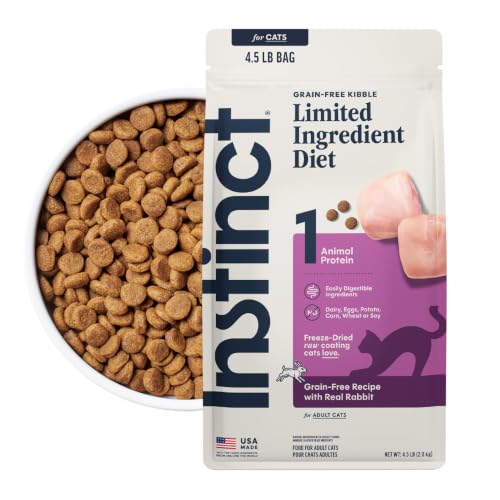
Instinct Limited Ingredient Diet Rabbit Dry Cat Food
What We Like
- Single animal protein for food sensitivities
- Freeze-dried raw coating for flavor
- Grain-free with natural omegas and antioxidants
- Made in the USA with global ingredients
Trade-offs
- 4.5 lb bag is relatively small for multi-cat homes
A single animal protein from farm-raised rabbit means this kibble strips away the guesswork for cats with food sensitivities. The ingredient list stays short and transparent, exactly what you want when you’re trying to isolate a trigger. The freeze-dried raw coating adds concentrated flavor without extra fillers, and the grain-free formula includes guaranteed levels of omegas and antioxidants to support skin, coat, and immune health. For owners who need a straightforward, limited-ingredient diet that doesn’t compromise on nutrition, this is the most practical starting point.
Compared to the Purina Pro Plan Veterinary Diets HA Hydrolyzed Dry Cat Food, which uses hydrolyzed protein for extreme cases, this Instinct formula relies on a novel whole protein. That makes it easier to digest for most cats, but it may still trigger a reaction in highly sensitive individuals. It’s a well-considered middle ground between strict veterinary diets and conventional limited-ingredient foods.
Blue Buffalo Basics Whitefish Grain-Free Dry Cat Food
What We Like
- Real whitefish is #1 ingredient
- Grain-free with no corn, wheat, soy
- Contains Omega 3 & 6 for skin & coat
- Antioxidant-rich LifeSource Bits
Trade-offs
- Only one protein source limits rotation options
- Whitefish is not a novel protein for most cats
A single animal protein, real whitefish, is the first ingredient, which means the protein source is straightforward and easy to identify for cats with food sensitivities. This limited-ingredient formula skips chicken by-product meals, corn, wheat, and soy, so the digestive load is lighter. The addition of Omega 3 and 6 fatty acids supports skin and coat health, and the antioxidant-rich LifeSource Bits provide immune system support without complicating the ingredient list. For owners whose cat has a sensitive stomach but tolerates fish, this is a clean, no-nonsense option that keeps the focus on what goes in the bowl.
The biggest limitation here is that whitefish is a common protein source, so if your cat needs a truly novel protein, one they’ve never eaten before, this bag won’t help. Compared to the Instinct Limited Ingredient Diet Rabbit formula, which uses rabbit as its single animal protein, the Blue Buffalo Basics sticks with a more familiar fish protein. That’s fine for many cats, but not ideal for those with extreme sensitivities. For a cat that does well with whitefish and just needs a gentle, grain-free dry food, this bag delivers exactly what the label says.
Purina Pro Plan Veterinary Diets HA Hydrolyzed Dry Cat Food
What We Like
- Hydrolyzed protein for allergen avoidance
- Single carbohydrate source limits triggers
- St/Ox Defense for urinary health
- Highly digestible for sensitive stomachs
Trade-offs
- Veterinary diet requires vet authorization
- Requires veterinary authorization to purchase
Hydrolyzed protein means the protein molecules are broken down small enough that most allergic cats won’t recognize them as allergens, which is the whole point of a formula like this. Purina Pro Plan Veterinary Diets HA pairs that with a single carbohydrate source, so there’s less chance of a reaction from starches or grains. The St/Ox Defense system also promotes a urinary environment that discourages both struvite and calcium oxalate crystals, a nice bonus for cats prone to urinary issues. This is a straightforward, no-nonsense approach for cats with confirmed food allergies that need a clean slate diet.
The trade-off is that this is a veterinary diet, so you’ll need a vet’s okay to buy it, and it only comes in a 4 lb dry bag. That’s fine for a single cat trial, but if you have multiple cats or want to rotate textures, you’re stuck with kibble.
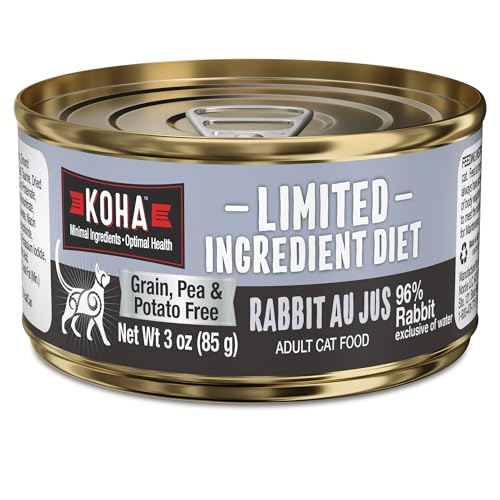
KOHA Limited Ingredient Diet Rabbit Pate Wet Cat Food
What We Like
- Single novel protein rabbit reduces allergy risk
- 96% meat for easy digestion
- Includes pumpkin and cranberries for digestion and urinary health
Trade-offs
- Only available in 3 oz cans, not suitable for large cats
- Wet food requires refrigeration after opening
A novel protein recipe that uses rabbit as the single meat source reduces the risk of food allergies and stomach upset, according to the manufacturer. The formula is 96% meat, with no unnecessary fillers and low carbohydrates, making it a soft, moisture-rich food that’s easy to digest. Pumpkin is included for digestion, and cranberries are added for urinary tract health, giving you a limited-ingredient diet that’s straightforward for cats with extreme food sensitivities.
Each can is 3 ounces, and the pack contains 24 cans, so it’s a compact option for portion control. The KOHA rabbit recipe uses a different protein source than the Blue Buffalo Basics Duck Grain-Free Wet Cat Food, which also relies on a single novel protein. If other meats have been problematic, this rabbit-based option may be worth trying. If your cat does well with rabbit, this grain-free, limited-ingredient wet food is a clean choice; if not, you’d need to look for another novel protein entirely.
Blue Buffalo Basics Duck Grain-Free Wet Cat Food

What We Like
- Real duck is #1 ingredient
- Limited ingredient diet for allergies
- Contains antioxidant-rich LifeSource Bits
- No chicken by-product meals
Trade-offs
- Wet food only, no dry option
- Not suitable for cats needing a dry food diet
With no chicken by-product meals, no corn, wheat, or soy, and the addition of Omega 3 and 6 fatty acids for skin and coat, it targets the two most common allergy symptoms. Those are digestive upset and itchy skin. The antioxidant-rich LifeSource Bits add immune support without complicating the formula. For a cat with confirmed duck tolerance, this is about as straightforward as a wet food gets.
You’re locked into a wet-only diet with this one. If your cat does well on duck, great; if you need a dry food option, you’ll have to look elsewhere. The Instinct Limited Ingredient Diet Rabbit Dry Cat Food offers a different novel protein in a dry format, while this Blue Buffalo Basics provides a wet food option that some cats prefer for hydration. It lacks the convenience of kibble. It’s a focused tool for a specific problem, not a general-purpose food.
Product photos
CANIDAE Pure Goodness Salmon Dry Cat Food

What We Like
- Real salmon as first ingredient
- Limited-ingredient formula with 7 or fewer key ingredients
- Contains probiotics for digestive support
- Antioxidants for immune system support
Trade-offs
- Not a single-protein recipe (contains menhaden fish)
- Not suitable for cats needing a single-protein diet (contains menhaden fish)
A 10-pound bag of limited-ingredient dry food with real salmon listed first and only seven or fewer recognizable ingredients means you can see exactly what your cat is eating without parsing a long label. This formula skips grains entirely and adds probiotics and antioxidants, which directly support digestion and immune function, two areas that often trouble cats with food sensitivities. It’s a straightforward, no-nonsense option for someone who wants to minimize variables while still feeding a complete, balanced diet.
This isn’t a strict single-protein recipe: menhaden fish appears alongside salmon. If your cat reacts to multiple fish sources, you might need to look elsewhere. The Instinct Limited Ingredient Diet Rabbit formula uses a single animal protein and vegetable recipe, while Canidae’s approach is slightly less restrictive. It offers a larger bag size and a more diverse nutrient profile. For most cats with mild to moderate allergies, the simplicity here is a solid starting point.
Product photos
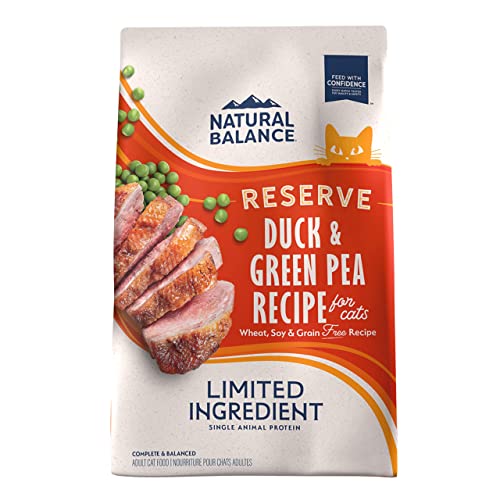
Natural Balance Limited Ingredient Duck & Green Pea Dry Cat Food
What We Like
- Single animal protein from duck
- Grain-free, soy-free, corn-free
- Easily digestible for sensitive stomachs
- Supports skin and coat health
Trade-offs
- Only one protein source limits variety
- 10 lb bag is heavy for small households
A single animal protein from duck means this food skips the guessing game of which ingredient triggers your cat’s allergies. With a limited ingredient list that’s grain-free, soy-free, and corn-free, it’s built for cats whose digestive systems need a straightforward, low-variable diet. The green peas serve as a natural fiber source, while the nutrient-dense blend helps promote healthy skin and visibly shiny coats. This is a practical option for owners who want a limited-ingredient diet without extra fillers.
Duck is the single animal protein here, so it’s a straightforward choice if that’s what your cat tolerates well. The Instinct Limited Ingredient Diet Rabbit Dry Cat Food comes in a 4.5 lb bag, while the Natural Balance offers a 10 lb supply. That’s enough for a longer trial period if you’re confident duck works for your cat.
Product photos
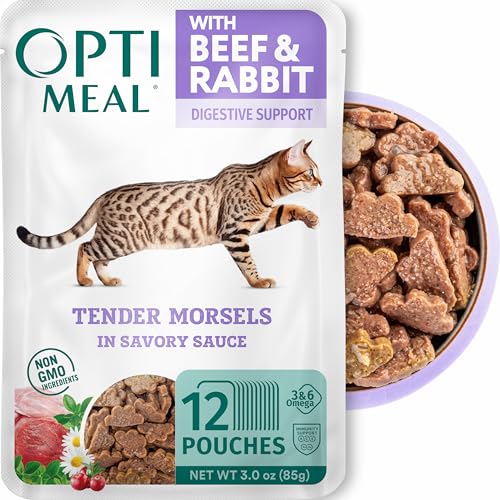
Optimeal Beef and Rabbit Wet Cat Food Pouches
What We Like
- Prebiotic FOS for digestive support
- 96%+ protein from animal sources
- No fillers or rendered by-products
Trade-offs
- Only available in 0.2 lb pouches
- Limited to two novel proteins only
The protein in this wet food comes 96% or more from animal sources, with no fillers or rendered by-products, so you’re getting a clean, straightforward ingredient list that avoids common triggers like chicken or fish. The addition of prebiotic FOS supports gentle digestion, and the cloud-shaped morsels in savory sauce are designed to tempt even picky eaters while keeping moisture intake high.
Each single-serve pouch weighs just 0.2 pounds, meaning owners of larger cats will need multiple pouches daily. This adds up in packaging waste and requires more prep time at each meal. The trade-off is convenience for portion control, but it’s worth considering your cat’s daily intake before committing to this format.
Product photos
How We Evaluated Cat Foods For Allergic Cats
We started by looking at the protein source in each formula, because the most common food allergens in cats are animal proteins like chicken, beef, and fish. A diet built around a single novel or hydrolyzed protein removes the most likely trigger before you ever open the bag. We checked each product’s ingredient deck against known common cat allergens to confirm whether the formula actually avoids them.
Next we evaluated the carbohydrate and filler profile. Grains, soy, and certain starches can cause issues in sensitive cats, so we prioritized grain-free recipes and noted when a formula used a single carbohydrate source. We also looked at digestibility markers: added probiotics, prebiotics, and simple ingredient lists with fewer than ten recognizable components.
Finally we considered practical ownership factors, bag size, availability (prescription versus over-the-counter), and whether the food comes in wet, dry, or both. A research-led evaluation cannot replace a veterinary diagnosis or a food trial, but it can narrow the field so your actual elimination diet starts with a strong candidate.
What To Look For In Cat Foods For Allergic Cats
The right food for an allergic cat depends on identifying the trigger first, then choosing a formula that avoids it entirely while still meeting nutritional needs. Here is what matters most.
Choose a single novel protein source your cat has never eaten, or a hydrolyzed protein if the allergy is severe, and verify the carbohydrate profile is grain-free with minimal ingredients.
Protein Source and Novelty
The single most important decision is the protein. If your cat has eaten chicken-based food for years, chicken is the most likely culprit. A novel protein, rabbit, duck, venison, or whitefish, gives the immune system nothing familiar to react against.
The Instinct Limited Ingredient Diet Rabbit Dry Cat Food and Natural Balance Limited Ingredient Duck & Green Pea Dry Cat Food both use a single novel animal protein with no poultry by-products. For cats with multiple sensitivities or confirmed severe allergies, a hydrolyzed cat food breaks the protein into fragments too small to trigger a reaction. That is why the Purina Pro Plan HA formula requires a prescription.
Ingredient Count and Transparency
Limited ingredient cat food means exactly what it says: fewer components mean fewer chances for a hidden trigger. Look for a formula with seven or fewer key ingredients and no mystery “meat meal” or “animal digest.” The CANIDAE Pure Goodness Salmon Dry Cat Food advertises seven or fewer main ingredients, though it does contain menhaden fish meal alongside salmon. That means it is not a single-protein recipe. Wet options like the KOHA Rabbit Pate list 96% meat content, which leaves almost no room for fillers or allergenic additives.
Wet vs. Dry and Digestive Support
Wet food provides higher moisture content, which can help cats with concurrent urinary issues or those who simply refuse dry kibble. The Blue Buffalo Basics Duck Grain-Free Wet Cat Food and Optimeal Beef and Rabbit Wet Cat Food Pouches both offer single-protein wet options with added digestive aids like pumpkin, cranberries, or prebiotics.
Dry food is more convenient for free-feeding and multi-cat homes, but it typically contains more carbohydrates. Whichever form you choose, look for added probiotics or prebiotics, the Blue Buffalo Basics Whitefish dry food includes LifeSource Bits, and the CANIDAE formula contains probiotics for digestive support.
- Confirm the protein source is one your cat has never eaten before starting the diet.
- Check the ingredient list for hidden chicken, fish, or egg derivatives in “natural flavors.”
- Choose a grain-free formula unless your cat tolerates grains without issue.
- Ask your vet whether a prescription hydrolyzed diet is warranted before buying over-the-counter options.
- Start with the smallest available bag or can to test tolerance before committing to bulk.
A true elimination diet requires feeding only the chosen food for 8-12 weeks, no treats, no table scraps, no flavored medications.
Cat Foods For Allergic Cats Compared
The table below compares all eight formulas across protein source, form, and key features so you can see at a glance which one fits your cat’s needs.
| Product | Protein Source | Grain Free | Form | Weight |
|---|---|---|---|---|
| Instinct Limited Ingredient Diet Rabbit Dry Cat Food | Farm-raised rabbit | Yes | Dry | 4.5 lb |
| Blue Buffalo Basics Whitefish Grain-Free Dry Cat Food | Whitefish | Yes | Dry | 5.1 pounds |
| Purina Pro Plan Veterinary Diets HA Hydrolyzed Dry Cat Food | Hydrolyzed | N/A | Dry | 4.1 pounds |
| KOHA Limited Ingredient Diet Rabbit Pate Wet Cat Food | Rabbit | Yes | Wet | 0.2 pounds |
| Blue Buffalo Basics Duck Grain-Free Wet Cat Food | Duck | Yes | Wet | 4.5 pounds |
| CANIDAE Pure Goodness Salmon Dry Cat Food | Salmon (first ingredient) | Yes | Dry | 10.0 pounds |
| Natural Balance Limited Ingredient Duck & Green Pea Dry Cat Food | Duck | Yes | Dry | 10.0 pounds |
| Optimeal Beef and Rabbit Wet Cat Food Pouches | Beef & Rabbit | Yes | Wet | 0.2 pounds |
Frequently Asked Questions
What is the difference between limited ingredient and hydrolyzed cat food?
Limited ingredient cat food uses a single protein source and a short list of other components to minimize the chance of an allergic reaction. Hydrolyzed cat food takes a protein, usually chicken or soy, and breaks it into fragments so small that the immune system does not recognize them as a threat. A limited ingredient diet is a good starting point for suspected allergies; a hydroyzed diet is typically reserved for cats with confirmed, severe food allergies after a veterinary diagnosis.
How do I know which protein my cat is allergic to?
The most reliable method is a veterinary-supervised elimination diet where you feed a single novel protein source for 8 to 12 weeks with no other foods, treats, or flavored medications. If symptoms resolve, you gradually reintroduce the old protein to confirm the trigger. Blood and saliva tests for food allergies exist but are not considered as accurate as a controlled food trial.
Can a cat develop a new allergy to a limited ingredient diet?
Yes. A cat can become allergic to any protein it eats over time, even a novel one like rabbit or duck. If your cat develops symptoms again after months or years on a limited ingredient diet, the protein itself may now be the trigger. You will need to switch to a different novel protein or a hydrolyzed formula.
Is grain-free cat food always better for allergies?
Not necessarily. True food allergies in cats are almost always caused by animal proteins, not grains. A grain-free formula can help if your cat has a grain sensitivity or a concurrent digestive issue, but the priority should be the protein source, not the presence or absence of corn or wheat.
Should I switch to wet food if my cat has allergies?
Wet food can help because it often contains fewer carbohydrates and less processing than dry kibble, and the higher moisture content supports urinary health. The KOHA Rabbit Pate and Blue Buffalo Basics Duck wet foods both offer single-protein, limited ingredient options. But the form matters less than the protein source, a dry limited ingredient food that avoids the trigger is better than a wet food that contains chicken or beef.
The Bottom Line
For most cat owners dealing with suspected food allergies, the Instinct Limited Ingredient Diet Rabbit Dry Cat Food is the strongest starting point. It pairs a single novel protein with a grain-free formula and freeze-dried raw coating that even picky cats tend to eat. It is a first choice that avoids the most common triggers without requiring a prescription.
If your cat has a confirmed allergy that requires a hydrolyzed protein diet, the Purina Pro Plan Veterinary Diets HA Hydrolyzed Dry Cat Food is the appropriate option. You will need your vet’s authorization to purchase it. For cats who prefer wet food or need a novel protein like duck or rabbit, the KOHA Rabbit Pate and Blue Buffalo Basics Duck wet foods offer clean, limited ingredient alternatives.
The single most important factor in managing feline food allergies is choosing a protein your cat has never eaten before and sticking with it exclusively for the full trial period. Everything else, grain-free, wet versus dry, added supplements, is secondary to that one decision.
