
10 Best Bird Seed For Winter Feeding in 2026
This post contains affiliate links. As an Amazon Associate, we earn from qualifying purchases.
For winter feeding, Wagner’s Black Oil Sunflower Wild Bird Food is the best overall pick because its thin-shelled, high-energy seeds attract the widest variety of birds and provide essential calories when natural food is scarce. The Audubon Park Year Round Wild Bird Seed works as a versatile all-season blend, while the Lyric Sunflower Kernels No Waste Bird Seed keeps your feeding station clean with zero waste.
Winter brings shorter days, colder temperatures, and fewer natural food sources for backyard birds. A high-fat, high-protein seed mix gives them the energy they need to survive overnight and maintain body heat through freezing weather. The right seed choice also determines which species visit your feeders and how often you need to refill.
This guide is research-based, drawing on manufacturer specifications, expert round-ups, and patterns in owner feedback. We cover the ten best bird seed options for winter feeding, from bulk sunflower to gourmet fruit blends, so you can match the right seed to your feeder type and local bird population.
Top 10 Bird Seeds For Winter Feeding in the Market
Certain content that appears on this site comes from Amazon. This content is provided "as is" and is subject to change or removal at any time.
The Best Bird Seeds For Winter Feeding, Reviewed
Wagner's Black Oil Sunflower Wild Bird Food

What We Like
- Thin shell for small-beaked birds
- High energy content for winter
- Attracts widest variety of birds
- Made in the USA
Trade-offs
- Black oil shells create mess under feeders
- 25-pound bag is heavy to carry and pour
A 25-pound bag of thin-shelled black oil sunflower seeds means you can keep feeders full without constant refills. The high energy content supports birds’ healthy lifestyle, and the thin shells let smaller-beaked species like chickadees and finches crack them open easily. That combination of accessibility and energy density is why this seed attracts the widest variety of birds. For anyone who wants a straightforward, high-quality seed that works for most backyard birds, this is the one to grab.
The whole black oil sunflower seed attracts the widest variety of birds, so you’ll see everything from chickadees to cardinals at your feeder. The thin shells make it easy for small-beaked birds to crack open, which means less time struggling and more time eating. A 25-pound bag weighs 25 pounds, so it’s hefty enough to keep your feeder full for weeks without constant refills.
Audubon Park Year Round Wild Bird Seed
What We Like
- All-season blend for year-round feeding
- Includes black oil sunflower seeds for energy
- Works with tube, tray, hopper, platform, smart feeders
- Attracts cardinals, chickadees, woodpeckers, and more
Trade-offs
- No nut or fruit pieces for specialized feeders
- Does not contain nut or fruit pieces for specialized feeders
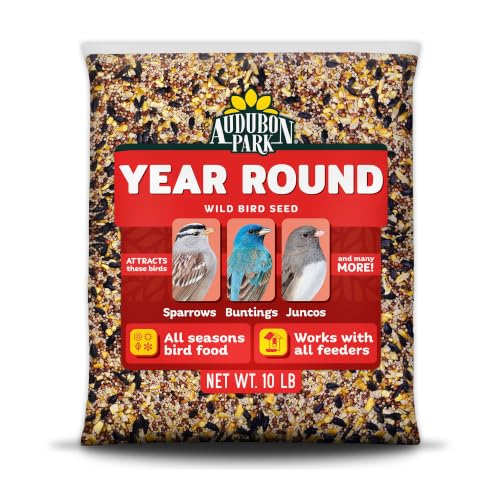
A 10-pound bag of black oil sunflower seeds blended with wholesome grains and millet means you get a mix that fuels birds through cold months without switching blends come spring. This Audubon Park blend is designed to attract cardinals, chickadees, woodpeckers, buntings, juncos, towhees, sparrows, and grosbeaks, so you’ll see a good variety at your feeder. It works with tube, tray, hopper, platform, and even smart feeders, which makes it a versatile option if you have different feeder types around your yard. The balanced nutrition is meant to support birds from winter residents to summer visitors, so you can keep one bag going all year.
The trade-off is that 10 pounds is a moderate size; if you have a busy feeder in deep winter, you might be refilling more often than with a 25-pound bag like Wagner’s Black Oil Sunflower. For a straightforward all-season mix that covers the basics and works across feeder styles, this Audubon Park blend is a practical choice.
Lyric Sunflower Kernels No Waste Bird Seed
What We Like
- 100% edible zero waste formula
- High-protein and high-fat content
- Attracts multiple songbird species
- Works with four feeder types
Trade-offs
- No shell means less foraging activity
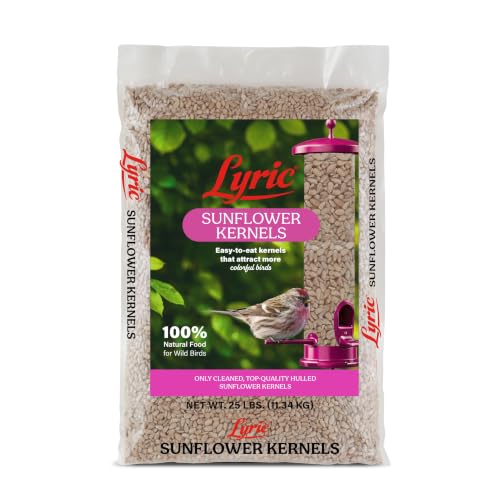
The 100% edible sunflower kernel formula means every last piece goes into the birds, not onto the ground. That zero-waste design is a real advantage during winter when you want every calorie to count and don’t want to attract rodents or rot under the feeder. It attracts a solid lineup of songbirds, finches, cardinals, chickadees, nuthatches, and works with tube, mesh, hopper, or tray feeders, so you can use whatever you already own. For someone who wants a clean, efficient winter feeding setup without mess or waste, this is a straightforward pick.
This product contains only sunflower kernels, so it won’t attract birds that prefer whole seeds with shells. Compared to Wagner’s Black Oil Sunflower, which is a different type of seed, this Lyric formula is designed for zero waste and high nutrition. If you want to attract a wide variety of songbirds with a clean feeding station, this is a straightforward choice. But if you prefer a seed mix with more variety, you might consider a different product.
Pennington Songbird Nut & Fruit Blend
What We Like
- Real fruit, nuts, and seeds
- Bird-Kote vitamin enrichment
- Attracts indigo buntings, chickadees, cardinals
Trade-offs
- 10-pound bag requires more frequent refills for multiple feeders
- Not suitable for tube feeders, only hopper, gazebo or tray types
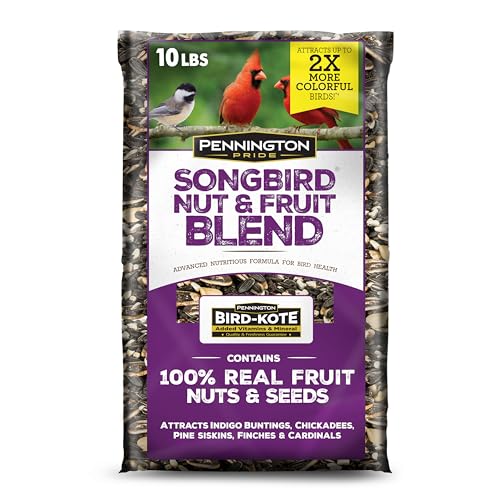
The Bird-Kote technology enriches this blend with vitamins and nutrients for advanced nutrition, supporting overall bird health. Real fruit, nuts, and seeds provide a high-energy mix that attracts a variety of songbirds, including indigo buntings, chickadees, and cardinals. It works with hopper, gazebo, and tray feeders, so it fits most standard setups without fuss.
At 10 pounds, this bag is lighter than the 25-pound options from Wagner’s Black Oil Sunflower or Lyric Sunflower Kernels, so you’ll restock more often if you have multiple feeders. The mix includes real fruit, nuts, and seeds, plus added vitamins for bird health, a practical choice for those focused on nutrition rather than bulk.
Kaytee Nut & Fruit Wild Bird Seed

What We Like
- Contains sunflower seeds, peanuts, and mixed nuts
- Includes raisins and cherries for fruit variety
- Attracts colorful songbirds like Cardinals and Woodpeckers
- Blended by Kaytee with 150 years of expertise
Trade-offs
- 5-pound bag is smaller than many winter feeding blends
- Does not suit birders who want a no-mess seed blend
A 5-pound bag of Kaytee Nut & Fruit Wild Bird Seed packs sunflower seeds, peanuts, mixed nuts, raisins, and cherries into a blend that targets a wide variety of colorful songbirds. That mix of nuts and fruit is designed to appeal to birds like Cardinals, Chickadees, Nuthatches, Grosbeaks, Juncos, and Woodpeckers. The ingredient list includes sunflower seeds, peanuts, nuts, raisins, and cherries, giving you a clear picture of what’s going out for the birds.
The 5-pound bag is smaller than the 10-pound Pennington Songbird Nut & Fruit Blend, so you’ll refill the feeder more often. The ingredient list is straightforward, giving you a clear picture of what the birds are getting.
Audubon Park Songbird Wild Bird Seed
What We Like
- Blend attracts colorful songbirds
- Includes protein-rich peanuts for energy
- Works in tube, tray, hopper feeders
- Balanced nutrition for year-round feeding
Trade-offs
- Contains cracked corn, which some birds ignore
- 14-pound bag is heavier than some alternatives
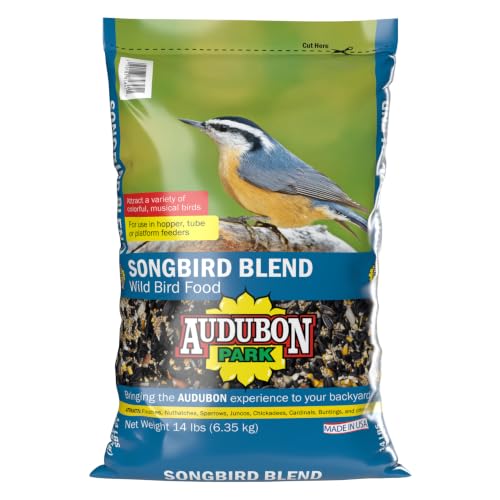
The 14-pound bag of Audubon Park Songbird Wild Bird Seed delivers a diverse blend of millet, black oil sunflower seed, cracked corn, safflower seed, and peanuts. Those ingredients are chosen to attract cardinals, chickadees, titmice, nuthatches, buntings, and finches. That mix means you’re not just feeding one or two species; the variety appeals to both seed-eaters and nut-lovers, so your feeder becomes a hub for multiple colorful visitors. It’s formulated to support birds through all seasons, with high-energy sunflower and peanuts that help songbirds stay active even during cold winter months.
The cracked corn in this blend adds bulk and attracts ground-feeding birds like doves and juncos, but some finches and chickadees tend to pick around it, leaving waste at the base of the feeder. If your goal is to draw a wider variety of songbirds to your yard, the balanced ingredient list and compatibility with tube, tray, hopper, and platform feeders make this a practical, straightforward choice.
Product photos
Wagner's Classic Blend Wild Bird Food

What We Like
- High-quality grains attract diverse winter birds
- Works in tube, hopper, or platform feeders
- Millet, milo, cracked corn, and sunflower mix
Trade-offs
- 6-pound bag is smaller than many winter options
- Milo is a filler some birds pick around
A mix of millet, milo, cracked corn, and sunflower means this bag covers the basics for a wide range of winter visitors, jays, cardinals, doves, juncos, and finches all find something to eat. At six pounds, it’s a compact option that fits tube, hopper, or platform feeders without needing a heavy-duty stand. For winter scarcity, when natural seeds are buried or gone, this blend gives birds a reliable stopgap, especially if you’re filling a single feeder in a small yard.
At six pounds, this bag is best for light to moderate feeding, a busy flock will go through it quickly. The mix includes milo, which some birds tend to leave behind, but it also has millet, cracked corn, and sunflower to attract a range of species like jays, cardinals, and finches. For comparison, Wagner’s Black Oil Sunflower Wild Bird Food comes in a 25-pound bag and offers straight sunflower seeds, a favorite of many winter birds.
Product photos
Happy Wings Black Oil Sunflower Seeds
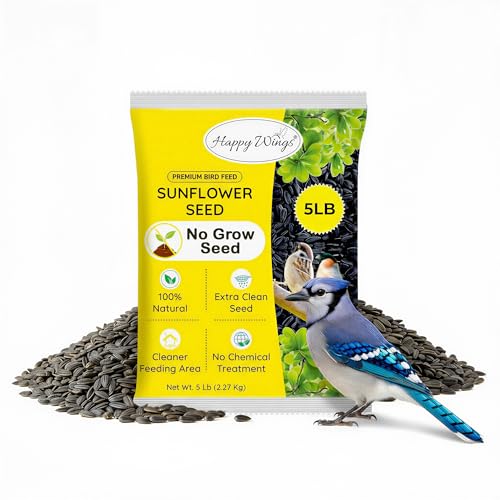
What We Like
- High fat and protein for winter energy
- No waste, low mess under feeders
- Attracts finches, sparrows, chickadees, cardinals
- No grow formula prevents sprouts
Trade-offs
- 5-pound bag is smaller than many winter options
- Single seed type limits variety for some birds
A compact bag of black oil sunflower seeds packed with high fat and protein means this is straight-up winter fuel for songbirds. When temperatures drop, birds need dense calories to maintain body heat, and these seeds deliver exactly that, rich natural oils and protein to keep finches, sparrows, chickadees, and cardinals coming back all season. The no-waste formulation also minimizes mess under the feeder, which is a practical bonus for anyone wanting a cleaner backyard.
The bag size here is 5 pounds, which is smaller than some larger options, so you’ll be refilling more often during heavy feeding weeks. That said, the clean-feeding design and high fat content make every pound count more than a blend with lower-energy fillers. For smaller yards or as a high-energy supplement, this is a smart, targeted choice.
Product photos
Cool Birds Nut & Fruit Wild Bird Seed
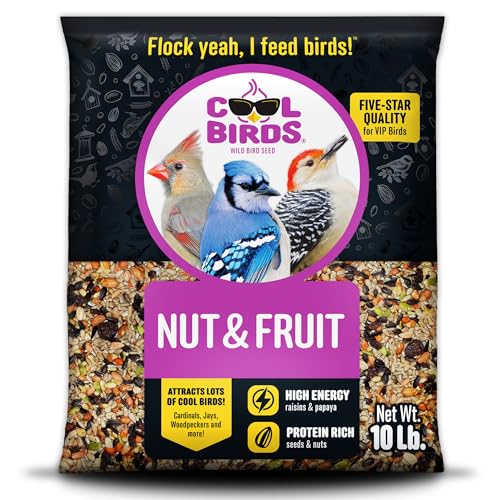
What We Like
- No corn, milo, or millet fillers
- Real fruit ingredients: raisins and papaya
- High-energy nutrient-rich formula
- Attracts cardinals, grosbeaks, woodpeckers, chickadees
Trade-offs
- 10 lb bag is smaller than some winter options
- Not ideal for ground-feeding birds that prefer millet
A 10-pound bag of this blend skips the cheap fillers like corn, milo, and millet entirely, replacing them with sunflower hearts, peanuts, tree nuts, and real fruit pieces. That means every scoop delivers concentrated energy for birds fighting winter cold, with no leftover husks or rejected seeds piling up under your feeder. It’s a premium no-waste approach that targets the most active winter visitors, cardinals, grosbeaks, woodpeckers, and chickadees, who need high-calorie fuel to survive freezing nights.
The real fruit pieces, raisins and papaya, make this blend irresistible to fruit-loving birds, though they can get soggy in wet weather, so a covered feeder is a smart move. Unlike Wagner’s single-ingredient black oil sunflower seed in a 25-pound bag, this mix offers sunflower hearts, peanuts, tree nuts, and fruit for a more varied diet that attracts cardinals, grosbeaks, woodpeckers, and chickadees. It’s a premium, filler-free option for birders who want to draw a wider range of colorful species, but the 10-pound bag is smaller than some bulk choices.
Product photos
Happy Wings Songbird Blend Bird Food

What We Like
- High in oil and protein for winter energy
- No grow seeds reduce mess under feeders
- Vacuum-sealed for freshness
- BRC-GS and USDA approved facilities
Trade-offs
- No fruit or nut variety for pickier birds
A smaller bag of sunflower, safflower, and peanuts packed with natural oils and protein means this blend is built to fuel birds through cold months when they need calories most. The heat treatment helps prevent seeds from sprouting under your feeder, so you get less lawn cleanup and more actual feeding. For anyone who wants a straightforward, high-energy mix that keeps cardinals, chickadees, and finches coming back without the hassle of weedy patches, this is a practical winter choice.
The 5-pound bag of Happy Wings Songbird Blend is vacuum-sealed to lock in freshness, which is a real plus for keeping the seed tasty and preventing moisture damage before you open it. This blend is high in oil and protein, making it a good choice for supporting birds’ energy and feather health during colder months. If you have a busy feeder, you might find yourself refilling more often compared to a 25-pound bag like Wagner’s Black Oil Sunflower, but the compact size is easier to store and carry.
Product photos
How We Evaluated Bird Seeds For Winter Feeding
We evaluated each seed blend by examining its ingredient list, nutritional profile, and feeder compatibility using manufacturer data and expert recommendations. Owner feedback patterns helped us understand real-world performance in cold weather, including how quickly birds emptied feeders and whether certain seeds were left behind.
The three most important criteria for winter feeding were energy density, waste level, and species appeal. High oil and protein content provide the calories birds need to stay warm, while low-mess formulas reduce spoiled seed buildup under feeders. A blend that attracts multiple species ensures your yard stays active even on the coldest days.
We also consulted guides on winter feeding and winter bird seed blends to cross-check our findings against broader expert consensus.
What To Look For In Bird Seeds For Winter Feeding
Choosing the right winter bird seed means balancing energy content, feeder type, and bird preferences. The best blends prioritize high-fat ingredients like black oil sunflower and peanuts, minimize filler seeds that birds ignore, and match your feeder’s design.
Energy Content
Winter birds need dense calories to maintain body temperature through long, cold nights. Black oil sunflower seeds are a top choice because they contain a high percentage of fat and significant protein. Peanuts, suet pieces, and nut blends offer similar high-energy density. Avoid mixes heavy in milo or red millet, which many birds pick around and leave to rot in wet weather.
Waste Level
Shells and filler seeds create mess under feeders, and wet, moldy seed can harm birds. No-waste formulas like Lyric Sunflower Kernels remove the shell entirely, leaving only edible kernel. Other low-mess options use “no grow” processing to prevent sprouting. If you feed on a deck or patio, consider a no-waste seed or a kernel-only blend.
Feeder Compatibility
Not every seed works in every feeder. Tube feeders require small seeds like black oil sunflower or hulled kernels. Hopper and platform feeders handle larger mixes with nuts and fruit. Winter feeders with weather guards or larger capacities reduce refill frequency in snow and ice. Check your feeder type before buying a bulk bag.
Species Appeal
Different birds prefer different seeds. Black oil sunflower attracts cardinals, chickadees, nuthatches, and finches. Peanuts draw woodpeckers and jays. Fruit pieces appeal to bluebirds and orioles. A blend with multiple ingredient types increases the variety of birds visiting your yard, but a single high-energy seed like sunflower often works best for winter survival.
- Check the ingredient list for black oil sunflower as the first ingredient.
- Look for “no grow” or “no waste” labels if you want less mess.
- Match bag size to your feeder capacity and how often you want to refill.
- Avoid blends with more than 10% milo or cracked corn in winter.
A 20-pound bag of black oil sunflower is the most cost-effective way to feed a busy yard through a cold winter.
Bird Seeds For Winter Feeding Compared
The table below compares all ten winter bird seed options side by side, highlighting their key ingredients, best uses, and feeder compatibility.
| Product | Seed Type | Bag Size | Attracts |
|---|---|---|---|
| Wagner's Black Oil Sunflower Wild Bird Food | Black Oil Sunflower | 25 lb | N/A |
| Audubon Park Year Round Wild Bird Seed | Sunflower & grain mix | 10 lb | Cardinals, chickadees, woodpeckers, buntings, juncos, towhees, sparrows, grosbeaks |
| Lyric Sunflower Kernels No Waste Bird Seed | Sunflower kernels | 25 lb | Finches, cardinals, chickadees |
| Pennington Songbird Nut & Fruit Blend | Real fruit, nuts, seeds | 10 lb | N/A |
| Kaytee Nut & Fruit Wild Bird Seed | Sunflower seeds, peanuts, nuts, raisins, cherries | 5 lb | Cardinals, Chickadees, Nuthatches, Grosbeaks, Juncos, Woodpeckers |
| Audubon Park Songbird Wild Bird Seed | Millet, sunflower, corn, safflower, peanuts | 14 lb | Cardinals, chickadees, titmice, nuthatches, buntings, finches |
| Wagner's Classic Blend Wild Bird Food | Millet, Milo, Cracked Corn, Sunflower | 6-Pound Bag | Jays, Cardinals, Doves, Juncos, Finches |
| Happy Wings Black Oil Sunflower Seeds | Black Oil Sunflower Seeds | 5 lb | Finches, sparrows, chickadees, cardinals |
| Cool Birds Nut & Fruit Wild Bird Seed | Sunflower hearts, peanuts, tree nuts, raisins, papaya | 10 lb | Cardinals, grosbeaks, woodpeckers, chickadees |
| Happy Wings Songbird Blend Bird Food | Sunflower, Safflower, Peanuts | 5 lb | N/A |
Frequently Asked Questions
What is the best bird seed for winter feeding?
Black oil sunflower seed is widely considered the best choice for winter feeding because of its high fat content, thin shell, and appeal to the largest number of bird species. Blends that include sunflower, peanuts, and tree nuts also provide excellent cold-weather energy.
Should I use suet instead of seed in winter?
Suet provides concentrated fat and is an excellent supplement to seed in winter, but it does not replace the variety of nutrients birds get from seeds and nuts. Many birders offer both suet and seed to attract different species. For suet-specific advice, a suet feeder guide can help you choose the right feeder.
How often should I refill bird feeders in winter?
In very cold weather, birds may empty a feeder in one or two days because they need more calories. Check feeders daily and refill as needed, especially after snow or ice storms that cover natural food sources. A large-capacity feeder or bulk bag reduces the need for frequent trips outside.
Can birds eat frozen bird seed?
Yes, birds can eat frozen seed, but wet or frozen seed can clog feeder ports and spoil more quickly. Use a weatherproof feeder with drainage holes and bring seed indoors overnight if temperatures drop below freezing with high humidity. Dry seed stored in a sealed bin stays fresher longer.
What seeds do cardinals eat in winter?
Cardinals strongly prefer black oil sunflower seeds, but they also eat safflower seeds, cracked corn, and peanut pieces. A blend that lists sunflower first and includes safflower will reliably attract cardinals through the winter months.
The Bottom Line
For most backyard birders, Wagner’s Black Oil Sunflower Wild Bird Food is the best choice for winter feeding. Its high energy content, thin shell, and broad species appeal make it a reliable staple that keeps birds coming back all season. It works in tube, hopper, and tray feeders and comes in a bulk bag that suits heavy winter use.
If you want a cleaner feeding station, the Lyric Sunflower Kernels No Waste Bird Seed delivers all the nutrition without the mess. For birders who prefer a single versatile blend, the Audubon Park Year Round Wild Bird Seed covers all seasons and feeder types. Those targeting specific species like woodpeckers or indigo buntings should consider the Pennington Songbird Nut & Fruit Blend or the Cool Birds Nut & Fruit Wild Bird Seed.
The single most important factor in winter bird feeding is energy density. Choose a seed or blend high in oil and protein, and your feeder will stay busy even on the coldest mornings.
