
Alcohol Toxicity in Pets: 3 Sources, 3 Answers
This post contains affiliate links. As an Amazon Associate, we earn from qualifying purchases.
Alcohol toxicity in pets depends on which alcohol was swallowed: ethanol, methanol, and isopropanol carry different lethal doses and different breakdown products. In dogs, the lethal oral dose of ethanol is 5.5 to 7.9 g/kg of 100% ethanol, methanol is 4 to 8 mL/kg, and isopropanol is twice as toxic as ethanol.
Those breakdown products are where the danger actually sits. Ethanol becomes acetaldehyde, methanol becomes formaldehyde and then formic acid, and isopropanol becomes acetone. Each one hits the nervous system on a different schedule and at a different strength.
What follows is the dose math for each alcohol, the genuine disagreement among veterinary sources about timing, where alcohol hides in an ordinary house, and what treatment at the clinic actually involves. Flip the bottle over before you panic. The label tells you which of the three you’re dealing with.
Key Takeaways
- Isopropanol is twice as toxic as ethanol, and an oral dose of just 0.5 mL/kg causes serious signs in dogs.
- Dogs don’t go blind from methanol the way humans do, because nonprimates clear formic acid efficiently and don’t build up the retinal damage primates get.
- Signs start in 30 to 60 minutes by Merck’s count, 15 to 90 minutes by VCA, as early as 1 hour by Pet Poison Helpline, and within 1 hour by Wismer.
- Activated charcoal doesn’t work here. It doesn’t appreciably bind small-chain alcohols, and Merck and Vetenum both advise against it.
- Most pets recover in 12 to 24 hours with supportive care. There is no antidote, so speed of treatment is the whole game.
Which Alcohol Is It? Ethanol, Methanol, and Isopropanol Compared
Merck’s toxicology section names three alcohols as the ones that actually turn up in companion animal cases: ethanol, methanol, and isopropanol. Everything else is noise until you know which of the three you’re holding.
Ethanol, methanol, and isopropanol are the three alcohols most often involved in companion animal toxicosis. Each is absorbed rapidly across the gastrointestinal tract and skin, and each produces a different intermediate metabolite: acetaldehyde from ethanol, formaldehyde from methanol, and acetone from isopropanol. Peak plasma concentrations arrive within 1.5 to 2 hours.
The dose differences are large enough to change how fast you move.
| Alcohol | Lethal oral dose, dogs | Breaks down into |
|---|---|---|
| Ethanol | 5.5–7.9 g/kg of 100% ethanol | Acetaldehyde, then acetic acid |
| Methanol | 4–8 mL/kg | Formaldehyde, then formic acid |
| Isopropanol | Twice as toxic as ethanol; serious signs at 0.5 mL/kg | Acetone |
One conversion matters if you’re doing math at 2 a.m.: 1 mL of ethanol weighs 0.789 g. A dose limit written in grams is not a dose limit written in milliliters.
Ethanol: The One You Know
Ethanol is the alcohol in drinks, but it also shows up in liquid medications, cosmetics, hand sanitizers, perfumes, colognes, mouthwashes, vanilla extract, alcohol-filled chocolates, and fermenting yeast bread dough. Wismer’s clinical review notes that drinks made with milk or cream are especially attractive to pets, which is a detail worth remembering next to a half-finished White Russian.
Methanol: The Windshield Fluid Problem
Methanol’s main household source is windshield washer fluid, sometimes sold as “windshield antifreeze.” Here’s the part that separates dogs from people. In humans and some other primates, formic acid accumulates after methanol ingestion and damages the retina and neurons. Nonprimates clear formic acid efficiently, so dogs don’t develop that blindness or cerebral necrosis. The poisoning is still real. The signature complication is different.
Isopropanol: Twice as Toxic as Ethanol
Isopropanol sits in rubbing alcohol, some alcohol-based hand sanitizers, and alcohol-based flea sprays for pets. It’s metabolized to acetone, and it’s roughly twice as potent as ethanol by dose. If you have one unlabeled bottle and no way to identify it, treat it as isopropanol and move.
How Fast Do Signs of Alcohol Toxicity in Pets Appear?
Four sources, four windows, and none of them are wrong.
| Source | Reported onset of signs |
|---|---|
| Merck Veterinary Manual | 30–60 minutes after ingestion |
| VCA Animal Hospitals | 15–90 minutes |
| Pet Poison Helpline | As early as 1 hour |
| Today’s Veterinary Practice (Wismer) | Within 1 hour of exposure |
The spread isn’t sloppiness. Absorption depends on how much was swallowed and whether there was food in the stomach. Wismer notes that peak plasma levels arrive 30 minutes to 2 hours after ingestion, and can be delayed after larger doses or with food present.
Fifteen to 90 minutes is the window that should reset your expectations.
If you’re trying to work out whether a pet’s wobble is alcohol or something else, the general guide to signs of poisoning covers the overlapping symptoms worth ruling out.
Easy to miss: A pet that vomits once and then seems fine has not necessarily cleared the dose. Peak absorption is still ahead of it, and the wobble can arrive after you’ve decided the emergency is over.
The Emesis Question: Three Sources, Three Answers
You cannot settle this one at home, and you shouldn’t try.
Merck says induction of emesis can be beneficial in the first 20 to 40 minutes after ingestion, provided clinical signs haven’t developed yet. VCA says a veterinarian may induce vomiting depending on timing, amount ingested, whether signs are present, and which alcohol is involved. Vetenum goes the other way and advises against emesis entirely, citing the rapid onset of CNS depression and the aspiration risk, and suggests gastric lavage instead if a large volume is still sitting in the stomach.
Before you start: Do not induce vomiting on your own. At high blood alcohol levels the muscles controlling the epiglottis slow down or paralyze, so vomit can travel into the lungs and cause aspiration pneumonia. Call Pet Poison Helpline at 1-800-213-6680 or your vet first, and have the container in your hand when you dial.
Wismer explains why the aspiration worry is serious rather than theoretical. Ethanol is directly irritating to the stomach and causes vomiting on its own, and high blood levels also stimulate the vomit reflex. So the pet may be vomiting whether you want it to or not, at exactly the moment its airway protection is worst. Merck lists aspiration pneumonia as a possible complication.
On activated charcoal, the sources actually agree. Merck says it isn’t thought to appreciably bind small-chain alcohols and isn’t often recommended. Vetenum says flatly that it isn’t recommended. That’s a rare clean answer in a messy topic.
Where Does Alcohol Hide in Your House?
A bottle of vanilla extract on the baking shelf. A pump of hand sanitizer by the front door. A jug of blue washer fluid in the garage, next to the dog’s leash.
The list is longer than most owners expect:
- Alcoholic beverages, including the milk- and cream-based ones pets find especially appealing
- Hand sanitizer, frequently ethanol-based and frequently left at cat height on a counter
- Mouthwash and some liquid medications, including drug elixirs
- Vanilla extract and other food flavorings
- Alcohol-filled chocolates
- Windshield washer fluid, the most common methanol source in a household
- Rubbing alcohol, perfumes, colognes, disinfectants, paint removers, cleaning products, canned fuels, and alcohol-based flea sprays
I’ve flipped over more hand sanitizer bottles in the last year than I care to admit, and the alcohol type is almost never on the front of the label. Read past the front of the package.
The part nobody mentions: Raw yeast dough keeps fermenting inside the stomach. Yeast produces ethanol as it ferments, so the dose isn’t fixed at the moment of ingestion. It keeps climbing while the dough sits there warming up, and the dough expands at the same time.
That double problem is why raw dough toxicity covers both the alcohol load and the mechanical bloat. Vetenum lists excessive gas, bloating, and vomiting as the signature of a fermented-bread ingestion, on top of the neurological signs.
While you’re auditing the kitchen, run the same pass for the rest of the shelf. The list of foods toxic to dogs and the separate list of foods toxic to cats overlap with this one but aren’t identical. Cats are especially sensitive to alcohol according to VCA, though Merck doesn’t single cats out and lists the same three alcohols as the frequent offenders across companion animals generally.
Mold is its own category and its own set of toxins, covered separately under moldy food poisoning. Don’t fold it into the alcohol conversation.
What Actually Happens in the Body, and Why There’s No Antidote
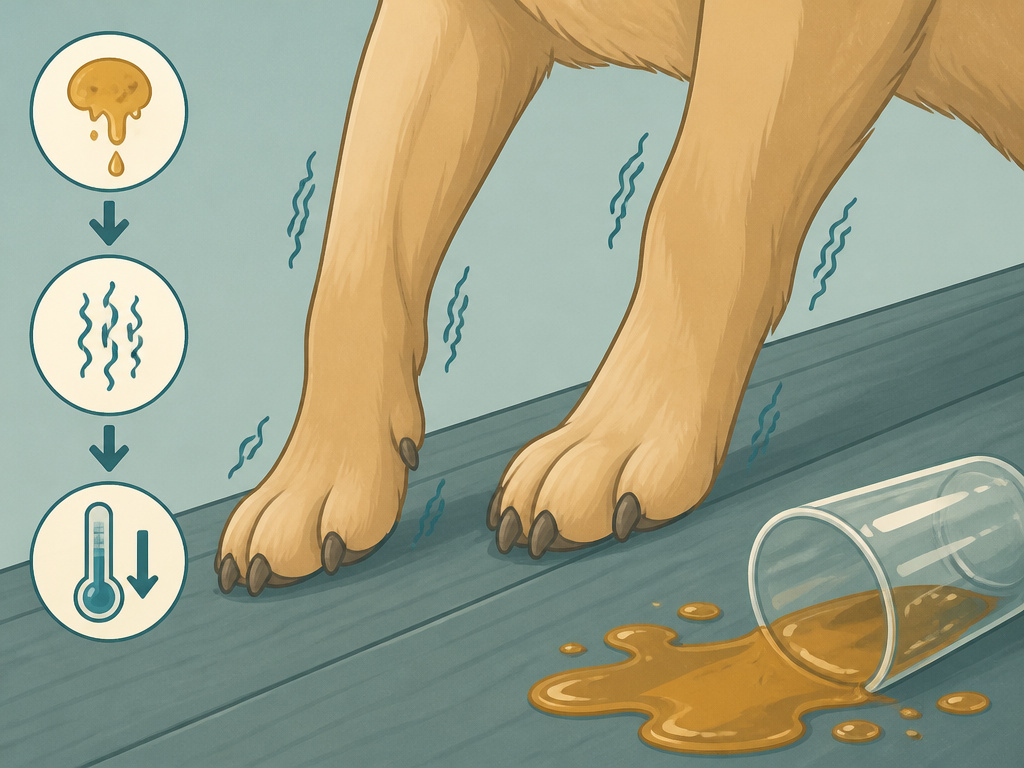
Alcohol toxicosis has no reversal agent. Treatment is management of whatever system is failing at that moment.
Merck lays out the chain. Ethanol is directly irritating to the stomach and causes vomiting, so vomiting comes early.
The signs stack up in a recognizable order:
- Vomiting and diarrhea, often the first thing an owner notices
- Ataxia, the wide-stance, wobbly walk of a drunk animal
- Disorientation and lethargy
- Tremors, and in severe cases seizures
- Slow or irregular breathing
- A body temperature that keeps sliding down
You’ll smell it before you finish the list. Wismer notes that most ethanol intoxications are unmistakable because of the odor of alcohol on the pet’s breath.
Diagnosis rests on exposure history plus compatible signs. VCA is direct about the limits here: veterinary medicine doesn’t use breathalyzer or blood testing to determine blood alcohol levels.
There’s a number worth knowing if you end up reading a lab report. The normal anion gap for dogs and cats is 10 to 15 mEq/L, and values above 25 mEq/L count as acidotic. Wismer notes that about 45% of intoxicated humans become acidotic, though there’s no equivalent data for pets.
If you’re sorting through what else could cause this, caffeine toxicity in pets produces a similar restless, tremoring picture and is the other common kitchen-counter exposure.
Dermal Exposure: The Route Most Owners Miss
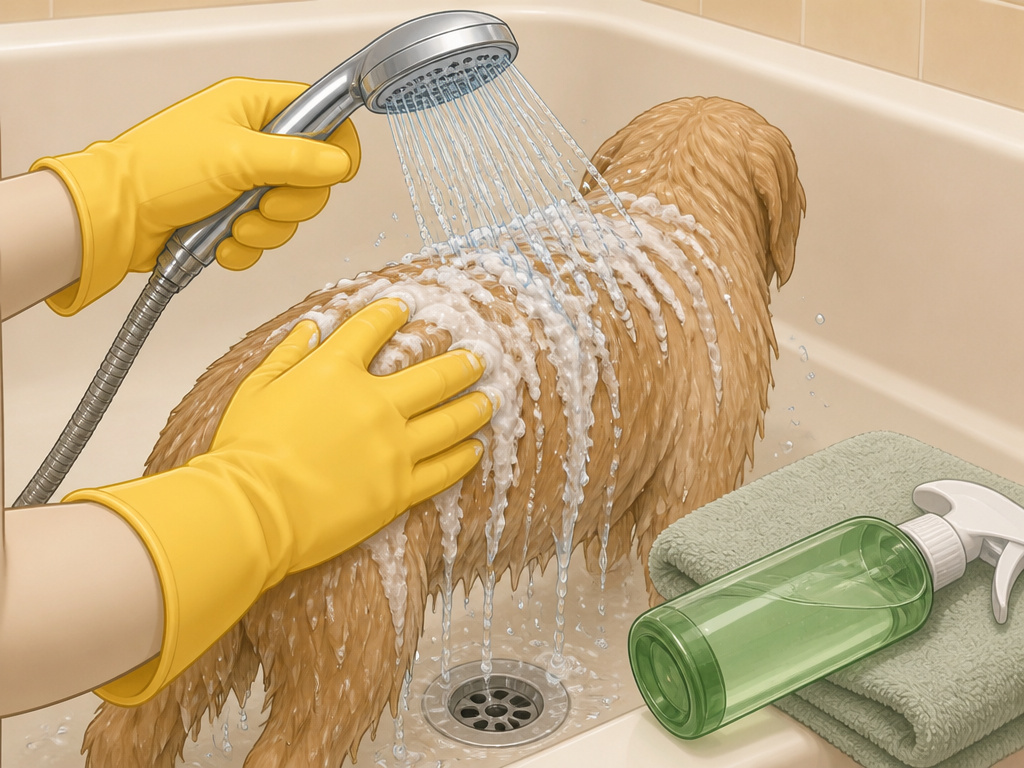
Everyone watches the glass. Merck flags a route that isn’t rare: the flea spray.
“Toxicosis resulting from overspraying pets with alcohol-based flea sprays is not uncommon,” the manual states plainly. Alcohols are well absorbed through skin, and Wismer adds that dermal absorption goes up when the skin isn’t intact.
The fix here is different from the ingestion fix, and that’s the part owners get wrong. Merck recommends bathing with mild shampoo for dermal exposures. Vetenum says rinse the affected skin with shampoo and water. No charcoal, no vomiting, no waiting to see.
I’d rather see an owner rinse a dog off and call, than watch them wait for symptoms that show up in 30 minutes. Bathing is cheap, fast, and the one decontamination step you can start without a vet on the line.
Puppies and kittens deserve extra caution on both routes. Pet Poison Helpline notes that alcohol poisoning causes dangerous drops in blood sugar and body temperature, especially in the young.
What Treatment at the Vet Actually Involves
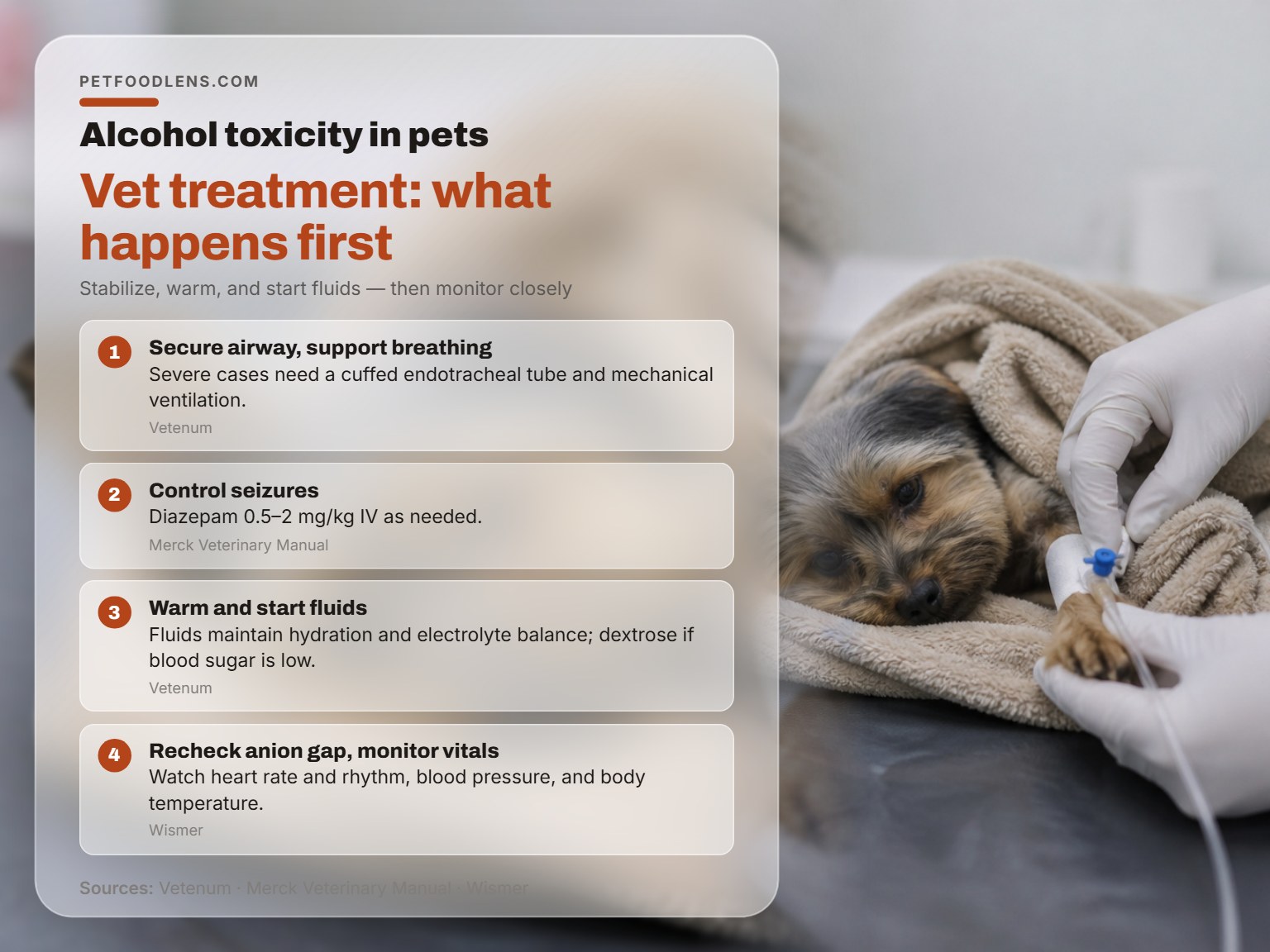
Treatment focuses on stabilizing, warming, and getting fluids running.
- Secure the airway and support breathing. Severe cases need a cuffed endotracheal tube and mechanical ventilation, per Vetenum. Respiratory failure is one of the listed causes of death, so this step matters.
- Control seizures with diazepam at 0.5 to 2 mg/kg IV, as needed. Merck gives this as the standard.
- Warm the patient and start fluid diuresis. Thermoregulation plus fluid therapy speeds elimination and corrects the acidosis. Dextrose goes into the IV bag if blood sugar is low, and sodium bicarbonate may be considered for the acidosis.
- Recheck the anion gap and monitor vitals. Wismer recommends watching heart rate and rhythm, blood pressure, and body temperature throughout.
There’s one more drug in the literature, and it’s flagged as anecdotal. Yohimbine at 0.1 mg/kg IV has been given to stimulate respiration in comatose dogs with alcohol toxicosis. Merck labels it anecdotal, so treat it as a clinician’s judgment call and not a protocol.
Rule of thumb: If the pet is standing and alert, you still call. If the pet is down, seizing, or breathing wrong, you drive. The decontamination window is measured in minutes and the recovery window is measured in hours.
The prognosis is genuinely good when treatment comes early. VCA calls the recovery prognosis excellent with prompt veterinary care, and Wismer puts most animal recoveries at 12 to 24 hours. Merck notes that most cases respond well to appropriate supportive care.
The exception is what makes this worth taking seriously. In a published case report, a dog that ate rotten apples died 48 hours later with an alcoholemia of 300 mg/dL.
Frequently Asked Questions
How much alcohol is dangerous to a dog?
The lethal oral dose of ethanol in dogs is 5.5 to 7.9 g/kg of 100% ethanol, per Wismer’s review. For methanol, Merck gives a lethal oral dose of 4 to 8 mL/kg, though notable signs can appear below that. Isopropanol is twice as toxic as ethanol, and 0.5 mL/kg can cause serious clinical signs. Body weight drives everything, which is why a small dog and a large dog at the same spill are two different emergencies.
Can a cat get alcohol poisoning from licking a wine glass?
Yes. VCA states that all animals are at risk but cats are especially sensitive. Merck doesn’t single cats out, listing ethanol, methanol, and isopropanol as the frequent causes across companion animals generally. The effects are dose-dependent, and a cat weighs very little.
Does activated charcoal help with alcohol poisoning in pets?
No. Merck states that activated charcoal isn’t thought to appreciably bind small-chain alcohols and isn’t often recommended. Vetenum advises against it outright.
How long does alcohol poisoning last in a dog?
Wismer puts most animal recoveries at 12 to 24 hours with treatment. Onset of action is typically within 1 hour of exposure.
Is raw bread dough really an alcohol risk?
Yes, and a moving one. Pet Poison Helpline explains that ethanol is produced when yeast ferments as dough rises, so uncooked yeast-based dough carries alcohol poisoning risk on top of the bloat risk. Because fermentation continues in the warm stomach, the dose keeps climbing after ingestion.
The Bottom Line
Here’s the threshold that decides your next move. Merck considers the first 20 to 40 minutes a possible decontamination window if the pet is still acting normal, though Vetenum advises against emesis entirely and VCA makes it depend on timing, amount, signs, and type of alcohol. If signs have already started, that window is closed and you’re driving, not dialing around for a second opinion.
One concession: this article is written by someone who reads ingredient panels for a living, not by a veterinarian. Everything above traces to Merck, Wismer, VCA, Vetenum, or Pet Poison Helpline, and none of it substitutes for a clinician who can put a stethoscope on the animal. My limit is real. I know commercial pet food far better than I know clinical toxicology, and alcohol poisoning is squarely in the second category.
So the practical takeaway is a phone number and a habit. Put Pet Poison Helpline at 1-800-213-6680 in your phone tonight, before you need it. Then walk your house once and flip over every bottle that could contain alcohol. The back of the label is where the answer lives, and it’s the one part of the package nobody reads until it’s too late.
