
10 Best Canned Food For Kittens in 2026
This post contains affiliate links. As an Amazon Associate, we earn from qualifying purchases.
The best canned food for kittens is Royal Canin Kitten Wet Cat Food, a vet-formulated recipe designed specifically for kittens under 12 months with immune support and an easy-to-eat gravy texture. For brain development, Purina Pro Plan Development Kitten Wet Food is a top choice, while Hill’s Science Diet Kitten Wet Food is the best veterinarian-recommended option for balanced, natural nutrition.
Choosing the right wet food for your kitten means balancing growth needs with texture preferences. Kittens have small stomachs and high energy demands, so every bite needs to pack the right nutrients. DHA for brain development, protein for muscle growth, and moisture for hydration.
This guide is based on research into manufacturer specifications, ingredient quality, and patterns in owner feedback. We evaluated each formula against the specific nutritional needs of growing kittens to help you make a confident choice.
Top 10 Canned Foods For Kittens in the Market
Certain content that appears on this site comes from Amazon. This content is provided "as is" and is subject to change or removal at any time.
The Best Canned Foods For Kittens, Reviewed
Royal Canin Kitten Wet Cat Food

What We Like
- Developed by veterinarians
- Antioxidants for immune support
- Supports playful energy needs
- Easy-to-eat gravy texture
Trade-offs
- Only for kittens under 12 months
- Requires a transition from dry food for best results
The clinically proven antioxidant blend with vitamins E and C directly supports your kitten’s developing immune system, which is crucial during the first year of life. Every nutrient is calibrated for rapid growth: the protein, fat, and carbohydrate ratio matches the high energy demands of a maturing kitten, while highly digestible proteins and prebiotics promote healthy digestion. This is a food designed by veterinarians with a clear developmental goal.
The trade-off is that this is a targeted product: once your kitten passes the 12-month mark, you’ll need to switch to an adult formula. Compared to variety packs like Hill’s Science Diet, which offer multiple protein options, Royal Canin’s single gravy texture and recipe means less variety for picky eaters. That focus is a strength for consistency, but if your kitten prefers pate or you want rotation, you might find the range limiting. For a straightforward, vet-formulated foundation, this does the job without guesswork.
Hill's Science Diet Kitten Wet Food Variety Pack

What We Like
- High-quality protein for muscle building
- Balanced minerals for bones and teeth
- Natural ingredients, no artificial preservatives
Trade-offs
- Smaller 2.9 oz cans than many competitors
A 12-pack of 2.9 oz cans gives you two flavors: Liver & Chicken and Savory Salmon, both built around high-quality protein to support muscle development in growing kittens. The balanced mineral profile targets strong bones and healthy teeth, which matters when you’re feeding a rapidly developing cat. The natural ingredient list backs up that reputation without relying on artificial flavors or preservatives.
Prioritizing vet-backed nutrition and straightforward ingredients over variety or larger portions, this pack delivers exactly what the label promises. Each 2.9-ounce can is formulated to support healthy growth, with high-quality protein to help build muscle in young cats. Balanced minerals contribute to strong bones and healthy teeth, making each meal a complete, worry-free choice. The variety pack includes six cans of Liver & Chicken Entrée and six of Savory Salmon Entrée, both minced textures that kittens tend to enjoy. Made in the USA with globally sourced ingredients, these recipes rely on natural components without artificial flavors or preservatives. For owners who want a trusted, research-based diet without unnecessary extras, this is a straightforward option.
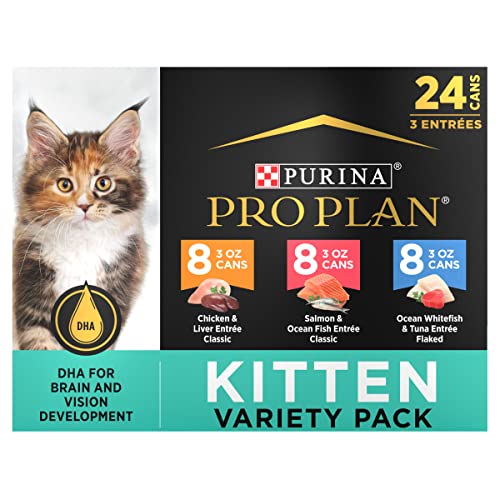
Purina Pro Plan Development Kitten Wet Food Variety Pack
What We Like
- DHA supports brain and vision development
- Made with real poultry or fish
- Includes antioxidants for immune support
- Formulated for first-year growth
Trade-offs
- Only wet food, no dry option included
- No dry kibble option for mixed feeding
Twenty-four 3-ounce cans of wet kitten food, each formulated with DHA for brain and vision development, make this variety pack a targeted choice for supporting a kitten’s cognitive growth in the first year. The inclusion of real poultry or fish provides a protein base that supports healthy development, while antioxidants and 25 essential vitamins and minerals round out the nutritional profile. For owners who prioritize brain health, this wet food covers the basics without extra frills.
For a kitten that takes to pate, this is a straightforward, nutritionally dense option. Each 3-ounce can delivers DHA for brain and vision development, plus antioxidants to support a growing immune system. The formulas are made with real poultry or fish and are highly digestible for optimal nutrient delivery. Owners can choose from three flavors: Chicken & Liver, Salmon & Ocean Fish, and Ocean Whitefish & Tuna Flaked. With 25 essential vitamins and minerals, including vitamin A and taurine, this wet food supports healthy vision and overall growth during the first year. The variety pack is produced at Purina-owned U.S. facilities.
Blue Buffalo Baby Blue Chicken Kitten Paté

What We Like
- Real chicken is first ingredient
- High moisture for daily hydration
- No by-product meals, corn, wheat, soy
- DHA supports cognitive development
Trade-offs
- Only 6 cans per pack, fewer than some
- Pate texture not preferred by all kittens
Chicken is the first ingredient in this wet kitten food, and the recipe includes DHA for cognitive development. The high moisture content supports daily hydration, which is helpful for kittens. Blue Buffalo avoids chicken by-product meals, corn, wheat, and soy, so the ingredient list is focused on what you want to feed.
This pack contains six 3-ounce cans, which is fewer than some other options like Purina Pro Plan’s 24-can variety pack or Royal Canin’s 12-can pack. The pate texture is a specific style that some kittens may not prefer, especially if they are used to flaked or minced varieties. The recipe is straightforward and avoids common fillers.
Tiki Cat Baby Pate Wet Kitten Food Variety Pack

What We Like
- Smooth paté eases weaning transition
- DHA and taurine support brain development
- Grain- and potato-free recipe
- Real meat and organ meat ingredients
Trade-offs
- Smaller 2.4 oz cans compared to many competitors
- Not suitable for multi-kitten households needing larger portions
A 2.4-ounce can with a smooth paté texture is the defining feature here, it’s designed specifically for kittens as young as 4 weeks old who are just starting solid food. That finely minced real chicken, duck, salmon, tuna and organ meats are easy on tiny tummies, while the added DHA, taurine and prebiotics target the rapid brain and nervous system development happening at that stage. This is the pick for anyone with a litter of weaning kittens who need a gentle, nutrient-dense first food that won’t overwhelm their digestive systems.
For a single-kitten household, the smaller portions can actually reduce waste, but for multiple kittens or a rapidly growing single cat, you’ll be opening cans more frequently.
Purina ONE Healthy Kitten Wet Food

What We Like
- Real meat is first ingredient
- Grain-free with no corn, wheat, soy
- High-protein for muscle support
- No artificial colors, flavors, preservatives
Trade-offs
- Only pate texture, no flaked or minced variety
Real meat is the number one ingredient here, which means your kitten gets a protein-forward start without plant-based fillers taking up can space. The grain-free formula skips corn, wheat, soy, and potato entirely, so you’re not paying for cheap bulk that does little for growth. With added vitamins and minerals, this pate covers the basics for a growing kitten without relying on artificial colors, flavors, or preservatives. If you want a straightforward, high-protein wet food that keeps the ingredient list clean, this one delivers on what it says on the label.
This line is strictly pate, so there are no flaked or minced options if your kitten prefers different textures. For the price-conscious buyer who wants grain-free without the premium markup, this works well; for someone hunting every developmental additive, it’s worth checking the fine print on other cans.
Product photos
Weruva Cats in the Kitchen Kitten Zoomies Variety Pack

What We Like
- Three recipes for variety
- Low-carb, hydration-focused formulas
- Free of gluten, carrageenan, and artificial additives
Trade-offs
- No single-protein option for sensitive kittens
The trade-off is portion size: at 3 oz per can, a larger or hungrier kitten might need more than one can per meal. That makes the 12-can pack disappear faster than a 24-count box from something like Purina Pro Plan Development Kitten Variety Pack.
Product photos
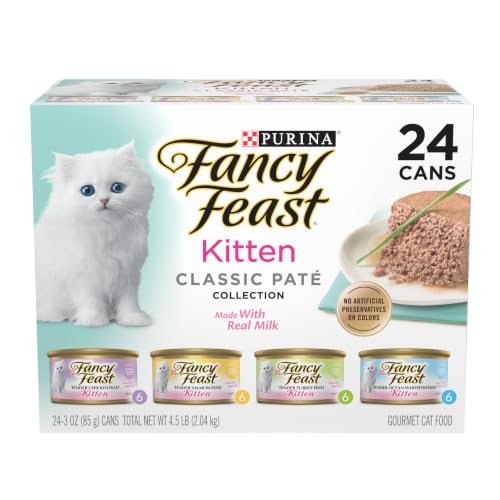
Purina Fancy Feast Kitten Wet Food Variety Pack
What We Like
- 24-can variety pack for kittens
- Real ocean whitefish, turkey, chicken or salmon
- No artificial colors or preservatives
- 100% complete and balanced
Trade-offs
- Only wet food, no dry kibble included
- Not suitable for adult cats
With 24 cans in a single pack, this variety box gives you four different protein sources, ocean whitefish, turkey, chicken, and salmon, so a picky kitten has options without you buying separate cases. The recipes skip artificial colors and preservatives, which lines up with what I look for when scanning a label. Purina formulates this as 100 percent complete and balanced for growth, meaning you don’t need to supplement with other foods to meet AAFCO kitten standards. It’s a straightforward, no-nonsense wet food that covers the nutritional bases without extra fluff.
This is wet food only, so if you prefer a mixed feeding routine with dry kibble, you’ll need to buy that separately. Compared to the Royal Canin Kitten Wet Cat Food, which comes in a 12-pack, this Fancy Feast pack gives you double the cans for roughly the same can size, so it stretches further between shopping trips. For a budget-friendly complete and balanced wet food lineup, this variety pack delivers solid ingredient transparency and convenience.
Product photos
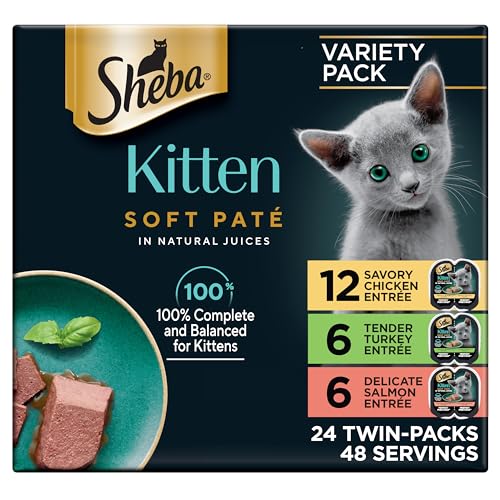
Sheba Perfect Portions Kitten Pate Wet Cat Food
What We Like
- Portion-controlled twin packs reduce waste
- DHA for healthy brain development
- Vitamin E supports immune system
Trade-offs
- Smaller 2.6 oz portions mean more frequent opening
Each 2.6 oz twin-pack is designed for small kittens who eat tiny meals, so you don’t have to guess how much to scoop or refrigerate half a can. The pate is easy to chew for little mouths, and the formula includes DHA for brain development and vitamin E for immune support. For owners who want precise, waste-free feeding without measuring, this is a practical system.
The Sheba Perfect Portions Kitten Pate Wet Cat Food comes in 2.6 oz cups, which are designed for small mouths and help kittens transition to solid food. Each serving provides 100% complete and balanced nutrition with DHA for brain development and Vitamin E for immune support. Reviewers note that the pre-portioned cups eliminate the need to store leftovers, making feeding straightforward for busy owners.
Product photos
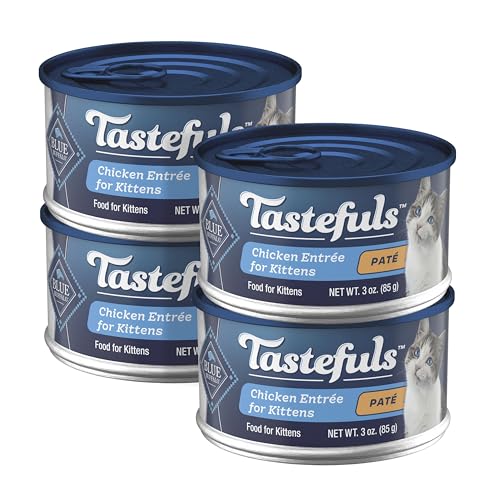
Blue Buffalo Tastefuls Chicken Kitten Paté
What We Like
- Real chicken is first ingredient
- Smooth pate texture for picky eaters
- Includes DHA for brain development
- High moisture supports hydration
Trade-offs
- Only 4 cans per pack
- Single flavor limits variety
Real chicken listed as the first ingredient means this pate starts with a protein source that supports healthy muscle growth during a kitten’s critical early months. The smooth, silky texture is designed to appeal to even the most hesitant eaters, and the inclusion of DHA, ARA, and choline targets cognitive development and retinal function. For a picky kitten that turns up its nose at chunkier or flaked foods, this recipe offers a straightforward, palatable option that doesn’t compromise on nutritional foundations.
The main trade-off here is pack size: four 3-ounce cans is a trial-sized introduction, not a long-term supply. If your kitten devours this, you’ll be reordering sooner than you would with a larger variety pack like the Tiki Cat Baby Pate 12-count. The single chicken flavor also means there’s no rotation built in, so if your kitten gets bored easily, you may need to mix things up with another brand. Still, for a finicky eater that needs convincing, this pate does the job without gimmicks.
Product photos
How We Evaluated Canned Foods For Kittens
Our evaluation began with a close look at each product’s ingredient list and guaranteed analysis. We compared protein sources, fat content, and the presence of key nutrients like DHA and taurine against the nutritional standards set for kitten growth. Manufacturer documentation and expert round-ups on feline nutrition informed our understanding of what matters most at each developmental stage.
The three criteria that mattered most were nutritional completeness for growth, ingredient quality, and texture suitability. Kittens need a precise balance of calcium and phosphorus for bone development, DHA for brain and vision development, and high-quality animal protein for muscle building. The texture, whether pate, gravy, or minced, affects whether a kitten will actually eat the food, especially during weaning.
A research-led evaluation has limits. We did not feed-test these foods or observe kittens over time. Our recommendations come from comparing what’s on the label against what kittens need, supported by patterns in what owners report about palatability and digestive tolerance.
What To Look For In Canned Foods For Kittens
Choosing a canned food for your kitten comes down to matching the formula to their age, health needs, and texture preferences. The right choice supports growth without upsetting a sensitive stomach.
Look for a complete and balanced formula labeled for kittens or all life stages. It should have a named animal protein as the first ingredient and guaranteed levels of DHA and taurine for brain and eye development.
Nutritional Completeness for Growth
Kittens grow rapidly in their first year, and their food must meet specific nutritional benchmarks. The Association of American Feed Control Officials (AAFCO) sets standards for kitten food, including minimum protein levels on a dry matter basis and specific calcium-to-phosphorus ratios for bone development. A food labeled “complete and balanced for growth” or “for kittens” has been formulated to meet these standards. Some adult cat foods don’t provide enough of the nutrients kittens need, so always check the label.
Ingredient Quality and Protein Source
The first ingredient should be a named animal protein like chicken, turkey, or fish. By-product meals are less desirable because their protein quality can vary, though they aren’t automatically harmful. Look for foods that avoid artificial colors, flavors, and preservatives, especially for a kitten’s developing digestive system. Natural preservatives like mixed tocopherols are a better sign of quality. The protein source also affects palatability, many kittens prefer poultry-based recipes over fish.
Texture and Palatability
Kittens can be particular about texture. Pates are smooth and easy to eat, making them ideal for weaning kittens or those with sensitive mouths. Gravy or minced varieties have more moisture and can encourage hydration, but some kittens may find them messy. A variety pack lets you test multiple textures without committing to a large quantity. If your kitten is transitioning from milk, an ultra-smooth pate like Tiki Cat Baby Pate is designed specifically for that stage.
- Check that the food is labeled for kittens or all life stages, not just adult maintenance.
- Look for DHA from a named source like fish oil or menhaden fish meal.
- Avoid foods with corn, wheat, or soy as primary fillers if your kitten has a sensitive stomach.
- Start with a single-protein recipe if your kitten has not eaten that protein before.
- Consider can size, smaller 2.4 to 3 oz cans work well for single kittens, while larger cans suit multi-kitten households.
A kitten’s first food sets the foundation for healthy eating habits, choose a formula that meets their growth needs first, then adjust for texture and flavor preferences.
Canned Foods For Kittens Compared
The table below compares the canned foods for kittens we evaluated, highlighting key features, protein sources, and what each formula is best for.
| Product | Can Size | Texture | Key Nutrients |
|---|---|---|---|
| Royal Canin Kitten Wet Cat Food | 3 oz | Thin slices in gravy | Antioxidants, vitamins E & C |
| Hill's Science Diet Kitten Wet Food Variety Pack | 2.9 oz | Minced | N/A |
| Purina Pro Plan Development Kitten Wet Food Variety Pack | 3 oz | Pate | DHA |
| Blue Buffalo Baby Blue Chicken Kitten Paté | 3 oz | Paté | DHA |
| Tiki Cat Baby Pate Wet Kitten Food Variety Pack | 2.4 oz | Smooth paté | DHA, taurine, prebiotics |
| Purina ONE Healthy Kitten Wet Food | 3 oz | Pate | Added vitamins, minerals |
| Weruva Cats in the Kitchen Kitten Zoomies Variety Pack | 3 oz | N/A | N/A |
| Purina Fancy Feast Kitten Wet Food Variety Pack | 3 oz | N/A | N/A |
| Sheba Perfect Portions Kitten Pate Wet Cat Food | 2.6 oz | Pate | DHA, Vitamin E, essential amino acids |
| Blue Buffalo Tastefuls Chicken Kitten Paté | 3 oz | Smooth Pate | DHA, ARA, Choline |
Frequently Asked Questions
How much canned food should I feed my kitten each day?
Feeding amounts vary by the kitten’s age, weight, and the specific food’s calorie density. Most kitten food labels provide a range based on weight, typically 2 to 4 small cans per day for kittens under 6 months. Divide the daily amount into three or four meals for young kittens, then reduce to two meals after six months. Your veterinarian can give you a more precise recommendation based on your kitten’s growth curve.
Can I mix wet and dry food for my kitten?
Yes, mixing wet and dry food is a common way to provide variety and ensure your kitten gets enough moisture. If you choose to mix, adjust the portions of each so your kitten doesn’t overeat. Some owners find that a combination of wet food for hydration and dry food for dental health works well. For more on this, our guide on wet vs dry food explains the benefits of each.
When should I switch my kitten from wet food to adult cat food?
Most kittens can transition to adult cat food around 12 months of age. Large breed cats may need to stay on kitten food until they are older. The switch should be gradual over several days, mixing increasing amounts of adult food with the kitten food. If you’re looking for options for the next stage, our complete guide to kitten food covers the full timeline.
What ingredients should I avoid in kitten food?
Avoid artificial colors, flavors, and preservatives like BHA, BHT, and ethoxyquin. Some kittens are sensitive to carrageenan, a thickener found in some wet foods. Corn, wheat, and soy are common fillers that offer little nutritional value and may cause digestive upset in sensitive kittens. Always check the ingredient list for named animal proteins rather than vague terms like “meat meal.”
How do I transition my kitten to a new wet food?
Transition gradually over several days by mixing a small amount of the new food with the current food, increasing the proportion each day. Start with a small amount of new food and mostly old food for the first two days, then equal amounts for the next few days, then mostly new food for the final days. If your kitten is very young or has a sensitive stomach, stretch the transition to two weeks. Our guide on the weaning process for kittens has more detail for kittens transitioning from milk.
The Bottom Line
For most kitten owners, Royal Canin Kitten Wet Cat Food is the best overall choice. It’s specifically formulated by veterinarians for kittens under 12 months, with immune-supporting antioxidants and an easy-to-eat gravy texture that appeals to a wide range of eaters. It’s a reliable, stage-specific option that covers the nutritional bases without unnecessary extras.
If your budget is tighter or your kitten has specific needs, consider the alternatives. Hill’s Science Diet Kitten Wet Food offers natural ingredients with balanced minerals for bone growth. For brain development, Purina Pro Plan Development Kitten Wet Food is packed with DHA. And for weaning kittens, Tiki Cat Baby Pate provides the smoothest texture for the transition from milk.
The single most important factor in choosing a canned food for your kitten is finding a complete and balanced formula that your kitten will actually eat. No matter how good the ingredient list, it won’t help if the bowl stays full.
