
2 Best Cat Food For Underweight Cats in 2026
This post contains affiliate links. As an Amazon Associate, we earn from qualifying purchases.
For cats that need to put on weight, we recommend Tiki Cat Solutions Wet Cat Food Pouches as the best overall. It delivers a high-calorie, easy-to-digest liquid diet formulated by veterinarians and nutritionists. For cats needing critical care, the Purina Pro Plan Veterinary Diets CN Wet Food is the best critical care formula.
An underweight cat needs more than just extra food, it needs calorie-dense nutrition that is easy to digest and palatable. Whether your cat is recovering from illness, has dental issues, or is a picky eater, the right formula can make all the difference in helping them reach a healthy weight.
This guide is based on a careful review of nutritional specifications, manufacturer information, and patterns in owner feedback. We focused on calorie density, digestibility, and formulation quality to find the best options for helping an underweight cat gain weight safely.
Top 2 Cat Foods For Underweight Cats in the Market
Certain content that appears on this site comes from Amazon. This content is provided "as is" and is subject to change or removal at any time.
The Best Cat Foods For Underweight Cats, Reviewed
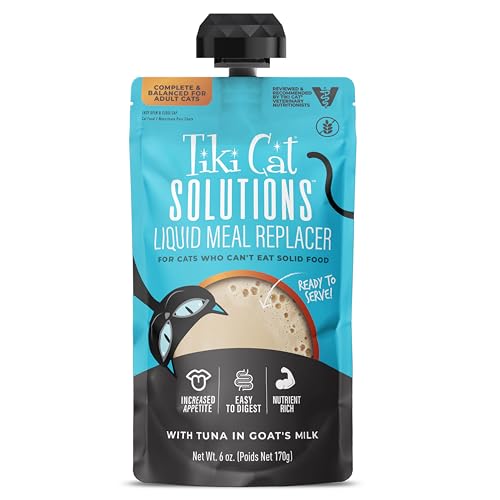
Tiki Cat Solutions Wet Cat Food Pouches
What We Like
- High calorie diet for undernourished cats
- Ready to serve resealable pouches
- Formulated by veterinarians and nutritionists
- Easy to digest formula
Trade-offs
- Liquid form only, no solid texture variety
- Single protein source limits rotation options
A 6-ounce spout pouch of liquid meal replacer means this is designed for cats that simply won’t or can’t chew solid food. Tiki Cat Solutions delivers a high-calorie, nutrient-rich formula with tuna and goat milk as the protein base. It is a direct tool for putting weight on an underweight cat without forcing it to gnaw on kibble or pate. The resealable pouch keeps freshness between feedings, and the fact it’s formulated by veterinarians and animal nutritionists gives the label some actual backing rather than just marketing fluff. For a cat that needs calories but has a sore mouth, recovering from surgery, or is just stubborn about eating, this skips the middleman and goes straight to digestible nutrition.
The trade-off is that this is a liquid meal replacer, not a traditional wet food with chunks or shreds. If your cat is underweight but still happy to chew, you might prefer something with more texture to encourage natural eating behavior. Compared to Purina Pro Plan Veterinary Diets CN, which comes in cans and targets critical nutrition through high digestibility, Tiki Cat Solutions leans harder on the liquid format for cats that need to lap rather than bite. The single protein source, tuna in goat milk, also means it’s not ideal for cats with sensitivities to fish or dairy. So check the ingredient list before committing to a full case. For the right cat, though, this is a straightforward calorie delivery system that does exactly what it says.
Product photos
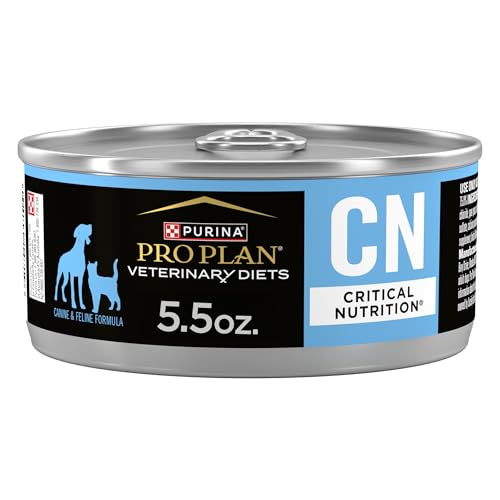
Purina Pro Plan Veterinary Diets CN Wet Food
What We Like
- Energy-dense for needed calories
- Smooth consistency for syringe feeding
- High fat supports weight gain
- Contains antioxidants
Trade-offs
- Veterinary diet requires vet authorization
- Not suitable for maintenance feeding of healthy pets
The energy density here is the headline. This formula packs enough calories per gram that a cat recovering from illness or struggling to keep weight on can get what it needs without having to eat large volumes. That matters when a cat is too weak to finish a full bowl. It’s also smooth enough to go through a syringe or feeding tube, which is exactly what a critical care formula should do.
The most decisive fact about this food is that it’s energy-dense, so a cat that’s not eating much can still get needed calories from a small volume. The smooth consistency is designed for easy syringe or tube feeding, which matters when a cat is too weak to eat on its own. Compared to Tiki Cat Solutions, which is a liquid meal replacer for adults, Purina’s CN is formulated with high fat for energy density and protein for tissue repair.
How We Evaluated Cat Foods For Underweight Cats
We evaluated each product by examining its nutritional profile, ingredient list, and formulation purpose. Our research relied on manufacturer specifications, expert veterinary guidance, and common owner-reported experiences with weight gain in cats.
The three criteria that mattered most were calorie density, digestibility, and ease of feeding. A cat that is underweight needs a high concentration of calories per serving, but those calories must come from ingredients that are gentle on the digestive system. We also looked at texture and format, because a cat that cannot or will not eat solid food needs a different solution than one that simply needs a richer diet.
A research-led evaluation cannot replace a veterinary exam. If your cat is significantly underweight, the first step is ruling out an underlying medical condition. These foods are tools for nutritional support, not a substitute for professional diagnosis.
What To Look For In Cat Foods For Underweight Cats
Choosing a food for an underweight cat means prioritizing energy density and digestibility over variety or price. Here are the key factors to consider.
Look for a food that packs enough calories per gram of wet weight, uses highly digestible protein and fat sources, and comes in a texture your cat will actually eat. Check the guaranteed analysis for crude fat content that is high in wet food.
Calorie Density and Fat Content
The most important number on the label is the caloric density. A high calorie cat food will typically have a higher percentage of fat, which provides more than twice the energy of protein or carbohydrates per gram. Look for wet foods with a high crude fat content on a dry matter basis, and check the kcal per can or pouch to ensure it meets your cat’s needs.
Digestibility and Texture
An underweight cat often has a sensitive stomach. Foods that are easy to digest, such as those with a single protein source or a smooth, pâté-like texture, are less likely to cause vomiting or diarrhea. The best wet cat food for weight gain often comes in a liquid or semi-liquid form that is gentle on the digestive tract and can be syringe-fed if necessary.
Protein Quality and Source
High-quality animal protein supports lean muscle mass, which is critical for a cat regaining weight. A single protein source can help identify food sensitivities, while novel proteins may be better for cats with a history of allergies. Check that the first ingredient is a named meat or meat broth, not a meat by-product or grain.
- Check the kcal per ounce or per can on the product page.
- Look for “complete and balanced” on the label for adult maintenance.
- Avoid foods with carrageenan or artificial colors if your cat has a sensitive stomach. Ask your vet if a veterinary diet formula is appropriate.
A good rule of thumb: if the food looks like baby food in texture and reads like a supplement on the label, it is probably designed for weight gain.
Cat Foods For Underweight Cats Compared
The table below compares our two top picks side by side, highlighting their key differences in formulation, texture, and best use case.
| Product | Form | Calorie Profile | Protein Source | Portion Size |
|---|---|---|---|---|
| Tiki Cat Solutions Wet Cat Food Pouches | Liquid meal replacer | High calorie | Tuna in Goats Milk | 6 oz spout pouch |
| Purina Pro Plan Veterinary Diets CN Wet Food | Wet food | Energy-dense | Essential amino acids | 5.5 oz can |
Frequently Asked Questions
What is the best cat food for an underweight cat?
The best overall choice is Tiki Cat Solutions Wet Cat Food Pouches, which provides a high-calorie, easy-to-digest liquid diet. For cats that need critical care and syringe feeding, the Purina Pro Plan Veterinary Diets CN Wet Food is the best critical care formula. Both are formulated to help underweight cats gain weight safely.
How much should I feed an underweight cat to help it gain weight?
Start by following the feeding guidelines on the package, then adjust based on your cat’s response. A general approach is to offer small, frequent meals throughout the day rather than one or two large portions. For specific tips for feeding underweight cats, consult your veterinarian.
Can I use kitten food to help my adult cat gain weight?
Kitten food is higher in calories and fat than adult maintenance food, so it can be used short-term to help an underweight adult cat gain weight. However, it is not nutritionally balanced for long-term adult maintenance. The best kitten food for weight gain is formulated for growing kittens, not adult cats.
Is wet or dry cat food better for weight gain?
Wet cat food is generally better because it has a higher moisture content and is often more palatable, which encourages eating. Many weight gain cat foods are wet formulas that provide concentrated calories in a soft texture that is easy to digest.
Do I need a prescription for weight gain cat food?
Some therapeutic formulas, like the Purina Pro Plan Veterinary Diets CN Wet Food, require veterinary authorization. These prescription cat food diets are designed for specific medical conditions and should only be used under a vet’s guidance. Over-the-counter options like Tiki Cat Solutions do not require a prescription.
The Bottom Line
For most owners, Tiki Cat Solutions Wet Cat Food Pouches is the best overall choice. It offers a high-calorie, easy-to-digest liquid diet that is ideal for cats that need a gentle, ready-to-serve meal replacement to gain weight. It is a strong option for cats recovering from illness or those that cannot chew solid food.
If your cat is in critical condition and requires syringe feeding or a calorie-dense formula for intensive care, the Purina Pro Plan Veterinary Diets CN Wet Food is the right pick. Just be aware that it requires a veterinarian’s approval and is not intended for routine feeding.
The single most important factor in helping an underweight cat gain weight is choosing a food that your cat will actually eat and digest well. No matter how calorie-dense the formula, it cannot help if your cat refuses it or cannot keep it down.
