
4 Best Food For Nursing Cats in 2026
This post contains affiliate links. As an Amazon Associate, we earn from qualifying purchases.
The best food for nursing cats supports both mother and kittens through lactation and weaning. Our Best Overall pick, Royal Canin Mother and Babycat Wet Cat Food, wins with its ultra-soft mousse texture and DHA for brain development. For a dry option, the Royal Canin Mother & Babycat Dry Cat Food takes Best Dry Food, while the IAMS Proactive Health Healthy Kitten Dry Cat Food earns Best Budget.
A nursing queen’s nutritional needs skyrocket during lactation, she may need two to four times her normal caloric intake. The right food provides dense energy, digestible protein, and key nutrients like DHA and taurine that pass through milk to support kitten growth. Texture matters too, especially during weaning when kittens transition from milk to solids.
We evaluated these foods by analyzing manufacturer specifications, ingredient lists, and nutritional adequacy statements. This research-based guide covers the four best options for nursing cats, from wet foods that ease weaning to budget-friendly dry kibble, helping you match a food to your cat’s specific stage and needs.
Top 4 Food For Nursing Cats in the Market
Certain content that appears on this site comes from Amazon. This content is provided "as is" and is subject to change or removal at any time.
The Best Food For Nursing Cats, Reviewed
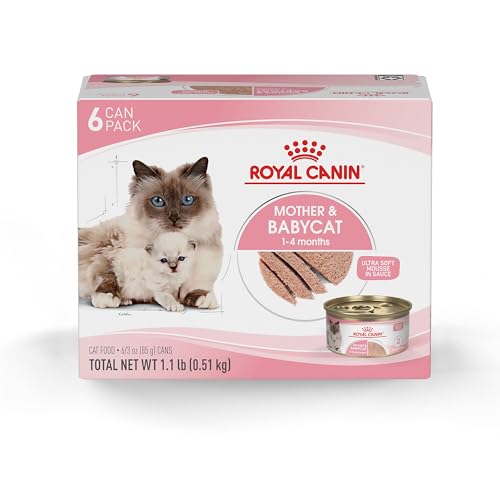
Royal Canin Mother and Babycat Wet Cat Food
What We Like
- Ultra-soft mousse texture eases weaning
- DHA supports brain development from womb
- Prebiotics and digestible proteins aid digestion
- Formulated for both mother and kittens
Trade-offs
- Wet food only; lacks kibble's dental benefits
- Requires careful transition from milk to solid food
The ultra-soft mousse in sauce texture practically dissolves on the tongue, which is crucial when kittens are learning to eat solids and a nursing queen needs easy-to-swallow nutrition. DHA supports brain development starting in the womb and continuing through a pregnant cat’s full term, while prebiotics and highly digestible proteins aid digestion. This formula is designed for both queen cats and kittens aged 1-4 months, so one can serves both during that busy period.
Because this is a wet food only, it lacks the dental benefits of kibble. Royal Canin’s own dry Mother & Babycat kibble is available as a complement, though that means managing two different textures. If you prefer a single-bag dry option for convenience, Fromm Kitten Gold offers a chicken-based recipe for kittens and pregnant or nursing cats, but it lacks the mousse texture that eases the transition from milk to solid food.
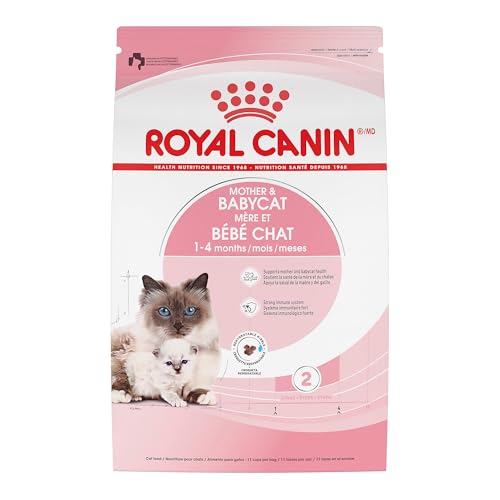
Royal Canin Mother & Babycat Dry Cat Food
What We Like
- Rehydratable kibble eases weaning transition
- Antioxidant blend supports immune system development
- Prebiotics and digestible proteins aid digestive health
- Formulated for both mother and kittens
Trade-offs
- Only for kittens up to 4 months, not older stages
- Dry kibble requires moisture for very young kittens
- Single-bag size limits bulk buying options
A 6-pound bag of kibble that you can rehydrate into a soft, easy-to-chew mash means this food helps bridge the gap between milk and solid food for kittens starting around three to four weeks old. That rehydratable design is the standout feature here: it helps a nursing cat transition from milk to solid food, and the small kibble is easy to chew for baby teeth. The antioxidant blend, vitamins E and C, targets immune development during a period when kittens are most vulnerable, while the prebiotic-plus-digestible-protein combo supports digestive health. For anyone managing a pregnant or nursing cat with a litter under four months, this dry food is formulated for both mother and kittens during the weaning window.
This formula stops at four months, so you’ll need to switch to a kitten maintenance food once the litter hits that mark. Compared to the IAMS Proactive Health Healthy Kitten Dry, which is a different formula for kittens, Royal Canin’s narrower target is a deliberate design choice. It’s built for the weaning window, not for the whole first year. If you want a single bag that carries through kittenhood, the IAMS is broader, but if you prioritize a milk-to-food transition with digestive and immune support built in, this one is formulated for that specific stage.
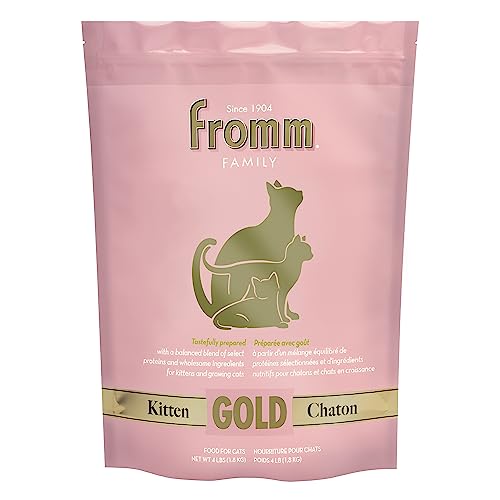
Fromm Kitten Gold Dry Cat Food
What We Like
- Chicken and duck as protein sources
- Formulated for gestation/lactation and growth
- Contains added probiotics for gut health
- Family-owned company since 1904
Trade-offs
- Dry kibble only, no moisture for nursing queens
- Contains chicken and duck, not suitable for cats with poultry allergies
This dry kitten food uses chicken and duck as protein sources, both listed as highly digestible and palatable, providing amino acids for muscle maintenance, tissue repair, and other metabolic processes. Fromm formulates it to meet AAFCO standards for gestation, lactation, and growth, so it covers the nutritional needs of a mother cat producing milk. The added probiotics support intestinal health and immune function, which can be helpful during the demands of nursing.
This is a dry kibble, so it provides no moisture. Nursing queens need extra water for milk production, and you’ll need to ensure fresh water is always available. Compared to Royal Canin’s Mother and Babycat wet mousse, which delivers hydration in an ultra-soft texture, this kibble is better suited as a high-protein base that you might pair with wet food or broth. The 4 lb bag is compact, not bulky, which is fine for a single queen but might run short if you’re feeding multiple cats.
Product photos
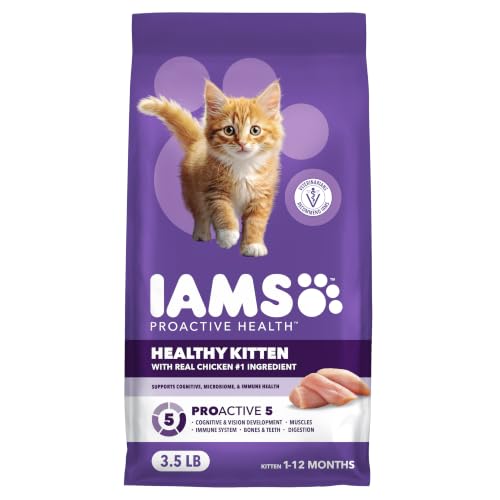
IAMS Proactive Health Healthy Kitten Dry Cat Food
What We Like
- Real chicken as first ingredient
- DHA and taurine for brain and vision
- Vitamin E supports immune system
- Fiber and prebiotics aid digestion
Trade-offs
- No wet food moisture content.
- Not suitable for adult cats after one year.
Real chicken shows up as the first ingredient, which is a solid starting point for a budget-friendly kitten food. The inclusion of DHA Omega-3 and taurine targets brain and vision development, while Vitamin E and prebiotics cover immune and digestive support. The recipe is straightforward, prioritizing nutritional function over fancy packaging.
A dry diet like this one is naturally low in moisture, so you’ll need to offer wet food or plenty of fresh water alongside it. That keeps your kitten properly hydrated and supports urinary tract health. Many owners find that setting out a clean water bowl in a separate spot from the food bowl encourages more drinking. Wet food can also be mixed in for added moisture and variety. This approach helps balance the convenience of dry kibble with the hydration kittens need for healthy growth.
Product photos
How We Evaluated Food For Nursing Cats
Our evaluation started with the nutritional adequacy statements on each product, specifically, whether the food meets AAFCO standards for gestation and lactation. A nursing queen’s body is under immense strain, so we prioritized formulas explicitly formulated for reproduction and growth, not just “all life stages” maintenance. We cross-checked these claims against manufacturer-published guaranteed analysis and ingredient lists.
We focused on three criteria: protein and fat density for milk production, digestibility for sensitive postpartum digestive systems, and texture suitability for weaning kittens. Wet foods offer hydration and soft textures that make the transition from milk to solids smoother, while dry foods provide convenience and dental benefits. We weighed the trade-offs each option presents for the specific challenges of the nursing period.
This is a research-led evaluation based on published specifications and ingredient data, not hands-on feeding trials. We rely on manufacturer transparency and established nutritional science. For the most accurate assessment of your cat’s individual needs, consult your veterinarian, especially if complications arise during lactation or weaning.
What To Look For In Food For Nursing Cats
Choosing food for a nursing queen means balancing her elevated nutritional demands with the practical needs of weaning kittens. Focus on formulas that cover both stages.
Look for foods labeled for “gestation and lactation” or “growth and reproduction” by AAFCO standards. Prioritize high-protein, high-fat formulas with DHA, taurine, and prebiotics. Consider texture, wet or rehydratable foods ease the weaning transition.
AAFCO Nutritional Adequacy Statement
The single most important check is the AAFCO statement on the bag or can. Foods formulated for “gestation/lactation” or “growth” provide the elevated protein, fat, and calcium a nursing queen needs. Maintenance-only formulas lack the energy density to support milk production without causing the mother to lose body condition. Look for the phrase “formulated to meet the nutritional levels established by the AAFCO Cat Food Nutrient Profiles for growth and reproduction.”
Protein and Fat Content
Lactation is the most energy-demanding period in a cat’s life. A nursing queen needs a diet that is high in protein and fat on a dry matter basis to sustain milk production and her own body weight. Chicken, duck, and fish meals are common concentrated protein sources. Higher fat content also boosts palatability, which matters when a queen’s appetite may be suppressed by the demands of caring for a litter.
Texture and Weaning Support
Kittens begin transitioning from milk to solid food around three to four weeks of age. A food for weaning kittens should be soft enough to lap up without teeth. Wet foods with pate or mousse textures work well; dry kibble can be moistened with warm water or kitten formula to create a gruel. The best weaning food allows kittens to explore solid food while still getting the hydration they need.
- Check the ingredient list for named animal protein sources (chicken, duck, fish) rather than vague “meat meal.”
- Look for added DHA and taurine. DHA supports kitten brain and vision development, while taurine is essential for adult cat heart and eye health.
- Choose formulas with prebiotics or probiotics to support digestive health during the stress of lactation and weaning.
- Verify that the food is appropriate for the queen’s age and health status, some senior queens may have different needs.
A food that works for the mother through weaning saves you from switching diets mid-stage.
Food For Nursing Cats Compared
The table below compares the four top picks for nursing cats across key nutritional and practical criteria.
| Product | Form | Target | Key Nutrients | Protein Source |
|---|---|---|---|---|
| Royal Canin Mother and Babycat Wet Cat Food | Wet (ultra-soft mousse in sauce) | Queen cats & kittens 1-4 months | DHA, antioxidants, prebiotics | Highly digestible proteins |
| Royal Canin Mother & Babycat Dry Cat Food | Dry (rehydratable kibble) | Pregnant/nursing cats & kittens 1-4 months | Antioxidants (vitamins E, C), prebiotics | Highly digestible proteins |
| Fromm Kitten Gold Dry Cat Food | Dry kibble | Gestation/lactation and growth | Probiotics | Chicken and duck |
| IAMS Proactive Health Healthy Kitten Dry Cat Food | Dry | Kitten | DHA Omega-3, taurine, Vitamin E | Real Chicken |
Frequently Asked Questions
How many times a day should I feed a nursing cat?
A nursing queen should have access to food at all times; free-feeding is recommended because she may eat small meals frequently throughout the day and night. Her caloric needs can increase significantly during peak lactation, so leaving dry food available and offering wet food several times daily helps her maintain energy. Follow a practical feeding guide for nursing cats to adjust portions as kittens grow.
Can I feed my nursing cat regular adult cat food?
No, regular adult maintenance food is not sufficient for a nursing queen. She needs a diet formulated for growth and reproduction, which provides higher protein, fat, and calcium levels. Feeding a maintenance diet can lead to rapid weight loss and poor milk quality. Look for foods labeled for gestation and lactation or kitten growth stages.
When should I switch my nursing cat from kitten food back to adult food?
You can begin transitioning back to adult food once the kittens are fully weaned, typically around eight to ten weeks of age. The queen’s caloric needs drop sharply after weaning, and continuing on high-calorie kitten food can lead to obesity. Gradually mix the new adult food with the kitten food over seven to ten days to avoid digestive upset.
What is the best dry food for a nursing cat?
The best dry food for a nursing cat is one labeled for growth and reproduction, with high protein and fat content. Our pick for Best Dry Food, Royal Canin Mother & Babycat Dry Cat Food, features rehydratable kibble that can be softened for weaning kittens and an antioxidant blend for immune support. Always ensure fresh water is available, as dry food provides less moisture than wet options.
How long does a mother cat nurse her kittens?
Mother cats typically nurse their kittens for eight to ten weeks, though kittens begin eating solid food around three to four weeks of age. The weaning process is gradual, the mother will spend less time nursing as kittens become more independent. By the time kittens are eight weeks old, most of their nutrition comes from solid food, not milk.
The Bottom Line
For most nursing queens and their litters, the Royal Canin Mother and Babycat Wet Cat Food is the best overall choice. Its ultra-soft mousse texture supports weaning kittens while the DHA and digestible proteins meet the mother’s elevated nutritional needs. This is the one food that covers both stages of the nursing period most effectively.
If you prefer a dry-food routine, the Royal Canin Mother & Babycat Dry Cat Food offers rehydratable kibble and an immune-supporting antioxidant blend. Budget-conscious owners should consider the IAMS Proactive Health Healthy Kitten Dry Cat Food, which provides real chicken as the first ingredient and DHA for brain development at a lower price point.
The single most important factor is choosing a food with a clear AAFCO statement for growth and reproduction. A nursing queen’s nutritional needs are too high to leave to chance, read the label, check the guaranteed analysis, and feed her enough to keep both her and her kittens thriving through weaning.
