
4 Best Cat Food For Persian Cats in 2026
This post contains affiliate links. As an Amazon Associate, we earn from qualifying purchases.
The best cat food for Persian cats is Royal Canin Persian Adult Dry Cat Food, thanks to its uniquely shaped kibble designed for the Persian jaw and a fiber blend that targets hairball control. For kittens, we recommend Royal Canin Persian Kitten Dry Cat Food, while owners wanting a grain-free option should consider the PURELUXE Persian Cat Elite Nutrition Dry Food.
Persian cats come with two distinct challenges: a flat face that makes eating difficult and a long coat that leads to frequent hairballs. A food that addresses both, through kibble shape and fiber content, makes daily life easier for you and your cat.
This guide is based on a review of ingredient lists, manufacturer specifications, and patterns in owner feedback. We focus on breed-specific formulas that account for the Persian’s unique anatomy and digestive needs.
Top 4 Cat Foods For Persian Cats in the Market
Certain content that appears on this site comes from Amazon. This content is provided "as is" and is subject to change or removal at any time.
The Best Cat Foods For Persian Cats, Reviewed
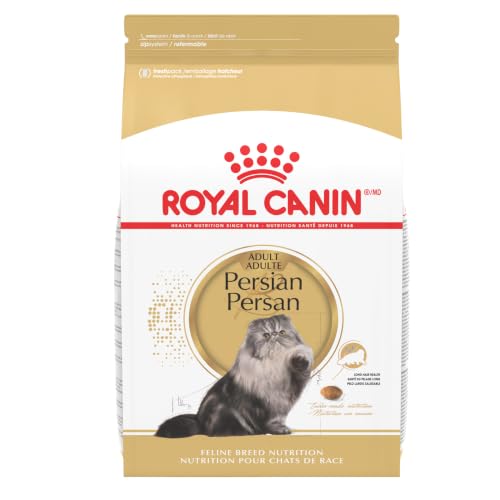
Royal Canin Persian Adult Dry Cat Food
What We Like
- Kibble shaped for Persian jaw
- Blend of fibers for hairball control
- Supports skin and coat health
- Prebiotics for digestive health
Trade-offs
- Only for adult Persians, not kittens
- Dry kibble only; no moisture variety
A 7-pound bag of kibble whose shape is designed specifically for the shortened jaw of a Persian cat means your cat can actually pick up and chew each piece without struggling. That alone makes this more than a generic dry food with a breed label slapped on. The formula backs that up with a complex fiber blend aimed at hairball control, a real concern for any long-haired cat, and highly digestible proteins plus prebiotics to keep digestion steady. For a Persian owner who wants a dry food built around the breed’s physical and nutritional quirks, this is the most straightforward option available.
The trade-off is that this is a dry-only product, so you will need to provide moisture separately, either through a wet food or fresh water. Compared to the Royal Canin Persian Adult Wet Cat Food, which offers canned texture and extra hydration, this bag covers the base nutritional needs but leaves hydration to you. It also targets adults exclusively, so if you have a kitten, you would need to switch to the Royal Canin Persian Kitten Dry Cat Food instead. For a purebred Persian over a year old that eats dry food without issue, this bag does exactly what it sets out to do.
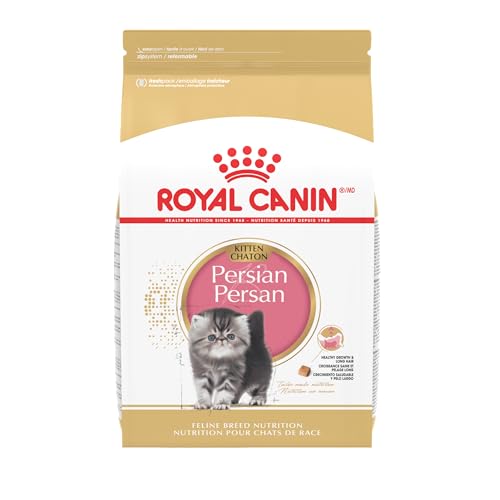
Royal Canin Persian Kitten Dry Cat Food
What We Like
- Breed-specific formula for Persian kittens
- Antioxidant blend supports immune development
- Prebiotics promote digestive health
- Unique kibble shape for small mouths
Trade-offs
- Only formulated for kittens up to 12 months
- Dry kibble only; no moisture from this food
A 3-pound bag of kibble with a shape designed for the small mouths of Persian kittens means this food is tailored to the breed’s needs, not a generic recipe. The antioxidant blend supports a young kitten’s immune system, and the highly digestible proteins with prebiotics aim to promote healthy digestive development. If you have a purebred Persian kitten up to 12 months old, this formula is designed for that developmental stage and for the breed’s facial structure.
The trade-off here is that this is strictly a kitten food, once your cat hits one year, you’ll need to switch to an adult formula, like Royal Canin’s Persian Adult Dry. That’s not a flaw in the product itself, but it does mean you’re buying for a limited window. Compared to the PURELUXE Persian formula, which covers all life stages, this one is more narrowly targeted. If you want a single bag that grows with your cat, the all-stages option might suit you better, but for a kitten-specific nutritional profile, this one sticks to its lane.
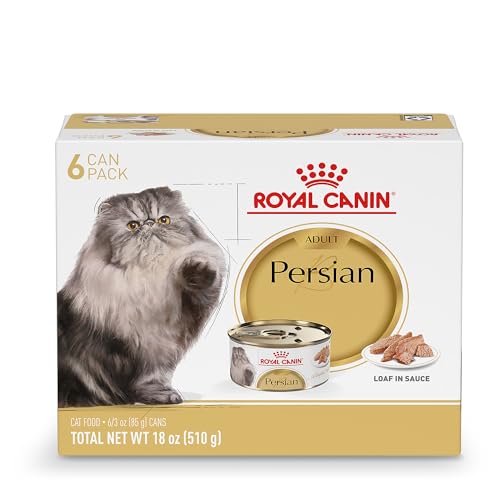
Royal Canin Persian Adult Wet Cat Food
What We Like
- Formulated for purebred Persian cats
- Nourishes skin and coat for long hair
- Supports digestive health
- Loaf in sauce texture for picky eaters
Trade-offs
- Only 3 oz cans require multiple per feeding
- Wet food has shorter shelf life after opening
- Single-breed formula limits use for mixed breeds
This 3-ounce can is formulated specifically for purebred Persian cats 1 year and older, with breed-specific nutrients that nourish skin and coat to keep long hair healthy. The loaf in sauce texture is designed to please even picky eaters, and exclusive use of this wet formula supports digestive health. It can be fed alone as a complete and balanced diet or mixed with Royal Canin Persian Dry Food.
A 3-ounce can is a modest portion, so a full-grown Persian might need two cans daily. That means more cans to store and more meals to open. The Royal Canin Persian Adult Dry Food is a 7-pound bag of crunchy kibble, while this wet food is a loaf in sauce that provides moisture and is designed to support skin and coat health. For a cat that does well on dry food and you want less prep, the dry bag is convenient. But if your cat needs extra hydration or has a picky palate, this wet option is formulated for their breed.
Product photos
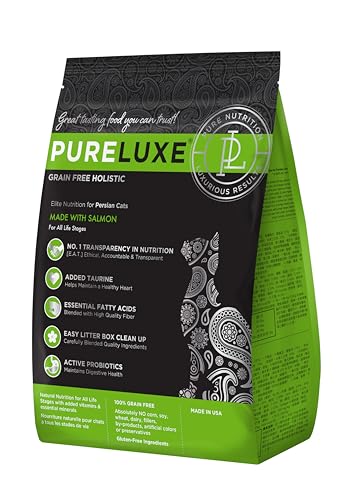
PURELUXE Persian Cat Elite Nutrition Dry Food
What We Like
- 100% grain and gluten free
- Contains prebiotics and active probiotics
- Omega-3 and Taurine for coat and heart
Trade-offs
- Not suitable for non-Persian cat breeds.
The ingredient list starts with salmon and stays there, no corn, soy, wheat, dairy, fillers, by-products, artificial colors, or preservatives. This is a clean, protein-forward recipe for owners who want to know exactly what goes into the bowl.
Product photos
How We Evaluated Cat Foods For Persian Cats
We started by looking at kibble geometry. Persian cats have a brachycephalic (flat-faced) skull, so standard round kibble can be hard to pick up. We prioritized brands that design kibble shapes specifically for the Persian jaw, as this reduces mealtime frustration and encourages proper chewing.
Digestive health came next. Long-haired cats swallow more fur during grooming, so we looked for fiber blends, both soluble and insoluble, that help move hair through the digestive tract. Prebiotics and probiotics were a bonus for overall gut health. Owner feedback on hairball frequency helped separate marketing claims from real results.
Finally, we looked at coat-supporting nutrients like omega-3 and omega-6 fatty acids. A Persian’s coat is its defining feature, and a food that doesn’t support skin health will show it in dull fur and dry patches. We also considered texture preferences, since many Persians are picky eaters who turn up their noses at unfamiliar formats.
What To Look For In Cat Foods For Persian Cats
Choosing the right food for a Persian cat means looking past the front of the bag and focusing on three things: kibble shape, fiber content, and coat-supporting nutrients.
Look for a kibble shape designed for flat-faced cats, a fiber blend that helps manage hairballs, and omega fatty acids that support a long, dense coat.
Kibble Shape Designed For Flat Faces
Standard round or star-shaped kibble can roll off a Persian’s tongue or get stuck against the flat palate. Breed-specific kibble is often flatter or oval-shaped, making it easier for your cat to scoop up. The kibble from Royal Canin, for example, is smaller and shaped to fit a kitten’s mouth. For adults, look for a kibble that is wide and shallow rather than tall and round.
Fiber For Hairball Control
Persian cats groom constantly, and that long fur has to go somewhere. A food with a mix of soluble and insoluble fibers, like psyllium seed husk, beet pulp, or oat fiber, helps push swallowed hair through the digestive tract rather than letting it accumulate. This is one area where breed-specific formulas often outperform general “hairball control” diets, because the fiber blend is calibrated for the Persian’s slower digestion. Good hairball control starts with the right fiber ratio.
Coat And Skin Support
The Persian coat is high-maintenance, and nutrition plays a direct role in its condition. Omega-3 and omega-6 fatty acids (from fish oil or flaxseed) support a healthy skin barrier and a glossy coat. If a food lacks these, you’ll likely notice more shedding, dander, or a dull appearance. For kittens, proper nutrition includes these same fatty acids to support coat development from the start.
- Check the ingredient list for a named source of omega fatty acids (fish oil, chicken fat, flaxseed).
- Look for at least one fiber source in the first ten ingredients.
- Choose a kibble shape described as “flat” or “wide” if you see it in the product images.
- If feeding wet food, consider a pate texture, which many Persians find easier to lick than chunks in gravy.
A Persian cat that eats with less mess and produces fewer hairballs is a good sign the food is working.
Cat Foods For Persian Cats Compared
The table below compares the four picks across key features, so you can see at a glance which formula fits your cat’s life stage, texture preference, and dietary needs.
| Product | Target Age | Kibble Shape / Form | Protein Source / Type | Weight |
|---|---|---|---|---|
| Royal Canin Persian Adult Dry Cat Food | Adult cats | Crunchy Kibble | Highly digestible proteins | 7.0 pounds |
| Royal Canin Persian Kitten Dry Cat Food | Up to 12 months | Designed for small mouths | Highly digestible proteins | 3.0 pounds |
| Royal Canin Persian Adult Wet Cat Food | Adult cats | Loaf in Sauce | N/A | 3 oz (Pack of 6) |
| PURELUXE Persian Cat Elite Nutrition Dry Food | All Life Stages | N/A | Salmon | 3.3 pounds |
Frequently Asked Questions
What is the best food for a Persian cat with hairballs?
The best choice is a breed-specific dry food with a balanced fiber blend, such as Royal Canin Persian Adult Dry Cat Food. It includes both soluble and insoluble fibers designed to move hair through the digestive tract. Adding a highly palatable wet food can also help with hydration, which supports overall digestion.
Can Persian cats eat regular cat food?
Yes, but regular cat food may not account for the Persian’s flat face or long coat. Standard kibble can be hard to pick up, and the fiber content may be too low to manage hairballs effectively. A breed-specific formula is generally more convenient and targeted.
Is wet food better for Persian cats?
Wet food provides moisture, which supports kidney and urinary tract health, a common concern in Persians. However, it doesn’t offer the same kibble shape benefits for jaw comfort. A combination of both, such as Royal Canin Persian Adult Wet Cat Food alongside dry food, gives you the benefits of wet food without losing the dental and shape advantages of kibble.
What should I feed a Persian kitten?
Feed a formula designed for kittens up to 12 months, like Royal Canin Persian Kitten Dry Cat Food. It has smaller kibble for a flat-faced kitten’s mouth and includes antioxidants and prebiotics for immune and digestive development. The best kitten food for Persians is one that supports rapid growth without causing digestive upset.
How do I transition my Persian cat to a new food?
Switch gradually over a week to ten days by mixing increasing amounts of the new food with the old. Start with a small portion of new food and a larger portion of old, then adjust every two to three days. This is especially important for transitioning finicky cats, who may refuse a sudden change entirely.
The Bottom Line
For most Persian cat owners, Royal Canin Persian Adult Dry Cat Food is the best overall choice because it addresses the two biggest daily hassles: difficult eating and hairballs. The breed-specific kibble shape and targeted fiber blend make it a practical option for adult cats.
If you have a kitten, Royal Canin Persian Kitten Dry Cat Food is the right pick for the first year. For owners who prefer wet food or have a picky eater, Royal Canin Persian Adult Wet Cat Food offers the same breed-specific nutrition in a soft loaf texture. And if grain-free is a priority, PURELUXE Persian Cat Elite Nutrition Dry Food delivers a single-protein, grain-free formula with probiotics.
The single most important factor is choosing a food that matches your cat’s anatomy and coat type, everything else is secondary. A food that a Persian can eat comfortably and that reduces hairballs will improve both your cat’s health and your daily routine.
