
10 Best Fish Food For Bettas in 2026
This post contains affiliate links. As an Amazon Associate, we earn from qualifying purchases.
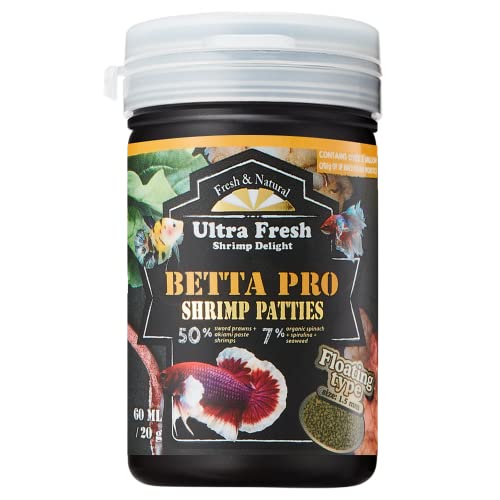
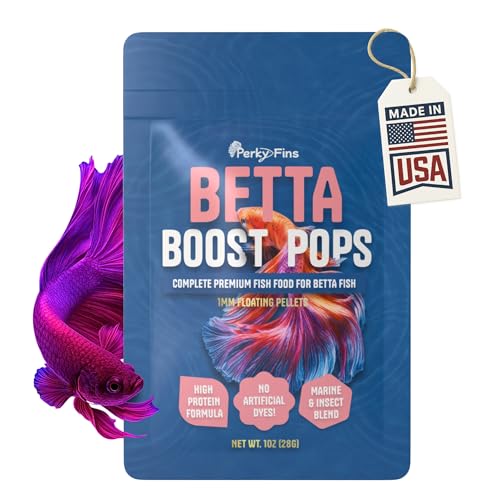
For betta keepers who want a high-protein diet with cleaner water, the Ultra Fresh Betta Pro Shrimp Patties takes the top spot thanks to its 3 million CFUs/g probiotics and whole-ingredient formula. The Fluval Bug Bites Betta Fish Food is our Best High Protein pick for insect-based nutrition, while the Perky Fins Betta Boost Pops leads as the Best Natural Color Blend for filler-free feeding.
Bettas are obligate carnivores with short digestive tracts, which means they need a protein-dense diet with minimal fillers like corn, soy, or pea meal. A food that floats too fast, sinks too quickly, or contains artificial binders can lead to bloating, poor coloration, or water quality issues that stress your fish.
This guide is based on a close review of ingredient lists, protein percentages, pellet sizes, and manufacturer sourcing practices. We also looked at patterns in owner feedback to understand what actually works for picky bettas. You’ll find clear picks for every feeding style and budget.
Top 10 Fish Foods For Bettas in the Market
Certain content that appears on this site comes from Amazon. This content is provided "as is" and is subject to change or removal at any time.
The Best Fish Foods For Bettas, Reviewed
Ultra Fresh Betta Pro Shrimp Patties
What We Like
- 3 million CFUs/g probiotics for cleaner water
- 1.5mm granules easy for adult bettas
- No artificial flavors, colors, or byproducts
Trade-offs
- Requires feeding within 3 minutes to avoid waste
- Not suitable for fry or small juvenile bettas
The 1.5mm granule size is sized for adult betta mouths, so they can grab and chew without struggling. That matters because a food that’s too large gets ignored or broken into dust that clouds the water. For keepers who want a single staple that covers nutrition, palatability, and water quality, this is a strong candidate.
Compared to Fluval Bug Bites, which uses insect protein, this one delivers more marine-based protein from whole prawns and shrimp. The probiotics at 3 million CFUs per gram help break down fish excrements and residuals, keeping the water cleaner. It’s not the cheapest option, but the transparent ingredient list and whole-food sourcing justify the premium for anyone who reads labels.
Product photos
Fluval Bug Bites Betta Fish Food

What We Like
- First ingredient is nutrient-rich Black Soldier Fly Larvae
- Slow-sinking granules suit all feeding depths
- Fortified with essential vitamins and minerals
Trade-offs
- Slow-sinking format not ideal for surface-only feeders
- Not suitable for bettas that prefer floating food
Up to 40% protein from Black Soldier Fly Larvae as the first ingredient gives this a clear edge if you’re prioritizing high-protein nutrition for your betta. It’s a straightforward, ingredient-focused formula that skips the marketing fluff and delivers what the label promises.
The trade-off is that the slow-sinking design won’t appeal to fish that strictly feed at the surface. Compared to the floating pellets from TetraBetta PLUS, this requires a bit more attention to how your betta actually eats. If you want a high-protein option with a clean ingredient list and don’t mind adjusting your feeding routine, this fits the bill.
Product photos
Perky Fins Betta Boost Pops
What We Like
- Marine and insect protein blend
- Natural color enhancers, no artificial dyes
- No corn, soy, or pea fillers
- Prebiotic yeast for digestion support
Trade-offs
- Not suitable for bettas that prefer sinking-only pellets
The ingredient list opens with krill, shrimp, Pacific whiting, and Black Soldier Fly Larvae, a marine-and-insect protein lineup that mirrors what a carnivorous betta would chase in the wild. That protein base is paired with spirulina, paprika, marigold, and astaxanthin for color enhancement, all without artificial dyes. The pellet floats first, then slow-sinks, matching the betta’s natural feeding preference while giving slower eaters a second chance. This is a food for owners who read the back of the bag and want purposeful ingredients, not filler.
The ingredient list is the real story here: Perky Fins Betta Boost Pops pack marine and insect proteins like krill, shrimp, Pacific whiting, and Black Soldier Fly Larvae into every pellet. They skip common plant fillers such as corn, soy, and peas. That means each bite delivers concentrated protein for your carnivorous betta, not cheap bulk. If you want a straightforward, USA-made formula with a clean ingredient list, this delivers.
Product photos
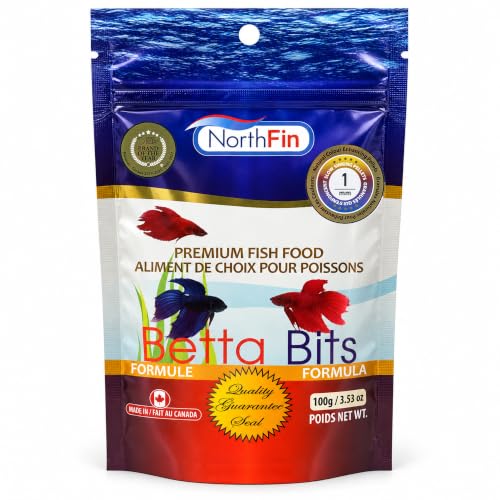
Northfin Betta Bits Sinking Pellets
What We Like
- Whole Antarctic krill is first ingredient
- 45% minimum crude protein from fish meals
- 1mm sinking pellet fits betta mouths
- No added hormones, low heat processed
Trade-offs
- Only one pellet size available
- Sinking pellets require diligent gravel cleaning
With 45% minimum crude protein from whole Antarctic krill, herring, and sardine meals, this formula delivers the animal-based protein bettas need as carnivores to maintain condition and finnage. The 1mm sinking pellet is sized for both adult and juvenile betta mouths, so even smaller fish can eat comfortably. Made without added hormones and low heat steam extruded at NorthFin’s facility in Canada, it prioritizes ingredient transparency.
These are sinking pellets, which means any uneaten bits can settle into the gravel and potentially foul the water if you don’t clean thoroughly. For keepers who prefer to monitor feeding closely or have heavily planted tanks, the sinking action requires a bit more attention. But if you’re comfortable with that and want a high-protein, no-filler formula with whole krill as the first ingredient, this pellet is hard to beat.
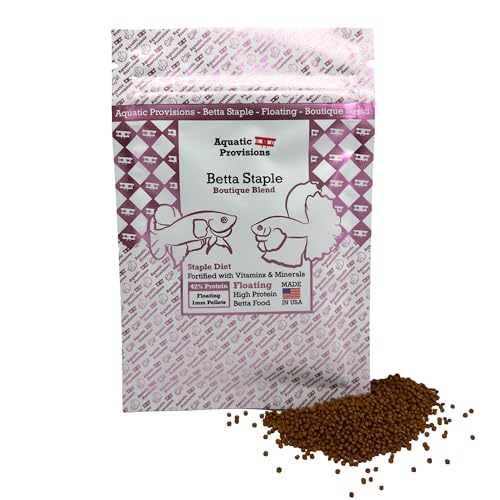
Aquatic Provisions Betta Staple Fish Food
What We Like
- Freshly made in the USA
- 42% protein with added vitamins and minerals
- 1mm floating pellets for easy feeding
Trade-offs
- Only floating pellets; bettas preferring sinking food won't get it
A 42% protein content with added vitamins, minerals, and carotenoids puts this formula squarely in the high-protein camp bettas need for color and health. The 1mm floating pellets are sized right for even small mouths, and the soft texture encourages picky eaters. Being freshly made in the USA gives some assurance of quality control, and the 10g pack lasts one betta about two to three months, so you’re not stuck with stale food. This is a straightforward, no-nonsense staple for someone who wants a clean protein source without fillers or flashy claims.
The 42% protein formula is the standout feature here, delivering the high-protein diet bettas need for optimal health without any filler. That 0.35-ounce pack is designed to last one fish about two to three months, so it’s a practical size for a single-betta household. If you’re keeping multiple fish, you’ll be ordering more often, but for a solo betta, it’s a straightforward, no-fuss option.
Product photos
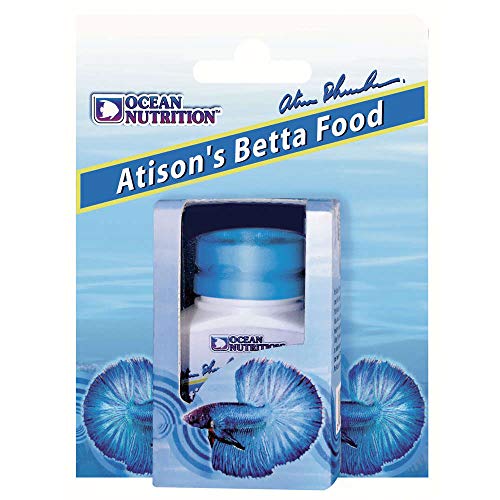
Ocean Nutrition Betta Pellets
What We Like
- Natural color enhancers boost betta hues
- Does not cloud aquarium water
- Includes krill meal and essential vitamins
Trade-offs
- Contains fish meal, not suitable for fish-free diets
- Includes alpha amylase, which some owners avoid
The natural color enhancers target vibrancy without relying on artificial dyes, so you’re feeding for both health and appearance. It’s designed to leave the water clear, which matters if you’re tired of cloudy tanks after feeding.
The small 0.53 oz container means you’ll be reordering more often than with some larger options. And the 6-month freshness window after opening means you can’t stockpile; you need to use it steadily. But if you’re focused on maximizing protein and natural color enhancement in a pellet that won’t foul the water, this does exactly what it says on the label, without extra fillers or marketing fluff.
TetraBetta PLUS Floating Mini Pellets
What We Like
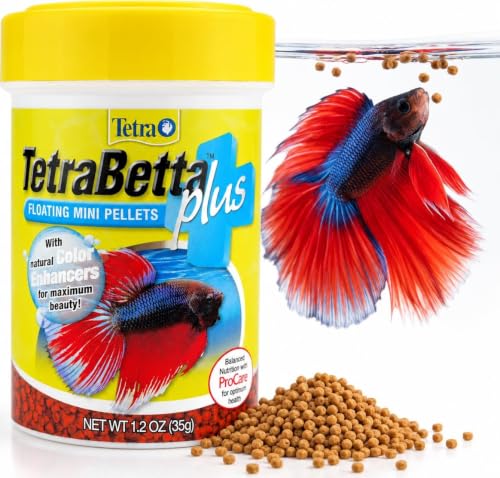
- Floating crisps for top-feeders
- Natural color enhancers included
- High protein and omega-3
- Clear water formula
Trade-offs
- Only floating format, not for bottom-feeders
- Not suitable for bottom-feeding fish
TetraBetta PLUS Floating Mini Pellets are a nutritionally balanced daily staple for bettas and other top-water feeders, with high protein and omega-3 fatty acids to support energy and growth. The natural color enhancers help develop richer coloration, and the clear water formula keeps the tank from clouding up between water changes. This is a straightforward daily food that focuses on protein, color, and water quality.
These are strictly floating crisps, so if your betta prefers sinking food or you have bottom feeders in the tank, you’ll need to look elsewhere. The sinking pellets from Northfin Betta Bits could be a better fit. For a reliable brand that covers the essentials, this is a practical pick.
Product photos
Hikari Micro Pellets Semi-Floating Fish Food
What We Like
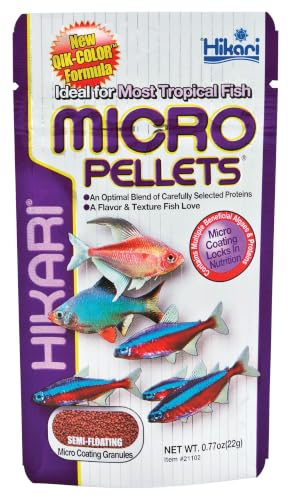
- Semi-floating pellets for small mouths
- Formulated for bettas and tetras
- Compact 0.77 oz package
Trade-offs
- Small package size for multiple fish
- Not suitable for bottom-feeding fish that need sinking food
A 0.77-ounce bag of semi-floating micro pellets is purpose-built for fish with tiny mouths, betta, tetras, and barbs all fit the bill. The pellet size means even the most finicky small-mouthed fish can grab a bite without struggling, which makes feeding less of a chore for owners of these species.
At just 0.77 ounces, this bag is small enough to tuck into a tackle box or travel kit, but if you’re feeding several small-mouthed fish, you’ll be restocking sooner than with a larger container. The pellets are semi-floating, so they stay near the surface for fish like bettas and tetras that feed there. It’s a targeted tool, not a universal solution, great for the fish it’s made for, less so for a mixed diet approach.
Tetra BettaMin Select-A-Food Variety Pack

What We Like
- Three food forms in one can
- Color-enhancing formula
- Easy-to-use dial dispenser
- Nutritionally balanced for bettas
Trade-offs
- Only 0.1 pounds total food volume
- Not suitable for bottom-feeding fish
Three food forms, flakes, freeze-dried shrimp, and floating mini pellets, come in one can, and the dial-top dispenser lets you choose which food to release. That means you can switch textures at each feeding without opening separate containers. For betta keepers who want a single package that offers multiple food types, this pack provides that convenience.
The total weight is 0.1 pounds, so the can holds a relatively small amount of food. If you feed multiple fish or go through food quickly, a larger single-formula container might last longer. But for a single betta, the variety in one can can make daily feeding more interesting without buying several jars.
Aqueon Nutrinsect Fish-Free Betta Pellets
What We Like
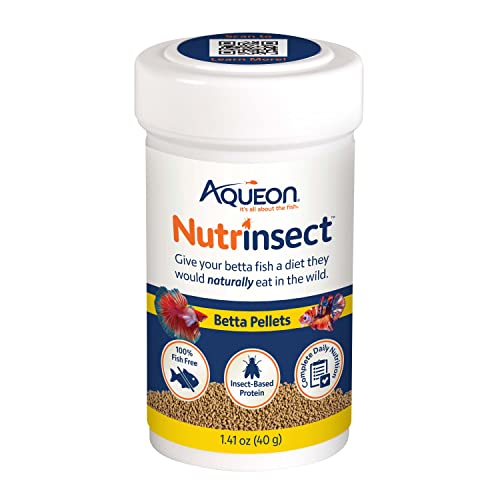
- 100% fish-free protein source
- Insect-based proteins support growth
- Highly palatable for picky eaters
- Highly digestible reduces waste
Trade-offs
- Single pellet size limits feeding style options
- Not suitable for bettas that prefer sinking food
A 100% fish-free formula means this pellet skips fishmeal and fish oils entirely, relying on insect-based proteins instead. That matters if you want a protein source closer to what a wild betta would naturally eat, while also cutting out the ocean-harvest footprint. It’s highly palatable, so even finicky eaters tend to take it, and the high digestibility means less waste in the tank. For anyone looking to avoid fish-derived ingredients altogether, this is a clean, straightforward option.
The most decisive fact about this food is that it’s 100% fish-free, using insect-based proteins instead, which means your betta gets a meal closer to what it would naturally eat in the wild. That single-pellet formula is designed to be highly palatable and digestible, so even picky eaters tend to go for it and produce less waste. It’s a straightforward staple if you want a sustainable, ocean-friendly option, but if your fish needs variety in texture or sinking behavior, this one-size-fits-all approach won’t cover that.
How We Evaluated Fish Foods For Bettas
We started by reading the guaranteed analysis and ingredient panel of each product, looking for whole-protein sources listed first and avoiding unnamed “fish meal” or grain fillers. Manufacturer documentation and expert round-ups helped us confirm which foods actually meet a betta’s carnivorous needs without unnecessary additives.
The four criteria that mattered most were protein content (minimum 40% for adult bettas), ingredient transparency (named proteins vs. Vague byproducts), pellet size and sink rate (1mm-1.5mm granules work best for betta mouths), and any added digestive aids like probiotics or prebiotics that reduce waste. We also considered whether a food clouded water or left excess oil.
A research-led evaluation has limits: we did not feed these foods to fish in a lab setting. Instead, we cross-referenced ingredient claims with owner-reported feeding behavior and water quality patterns. For a deeper look at the category, our comprehensive betta food guide covers additional options and feeding strategies.
What To Look For In Fish Foods For Bettas
The right betta food balances high animal protein with the right pellet size and sink rate for your fish’s feeding style. Fillers like corn, wheat, and soy offer no nutritional value and can cause bloating.
Look for a food with at least 40% crude protein, a named whole-protein first ingredient (krill, shrimp, black soldier fly larvae), and a pellet size between 1mm and 1.5mm. Avoid artificial colors, preservatives, and vague “fish meal” listings.
Protein Content and Source
Bettas need a minimum of 40% crude protein from animal sources. Whole Antarctic krill, black soldier fly larvae, and shrimp meal are excellent first ingredients because they provide the amino acids bettas require. Foods that list corn, wheat gluten, or soybean meal high on the ingredient panel are not appropriate for a carnivorous fish.
Pellet Size and Sink Rate
Adult betta mouths are small. Pellets between 1mm and 1.5mm are ideal. Floating pellets suit surface feeders, while slow-sinking or sinking pellets work for bettas that prefer to eat mid-water or from the bottom. Semi-floating options, like those from Hikari, can accommodate both feeding styles.
Additives and Water Quality
Probiotics and prebiotics (such as 3 million CFUs/g or yeast-based prebiotics) help bettas digest food efficiently and reduce waste that clouds water. Avoid foods with artificial dyes, ethoxyquin, or BHA/BHT preservatives. Natural color enhancers like astaxanthin and spirulina can deepen reds and blues without artificial chemicals.
- Check the guaranteed analysis for crude protein (40% minimum) and crude fat (5-10%).
- Look for a named protein source in the first three ingredients.
- Choose a pellet size that matches your betta’s mouth (1mm-1.5mm).
- Avoid foods with corn, wheat, soy, or unnamed “fish meal.”
- Consider your betta’s feeding preference: floating, sinking, or semi-floating.
A betta that refuses food for more than two days may need a different pellet size or sink rate rather than a different brand.
Fish Foods For Bettas Compared
The table below compares all ten foods side by side, including their protein content, pellet size, sink rate, and key ingredients.
| Product | Protein Source | Protein Content | Sinking Behavior |
|---|---|---|---|
| Ultra Fresh Betta Pro Shrimp Patties | Sword prawns + Akiami paste shrimp | N/A | N/A |
| Fluval Bug Bites Betta Fish Food | Black Soldier Fly Larvae | Up to 40% | Slow-sinking |
| Perky Fins Betta Boost Pops | Krill, shrimp, Pacific whiting, Black Soldier Fly Larvae | N/A | Floats first, then slow-sinks |
| Northfin Betta Bits Sinking Pellets | Krill, herring, sardine | 45% min | Sinking |
| Aquatic Provisions Betta Staple Fish Food | N/A | 42% | Floating |
| Ocean Nutrition Betta Pellets | N/A | 41.5% | N/A |
| TetraBetta PLUS Floating Mini Pellets | N/A | High protein | Floating |
| Hikari Micro Pellets Semi-Floating Fish Food | N/A | N/A | Semi-Floating |
| Tetra BettaMin Select-A-Food Variety Pack | N/A | N/A | N/A |
| Aqueon Nutrinsect Fish-Free Betta Pellets | Insect-based | N/A | N/A |
Frequently Asked Questions
How often should I feed my betta fish?
Feed adult bettas 2-3 pellets twice per day, once in the morning and once in the evening. Skip one day per week to help prevent bloating and constipation. For a detailed schedule, our betta feeding guide breaks down portion sizes by age and activity level.
What is the best food for betta fish color?
Foods with natural color enhancers like astaxanthin, spirulina, and krill meal can deepen reds and blues. The Ocean Nutrition Betta Pellets and Perky Fins Betta Boost Pops both include these ingredients without artificial dyes.
Can betta fish eat floating or sinking pellets?
It depends on your fish. Many bettas prefer floating pellets because they feed at the surface, but some will eat slow-sinking or sinking pellets once they discover them. Semi-floating pellets like Hikari Micro Pellets work for both styles.
What ingredients should I avoid in betta food?
Avoid corn, wheat, soy, and unnamed “fish meal” as first ingredients. Also skip foods with artificial colors, BHA, BHT, or ethoxyquin. These offer no nutritional value and can cause digestive issues.
How long can betta fish go without food?
A healthy adult betta can go 3-4 days without food, but it is not ideal for their long-term health. If you are away for a weekend, skip feeding rather than using a vacation feeder, which often fouls the water.
The Bottom Line
The Ultra Fresh Betta Pro Shrimp Patties is our Best Overall pick for betta keepers who want a high-protein, whole-ingredient food with probiotics that help keep the water cleaner. It is best suited for adult bettas that will eat 1.5mm granules within a few minutes. If your betta prefers a different feeding style, the Fluval Bug Bites (Best High Protein) offers insect-based nutrition in a slow-sinking format. The Perky Fins Betta Boost Pops (Best Natural Color Blend) delivers a filler-free diet with natural color enhancers.
For budget-conscious keepers, the TetraBetta PLUS Floating Mini Pellets provides a reliable floating staple with color enhancement at a lower cost. Those who want a fish-free protein option should look at the Aqueon Nutrinsect Fish-Free Betta Pellets, which uses insect-based protein for easy digestion. If you need a tiny pellet for a small-mouthed betta, the Hikari Micro Pellets Semi-Floating Fish Food is the right choice.
The single most important factor in choosing betta food is matching the protein source and pellet size to your fish’s feeding behavior. A betta that refuses to eat a high-quality food may simply need a different sink rate or smaller pellet. For a closer look at pellet-only options, our best betta pellets guide compares the top sinking and floating formulas.
