
10 Best Fish Food For Community Tank in 2026
This post contains affiliate links. As an Amazon Associate, we earn from qualifying purchases.
The best fish food for a community tank needs to reach every fish, from surface-grazing tetras to bottom-scavenging catfish. We recommend the Tetra Community Select-A-Food Fish Food as Best Overall because its three food forms and dial dispenser let you feed all water column levels from one canister. For keepers who prefer a slow-sinking pellet, the Xtreme Community Peewee Pellets earn our Best Slow-Sinking Pellets award, and the NorthFin Community Tropical Fish Food is our top pick for small-fish sinking pellets.
A community tank is a mixed neighborhood: top feeders, mid-water swimmers, and bottom dwellers all need food that reaches them without clouding the water or leaving one group hungry. One-size-fits-all flakes miss the bottom, and sinking pellets alone ignore surface feeders. The real challenge is finding a food or a combination that covers every zone without turning feeding time into a logistics puzzle.
This guide is research-based. We examined manufacturer specifications, ingredient lists, feeding recommendations, and patterns in owner feedback across ten products. We focused on what matters most for a mixed-species tank: water-column coverage, ingredient quality, and how each food handles the messiest part of fishkeeping, leftover waste.
Top 10 Fish Foods For Community Tanks in the Market
Certain content that appears on this site comes from Amazon. This content is provided "as is" and is subject to change or removal at any time.
The Best Fish Foods For Community Tanks, Reviewed
Tetra Community Select-A-Food Fish Food

What We Like
- Three food forms for all feeding levels
- Fortified with Vitamin C
- Dial dispenser for portion control
Trade-offs
- Single canister limits separate feeding schedules
- No ingredient list provided for scrutiny
Three distinct food forms in one canister, flakes for top-feeders, granules for mid-dwellers, and wafers for bottom-scavengers, means you can feed every level of a community tank from a single container. That’s the kind of practical convenience that makes this a sensible starting point for a mixed-species aquarium. The dial-top dispenser lets you choose which food comes out, so you’re not dumping everything in at once. It’s a straightforward system for anyone who wants to cover all bases without juggling three separate jars.
The big trade-off with this all-in-one can is that you’re tied to Tetra’s specific formulas for flakes, granules, and wafers, and the ingredient list isn’t on the package. Compared to a single-product option like Xtreme Community Peewee Pellets, which offers one slow-sinking pellet, this feels more like a convenience kit than a tailored feeding solution. If you like to choose each food type separately or want full ingredient transparency, this approach might feel limiting. But for most community keepers, the one-can design saves counter space and cuts down on daily decisions.
Xtreme Community Peewee Pellets
What We Like
- Slow-sinking design feeds all water column levels
- Includes cold-water krill and squid meal
- No added hormones or inferior fillers
- Visible color improvement within 14 days
Trade-offs
- Slow-sinking not ideal for surface-only feeders
- 1.5mm pellets too large for nano fish or fry
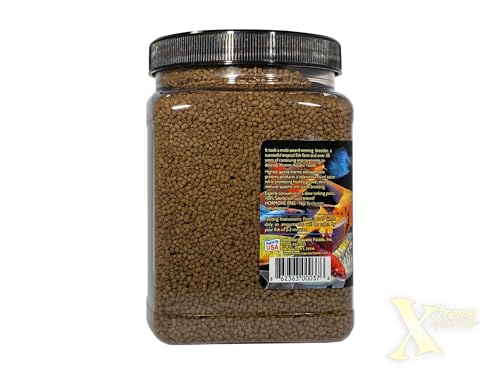
The 1.5mm pellet size and slow-sinking design mean this food drifts down through the water column, letting mid- and bottom-dwelling community fish eat at their natural level rather than scrambling for flakes that float. The ingredient list leads with cold-water krill, shrimp meal, and squid meal, which are high-quality protein sources that actually support color and growth, not just filler. For a community tank with tetras, guppies, or similar small-to-medium fish, this pellet gives you a balanced diet without added hormones or cheap starch. The manufacturer states visible improvement in color and health within 14 days.
For a mixed community of tetras, guppies, and similar mid-to-bottom feeders, these 1.5mm slow-sinking pellets deliver a balanced diet with real krill, shrimp, and squid meal, no fillers or hormones. The slow sink lets fish at every level eat naturally, and owners often see better color and health within two weeks. Just note that surface-only feeders might ignore them until they drop lower.
Product photos
NorthFin Community Tropical Fish Food
What We Like
- No artificial colors or added hormones
- 0.5mm pellets suit small fish and fry
- Whole Antarctic krill meal as a key ingredient
Trade-offs
- Sinking format misses surface feeders entirely
- 0.5mm pellets too small for larger community fish
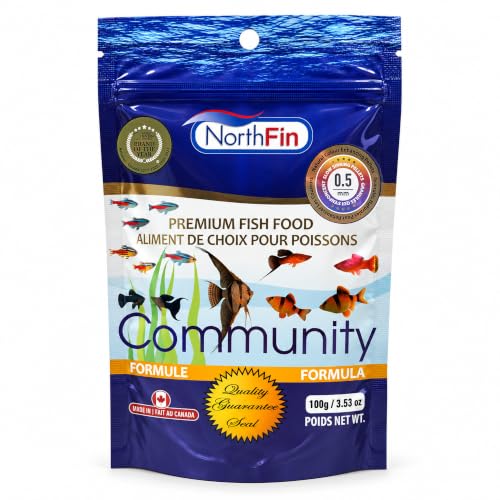
The 0.5mm pellet is small enough for fry and nano fish to handle easily, and because it sinks, mid-water and bottom feeders can eat in a way that feels natural to them.
The trade-off is that this pellet does nothing for surface-oriented fish like hatchetfish or top-dwelling guppies, so if your community includes both top and bottom feeders, you will need a floating option alongside it. Compared to Tetra’s three-in-one Select-A-Food, which offers flakes, granules, and wafers in one container, NorthFin commits to a single sinking pellet. That approach works well if you prefer a sinking format for mid-water and bottom feeders and are willing to manage multiple foods for different feeding zones.
Northfin Community Fish Food Flakes
What We Like
- 40% protein from whole-meal sources
- Natural color enhancement without synthetic dyes
- Highly digestible with no fillers
- Made in Canada with low-heat processing
Trade-offs
- Only available in two sizes
- Not suitable for bottom-feeding fish
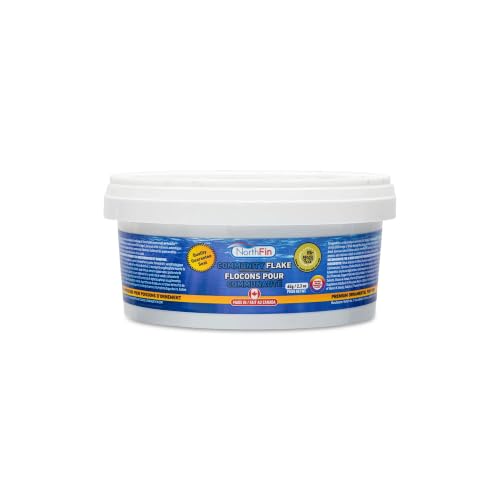
A 40% minimum protein content from whole Antarctic krill and herring meal means this flake delivers the kind of dense nutrition that supports growth and energy without relying on cheap fillers. The inclusion of astaxanthin and spirulina for natural color enhancement is a thoughtful touch for tetras, barbs, and livebearers, helping their colors come through without synthetic dyes. This makes it a strong choice for community tanks where mixed species need a balanced, digestible staple that also keeps water clearer by reducing waste.
Flakes float naturally, so they work best for fish that feed at the surface or mid-water. If your tank has bottom feeders, you will need a sinking food for them. The Xtreme Community Peewee Pellets are slow-sinking, while these flakes stay on top longer.
API Tropical Flakes Fish Food

What We Like
- Menhaden and squid for amino acids
- Formulated to reduce waste
- Complete balanced nutrition for community fish
Trade-offs
- Only one form factor, no sinking options
- Not suitable for bottom-feeding fish
A 5.7-ounce container of flakes built around menhaden and squid gives this budget-friendly pick a straightforward protein profile for tropical community fish. The formulation is designed to help fish use nutrients more efficiently, which translates to less waste and clearer water, a practical advantage for anyone maintaining a mixed-species tank. It covers the basics without fuss, making it a sensible option if you want a reliable staple that doesn’t overcomplicate feeding.
Because these are floating flakes, bottom-dwellers in a community setup might not get their share. Compared to the slow-sinking Xtreme Community Peewee Pellets, which reach mid- and bottom-feeders, this API option is better suited to surface- and mid-water fish. If your tank includes catfish or loaches, you will likely need a separate sinking food to reach everyone.
Product photos
Sera Vipan Tropical Flakes
What We Like
- Includes 4% insect protein
- Contains probiotics for digestion
- Free from artificial colors and preservatives
- Floating flakes for surface feeding
Trade-offs
- Floating only; no option for mid or bottom feeders
- Not suitable for bottom-feeding fish species
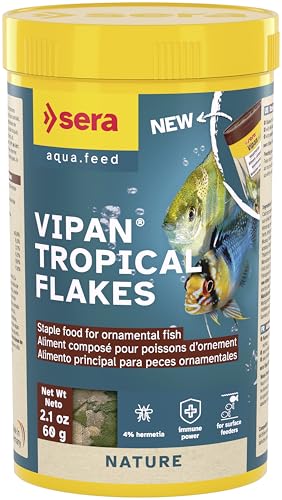
The 4% insect protein in Sera Vipan Tropical Flakes is the standout spec here, it’s a clean, natural protein source that most flake foods skip entirely. That, paired with added probiotics and prebiotics, makes this a solid daily staple for a community tank where you want steady digestion and clear water. The floating flake format is straightforward for top-feeding tetras, guppies, and similar fish, and the lack of artificial colors or preservatives matches what a label-checker likes to see.
Since these flakes only float, if your tank has bottom dwellers like corydoras or loaches, they won’t get much from this food. Compared to the slow-sinking Xtreme Community Peewee Pellets, which reach all levels, Sera’s offering is more targeted. It’s a good pick if you’re focused on surface feeders and want a cleaner protein profile, but for a mixed community with bottom fish, you’d need to supplement.
Aquatic Provisions Extra Small Fish Food Pellets

What We Like
- 48% protein from quality ingredients
- Highly digestible nutritious formula
- Made in USA with quality ingredients
Trade-offs
- Sinking pellets not ideal for top-feeders
Made in the USA with highly digestible ingredients, this is a straightforward, no-nonsense food for anyone who wants to prioritize protein without a lot of filler.
Because these pellets sink, they won’t suit tanks where most fish feed at the surface. Compared to the Tetra Community Select-A-Food, which includes flakes, granules, and wafers for different feeding zones, this is a more focused product. It’s best for community tanks with fish that naturally feed in the middle and lower water column. Not ideal for tanks with many surface-feeding species.
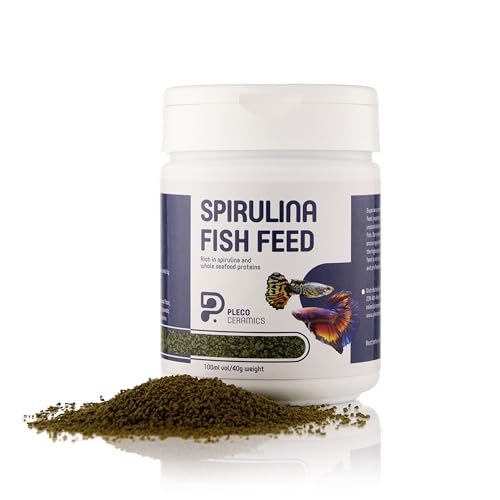
Plecoceramics Tropical Fish Granules
What We Like
- Spirulina and astaxanthin for color
- Whole anchovy and shrimp meal
- Garlic supports palatability
Trade-offs
- Only 1.4 oz per package
- No floating option for top-feeders
A guaranteed 35% crude protein minimum from whole anchovy and shrimp meal means this granule puts animal protein first, not filler. The spirulina, red algae, and astaxanthin are included to support color and vitality, and garlic is listed as an ingredient. For a community tank keeper who wants a single sinking staple that covers mid- and bottom-feeders and helps maintain clean water, the ingredient list is straightforward.
At 1.4 ounces, this is a smaller portion than a 20-ounce bag of Xtreme Community Peewee Pellets, so you’ll need to restock more often. The sinking granules work well for mid- and bottom-feeders, but top-dwelling fish that prefer floating food might miss out unless you presoak or target-feed. If you want a protein-rich formula with spirulina rather than a bulk supply, this is a focused choice.
Product photos
Ocean Nutrition Community Formula Flakes

What We Like
- All-natural ingredients including salmon eggs
- 53% crude protein for balanced nutrition
- No artificial colors or preservatives
- Won't cloud aquarium water
Trade-offs
- Only two sizes available
- Not suitable for bottom feeders without manual sinking
The 53% crude protein content comes from all-natural ingredients like brine shrimp, seafood plankton, and salmon eggs, which means you’re getting a protein-rich flake without artificial colors or preservatives. That’s a straightforward benefit for anyone who reads ingredient labels and wants recognizable animal proteins in their fish’s daily diet. The formula is made in the USA and is designed to support coloration and vitality for freshwater tropical fish.
Because flakes float, bottom-dwelling fish like plecos or corydoras won’t naturally get their share unless you crumble and sink them manually. Xtreme Community Peewee Pellets are slow-sinking 1.5mm pellets, so they drift down toward lower tank levels. If your community includes both top and bottom feeders, you’ll need to add a sinking food or accept that this flake is really designed for mid-to-surface eaters.
Product photos
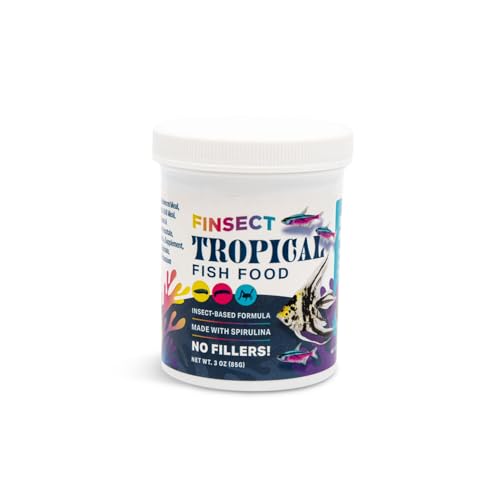
Finsect Tropical Fish Food
What We Like
- Non-clouding formula keeps tank clear
- 100% natural ingredients, no fillers
- Sustainable protein from insects
- Color-enhancing formulation
Trade-offs
- Only 0.2 pounds per container
- Not suitable for bottom-feeding fish
The non-clouding formulation means you can feed your community without turning the water into a murky soup. That’s the headline here: less cloudiness, fewer water changes, more time actually watching the fish. It’s built around sustainable insect protein from black soldier fly larvae and mealworms, so the ingredient list is clean and straightforward. For anyone who values water clarity and natural feeding, this is a smart fit.
The most decisive fact is that this food is color-enhancing and 100% natural with no fillers, artificial colors, or flavors, which means your fish get a clean diet that brings out their natural brightness. The 0.2-pound container is lightweight, so it’s easy to store or travel with, but it won’t last long in a busy tank. If clear water and simple ingredients matter more than bulk, the trade-off is worth it.
Product photos
How We Evaluated Fish Foods For Community Tanks
We evaluated these fish foods by reviewing manufacturer specifications, ingredient lists, and protein content, then cross-referencing that data with expert round-ups and the patterns reported in thousands of owner experiences. No product was tested in a lab or tank, this is a desk-research evaluation built on what the makers say and what owners consistently report.
Our criteria centered on three things. First, water-column coverage: a community food must reach top, mid, and bottom feeders, or at least be compatible with a second food that does. Second, ingredient quality: we looked for named protein sources (whole krill meal, salmon eggs, insect protein) over vague “fish meal” and flagged artificial dyes and fillers. Third, waste management: foods that cloud water or produce excess waste were noted, because dirty water is the fastest way to stress a community tank.
An honest limit of this evaluation: without lab analysis, we cannot verify protein percentages or digestibility claims. We can tell you what the label says, what owners report about color change and feeding behavior, and how the ingredient list stacks up against a skeptical label-reader’s standards. If you want to dig deeper, our guide to choosing fish food walks through exactly what to check on the back of the bag.
What To Look For In Fish Foods For Community Tanks
A community tank food must feed every resident without turning your aquarium into a soup. Here is what to check before you buy.
Look for a food that reaches all water-column levels, uses named protein sources over vague fillers, and produces minimal waste. The ingredient list tells you more than the front of the bag ever will.
Water-Column Coverage
The single most important factor for a community tank. Floating flakes serve tetras, rasboras, and guppies at the surface. Slow-sinking pellets feed mid-water fish like barbs and danios. Sinking wafers or pellets reach bottom dwellers like corydoras and loaches. A single food that covers all three zones, like the Tetra Community Select-A-Food’s three-form system, simplifies feeding. If you use separate foods, make sure the sinking option reaches the bottom before surface fish intercept it.
Ingredient Quality
Named protein sources tell you what the fish are actually eating. Whole Antarctic krill meal, salmon eggs, insect protein, and squid meal are specific and nutritionally dense. Vague terms like “fish meal” or “poultry by-product” are red flags. Look for foods with no artificial colors or added hormones, fish do not need Red 40, and you do not need dye leaching into your water. A high-quality freshwater fish food will list its protein source by name and keep the filler list short.
Protein Content and Digestibility
Community fish are omnivores that need protein levels around 35%, depending on species. Higher protein is not always better, it can mean more waste if the food is not digestible. Foods with whole-meal protein sources and probiotics (like the Sera Vipan flakes) tend to be more digestible. Check the crude protein percentage on the guaranteed analysis, but remember that a high number from low-quality protein is worse than a moderate number from whole ingredients.
Waste and Water Clarity
Leftover food and fish waste are the top causes of ammonia spikes in community tanks. Some foods are formulated to reduce waste (API Tropical Flakes) or include a non-clouding formula (Finsect tropical fish food). Others rely on high digestibility to minimize output. If your tank is heavily stocked, prioritize a food that claims low waste or non-clouding properties.
- Check the guaranteed analysis for crude protein and crude fat percentages.
- Look for named protein sources in the first three ingredients.
- Decide whether you need one all-in-one food or are willing to use two foods for different zones.
- Read owner feedback about water clarity and waste volume for your tank size.
- Verify pellet size, 0.5mm works for nano fish, 1.5mm is better for medium community fish.
The ingredient list is the only part of the package that cannot lie. Read it like you are buying food for yourself.
Fish Foods For Community Tanks Compared
The table below compares all ten foods side by side, so you can see at a glance which ones cover your tank’s feeding zones and which ingredients drive the protein content.
| Product | Formulation | Protein Content | Key Ingredients |
|---|---|---|---|
| Tetra Community Select-A-Food Fish Food | Flakes, granules, wafers | N/A | N/A |
| Xtreme Community Peewee Pellets | Slow-sinking 1.5mm pellets | N/A | Krill, shrimp meal, squid meal |
| NorthFin Community Tropical Fish Food | Sinking pellets | Minimum 40% | Whole Antarctic krill meal |
| Northfin Community Fish Food Flakes | Flakes | 40% minimum | Whole Antarctic Krill Meal, Omega-3 Herring Meal |
| API Tropical Flakes Fish Food | N/A | N/A | menhaden, squid |
| Sera Vipan Tropical Flakes | Floating flakes | N/A | 4% insect protein |
| Aquatic Provisions Extra Small Fish Food Pellets | Sinking mini pellets | 48% | N/A |
| Plecoceramics Tropical Fish Granules | N/A | 35% min | whole anchovy meal and whole shrimp meal |
| Ocean Nutrition Community Formula Flakes | N/A | 53% crude protein | brine shrimp, plankton, salmon eggs |
| Finsect Tropical Fish Food | N/A | N/A | Black Soldier Fly, Mealworms |
Frequently Asked Questions
Can I feed only flakes in a community tank?
Floating flakes work well for surface and mid-water feeders like tetras and guppies, but they rarely reach bottom dwellers. If your tank has catfish, loaches, or other bottom feeders, you need a sinking pellet or wafer to supplement. A single flake-only diet will leave your bottom fish underfed.
What is the best fish food for a community tank with small fish?
For tanks with nano fish, tetras, and small rasboras, the NorthFin Community Tropical Fish Food‘s 0.5mm sinking pellets are an excellent fit. The Xtreme Community Peewee Pellets at 1.5mm work for slightly larger fish. Check pellet size against your fish’s mouth, a pellet too large will be ignored and rot on the substrate.
How do I feed a community tank with both top and bottom feeders?
The simplest approach is a single all-in-one food like the Tetra Community Select-A-Food, which includes floating sticks, slow-sinking granules, and sinking wafers in one dispenser. Alternatively, feed flakes first for surface fish, then add sinking pellets a minute later so bottom feeders get their share before the flakes soften and sink.
What protein percentage should I look for in community fish food?
Most community omnivores do well with 35% crude protein. Foods like the Ocean Nutrition Community Formula Flakes hit 53%, which suits more carnivorous species. Very high protein can increase waste if the food is not digestible, so match the protein level to your fish species rather than chasing the highest number.
Do community fish need color-enhancing food?
Color-enhancing foods use natural ingredients like spirulina and astaxanthin (found in the Northfin Community Flakes and Plecoceramics granules) to bring out reds, oranges, and yellows. These are not necessary for health, but many keepers enjoy the visual result. Avoid foods that use artificial dyes for color, the effect is cosmetic and the dye offers no nutritional benefit.
The Bottom Line
The Tetra Community Select-A-Food Fish Food is the best overall choice for community tank keepers who want one canister that feeds every fish in the tank. Its three food forms and dial dispenser solve the core problem of water-column coverage without requiring multiple containers or a complicated feeding routine.
If your tank is stocked with small-to-medium fish that feed in the middle and bottom zones, the Xtreme Community Peewee Pellets deliver visible color improvement and clean ingredients. For budget-minded keepers with surface-feeding fish, the API Tropical Flakes offer balanced nutrition at a lower cost. Label-readers who want full ingredient transparency should look at the Ocean Nutrition Community Formula Flakes or the Northfin Community options.
The single most important factor is water-column coverage. A food that only reaches one zone will leave part of your community hungry, no matter how good the ingredient list looks. Pick a food that matches your tank’s feeding habits, and your fish will tell you they approve.
