
10 Best High Fiber Cat Food in 2026
This post contains affiliate links. As an Amazon Associate, we earn from qualifying purchases.
For cats with digestive issues, the Hill’s Prescription Diet GI Biome Stress Digestive/Fiber Care Dry Cat Food is the best overall pick. Its ActivBiome+ technology and unique prebiotic fiber blend work to normalize stool and reduce stress-related GI problems. The Royal Canin Veterinary Gastrointestinal Fiber Response Dry Cat Food is the best veterinary-exclusive fiber formula, while the IAMS Proactive Health Indoor Dry Cat Food earns the budget pick award.
Indoor cats, seniors, and cats prone to hairballs or irregular stools all benefit from increased dietary fiber. But not all fiber is the same, some formulas target stool firmness, others focus on hairball passage, and prescription diets address diagnosed conditions like chronic constipation or stress-sensitive digestion.
This guide is based on manufacturer specifications, ingredient analysis, patterns in owner feedback, and expert round-ups from veterinary nutrition sources. We compared fiber sources, protein quality, and special additives across ten products to help you match a formula to your cat’s specific needs.
Top 10 High Fiber Cat Foods in the Market


Certain content that appears on this site comes from Amazon. This content is provided "as is" and is subject to change or removal at any time.
The Best High Fiber Cat Foods, Reviewed
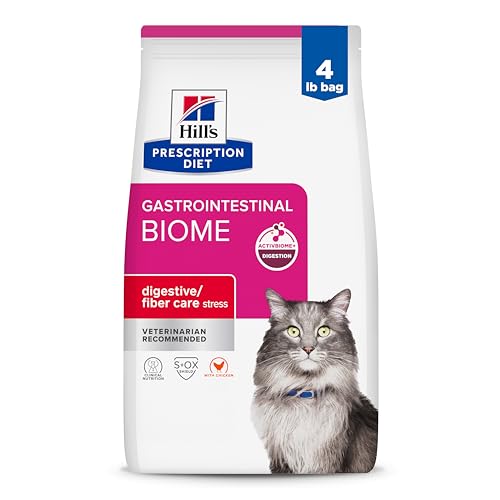
Hill's Prescription Diet GI Biome Stress Digestive/Fiber Care Dry Cat Food
What We Like
- Promotes healthy stool in 24 hours
- Reduces stress with hydrolyzed casein & L-tryptophan
- ActivBiome+ technology supports gut microbiome
- Unique prebiotic fiber blend for bowel regularity
Trade-offs
- Only available in a 4 lb bag
- Requires veterinary prescription to purchase
Promoting regular healthy stool in as little as 24 hours, this formula uses ActivBiome+ ingredient technology shown to rapidly activate beneficial gut bacteria. The hydrolyzed casein and L-tryptophan are included to help reduce stress, making it a targeted option for cats with diagnosed digestive issues or stress-related GI upset. With a unique blend of prebiotic fibers and high levels of omega-3 fatty acids (DHA & EPA), it supports digestive function for cats that need a prescription fiber diet.
The trade-off is that you need a veterinary prescription and the bag is 4 pounds, so it is not a grab-and-go solution for routine hairball management or general maintenance. Compared to the IAMS Proactive Health Indoor Dry Cat Food, which is vet-recommended and offers a proprietary fiber blend, the Hill’s formula is more specialized for stress-related digestive issues. For a cat that needs stress-reducing digestive support, the clinical formulation and rapid stool improvement may justify the extra cost and the trip to the vet.
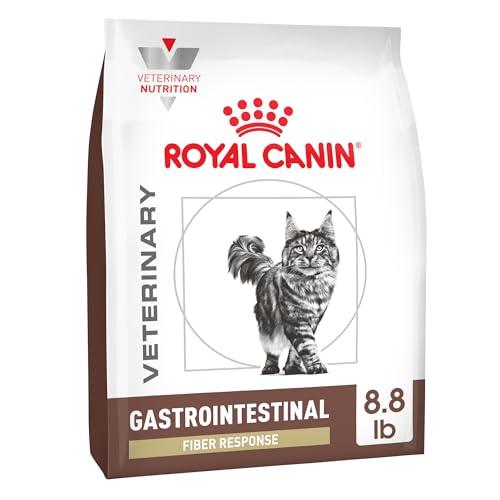
Royal Canin Veterinary Gastrointestinal Fiber Response Dry Cat Food
What We Like
- Psyllium-enhanced for stool normalization
- Highly digestible proteins for GI support
- Prebiotics support microbiome health
- S/O Index supports urinary health
Trade-offs
- Veterinary-exclusive: requires vet authorization
- Requires veterinary prescription for purchase
Psyllium is the standout here, a soluble fiber that works to normalize stool frequency and quality, which is exactly what you want when your cat’s digestive system needs a reset. This veterinary-exclusive dry food pairs that fiber with highly digestible proteins and prebiotics, so the gut gets support from multiple angles. It’s designed for adult cats with chronic GI issues, not just occasional upset, and the added S/O Index helps keep urinary crystals from forming, a nice bonus for cats prone to bladder trouble.
Access is the main hurdle: because it’s veterinary-exclusive, you’ll need a prescription or vet consult before buying, which adds a step compared to over-the-counter options like Purina ONE Hairball Control. That extra hurdle makes sense for cats with diagnosed digestive conditions, but if your cat just needs a little more fiber for hairball management, a non-prescription formula might be simpler. Stick with this if your vet has already recommended a targeted fiber approach.
Royal Canin Veterinary Fiber Response Adult Wet Cat Food
What We Like
- Psyllium-enhanced for stool normalization
- Highly digestible proteins and prebiotics
- Omega-3 fatty acids support digestive health
- S/O Index supports urinary health
Trade-offs
- Veterinary-exclusive, requires vet authorization
- Wet food has shorter shelf life after opening
- Not a dry kibble for free-feeding
The psyllium content in this wet formula is the standout feature, it’s specifically included to help normalize stool frequency and quality, which is exactly what you want when your cat has digestive sensitivity. That fiber source works alongside highly digestible proteins and prebiotics to support gut health without overloading the system. The omega-3 fatty acids (EPA and DHA) add anti-inflammatory support, and the S/O Index helps reduce crystal formation in the bladder, so you’re getting digestive and urinary care in one can. This is a targeted solution for cats that need gentle, consistent GI support, not a general maintenance food.
The psyllium-enhanced formula in this wet cat food is designed to normalize stool frequency and quality, making it a targeted option for cats with digestive sensitivities. Because it’s a veterinary-exclusive diet, you’ll need to work with your vet to get it, which adds a step compared to grabbing a bag off the shelf. The wet format also means you’re dealing with open cans that spoil faster than kibble, so portion planning matters more. For cats that need serious digestive intervention, though, the psyllium-based formulation justifies the extra effort.
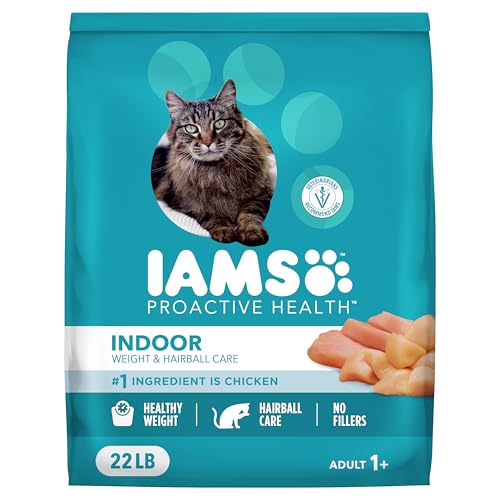
IAMS Proactive Health Indoor Dry Cat Food
What We Like
- Real poultry as first ingredient
- L-carnitine supports healthy weight
- Beet pulp fiber for hairball reduction
Trade-offs
- Contains grains, not grain-free
- Not suitable for cats with grain allergies
A 22-pound bag with real chicken and turkey listed first means you get a protein-forward recipe at a practical volume for multi-cat households or budget-conscious owners who still want decent ingredients. The proprietary fiber blend with beet pulp targets hairball reduction, and L-carnitine is added to encourage fat burning for weight management. This is a straightforward, no-nonsense dry food that covers the basics without pretending to be something it isn’t.
Grain content is the main consideration: wholesome grains provide energy but rule out anyone looking for a grain-free formula. If your cat tolerates grains well and you want a cost-effective hairball-control diet with a recognizable brand name, this fits. For cats needing a grain-free or specialized fiber formula, other options like Hill’s or Royal Canin are available.
Purina ONE Natural Hairball Control Dry Cat Food

What We Like
- Real chicken is first ingredient
- No artificial flavors or preservatives
- Natural fiber blend helps minimize hairballs
Trade-offs
- Not suitable for cats needing a grain-free diet
- Not a veterinary prescription diet
Real chicken as the number one ingredient means this formula prioritizes animal protein over cheap fillers, which is a solid start for a hairball-control food.
At 7 pounds, this bag is smaller than some competitors like the 22-pound IAMS Proactive Health Indoor option, so it may not last as long for multi-cat households. It’s an over-the-counter maintenance food, unlike the Hill’s Prescription Diet GI Biome Stress Digestive/Fiber Care which requires a vet’s okay. For owners seeking a reliable hairball-control food with real chicken as the top ingredient, this Purina ONE fits the bill.
Purina ONE Indoor Advantage Senior Dry Cat Food

What We Like
- Real chicken as first ingredient
- Glucosamine for senior joint support
- Four antioxidant sources for immune health
- Natural fiber blend minimizes hairballs
Trade-offs
- Not grain-free or limited ingredient
- Not suitable for cats needing prescription-strength fiber
Glucosamine is listed among the key nutrients in this formula, which is aimed at cats age 7 and older. Real chicken is the number one ingredient, providing high-quality protein to help maintain muscle mass. Four antioxidant sources are included to support the immune system, which can weaken with age. The natural fiber blend helps minimize hairballs, a common concern for senior cats. Together, these features address several age-related needs in one bag.
The 3.5-pound bag size means you’ll need to reorder more often than with larger bags, but that’s manageable for a single-cat household. The natural fiber blend is effective for hairball control, though it is not a prescription-level formula. For a straightforward senior diet that doesn’t require a vet visit, this is a practical option.
Product photos
Solid Gold Indoor Chicken Dry Cat Food

What We Like
- Grain-free with high-fiber superfoods
- Live probiotics for gut health
- Real cage-free chicken protein
- Includes antioxidants and omega fatty acids
Trade-offs
- Only 3 lb bag size limits long-term value
- Not suitable for kittens or pregnant cats
The inclusion of lentils, pumpkin, and broccoli as high-fiber superfoods makes this formula a targeted option for indoor cats prone to hairballs and digestive sluggishness. Live probiotics and prebiotics further support gut flora, which is especially useful for sensitive stomachs. With real cage-free chicken as the protein base, it appeals to picky eaters while providing the fiber needed to move hair through the digestive tract. This is a sensible grain-free choice for adult and senior indoor cats whose activity levels and fiber needs differ from their outdoor counterparts.
Bag size is the main trade-off: at just 3 pounds, it’s a small commitment for trial but means more frequent repurchasing compared to larger bags like the 22-pound IAMS Proactive Health Indoor formula. If you’re managing multiple cats or want to stock up, the Solid Gold bag will disappear quickly. That said, the ingredient transparency, superfoods and probiotics listed plainly, aligns with a label-reading approach that prioritizes what’s inside over marketing. It’s a practical pick for owners who want a fiber-focused indoor diet without grains.
Product photos
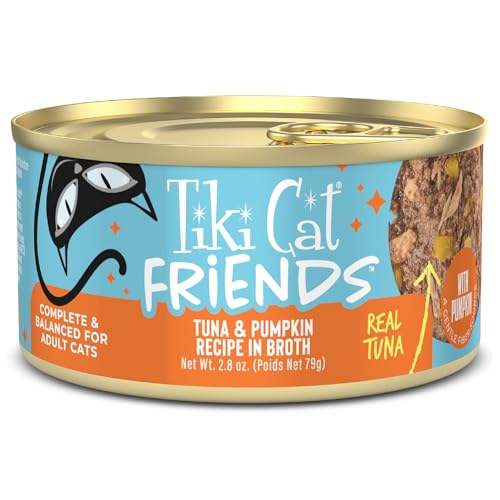
Tiki Cat Friends Wet Cat Food Tuna & Pumpkin
What We Like
- High moisture content for hydration
- Pumpkin provides gentle fiber
- Grain-free and low carb
Trade-offs
- Small 2.8 oz cans require multiple per meal
- Wet food has shorter shelf life after opening
- Limited to tuna flavor only
The 2.8 oz can size and high moisture content mean this wet food delivers supplemental water alongside fiber from pumpkin, which helps digestion without the bulk of dry kibble. If your cat is picky about drinking or you want a low-carb, grain-free option that still supports regularity, this is a straightforward choice.
Portion size is the main consideration here: at 2.8 ounces per can, a typical adult cat may need multiple cans daily, which adds up in pantry space and waste compared to a dry food like Hill’s Prescription Diet GI Biome that comes in a 4 lb bag. But if your priority is moisture and a simple fiber source you can see in the ingredients, the convenience of a wet food that provides supplemental water while it feeds is hard to beat.
Product photos
Inaba Churu Entree Bisque Wet Cat Food Tuna Salmon
What We Like
- Prebiotic fiber for digestive support
- 90% moisture for hydration
- Complete and balanced nutrition
- No artificial preservatives
Trade-offs
- Not a dry food for dental health
- Single-serve packs create more waste
- Limited to adult cats only
With 90% moisture and inulin as a prebiotic fiber, this bisque delivers hydration and digestive support in one spoonable meal. The creamy texture sits between purée and paté, making it easy for cats to lap up while getting a complete and balanced diet. It suits cats who need gentle fiber for gut health without the crunch of kibble, especially those prone to dehydration or picky about texture.
With 90% moisture, this bisque keeps your cat hydrated while delivering prebiotic fiber for digestion, something dry kibble can’t do. Unlike the Solid Gold Indoor Chicken Dry Cat Food, which relies on grain-free probiotics and crunchy texture for fiber, the Inaba focuses on a silky-smooth, hydrating formula with inulin to support gut health. That makes it a smart pick if your cat needs both extra water and digestive care.
Product photos
Solid Gold High Protein Chicken Cat Food

What We Like
- 42% protein supports lean muscle
- Grain free with prebiotics and probiotics
- Omega 3 & 6 for skin and coat
- Suitable for all life stages
Trade-offs
- 6 lb bag is small for multi-cat homes
- Not suitable for cats needing a low-protein diet
With 42% protein, this kibble packs enough fuel for an active cat without relying on grains to pad the numbers. That protein comes from chicken and whole egg, which provide the amino acids cats need for metabolism and muscle maintenance. The grain-free formula also includes prebiotics, live probiotics, and omega fatty acids, so you’re getting digestive support and coat health in the same bowl. It’s a straightforward recipe that puts nutrition ahead of marketing fluff, ideal for owners who want a high-protein dry food that works for kittens through seniors.
Bag size is the main trade-off: at 6 pounds, this won’t last long if you have multiple cats or a big eater, and you’ll be reordering more often than with larger bags like the IAMS Proactive Health Indoor Dry Cat Food. That said, Solid Gold keeps the ingredient list clean and functional, no grains, no fillers, just a protein-forward blend with gut-friendly extras. If your cat is less active, the high protein might be more than they need, but for indoor cats that still move, it’s a well-balanced option that doesn’t hide behind flashy packaging.
Product photos
How We Evaluated High Fiber Cat Foods
We reviewed manufacturer nutritional data, ingredient panels, and feeding guidelines for each product. Owner feedback patterns, particularly reports of stool changes, hairball reduction, and palatability, helped us understand real-world performance. Expert round-ups from veterinary nutritionists informed our understanding of which fiber types work best for different conditions.
Four criteria mattered most. First, fiber source and type: we looked for prebiotic fibers (inulin, beet pulp, psyllium) that support gut bacteria versus insoluble fibers that add bulk for hairball passage. Second, protein quality and digestibility, highly digestible proteins reduce GI workload. Third, the presence of complementary ingredients like probiotics, omega-3s, or L-carnitine. Fourth, prescription status and cost-per-meal value.
A research-led evaluation has limits. We did not feed-trial these foods ourselves, nor did we measure stool scores in a lab. Our conclusions rest on published specs, ingredient transparency, and what owners consistently report. Always consult your veterinarian before switching to a prescription diet or making a significant dietary change for a cat with chronic GI issues.
What To Look For In High Fiber Cat Foods
Choosing a high-fiber cat food means matching the fiber type and concentration to your cat’s specific problem, constipation, hairballs, weight management, or general digestive sensitivity.
Look for a named fiber source (psyllium, beet pulp, pumpkin, inulin) rather than vague “fiber blend” labels. Match fiber type to the problem: soluble prebiotic fibers for stool regulation, insoluble fibers for hairball passage.
Fiber Type and Source
The types of fiber in pet food fall into two categories. Soluble fibers (inulin, psyllium, beet pulp) dissolve in water, ferment in the gut, and feed beneficial bacteria, ideal for stool consistency and digestive health. Insoluble fibers (cellulose, oat hulls) add bulk and speed transit time, which helps push hair through the digestive tract. A good high-fiber dry cat food will list the specific fiber source so you know what you are getting.
Prescription vs. Over-the-Counter
Veterinary diets like Hill’s GI Biome and Royal Canin Fiber Response contain higher, more precisely calibrated fiber levels plus therapeutic additives (hydrolyzed casein, psyllium, S/O Index support). These require a vet prescription and cost more per pound. Over-the-counter options like IAMS Proactive Health and Purina ONE are adequate for routine hairball control and mild digestive support but lack the clinical fiber concentration needed for chronic conditions.
Protein Digestibility and Quality
A high-fiber diet is only helpful if the protein in it is easy to digest. Poorly digestible proteins increase the fermentation load in the colon, worsening gas and loose stools. Look for named animal proteins (chicken, turkey, salmon) as the first ingredient. Prescription formulas often use hydrolyzed or highly digestible protein isolates to minimize GI irritation.
Additional Functional Ingredients
- Probiotics or prebiotics for microbiome support
- Omega-3 fatty acids for anti-inflammatory digestive benefits
- L-carnitine for weight management in indoor formulas
- Glucosamine for senior joint health
A cat with chronic constipation needs a different fiber profile than a cat that vomits hairballs twice a week. Match the formula to the symptom.
High Fiber Cat Foods Compared
The table below compares all ten high-fiber cat foods across fiber source, protein quality, key benefits, and best-use scenarios.
| Product | Key Feature | Protein Source | Fiber Source | Form |
|---|---|---|---|---|
| Hill's Prescription Diet GI Biome Stress Digestive/Fiber Care Dry Cat Food | ActivBiome+ ingredient technology | Chicken Recipe | N/A | Dry |
| Royal Canin Veterinary Gastrointestinal Fiber Response Dry Cat Food | Psyllium-enhanced | Highly digestible proteins | Psyllium | Dry |
| Royal Canin Veterinary Fiber Response Adult Wet Cat Food | Psyllium | Highly digestible proteins | Psyllium | Wet Canned |
| IAMS Proactive Health Indoor Dry Cat Food | Proprietary fiber blend | Real chicken & turkey | Beet pulp | Dry |
| Purina ONE Natural Hairball Control Dry Cat Food | Natural fiber-rich blend | Real chicken #1 ingredient | Natural fiber-rich blend | Dry |
| Purina ONE Indoor Advantage Senior Dry Cat Food | Natural fiber blend | Real chicken #1 ingredient | Natural fiber blend | Dry |
| Solid Gold Indoor Chicken Dry Cat Food | Grain Free | Real cage-free chicken | Lentils, pumpkin, broccoli | Dry |
| Tiki Cat Friends Wet Cat Food Tuna & Pumpkin | High moisture | Real flaked tuna | Pumpkin | Wet |
| Inaba Churu Entree Bisque Wet Cat Food Tuna Salmon | 90% moisture | Real chicken or wild-caught tuna | Inulin (prebiotic) | Wet |
| Solid Gold High Protein Chicken Cat Food | 42% protein | Chicken & whole egg | N/A | Dry |
Frequently Asked Questions
How much fiber does a cat need daily?
The recommended fiber for cats from most veterinary sources is roughly 2 to 5 percent of dry matter for healthy adults. Cats with diagnosed conditions like constipation or diabetes may benefit from higher levels, but a vet should guide that increase. Too much fiber too quickly can cause gas and bloating.
Can high-fiber cat food help with constipation?
Yes, certain cat foods that help with constipation use psyllium or pumpkin to add moisture-retaining soluble fiber that softens stool. Insoluble fiber adds bulk that stimulates colon contractions. A cat that strains in the litter box may benefit from a formula with both fiber types, but always rule out obstruction or other medical causes first.
What is the best cat food for hairball control?
The best hairball control cat food uses a natural fiber blend, often beet pulp or cellulose, to help hair pass through the digestive tract rather than accumulating in the stomach. Purina ONE Natural Hairball Control is a strong over-the-counter choice. Cats that vomit hairballs more than once a month may need a prescription fiber diet.
Is grain-free high-fiber cat food better?
Not necessarily. Grain-free diets replace grains with legumes or potatoes as carbohydrate sources, which can still provide fiber. The soluble and insoluble fiber content matters more than whether grains are present. Some cats with grain allergies do better on grain-free formulas like Solid Gold Indoor Chicken, but most cats digest properly cooked grains without issue.
Can high-fiber cat food help with weight loss?
Fiber adds bulk without many calories, so a weight management cat food with increased fiber can help a cat feel fuller between meals. The IAMS Proactive Health Indoor formula includes L-carnitine alongside fiber to support metabolism. For obese cats, a veterinary weight-loss diet with precisely controlled calories and fiber is safer than simply choosing a high-fiber maintenance food.
The Bottom Line
For cats with diagnosed digestive issues, stress-related stool problems, or chronic constipation, the Hill’s Prescription Diet GI Biome Stress is the best overall pick. Its ActivBiome+ technology and prebiotic fiber blend are backed by veterinary research, and owner reports consistently mention firmer stools within days. Just be prepared for the prescription requirement and the small bag size.
Budget-conscious owners of healthy indoor cats should look at the IAMS Proactive Health Indoor formula for reliable hairball control and weight support at a lower cost. Cats that need grain-free options will find Solid Gold Indoor Chicken a reasonable choice, while senior cats benefit from the glucosamine and fiber combo in Purina ONE Indoor Advantage Senior.
The single most important factor in choosing a high-fiber cat food is matching the fiber type to your cat’s specific symptom. A food for consistent stools uses different fiber sources than a food designed to push hair through the tract. Read the ingredient panel, not the front of the bag, and ask your vet before switching to a prescription formula.
