
10 Best Canned Cat Food For Constipation in 2026
This post contains affiliate links. As an Amazon Associate, we earn from qualifying purchases.
The Blue Buffalo True Solutions Digestive Care combines real chicken with clinically proven prebiotic fiber. Its high moisture content supports daily hydration and stool quality, so it helps with constipation. For cats that respond well to pumpkin, the I AND LOVE AND YOU Feed Meow Tummy offers natural fiber in a grain-free shredded texture. The Purina Pro Plan Hairball Control Variety Pack adds prebiotic fiber alongside high protein for lean muscle.
Constipation in cats often stems from dehydration, low dietary fiber, or underlying digestive sensitivity. Wet food naturally provides more moisture than dry kibble, making canned formulas a practical first step, but the specific fiber source and protein base matter just as much for regular, comfortable bowel movements.
This guide evaluates ten canned options using manufacturer specifications, expert ingredient analysis, and patterns in owner-reported outcomes. We focus on fiber type, moisture content, protein quality, and digestive-support additives so you can match a formula to your cat’s specific needs.
Top 10 Canned Cat Foods For Constipation in the Market
Certain content that appears on this site comes from Amazon. This content is provided "as is" and is subject to change or removal at any time.
The Best Canned Cat Foods For Constipation, Reviewed
Blue Buffalo True Solutions Digestive Care

What We Like
- Real chicken is first ingredient
- Clinically proven prebiotic fiber
- High moisture for daily hydration
- No corn, wheat, or soy
Trade-offs
- Only one protein option (chicken)
- Not suitable for cats needing a grain-free diet
Clinically proven prebiotic fiber is the key feature here. It’s not just a marketing claim but a specific ingredient backed by research to support stool quality and digestive health. Real chicken as the first ingredient gives it a protein base that many cats do well on, and the high moisture content helps with daily hydration, which is often a concern for cats prone to constipation. This combination makes it a strong candidate for anyone looking to address digestive issues without resorting to a prescription diet. The 24-count case provides a solid supply, and the absence of corn, wheat, soy, and by-product meals means fewer fillers that can sometimes aggravate sensitive stomachs.
The main trade-off is that this formula comes only in chicken. So if your cat has a poultry sensitivity or simply refuses chicken, you’re out of luck, unlike the Purina Pro Plan Hairball Control Variety Pack, which offers multiple protein options. That said, if chicken works for your cat, the targeted digestive support here is more specific than what you get from a general hairball formula, making it worth the extra attention to ingredient choice.
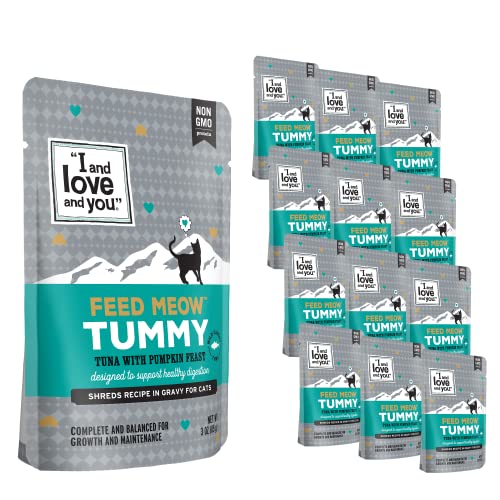
I AND LOVE AND YOU Feed Meow Tummy
What We Like
- Pumpkin for natural fiber
- Prebiotics support digestion
- Grain-free, no filler grains
- Shredded meat texture
Trade-offs
- Single flavor option only
- Not suitable for cats needing multiple protein sources
A can of shredded tuna and pumpkin delivers a straightforward fiber boost; pumpkin is a well-known source of soluble fiber that helps bulk stool and keep things moving. The prebiotics feed beneficial gut bacteria, adding another layer of digestive support without relying on artificial additives. This is a grain-free, filler-free recipe, so you’re not padding your cat’s diet with corn or rice. For a cat that needs gentle digestive support and enjoys a moist, meaty texture, this formula fits the bill.
The single protein source here is wild-caught tuna. So if your cat is picky about fish or needs a rotation of proteins, this won’t offer the variety of the Purina Pro Plan Hairball Control Variety Pack, which comes in chicken, salmon, and ocean whitefish & tuna entrees.
Product photos
Purina Pro Plan Hairball Control Variety Pack
What We Like
- Natural prebiotic fiber for hairball control
- High protein supports lean muscle mass
- No artificial colors or preservatives
- Includes 25 essential vitamins and minerals
Trade-offs
- Not specifically formulated for constipation relief
- Not suitable for cats without hairball issues
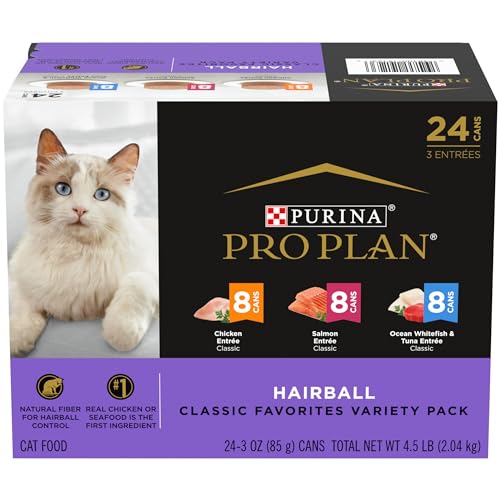
Twenty-four 3-ounce cans of wet food with natural prebiotic fiber give this variety pack a clear angle: it’s designed to manage hairballs through gentle, daily fiber intake. Real salmon, whitefish, tuna, or chicken provide high protein to maintain lean muscle, and the inclusion of 25 essential vitamins and minerals covers overall nutrition without relying on artificial colors or preservatives. This makes it a practical option for cat owners who want a straightforward, fiber-supported hairball control diet.
This Purina Pro Plan variety pack uses natural prebiotic fiber to help control hairballs, so if your cat tends to cough up fur clumps, this is a straightforward solution. The 24-pack includes three protein options, chicken, salmon, and ocean whitefish with tuna, which gives you variety without needing to buy separate cases. Since it’s made in Purina-owned U.S. facilities, you’re getting a product from a manufacturer that oversees its own production.
Wellness CORE+ Digestive Health Pate

What We Like
- Prebiotic fiber for digestive health
- Grain-free with no corn or soy
- Real salmon and whitefish first ingredients
- Omega-3 for skin and coat
Trade-offs
- Only two flavor options in variety pack
- Small 3 oz cans require multiple per meal
The prebiotic fiber in this pate supports gut health by feeding beneficial bacteria, which is the stated purpose of the formula. The grain-free recipe and real salmon or whitefish as the first ingredient are designed to reduce common dietary triggers for cats with sensitive stomachs. For owners who want a nutritionist-designed wet food that focuses on digestive health through its ingredient choices, this product aligns with that goal.
You get two seafood pates, salmon and whitefish, so if your cat is a fish fan, this pack is a straightforward choice. The 3 oz cans are handy for portion control, but a bigger cat might need two cans per meal.
Royal Canin Digestive Care Variety Pack

What We Like
- Two textures (loaf and thin slices)
- Balanced vitamins and minerals
Trade-offs
- Stool quality result requires feeding both wet and dry formulas together
- Variety pack only includes two textures, not three
The variety pack gives you two textures, loaf in sauce and thin slices in gravy, so you can figure out which your cat actually tolerates without committing to 12 identical cans.
The stool-quality result depends on using both the wet and dry Royal Canin Digestive Care formulas together, as stated in the product’s own study. If you’re only feeding wet food, that specific data point doesn’t apply. The 3 oz cans are a standard size for this type of product, and a multi-cat household may go through them quickly.
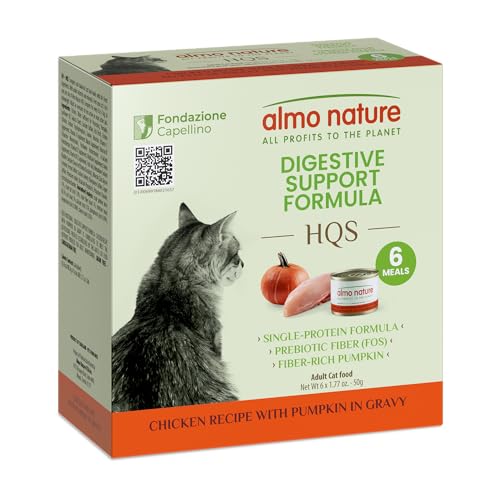
almo nature Digestive Support Formula
What We Like
- Single protein chicken formula
- Prebiotic fiber (FOS) added
- Fiber-rich pumpkin included
- No grains, gluten, or by-products
Trade-offs
- Small 1.77-oz cans for larger cats
- Only 6 cans per case
- Single protein limits variety
The most decisive fact about this food is that it’s a single-protein chicken formula with prebiotic fiber (FOS) and fiber-rich pumpkin, designed for digestive support. That means you’re giving your cat a predictable, simple recipe that won’t introduce extra ingredients that could upset a sensitive stomach. The combination of prebiotic fiber and pumpkin helps maintain regularity, so it’s a smart choice for cats who need gentle, focused digestive care.
The trade-off here is portion size. At 1.77 ounces per can, these are smaller than the 3-ounce cans from competitors like Blue Buffalo True Solutions Digestive Care. For a single cat who does well on small meals, the smaller can size actually works in your favor, less leftover food to store and less risk of spoilage. The case of six is compact, so it won’t take up much pantry space.
Hill's Science Diet Sensitive Stomach & Skin
What We Like
- Grain free with natural ingredients
- Omega-6 and vitamin E for skin and fur
- Natural fibers for easy stool pickup
- Essential taurine for heart health
Trade-offs
- Only two flavor options in variety pack
- Not specifically formulated for constipation relief
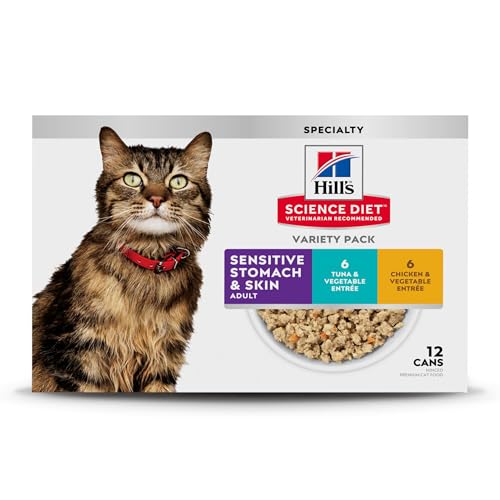
A 12-can variety pack of wet food built around digestive and skin health, with natural fibers that help keep stool easy to pick up. The grain-free base and omega-6 fatty acids plus vitamin E target skin and coat condition, making it a good fit for a cat with a sensitive stomach and skin issues.
The US Veterinarians’ #1 recommended brand, Hill’s Science Diet, combines omega-6 fatty acids and vitamin E for skin and fur health with natural fibers for easy stool pickup. This makes it a strong choice for cats that need both digestive and dermal support. This variety pack includes 12 cans of wet cat food, with six of the Tuna & Vegetable Entrée and six of the Chicken & Vegetable Entrée, each 2.9 ounces. Both flavors are grain-free, made with natural ingredients, and contain essential taurine for heart health along with balanced minerals to support kidneys and bladder.
Product photos
Purina Pro Plan Indoor Balance Variety Pack
What We Like
- High protein for weight maintenance
- Real chicken, salmon, or whitefish & tuna
- Includes 25 essential vitamins and minerals
- Veterinarian-recommended brand
Trade-offs
- No added prebiotic fiber for digestive support
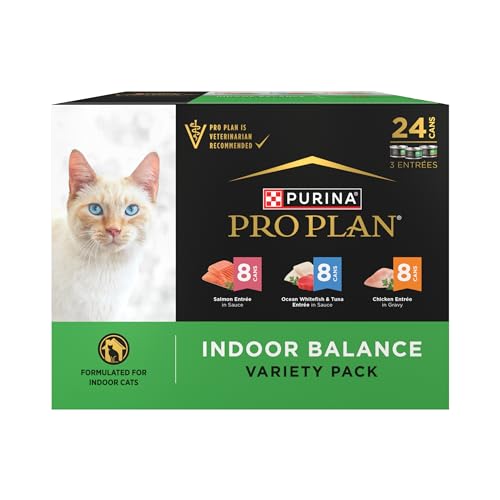
A 4.5-pound case of 24 three-ounce cans means this is a solid everyday option for indoor cats who need help managing hairballs while keeping weight in check. The high-protein formula with real animal proteins supports lean muscle, and the inclusion of taurine and 25 essential vitamins covers basic nutritional needs without extra fluff. If your cat’s main issue is hairball buildup rather than chronic constipation, this Purina Pro Plan variety pack delivers focused nutrition from a vet-recommended brand.
When a cat occasionally coughs up hairballs but otherwise has normal bowel movements, this variety pack offers a straightforward solution. Each 3-ounce can features real chicken, salmon, or ocean whitefish and tuna in a savory gravy that cats tend to enjoy. The high-protein formula is designed to help maintain an ideal body weight while also promoting hairball control, addressing two common indoor cat concerns at once. Owners will appreciate that this food comes from a veterinarian-recommended brand and includes 25 essential vitamins and minerals plus taurine for overall health. The packaging is recyclable, which aligns with the brand’s sustainability efforts like reducing water usage.
Product photos
Moochie Digestive Care Grain-Free Wet Cat Food
What We Like
- Prebiotics and pumpkin support healthy digestion
- Grain-free formula for sensitive stomachs
- Moisture-rich for gentle digestion
- No artificial flavors or preservatives
Trade-offs
- Contains beef liver, which some cats avoid
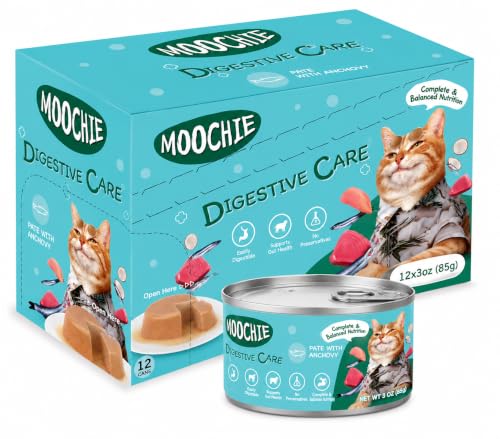
Prebiotics and pumpkin are the headline ingredients here, and they’re backed by the label’s claim of supporting healthy digestion and digestive health. The moisture-rich wet texture is designed for gentle digestion, and the grain-free formula avoids common fillers. Real chicken and beef liver provide protein without artificial flavors or preservatives, making this a straightforward choice for daily digestive care without extra additives.
The Moochie Digestive Care Grain-Free Wet Cat Food combines prebiotics and pumpkin to support healthy digestion, making it a practical choice for cats with sensitive stomachs. Each 3-ounce can provides complete nutrition with real chicken and beef liver, though owners of larger cats may find the portion size requires multiple cans daily. The 12-pack is convenient for portioning and storage, and the formula avoids artificial flavors or preservatives. Compared to Blue Buffalo True Solutions Digestive Care, which offers a 24-count case with clinically proven prebiotic fiber, Moochie focuses on a specific prebiotic-pumpkin blend without the larger quantity. For cats that enjoy the recipe, this is a straightforward digestive aid.
Product photos
Open Farm Digestive Health Wet Cat Food
What We Like
- Non-GMO vegetables, no corn/wheat/soy
- Recyclable packaging certified by H2R
Trade-offs
- Only one protein source limits rotation options
- No added prebiotic fiber for extra constipation help
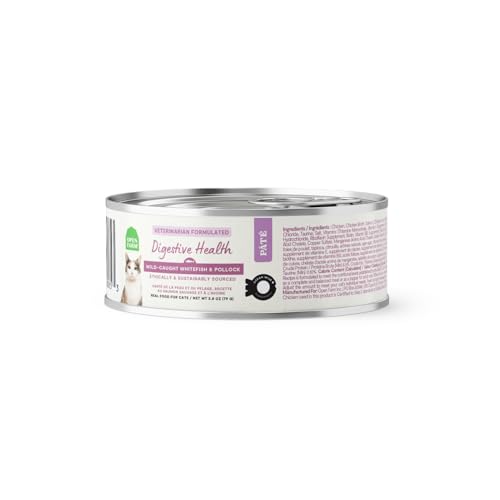
The most decisive fact about this food is that every ingredient is 100% traceable, so you can look up exactly where each component came from. For a cat with digestive issues, that kind of transparency is rare in canned food. The recipe skips corn, wheat, and soy, which are common fillers that offer little digestive benefit, and uses non-GMO vegetables instead. It’s a straightforward, vet-formulated wet food built around digestibility and ingredient clarity, not marketing fluff.
The trade-off is that this formula doesn’t add a prebiotic fiber source like pumpkin or psyllium, which some constipation-focused recipes include. If your cat needs that extra fiber boost, a product like I AND LOVE AND YOU Feed Meow Tummy pairs tuna with pumpkin for more direct digestive support. Open Farm’s strength is in the traceability and quality of its base ingredients, not in fiber supplementation. For a cat that does well on a clean, single-protein wet food and whose constipation is mild or managed, this is a premium option that lets you see the whole supply chain. Just don’t expect a fiber-packed formula.
How We Evaluated Canned Cat Foods For Constipation
This guide is based on manufacturer-published nutritional data, ingredient panels, and assessments from veterinary nutritionists. Because constipation relief depends on consistent fiber intake and hydration, we prioritized foods with clearly stated prebiotic fibers (such as chicory root, inulin, or FOS) and high moisture levels typical of quality canned foods.
The four criteria that mattered most were fiber source and concentration, moisture content, protein digestibility, and the presence of complementary ingredients like pumpkin or omega fatty acids. A formula with real meat as the first ingredient but no added fiber source rarely helps a constipated cat, while a high-fiber food with poor protein quality can cause other digestive issues. We weighed each product’s trade-offs accordingly.
A research-led evaluation has limits: we did not feed these foods to cats in a controlled setting, and individual results vary based on a cat’s age, health status, and the root cause of constipation. We recommend cross-referencing our findings with your veterinarian, especially for chronic or severe cases.
What To Look For In Canned Cat Foods For Constipation
Choosing the right canned food for a constipated cat means looking past the front-of-can claims and checking the ingredient list and guaranteed analysis for specific features that support regular bowel movements.
Look for canned foods with a named prebiotic fiber source (chicory root, inulin, FOS), high moisture content, and a single, digestible animal protein as the first ingredient. Avoid formulas with corn, wheat, or soy fillers that offer no digestive benefit.
Fiber Type and Source
Not all fiber helps constipation the same way. Insoluble fiber adds bulk to stool, while soluble prebiotic fiber feeds beneficial gut bacteria and supports stool consistency. The most effective wet food options for constipation include chicory root, inulin, or fructooligosaccharides (FOS) as added prebiotics. Pumpkin is a dual-action fiber that provides both soluble and insoluble benefits, making it a common ingredient in digestive-support formulas.
Moisture Content
Canned food already contains more water than dry kibble, but moisture levels vary. Higher moisture helps soften stool and supports overall hydration, which is critical because dehydration is a primary cause of feline constipation. When evaluating canned food for constipated cats, check the guaranteed analysis for moisture content and avoid any product that lists water as the first ingredient, that signals a watery formula rather than a nutrient-dense one.
Protein Digestibility and Source
A constipated cat still needs high-quality protein for muscle maintenance, but the protein must be easy to digest. Real chicken, turkey, salmon, or whitefish as the first ingredient indicates a digestible protein base. Single-protein formulas, like the almo nature Digestive Support Formula, reduce the risk of food sensitivity that can complicate constipation. Multi-protein blends may work for cats without known sensitivities but add variables that are hard to isolate.
Additional Digestive Support Ingredients
Some formulas add omega-3 and omega-6 fatty acids for gut health, taurine for heart function, or a limited ingredient list to minimize digestive stress. The overall best cat foods for constipation often combine prebiotic fiber with one or more of these supportive elements. Avoid foods with artificial colors, preservatives, or carrageenan, which can irritate sensitive digestive tracts.
- Check the guaranteed analysis for crude fiber percentage, aim for 1 to 5 percent for most cats.
- Verify the prebiotic fiber source is named (e.g., chicory root) rather than listed as “natural fiber.”
- Confirm the food is complete and balanced according to AAFCO nutrient profiles for adult cats.
- Look for a high moisture content for optimal hydration support.
- Choose a protein source your cat has eaten before without issues to avoid introducing new sensitivities.
A cat with chronic constipation may need a prescription diet; always consult your veterinarian before making long-term dietary changes.
Canned Cat Foods For Constipation Compared
The table below compares the ten canned cat foods across the key factors that matter for constipation relief: fiber source, protein base, moisture level, and special digestive features.
| Product | Protein Source | Form | Can Size |
|---|---|---|---|
| Blue Buffalo True Solutions Digestive Care | Real Chicken | Wet Cat Food | 3 oz |
| I AND LOVE AND YOU Feed Meow Tummy | Wild-caught tuna | Wet Cat Food | 3 oz |
| Purina Pro Plan Hairball Control Variety Pack | Real salmon, whitefish, tuna, or chicken | Wet Cat Food | 3 oz |
| Wellness CORE+ Digestive Health Pate | Salmon and Whitefish | Wet Cat Food | 3 oz |
| Royal Canin Digestive Care Variety Pack | N/A | Wet Cat Food | 3 oz |
| almo nature Digestive Support Formula | Chicken | Wet Cat Food | 1.77 oz |
| Hill's Science Diet Sensitive Stomach & Skin | N/A | Wet Cat Food | 2.9 oz |
| Purina Pro Plan Indoor Balance Variety Pack | Chicken, Salmon, Whitefish & Tuna | Wet Cat Food | 3 oz |
| Moochie Digestive Care Grain-Free Wet Cat Food | Real chicken, beef liver | Wet Cat Food | 3 oz |
| Open Farm Digestive Health Wet Cat Food | Wild-Caught Fish | Wet Cat Food | 5.3 oz |
Frequently Asked Questions
What ingredient in canned cat food helps with constipation?
Prebiotic fibers like chicory root, inulin, and fructooligosaccharides (FOS) support healthy gut bacteria and stool consistency. Pumpkin provides both soluble and insoluble fiber, which helps bulk stool and move it through the digestive tract. High moisture content in canned food also softens stool and aids passage.
How much wet food should I feed a constipated cat?
Portion sizes depend on your cat’s weight, activity level, and whether you also feed dry food. Most canned food labels provide daily feeding guidelines based on a 6-to-8-pound adult cat. For constipation management, splitting the daily portion into two or three smaller meals can help maintain consistent hydration and fiber intake throughout the day.
Can I mix pumpkin into my cat’s canned food for constipation?
Yes, plain canned pumpkin (not pumpkin pie filling) is a common home remedy for feline constipation. Start with one teaspoon per meal and monitor stool quality. Some commercial formulas, like I AND LOVE AND YOU Feed Meow Tummy and Moochie Digestive Care, already include pumpkin, so adding extra may not be necessary.
Is grain-free canned cat food better for constipation?
Grain-free formulas are not inherently better for constipation unless your cat has a confirmed grain sensitivity. The fiber in grains like rice or barley can actually aid stool formation. What matters more is the presence of a named prebiotic fiber source and adequate moisture, regardless of whether the food contains grains.
When should I take my constipated cat to the vet?
If your cat has not had a bowel movement in more than 48 hours, is straining without producing stool, vomits, loses appetite, or shows signs of pain (hiding, crying, hunched posture), seek veterinary care immediately. Chronic constipation can lead to megacolon, a serious condition that requires medical intervention.
The Bottom Line
The Blue Buffalo True Solutions Digestive Care stands out as the best overall choice because it delivers clinically proven prebiotic fiber in a high-moisture, chicken-first formula that supports both daily hydration and consistent stool quality. It is ideal for cat owners who want a straightforward option and whose cats tolerate chicken well.
If your cat does better with pumpkin-based fiber or needs a grain-free diet, the I AND LOVE AND YOU Feed Meow Tummy provides natural digestive support in a shredded texture that many cats find palatable. For multi-cat households or cats prone to hairballs alongside constipation, the Purina Pro Plan Hairball Control Variety Pack adds prebiotic fiber without sacrificing protein quality.
The single most important factor in managing feline constipation through diet is choosing a canned food with a named prebiotic fiber source and high moisture content. Check the ingredient list before the marketing claims, and work with your veterinarian to rule out underlying medical causes.
