
8 Best Clownfish Food in 2026
This post contains affiliate links. As an Amazon Associate, we earn from qualifying purchases.
The Ultra Fresh Marine Fish Food wins as Best Overall because its 75% sword prawn and squid protein base and probiotic-rich formula support digestion and water quality in small marine fish. For herbivorous clownfish, the Hikari Seaweed Extreme Pellets offer a floating, seaweed-rich option, while the Vitalis Marine Pellets provide a soft, slow-sinking alternative for easy digestion.
Keeping clownfish healthy starts with matching food size and composition to their small mouths and omnivorous needs. Many aquarists struggle with picky eaters, water clouding, and finding a pellet that sinks at the right pace for their tank’s inhabitants.
This research-based guide evaluates eight products using manufacturer specifications, expert ingredient analysis, and patterns in owner feedback. We break down what matters most for protein content, pellet texture, and feeding behavior so you can choose with confidence.
Top 8 Clownfish Foods in the Market
Certain content that appears on this site comes from Amazon. This content is provided "as is" and is subject to change or removal at any time.
The Best Clownfish Foods, Reviewed
Ultra Fresh Marine Fish Food

What We Like
- 75% sword prawns and squids for natural protein
- 1.5mm granules sized for small marine fish
- 3 million CFUs/g probiotics aid digestion and water quality
- No additives, artificial flavors, or byproducts
Trade-offs
- Granule size only suits small fish, not larger species
- Requires feeding 1-3 times daily within 3 minutes
The 8:2 meat-to-vegetable protein ratio, built on a 75% sword prawn and squid base, delivers a high-protein diet that small marine fish thrive on. The 1.5mm granule size is easy for fish like clownfish and blue tang to eat, and the 3 million CFUs per gram of probiotics help keep the water clean by dissolving fish excrements and residuals. This food covers both nutrition and water quality in one straightforward product.
The trade-off is that the 1.5mm size works well for small marine fish but won’t suit larger tankmates that need bigger pellets. Compared to Hikari Seaweed Extreme Pellets, which target smaller marine herbivores, this one offers a higher meat content and probiotics, but the Hikari product is seaweed-rich and suited for herbivorous fish. If your tank is mostly small marine fish and you value natural protein sources, this food delivers on both fronts.
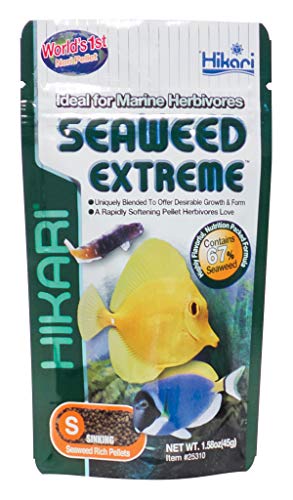
Hikari Seaweed Extreme Pellets
What We Like
- Formulated for small marine herbivores
- Floating pellets reduce waste
- Seaweed-rich for herbivorous diets
Trade-offs
- Floating pellets not ideal for bottom feeders
- Not suitable for larger community tanks with multiple herbivores
A 1.58-ounce bag of floating seaweed-rich pellets means you’re getting a food designed specifically for the grazing habits of small marine herbivores like clownfish and damsels. The pellets stay at the surface, which matches how these fish naturally feed in the wild and helps keep uneaten food from rotting on the substrate. For anyone keeping a tank of smaller herbivores, this is a targeted option that skips the filler ingredients found in general marine blends.
The 1.58-ounce bag is designed for smaller marine herbivores like damsels, clownfish, and butterflies, so if you have a larger community tank, you will need to reorder more often. These floating pellets stay at the surface, which means they won’t reach bottom-dwelling species that prefer sinking foods. Stick with this if your fish are surface feeders and you want a straightforward, seaweed-based pellet that doesn’t try to be everything to everyone.
Vitalis Marine Pellets

What We Like
- Soft pellet for easy digestion
- Slow-sinking mimics natural feeding
- Marine protein blend with whole fish meal
- Suitable for clownfish and many species
Trade-offs
- Unsuitable for large fish needing bigger pellets
The 1mm soft pellet is the standout feature here, it’s designed to sink slowly and be easy to digest, which matters for clownfish that naturally pick at food drifting through the water column. The marine protein formulation uses whole fish meal along with molluscs and crustaceans, giving a protein profile closer to what these fish would eat in the wild. This makes it a sensible choice for anyone keeping smaller marine fish that benefit from a gentler, more digestible pellet.
The soft, 1mm size can be a problem in tanks with strong flow or larger fish that need bigger bites. If your tank has heavy current or you’re feeding bigger species, you might end up with more waste in the water. For a dedicated clownfish setup or a community of small reef fish, though, the soft texture and marine protein blend make it a smart pick.
Product photos
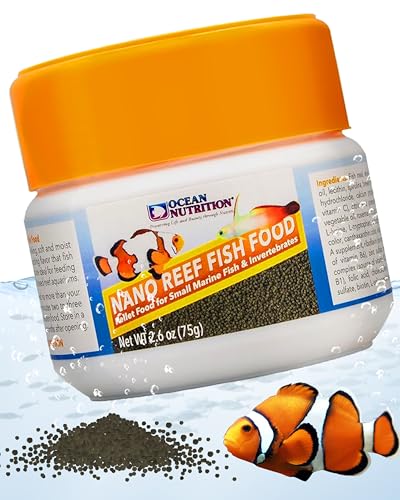
Ocean Nutrition Nano Reef Pellets
What We Like
- Soft moist pellets easy to consume
- Spirulina enhances natural coloration
- Natural attractants for rapid acceptance
- Includes mini-spoon for precise portions
Trade-offs
- Only 2.6oz package size limits long-term use
The 0.95mm soft, moist pellet is small enough for a clownfish’s mouth yet dense enough to sink slowly, letting every fish in a nano reef get a bite before it hits the sand. With 39.7% crude protein and spirulina for color, this is a straightforward daily ration for small marine fish and inverts that need nutrition without fighting over oversized flakes. It’s a label I can read without squinting: the ingredient list puts spirulina and natural attractants front and center, no filler fluff.
Designed specifically for small marine fish and invertebrates, these soft, moist pellets sink slowly so every fish gets a chance to feed. Each mini pellet measures just 0.95mm, making them easy for clownfish, cardinalfish, chromis, gobies, blennies, and wrasses to consume. The formula delivers a crude protein content of 39.7% along with high HUFA and vitamins to support daily nutrition. Spirulina is included to promote vibrant coloration, while natural attractants encourage rapid acceptance even from finicky eaters. A mini-spoon comes with each pack for precise, convenient portioning.
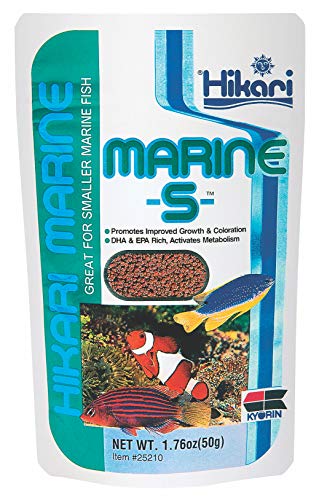
Hikari Marine-S Pellets
What We Like
- High protein levels mimic reef diet
- Soft sponge-like texture fish instinctively accept
- Shrimp Meal for natural color enhancement
- Stabilized Vitamin C supports immune health
Trade-offs
- Only 1.76 oz bag for smaller tanks
- Slow-sinking design not ideal for surface feeders
A high-protein pellet at 50%+ that mirrors what small marine carnivores and omnivores would hunt on the reef, so you are not feeding filler. The soft, sponge-like texture is something fish instinctively grab, and the shrimp meal drives natural reds and oranges without artificial dyes. Stabilized vitamin C means the immune support lasts longer on the shelf than in cheaper flakes. This is the pellet to reach for if your clownfish or other small reef fish are picky about hard, dry foods.
The high protein levels in Hikari Marine-S Pellets match what smaller saltwater fish would eat on a reef, so they get the nutrition they need without fillers. The soft, sponge-like texture is what marine fish instinctively recognize, making it easy for them to accept. Since it’s a slow-sinking pellet, it works best for fish that feed in the water column rather than at the surface.
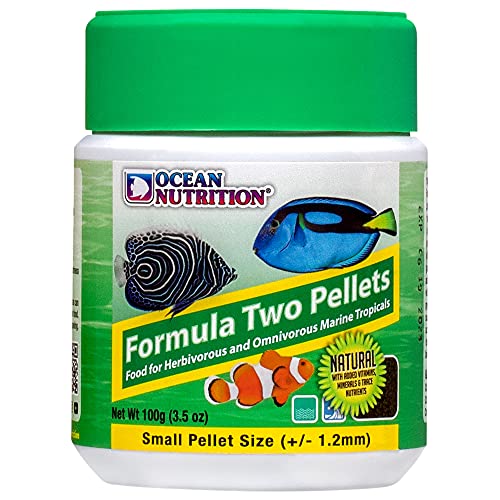
Ocean Nutrition Formula Two Pellets
What We Like
- Soft, moist pellets for easy digestion
- Does not cloud aquarium water
- Oxygen-free pouch preserves freshness
Trade-offs
- Omnivore formula less targeted for strict carnivores
With 40% protein, this pellet is formulated for herbivorous and omnivorous marine tropical fish, so tangs and clownfish can both eat from the same jar. The soft, moist texture aids digestion, and the slow-sinking design lets mid-water feeders grab a bite before it reaches the bottom. If you keep a mixed community, one container covers the whole tank without needing separate flakes for each species.
This formula is less targeted for strict carnivores, who may not benefit from the plant-based ingredients. Compared to the Ultra Fresh Marine Fish Food, which uses sword prawns and squid as protein sources, Formula Two is better suited to mixed communities where some fish graze on algae and others hunt for meat. The oxygen-free pouch helps retain freshness longer, so the pellets stay nutritious over time.
Product photos
Seachem NutriDiet Marine Plus Flakes

What We Like
- Includes probiotic for digestive support
- Contains shrimp, plankton, Chlorella algae
- Uses Entice attractant for picky eaters
- Proteinates and hydrolysates reduce waste
Trade-offs
- Probiotic benefit depends on freshness over time
The inclusion of a probiotic in this flake formula is the standout feature, most marine foods skip digestive support entirely, so this directly targets nutrient uptake and immune health in clownfish. The blend of shrimp, plankton, and Chlorella algae provides a varied protein base that mirrors natural foraging, while the Entice attractant helps coax finicky eaters into feeding. For keepers who want to minimize waste and boost water quality, the proteinates and hydrolysates are a practical bonus, reducing uneaten food breakdown in the tank.
The probiotic and enhanced palatability from Entice make this flake food a strong option for picky saltwater eaters, since the attractant helps finicky fish start feeding more readily. The inclusion of shrimp, plankton, and Chlorella algae provides a varied nutritional base, while the proteinates and hydrolysates support nutrient uptake and immune function with less waste. Owners who feed flakes will find this formula targets digestion in a way that few competitors do, though the flake format itself demands careful portioning to avoid overfeeding.
Product photos
Omega One Garlic Marine Flakes

What We Like
- Garlic may stimulate feeding response
- Two-pack offers good quantity
- Flake form suits small-mouthed fish
Trade-offs
- Flakes can lose nutrients faster than pellets
A two-pack of 5.3-ounce jars means you get a solid volume of garlic-infused flakes designed specifically for saltwater fish. That garlic isn’t just for smell, it’s often used to entice picky eaters and support immune function, which matters when you’re dealing with clownfish that might be adjusting to a new tank. If your fish are hesitant at feeding time, these flakes give you a practical tool to get them eating without resorting to live foods.
The flake format itself has a downside. Flakes tend to break down faster in water than pellets, potentially leaching nutrients before your fish get them. This means you may need to portion carefully to avoid waste. But for a saltwater fish keeper who values a strong feeding response and doesn’t mind a little extra attention at mealtime, the garlic boost makes these worth considering.
Product photos
How We Evaluated Clownfish Foods
We built this guide by studying manufacturer ingredient lists, nutritional analysis, and feeding instructions for each product. Our process also included reviewing expert round-ups from marine biology resources and identifying common praise and complaints reported by saltwater aquarium owners.
The four criteria that mattered most were protein source and content, pellet or flake size relative to clownfish mouths, sinking behavior (floating, slow-sink, or fast-sink), and the presence of digestive aids like probiotics. For example, a pellet that is too large or too firm can discourage feeding, while a flake that disintegrates quickly can cloud the water and reduce nutrient intake.
A research-led evaluation cannot replace hands-on feeding trials, but it gives you a reliable framework for comparing options side by side. We prioritize verifiable facts over marketing claims, so you can check our conclusions against the bag in your own hand.
What To Look For In Clownfish Foods
Choosing the right food for your clownfish means matching the pellet size, protein profile, and sinking rate to your specific tank setup and fish behavior.
Look for a high-protein pellet or flake sized for small mouths, with a sinking behavior that matches your fish’s feeding zone and a clean ingredient list free of fillers.
Protein Source and Content
Clownfish are omnivores that thrive on marine-based protein. The best options list whole fish meal, shrimp meal, squid, or plankton as the first ingredient. A protein content around 40-50% is typical for quality marine foods. Avoid foods with unnamed “fish meal” or high plant-protein fillers that offer less nutritional value for carnivorous-leaning fish.
Pellet Size and Texture
Small-mouthed fish like clownfish need granules or pellets around 1-1.5mm. Soft, moist pellets are easier to digest and more readily accepted than hard, dry kibble. Flakes work well for surface feeders but can lose nutrients faster once opened. Slow-sinking pellets mimic natural feeding behavior and give all tank inhabitants a chance to eat.
Feeding Behavior and Water Quality
Match the food’s sinking rate to your fish’s preferred feeding zone. Floating pellets suit surface feeders, while slow-sinking options reach mid-water and bottom dwellers. Overfeeding is the leading cause of poor water quality, so choose a food that stays intact long enough for fish to eat but doesn’t break down and cloud the tank. Probiotic additives can aid digestion and reduce waste.
- Check the ingredient list for named marine proteins (shrimp, squid, fish meal) rather than generic “fish derivatives.”
- Confirm pellet diameter is under 2mm for small clownfish species.
- Look for slow-sinking or soft-moist textures if your fish ignore floating pellets.
- Avoid foods with artificial colors, preservatives, or byproducts listed early.
- Choose resealable packaging or oxygen-free pouches to preserve freshness.
A good rule of thumb: if the food’s first three ingredients are not recognizable marine proteins, keep looking.
Clownfish Foods Compared
The table below compares all eight clownfish foods side by side, highlighting their key features, best-use scenarios, and trade-offs.
| Product | Form | Key Ingredient | Target Species |
|---|---|---|---|
| Ultra Fresh Marine Fish Food | Pellet | 75% Sword Prawns + Squids | Small Saltwater Fish |
| Hikari Seaweed Extreme Pellets | Floating pellets | Seaweed-rich | Damsels, clownfish, butterflies |
| Vitalis Marine Pellets | Soft, slow-sinking | Whole fish meal, molluscs, crustaceans | All tropical marine fish |
| Ocean Nutrition Nano Reef Pellets | Soft & Moist Slow Sinking | Spirulina | Clownfish, cardinalfish, gobies |
| Hikari Marine-S Pellets | Slow-sinking | Shrimp Meal | Smaller marine carnivores or omnivores |
| Ocean Nutrition Formula Two Pellets | Soft, moist, slow-sinking | Spirulina, dried kelp, soybean meal | Herbivorous & Omnivorous Marine Tropical Fish |
| Seachem NutriDiet Marine Plus Flakes | Flakes | Probiotic | N/A |
| Omega One Garlic Marine Flakes | Flakes | Garlic | Saltwater fish |
Frequently Asked Questions
What is the best food for clownfish?
The Ultra Fresh Marine Fish Food is the best overall option for small clownfish. It features 75% sword prawn and squid for natural protein and includes probiotics to support digestion and water quality. The 1.5mm granule size is well-suited for small marine fish mouths.
How often should I feed my clownfish?
Most clownfish do well with 1-3 small feedings per day, with only as much food as they can consume in about three minutes. Overfeeding can quickly degrade water quality in a saltwater tank, so it is better to underfeed slightly than to leave uneaten food sinking to the bottom.
Should I feed my clownfish pellets or flakes?
Both forms work, but pellets generally hold their nutrients longer and create less waste in the water. Flakes are fine for picky eaters or small-mouthed fish, though they can lose freshness faster once the pouch is opened. Soft, slow-sinking pellets often strike the best balance for clownfish.
Can clownfish eat the same food as other saltwater fish?
Yes, many foods formulated for small marine omnivores work well for clownfish. The key is matching pellet size and protein content to your fish’s needs. A broad saltwater fish food like Ocean Nutrition Formula Two Pellets can serve a mixed community tank with omnivores and herbivores.
What ingredients should I avoid in clownfish food?
Avoid foods with unnamed “fish meal,” artificial colors, chemical preservatives, or high levels of plant fillers like soy or wheat. Quality clownfish food lists specific marine proteins such as shrimp, squid, or whole fish meal as the first ingredients. A clownfish feeding guide can help you decode labels more confidently.
The Bottom Line
The Ultra Fresh Marine Fish Food is our Best Overall pick for small clownfish keepers who want a high-protein, probiotic-enriched pellet that supports both fish health and water quality. Its 1.5mm granule size and clean ingredient list make it a reliable daily staple for tanks without larger fish.
If your clownfish share space with herbivores or need a floating pellet, the Hikari Seaweed Extreme Pellets are a strong alternative. For nano reef owners or those with picky eaters, the Ocean Nutrition Nano Reef Pellets and Omega One Garlic Marine Flakes each address specific feeding challenges.
The single most important factor when choosing clownfish food is matching the pellet size and protein source to your fish’s mouth size and natural diet. Get that right, and you are most of the way to a healthy, colorful tank.
