
10 Best Dog Food For Toy Poodle Puppy in 2026
This post contains affiliate links. As an Amazon Associate, we earn from qualifying purchases.
For a toy poodle puppy, the Royal Canin Poodle Puppy Dry Dog Food is our best overall pick because its uniquely shaped kibble makes it easier for a poodle’s narrow muzzle to pick up. It also includes fish oil for that signature curly coat. If you need a formula for an extra-small puppy under 8 pounds, the Royal Canin X-Small Puppy is our pick for toy breeds. For owners who want high protein from real chicken as the first ingredient, the Purina Pro Plan Small Breed Puppy Food is our best high protein choice.
A toy poodle puppy has a fast metabolism, a tiny mouth, and a coat that needs specific nutritional support. Standard puppy kibble can be too large for them to chew comfortably, and a generic formula might not provide the right balance of omega fatty acids for their skin and coat health. Getting the kibble size and ingredient profile right from the start makes a real difference in their growth and comfort.
This guide is based on the ingredient lists, guaranteed analysis, and kibble design of ten leading puppy foods. We compared manufacturer specifications, consulted expert round-ups on small-breed nutrition, and identified common patterns in owner feedback to give you a clear recommendation.
Top 10 Dog Foods For Toy Poodle Puppies in the Market
Certain content that appears on this site comes from Amazon. This content is provided "as is" and is subject to change or removal at any time.
The Best Dog Foods For Toy Poodle Puppies, Reviewed
Royal Canin Poodle Puppy Dry Dog Food
What We Like
- Kibble shaped for poodle pickup
- Antioxidants support immune development
- Fish oil for skin and coat
- Prebiotics promote optimal stool quality
Trade-offs
- Only for poodle puppies, not other breeds
- Small 2.5 lb bag for a growing puppy
- No grain-free or limited-ingredient option listed
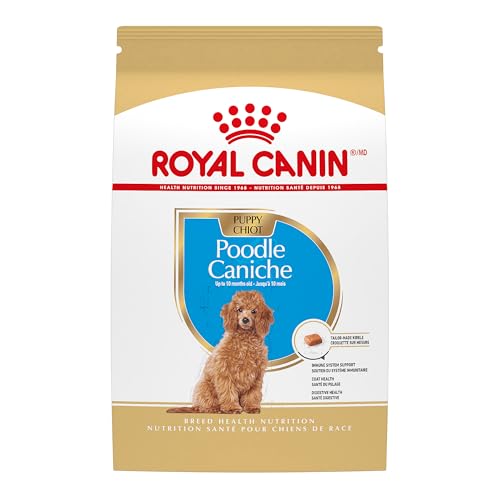
A kibble shape designed specifically for a poodle puppy’s mouth means less frustration at mealtime, those narrow jaws and long snouts can make standard round kibble a pain to pick up. Royal Canin backs that with an antioxidant complex (including vitamin E) to support immune system development during the first ten months, plus EPA and DHA from fish oil to nourish that signature curly coat. If you’ve got a purebred poodle puppy, this is the most targeted option you’ll find: it’s formulated for the breed’s unique nutritional needs from eight weeks to ten months, not just a generic small-breed recipe.
The specialized kibble shape is designed so poodle puppies can pick it up and chew it easily, which makes mealtime less messy for owners of purebred Poodles 8 weeks to 10 months old. The formula includes EPA and DHA from fish oil to support healthy skin and a developing curly coat, plus antioxidants like vitamin E to help build the immune system. Owners should note the 2.5-pound bag is smaller than the 6-pound Purina Pro Plan Small Breed Puppy option, so you’ll need to reorder more often if you have a hungry pup.
Royal Canin X-Small Puppy Dry Dog Food
What We Like
- Formulated for toy breeds under 8 lbs
- Supports brain development during growth
- Antioxidants and prebiotics for immune health
- Crunchy kibble texture for easy feeding
Trade-offs
- Only for puppies up to 10 months old
- Not suitable for breeds expected to exceed 8 pounds adult weight
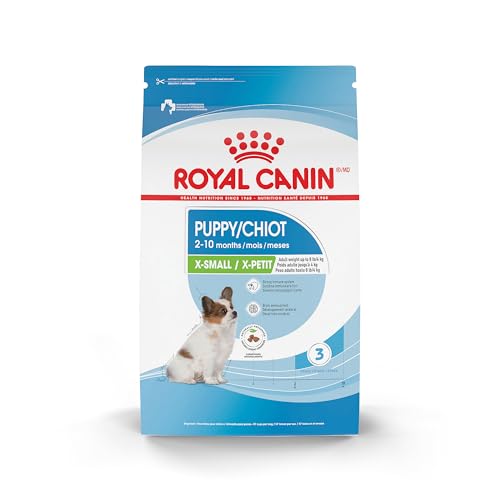
A kibble designed for extra-small puppies with an expected adult weight of no more than 8 pounds means the particle size and nutrient density are dialed in for toy breeds. Royal Canin X-Small Puppy supports brain development during the rapid growth phase from 2 to 10 months, while antioxidants and prebiotics target immune and digestive health, two areas where tiny puppies often need extra help. The crunchy texture is straightforward to serve and pairs with the brand’s wet food for mixed feeding, giving you flexibility at mealtime.
This formula is specifically for puppies up to 10 months old with an expected adult weight of no more than 8 pounds. For a toy breed puppy it eliminates the guesswork of choosing a food that might not match their tiny size. Compared to Purina Pro Plan Small Breed Puppy Food, which is formulated for small breeds up to a higher adult weight, Royal Canin’s X-Small Puppy is designed for toy breeds. If you prefer a single bag that covers a wider size range, the Pro Plan might stretch further, but for a toy breed puppy, this targeted formulation reduces guesswork.
Purina Pro Plan Small Breed Puppy Food

What We Like
- Real chicken is first ingredient
- High protein for active small dogs
- DHA for brain and vision development
- Live probiotics for digestive health
Trade-offs
- Chicken-based formula not suitable for poultry allergies
- Lacks specialized kibble shape for brachycephalic breeds
Real chicken leads the ingredient list, so this 6-pound bag packs the protein active small-breed puppies need to fuel their high energy levels. Guaranteed live probiotics help maintain digestive and immune health during a puppy’s early development, while DHA from omega-rich fish oil supports brain and vision development. It’s a dense, nutrient-rich formula designed specifically for small dogs that are always on the go.
The chicken-and-rice recipe won’t work for puppies with poultry sensitivities. Compared to Royal Canin Poodle Puppy Dry Dog Food, which uses specialized kibble for easy pickup, Purina Pro Plan focuses on protein and probiotics rather than kibble shape. If your puppy tolerates chicken well and you want high protein plus digestive support, this is a suitable choice.
Blue Buffalo Baby BLUE Small Breed Puppy Food

What We Like
- Real chicken is the first ingredient
- DHA supports cognitive development
- Antioxidant-rich LifeSource Bits included
- No corn, wheat, or soy
Trade-offs
- 4 lb bag is small for larger puppies
- Contains chicken, not for poultry-sensitive dogs
Chicken is the number one ingredient here, which is exactly what you want to see on a label if you’re after a protein-rich start for a toy poodle puppy. That real meat base, paired with DHA for cognitive development, gives this formula a clear focus on early growth and brain health. The antioxidant-packed LifeSource Bits add another layer of immune support without relying on corn, wheat, or soy fillers. For a small breed puppy, especially one as energetic and curious as a toy poodle, this combination hits the nutritional notes that matter most during those first months.
The bag holds 4 pounds, so if you have a larger puppy or multiple dogs, you may need to buy more frequently than with a 6-pound bag like Purina Pro Plan Small Breed Puppy Food. That’s a minor trade-off if you prefer a smaller, fresher supply. The formula is chicken-based, so if your puppy has a poultry sensitivity, you’ll need to look elsewhere. For most small breed puppy owners focused on clean ingredients and brain development, this is a straightforward, well-constructed option.
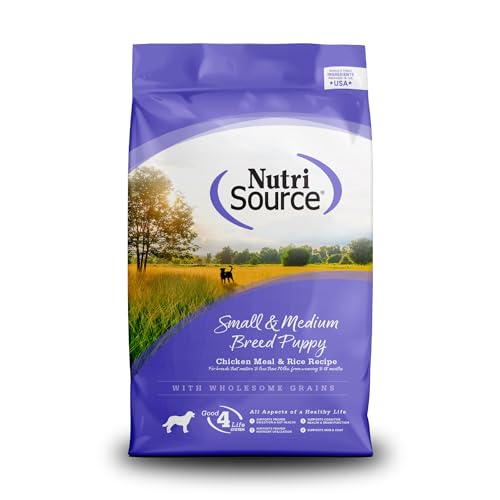
NutriSource Small & Medium Breed Puppy Food
What We Like
- Chicken meal as #1 ingredient
- Prebiotics and probiotics for digestion
- Omega fatty acids for skin and coat
- Wholesome grains for sustained energy
Trade-offs
- 4 lb bag is small for multi-dog homes
- Grain-inclusive recipe not for grain-free diets
A chicken meal first ingredient supplies essential amino acids for healthy muscle growth, which supports steady development in a growing puppy. The prebiotic and probiotic pair fosters a healthy digestive system, so the food works with digestion rather than against it. Omega-3 and Omega-6 fatty acids contribute to skin and coat health, and the whole grains, brown rice, oatmeal, barley, provide easily digestible carbohydrates for sustained energy, helping a small pup stay active between meals.
Chicken meal is the #1 ingredient, supplying essential amino acids for healthy muscle growth, so your puppy gets a strong start. The formula includes prebiotics and probiotics for digestive support, which helps maintain a healthy gut. It also contains brown rice, oatmeal, and barley for sustained energy, making it a balanced option for small and medium breed puppies.
Product photos
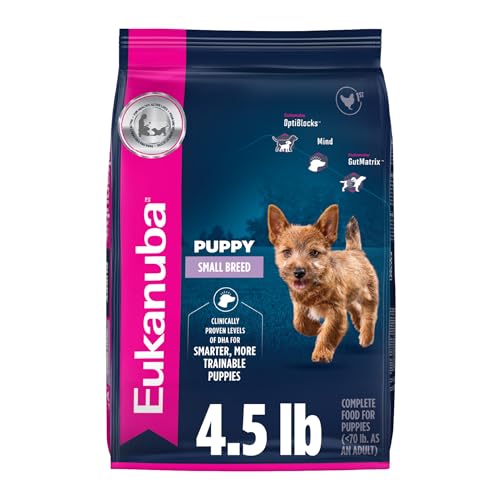
Eukanuba Puppy Small Breed Dry Dog Food
What We Like
- Real chicken is first ingredient
- Optimal calcium and phosphorus for bones
- Clinically proven DHA for brain development
- Concentrated energy for growing puppies
Trade-offs
- Only for small breeds under 23 lbs adult weight
- Not suitable for puppies over 23 lbs adult weight
A 4.5-pound bag with chicken as the first ingredient and clinically proven levels of DHA means this formula is built around two things: protein for muscle and fat for energy. Plus the omega-3 that supports trainability. The calcium and phosphorus levels are dialed in specifically for bone development in small-breed puppies, which matters when you’re raising a toy poodle whose frame is still forming. For a straightforward kibble that covers the growth basics, this one delivers.
The most decisive fact about Eukanuba Puppy Small Breed Dry Dog Food is that it’s formulated for puppies up to 12 months old with an expected adult weight under 23 lbs. So it’s a perfect match if you’ve got a tiny pup that’s still growing. Compared to Royal Canin Poodle Puppy, which targets poodle puppies from 8 weeks to 10 months, this Eukanuba bag is a general small-breed option, not breed-specific. But for a fast-growing puppy that needs solid bone support, the calcium and phosphorous levels here are optimized to help build strong bones during that critical first year.
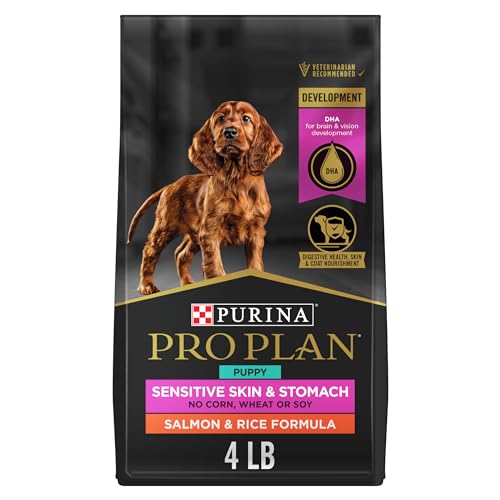
Purina Pro Plan Sensitive Skin & Stomach Puppy Food
What We Like
- Real salmon as first ingredient
- Easily digestible with rice
- Omega-6 and vitamin A for skin and coat
- DHA from fish oil supports brain and vision
Trade-offs
- Salmon-based formula not suitable for fish allergies
- Contains rice, which some owners avoid
Real salmon is the number one ingredient here, which means you’re starting with a high-protein base that’s also gentle on a developing digestive system. The rice in this formula is easily digestible, and the added prebiotic fiber supports gut bacteria directly, so a toy poodle puppy with a sensitive stomach is less likely to have loose stools or discomfort. DHA from fish oil aids brain and vision development during those critical early months, while omega-6 fatty acids and vitamin A work to keep the coat and skin healthy. This is a straightforward, ingredient-focused recipe for puppies that need a little extra digestive care without sacrificing nutrition.
Real salmon is the number one ingredient, so this food works well for puppies with sensitive stomachs or skin, but it won’t suit a puppy with a fish sensitivity. The formula includes rice, which is easily digestible, and prebiotic fiber to support digestive health, making it a practical choice for owners who want a gentle, salmon-based recipe.
Product photos
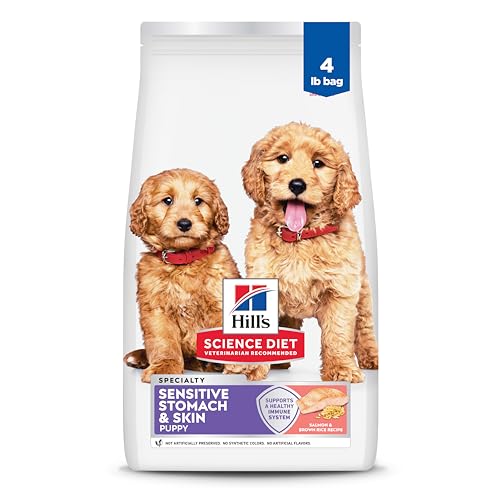
Hill's Science Diet Puppy Sensitive Stomach & Skin Food
What We Like
- Salmon is #1 ingredient
- Prebiotic fiber for gentle digestion
- DHA supports brain development
- Vitamin E and Omega fatty acids for skin
Trade-offs
- Salmon protein not suitable for all puppies with fish sensitivities
- Not formulated for large breed puppies
The #1 ingredient is salmon, which provides high-quality protein for growing muscles without relying on common fillers. This formula also includes prebiotic fiber to keep digestion gentle, along with DHA for healthy brain development and Vitamin E plus Omega-3 and 6 fatty acids to support skin and coat health. It’s a well-rounded option for owners who want a veterinarian-recommended recipe that covers multiple developmental needs in one bag.
The main trade-off is the bag size: at 4 pounds, it’s convenient for small households but may run out quickly if you have multiple puppies or a larger breed. For owners who prioritize ingredient transparency and digestive support, this is a practical pick.
Product photos
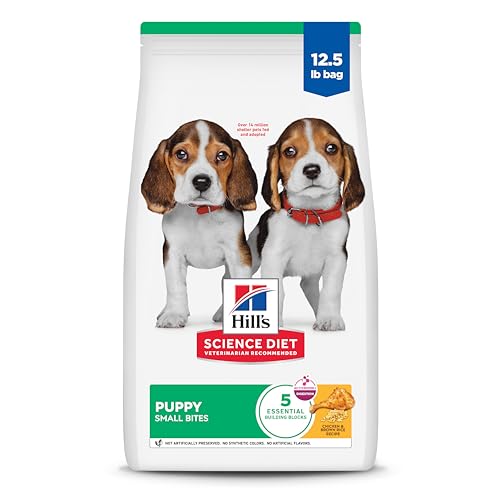
Hill's Science Diet Puppy Small Bites Dry Dog Food
What We Like
- Balanced minerals for growing bones and teeth
- DHA and fish oil support brain and eye development
- Antioxidant blend for developing immune system
- High quality proteins fuel growing muscles
Trade-offs
- 12.5 lb bag is heavy for small toy poodle households
- Chicken-based recipe not suitable for poultry sensitivities
The #1 veterinarian recommended brand is the headline here, and for a toy poodle whose tiny bones and developing brain need precise nutrition, that recommendation carries weight. Hill’s Science Diet Puppy Small Bites packs DHA from fish oil for brain and eye development, balanced minerals for growing bones and teeth, and an antioxidant blend to support a young immune system. The kibble is small bites, which can help small mouths pick up and chew. If you want a formula backed by veterinary consensus and made with natural ingredients, this is a straightforward, no-nonsense choice.
The #1 Veterinarian Recommended brand brings a formula that supports growing bones, teeth, brain, eyes, and immune system with balanced minerals, DHA, fish oil, and antioxidants, all in a 12.5-pound bag. That’s a substantial amount of food for a toy poodle, so you’ll want to store it properly to keep it fresh. If your puppy has no poultry issues and you value vet-backed simplicity, this is a strong choice.
Product photos
Solid Gold Small Breed Chicken Dry Dog Food

What We Like
- Real chicken as first ingredient
- Grain-free for allergy-prone dogs
- 90 million probiotics per pound
- Small kibble for toy breeds
Trade-offs
- Not a puppy-specific formula
- Not suitable for large breed dogs
90 million probiotics per pound is the standout number here, that’s a serious dose of gut support packed into a small-breed kibble. Solid Gold leads with real chicken as the first ingredient, which means your toy poodle gets muscle-supporting protein without fillers or by-products. The grain-free, gluten-free formula also sidesteps common allergens, making this a strong pick for sensitive stomachs or skin issues. If your poodle has a touchy digestive system, this is where you start looking.
The trade-off: this is labeled for all life stages, so it works for puppies as well as adults. Royal Canin’s Poodle Puppy formula tailors its nutrient profile to growth phases, while Solid Gold takes a broader approach. For a toy poodle, that means you’ll want to check that the calcium-to-phosphorus ratio suits a growing dog, the bag doesn’t call it out. But if your puppy is past the rapid-growth window or has grain sensitivities, the probiotic load and clean ingredient list make this a smart alternative.
Product photos
How We Evaluated Dog Foods For Toy Poodle Puppies
We started by examining the nutritional profiles of each food, focusing on protein-to-fat ratios, calcium and phosphorus levels for bone development, and the inclusion of DHA for brain and vision development. Manufacturer feeding guidelines and kibble dimensions were also compared to ensure the food was physically appropriate for a toy poodle’s small mouth.
The three most important criteria were kibble size and shape, ingredient quality and source, and the presence of breed-specific or size-specific nutrients. For a toy poodle, the kibble must be small enough to pick up easily, and the fat profile should support a healthy coat. We also prioritized formulas that included prebiotics or probiotics for digestive health, as toy breeds can have sensitive stomachs.
Because we do not conduct feeding trials, this evaluation relies on published manufacturer data, ingredient transparency, and patterns reported by owners. We encourage you to check the guaranteed analysis on the bag yourself and compare it to the nutritional needs of your specific puppy.
What To Look For In Dog Foods For Toy Poodle Puppies
Choosing the right food for a toy poodle puppy means looking beyond the front of the bag. The kibble size, the first ingredient, and the presence of key nutrients like DHA and omega fatty acids will tell you more than any marketing claim.
Focus on kibble shape designed for a narrow muzzle, a named animal protein as the first ingredient, guaranteed DHA for brain development, and a calorie density appropriate for a toy breed’s fast metabolism.
Kibble Size and Shape
A standard kibble can be too large for a toy poodle puppy’s tiny jaw. Look for a small-bite kibble or, ideally, a breed-specific shape like the flat, oval kibble in Royal Canin’s poodle formula. This design makes it easier for your puppy to pick up and chew, reducing mealtime frustration. For the smallest puppies, a toy breed puppy food with a very small kibble diameter is a smart choice.
Protein Source and Quality
The first ingredient should be a named animal protein, such as chicken, salmon, or lamb. This gives you the most digestible protein for muscle development. Avoid vague terms like “meat meal” or “poultry by-product.” Real chicken as the first ingredient, as seen in the Purina Pro Plan Small Breed and Blue Buffalo Baby BLUE formulas, provides a strong amino acid profile. That helps growing puppies get the building blocks they need.
DHA and Omega Fatty Acids
DHA (docosahexaenoic acid) is a crucial omega-3 fatty acid for brain and vision development in puppies. Look for a guaranteed source of DHA, often from fish oil. Omega-6 and omega-3 fatty acids also support a healthy skin barrier and that characteristic poodle coat. Fish oil is a common and effective source, and it is included in our best overall pick.
Calorie Density and Feeding Guidelines
Toy breed puppies have a high metabolic rate and need calorie-dense food to meet their energy needs without eating large volumes. Check the feeding guidelines on the bag; they should be specific to the puppy’s expected adult weight. A guide to small breed puppy food can help you understand the right calorie range for your toy poodle.
- Confirm the kibble is small enough to fit comfortably in your puppy’s mouth.
- Check that the first ingredient is a named protein source (chicken, salmon, lamb).
- Look for a guaranteed source of DHA from fish oil.
- Ensure the formula is labeled for small or toy breed puppies, not all life stages.
- Verify the feeding guidelines match your puppy’s expected adult weight.
A toy poodle puppy should eat a formula specifically designed for small or toy breeds, not a generic all-breed puppy food.
Dog Foods For Toy Poodle Puppies Compared
The table below compares the key features of each of the ten puppy foods we evaluated, including their primary protein source, kibble design, and notable nutritional benefits.
| Product | Protein Source | Weight | Key Feature |
|---|---|---|---|
| Royal Canin Poodle Puppy Dry Dog Food | N/A | 2.5 lb | Specialized Kibble for Easy Pickup |
| Royal Canin X-Small Puppy Dry Dog Food | N/A | 3 lb | Immune & Digestive Support |
| Purina Pro Plan Small Breed Puppy Food | Real chicken | 6.0 pounds | Guaranteed live probiotics |
| Blue Buffalo Baby BLUE Small Breed Puppy Food | Chicken (real meat first) | 4 lb | Antioxidant-rich LifeSource Bits |
| NutriSource Small & Medium Breed Puppy Food | Chicken meal | 4.0 pounds | Prebiotics and probiotics |
| Eukanuba Puppy Small Breed Dry Dog Food | Chicken first ingredient | 4.5 pounds | Clinically proven levels of DHA |
| Purina Pro Plan Sensitive Skin & Stomach Puppy Food | Real Salmon | 4 lb | Sensitive Skin & Stomach |
| Hill's Science Diet Puppy Sensitive Stomach & Skin Food | Salmon | 4.0 lb | Prebiotic fiber, Vitamin E, Omega-3 & 6 |
| Hill's Science Diet Puppy Small Bites Dry Dog Food | Chicken & Brown Rice | 12.5 lb | DHA and Fish Oil |
| Solid Gold Small Breed Chicken Dry Dog Food | Real Chicken First Ingredient | 3.8 Pounds | 90 Million Probiotics Per Pound |
Frequently Asked Questions
What is the best dog food for a toy poodle puppy?
The best overall choice is Royal Canin Poodle Puppy Dry Dog Food, which features a uniquely shaped kibble designed for a poodle’s narrow muzzle and includes fish oil for coat health. For toy breeds under 8 pounds, Royal Canin X-Small Puppy is a strong alternative.
How much should I feed my toy poodle puppy?
Feeding amounts depend on the specific food’s calorie density and your puppy’s age and weight. Always follow the feeding guidelines on the bag, which are typically broken down by the puppy’s expected adult weight. A toy poodle puppy may need three to four small meals per day.
Is grain-free food good for toy poodle puppies?
Grain-free food can be a good option for puppies with grain sensitivities, but it is not necessary for all toy poodles. If you choose a grain-free formula, ensure it is a complete and balanced puppy food, not an all-life-stages formula. Solid Gold Small Breed Chicken Dry Dog Food is a grain-free option, though it is not a puppy-specific formula.
When should I switch from puppy food to adult food?
Toy poodle puppies should eat puppy food until they reach about 90 percent of their expected adult size, which is usually around 10 to 12 months of age. Switching too early can deprive them of essential nutrients for growth. Consult your veterinarian for a precise timeline based on your puppy’s development.
Can I mix wet and dry food for my toy poodle puppy?
Yes, mixing wet and dry food can add moisture and variety to your puppy’s diet. If you do, adjust the portions of each to avoid overfeeding. Choose a wet food that matches the nutritional profile of the dry kibble you are using.
The Bottom Line
For most owners of a purebred toy poodle puppy, the Royal Canin Poodle Puppy Dry Dog Food is the best overall choice. Its breed-specific kibble shape and coat-supporting formula address the two biggest challenges of feeding a toy poodle: getting them to eat comfortably and keeping their skin and coat healthy. It is the most targeted option on our list.
If your puppy is a toy breed under 8 pounds but not a purebred poodle, the Royal Canin X-Small Puppy is our best for toy breeds pick. For owners who want a high-protein, chicken-first recipe with probiotics, the Purina Pro Plan Small Breed Puppy Food is our best high protein pick. Budget-conscious shoppers should look to the Hill’s Science Diet Puppy Small Bites, which offers strong nutritional value in a small-bite kibble.
The single most important factor when choosing a food for your toy poodle puppy is the kibble size and shape. A kibble that is too large will discourage eating, while a shape designed for a narrow muzzle makes mealtime easier and more enjoyable for your puppy. Start there, and the rest of the nutritional profile will follow.
