
6 Best Dog Food For Dogs With Diabetes in 2026
This post contains affiliate links. As an Amazon Associate, we earn from qualifying purchases.
Managing diabetes in dogs starts with what goes in the bowl. The Royal Canin Veterinary Glycobalance Dry Dog Food takes the best overall spot. Its prebiotic and fiber blend is designed to minimize glucose fluctuations, while complex carbohydrates help moderate blood sugar. For small breed diabetic dogs, the Royal Canin Glycobalance Small Dog Dry Food earns our best-for-small-breeds award, and the Hill’s Prescription Diet w/d Multi-Benefit Dry Dog Food stands out for owners who need combined weight and glucose support.
A diabetes diagnosis means every meal matters. Carbohydrate type, fiber content, and fat levels all directly affect how a dog processes food and maintains stable blood sugar. A food that works for one diabetic dog may spike glucose in another, so matching the formula to your dog’s specific needs is the real challenge.
This guide is research-based. We looked at manufacturer specifications, veterinary nutrition guidelines, and patterns in owner feedback to identify the six foods that address the most common challenges of feeding a diabetic dog. Each pick targets a specific need, from prescription-grade formulas to human-grade base mixes.
Top 6 Dog Foods For Dogs With Diabetes in the Market
Certain content that appears on this site comes from Amazon. This content is provided "as is" and is subject to change or removal at any time.
The Best Dog Foods For Dogs With Diabetes, Reviewed
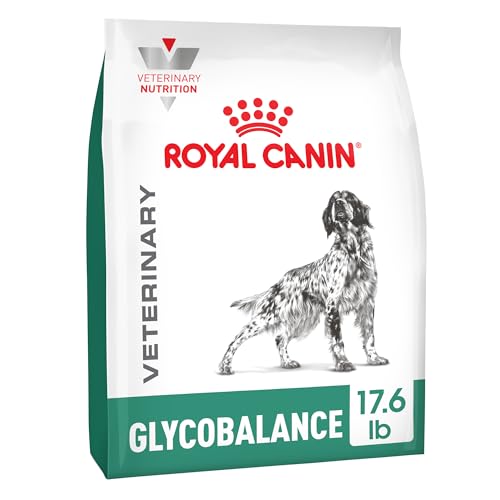
Royal Canin Veterinary Glycobalance Dry Dog Food
What We Like
- Prebiotics and fiber blend minimize glucose fluctuations
- Complex carbohydrates help moderate blood sugar
- Controlled fat levels support diabetes management
Trade-offs
- Requires veterinary guidance before use
- Contains controlled fat, not low fat
A combination of prebiotics and both soluble and insoluble fibers directly targets the glucose spikes that make managing diabetes in dogs so tricky. That fiber blend works to moderate glycemic response, while complex carbohydrates and controlled fat levels round out a formula designed specifically for blood sugar stability. This is the kind of label-first approach that makes sense for owners who want a food built around a clear physiological need rather than marketing hype. It suits dogs that need consistent energy without surprises, and the veterinary backing gives it a layer of formulation rigor you don’t find in over-the-counter options.
Because this is a veterinary diet, you’ll need a vet’s guidance before feeding it, which adds a step compared to over-the-counter options. That extra coordination can be a hurdle for owners who prefer a grab-and-go solution, but the Royal Canin formula is a complete, ready-to-feed diet with a targeted fiber system already dialed in. If you’re comfortable working with your vet and want a food that handles the glucose piece head-on without guesswork, this is the most straightforward path.
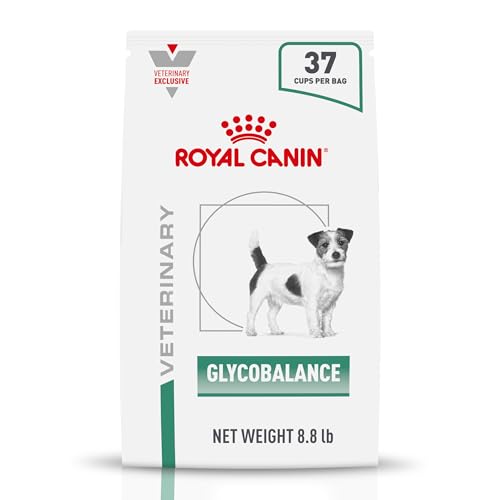
Royal Canin Glycobalance Small Dog Dry Food
What We Like
- Formulated for small breed diabetic dogs
- Reduced starch supports blood glucose levels
- Small kibbles suit smaller jaws
- Highly appetizing poultry-based recipe
Trade-offs
- Only for dogs up to 22 lbs
- Poultry-based recipe excludes dogs with poultry allergies
An 8.8-pound bag of kibbles sized for small jaws means your 22-pound diabetic dog gets pieces that are easy to chew. The reduced starch formulation is designed to help maintain healthy blood glucose levels, which is the key benefit for managing diabetes. This makes it a practical daily option for owners of small diabetic dogs who want a food that addresses both the metabolic condition and the physical eating experience.
The trade-off is that this is a targeted product: if your dog weighs over 22 pounds, you’re out of luck. Compared to the starch-free Wysong Epigen 90, this formula still contains some starch, so it’s not the most aggressive low-carb option on the market. But for small-breed owners who want a food that supports blood glucose levels without requiring mixing or supplementing, this delivers convenience without sacrificing the glucose management angle.
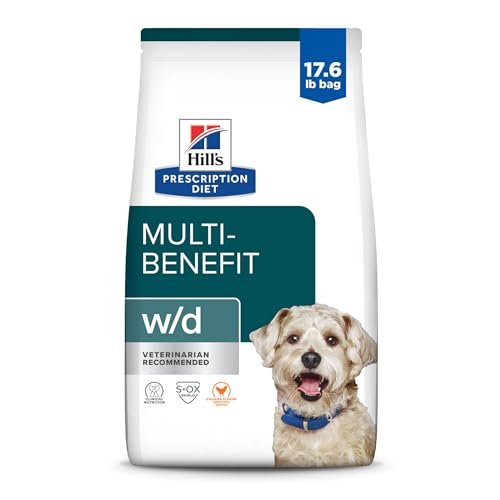
Hill's Prescription Diet w/d Multi-Benefit Dry Dog Food
What We Like
- Helps manage glucose and weight
- Therapeutic L-carnitine for lean muscle
- Optimal fiber blend for healthy weight
- Supports urinary health with controlled minerals
Trade-offs
- Requires veterinary prescription to purchase
- Not suitable for dogs without a diagnosed need for fiber or glucose management
A 17.6 lb bag of therapeutic dry food formulated to manage multiple conditions at once, so you’re not juggling separate diets for glucose control, weight, digestion, and urinary health. It uses an optimal blend of soluble and insoluble fiber to help maintain healthy weight while keeping calories low, plus therapeutic L-carnitine to metabolize fat and preserve lean muscle. This makes it a strong fit for dogs that need combined glucose and weight management along with digestive or urinary support, especially when you want one food that pulls several levers at once.
This food requires a vet’s prescription, so you’ll need an okay before buying, which adds a step compared to over-the-counter options like Dr. Harvey’s Paradigm. The multi-benefit design means you’re getting targeted fiber ratios and controlled magnesium and sodium levels that a general diet can’t guarantee. If your dog’s health concerns include glucose, weight, digestion, and urinary issues, this saves you from mixing or supplementing separate foods.
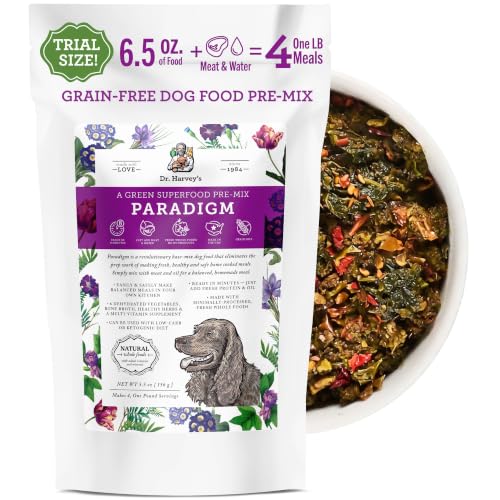
Dr. Harvey's Paradigm Green Superfood Base Mix
What We Like
- Human-grade, grain-free base mix
- Low-carb, ketogenic formula for diabetics
- Ready in 8 minutes with hot water
- No dyes, fillers, or preservatives
Trade-offs
- Requires adding protein and oil separately
- Trial size makes only 4 one-pound meals
A 5.5-ounce trial bag that rehydrates into four pounds of food means you can test this low-carb base mix without committing to a bulk purchase. The ketogenic formula is designed as a low carb alternative to kibble, with just 54 kcal per scoop and minimal fat. The human-grade, grain-free formula skips fillers entirely, so you’re not guessing what’s inside. This suits owners who want full control over the meat source and oil they add, making each meal as fresh as you choose to make it.
For pet parents who want full control over their dog’s protein source, this base mix lets you choose the type, quality, and quantity of meat you add. You simply rehydrate the dehydrated vegetables and bone broth with hot water, wait eight minutes, then stir in your own protein and a healthy oil. The trial bag makes four one-pound meals, so it’s a way to test the concept before committing to larger sizes. Reviewers who value ingredient transparency appreciate that there are no dyes, fillers, or preservatives, and that every component is human grade.
Product photos
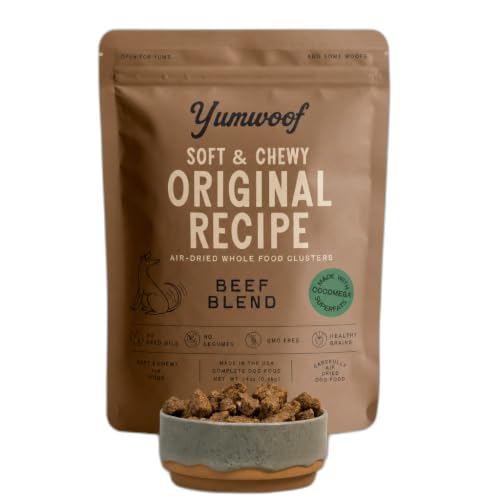
Yumwoof Perfect Kibble Air Dried Dog Food
What We Like
- Low net carbs (16%)
- Non-GMO ingredients
- No seed oils, uses superfats
- Air dried, no fridge needed
Trade-offs
- Small 0.9 lb bag
- Only one protein option listed
This kibble contains 16% net carbs and is labeled low-carb and diabetes-friendly, which means it avoids the empty-calorie fillers that can spike insulin levels. It uses air drying to preserve natural nutrients, and it skips seed oils in favor of superfats. For owners who want a dry food with non-GMO ingredients and no seed oils, this is a straightforward option that keeps the ingredient list clean.
A 0.9-pound bag is quite small, so it’s better suited for small dogs or as a trial run than as a staple for a larger breed. That’s much smaller than the 17.6-pound Royal Canin Veterinary Glycobalance Dry Dog Food. If you’re feeding a medium or large dog long-term, you’ll need to reorder more often.
Product photos
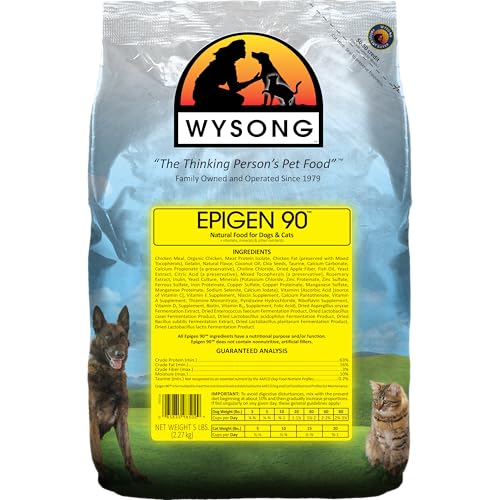
Wysong Epigen 90 Starch Free Dry Dog Food
What We Like
- Starch free dry kibble
- High meat content including organic
Trade-offs
- Very nutrient dense, requires slow introduction
- Designed as protein booster or supplement
A dry kibble that is actually starch free, not just grain free, sets this apart from nearly everything else on the shelf. It’s nutrient dense, so you’ll need to introduce it slowly per the feeding guidelines, but the ingredient list reads like a nutrition textbook, not a filler catalog.
This food is very concentrated and can be used as a protein booster or meal supplement, so it may not serve as a standard complete diet on its own. Compared to Hill’s Prescription Diet w/d, which is designed for glucose management, Wysong takes a different approach by eliminating starch entirely. The 5-pound bag means you will need to repurchase more often. For owners ready to follow the feeding guidelines carefully, this is a direct way to cut starch from the diet.
Product photos
How We Evaluated Dog Foods For Dogs With Diabetes
We started with the basics: ingredient lists, guaranteed analysis, and manufacturer feeding protocols. For diabetic dogs, the type and source of carbohydrates matter more than crude protein or fat percentages alone. We compared each formula’s starch content, fiber sources, and glycemic impact claims against current veterinary nutrition recommendations.
Three criteria drove every decision. First, carbohydrate management, does the food use low-glycemic ingredients or controlled starch levels to avoid blood sugar spikes? Second, nutritional completeness, can a dog eat this as a sole diet, or does it require supplementation? Third, practical suitability, is the food easy to source, store, and feed consistently, since diabetic dogs need routine above all else?
A research-based evaluation has limits. No one can predict how any single dog will respond. What we can do is give you the facts to discuss with your veterinarian, who knows your dog’s glucose curves and insulin needs.
What To Look For In Dog Foods For Dogs With Diabetes
Choosing a food for a diabetic dog means reading past the marketing claims and looking at what actually controls blood sugar. The right formula balances carbohydrates, fiber, and fat in a way that works with your dog’s insulin regimen.
Focus on carbohydrate source and fiber content first. Complex carbohydrates and moderate-to-high soluble fiber help slow glucose absorption. Avoid foods with simple sugars, high starch levels, or vague “grain-free” labels that may still spike blood sugar.
Carbohydrate Type and Starch Content
Not all carbs are equal for a diabetic dog. Complex carbohydrates from sources like barley, oats, or legumes digest more slowly than white rice, potato, or corn, producing a gentler rise in blood glucose. Some of the best options in our list, like the Wysong Epigen 90, aim for starch-free formulas, while others use controlled starch levels to keep glucose stable. Look for foods that list a specific carbohydrate source rather than vague “grain” blends.
Fiber Profile
Fiber is the unsung hero of diabetic dog nutrition. Soluble fiber forms a gel in the gut that slows carbohydrate absorption, while insoluble fiber adds bulk and helps with weight management. Foods like the Hill’s Prescription Diet w/d use an “optimal fiber blend” specifically to manage glucose and weight together. A food with at least 8-12% crude fiber is worth considering, but check that the fiber comes from named sources like beet pulp, oats, or psyllium rather than unspecified plant byproducts.
Fat Content and Calorie Density
Diabetic dogs often need weight management, but fat restriction is not always the answer. The Royal Canin Glycobalance uses “controlled fat” rather than low fat because some diabetic dogs need moderate fat for energy without the glucose spike that comes from high-carb foods. Watch calorie density too, a very high-calorie food makes portion control harder, while a very low-calorie food may leave a dog hungry between meals.
- Check that the food is labeled “complete and balanced” by AAFCO for the dog’s life stage
- Confirm the carbohydrate source is named and not a vague “grain” or “cereal” blend
- Look for added prebiotics or probiotics to support digestive health during dietary changes
- Ask your vet about the ideal fiber percentage for your dog’s specific glucose patterns
A diabetic dog’s food should be consistent, meal to meal and bag to bag. Switching formulas disrupts insulin dosing, so find a food you can reliably source.
Dog Foods For Dogs With Diabetes Compared
The table below compares all six picks side by side, so you can see how carbohydrate approach, fiber strategy, and feeding format differ across the options.
| Product | Weight | Carb Type | Protein Source |
|---|---|---|---|
| Royal Canin Veterinary Glycobalance Dry Dog Food | 17.6 lb | Complex carbohydrates | N/A |
| Royal Canin Glycobalance Small Dog Dry Food | 8.8 lb | Reduced starch | Poultry-based |
| Hill's Prescription Diet w/d Multi-Benefit Dry Dog Food | 17.6 lb | N/A | Chicken Recipe |
| Dr. Harvey's Paradigm Green Superfood Base Mix | 0.3 pounds | Low Carb | N/A |
| Yumwoof Perfect Kibble Air Dried Dog Food | 0.9 pounds | 16% net carbs | Beef |
| Wysong Epigen 90 Starch Free Dry Dog Food | 5.0 pounds | Starch Free | Chicken |
Frequently Asked Questions
Can I feed my diabetic dog a grain-free diet?
Grain-free does not automatically mean low-carb. Many grain-free foods replace grains with potatoes, tapioca, or peas, which can spike blood sugar as much as corn or wheat. Focus on total starch and carbohydrate content rather than the presence or absence of grains.
How do I transition my diabetic dog to a new food?
Switch slowly over several days, mixing increasing amounts of the new food with the old. Monitor blood glucose closely during the transition and keep insulin dosing consistent. Any sudden change in food can affect glucose levels, so work with your vet on timing.
What treats are safe for a diabetic dog?
Low-carb, single-ingredient treats like freeze-dried meat or low-glycemic vegetables work best. Avoid treats with sugar, molasses, or grain fillers. Our guide to treats for diabetic dogs covers safe options in more detail.
Should I feed wet or dry food to my diabetic dog?
Both can work, but wet food typically has lower carbohydrate content than dry kibble because it contains more water. Some owners use wet food for its lower carb profile and higher moisture. Our research on best canned food for diabetic dogs explains the trade-offs.
Do I need a veterinary prescription for diabetic dog food?
Some of the most effective formulas, like the Royal Canin Glycobalance and Hill’s w/d, require veterinary authorization because they are therapeutic diets designed for specific medical conditions. If you prefer a non-prescription option, our non-prescription diabetic dog food guide covers alternatives.
The Bottom Line
The Royal Canin Veterinary Glycobalance Dry Dog Food is our best overall pick because it addresses the core challenge of diabetic feeding: keeping blood sugar stable through targeted fiber and carbohydrate control. It is a complete, vet-formulated diet that takes the guesswork out of meal planning for diabetic dogs. If your dog is small breed, the Royal Canin Glycobalance Small Dog Dry Food offers the same approach in a smaller kibble and lower starch formula.
For owners who need combined weight and glucose management, the Hill’s Prescription Diet w/d Multi-Benefit Dry Dog Food pulls double duty. And if you prefer a human-grade base mix where you control the protein and fat, Dr. Harvey’s Paradigm Green Superfood Base Mix lets you build each meal from scratch.
The single most important factor is consistency. A diabetic dog thrives on routine, same food, same portions, same schedule. Pick the food that fits your dog’s specific needs and your ability to source it reliably, then work with your vet to fine-tune the insulin dose.
