
10 Best Dog Food For Yeast Issues in 2026
This post contains affiliate links. As an Amazon Associate, we earn from qualifying purchases.
For dogs with yeast issues, the Ketona Chicken Recipe Dry Dog Food leads our list because its ultra-low-carb, high-protein formula starves the yeast while feeding the dog. The Ketona Salmon Recipe offers the same carb control for fish-tolerant dogs, and the Natural Balance Limited Ingredient Salmon & Sweet Potato provides a simpler option for dogs with multiple sensitivities.
Yeast overgrowth in dogs typically flares when diet supplies excess carbohydrates and sugars that feed Malassezia. The real challenge is finding a food low enough in starch to reduce yeast fuel while still providing complete nutrition. Most kibble sits at a high percentage of carbs, which is exactly what yeast thrives on.
We evaluated these foods by analyzing ingredient lists, macronutrient profiles, and manufacturer specifications, then cross-referenced those with patterns in owner-reported outcomes. This guide gives you the specific criteria to match a food to your dog’s unique sensitivity profile.
Top 10 Dog Foods For Yeast Issues in the Market
Certain content that appears on this site comes from Amazon. This content is provided "as is" and is subject to change or removal at any time.
The Best Dog Foods For Yeast Issues, Reviewed
Ketona Chicken Recipe Dry Dog Food

What We Like
- High protein at over 46%
- Grain-free, low starch and sugar
- Chicken raised antibiotic-free and non-GMO
Trade-offs
- Chicken is a common allergen for some dogs
- Not suitable for dogs with chicken allergies
With less than 6% starch and under 0.5% sugar, this food cuts the fuel that feeds yeast issues in dogs, which is the whole game for owners dealing with that problem. It delivers 85% less carbohydrate than other leading grain-free brands while packing over 46% protein from antibiotic-free, non-GMO chicken raised by American ranchers. The formula comes from Daniel Schulof, author of “Dogs, Dog Food, and Dogma,” and is made entirely in the USA with natural ingredients.
The trade-off is that this is a chicken-based recipe, and chicken is one of the more common proteins that can trigger sensitivities in some dogs, even if yeast is the primary concern. If your dog has a known chicken intolerance, you’d want to look at the Ketona Salmon Recipe instead, which shares the same low-carb, high-protein framework but swaps the protein source. For most dogs with yeast issues, though, the extreme carb restriction here is the more critical factor, and this formula nails it without relying on exotic proteins or expensive novel ingredients.
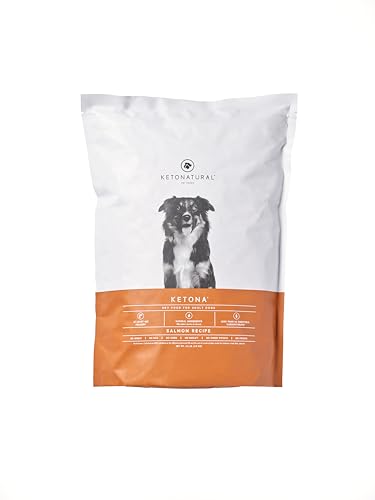
Ketona Salmon Recipe Dry Dog Food
What We Like
- 46% protein supports lean muscle
- Less than 6% carbohydrate reduces yeast fuel
- Grain-free formula avoids common allergens
Trade-offs
- Single 4.2 lb bag size limits multi-dog households
- Not suitable for dogs needing higher fiber
Less than 6% carbohydrate means this kibble provides a very low-starch diet, which can be useful for dogs that need to limit sugar and starch intake. The 46% protein comes from salmon, a single animal protein source. Ketona’s formula is grain-free and contains no added grains. It comes in a 4.2 lb bag, so it’s easy to try without a large commitment, but owners of medium or large dogs will need to reorder often.
The biggest draw here is the carb count: less than 6% carbohydrate and over 46% protein. That mimics a dog’s ancestral diet and can help keep lean muscle while burning body fat. The 4.2-pound bag is handy for a trial run, but with a medium or large dog it’ll vanish fast. If your dog thrives on a very low-carb approach, this is a focused option; for owners needing a larger bag or more fiber, a recipe like Natural Balance Limited Ingredient Salmon & Sweet Potato offers a different nutritional profile.
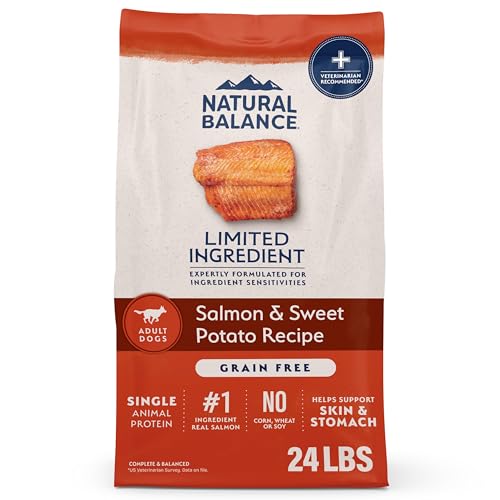
Natural Balance Limited Ingredient Salmon & Sweet Potato
What We Like
- Single animal protein from salmon
- Grain-free for sensitive stomachs
- Supports skin and coat health
- Vet-recommended brand
Trade-offs
- Only one protein source limits variety
- Not low-carb for dogs needing carb control
A single animal protein from salmon means this formula strips away the usual clutter of multiple meat sources and grains. That makes it a straightforward option for dogs with yeast sensitivities that often flare up from dietary triggers. The limited ingredient approach reduces the chance of an immune overreaction, while the grain-free recipe and easily digestible ingredients support sensitive stomachs directly. This is the kind of label that rewards a skeptical reader: no vague ‘novel protein’ claims, just salmon and sweet potato doing the work.
Sticking to one protein source can feel restrictive if your dog does well on a rotation of meats. But for a dog that needs a clean, simple baseline to calm digestive and skin issues, this bag delivers dependable nutrition without the guesswork.
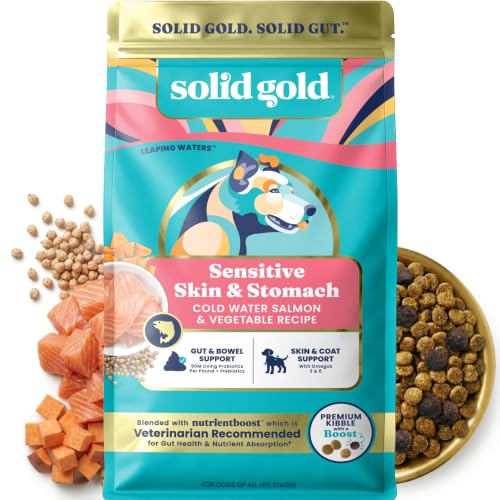
Solid Gold Salmon Dry Dog Food
What We Like
- 90 million probiotics per lb
- Salmon for sensitive stomachs
- Grain-free formula
- Omega 3 & 6 from salmon oil
Trade-offs
- Small 3.8 lb bag size
- Only one protein option
Ninety million probiotics per pound is a serious number for a dry kibble, that’s the kind of colony-forming-unit count you’d expect from a dedicated probiotic supplement, not a daily food. This salmon-and-veggie formula is grain-free and designed for sensitive stomachs, putting digestive support front and center. It’s a sensible pick for owners who want a kibble that includes probiotics for gut health.
At 3.8 pounds, this bag is a trial or travel portion, not a bulk buy. Compared to the 28-pound bags of Taste of the Wild Sierra Mountain, you’re getting a smaller format that works well for small dogs or testing a new food. For larger breeds or multi-dog households, you’ll be reordering frequently, but the probiotic content per pound is clearly stated on the label.
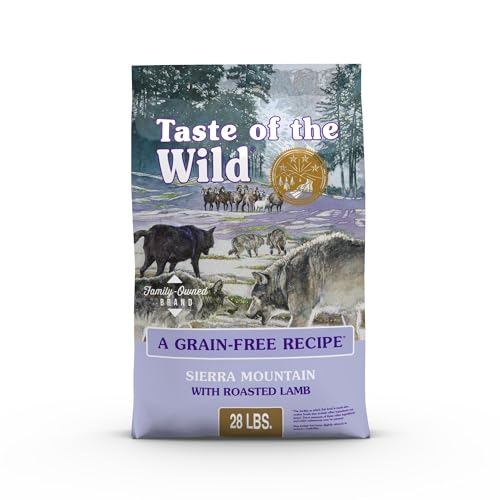
Taste of the Wild Sierra Mountain Dry Dog Food
What We Like
- Real lamb is the #1 ingredient
- Includes proprietary probiotics for digestion
- Omega fatty acids support skin and coat
- Made in the USA by family-owned company
Trade-offs
- 28-pound bag is heavy to handle
- Not suitable for dogs needing a low-protein diet
Real lamb is the first ingredient in this grain-free recipe, and the 25% protein content supports lean muscle maintenance for dogs at all life stages. Each serving includes K9 Strain proprietary probiotics, which are species-specific and designed to aid digestive health, along with omega fatty acids from superfoods that help maintain healthy skin and coat. The formula skips grain fillers and focuses on nutrient-dense ingredients, making it a straightforward option for owners who want a protein-forward kibble without unnecessary additives.
Grain-free diets aren’t necessary for every dog, and some owners prefer to include grains for fiber variety. Compared to the Ketona Chicken Recipe, which offers 46% protein and is labeled as low carb, this 25% protein option is more moderate and less extreme. It may not suit those seeking a very high-protein, low-carb formula. The 28-pound bag is practical for multi-dog households, though its weight can make pouring into smaller containers or storage bins a bit cumbersome.
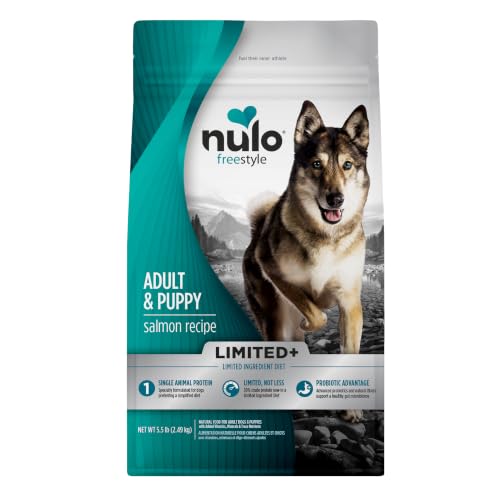
Nulo FreeStyle Limited Ingredient Salmon Dry Dog Food
What We Like
- Single animal protein: salmon
- Omega-3 & omega-6 for skin
- BC30 probiotic for digestion
- No chicken, eggs, or peas
Trade-offs
- Not suitable for dogs needing hydrolyzed protein
- No chicken or egg protein for varied diets
A single animal protein, salmon, is the first ingredient here, which cuts down the guesswork when a dog has yeast issues tied to diet. That limited-ingredient approach, paired with a BC30 probiotic and prebiotic fibers, supports gut balance without loading the bowl with common triggers like chicken, eggs, or peas. The omega-3 and omega-6 from salmon oil also target skin health directly, which matters because yeast flare-ups often show up as itchy, irritated skin. This recipe suits owners who want a straightforward, grain-free kibble that leans on one protein source and skips the filler list.
If your dog has food sensitivities, this Nulo recipe uses salmon as the single animal protein, which helps you identify triggers without guessing. It packs 30% crude protein to support lean muscles and steady energy, plus omega-3 and omega-6 fatty acids from salmon oil for healthy skin and a shiny coat. The kibble also includes prebiotic fibers and BC30 probiotics to aid digestion and immune strength, all in a grain-free formula made in the USA.
Product photos
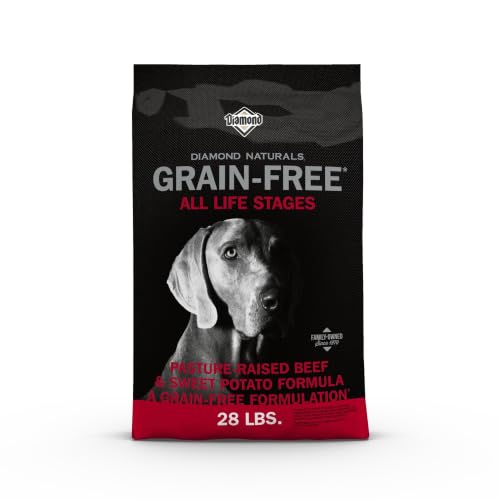
Diamond Naturals Grain-Free Beef Dry Dog Food
What We Like
- Real pasture-raised beef as #1 ingredient
- Sweet potatoes for sustained all-day energy
- Guaranteed probiotics for digestive support
- Omega fatty acids for skin and coat
Trade-offs
- Beef protein can be a trigger for some sensitivities
- Not suitable for dogs with beef allergies
Real pasture-raised beef is the first ingredient, so the protein source is straightforward for dogs that need a clean fuel source. Sweet potatoes provide all-day energy, while tomatoes, blueberries and raspberries add antioxidants. The proprietary probiotics are guaranteed to survive the GI tract, and omega fatty acids help support healthy skin and coat.
This is a grain-free recipe, which some dogs handle well, but others might do better with a limited-ingredient option like Natural Balance Limited Ingredient Salmon & Sweet Potato. Beef is a common protein, so if your dog has shown sensitivity to it, this bag won’t help. For dogs that tolerate beef and don’t need a stripped-down ingredient list, the Diamond Naturals offers a balanced, energy-focused diet with digestive support already factored in. It’s a workhorse formula for dogs that need steady fuel without extra fillers.
Product photos
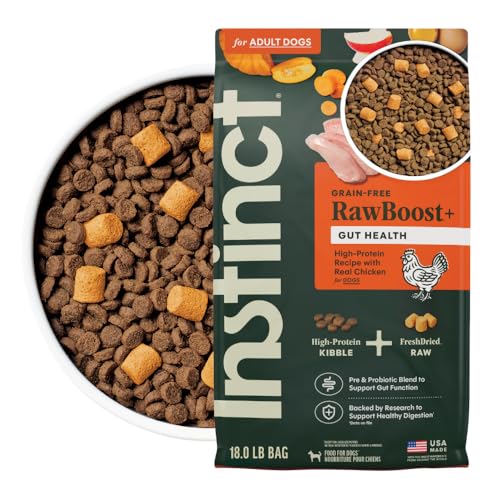
Instinct RawBoost Gut Health Chicken Dry Dog Food
What We Like
- Prebiotics and probiotics for gut health
- Freeze-dried raw bites for texture
- Grain-free with no by-product meals
Trade-offs
- Not suitable for dogs needing a low-protein diet
- Contains freeze-dried raw pieces that some dogs reject
A blend of prebiotics and probiotics targets gut microflora directly, supporting healthy digestion and immune function. The cage-free chicken provides an easily digestible protein base, and the addition of freeze-dried raw bites adds texture that might encourage picky eaters. This formula includes antioxidants and Omegas to support immune function alongside digestion, making it a good choice for dogs needing digestive support.
The price tag is the main catch: freeze-dried raw inclusions raise the cost compared to a straightforward kibble like Ketona Chicken Recipe, which also keeps carbs low. If you want a simpler, lower-cost option, Ketona’s formula may be a better fit. But if you suspect gut flora imbalance is the root cause, the targeted probiotic and prebiotic blend here gives you a more specialized approach.
Product photos
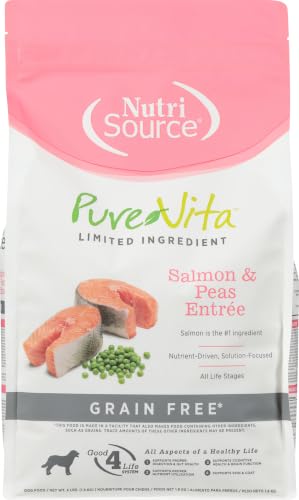
NutriSource Grain Free Salmon & Peas Dog Food
What We Like
- Probiotics coated on every kibble
- Contains prebiotic BIO-MOS and selenium yeast
- Omega-3 & Omega-6 for skin and coat
- Made in USA by family-owned company
Trade-offs
- Grain-free diet unnecessary for most dogs
- Not suitable for dogs with salmon allergies
The probiotic coating on every kibble is the standout feature here. NutriSource uses the Good4Life Gut Health System, which coats probiotics on the outside of each kibble so they absorb quickly and colonize faster. It also includes BIO-MOS prebiotic, Bioplex trace minerals, and Sel-Plex selenium yeast to nourish the gut microbiome. With a grain-free formula and salmon as the protein source, it avoids common grain-based triggers while providing omega-3 and omega-6 fatty acids that support brain function, heart health, and healthy skin and coat. The formula also includes DL Methionine, Choline Chloride, Taurine, and Carniking L-Carnitine to nourish the whole body.
Grain-free diets aren’t necessary for every dog, and some owners prefer a limited-ingredient approach if their dog has multiple sensitivities. If your dog tolerates salmon and you want a kibble that supports digestive health, this is a more targeted option.
Product photos
SquarePet Hydrolyzed Protein Skin & Digestive Support

What We Like
- Hydrolyzed protein limits allergic reactions
- No prescription required for purchase
- Includes DHA & EPA for skin health
- No chemical preservatives or fillers
Trade-offs
- Only one protein source limits rotation options
- Not for dogs with pork allergies
Hydrolyzed protein can help limit skin and GI reactions found with other common protein ingredients, making this SquarePet formula a smart first-line option for dogs with food sensitivities. No prescription is needed, so you can try it without a vet visit for a prescription diet. The added DHA and EPA support healthy skin and a shiny coat, immune system health and brain function. The limited ingredient diet uses one primary carbohydrate source for simplicity.
The hydrolyzed pork protein in this SquarePet diet is broken down into tiny pieces, so dogs with food sensitivities are far less likely to react to it. That makes it a precise tool for owners whose vet has pinpointed a protein allergy. Unlike the Natural Balance Limited Ingredient Salmon & Sweet Potato, which uses salmon, this formula offers only one protein source, so it’s not for owners who like to rotate proteins. If your dog’s hot spots or digestive upset are tied to food, this focused diet can help; if the cause is something else, you’ll need a different approach.
Product photos
How We Evaluated Dog Foods For Yeast Issues
This evaluation is research-based: we examined manufacturer-published guaranteed analyses, ingredient sourcing statements, and macronutrient breakdowns for each food. We also reviewed patterns in owner-reported outcomes across multiple forums and veterinary nutrition round-ups to understand which formulations consistently helped dogs prone to yeast. No product was tested in-house; our conclusions come from comparing what the label says against what the science says about yeast metabolism.
The three criteria that mattered most were carbohydrate content (below 25% ideal for yeast-prone dogs), protein source quality and digestibility, and the presence of gut-supporting ingredients like probiotics or prebiotics. Yeast feeds on simple sugars and starches, so a food’s carb percentage is the single most important number on the bag, most commercial kibble fails this test.
A research-led evaluation has limits: individual dogs respond differently, and a food that works for one yeast-prone dog may not work for another. We flag known trade-offs (common allergens, fiber levels, protein digestibility) so you can compare against your dog’s specific history. The best diet for yeast infections in dogs starts with knowing what’s actually in the bowl.
What To Look For In Dog Foods For Yeast Issues
Choosing a food for a yeast-prone dog means reading past the front-of-bag marketing and checking the numbers that matter for controlling yeast overgrowth with diet.
Look for a food with under 25% carbohydrates, a single novel or limited protein source, added probiotics or prebiotics, and no added sugars or high-glycemic fillers like potatoes, rice, or corn.
Carbohydrate Content
Yeast (Malassezia) ferments sugars and starches, so carb content is the primary lever. Most dry kibble runs high in carbohydrates, that’s yeast fuel. For dogs with active yeast issues, aim for foods under a quarter of calories from carbs, ideally under 15%. The Ketona formulas hit around 6%, which is exceptionally low. Wet foods and freeze-dried raw options often have lower carb counts than extruded kibble, but check the label: “grain-free” does not mean low-carb.
Protein Source and Novelty
A protein your dog has never eaten is less likely to trigger an immune response that worsens yeast-related inflammation. Salmon, lamb, and venison are common novel choices. The Natural Balance Limited Ingredient Salmon & Sweet Potato uses a single animal protein, which helps when you are identifying food allergies in dogs alongside yeast management. Chicken is an excellent low-carb protein if your dog tolerates it, but it is a common allergen, the Ketona Chicken Recipe works only for dogs without chicken sensitivity.
Gut Health Support
Probiotics and prebiotics help maintain a balanced gut microbiome, which can crowd out yeast and reduce recurrence. Look for guaranteed probiotic counts (Solid Gold provides 90 million CFU per pound) or probiotic-coated kibble like NutriSource. The Instinct RawBoost Gut Health formula adds freeze-dried raw pieces with natural probiotics. For dogs with chronic yeast, managing yeast-related ear infections often improves when gut health is addressed simultaneously.
- Confirm the protein source is the only animal protein if the dog has known sensitivities.
- Look for a specific probiotic strain (like BC30 or proprietary blends) rather than vague “natural probiotics.”
- Avoid foods with added sugars, molasses, or high-glycemic vegetables like white potatoes and peas.
A food that controls yeast will show improvement in ear odor, paw licking, and skin redness within a few weeks, if you see no change, the carb count is likely still too high.
Dog Foods For Yeast Issues Compared
The table below compares all ten foods across the criteria that matter most for feeding a dog prone to yeast: protein percentage, carbohydrate estimate, protein source, and probiotic support.
| Product | Protein Source | Grain-Free | Weight |
|---|---|---|---|
| Ketona Chicken Recipe Dry Dog Food | Chicken | Yes | 4.2 pounds |
| Ketona Salmon Recipe Dry Dog Food | Salmon | Yes | 4.2 lb |
| Natural Balance Limited Ingredient Salmon & Sweet Potato | Salmon | Yes | 24.0 pounds |
| Solid Gold Salmon Dry Dog Food | Salmon | Yes | 3.8 pounds |
| Taste of the Wild Sierra Mountain Dry Dog Food | Roasted Lamb | Yes | 28.0 pounds |
| Nulo FreeStyle Limited Ingredient Salmon Dry Dog Food | Salmon | Yes | 5.5 pounds |
| Diamond Naturals Grain-Free Beef Dry Dog Food | Pasture-raised beef | Yes | 28.0 pounds |
| Instinct RawBoost Gut Health Chicken Dry Dog Food | Cage-free chicken | Yes | 18.0 pounds |
| NutriSource Grain Free Salmon & Peas Dog Food | Salmon | Yes | N/A |
| SquarePet Hydrolyzed Protein Skin & Digestive Support | Hydrolyzed Pork | N/A | 4.4 pounds |
Frequently Asked Questions
Can diet alone cure a dog’s yeast infection?
Diet is a powerful tool for reducing the fuel yeast needs to grow, but active yeast infections often require veterinary treatment including medicated washes, ear drops, or oral antifungals. A low-carb diet helps prevent recurrence once the infection is cleared. Always consult your vet for active infections.
What carbohydrate level is too high for a yeast-prone dog?
Most dogs with chronic yeast issues do best on foods with under a quarter of calories from carbs. Many commercial kibbles exceed that, which can feed yeast overgrowth. The ideal range for active management is under 15%, which is why the Ketona formulas (around 6% carbs) are a strong choice.
Is grain-free dog food always better for yeast issues?
No. Grain-free simply means no wheat, corn, or rice, it does not guarantee low carbohydrates. Many grain-free foods replace grains with potatoes, peas, or tapioca, which are high in starch and can feed yeast just as readily. Check the carbohydrate content, not just the “grain-free” label.
Can probiotics help with yeast overgrowth in dogs?
Yes. Probiotics support a healthy gut microbiome, which helps crowd out yeast and reduce inflammation. Look for foods with guaranteed live probiotic counts (like Solid Gold’s 90 million per pound) or probiotic-coated kibble such as NutriSource. For dogs with chronic yeast, long-term yeast infection prevention often includes both probiotics and diet.
What are the signs that my dog’s food is making yeast worse?
Increased ear scratching or head shaking, a musty or corn-chip smell on the skin, red or greasy paws, and dark brown discharge in the ears are common signs. If these worsen after switching foods, check the carbohydrate content, it may be higher than expected. Relieving itchiness through diet usually means lowering carbs further or trying a novel protein.
The Bottom Line
The Ketona Chicken Recipe Dry Dog Food is our best overall pick for dogs with yeast issues because its 6% carbohydrate content directly addresses the root dietary cause of yeast overgrowth. It is ideal for owners who want a simple, high-protein kibble without fillers, provided their dog tolerates chicken. For dogs with chicken sensitivity, the Ketona Salmon Recipe offers the same low-carb advantage with a different protein.
Budget-conscious owners or those needing a larger bag should consider the Diamond Naturals Grain-Free Beef formula, which provides probiotics and omega fatty acids at a lower cost per pound. Dogs with multiple sensitivities will benefit most from the Natural Balance Limited Ingredient Salmon, while the SquarePet Hydrolyzed Formula is the best option for dogs with severe allergies that require a prescription-free hydrolyzed diet.
The single most important factor in managing yeast through diet is carbohydrate content, no other ingredient matters as much. Read the guaranteed analysis, estimate the carbs, and choose a food that starves the yeast before it feeds the dog.
