
How to Use Treats to Train a Cat: Step-by-Step
This post contains affiliate links. As an Amazon Associate, we earn from qualifying purchases.
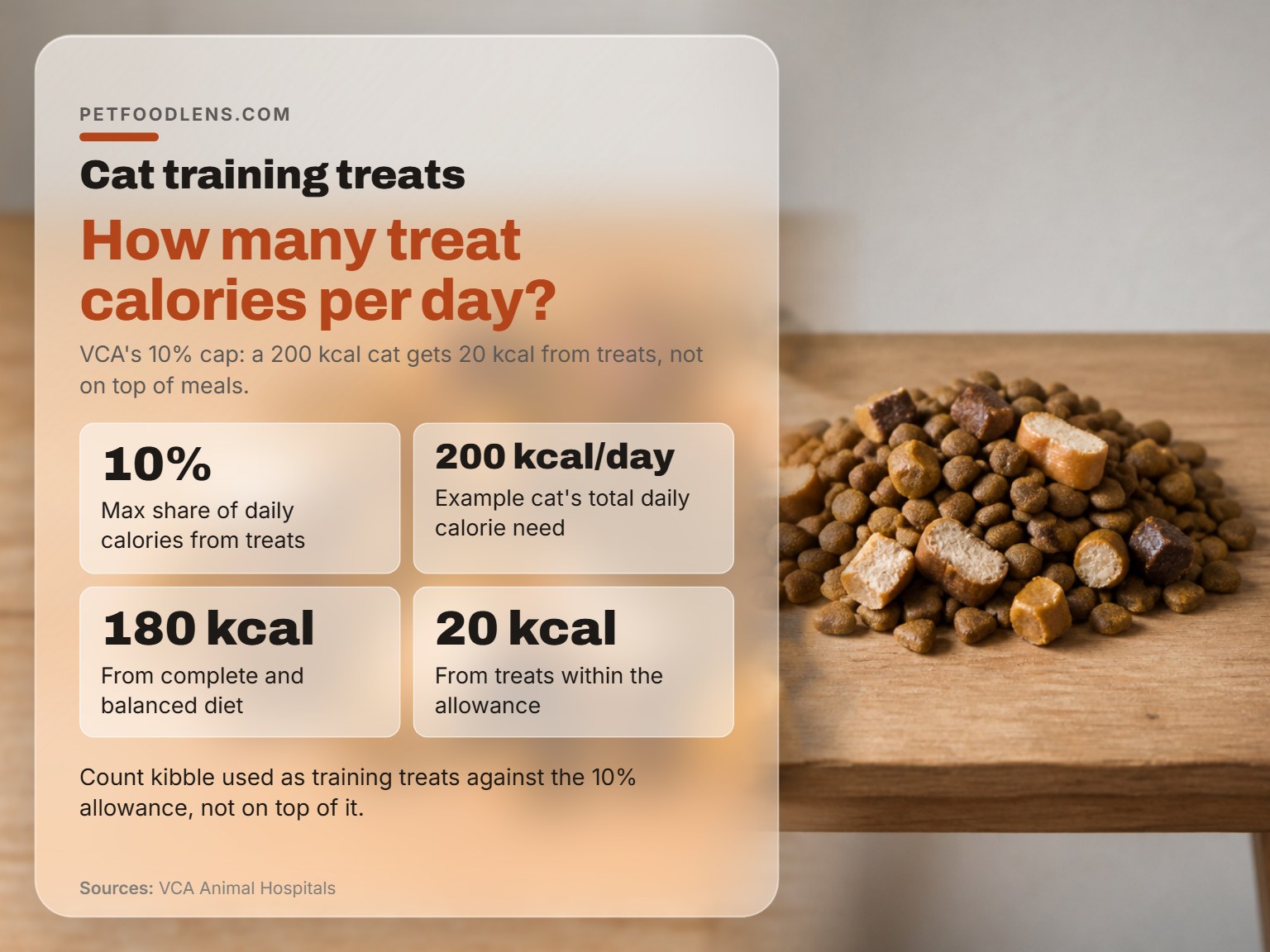
To use treats to train a cat, cap treats at 10% of the cat’s daily calories, mark the exact moment the behavior happens, and deliver the reward within two to three seconds. A cat needing 200 calories a day gets 180 from complete food and 20 from treats.
Twenty calories is a smaller pile than it sounds. Blueberries, at 12 kcal as a treat in VCA’s table, spend more than half the allowance before the cat has learned anything.
The rest of this covers the portion math, the timing window, and the two points where the veterinary sources genuinely disagree about how a session should run.
Key Takeaways
- Treats cap at 10% of daily calories. On a 200-calorie day that’s 20 calories, measured out before the session rather than after.
- TEMPTATIONS puts the reward window at two to three seconds after the behavior, while VCA says to deliver the treat as soon as possible after the click, allowing very slight delays as training advances. A late treat reinforces whatever the cat did next.
- TEMPTATIONS suggests five minutes or less per session, one behavior at a time, while AAHA gives no numeric limit and says only to keep sessions short, positive, and voluntary.
- Kibble works as a training treat because it’s complete and balanced, but it still spends calories.
- Punishment is off the table. AAHA states plainly that it worsens the behavior you’re trying to fix.
The 10% Treat Allowance, Measured in Calories You Can Picture
Ten percent of daily calories is the ceiling VCA Animal Hospitals puts on treats, and it’s the number worth writing on the lid of the treat jar.
Treat calories are capped at 10% of a cat’s total daily intake. A cat requiring 200 calories per day should receive 180 calories from a complete and balanced diet and 20 calories from treats. Measuring the daily treat portion in advance prevents both nutrient deficiency and the slow weight gain that follows an unmeasured handful.
The reason for the cap is nutritional, not moral. Treats crowd out the complete and balanced food that carries the vitamins and minerals, so a treat-heavy day is a day where the cat eats less of what it actually needs, which is why how to use treats to train a cat starts with the cap.
VCA’s practical instruction is to measure the day’s treats out once and set them aside. Whatever sits in that bowl is the day’s supply.
Commercial treats often list a calorie figure, so check it before the bag goes in the cupboard. Read it before the bag goes in the cupboard, because how many treats a day a cat can have depends entirely on that number and the cat’s weight.
For whole foods, VCA points to the USDA FoodData Central database for calorie estimates. That’s the only honest way to price a slice of chicken or a blueberry.
| Whole-food treat | Calories per treat (VCA) | Handling |
|---|---|---|
| Air-popped popcorn, no salt or butter | 3 kcal | Single kernels only |
| Zucchini | 3 kcal | Small dice, raw or cooked |
| Boiled green beans, no salt | 7 kcal | Split lengthwise |
| Blueberries | 12 kcal | Halve them |
| Boiled chickpeas, no salt | 33 kcal | One piece, never a handful |
Look at the bottom row. A single boiled chickpea carries 33 kcal, which is more than the entire 20-calorie allowance on a 200-calorie day.
Easy to miss: A chickpea or black bean at 33 kcal blows through the whole daily treat budget in one bite. Halve it, or use it as the day’s only reward.
VCA’s guidance is to measure the daily treat portion in advance to stay within the 10% allowance, which is why using treats without weight gain starts with the measuring cup and not the training plan.
Which Reward Does Your Cat Actually Work For?
The first step in training isn’t a treat at all. AAHA says it’s identifying the individual cat’s preferred reward, and using the one that cat values most.
That’s a different starting point from VCA’s, which describes positive reinforcement training as one that often involves treats or food rewards, and the how to use treats to train a cat question depends on which starting point you take.
The two sources part company on the default. VCA treats food as the engine of a training session. AAHA lists petting, play, brushing, and social interaction as equally valid primary rewards, and puts reward selection ahead of everything else.
| Question | VCA position | AAHA position |
|---|---|---|
| Default reward | Food or treats drive most training | Use whatever the cat values most |
| Non-food rewards | Not the stated default | Petting, play, brushing, social contact |
| First move | Pick a high-value treat | Identify the preferred reward |
Neither position is wrong, and the practical answer is to test both. Offer a treat after a simple behavior. If the cat’s ears stay flat and it walks away, try a hand on the shoulder or a wand toy instead.
Food motivation is a dial rather than a personality trait. VCA notes some cats respond to their own regular food while others need something higher-value, and you find out by offering both.
For cats that turn their nose up at everything in the cupboard, treats for picky cats usually come down to smell and texture rather than price.
How to Use Treats to Train a Cat: Marker First, Treat Second
A marker is a word or a sound that lands on the exact instant the behavior happens, and AAHA is precise about the sequence: the marker is always followed immediately by the reward.
Marker Words vs. Clickers
A spoken “yes” and a clicker do the same job: both mark the exact moment the cat did the right thing and are always followed immediately by the reward.
The click is a timestamp. Whatever the cat is doing when the food lands is what gets reinforced, so a late treat teaches a late lesson.
TEMPTATIONS puts the working window at two to three seconds after the behavior. VCA’s phrasing is a treat delivered “as soon as possible after the click,” which is the same instruction with a stopwatch attached.
As training advances, VCA allows the food reward to be very slightly delayed.
Distance changes the marker, not the reward. VCA suggests a click when you’re close to the cat and a whistle when you’re training from across the room.
How Long Should a Training Session Last?
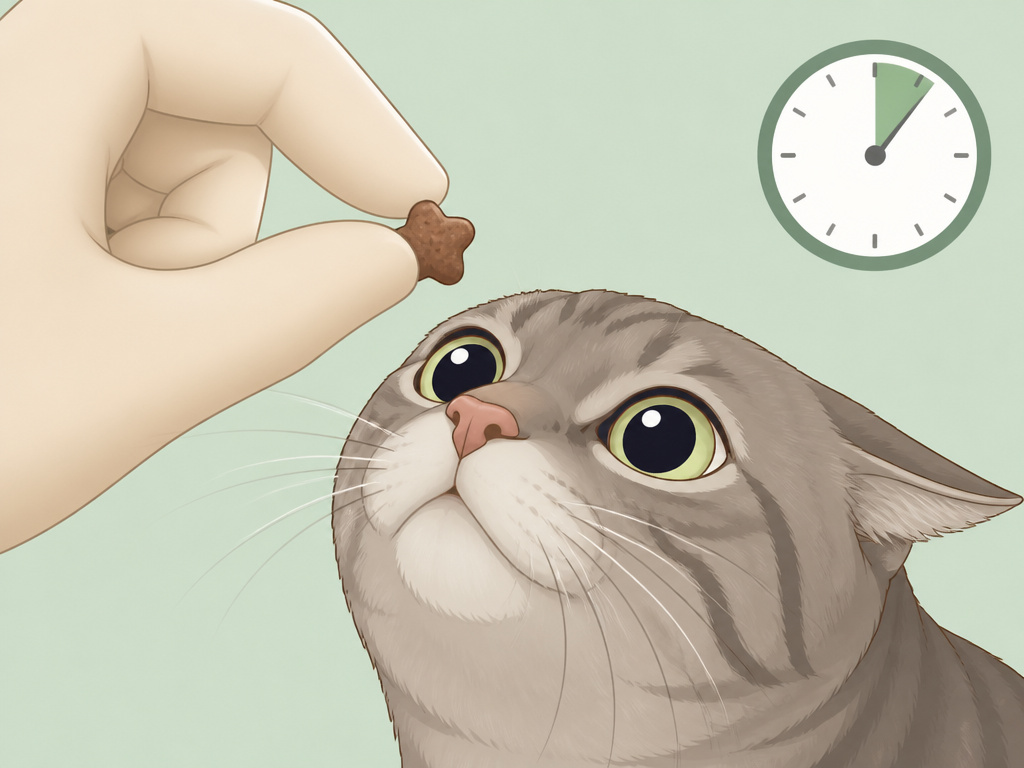
Five minutes or less, focused on one behavior at a time, is the limit TEMPTATIONS publishes. AAHA doesn’t put a number on it, and instead says sessions should stay short, positive, and voluntary.
Watch the body language. FelineVMA lists the signs that a cat is done:
- Dilated pupils
- Flattened ears
- Frequent lip-licking
- A rigid or stiff body posture
Stop when those appear.
AAHA’s instruction is to end on success, because that maintains motivation and builds confidence. That’s a rule about stopping early, not about pushing through.
Once a behavior is reliable, gradually reducing training treats becomes the next skill, and the timing rules loosen slightly as the reward becomes less predictable.
Sit, Place, and the Mat Mistake Everyone Makes
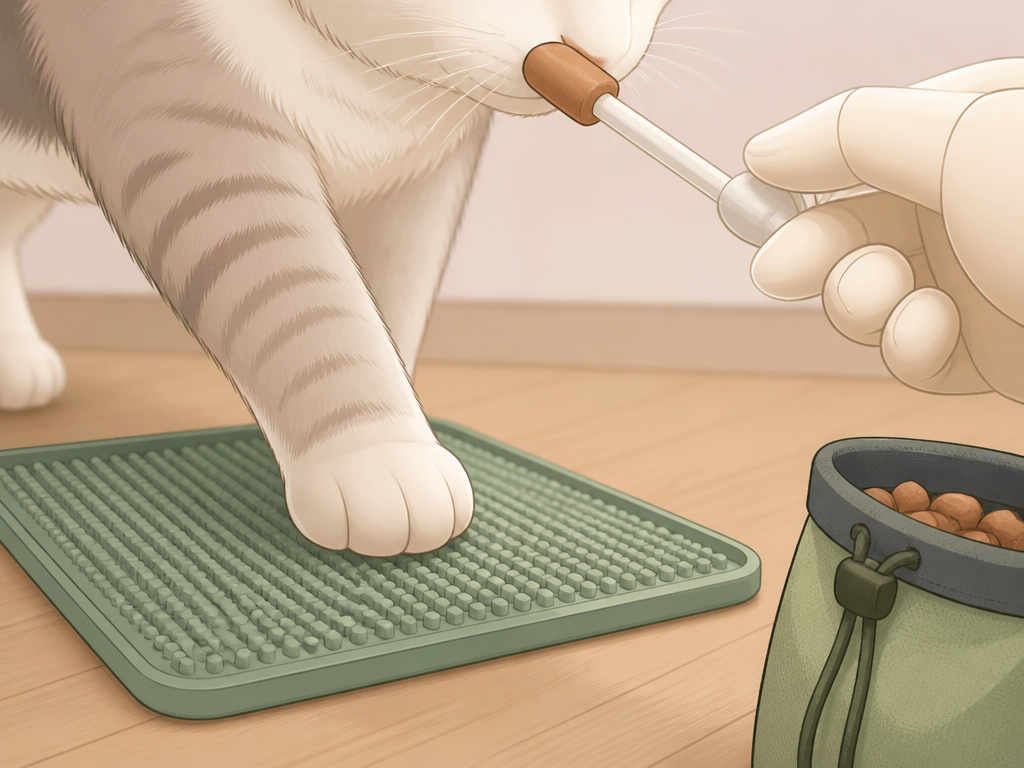
You never put the cat on the mat. AAHA is direct about it: choice is essential to learning, so the cat has to walk onto the mat itself.
The procedure is simpler than it sounds. Put the mat on the floor and let the cat investigate. The moment it looks at the mat, steps on it, or interacts with it, mark and reward.
Then build duration slowly, delivering the reward while the cat is still on the mat. Add the verbal cue once the behavior is predictable, and never use the cue to force compliance.
FelineVMA’s version of the same behavior, called “go to a place,” leans on repetition across the day. Show the cat that approaching the location leads to rewards, encourage it several times throughout the day and reward each time, then add the phrase.
The two sources differ on method. AAHA rules out physically placing the cat, saying choice is essential to learning; FelineVMA builds the association by encouraging the cat to go to the location several times throughout the day and rewarding each time.
The Mat: Encourage, Don’t Place
A cat that gets pushed onto the mat tends to start leaving the room when the mat appears, and you end up training a cat that’s already gone.
Why the Reward Goes Above the Head
For “sit,” AAHA says to wait for the cat to offer the behavior. The moment the hindquarters touch the ground, mark it and reward immediately.
For cats that don’t offer a sit, moving the reward slowly above the cat’s head encourages a weight shift backward into a sitting position. The mechanics do the teaching.
Targeting is the easiest behavior to start with, and FelineVMA breaks it into three steps:
- Place a target stick directly in front of the cat’s face.
- Slowly move the stick further from the cat’s face.
- Move the stick so the cat has to reach to touch it.
The moment the cat’s nose touches the stick, deliver the preferred reward. Soft or lickable treats smeared on the end of the stick work as both enticement and instant reward.
Soft, Crunchy, or Kibble: Matching the Treat to the Job
Three things decide whether a treat works in a session: size, calories, and whether the cat will actually eat it.
VCA recommends treats that break into many small pieces, small kibble, or low-calorie treats. The point is a reward the cat can finish fast, because a cat still chewing is a cat not offering the next behavior.
TEMPTATIONS makes the same argument from the other direction: bite-sized treats get eaten quickly and keep the cat focused. Their Classic Cat Treats are crunchy outside and soft inside, which is a texture the cat notices and a size that disappears fast.
Common mistake: Reaching for sprayable cheese as the default. VCA calls it very tasty and genuinely useful in training, then adds that it’s high in calories and should be used cautiously.
Kibble as a Training Treat
VCA’s most useful suggestion is also the cheapest: use the cat’s regular kibble as the reward. It’s complete and balanced, so a treat-heavy training day won’t leave a nutritional hole.
The same document flags the catch. Even complete and balanced kibble can overshoot the calorie budget, and VCA explicitly says to keep training treats within reason to avoid excess calories and weight gain.
So the 10% cap and the kibble workaround sit in tension inside the same source. The way to hold both is to count kibble against the allowance rather than on top of it.
The best cat treats for training are the ones you can break in half, not the ones with the loudest bag; check the kcal per piece before you commit.
When the Standard Advice Doesn’t Apply
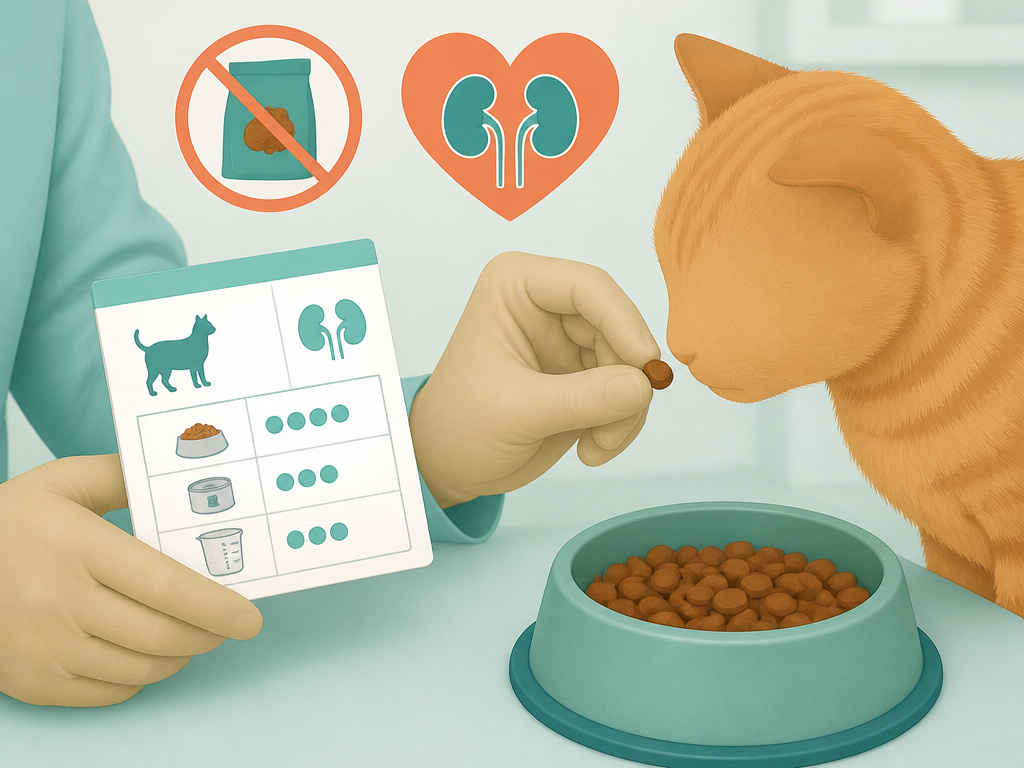
A cat with kidney disease is playing by different calorie rules, and the 10% arithmetic doesn’t solve it on its own.
Catnip isn’t universal either. VCA suggests catnip or a favorite toy may entice a cat to use a scratching post, so offer catnip only if your cat reacts positively to it.
Skip this if: your cat is on a therapeutic diet for kidney or heart disease. The 10% ceiling still applies, but which treats fit inside it changes completely, and that answer comes from your vet rather than from a bag.
Frequently Asked Questions
Can you train a cat using only treats?
Yes, and VCA describes food rewards as the usual engine of positive reinforcement training. The catch is that some cats aren’t food-motivated at all, and AAHA lists petting, play, brushing, and social interaction as equally valid rewards. Test both before assuming the treat bag is the answer.
How many treats can a cat have during one training session?
Work from the daily allowance, not the session. VCA’s cap is 10% of daily calories, which is 20 calories on a 200-calorie day. Measure that out once in the morning and spend it across every session that day.
What if my cat ignores the treat I’m offering?
Try a different reward before trying a different training plan. VCA notes food motivation varies by cat, with some working happily for regular kibble and others needing something higher-value. AAHA’s position is that the reward the cat values most is the only one worth using.
Do training treats have to be commercial?
No. VCA lists whole foods as valid treats and points to the USDA FoodData Central database for calorie estimates. Air-popped popcorn and zucchini both come in at 3 kcal, which leaves plenty of room inside a 20-calorie allowance.
When can kittens start training with treats?
TEMPTATIONS puts it at weaning, around 8 weeks, using smaller and gentler options suited to tiny tummies. The 10% rule still applies, and the pieces need to be smaller than what you’d give an adult cat.
The Bottom Line
Measure the day’s treats into a bowl before the first session. When the bowl is empty, training is over for the day, and that’s the whole trigger. No arithmetic in the middle of a session, no guessing at a handful.
Using treats to train a cat is mostly a portioning and timing problem, and both of those are measurable. The behavior work is the easy part once the numbers are settled.
One concession, and it’s a real one. Everything above assumes a healthy adult cat eating a maintenance diet. On a therapeutic diet, the 10% math belongs to your vet, and I’d rather you ask than take my arithmetic into an exam room.
And if you’re choosing between a boutique freeze-dried single-protein treat and plain kibble from the cat’s own bowl, I’d take the kibble. It’s already balanced, it’s already portioned, and I know exactly what’s in it.
