
8 Best Starling Proof Bird Feeders in 2026
This post contains affiliate links. As an Amazon Associate, we earn from qualifying purchases.
The Birdream Metal Cage Bird Feeder is our best overall pick because its starling-resistant cage openings let small finches and chickadees feed while blocking larger bully birds. For clinging birds like woodpeckers, the Kettle Moraine Upside Down Suet Log Feeder offers a clever design that starlings cannot master. And if you want a large-capacity tube feeder that still excludes starlings, the Mosloly Caged Tube Seed Feeder holds 2.8 pounds of seed.
Starlings travel in flocks and can empty a standard feeder in minutes, scaring off the smaller birds you actually want to see. The key is a physical barrier, cage spacing, upside-down feeding ports, or a weighted mechanism, that lets target species through while keeping starlings out. Without the right design, you are just feeding the flock.
We researched manufacturer specifications, studied expert round-ups on starling exclusion, and analyzed patterns in owner feedback to find the feeders that actually work. This guide covers eight models across different styles and capacities, so you can match the right feeder to your yard and the birds you want to attract.
Top 8 Starling Proof Bird Feeders in the Market
Certain content that appears on this site comes from Amazon. This content is provided "as is" and is subject to change or removal at any time.
The Best Starling Proof Bird Feeders, Reviewed
Birdream Metal Cage Bird Feeder
What We Like
- Starling-resistant cage openings
- Squirrel-deterring metal cage
- Weatherproof lid and drain holes
- Wide opening for easy refill
Trade-offs
- Limited to small bird species
- Not suitable for larger birds like cardinals or jays
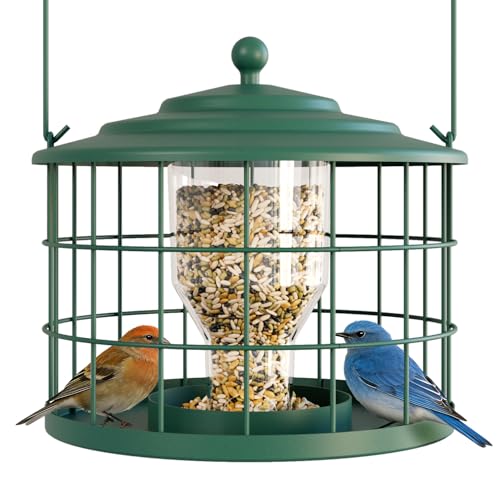
A 9.2-inch square metal cage with finch-friendly openings means starlings and larger birds get blocked while chickadees and finches feed without the usual crowd. The covered lid and quick-drain holes keep seed drier after rain, so you’re not dumping soggy mix every few days. For anyone tired of watching starlings bully the feeder clean, this is a straightforward fix that puts small birds first.
The trade-off is that the same openings that keep starlings out also mean larger birds won’t visit at all, so if you want cardinals or jays, you’ll need a separate feeder. It’s a focused tool for a specific problem, not a one-size-fits-all solution.
Product photos
Kingsyard Caged Squirrel Proof Bird Feeder
What We Like
- All-metal build resists chewing
- Wide roof keeps seed dry
- Extended tray catches falling seed
Trade-offs
- 2 lb capacity limits fill frequency
- 2 lb capacity requires more frequent refills
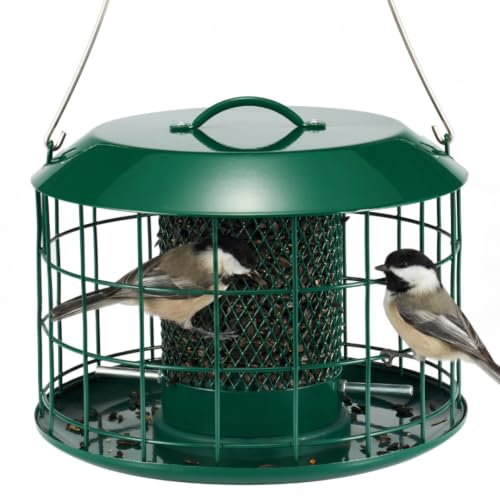
The 1.5 x 1.5 inch mesh openings are the standout feature: they welcome goldfinches, chickadees, and bluebirds while making it harder for squirrels, pigeons, and starlings to reach the seed. That selective access, paired with an all-metal build that stops squirrels from chewing through, makes this feeder a practical choice if you want to reduce seed waste and focus on smaller birds. The wide metal roof also keeps rain off the seed, so you’re not dumping out soggy sunflower hearts after every storm.
Capacity is the trade-off: at 2 lbs, you’ll be refilling more often than with a larger tube feeder like the Mosloly Caged Tube Seed Feeder, which holds 2.8 lbs. That extra ounce of convenience matters if you have a busy feeding station or go away for a few days.
Product photos
Birdream Suet Feeder Metal Cage

What We Like
- Holds two suet cakes for less refilling
- All-metal build with weatherproof powder coating
- Covered cage catches falling suet crumbs
Trade-offs
- Must hang out of squirrel jumping range for best effect
- Does not attract larger birds like blue jays or grackles
The all-metal construction with anti-rust powder coating means it can sit out in snow and rain without turning into a rust bucket. The covered roof plus drainage holes keep the suet cakes from turning into mush. It holds two standard suet cakes at once, so you’re not refilling every other day.
Compared to the Kettle Moraine upside-down suet log, which relies on birds feeding from below, this cage is more straightforward for clingers like woodpeckers and finches. Just keep in mind the manufacturer’s note about hanging it out of squirrel jumping range, the cage is tough, but a determined squirrel on a nearby branch can still reach it. For anyone who wants a no-nonsense suet feeder that actually keeps starlings out, this one delivers on its design.
Product photos
Mosloly Caged Tube Seed Feeder

What We Like
- 2.8 lb seed capacity
- Metal cage deters starlings and squirrels
- Clear tube attracts wild birds
- Detachable design for easy cleaning
Trade-offs
- Requires patience for birds to adapt
- Assembly needed before use
A 2.8-pound seed capacity means fewer refills for anyone maintaining a busy feeder station, especially when smaller birds go through mixed seed quickly. The metal cage with 1.73 x 1.27 inch openings is designed to keep out starlings and squirrels while letting smaller birds access the clear tube. That design suits someone who wants a set-and-forget feeder that prioritizes volume over constant attention, without worrying about larger birds muscling in on the food.
The same mesh that keeps out starlings also keeps out any bird too big to squeeze through a 1.27-inch gap, so you are deliberately selecting for smaller species. It is a feeder for someone who values capacity and exclusion over instant acceptance.
Mosloly Caged Bird Feeder Metal
What We Like
- 3 lb seed capacity reduces refill frequency
- Durable stainless and iron construction
- Detachable assembly for easy cleaning
- Adjustable switch to close feeding ports
Trade-offs
- At 16.5 inches tall, needs clearance for hanging
- 4.1 pounds is heavier than some cage feeders
- Assembly required per manual instructions
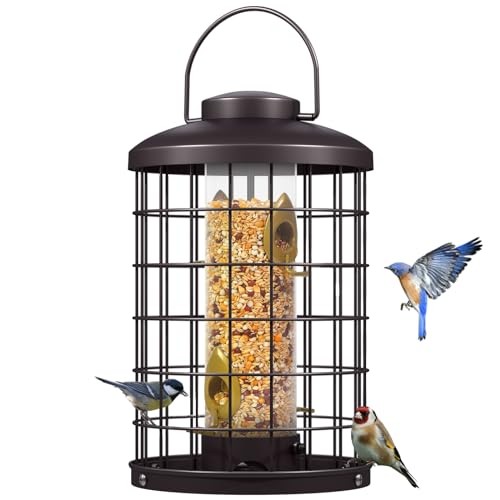
A 3-pound seed capacity means you won’t be refilling every day, and the clear tube lets you see when it’s running low without taking it apart. The heavy-duty stainless and iron cage is built to handle weather and persistent birds alike. For someone who wants to feed a crowd of finches, chickadees, and titmice without constant refills, this feeder keeps the buffet open longer.
With a 3-pound seed capacity, this feeder holds enough to attract tits, mockingbirds, and warblers for days without constant refills. The trade-off is its size: at over 16 inches tall and 4.1 pounds, it needs a sturdy hook and enough clearance to swing freely. An adjustable switch on the bottom lets you close off the lower ports to deny access to the bottom tray, which helps manage seed flow.
Erva Starling-Proof Barrier Guard Feeder
What We Like
- Premium copper finish
- Proudly made in USA
- Barrier guard design deters starlings
- Includes seed cylinder holder
Trade-offs
- Wide 14-inch footprint needs ample hanging space
- No perches for birds that need them
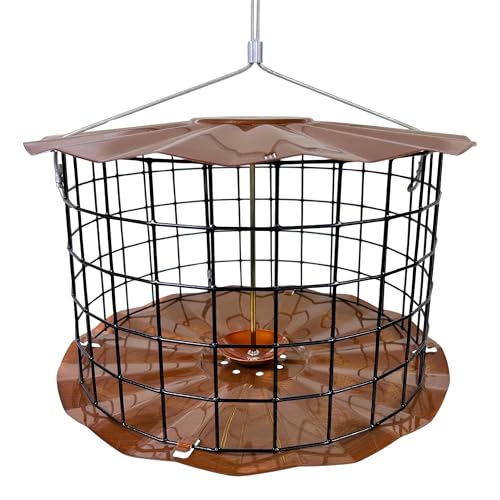
A 14-inch-wide barrier guard with a seed cylinder holder means this feeder physically blocks larger birds like starlings while letting smaller species slip through to the ports. That design, paired with a premium copper finish and US manufacturing, makes it a durable option for anyone who wants to feed chickadees or nuthatches without subsidizing bully birds. The all-metal construction and straightforward refill process add to its practical appeal for a feeder that should last years outdoors.
Its wide 14-inch footprint takes up more space on a hook or pole than a compact caged feeder like the Mosloly Caged Tube Seed Feeder, which stands 12.5 inches tall but is narrower. If your hanging spot is tight, the Erva may feel oversized. For a focused starling-deterrent feeder built in the US, this is a straightforward, no-nonsense pick.
Kettle Moraine Upside Down Suet Log Feeder

What We Like
- Upside down design deters starlings
- Solid cedar construction
- Large hook for easy hanging
- 4 holes plus natural cracks for suet
Trade-offs
- Suet plugs not included
- Only suits clinging birds like woodpeckers
- Narrow 3.5-inch width limits capacity
A 16-inch cedar log with four suet plug holes and natural cracking means this feeder is built for one thing: letting downy woodpeckers eat while starlings and grackles get nothing. The upside-down design prevents non-clinging birds from feeding here, which makes it a straightforward solution if your yard has been overrun by greedy flock feeders. The solid cedar body is made in the USA and should hold up well in outdoor conditions.
The upside-down design of this 16-inch cedar log feeder keeps greedy birds like starlings and grackles away, so clinging birds like downy woodpeckers finally get a chance to feed. It comes empty of suet, letting you choose your own plugs, and its natural cracking adds both rustic looks and extra grip for birds. The large silver aluminum hook makes hanging simple, and since it’s made in the USA from solid cedar, it’s built to last.
Product photos
Kettle Moraine Mini Cedar Suet Log Feeder

What We Like
- Starling resistant for clinging birds
- Hangs vertically or horizontally
- Solid cedar log construction
- Made in the USA
Trade-offs
- Only accepts suet plugs or spreadable suet
- Smaller log limits number of feeding holes
- No included suet requires separate purchase
Three 1.25-inch suet plug holes and a solid cedar log mean this feeder targets clinging birds like woodpeckers and nuthatches while excluding starlings that prefer to perch and peck. The ability to hang it vertically or horizontally lets you adjust placement to attract the species you want, making it a flexible option for backyard birders who value control over who visits. Its compact 8-inch length and lightweight cedar build suit smaller spaces or mixed feeding stations without dominating the setup.
This feeder only works with suet plugs or spreadable suet, so it won’t accommodate loose seed or larger suet blocks like the Birdream Metal Cage Bird Feeder does. That narrower food type limits the birds it attracts, but for anyone specifically wanting to feed clinging birds without starling interference, the design delivers exactly that. The simple cedar construction is durable and blends naturally into a yard, though it lacks the metal cage protection some other options offer.
Product photos
How We Evaluated Starling Proof Bird Feeders
Our research began with manufacturer specifications and design documentation for each feeder, focusing on the physical mechanism used to exclude starlings. Cage spacing, perch weight sensitivity, and port orientation were the primary exclusion features we compared. We then cross-referenced these designs against known starling body measurements and feeding behaviors to confirm each feeder’s theoretical effectiveness.
The three criteria that mattered most were exclusion effectiveness, target bird accessibility, and build durability. A feeder that keeps starlings out but also blocks chickadees and nuthatches has missed the point. We looked for designs that selectively admit smaller birds while physically preventing larger birds from accessing seed. Build quality was critical because starlings are persistent and a flimsy feeder will not hold up.
This guide is based on documented specifications, expert consensus on starling exclusion methods, and patterns in verified owner experiences. The best feeder for your yard depends on which bird species you want to attract and the feeder location you have available.
What To Look For In Starling Proof Bird Feeders
Choosing a starling-proof feeder means understanding how different exclusion mechanisms work and which birds they let through. Here is what to check before you buy.
The best starling-proof feeder uses a physical barrier, cage spacing under 1.5 inches, upside-down ports, or a weight-sensitive perch, that lets target birds feed while blocking starlings. Match the mechanism to the birds you want.
Cage Spacing and Bar Spacing
The most common starling-proof design is a metal cage wrapped around the seed tube or tray. The critical measurement is the vertical bar spacing. Starlings need about 1.5 inches of clearance to squeeze through. A cage with bars spaced 1.25 inches or less will exclude adult starlings while allowing chickadees, finches, and nuthatches to pass. Check the manufacturer’s stated bar spacing before buying.
Feeding Port Orientation
Upside-down feeders require a bird to cling upside down to reach the suet or seed. Starlings rarely feed in this position, while woodpeckers, nuthatches, and chickadees do it naturally. This design is highly effective for suet feeding but limits you to clinging species. If you want to attract goldfinches and titmice, a cage-style feeder with proper spacing is a better fit.
Build Material and Weather Resistance
Starlings are persistent and will test a feeder repeatedly. Look for all-metal construction, powder-coated steel or stainless steel, rather than plastic, which starlings and squirrels can chew through. A weatherproof lid with drain holes keeps seed dry and prevents mold, which matters because wet seed spoils faster and attracts less-desirable birds. Copper finishes like the Erva feeder’s offer natural weather resistance and a premium look.
- Measure the cage bar spacing, under 1.5 inches excludes most starlings
- Check that small birds you want can actually reach the seed or suet
- Confirm the feeder includes drain holes or a weatherproof lid
- Verify the hanging method suits your yard, some heavy feeders need sturdy bird feeder poles
- Look for detachable designs that make cleaning easier
If starlings are your only problem, a cage feeder with 1.25-inch bar spacing is the simplest solution. If squirrels are also an issue, combine it with squirrel baffles on the pole.
Starling Proof Bird Feeders Compared
The table below compares all eight feeders across key specs so you can see at a glance which design fits your yard.
| Product | Dimensions | Material | Design |
|---|---|---|---|
| Birdream Metal Cage Bird Feeder | L 9.2 x W 9.2 x H 6.7 inches | Durable Metal | Squirrel & Starling Resistant |
| Kingsyard Caged Squirrel Proof Bird Feeder | L 9.8 x W 9.8 x H 7.9 inches | Rust-resistant metal | Small Bird Focus |
| Birdream Suet Feeder Metal Cage | L 9.4 x W 9.4 x H 7.5 inches | Heavy-gauge metal, anti-rust powder coat | Squirrel Proof Cage |
| Mosloly Caged Tube Seed Feeder | L 10.6 x W 10.6 x H 12.5 in | Metal | Squirrel-Proof |
| Mosloly Caged Bird Feeder Metal | L 8.2 x W 8.2 x H 16.5 inches | Heavy-duty stainless and iron | Squirrel-Proof |
| Erva Starling-Proof Barrier Guard Feeder | L 14.0 x W 14.0 x H 8.0 inches | Copper finish | Starling-Proof Barrier Guard |
| Kettle Moraine Upside Down Suet Log Feeder | L 16.0 x W 3.5 x H 3.5 inches | Solid cedar | Upside down clinger |
| Kettle Moraine Mini Cedar Suet Log Feeder | L 8.0 x W 3.5 x H 8.0 inches | Solid Cedar Log | Starling Resistant |
Frequently Asked Questions
Do starling-proof feeders also keep squirrels out?
Some do, but not all. Metal cage feeders with tight bar spacing can exclude both starlings and squirrels, but squirrels are stronger chewers and may damage plastic components. For reliable squirrel exclusion, look for feeders with metal cages or combine a starling-proof feeder with squirrel-proofing tips on the pole.
What is the best seed to use in a starling-proof feeder?
Safflower seed is a good choice because starlings and squirrels dislike its bitter taste, while cardinals, chickadees, and finches eat it readily. Many birders pair a starling-proof feeder with safflower seed to add a second layer of deterrence.
Will a starling-proof feeder still attract cardinals and blue jays?
It depends on the design. Cage feeders with bar spacing under 1.5 inches will exclude cardinals and jays because they are too large to pass through. If you want those species, choose a feeder with a weight-sensitive perch or an upside-down design that lets larger birds feed from below or the side.
How do I clean a starling-proof bird feeder?
Most cage feeders have detachable components for easy cleaning. Disassemble the feeder every two weeks and scrub all parts with a mild bleach solution (one part bleach to nine parts water), then rinse thoroughly. Let it dry completely before refilling to prevent mold.
Can I use a starling-proof feeder for suet?
Yes, but only if the feeder is designed for suet. The Birdream Suet Feeder Metal Cage and both Kettle Moraine models accept suet cakes or plugs. A standard seed feeder with a cage may not have the right port shape for suet. Check the product description for suet compatibility before buying.
The Bottom Line
The Birdream Metal Cage Bird Feeder is the best overall choice for birders who want to stop starlings from dominating the feeder while keeping small finches, chickadees, and nuthatches feeding in peace. Its cage design is simple, effective, and built to last. For birders who prefer suet, the Kettle Moraine Upside Down Suet Log Feeder offers a clever orientation-based solution that woodpeckers love and starlings cannot figure out.
If you need a larger seed capacity, the Mosloly Caged Tube Seed Feeder holds 2.8 pounds and uses the same cage principle. And for those who want a US-made option, the Erva Starling-Proof Barrier Guard Feeder brings a premium copper finish and a barrier design that physically excludes starlings.
The single most important factor is matching the exclusion mechanism to the birds you want. Measure your feeder location, know which species visit your yard, and choose a design that lets the right birds through while keeping the bullies out.
