
4 Best Small Kibble Cat Food in 2026
This post contains affiliate links. As an Amazon Associate, we earn from qualifying purchases.
For cats that struggle with standard-sized kibble, Stella & Chewy’s Raw Coated Cat Food is the best overall small kibble option. Its tiny pieces, high animal protein content, and probiotics support gentle digestion. The Nulo FreeStyle Grain-Free Cat Food Chicken & Cod offers a high-protein alternative with a disc-shaped kibble, while the Purina Pro Plan All Life Stages Chicken Formula works well for multi-cat households needing a single bag that suits every age.
A smaller kibble isn’t just about preference, it can make a real difference for kittens with tiny mouths, senior cats with sore gums, or any cat that tends to gulp food without chewing. The right size helps cats eat at a comfortable pace and reduces the chance of choking or regurgitation.
This guide is based on a close look at ingredient lists, kibble dimensions, protein sources, and digestive support features across four top contenders. We focused on what actually matters for cats that need a smaller bite, so you can match the right formula to your cat’s specific needs.
Top 4 Small Kibble Cat Foods in the Market
Certain content that appears on this site comes from Amazon. This content is provided "as is" and is subject to change or removal at any time.
The Best Small Kibble Cat Foods, Reviewed
Stella & Chewy's Raw Coated Cat Food

What We Like
- Small kibble for kittens and seniors
- High animal protein content
- Probiotics support gentle digestion
- Omega fatty acids for coat health
Trade-offs
- Only one animal protein source (chicken)
- Not suitable for cats with poultry sensitivities
A 65-70% animal protein content with cage-free chicken as the first ingredient puts this firmly in the high-protein camp, which mirrors what a cat’s ancestral diet looks like. The small kibble size means it works for kittens, senior cats, and those with dental issues, while the freeze-dried raw coating is aimed squarely at picky eaters. Probiotics and omega fatty acids from salmon oil and fenugreek seeds round out the digestive and coat support, so you get a fairly complete nutritional package in one bag.
With 65-70% animal protein from cage-free chicken as the number one ingredient, this kibble delivers the kind of concentrated nutrition that mirrors what a cat’s wild ancestors would eat. The small kibble size makes it especially easy for kittens, seniors, or cats with dental issues to chew, and the freeze-dried raw coating adds a layer of flavor that picky eaters tend to love. If your cat does well on chicken and doesn’t need grains, this is a straightforward, well-formulated option.
Product photos
Nulo FreeStyle Grain-Free Cat Food Chicken & Cod
What We Like
- 83% animal-based protein from deboned chicken
- Small disc-shaped kibble for easy eating
- BC30 probiotics for digestive support
- Omega fatty acids for skin and coat
Trade-offs
- Contains fish oil, not ideal for fish-averse cats
- Contains fish-derived omega fatty acids, which some cats avoid
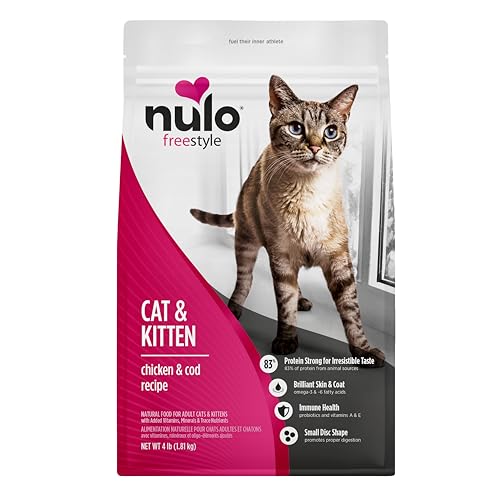
With 83% animal-based protein from deboned chicken as the first ingredient, this formula targets lean muscle support and appetite satisfaction in a way that mirrors a cat’s natural carnivorous diet. The small disc-shaped kibble makes it easy for kittens and seniors to chew. The inclusion of BC30 probiotics and omega-3 and -6 fatty acids addresses digestive health and coat condition without relying on fillers like corn or wheat. This is a straightforward, high-protein option for owners who want a grain-free recipe that prioritizes meat content over plant-based protein sources.
The trade-off here is that the high protein and fish oil content may not suit every cat, particularly those with sedentary lifestyles or sensitivities to fish-based ingredients. Compared to the Stella & Chewy’s Raw Coated option, which offers a raw-coated kibble for a different texture experience, Nulo FreeStyle focuses on a higher protein percentage and a simpler ingredient list. If your cat thrives on a meat-forward diet and you’re comfortable with a grain-free formula, this delivers on its protein promise without unnecessary additives.
Product photos
Nulo FreeStyle Indoor Grain-Free Cat Food Duck & Cod
What We Like
- 82% animal-based protein from deboned duck
- Small disc-shaped kibble for indoor cats
- Omega-3 & 6 for skin and coat
- BC30 probiotics for digestive support
Trade-offs
- Targeted for indoor cats only
- Not suitable for outdoor or active cats needing more calories
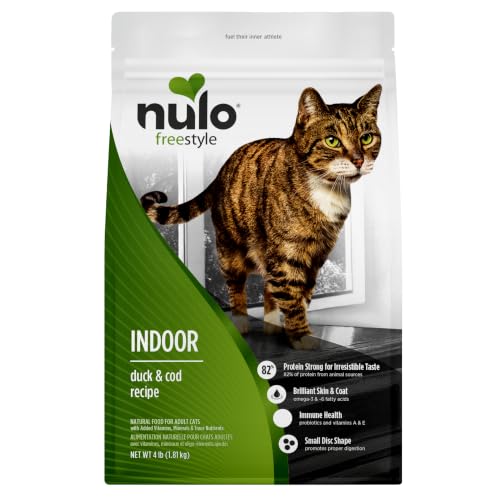
82% animal-based protein from deboned duck is the headline here, and it means this formula is built to support lean muscle without the filler carbs that pad out many indoor recipes. The small disc-shaped kibble is a practical detail for cats who prefer a finer texture or tend to gulp their food. With BC30 probiotics and prebiotic fibers on board, digestion and immune support get a targeted boost, which matters for indoor cats that often have lower activity levels and slower gut motility. This is a grain-free, low-carb option that leans hard on meat-first nutrition, skipping corn, wheat, soy, and even white potato or tapioca.
This formula is designed for indoor cats, so it may not be the best fit for kittens or cats with higher activity levels. The Purina Pro Plan All Life Stages Chicken Formula is a more versatile option that covers a wider range of life stages. The omega-3 and omega-6 fatty acids come from fish, which is a common ingredient in many cat foods. For an indoor cat that needs a lean, high-protein diet with digestive support, the ingredient list here is clean and purposeful.
Product photos
Purina Pro Plan All Life Stages Chicken Formula
What We Like
- Real chicken as first ingredient
- Includes DHA for brain and vision
- Live probiotics for digestive support
- Formulated for all life stages
Trade-offs
- Contains rice, not grain-free
- 3.2 lb bag is smaller than some alternatives
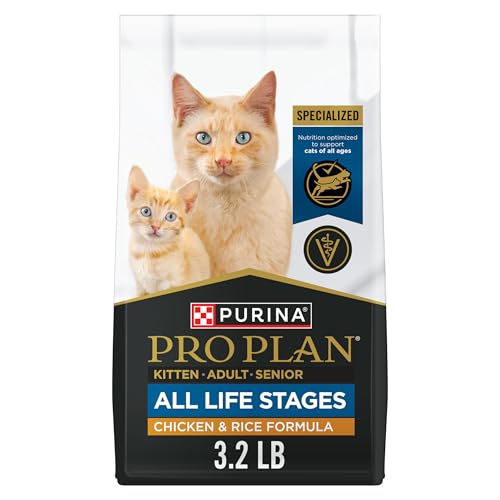
A single bag that works for kittens, adults, and seniors means you don’t need separate food for each cat in a multi-cat home. Real chicken leads the ingredient list, and the inclusion of DHA supports brain and vision development while live probiotics aid digestion. This formula is designed to keep every cat in the household on the same kibble without compromising on nutrition for any age group.
The trade-off is that this formula contains rice, so if you’re avoiding grains, the Nulo FreeStyle Chicken & Cod offers a different ingredient profile. But for a household with cats of different ages, the convenience of one bag that covers all life stages is hard to beat. The 3.2-pound bag is modest, but the formula itself is built for versatility.
Product photos
How We Evaluated Small Kibble Cat Foods
We started by examining manufacturer specifications for kibble size, shape, and texture, then cross-referenced those details with ingredient quality and guaranteed analysis data. Owner feedback patterns helped us understand how well each formula worked for cats with dental sensitivities, picky eating habits, or digestive issues. We also consulted expert round-ups from veterinary nutritionists to confirm which ingredients and formulations consistently support feline health.
The three criteria that mattered most were kibble dimensions, protein content and source, and digestive support features like probiotics or prebiotic fiber. Kibble size needed to be small enough for kittens and seniors to manage, while animal-based protein is essential for obligate carnivores. We also considered whether the formula was appropriate for specific life stages or activity levels, since a small kibble that doesn’t meet nutritional needs is no bargain.
A research-led evaluation like this has limits, we didn’t feed these foods to a panel of cats, and individual palates vary. What we can do is give you a clear, evidence-based picture of what each bag offers, so you can make an informed choice based on your cat’s health profile and your own priorities.
What To Look For In Small Kibble Cat Foods
Finding the right small kibble means looking past the bag’s claims and checking the actual kibble size, ingredient order, and nutritional guarantees. Here’s what matters.
Look for kibble that’s genuinely small, with a named animal protein as the first ingredient, and a guaranteed analysis that matches your cat’s life stage and activity level.
Kibble Size and Shape
The whole point of a small kibble is that it fits comfortably in a cat’s mouth. Kittens, seniors with dental issues, and brachycephalic breeds benefit most from small kibble. Disc-shaped or rounded pieces are easier to pick up and chew than sharp triangles or stars. Some brands list kibble dimensions on the bag or website; if they don’t, owner photos and reviews can give you a rough idea.
Protein Content and Source
Cats are obligate carnivores, so the first ingredient should be a named animal protein like chicken, duck, or fish. Look for formulas with high protein content on a dry matter basis, and check whether the protein comes from muscle meat, organs, or by-products. A single protein source can be ideal for cats with food sensitivities, but it also means less variety in amino acid profiles.
Digestive Support and Coat Health
Probiotics, prebiotic fiber, and omega fatty acids aren’t just marketing buzzwords, they support nutrient absorption, stool quality, and skin health. Look for guaranteed levels of live probiotics (like BC30 or proprietary blends) and named sources of omega-3 and omega-6, such as fish oil or flaxseed. These are especially important for seniors and cats with sensitive stomachs.
- Check the guaranteed analysis for crude protein and fat percentages.
- Look for a named animal protein as the first ingredient.
- Confirm the kibble size if the brand lists it on the packaging.
- Verify that the formula is appropriate for your cat’s life stage.
- Read the ingredient list for added fillers like corn, wheat, or soy.
If your cat has a known health condition, run the ingredient list by your veterinarian before switching foods.
Small Kibble Cat Foods Compared
The table below compares each pick’s protein source, kibble characteristics, and digestive support features side by side.
| Product | Protein Content | Kibble Size/Shape | First Ingredient | Special Features |
|---|---|---|---|---|
| Stella & Chewy's Raw Coated Cat Food | 65-70% animal protein | Small kibble | Cage-free chicken | Probiotics, omega fatty acids |
| Nulo FreeStyle Grain-Free Cat Food Chicken & Cod | 83% animal-based protein | Small disc-shaped | Deboned Chicken | BC30 probiotics, omega-3 & -6 |
| Nulo FreeStyle Indoor Grain-Free Cat Food Duck & Cod | 82% animal-based protein | Small Disc | Deboned Duck | BC30 probiotics, omega-3 & -6 |
| Purina Pro Plan All Life Stages Chicken Formula | N/A | N/A | Real chicken | DHA, live probiotics |
Frequently Asked Questions
What size kibble is considered small for cats?
Small kibble typically measures under a certain diameter, though some brands produce pieces as small as a few millimeters. Disc-shaped or rounded kibble is easier for kittens and seniors to manage than irregular shapes. If the bag doesn’t list dimensions, owner photos and reviews often give a good sense of the actual size.
Is small kibble better for cats with dental problems?
Smaller kibble can be easier for cats with sore gums, missing teeth, or dental disease to chew and swallow. However, it doesn’t clean teeth any better than larger kibble, that’s a common myth. For cats with serious dental issues, a wet food diet or veterinary dental care may be more appropriate.
Can kittens eat adult small kibble formulas?
Kittens need higher levels of protein, fat, and certain nutrients like DHA for brain and vision development. Some small kibble formulas are labeled for all life stages and meet those requirements, but adult-only formulas may not provide enough calories or calcium for growing kittens. Always check the life stage label before feeding.
What should I look for in a high-protein small kibble?
Look for a named animal protein as the first ingredient, with high protein content on a dry matter basis. Avoid formulas that rely on plant proteins like corn gluten meal or soybean meal to boost the protein percentage. The best high-protein kibbles also include probiotics and omega fatty acids for digestive and coat support.
How do I transition my cat to a new small kibble?
Gradually mix the new food with the old over a week to ten days, starting with a small amount of new food and increasing by a modest percentage each day. A sudden switch can cause vomiting, diarrhea, or refusal to eat. If your cat has a sensitive stomach, extend the transition to two weeks and add a probiotic supplement.
The Bottom Line
The Stella & Chewy’s Raw Coated Cat Food is our top pick for cat owners who want a genuinely small kibble with high animal protein, probiotics for digestion, and omega fatty acids for coat health. It’s especially well suited for kittens, seniors, and picky eaters who need a smaller bite without sacrificing nutritional quality.
If your cat needs a higher protein percentage or has fish sensitivities, the Nulo FreeStyle Grain-Free Cat Food Chicken & Cod offers 83% animal-based protein in a disc-shaped kibble that’s easy to chew. For multi-cat households, the Purina Pro Plan All Life Stages Chicken Formula provides a single-bag solution that works for kittens, adults, and seniors alike.
The single most important factor is matching the kibble size and nutritional profile to your cat’s specific life stage and health needs. A small kibble that’s nutritionally incomplete is no bargain, no matter how tiny the pieces are.
