
9 Best Hypoallergenic Dog Food in 2026
This post contains affiliate links. As an Amazon Associate, we earn from qualifying purchases.
For dogs with food sensitivities, the right diet makes all the difference. The Natural Balance Limited Ingredient Salmon & Sweet Potato Dry Dog Food earns our best overall spot for its straightforward single-animal-protein recipe that supports sensitive stomachs and skin without unnecessary ingredients. We also highlight the Blue Buffalo Basics Salmon for skin and stomach care and the veterinary-exclusive Royal Canin HP for dogs needing hydrolyzed protein.
A “hypoallergenic” label doesn’t mean the food is allergy-proof. It means the formula uses a limited number of ingredients or specially processed proteins to reduce the chance of a reaction. The real challenge is finding a recipe that avoids your dog’s specific triggers while still delivering complete, balanced nutrition.
This guide is research-based. We looked at ingredient lists, manufacturer specifications, expert recommendations, and patterns in owner feedback to identify nine of the best hypoallergenic dog foods available. Our goal is to help you match your dog’s needs to the right formula.
Top 9 Hypoallergenic Dog Foods in the Market



Certain content that appears on this site comes from Amazon. This content is provided "as is" and is subject to change or removal at any time.
The Best Hypoallergenic Dog Foods, Reviewed
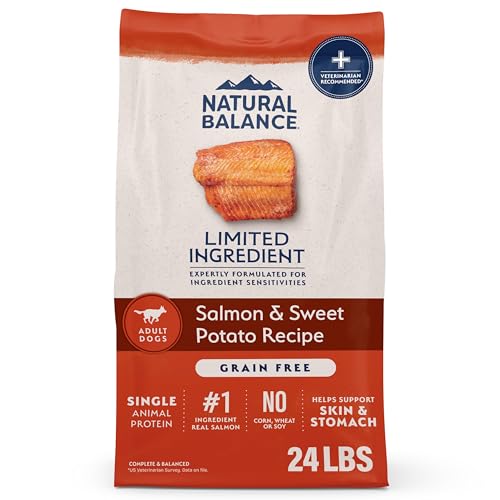
Natural Balance Limited Ingredient Salmon & Sweet Potato Dry Dog Food
What We Like
- Single animal protein for limited ingredient diet
- Grain-free recipe supports sensitive stomachs
- Includes skin and coat nourishment
- Vet recommended for trusted nutrition
Trade-offs
- Not suitable for dogs needing hydrolyzed protein
A single animal protein source, salmon, is the primary protein in this grain-free formula, which is exactly what you want when your dog’s stomach is touchy. Natural Balance uses easily digestible ingredients to support sensitive digestion and daily comfort. This is a straightforward, no-nonsense formula for adult dogs with mild to moderate sensitivities, and the vet recommendation adds a layer of credibility that many grain-free bags lack. If your dog does fine on a limited ingredient diet but needs reliable skin and coat support, this 24-pound bag delivers balanced nutrition without the guesswork.
Compared to Royal Canin HP Hypoallergenic Hydrolyzed Protein Dog Food, which breaks proteins down to avoid immune responses, this Natural Balance recipe is a gentler first step rather than a medical-grade solution. For most dogs with sensitive stomachs or mild skin issues, the limited ingredient approach works well, just don’t expect it to replace a veterinary elimination diet.
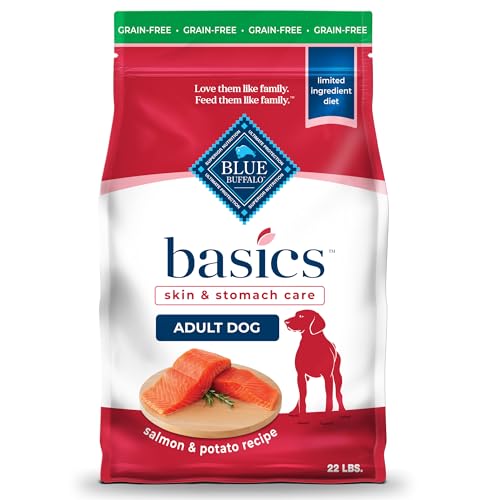
Blue Buffalo Basics Salmon Grain-Free Dry Dog Food
What We Like
- Real salmon is first ingredient
- No chicken by-product meals
- No corn, wheat, or soy
- Includes antioxidant-rich LifeSource Bits
Trade-offs
- Grain-free not suitable for all dogs
- Not suitable for dogs needing hydrolyzed protein
The #1 ingredient here is real salmon, which gives this kibble a straightforward protein base for dogs with sensitive skin or stomachs. It skips chicken by-product meals, corn, wheat, and soy entirely, and the LifeSource Bits add antioxidants without complicating the formula. That makes it a sensible pick if your dog reacts to common fillers or poultry, and you want a grain-free option that keeps the ingredient list short and readable.
The recipe sticks to a limited ingredient philosophy, which is exactly the point for this category, but means fewer protein or grain sources than a more varied diet might offer. If your dog does well on salmon and potato without grains, this is a clean, no-nonsense recipe.
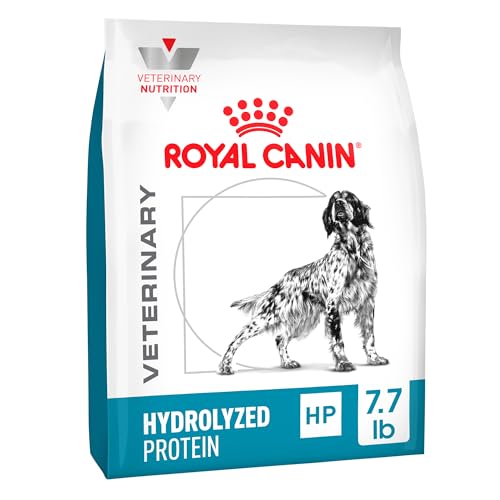
Royal Canin HP Hypoallergenic Hydrolyzed Protein Dog Food
What We Like
- Hydrolyzed soy protein for sensitivity support
- Enriched with EPA and DHA fatty acids
- Supports skin barrier and digestive flora
Trade-offs
- Only 7.7 lb bag, smaller than many competitors
- Requires veterinary prescription to purchase
Hydrolyzed soy protein broken into low molecular weight peptides is the key here, it’s highly digestible and designed to dodge the immune response that triggers food sensitivities. That makes this Royal Canin formula a precise tool for elimination diets or managing chronic skin and stomach issues. The addition of EPA and DHA fatty acids helps maintain healthy skin and digestion, so you’re supporting the skin’s natural protective barrier while also aiding digestive health.
The trade-off is the bag size: at 7.7 lb, it’s smaller than the 25 lb bags from Purina Pro Plan Veterinary Diets HA or Hill’s Prescription Diet z/d. That means more frequent reordering, and if you’re feeding a large breed, you’ll be buying often. The soy protein base works for many dogs, but some owners may prefer a different protein source like salmon, which you’ll find in the Natural Balance Limited Ingredient line. If you need a larger bag, one of those longer-running bags might fit your routine better.
Purina Pro Plan Veterinary Diets HA Hydrolyzed Dry Dog Food
What We Like
- Single hydrolyzed protein source
- Single carbohydrate source
- Highly digestible for nutrient absorption
- Vegetarian formula
Trade-offs
- Veterinary diet requires vet authorization
- Single protein limits variety
This kibble uses a single hydrolyzed protein source and a single carbohydrate source, which means the protein is broken down into smaller fragments. The formula is vegetarian and highly digestible, promoting optimal nutrient absorption. It’s designed as a targeted option for dogs with specific dietary needs, not as a general everyday food.
A veterinary diet requires a prescription, so you’ll need your vet’s approval to buy this Purina Pro Plan HA Hydrolyzed Dry Dog Food. The single hydrolyzed protein source and single carbohydrate source make it a highly controlled option for dogs with food sensitivities. For milder cases, a limited-ingredient diet like Natural Balance’s salmon and sweet potato formula might be sufficient without the vet involvement.
Hill's Prescription Diet z/d Skin/Food Sensitivities Dry Dog Food
What We Like
- Hydrolyzed proteins avoid immune detection
- Clinically shown to firm stool in 3 days
- Rich in Omega-6 & 3 fatty acids
- ActivBiome+ prebiotic fiber blend
Trade-offs
- Requires veterinary prescription to purchase
- Not suitable for dogs without diagnosed food sensitivities
The hydrolyzed proteins in this formula are broken down so the immune system doesn’t detect them, which is the core mechanism for managing food sensitivities. Designed by Hill’s nutritionists and veterinarians, it’s clinically shown to firm loose stool in just three days and support visible skin and coat improvement within 30 days. ActivBiome+, a proprietary blend of prebiotic fibers, rapidly activates the gut microbiome to support digestive health and well-being. This is the option to reach for when your dog’s sensitivities are persistent enough that your vet wants a precisely controlled diet.
The obvious trade-off is that you need a prescription to buy it, so this isn’t a grab-off-the-shelf solution for mild itching or occasional digestive upset. Compared to something like Natural Balance Limited Ingredient Salmon & Sweet Potato, which uses a single protein source, Hill’s z/d takes a more controlled approach to avoiding immune triggers. That makes it ideal for dogs with food sensitivities needing a veterinary-supervised diet, but it also means you’re locked into a prescription requirement. If your dog’s issues are less severe, a limited-ingredient diet might work without the prescription hassle.
Product photos
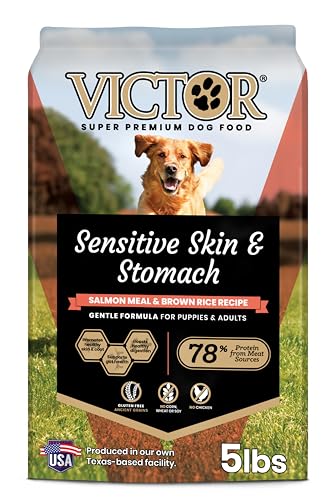
VICTOR Sensitive Skin & Stomach Salmon Meal & Brown Rice Dog Food
What We Like
- Salmon meal is first ingredient
- Contains prebiotics and probiotics
- Gluten-free and no chicken
- Fortified with Omega 3, 6, Vitamin E
Trade-offs
- Contains brown rice, not grain-free
- Not suitable for dogs needing a grain-free diet
Salmon meal as the first ingredient means this recipe puts animal protein front and center, which matters for building lean muscle and maintaining energy in dogs with food sensitivities. The inclusion of prebiotics and probiotics targets gut health directly, so you’re not just avoiding allergens but also supporting digestion and immune function. That makes it a strong fit for dogs whose skin and stomach issues stem from a compromised microbiome or a chicken intolerance, without relying on exotic proteins or hydrolyzed formulas.
The trade-off is that this isn’t a grain-free recipe, brown rice is present. So if your dog needs a strictly grain-limited diet, something like Natural Balance Limited Ingredient Salmon & Sweet Potato might be a better fit since it skips grains entirely. But for dogs that tolerate grains well and need the extra digestive support, the probiotic edge here gives it a practical advantage over simpler limited-ingredient options. It’s a sensible middle ground between a stripped-down diet and a fully therapeutic formula.
Product photos
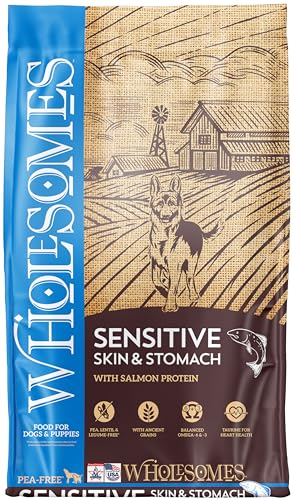
Wholesomes Sensitive Skin & Stomach Salmon & Rice Dry Dog Food
What We Like
- Free from peas, lentils, legumes
- Enriched with taurine for heart health
- Omega fatty acids for skin and coat
Trade-offs
- Not grain-free; contains brown rice
- Contains beef meal, not ideal for beef-sensitive dogs
Omega-6 and Omega-3 fatty acids are included to help maintain healthy skin and a shiny coat. If you’re looking for a recipe that avoids common legume fillers like peas and lentils, this one checks that box without sacrificing nutritional balance.
Product photos
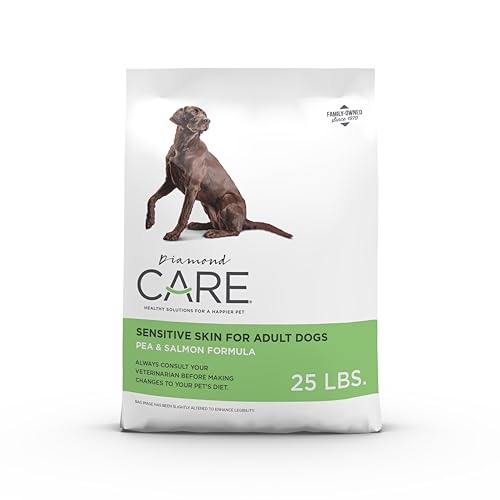
DIAMOND CARE Sensitive Skin Hydrolyzed Salmon Dry Dog Food
What We Like
- Single source hydrolyzed salmon protein
- Guaranteed omega fatty acids for skin
- Guaranteed probiotics for digestive support
- Family owned, made in USA
Trade-offs
- Not suitable for puppies or seniors needing a life-stage specific formula
- Not for puppies or seniors needing life-stage formulas
A 25-pound bag of hydrolyzed salmon protein from a single source is the core pitch here, and it’s a sensible one for dogs with suspected food sensitivities. The guaranteed levels of omega-6 and omega-3 fatty acids target skin and coat health directly, while the proprietary probiotics are formulated to survive the GI tract and support digestion. This is a limited ingredient diet that doesn’t rely on vague promises: the label puts the key numbers front and center. It suits owners who want a straightforward, traceable protein source without guessing what else is in the bag.
Hydrolyzed salmon is the single protein source here, processed to be less likely to trigger reactions in sensitive dogs, so it’s a smart pick if your adult dog has food sensitivities. Compared to Natural Balance’s Limited Ingredient Salmon & Sweet Potato, which uses whole salmon, Diamond Care relies on a hydrolyzed form that’s designed for dogs with delicate skin. That focus on hydrolysis means you’re getting a protein tailored for sensitivity, not a whole-food ingredient list.
Product photos
Blue Buffalo Basics Turkey Small Breed Adult Dry Dog Food
What We Like
- Real turkey as #1 ingredient
- No chicken by-product meals
- No corn, wheat, or soy
- Antioxidant-rich LifeSource Bits
Trade-offs
- Limited to small breed adult dogs
- Not suitable for dogs with poultry sensitivities
Real turkey is the first ingredient here, which is a straightforward way to avoid the poultry by-products that often trigger allergic reactions in sensitive small breeds. The formula skips corn, wheat, and soy entirely, and the antioxidant-rich LifeSource Bits add immune support without relying on flashy marketing claims. This makes it a sensible option for owners of small adult dogs who need a limited-ingredient diet that prioritizes digestibility over filler grains.
The 4-pound bag is ideal for testing or travel, but you’ll need to reorder often if feeding a small breed daily. Unlike Natural Balance’s 24-pound salmon and sweet potato recipe, this Blue Buffalo formula uses turkey as a single protein source and includes LifeSource Bits for immune support. It’s a straightforward option if your dog thrives on turkey and you want a small bag.
Product photos
How We Evaluated Hypoallergenic Dog Foods
We started with the ingredient panel. For each product, we examined the protein source, the carbohydrate source, and the presence of common allergens like chicken, corn, wheat, and soy. We also checked for added digestive aids like probiotics and prebiotics, and for fatty acid profiles that support skin health.
Our criteria focused on three areas: protein sourcing (single vs. Novel vs. Hydrolyzed), ingredient simplicity, and nutritional completeness. A food with a single animal protein and a single carbohydrate source offers the lowest risk of triggering a reaction. But some dogs need hydrolyzed proteins that are broken down small enough to avoid immune detection. We also weighed whether a formula required a veterinary prescription, since that changes how easily you can access it.
A research-led evaluation has limits. We haven’t fed these foods to a panel of dogs, and individual reactions vary widely. What works for one dog may not work for another, so we encourage you to check the ingredient list against your dog’s known sensitivities and consult your vet before making a switch. For a deeper look at the category, our guide to choosing hypoallergenic food walks through the label-reading process step by step.
What To Look For In Hypoallergenic Dog Foods
Choosing a hypoallergenic dog food means reading past the marketing claims and focusing on the ingredient list and protein source.
Look for a single, novel, or hydrolyzed protein source, a simple carbohydrate, and the absence of common triggers like chicken, corn, wheat, and soy. Check for added omega fatty acids and probiotics to support skin and digestion.
Protein Source: Single, Novel, or Hydrolyzed
The protein is usually the culprit in food allergies. A single animal protein (like salmon or turkey) limits exposure to one source. A novel protein (one your dog hasn’t eaten before) can help if they’ve developed sensitivities to common proteins. For dogs with severe allergies, hydrolyzed protein, broken into fragments too small for the immune system to recognize, is the most reliable option. Our guide to hydrolyzed dog food explains how these prescription diets work.
Ingredient Simplicity
Fewer ingredients mean fewer potential triggers. A true limited-ingredient diet (LID) uses one protein and one carbohydrate source, plus essential vitamins and minerals. Some formulas add a prebiotic fiber or probiotic strain for digestion, which is fine as long as the core ingredient list stays short. Our overview of limited ingredient diets covers the difference between true LID foods and those that just use the phrase on the bag.
Fat Profile and Digestive Support
Omega-3 and omega-6 fatty acids (often from fish oil or flaxseed) support skin barrier function, which matters when allergies cause itching and inflammation. Probiotics and prebiotics help maintain healthy gut flora, which can reduce digestive upset. Look for guaranteed levels on the label, not just “sources of” in the ingredient list.
- Check whether the food requires a veterinary prescription (hydrolyzed diets do).
- Confirm the protein source is one your dog has not reacted to before.
- Look for a single carbohydrate source (sweet potato, brown rice, or potato) to minimize variables.
- Avoid formulas with “meat meal” or “animal fat” unless the source is specified.
- Start with a small bag to test tolerance before committing to a large one.
A dog with a suspected food allergy should eat only the chosen food and water for several weeks to see if symptoms improve, no treats, chews, or table scraps.
Hypoallergenic Dog Foods Compared
The table below compares all nine formulas side by side, focusing on protein source, carbohydrate source, and whether a prescription is required.
| Product | Protein Source | Weight | Key Feature |
|---|---|---|---|
| Natural Balance Limited Ingredient Salmon & Sweet Potato Dry Dog Food | Salmon | 24 lb | Single Animal Protein Nutrition |
| Blue Buffalo Basics Salmon Grain-Free Dry Dog Food | Real Salmon #1 | 22 lb | Skin & Stomach Care |
| Royal Canin HP Hypoallergenic Hydrolyzed Protein Dog Food | Hydrolyzed soy protein | 7.7 lb | Hydrolyzed Protein Formula |
| Purina Pro Plan Veterinary Diets HA Hydrolyzed Dry Dog Food | Hydrolyzed | 25.0 pounds | Vegetarian formula |
| Hill's Prescription Diet z/d Skin/Food Sensitivities Dry Dog Food | Hydrolyzed Chicken | 25.0 lb | Hydrolyzed proteins |
| VICTOR Sensitive Skin & Stomach Salmon Meal & Brown Rice Dog Food | Salmon Meal | N/A | Gluten Free |
| Wholesomes Sensitive Skin & Stomach Salmon & Rice Dry Dog Food | Salmon | 30 lb | Omega-6 & Omega-3 |
| DIAMOND CARE Sensitive Skin Hydrolyzed Salmon Dry Dog Food | Hydrolyzed Salmon | 25 lb | Omega-6 & Omega-3 Guaranteed |
| Blue Buffalo Basics Turkey Small Breed Adult Dry Dog Food | Real Turkey | 4 lb | No chicken by-product meals |
Frequently Asked Questions
What is the difference between limited ingredient and hydrolyzed dog food?
Limited ingredient dog food uses a small number of whole ingredients, typically one protein and one carbohydrate, to reduce the chance of triggering a reaction. Hydrolyzed dog food takes protein and breaks it into tiny fragments that the immune system is less likely to recognize as an allergen. Hydrolyzed formulas are prescription-only and are often used for elimination diets or dogs with severe, confirmed allergies.
Can I switch my dog to hypoallergenic food without a vet visit?
You can switch to an over-the-counter limited ingredient or novel protein food without a prescription, but a vet visit is still a good idea. Your vet can help rule out environmental allergies, parasites, or other conditions that mimic food allergies. If your dog has severe symptoms like chronic ear infections or persistent vomiting, a vet-supervised elimination diet using a prescription hydrolyzed food is the most reliable diagnostic method.
How long does it take for hypoallergenic dog food to work?
Most dogs show improvement in skin and digestive symptoms within several weeks of starting a strict hypoallergenic diet. The key is that the dog eats only the new food and water, no treats, flavored medications, or chews. If symptoms don’t improve after that time, the food may not be the right match, and your vet may recommend a different protein source or a hydrolyzed formula.
Is grain-free hypoallergenic dog food better for allergies?
Not necessarily. Grain allergies in dogs are much less common than protein allergies. A grain-free formula may help if your dog has a confirmed sensitivity to grains like wheat or corn, but for most dogs with food allergies, the protein source is the real issue. Some grain-free diets replace grains with legumes like peas or lentils, which can be problematic for dogs with legume sensitivities.
What ingredients should I avoid in hypoallergenic dog food?
Avoid foods with unspecified “meat meal” or “animal fat,” since the source could be a common allergen like chicken or beef. Also avoid artificial colors, flavors, and preservatives, which add no nutritional value and could be irritants. If your dog has known sensitivities, avoid any formula that lists chicken, beef, dairy, egg, corn, wheat, or soy, these are the most common triggers.
The Bottom Line
The Natural Balance Limited Ingredient Salmon & Sweet Potato Dry Dog Food is our best overall pick because it keeps things simple: one animal protein, one carbohydrate, and no fillers. It’s a strong starting point for dogs with mild to moderate sensitivities and doesn’t require a prescription. If your dog needs a more targeted approach, the Royal Canin HP or Hill’s Prescription Diet z/d are the right choices for confirmed food allergies requiring hydrolyzed protein.
For budget-conscious owners, the VICTOR Sensitive Skin & Stomach and Wholesomes Sensitive Skin & Stomach offer solid salmon-based nutrition without the premium price tag. Small breed owners should look at the Blue Buffalo Basics Turkey Small Breed formula, which is sized for smaller mouths and lower calorie needs.
The single most important factor in choosing a hypoallergenic dog food is the protein source. Start there, keep the ingredient list short, and give the food at least eight weeks to show results. Your dog’s skin, coat, and digestion will tell you if you got it right.
