
3 Best Healthiest Lowest In Ash Phosphorus Dry Cat Food 2026
This post contains affiliate links. As an Amazon Associate, we earn from qualifying purchases.
The Purina Pro Plan Veterinary Diets NF Kidney Early Care Dry Cat Food earns our best overall pick for its scientifically backed phosphorus control and moderate protein levels designed for early kidney support. For cats needing a clean ingredient profile, the Forza10 Renal Dry Cat Food offers hydrolyzed protein with no GMOs or by-products. The Blue Buffalo Natural Veterinary Diet K+M Support combines kidney and joint support for cats with mobility concerns.
Managing phosphorus and ash levels in a cat’s diet becomes critical when kidney function starts to decline, yet many pet owners struggle to decode the numbers on a bag. Low phosphorus dry food helps reduce the workload on the kidneys, while low ash content minimizes mineral buildup that can worsen urinary and renal issues. The challenge is finding a kibble that balances these restrictions with adequate nutrition and palatability.
We built this guide by analyzing manufacturer specifications, veterinary feeding protocols, and patterns in owner feedback for kidney-support diets. Our research focuses on three products that meet controlled phosphorus thresholds, moderate protein targets, and low ash content without sacrificing ingredient quality. Each pick addresses a specific combination of health needs so you can match the formula to your cat’s stage of care.
Top 3 Healthiest Low Ash Low Phosphorus Dry Cat Foods in the Market
Certain content that appears on this site comes from Amazon. This content is provided "as is" and is subject to change or removal at any time.
The Best Healthiest Low Ash Low Phosphorus Dry Cat Foods, Reviewed
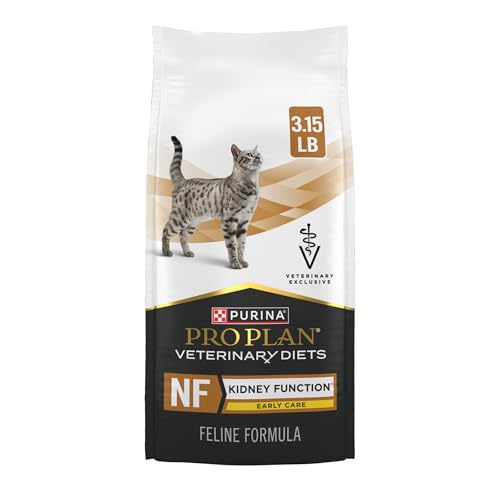
Purina Pro Plan Veterinary Diets NF Kidney Early Care Dry Cat Food
What We Like
- Controlled phosphorus for kidney support
- Moderate premium protein with antioxidants
- Omega-3 fatty acids for overall health
- Backed by scientific research
Trade-offs
- Targets early kidney care only
- Not suitable for cats with advanced kidney disease
Controlled phosphorus is the single most important spec here for anyone managing a cat with early kidney concerns. This formula keeps phosphorus in check while delivering moderate protein and added omega-3 fatty acids, so you aren’t sacrificing immune or coat health for the sake of renal support. That makes it the most balanced option for owners who want a science-backed daily food rather than a restrictive prescription diet.
The 3.1-pound bag is designed specifically for early-stage kidney management, not advanced disease. If your cat needs a lower-protein or lower-phosphorus formula for later stages, the Forza10 Renal option may be a better fit. For early care, this one hits the right notes.
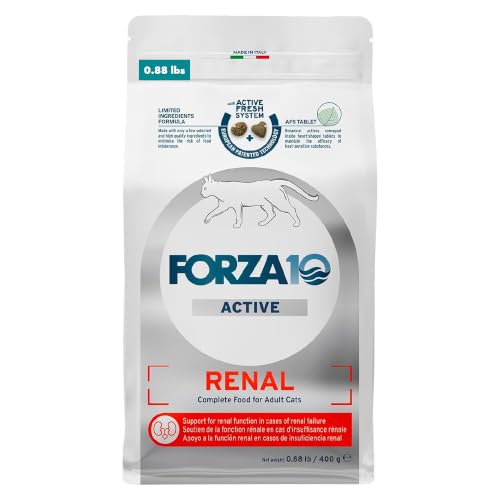
Forza10 Renal Dry Cat Food for Kidney Support
What We Like
- Free from GMOs, by-products, wheat, and soy
- Formulated with hydrolyzed protein and potato protein
- Includes cranberries, dried dandelion, dried clover extract
Trade-offs
- Only 0.88 lb bag, smaller than typical kidney diets
- No mobility support like Blue Buffalo's K+M formula
A 0.88-pound bag means this is a starter or travel size, not a full month’s supply, but the formulation itself is tightly focused on kidney support. This makes it a precise option for cats that need a low-phosphorus diet without the filler grains or by-products found in many maintenance foods.
The trade-off is portion size: at under a pound, you will need to buy multiple bags for a full feeding schedule, and the fish flavor may not work for picky eaters. Compared to Purina Pro Plan Veterinary Diets NF Kidney Early Care, which comes in a 3.14-pound bag, Forza10 offers a smaller package and a different ingredient profile. For a cat that needs controlled phosphorus and a hydrolyzed protein source, this is a clean option on paper.
Product photos
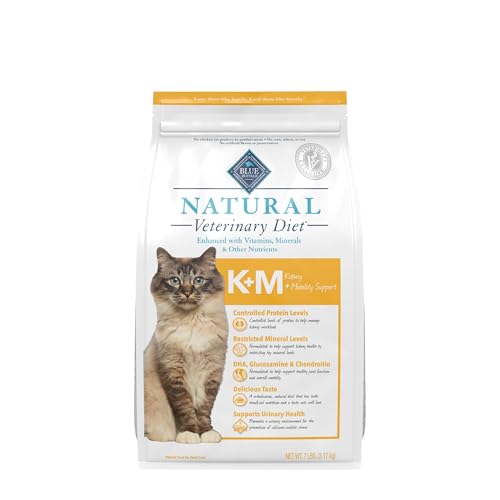
Blue Buffalo Natural Veterinary Diet K+M Support Dry Cat Food
What We Like
- Real chicken as first ingredient
- Includes glucosamine and chondroitin for joints
- Controlled protein to manage kidney workload
- No corn, wheat, soy, or by-products
Trade-offs
- Requires veterinarian authorization to purchase
- 7-lb bag is a single size option
Controlled protein levels plus added glucosamine and chondroitin mean this bag targets both kidney function and joint care, two needs that often show up together in older cats. Real chicken is the first ingredient, and the formula skips corn, wheat, soy, and poultry by-product meals for a cleaner ingredient list. Owners whose vet has recommended support for both kidney and joint issues get a single food instead of adding separate supplements.
The catch is access: this is a veterinary diet, so you need your vet’s authorization before buying. That adds a step compared to an over-the-counter renal option like Forza10 Renal, which is available without a prescription but lacks the joint-support ingredients. For kidney care alone, the Purina Pro Plan NF Kidney Early Care comes in a smaller 3.1-pound bag. This Blue formula works best for the dual-target approach, but only if your vet agrees it fits.
Product photos
How We Evaluated Healthiest Low Ash Low Phosphorus Dry Cat Foods
Our evaluation started with the numbers that matter most for kidney health: phosphorus percentage, ash content, and protein level. We cross-referenced guaranteed analysis data from each manufacturer against veterinary guidelines for early to moderate renal support. Owner feedback patterns helped us understand which formulas cats actually eat consistently, since a kidney diet only works if the cat accepts it.
We prioritized three criteria above all others. Phosphorus control came first because excess phosphorus accelerates kidney damage in cats with compromised renal function. Ash content followed closely, as high ash levels can contribute to urinary crystal formation and further stress the kidneys. Protein moderation rounded out the list, enough to maintain muscle mass but not so much that it overwhelms the kidneys’ filtration capacity.
A research-led approach has limits. Our recommendations rest on published nutritional data, veterinary consensus on renal care, and what long-term owners report about palatability and health outcomes. Always consult your veterinarian before switching a cat with diagnosed kidney disease to any new diet.
What To Look For In Healthiest Low Ash Low Phosphorus Dry Cat Foods
Choosing a low phosphorus dry cat food means learning to read past the marketing claims and focus on the guaranteed analysis panel. The key numbers are phosphorus percentage, ash content, and protein level, and they must be considered together, not in isolation.
Look for dry cat food with controlled phosphorus on a dry matter basis, low ash content, and moderate protein from named animal proteins. Avoid formulas with bone meal or meat by-products that inflate ash levels.
Phosphorus Content and Calcium-Phosphorus Balance
Phosphorus is the primary mineral to restrict in a kidney-support diet. Most veterinary guidelines recommend a restricted phosphorus level on a dry matter basis for cats with early to moderate kidney disease. The dry food for kidney disease category typically targets this range, but not all products disclose phosphorus as a percentage; some list it only in milligrams per serving, which requires conversion.
The calcium to phosphorus ratio matters almost as much as the phosphorus number alone. An ideal ratio has calcium slightly higher than phosphorus. A ratio that falls outside this range can interfere with mineral absorption and put additional strain on the kidneys, even if the total phosphorus looks acceptable on paper. The mineral balance in cat food directly affects how well the body processes these nutrients.
Ash Content and What It Actually Means
Ash is the mineral residue left after food is burned in a lab, it represents the total mineral content, including calcium, phosphorus, magnesium, and trace elements. A high ash content in dry cat food often comes from bone meal, meat by-products, or excessive mineral supplementation. For cats with kidney concerns, lower ash means less mineral burden on the kidneys.
What ash content means on a bag label is straightforward: look for low ash on a dry matter basis. Some premium renal diets achieve ideal ash levels. Keep in mind that ash isn’t listed on every guaranteed analysis panel, manufacturers are required to show crude protein, fat, fiber, and moisture, but ash is optional. If it’s missing, contact the company or look for a product that provides full disclosure.
Protein Level and Source Quality
Kidney-support diets often reduce protein to ease the filtration load, but too little protein leads to muscle wasting. The sweet spot for early to moderate kidney care is moderate protein on a dry matter basis, from a high-quality source like chicken, fish, or hydrolyzed protein. Lower-quality protein sources produce more nitrogenous waste, which the kidneys must filter out.
- Check the guaranteed analysis for protein percentage and compare it to your cat’s current diet, a significant drop may cause weight loss.
- Look for a named animal protein as the first ingredient rather than a generic “meat meal” that could include rendered by-products.
- Verify that the formula includes omega-3 fatty acids (from fish oil or flaxseed) to support kidney function and reduce inflammation.
A good rule of thumb: the first three ingredients should be recognizable protein sources, not grains or starches, and the ash content should be low enough that the manufacturer lists it on the bag.
Healthiest Low Ash Low Phosphorus Dry Cat Foods Compared
The table below compares the three dry cat foods side by side on phosphorus control, ash content, protein level, and key ingredient features so you can see how they differ at a glance.
| Product | Protein Level | Phosphorus | Key Ingredients | Weight |
|---|---|---|---|---|
| Purina Pro Plan Veterinary Diets NF Kidney Early Care Dry Cat Food | Moderate | Controlled | EPA and DHA | 3.1 pounds |
| Forza10 Renal Dry Cat Food for Kidney Support | Hydrolyzed protein, potato protein | Controlled | Cranberries, dried dandelion, dried clover extract | 0.9 pounds |
| Blue Buffalo Natural Veterinary Diet K+M Support Dry Cat Food | Controlled | N/A | Glucosamine and chondroitin | 7.0 pounds |
Frequently Asked Questions
What is considered low phosphorus in dry cat food?
Low phosphorus dry cat food typically contains controlled phosphorus on a dry matter basis. Foods with higher phosphorus are not suitable for cats with kidney disease. Always check the guaranteed analysis and convert to dry matter if the percentage is listed on an as-fed basis.
Is low ash cat food the same as low phosphorus cat food?
Not exactly. Ash is the total mineral content, which includes phosphorus, calcium, magnesium, and other minerals. Low ash cat food usually also has low phosphorus, but the reverse is not always true. A food can be low in phosphorus but high in other minerals that raise the total ash percentage.
Can a healthy cat eat low phosphorus dry food?
A healthy cat can eat low phosphorus dry food without harm, but it may not provide enough phosphorus for growing kittens or active adults. Phosphorus restriction is designed for cats with kidney issues. If your cat has no diagnosed condition, a balanced maintenance diet is usually a better choice.
What is the best dry cat food for kidney disease and joint support?
The Blue Buffalo Natural Veterinary Diet K+M Support combines kidney-friendly phosphorus control with glucosamine and chondroitin for joint health. It requires veterinarian authorization and is designed for cats that need both renal and mobility support in one formula.
How do I switch my cat to a low phosphorus diet?
Transition gradually over a period of days by mixing increasing amounts of the new food with the old food. Cats with kidney disease can be picky eaters, so a slow transition helps avoid food refusal. If your cat stops eating, consult your veterinarian before forcing the change.
The Bottom Line
The Purina Pro Plan Veterinary Diets NF Kidney Early Care Dry Cat Food is the best overall choice for cat owners managing early kidney disease with a phosphorus-controlled, moderate-protein kibble backed by veterinary research. It strikes the most reliable balance between renal support and everyday nutrition for cats that still have decent kidney function.
If your cat needs a cleaner ingredient list with no GMOs or by-products, the Forza10 Renal Dry Cat Food delivers hydrolyzed protein and botanical extracts like cranberry and dandelion in a smaller bag. For cats that also struggle with joint stiffness, the Blue Buffalo Natural Veterinary Diet K+M Support adds glucosamine and chondroitin while keeping phosphorus and protein in the kidney-safe range.
The single most important factor in choosing a low phosphorus dry cat food is the actual phosphorus percentage on a dry matter basis, ignore the front-of-bag promises and read the numbers. Run the math, confirm the ash content, and get your veterinarian’s sign-off before making the switch.
