
5 Best Grackle Proof Bird Feeders in 2026
This post contains affiliate links. As an Amazon Associate, we earn from qualifying purchases.
The Kingsyard Upside Down Double Suet Bird Feeder wins as best overall because its upside-down design mechanically blocks grackles and starlings while attracting woodpeckers and nuthatches. For those who want recycled materials, the JCs Wildlife Upside Down Double Suet Feeder is our best eco-friendly pick, and the Eiszhjk Grackle Proof Hanging Bird Cage Feeder offers a simple metal cage approach.
Grackles are smart, persistent birds that can empty a standard feeder in hours, scaring off smaller species and wasting seed. The real challenge is finding a feeder that excludes them without also excluding the birds you actually want to see.
This guide is research-based, drawing on manufacturer specifications, expert round-ups, and patterns in owner feedback. We evaluated five feeders across four key criteria to help you match a feeder to your specific backyard setup and birding goals.
Top 5 Grackle Proof Bird Feeders in the Market

Certain content that appears on this site comes from Amazon. This content is provided "as is" and is subject to change or removal at any time.
The Best Grackle Proof Bird Feeders, Reviewed
Kingsyard Upside Down Double Suet Bird Feeder

What We Like
- Upside-down design deters grackles and starlings
- Recycled plastic resists weather and cracking
- Clear roof lets you check food levels
- Easy top-lid refill for two suet blocks
Trade-offs
- Small size limits suet capacity to two blocks
- Design targets only upside-down feeding birds like woodpeckers and nuthatches
The upside-down design is the single most decisive feature here: grackles and starlings can’t feed while hanging upside down, but woodpeckers and nuthatches do it naturally. That mechanical filter means you don’t need cages or weight-sensitive perches to keep bully birds off the suet. Made from recycled plastic with a metal seal at the bottom to stop squirrel gnawing, it’s built for year-round outdoor use without cracking in sun or cold. The clear roof lets you see when suet runs low without lifting the lid, and the top opens easily for refilling two blocks.
The Kingsyard feeder only attracts birds that naturally feed upside down, so it keeps starlings and grackles from scarfing down the suet. Compared to the JCs Wildlife feeder, which measures 12 inches long, this one is 5.7 inches long, meaning you’ll refill it more often on busy days. That compact size also makes it easier to hang in tight spots. If your yard gets woodpeckers and nuthatches, this is a durable, no-moving-parts way to keep bully birds away.
Product photos
JCs Wildlife Upside Down Double Suet Feeder

What We Like
- Recycled poly lumber construction
- Stainless steel hardware
- Holds 4 suet cakes at once
- Starling-resistant upside-down design
Trade-offs
- At 11 lb, needs a sturdy hanging point
- Holds only 4 suet cakes at a time
At 11 pounds, this feeder is built from recycled poly lumber with stainless steel screws, so it will hold up to outdoor weather without rusting or warping. The upside-down design is marketed as starling-resistant, letting woodpeckers and other clingers feed while discouraging larger birds. For anyone who wants a feeder made from reclaimed materials and assembled in the USA, this model offers a sturdy, long-lasting option.
At 11 pounds, this feeder demands a solid support, a thin shepherd’s hook won’t work. The recycled poly lumber and stainless steel screws make it durable for permanent yard placement, and the upside-down design specifically targets woodpeckers, nuthatches, and chickadees while resisting starlings. It comes with eight peanut butter suet cakes, so you can start attracting clingers right away.
Product photos
Eiszhjk Grackle Proof Hanging Bird Cage Feeder
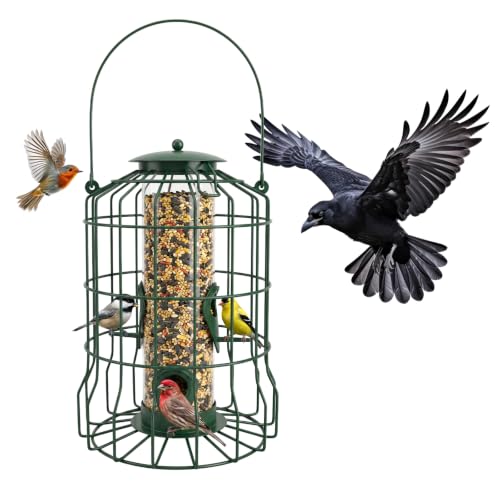
What We Like
- Metal cage blocks larger birds
- Easy-refill design for daily use
- Chew-proof metal frame
Trade-offs
- Hanging only, no pole or post mount
- Small birds only; larger species excluded by cage design.
A 7.1 by 6.9 by 10.4-inch metal cage that lets small birds slip through while keeping larger birds like grackles outside. That’s the whole point of a grackle-proof feeder, and the Eiszhjk delivers it with a sturdy metal frame designed for long-term outdoor use. The cage structure helps shield seeds from weather, and the feeder is easy to refill and clean, making daily bird feeding simple. If your yard is overrun by blackbirds but you still want to feed the little guys, this design solves the access problem directly.
The trade-off is capacity. At roughly the size of a large coffee mug, this feeder holds enough for a day or two of steady visits, but you will refill it more often than a hopper-style feeder. Compared to the Panacea Absolute III squirrel-resistant feeder, which is larger at 14 by 11.2 by 9.5 inches, the Eiszhjk is a specialist tool for grackle exclusion rather than a bulk feeder. It hangs from a single hook, so you need a sturdy branch or shepherd’s pole. Best for birders who prioritize keeping grackles out over minimizing refill trips.
Product photos
Kettle Moraine Cedar Upside Down Clinger Suet Plug Log Feeder
What We Like
- Solid cedar construction
- Upside down design blocks grackles
- Natural cracks add rustic look
- Made in the USA
Trade-offs
- Suet not included
- 16-inch length limits small-yard placement
- No weatherproofing mentioned for cedar
A 16-inch solid cedar log with four holes and natural cracks means this feeder is built to look like a chunk of bark-covered branch while doing one thing well: letting woodpeckers eat while grackles cannot. The upside-down design prevents non-clinging birds like grackles and blue jays from feeding, so downy woodpeckers finally get a chance. It suits anyone who wants a feeder that blends into a wooded yard and does not look like a plastic tube, especially if you prefer natural materials over synthetic ones.
You have to buy your own suet plugs since the feeder ships empty, but that lets you pick the suet you prefer. At 16 inches long, it needs a sturdy branch or pole that can handle the weight without swinging. Compared to the Kingsyard Upside Down Double Suet Feeder, which is 5.7 inches long, this Kettle Moraine log takes up more horizontal space. If you want a feeder that keeps greedy birds off the menu and blends into the landscape, this is the one to hang.
Product photos
Panacea Absolute III Squirrel-Resistant Feeder
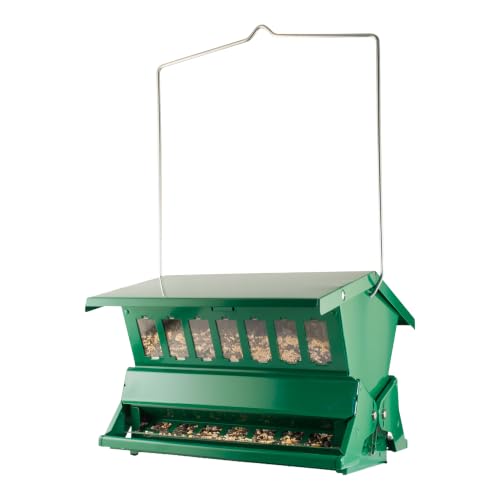
What We Like
- Weight-sensitive perch closes ports on larger birds
- Steel construction for durability
- 8-quart reservoir reduces refill frequency
Trade-offs
- No specific grackle-proofing beyond weight sensitivity
- Steel construction adds weight for hanging
An 8-quart reservoir means you can fill this feeder and walk away for days, even with a hungry flock. The weight-sensitive perch is the key feature: when a squirrel or large bird lands, the perch drops and the seed ports close, denying them access. That steel construction forms a durable feeder, so it should hold up well over time. It suits anyone who wants a large-capacity feeder that uses a weight-sensitive mechanism to keep larger birds off the seed.
The weight-sensitive perch closes the seed ports when a squirrel or large bird lands, so it won’t stop every large bird every time. Compared to the Eiszhjk Grackle Proof Hanging Bird Cage Feeder, which is designed for small birds, the Panacea uses a different approach. If you prefer a feeder that relies on weight rather than a cage to deter larger visitors, this is the one to choose. It is not ideal for those who want a feeder that physically excludes larger birds by size.
Product photos
How We Evaluated Grackle Proof Bird Feeders
Our evaluation relied on manufacturer specifications, expert round-ups from birding organizations, and consistent patterns in owner feedback. We cross-referenced technical details with real-world reports to identify which designs actually work for grackle control.
The four criteria that mattered most were exclusion mechanism, build durability, ease of refill, and target species compatibility. A feeder that keeps grackles out but also frustrates woodpeckers or makes refilling a chore isn’t a practical solution for daily use. We prioritized designs that balance effective exclusion with convenience.
We also considered material quality and weather resistance since a feeder lives outdoors year-round. Recycled plastics, stainless steel hardware, and solid cedar each offer different trade-offs in longevity and appearance. The honest limit of a research-led evaluation is that individual bird behavior varies, so what works in one yard may need adjustment in another.
What To Look For In Grackle Proof Bird Feeders
The right feeder for your yard depends on which birds you want to attract and how much grackle pressure you face. Focus on the exclusion mechanism first, then match the capacity and material to your setup.
Choose a feeder whose primary grackle deterrent matches the birds you want to feed, upside-down designs for suet-loving woodpeckers, cage designs for small seed-eaters, or weight-sensitive perches for mixed flocks.
Exclusion Mechanism
The most reliable grackle-proof designs use physical exclusion rather than taste or color. Upside-down feeders require birds to hang upside down to reach suet, which grackles and starlings cannot comfortably do. Cage feeders use narrow bars that let small birds pass through while blocking larger-bodied grackles. Weight-sensitive perches close seed ports when a heavy bird lands, which works for grackles but also affects other large species like blue jays.
Capacity and Refill Frequency
Grackles travel in flocks and can drain a small feeder quickly if they find a way in. Larger reservoirs reduce how often you need to refill, but they also mean more seed lost if the feeder fails. Suet feeders typically hold two to four blocks, and the trade-off is between fewer refills and a smaller target for grackles to work on.
- Check that the refill opening is large enough for your hand or a scoop without spilling.
- Consider how often you want to refill versus how much seed you want to store at once.
- Look for clear windows or roofs that let you see food levels without opening the feeder.
- Verify that the feeder hangs or mounts securely, especially for heavier models.
- Confirm that the design excludes the specific grackle species in your region, some are smaller than others.
A feeder that needs daily refilling will frustrate you faster than one that holds three days’ worth of food.
Grackle Proof Bird Feeders Compared
The table below compares the five grackle-proof feeders across key specs and design features to help you narrow your choice.
| Product | Material | Design | Dimensions |
|---|---|---|---|
| Kingsyard Upside Down Double Suet Bird Feeder | Recycled plastic, metal seal | Upside-down suet feeder | 5.7 x 3.5 x 5.7 in |
| JCs Wildlife Upside Down Double Suet Feeder | Recycled poly lumber, stainless steel screws | Starling resistant design | 12.0 x 10.0 x 6.0 in |
| Eiszhjk Grackle Proof Hanging Bird Cage Feeder | Metal | Cage structure | 7.1 x 6.9 x 10.4 in |
| Kettle Moraine Cedar Upside Down Clinger Suet Plug Log Feeder | Solid cedar | Upside down clinger | 16.0 x 3.5 x 3.5 in |
| Panacea Absolute III Squirrel-Resistant Feeder | Steel | Weight-sensitive perch | 14.0 x 11.2 x 9.5 in |
Frequently Asked Questions
What makes a bird feeder grackle proof?
Grackle-proof feeders use physical barriers that grackles cannot bypass. Upside-down designs require birds to hang upside down to reach food, which grackles cannot do comfortably. Cage feeders use narrow bar spacing that blocks larger bodies. Weight-sensitive perches close seed ports when a bird over a certain weight lands. No design is completely effective for every bird, but these mechanisms reliably reduce grackle access.
Do upside-down bird feeders really keep grackles away?
Yes, upside-down feeders work well for suet because grackles and starlings struggle to feed while hanging upside down. Woodpeckers, nuthatches, and chickadees are natural upside-down feeders and have no trouble. The design is one of the most reliable mechanical exclusions for suet feeders, though it only works for suet, not loose seed.
What birds will still visit a grackle-proof feeder?
It depends on the exclusion mechanism. Upside-down suet feeders attract woodpeckers, nuthatches, chickadees, and titmice. Cage feeders with narrow bars welcome chickadees, finches, and wrens while blocking grackles, starlings, and larger jays. Weight-sensitive feeders allow any bird under the perch threshold, which includes most small songbirds but excludes grackles, crows, and squirrels.
Can I use safflower seed to deter grackles?
Many birders use safflower seed because grackles and starlings typically avoid it while cardinals, chickadees, and finches eat it readily. It is not a guaranteed deterrent, some grackles will eat safflower if no other food is available, but it reduces visits when combined with a physical exclusion feeder. The pros and cons of safflower seed include lower waste and fewer bully birds, though it costs more than mixed seed.
How do I keep grackles away from my bird feeder permanently?
No single method works permanently for every yard. Combine a physical exclusion feeder with strategic seed choice, using safflower seed or suet that grackles dislike. Remove platform feeders and open trays that attract grackles. Keep the area under the feeder clean so fallen seed does not draw them in. For persistent flocks, take the feeder down for a few days to break the habit.
The Bottom Line
The Kingsyard Upside Down Double Suet Bird Feeder is the best choice for most backyard birders who want a simple, durable feeder that mechanically excludes grackles and starlings while attracting woodpeckers and nuthatches. Its recycled plastic body resists weather, and the clear roof lets you check suet levels at a glance.
If you have a sturdy hanging point and prefer recycled materials, the JCs Wildlife Upside Down Double Suet Feeder holds four suet cakes and uses stainless steel hardware. For small-seed feeders who want a cage design, the Eiszhjk Grackle Proof Hanging Bird Cage Feeder lets chickadees and finches feed undisturbed.
The single most important buying factor is matching the exclusion mechanism to the birds you want to see. An upside-down feeder works brilliantly for woodpeckers but will not help if your goal is feeding goldfinches. Know your target species, then choose the mechanism.
