
9 Best Food For Maine Coon Kitten in 2026
This post contains affiliate links. As an Amazon Associate, we earn from qualifying purchases.
The Royal Canin Maine Coon Kitten Dry Cat Food takes the top spot because its oversized kibble matches the breed’s distinctive jaw shape and its nutrient profile supports the long growth period these cats need. For owners who prefer wet food, the Royal Canin Kitten Wet Cat Food offers targeted immune support, while the Blue Buffalo Wilderness Kitten Paté Wet Food delivers high protein for growing muscles.
A Maine Coon kitten isn’t a standard kitten. These cats take up to four years to reach full size, which means their nutritional needs differ from smaller breeds during that extended development window. Calcium-to-phosphorus ratios, protein levels, and kibble shape all matter more than they do for an average domestic shorthair.
This guide is based on manufacturer specifications, ingredient analysis, and patterns in owner feedback across nine products. We focus on what actually supports a Maine Coon kitten’s unique growth curve rather than what looks good on the bag.
Top 9 Foods For Maine Coon Kittens in the Market
Certain content that appears on this site comes from Amazon. This content is provided "as is" and is subject to change or removal at any time.
The Best Foods For Maine Coon Kittens, Reviewed
Royal Canin Maine Coon Kitten Dry Cat Food

What We Like
- Kibble sized for Maine Coon jaw
- Supports bone and joint health
- Highly digestible proteins for digestion
- Antioxidant complex for immune support
Trade-offs
- Dry kibble only; no moisture content in the product
- Formulated for purebred Maine Coon kittens, not other breeds
A kibble shaped specifically for the large jaw of a Maine Coon kitten means less fumbling at mealtime and better chewing mechanics for that distinctive breed. The formula backs this up with targeted bone and joint support, including vitamin D and balanced minerals, which matters during the long growth period these kittens have up to 15 months. Combined with highly digestible proteins that protect a developing digestive system, this is a dry food built around the breed’s actual physiological needs rather than generic kitten nutrition.
Designed specifically for purebred Maine Coon kittens up to 15 months old, this dry food supports their extended growth period with optimal energy and protein levels. The unique kibble shape and size are adapted for a Maine Coon’s large jaw, making it easier for them to pick up and chew. Precise levels of vitamin D and minerals help support healthy bone and joint development during this critical stage. Highly digestible proteins protect the developing digestive system and promote balanced intestinal flora, which owners report helps reduce stomach upset. An exclusive antioxidant complex with vitamins C and E, lutein, and taurine provides immune support to bolster a young cat’s natural defenses.
Royal Canin Kitten Wet Cat Food

What We Like
- Clinically proven antioxidant blend
- Supports immune system development
- Designed for kittens up to 12 months
- High digestibility for sensitive digestion
Trade-offs
- Wet food only, no kibble texture variety
- Not formulated specifically for Maine Coon growth needs
A 3-ounce can packed with a clinically proven antioxidant blend (vitamins E and C) means this wet food targets immune support head-on for kittens up to 12 months old. The thin slices in gravy texture is easy for a growing kitten to handle as it transitions from milk to solids. Highly digestible proteins plus prebiotics keep digestion smooth during that rapid growth phase. For any kitten, a formula that prioritizes immune system development gives a solid foundation for healthy growth.
The trade-off: this is a general kitten formula, not a breed-specific one. Royal Canin does make a Maine Coon Kitten Dry Food, so if you want a wet food that pairs with that dry line, this wet food works as a complement. But if you prefer a single all-in-one wet food, the Blue Buffalo Wilderness Kitten Paté offers a high-protein, grain-free recipe, which some owners lean toward for muscle support. This Royal Canin wet food is best used as part of a mixed feeding plan with a breed-specific dry kibble.
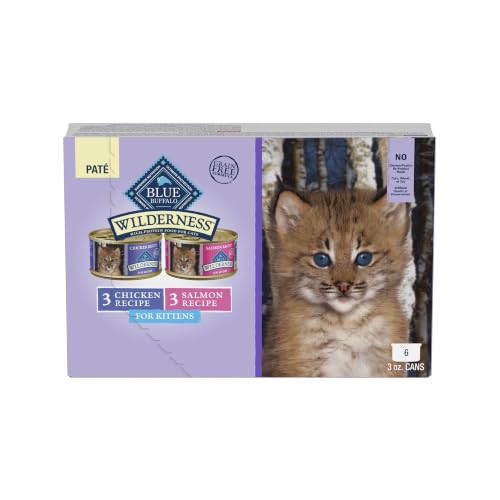
Blue Buffalo Wilderness Kitten Paté Wet Food
What We Like
- Real chicken or salmon first ingredient
- Grain-free with no fillers
- DHA from salmon oil for brain development
- High moisture for hydration
Trade-offs
- Variety pack includes only two recipes
Real chicken or salmon as the first ingredient means this wet food puts animal protein front and center, which aligns with what a growing carnivore actually needs. The high-protein, grain-free formula skips the corn, wheat, and soy fillers that pad out cheaper foods, so your kitten gets more usable nutrition per bite. DHA from salmon oil supports cognitive development during those rapid early months, and the smooth paté texture makes it easy for young mouths to handle. For kittens who need dense protein to fuel their growth, this is a straightforward, no-nonsense option that doesn’t rely on marketing fluff.
The trade-off is that paté isn’t every kitten’s preferred texture, some prefer shreds or chunks, and if your kitten is picky about mouthfeel, you might end up with uneaten cans. Compared to other wet kitten foods, Blue Buffalo’s paté is smooth and velvety, which many kittens find easy to eat.
Instinct Original Kitten Dry Food

What We Like
- 81% animal ingredients for growth
- Raw-coated kibble for flavor and nutrition
- DHA from chicken eggs for brain development
- Live probiotics aid digestion
Trade-offs
- Dry kibble only, no moisture content
- Contains chicken, not suitable for poultry allergies
81% animal ingredients and oils means this kibble is built around protein, not fillers. For a Maine Coon kitten that needs steady muscle and bone development, that high meat content directly supports lean growth and energy. The raw coating adds freeze-dried nutrition on every piece, which keeps the protein profile intact without heavy processing. It’s a formula that puts ingredient density first, ideal for owners who want a dry food that doesn’t skimp on what growing kittens actually need.
It’s grain-free, which some kittens handle fine and others don’t. But if you want a dry food that mirrors a raw diet’s nutritional density without going fully raw, this bag delivers on that premise.
Tiki Cat Baby Shreds Kitten Food

What We Like
- High protein for muscle growth
- DHA for brain and vision development
- Prebiotics aid digestion
- No grains or artificial ingredients
Trade-offs
- No kibble option for dental health
- Smaller 2.4 oz cans require more per meal
Four distinct recipes in one case give you a rotating menu without committing to a single protein source. With DHA for brain and vision development, plus prebiotics for gentle digestion, this wet food covers the nutritional bases for kittens eight weeks and older. It’s a strong choice if you want to keep mealtime interesting while still feeding a high-protein, grain-free diet.
The biggest factor here is portion size: at 2.4 ounces per can, a larger kitten may need two cans per meal to feel full, which adds up quickly. Compared to Royal Canin Kitten Wet Food’s 3-ounce cans, these are noticeably smaller, so factor that into your weekly shopping. For owners who want a single protein or a bigger can, this variety pack might not be your best fit, but for those who value ingredient transparency and want to avoid fillers, the recipe rotation is a genuine advantage.
Product photos
Wellness CORE Signature Selects Kitten Wet Food

What We Like
- DHA supports brain and eye development
- Grain-free with protein as first ingredient
- Two gourmet recipes in broth or sauce
- Carrageenan-free recipe
Trade-offs
- Wet food only; no dry kibble texture for dental health
- Not suitable for kittens needing dry food for dental health
DHA is the headline here, this wet food adds it to support brain and eye development during the rapid growth phase kittens go through. Protein comes first in the ingredient list, and the grain-free formula skips corn, wheat, and soy entirely, which matters if you’re trying to avoid fillers. Two recipes (flaked tuna with salmon, shredded chicken with liver) give some variety in texture and flavor. They’re all packed into a broth or sauce that also helps boost hydration, a useful angle for kittens that don’t drink enough on their own.
These are small 2.8-ounce cans, so a growing kitten with a big appetite might need two cans per meal, making the per-serving cost add up faster than a larger wet food format. Compared to Royal Canin Kitten Wet Food, which uses a standard 3-ounce can, Wellness CORE Signature Selects offers a grain-free formula with DHA, but you’re paying for that specificity in smaller portions. If your kitten polishes off a can and still looks for more, you’ll be opening another one sooner than you might expect.
Product photos
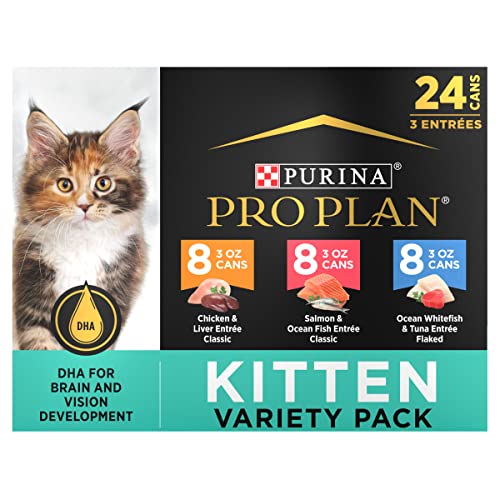
Purina Pro Plan Development Kitten Wet Food
What We Like
- DHA supports brain and vision development
- High protein for healthy growth
- Made with real poultry or fish
- Includes 25 essential vitamins and minerals
Trade-offs
- Wet food only, no dental crunch benefit
- Not suitable for kittens needing dry food for dental health
Each 3-ounce can delivers DHA, the omega-3 fatty acid linked to kitten brain and vision development, so this wet food targets the cognitive side of growth as directly as any option here. The high protein formula, built around real poultry or fish, supports the rapid muscle and tissue development Maine Coon kittens need in their first year. With 25 essential vitamins and minerals including vitamin A and taurine, it covers the full nutritional baseline without relying on filler or gimmicks. This makes it a strong fit for owners who want a wet food that prioritizes neural development alongside general growth, especially if they already feed a dry kibble for dental health.
This is a wet-only lineup, so it won’t provide the mechanical abrasion that helps keep a growing kitten’s teeth clean. For owners who want a single dry food like Royal Canin Maine Coon Kitten Dry Cat Food for its breed-specific kibble shape and texture, you lose the moisture and DHA concentration this variety pack offers. The variety pack includes chicken & liver, salmon & ocean fish, and ocean whitefish & tuna flaked recipes, which can keep mealtime interesting. A kitten that dislikes one or two proteins may leave you with opened cans to work through. For a kitten, this works best as a wet complement to a dry staple, not as the sole ration.
Product photos
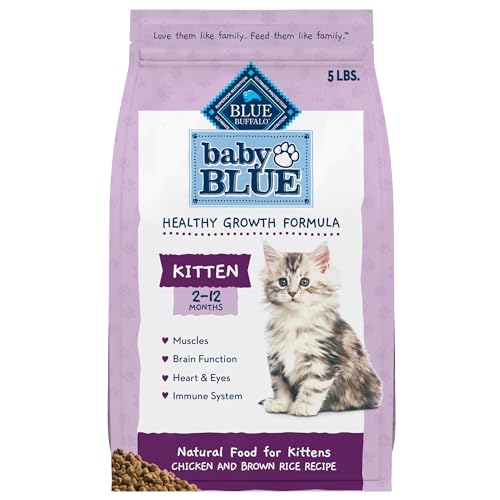
Blue Buffalo Baby Blue Chicken Kitten Dry Food
What We Like
- Chicken is the #1 ingredient
- Includes DHA for cognitive development
- Antioxidant-rich LifeSource Bits
- No corn, wheat, or soy
Trade-offs
- Contains brown rice, not grain-free
- Not suitable for grain-free diets
The first ingredient here is real chicken, which gives kittens the high-quality protein they need for steady growth and energy. DHA is included to support cognitive development, so this kibble is built around brain health from the start. The LifeSource Bits add antioxidants for immune support, making it a well-rounded dry food for a kitten whose brain is still developing fast. It suits owners who want a straightforward, protein-first recipe without corn, wheat, or soy.
This food includes brown rice, so it’s not grain-free, something to consider if you prefer a zero-grain diet for your Maine Coon. Compared to Royal Canin Maine Coon Kitten Dry Food, which uses a specialized kibble shape and breed-specific formula, Blue Buffalo focuses on general kitten nutrition with a simpler ingredient list. The 5 lb bag is also on the smaller side, so you’ll be buying more frequently than with larger bags.
Product photos
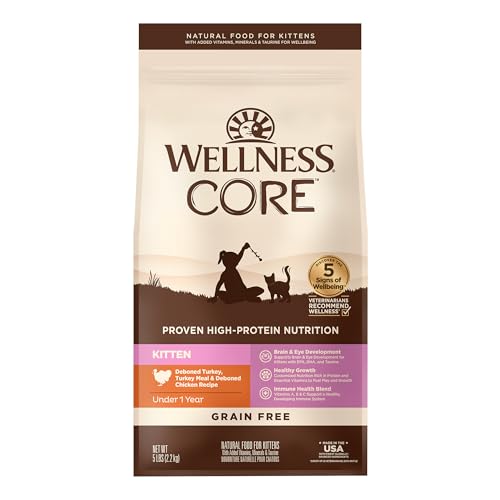
Wellness CORE Kitten Dry Cat Food
What We Like
- 55% high-quality animal protein
- Grain-free recipe
- Contains DHA from salmon oil
- Made in USA with non-GMO ingredients
Trade-offs
- Dry food only, no moisture for hydration
- Not tailored for specific breeds
With 55 percent animal protein, this kibble delivers the dense amino acids growing kittens need for muscle and bone development. Turkey meal and chicken are the primary sources, and DHA from salmon oil supports brain and eye development during those early months. It is a straightforward, grain-free formula from a brand that employs vets and nutritionists on staff.
This is a dry-only food, so you will need to provide wet food or encourage extra water intake to support hydration. Compared to the Royal Canin Maine Coon Kitten Dry Food, which is formulated specifically for Maine Coon cats and developed by veterinarians, this Wellness recipe takes a broader high-protein approach suitable for any kitten. For owners who prioritize protein density over breed-specific tailoring, this is a clean option.
Product photos
How We Evaluated Foods For Maine Coon Kittens
We started with the breed’s specific physiology. Maine Coon kittens have a longer growth window, a broader jaw, and a higher risk of joint and hip issues than smaller breeds. Every product on this list was assessed against those realities using published nutritional data and manufacturer documentation.
Three criteria carried the most weight. First, kibble size and shape: a Maine Coon’s jaw needs a larger kibble that encourages chewing rather than gulping. Second, protein and fat ratios: these kittens need sustained energy for a slow, steady growth curve. Third, DHA content for brain and vision development during the first year of life.
This is a research-led evaluation, not a feeding trial. We examined ingredient lists, guaranteed analysis panels, and feeding guidelines, then cross-referenced those with what experienced Maine Coon breeders and veterinarians consistently recommend. If you want to dig deeper into specific categories, our dedicated guides cover best wet food and best dry food options separately.
What To Look For In Foods For Maine Coon Kittens
The bag’s front label tells you nothing useful. Flip it over and read the ingredient panel and guaranteed analysis, that is where the real story lives.
Look for a kibble large enough to make your kitten chew. Also check that a protein source is listed as the first ingredient, with DHA from a named animal source like salmon oil or eggs. A calcium-to-phosphorus ratio that supports slow, steady bone development is important too.
Kibble Size and Shape
A Maine Coon’s jaw is broader and longer than a standard cat’s. Standard kitten kibble is often small enough to be swallowed whole, which skips the mechanical cleaning action of chewing. Breed-specific options like the Royal Canin Maine Coon formula use an oversized, curved kibble designed to fit the jaw’s natural shape. If you choose a non-breed-specific kibble for kittens, look for larger pieces or consider a shape that encourages biting rather than inhaling.
Protein Content and Source
Maine Coon kittens need more protein per pound than adult cats because they are building bone and muscle over a longer period. A named animal protein, chicken, salmon, or turkey, should be the first ingredient. Avoid vague terms like “poultry meal” or “meat by-products” that hide the source. For owners who want the highest concentration, a food with a high protein content on a dry matter basis gives these growing cats the fuel they need without fillers.
DHA for Brain and Vision Development
Docosahexaenoic acid (DHA) is an omega-3 fatty acid critical for cognitive development and retinal health in kittens. It should come from a named source, salmon oil, fish oil, or chicken eggs, not from a generic “fish oil” that could be any species. The first year is the most important window for DHA intake, so check the guaranteed analysis or contact the manufacturer for details.
Calcium-to-Phosphorus Ratio
Large-breed kittens need a carefully balanced calcium-to-phosphorus ratio to support steady skeletal growth without overshooting. Too much calcium can cause developmental bone issues; too little can stunt growth. Look for a ratio close to 1.2:1 or as close to it as possible. This is especially important for owners feeding a mix of wet and dry food, because the combined calcium load can drift out of balance.
- Check the guaranteed analysis for crude protein, fat, and fiber percentages.
- Verify DHA is from a named source, not a generic “fish oil.”
- Confirm the first ingredient is a named animal protein, not a meat meal or by-product.
- Look for a calcium-to-phosphorus ratio near 1.2:1 on the manufacturer’s website if it is not on the bag.
- Choose a kibble size that forces chewing if feeding dry food.
A Maine Coon kitten’s growth is a marathon, not a sprint, the food you pick now affects their joint health and body condition years later.
Foods For Maine Coon Kittens Compared
The table below compares all nine products side by side so you can see protein sources, key nutrients, and format differences at a glance.
| Product | Protein Source | Texture | Key Additives |
|---|---|---|---|
| Royal Canin Maine Coon Kitten Dry Cat Food | N/A | Crunchy Kibble | Antioxidant complex |
| Royal Canin Kitten Wet Cat Food | N/A | Thin slices in gravy | Antioxidants, vitamins E & C |
| Blue Buffalo Wilderness Kitten Paté Wet Food | Chicken or Salmon | Smooth Paté | DHA |
| Instinct Original Kitten Dry Food | Cage-free chicken | Raw-coated kibble | DHA, probiotics, omegas |
| Tiki Cat Baby Shreds Kitten Food | Chicken, salmon, tuna, duck, egg | Shreds | DHA, taurine, prebiotics |
| Wellness CORE Signature Selects Kitten Wet Food | Chicken, tuna, salmon | Shredded | DHA |
| Purina Pro Plan Development Kitten Wet Food | N/A | Flaked | DHA |
| Blue Buffalo Baby Blue Chicken Kitten Dry Food | Chicken #1 Ingredient | N/A | DHA |
| Wellness CORE Kitten Dry Cat Food | Turkey Meal & Chicken | Dry kibble | N/A |
Frequently Asked Questions
What makes Maine Coon kitten food different from regular kitten food?
Maine Coon kittens grow over a longer period, up to four years, than smaller breeds. Their food needs a larger kibble shape for their broader jaw, a carefully balanced calcium-to-phosphorus ratio for steady bone development, and higher protein levels to support extended muscle growth. Standard kitten formulas are designed for cats that reach adult size in 12 months.
How much should I feed a Maine Coon kitten?
Portion sizes depend on the food’s calorie density and your kitten’s age and activity level. Most breed-specific formulas include a feeding chart on the bag based on weight and age. General portion sizes from a standard kitten food will likely underestimate a Maine Coon’s needs because these kittens are larger and grow longer.
Should I feed wet food, dry food, or both to my Maine Coon kitten?
A combination gives you the best of both. Wet food provides moisture for hydration and urinary tract health, while dry food’s larger kibble encourages chewing and provides mechanical dental benefits. Many owners pair a breed-specific dry food like the Royal Canin Maine Coon Kitten formula with a canned kitten food for immune support or variety.
What ingredients should I avoid in Maine Coon kitten food?
Avoid vague animal fats or proteins labeled only as “meat meal” or “poultry by-product”, these hide the species and quality. Artificial colors, flavors, and preservatives like BHA, BHT, and ethoxyquin have no place in a kitten’s diet. Corn, wheat, and soy as primary fillers offer little nutritional value for a growing large-breed kitten.
When should I switch my Maine Coon kitten to adult food?
Maine Coons should stay on kitten food longer than standard breeds, typically until 18 to 24 months, and some breeders recommend up to three years. The switch should happen gradually over a week to avoid digestive upset. Look for a food formulated for adults when your kitten’s growth rate slows noticeably.
The Bottom Line
The Royal Canin Maine Coon Kitten Dry Cat Food is the best overall choice for owners who want a kibble designed around the breed’s specific jaw shape and extended growth period. Its oversized kibble encourages chewing, and its nutrient profile supports bone and joint health during the long developmental window. This is the one to start with if you want breed-specific nutrition in a dry format.
If you prefer wet food, the Royal Canin Kitten Wet Cat Food provides targeted immune support that pairs well with the dry formula. For owners who want a high-protein, grain-free option, the Blue Buffalo Wilderness Kitten Paté Wet Food delivers real meat first and DHA from salmon oil for brain development.
The single most important factor in choosing a food for your Maine Coon kitten is matching the kibble size and nutrient density to the breed’s unique growth curve. A standard kitten food designed for a cat that finishes growing in 12 months will not serve a Maine Coon that is still developing at two years old.
