
10 Best Food For Labrador Puppy in 2026
This post contains affiliate links. As an Amazon Associate, we earn from qualifying purchases.
The best food for a Labrador puppy needs to support rapid bone growth without outpacing joint development. Royal Canin Labrador Retriever Puppy Dry Dog Food wins as best overall because its breed-specific formula tailors calcium and phosphorus levels exactly for a Lab’s growth curve. For owners of non-Labrador large breeds, Royal Canin Large Puppy offers strong digestive and immune support. Purina Pro Plan Large Breed Dry Puppy Food provides targeted glucosamine for joint care.
A Labrador puppy’s frame grows fast, and the wrong calcium-phosphorus balance can stress developing joints. Large-breed puppies also have sensitive digestion and need consistent energy from quality protein. Choosing a food built for their specific growth window, typically 8 weeks to 15 months, makes a real difference.
This guide is based on manufacturer specifications, ingredient lists, feeding guidelines, and patterns in owner feedback. We compared formulas across protein sources, calcium levels, DHA content, kibble size, and bag weight to help you match a food to your puppy’s actual needs.
Top 10 Foods For Labrador Puppies in the Market

Certain content that appears on this site comes from Amazon. This content is provided "as is" and is subject to change or removal at any time.
The Best Foods For Labrador Puppies, Reviewed
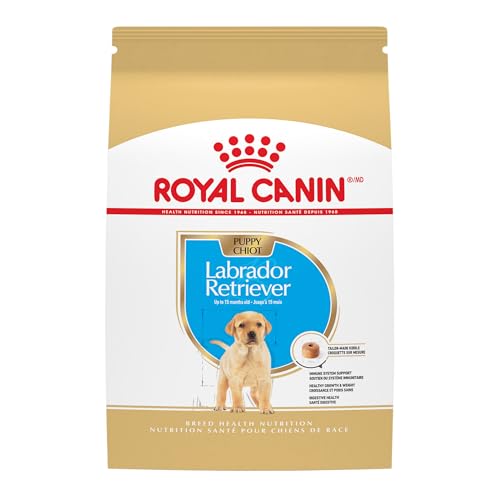
Royal Canin Labrador Retriever Puppy Dry Dog Food
What We Like
- Calcium and phosphorus for bone and joint support
- Antioxidants and vitamin E support immune system
- High-quality proteins and prebiotics for digestive health
Trade-offs
- Only for purebred Labrador Retrievers, not other breeds
- Limited to puppies 8 weeks to 15 months old
With added calcium and phosphorus targeting bone and joint development, plus antioxidants and vitamin E for immune support, this formula addresses the two biggest growth concerns for a large-breed puppy: structural strength and immune resilience. It’s a breed-specific recipe, so every nutrient level is tailored to a Lab’s typical growth curve rather than a one-size-fits-all large-breed formula.
The obvious trade-off is that this food is locked into the Labrador Retriever breed and the puppy life stage, so it won’t work for a mixed-breed pup or an adult dog. Compared to the Royal Canin Large Puppy Dry Dog Food, which is for large-breed puppies, this Lab-specific version uses a different kibble shape. If you have a purebred Lab under 15 months, the specialized donut kibble and targeted joint support make it a more precise fit than the general large-breed option. If your puppy isn’t a purebred Lab, you’ll need to look at the broader large-breed formulas instead.
Royal Canin Large Puppy Dry Dog Food

What We Like
- Formulated for large-breed growth needs
- Prebiotics and proteins for gut health
- Antioxidants support immune system
- Crunchy kibble texture for mixed feeding
Trade-offs
A 30-pound bag of crunchy kibble formulated for puppies expected to weigh 56 to 100 pounds as adults means this food is built around the specific growth curve of a large breed. The prebiotics and proteins target digestive health, while antioxidants back the immune system, both critical during the rapid development phase. That makes it a straightforward pick for owners who want a veterinarian-developed formula that addresses the two biggest puppy health concerns without extra frills.
If you’re set on breed-specific nutrition, that other bag gives you donut-shaped kibble and targeted bone-and-joint support. For anyone who just wants a solid, large-breed puppy food with immune and digestive backing, this one covers the essentials at a practical bag size.
Purina Pro Plan Large Breed Dry Puppy Food

What We Like
- Glucosamine for developing joints and cartilage
- Real chicken as first ingredient
- DHA from fish oil for brain and vision
Trade-offs
- Chicken-based formula not suitable for poultry allergies
- Bag lacks a resealable closure for freshness
Purina Pro Plan Large Breed Dry Puppy Food includes glucosamine, which supports developing joints and cartilage in large breed puppies. Real chicken is the first ingredient, and the formula provides DHA from omega-rich fish oil for brain and vision development. This combination addresses the nutritional needs of a large breed puppy during growth, with an emphasis on joint health.
The 34 lb bag is the heaviest among comparable large breed puppy foods in this guide, which may be a consideration for storage or handling. If you prefer a lighter option, the Royal Canin Labrador Retriever Puppy food comes in a 30 lb bag. For owners focused on joint support, this formula includes glucosamine as a key ingredient.
Hill's Science Diet Puppy Large Breed Dry Dog Food
What We Like
- Balanced minerals for growing bones and teeth
- DHA and Fish Oil for brain and eye development
- Antioxidant blend supports developing immune system
- High quality proteins fuel growing muscles
Trade-offs
- Only 27.5 lb bag is smaller than some competitors' 30-40 lb bags
- Not suitable for small or medium breed puppies
The #1 Veterinarian Recommended brand backs this formula with balanced minerals for growing bones and teeth, DHA and Fish Oil for brain and eye development, and an antioxidant blend for the developing immune system. High quality proteins fuel growing muscles, and it’s made with natural ingredients in the USA with global ingredients you can trust. For a large breed puppy, these are the key areas covered without extra guesswork.
The bag is 27.5 pounds, which is smaller than some competitors’ 30- to 34-pound bags. That means you’ll need to buy more frequently if you have a large breed puppy that eats a lot. The formulation itself is designed for large breed puppies, not a specific breed, so if you want a breed-specific kibble shape like Royal Canin’s donut kibble for Labradors, that’s a different product. Otherwise, this is a veterinarian-recommended option that covers the essentials.
Diamond Naturals Large Breed Puppy Dry Dog Food
What We Like
- Real pasture-raised lamb is #1 ingredient
- Formulated for large breed puppy needs
- Includes DHA for brain development
Trade-offs
- Large 40lb bag is heavy to handle.
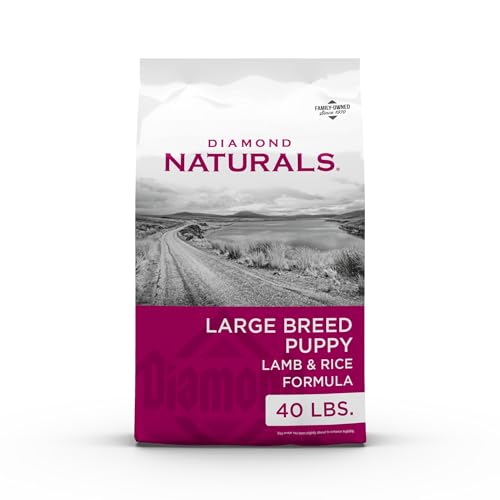
A 40-pound bag means fewer trips to the store, which matters when your Labrador puppy is plowing through food at a rate that would make a grown adult blink. Real pasture-raised lamb leads the ingredient list, giving you a named protein source rather than vague meat meal. The formulation includes DHA to support brain and eye development, a detail that aligns with what growing large-breed puppies need during their rapid early months. This is a sensible option for someone who wants a straightforward, meat-first recipe without paying extra for breed-specific packaging or marketing flourishes.
Real pasture-raised lamb is the #1 ingredient, so the protein source is clearly identified upfront. The formula is specially formulated with carefully determined protein and mineral content to support the needs of large breed puppies, which means it targets controlled growth for bigger frames. Reviewers note that the 40-pound bag covers more ground than many competitors’ 30-pound bags, so it lasts longer between purchases.
Product photos
Victor Hi-Pro Plus Large Breed Puppy Dry Kibble
What We Like
- Real chicken first ingredient
- DHA for brain and vision development
- Prebiotics and probiotics for gut health
- Gluten free ancient grains
Trade-offs
- Not a breed-specific formula for Labradors
- Contains ancient grains, not grain-free
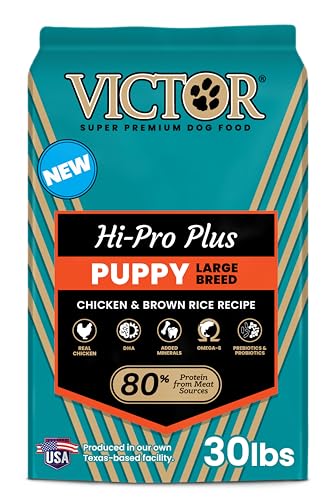
Chicken tops the ingredient list, so you’re starting with a high-quality protein that directly supports lean muscle growth in a growing large-breed puppy. The formula includes DHA to aid brain and eye development, and prebiotics and probiotics help settle a young digestive system. That combination makes it a strong choice for owners who prioritize protein density and gut support over breed-specific tailoring. Every VICTOR formula begins with the VPRO Blend, an exclusive mix of five rigorously researched ingredients designed to maximize your dog’s genetic potential, and the gluten-free ancient grains provide a carbohydrate source without corn, wheat, or soy.
The catch is that this is a high-protein kibble, so it fits best if your Labrador puppy is active or you want to push lean muscle development. If your pup is more of a couch potato, the protein load might be more than needed. Compared to Royal Canin Labrador Retriever Puppy, which is formulated for Labrador puppies, Victor takes a broader large-breed approach. That makes it a better value for protein-focused owners, but less targeted if you want a breed-specific nutrient profile.
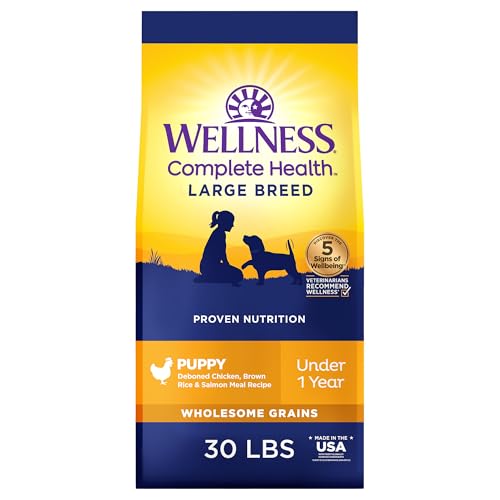
Wellness Complete Health Large Breed Puppy Dry Dog Food
What We Like
- DHA from Salmon Oil for brain development
- No corn, wheat, or soy fillers
- Natural recipe with chicken and salmon
- Antioxidants support immune system
Trade-offs
- Not breed-specific for Labrador growth rates
- Kibble size not tailored for large breed jaws
The ingredient list shows chicken and salmon as protein sources, with DHA from salmon oil included for brain development. That means a puppy gets the fatty acids needed for neural and vision growth without relying on synthetic additives. The no-corn-wheat-soy stance is a solid baseline for owners who want to avoid common fillers that can upset sensitive stomachs. This food suits someone who trusts a transparent ingredient panel over breed-specific marketing, and who wants a straightforward natural formula from a US-based facility.
Wellness Complete Health Large Breed Puppy is a general large-breed puppy food, not a breed-specific recipe like Royal Canin Labrador Retriever Puppy. That bag uses a donut-shaped kibble designed for Labrador retrievers and supports bone and joint development. If you prefer a formula built around your breed’s known orthopedic risks, the Royal Canin option is more targeted. But if you value ingredient simplicity and a cleaner label over breed-specific tweaks, the Wellness formula delivers what the front of the bag promises without the extra marketing layers.
Product photos
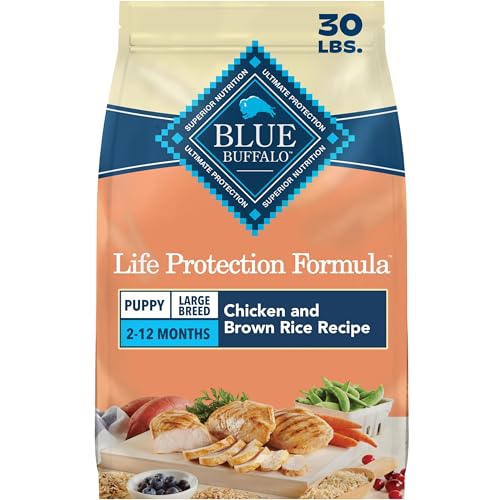
Blue Buffalo Life Protection Formula Large Puppy Dog Food
What We Like
- Real chicken is first ingredient
- LifeSource Bits support immune health
- Includes DHA and ARA for brain development
- Formulated for large breed puppies
Trade-offs
- Contains grains (brown rice, barley, oatmeal)
- Not breed-specific for Labrador Retrievers
The most important feature for a large breed puppy is the LifeSource Bits, a precise blend of antioxidants, vitamins, and minerals formed at a lower temperature to ensure optimal potency. That matters because a growing puppy’s immune system is still developing, especially during that first year. Real chicken leads the ingredient list, which supports healthy muscle development, and the formula includes DHA and ARA for brain and eye development, along with fatty acids found in mother’s milk. Calcium and phosphorus are also included to help build strong bones and teeth during the large breed growth stage.
Blue Buffalo Life Protection Formula is a general large breed puppy formula, not tailored specifically to Labrador Retrievers the way Royal Canin’s Labrador Retriever Puppy formula is. If you want a recipe designed around the breed’s unique growth patterns and joint needs, that one is more targeted. But if your priority is immune support and a formula with real meat first, Blue Buffalo delivers that.
Product photos
Orijen Grain Free Puppy Large Dry Dog Food

What We Like
- 85% animal ingredients for high protein
- WholePrey organs mimic ancestral diet
- No soy, corn, tapioca, or wheat
- Tailored for large breed puppies
Trade-offs
- 23.5 lb bag is smaller than many competitors
- Grain-free diet not suitable for all puppies
The 85% animal ingredient content is the headline here, that’s a lot of chicken, fish, and organ meat packed into each kibble, designed to mirror what a wild ancestor would eat. For a large breed puppy like a Labrador, that high protein and fat supports rapid growth and energy needs, especially during the early months when they’re doubling in size. If you’re the kind of owner who reads the ingredient list before the front label, you’ll appreciate that the first five ingredients are fresh or raw poultry or fish, with no corn, wheat, or tapioca filler to pad the bag. This is a grain-free, protein-forward option that skips the marketing fluff and delivers what it says on the back panel.
This formula is grain-free and high in protein, which may not suit every puppy’s dietary needs. Compared to Royal Canin Labrador Retriever Puppy, which uses a specialized donut kibble and breed-specific nutrient balance, Orijen focuses on a high-protein, grain-free recipe with WholePrey ingredients. It’s a better fit if you prioritize ingredient transparency and protein density over breed-specific tailoring.
Product photos
Fromm Large Breed Puppy Gold Premium Dry Dog Food

What We Like
- Three animal protein sources for amino acid variety
- Whole grains provide energy and fiber
- Formulated for gestation, lactation, and growth
Trade-offs
- Chicken base rules it out for poultry-sensitive puppies
- Whole grain recipe not ideal for grain-free diets
Three named protein sources, chicken, duck, and lamb, mean your puppy gets a broader amino acid profile than most single-protein large-breed formulas offer. That matters for muscle development and tissue repair during the rapid growth phase, especially for a Labrador that will hit 50-plus pounds. The whole grains provide a steady energy release rather than a spike-and-crash from cheaper fillers, which is exactly what a growing large-breed puppy needs to avoid joint stress from rapid weight gain.
The trade-off here is that the chicken base means this formula won’t work for puppies with a poultry sensitivity. Compared to Royal Canin’s Labrador-specific recipe, which tailors kibble shape for that breed’s bite, Fromm takes a more general large-breed approach, fine for most Labs, but the Royal Canin option offers a specialized kibble design.
Product photos
How We Evaluated Foods For Labrador Puppies
We started by reading the guaranteed analysis and ingredient panel of each formula, focusing on calcium and phosphorus ratios, protein percentage, and the source of DHA. Manufacturer feeding charts told us whether a food was designed for the large-breed growth rate versus an all-breed puppy diet. We also checked for breed-specific kibble shapes, which can affect how easily a Labrador puppy chews and digests.
The three criteria that mattered most were: joint-supporting nutrient levels (calcium, phosphorus, glucosamine), digestibility (prebiotics, fiber, protein source), and immune support (antioxidants, vitamin E, DHA). For large breed puppy food, getting these numbers right is more important than marketing claims about “premium” ingredients.
A research-led evaluation has limits. We did not feed-test these foods or measure stool quality. Our recommendations come from comparing documented specs against the known needs of Labrador retriever puppies. Always transition your puppy slowly and watch their body condition and stool consistency.
What To Look For In Foods For Labrador Puppies
Labrador puppies need a food that supports steady, controlled growth without encouraging them to gain weight too fast.
Look for a large-breed puppy formula with a calcium level around 1.0% (dry matter), a named animal protein as the first ingredient, DHA from fish oil, and prebiotics for digestion. Avoid all-life-stage foods, which may have too much calcium for a growing Lab.
Breed-Specific vs. Large-Breed Formulas
A breed-specific food like the Royal Canin Labrador formula tailors kibble shape, calorie density, and calcium-phosphorus ratios to a Lab’s unique growth pattern. Large-breed puppy foods are a good alternative for mixed-breed puppies, but they may not account for a Lab’s tendency to gain weight easily. Check the calcium percentage on the guaranteed analysis; numbers above a certain level on a dry-matter basis can stress developing joints.
Protein and Fat Levels
Labrador puppies need enough protein to build muscle, but not so much fat that they pack on pounds too quickly. Look for protein between 26-30% and fat between 12-16% on an as-fed basis. A feeding schedule that splits meals into three or four portions can help prevent bloat and keep energy steady. High-protein grain-free formulas like Orijen work for very active puppies but may be too rich for a couch-potato Lab.
DHA and Joint Support
DHA from fish oil supports brain and vision development during the first year. Glucosamine and chondroitin are helpful additions but not a substitute for correct calcium levels. The nutritional needs for large breeds include controlled growth rates; a food that promotes slow, steady bone development is better than one that pushes rapid size gains.
Kibble Size and Texture
Labrador puppies have strong jaws but can still benefit from a kibble size that encourages chewing rather than gulping. Breed-specific formulas often use a larger, denser kibble that slows eating. Some large-breed puppy foods use a medium-sized kibble that smaller mouths handle well.
- Check the bag for a “large breed puppy” label, not just “puppy” or “all life stages.”
- Look for a named animal protein (chicken, lamb, salmon) as the first ingredient.
- Avoid formulas with calcium levels above a certain percentage on dry matter unless your vet advises it.
- Choose a bag size you can use within four to six weeks to maintain freshness.
- Transition over several days by mixing increasing amounts of the new food with the old.
A good rule of thumb: the first ingredient should be something you’d recognize in a kitchen, and the calcium-phosphorus ratio should be close to balanced.
Foods For Labrador Puppies Compared
The table below compares the foods side by side on protein source, key nutrients, and best-use scenario so you can see which formula fits your puppy’s needs.
| Product | Breed Size | Protein Source | Bag Weight |
|---|---|---|---|
| Royal Canin Labrador Retriever Puppy Dry Dog Food | Labrador Retriever | High-quality proteins | 30.0 pounds |
| Royal Canin Large Puppy Dry Dog Food | Large breed | N/A | 30.0 pounds |
| Purina Pro Plan Large Breed Dry Puppy Food | Large breed puppy | Real chicken first ingredient | 34.0 pounds |
| Hill's Science Diet Puppy Large Breed Dry Dog Food | Large breed puppies | Chicken & Brown Rice | 27.5 pounds |
| Diamond Naturals Large Breed Puppy Dry Dog Food | Large Breed | Pasture-raised lamb | 39.9 pounds |
| Victor Hi-Pro Plus Large Breed Puppy Dry Kibble | Large Breed Puppy | Real Chicken | N/A |
| Wellness Complete Health Large Breed Puppy Dry Dog Food | Large Breed Puppy | Chicken, Brown Rice and Salmon Meal | 30.0 pounds |
| Blue Buffalo Life Protection Formula Large Puppy Dog Food | Large breed puppies | Real Chicken | 30.3 pounds |
| Orijen Grain Free Puppy Large Dry Dog Food | Large breed puppies | 85% animal ingredients | 23.5 pounds |
| Fromm Large Breed Puppy Gold Premium Dry Dog Food | Large breeds (50+ lb adult) | Chicken, duck, lamb | 30.0 pounds |
Frequently Asked Questions
What is the best food for a Labrador puppy?
The best food for a Labrador puppy is a large-breed or breed-specific formula that controls calcium and phosphorus levels. This supports steady joint development. Royal Canin Labrador Retriever Puppy is our top pick for purebred Labs because it matches their growth rate precisely. For mixed-breed puppies, a large-breed formula like Hill’s Science Diet Large Breed Puppy works well.
When should I switch my Labrador puppy to adult food?
Switch your Labrador puppy to adult food when they reach about 90% of their expected adult weight, typically between 12 and 18 months for Labs. Large-breed puppy formulas are designed for slower growth, so check the feeding chart on the bag for the recommended transition window. A sudden switch can upset digestion, so mix the foods over a week.
Can Labrador puppies eat grain-free food?
Some Labrador puppies can eat grain-free food, but it is not necessary for most. Grain-free diets may be useful for puppies with confirmed grain allergies, but the food for sensitive stomach puppies category includes both grain-free and grain-inclusive options. Whole grains like brown rice and barley provide fiber and steady energy. Always consult your vet before switching to a grain-free formula.
How much should I feed my Labrador puppy?
Feeding amounts depend on the specific food’s calorie density and your puppy’s age, weight, and activity level. Start with the manufacturer’s feeding chart on the bag, split into three or four meals per day. Monitor your puppy’s body condition; you should be able to feel their ribs without pressing hard. Adjust portions up or down as needed.
What ingredients should I avoid in Labrador puppy food?
Avoid puppy foods with unnamed meat meals (like “poultry meal” or “meat and bone meal”), artificial colors, and excessive calcium (above a certain percentage on dry matter). Also skip all-life-stage foods, which often have calcium levels meant for adult maintenance. For puppies with known sensitivities, check the Labrador allergy diet guide for alternative protein sources.
The Bottom Line
Royal Canin Labrador Retriever Puppy Dry Dog Food is the best overall choice for purebred Labrador puppies. It matches the breed’s specific calcium, phosphorus, and calorie needs during that critical 8-week to 15-month growth window. If your puppy is a large-breed mix, Royal Canin Large Puppy or Hill’s Science Diet Large Breed Puppy offer strong immune and digestive support without the breed-specific price tag.
Budget-conscious owners should look at Diamond Naturals Large Breed Puppy, which delivers real lamb as the first ingredient in a 40-pound bag. For those wanting targeted joint support, Purina Pro Plan Large Breed adds glucosamine directly to the formula.
The single most important buying factor is calcium level. A food that controls calcium between 1.0 and a certain percentage on dry matter will serve your Labrador puppy better than any marketing claim on the front of the bag. It should also have a named animal protein first and DHA for brain development.
