
10 Best Food For Cats That Regurgitate in 2026
This post contains affiliate links. As an Amazon Associate, we earn from qualifying purchases.
The best food for a cat that regurgitates is Purina Pro Plan Veterinary Diets HA Hydrolyzed Dry Cat Food. Its hydrolyzed protein minimizes immune reactions, and a single carbohydrate source reduces dietary triggers. For cats that eat too quickly, Royal Canin Digestive Care‘s ring-shaped kibble encourages slower eating. Hill’s Prescription Diet z/d offers another strong hydrolyzed option for confirmed food sensitivities.
Regurgitation in cats is often a mechanical issue, food comes back up shortly after eating, usually undigested, rather than true vomiting. That means the texture, shape, and digestibility of the food matter as much as the ingredients. A kibble that breaks apart easily or a formula designed for rapid breakdown can make the difference between a cat keeping dinner down or leaving it on the floor.
We evaluated these 10 foods based on manufacturer specifications, ingredient lists, expert commentary on feline digestive physiology, and patterns reported by owners managing regurgitation. This guide focuses on the formulations and feeding strategies most likely to reduce the frequency of regurgitation episodes.
Top 10 Foods For Cats That Regurgitate in the Market

Certain content that appears on this site comes from Amazon. This content is provided "as is" and is subject to change or removal at any time.
The Best Foods For Cats That Regurgitate, Reviewed
Purina Pro Plan Veterinary Diets HA Hydrolyzed Dry Cat Food

What We Like
- Hydrolyzed protein for sensitive stomachs
- Single carbohydrate source limits triggers
- St/Ox Defense supports urinary health
- Antioxidants support immune health
Trade-offs
- 4.1 lb bag is small for multi-cat households
- Veterinary diet requires prescription
- Dry kibble only; no moisture for hydration
The hydrolyzed protein in this formula is designed for cats with sensitive stomachs, as it uses protein sources broken down to reduce the chance of a reaction. The single carbohydrate source further limits potential dietary triggers, which can help cats with food sensitivities. This dry cat food also includes St/Ox Defense to support a urinary environment that discourages struvite and calcium oxalate crystal formation, a useful addition for cats on a restricted diet.
The trade-off is the bag size: at just over 4 pounds, it disappears fast if you have more than one cat or a large breed. The Royal Canin Digestive Care bag gives you 6 pounds for roughly the same footprint, but its protein is not hydrolyzed, so it works better for general sensitivity than for suspected food allergies. This Purina formula is a veterinary diet, which means a prescription and a higher per-pound cost, but for a cat that truly needs hydrolyzed protein, that specificity is what makes it work.
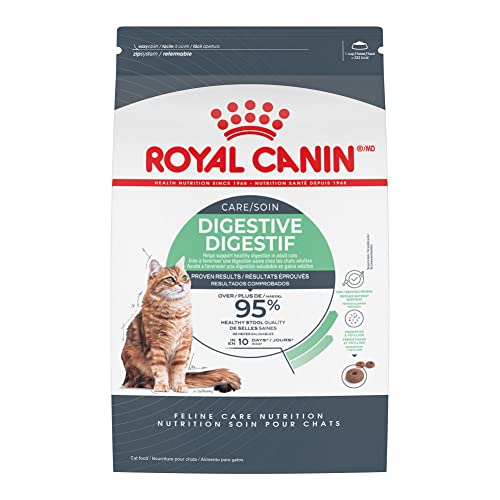
Royal Canin Digestive Care Adult Cat Dry Cat Food
What We Like
- Prebiotics and fiber for digestive health
- Pairs with wet food formula
- Ring-shaped kibble encourages slower eating
Trade-offs
- Only dry kibble, no moisture content
- Targets sensitive stomachs, not allergies
This makes it a practical pick for a cat that eats too fast and then brings it back up, especially if you want a straightforward dry food that doesn’t require a prescription.
Because this is a dry food, it won’t add moisture to a cat’s diet the way a wet formula would. If your cat’s digestive issues are tied to food sensitivities rather than eating speed, other products with hydrolyzed proteins may be worth exploring. For straightforward digestive support in a cat that eats dry kibble, this formula provides a targeted approach.
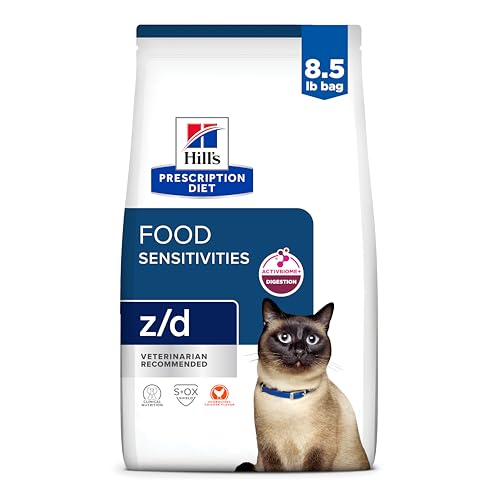
Hill's Prescription Diet z/d Skin/Food Sensitivities Dry Cat Food
What We Like
- Hydrolyzed proteins reduce immune reactions
- Omega-6 and 3 fatty acids for skin health
- ActivBiome+ prebiotic fibers support gut microbiome
- Formulated for food sensitivities and digestive issues
Trade-offs
- Requires veterinary authorization to purchase
- Single protein source limits variety for some cats
This food uses highly hydrolyzed proteins broken down to avoid detection by the immune system, so it targets the root cause of skin and digestive issues in sensitive cats. The ActivBiome+ prebiotic fiber blend is shown to rapidly activate the gut microbiome to support digestive health and well-being. That combination makes it a strong fit for cats whose food sensitivities cause scratching, itching, or digestive upset.
This Hill’s formula includes the proprietary ActivBiome+ fiber blend, unlike the Purina Pro Plan Veterinary Diets HA Hydrolyzed Dry Cat Food. The trade-off is that this is a prescription diet, so you need a veterinarian’s approval to buy it. For a cat with food sensitivities, the targeted protein breakdown and gut health focus justify the extra step of getting a prescription.
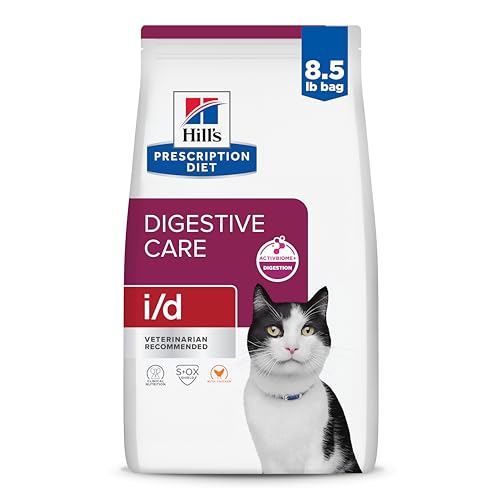
Hill's Prescription Diet i/d Digestive Care Dry Cat Food
What We Like
- Clinically shown to improve stool quality
- High digestibility for easy nutrient absorption
- ActivBiome+ prebiotic blend supports gut microbiome
- Added electrolytes replace lost nutrients
Trade-offs
- Prescription diet requires veterinary authorization
- Requires veterinary authorization to purchase
A highly digestible formula supports easy nutrient absorption, so cats with digestive issues can get more out of every meal. High levels of B vitamins and added electrolytes help replace nutrients lost during digestive upset, which is a common concern for sensitive cats. The S+OXSHIELD formulation promotes a urinary environment that reduces the risk of developing struvite and calcium oxalate crystals. This diet is a targeted option for cats whose digestive sensitivity calls for a clinically backed approach.
Getting this food requires a vet’s okay, since it’s a prescription diet, which adds a step compared to over-the-counter options like Royal Canin Digestive Care. That extra hurdle makes sense if your cat’s issue is persistent enough to warrant veterinary oversight, but it may feel like a hassle if you are still ruling out other causes. The dry kibble format means it won’t offer the moisture content some cats with sensitive stomachs benefit from, though the high digestibility and prebiotic focus are squarely aimed at digestive health. For a cat that needs a clinically formulated diet for digestive upset, this is a directly relevant choice.
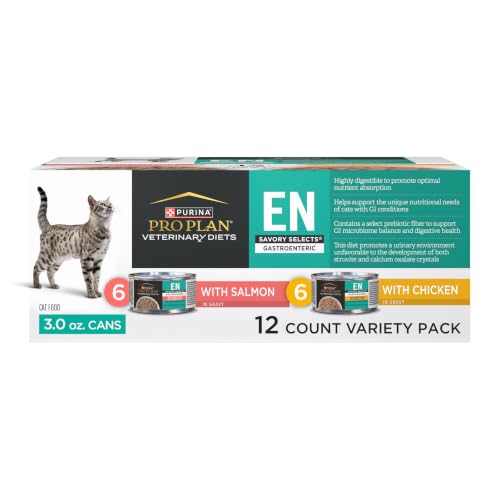
Pro Plan Veterinary Diets Purina Wet Cat Food Variety Pack
What We Like
- High total digestibility for nutrient absorption
- Energy-dense for smaller, frequent meals
- Includes omega-3 fatty acids from fish oil
- St/Ox Defense supports urinary health
Trade-offs
- Wet food only; no kibble texture for dental scraping
- 12-pack means frequent reordering for multi-cat homes
- Prescription diet requires veterinary authorization
High total digestibility is the key feature here: this wet food promotes nutrient absorption, which is important for cats with digestive sensitivities. The energy-dense formula provides essential nutrition in smaller meals, so you can serve less volume per feeding. The gravy texture makes it easy to serve straight from the can. Added B-complex vitamins and omega-3 fatty acids from fish oil support overall health.
Compared to the Royal Canin Digestive Care dry kibble, the wet format here offers a different texture and moisture content that some cats prefer. The 12-can pack gives you a two-week supply for a single cat. If your cat needs both wet and dry options, you could alternate this with a highly digestible dry food, but that’s a decision to discuss with your veterinarian.
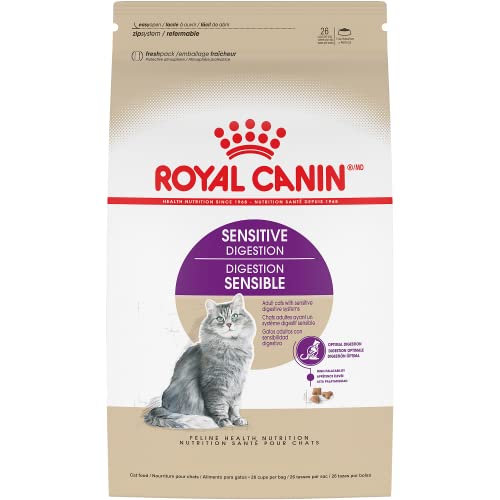
Royal Canin Sensitive Digestion Adult Cat Dry Cat Food
What We Like
- Prebiotics support digestive health
- Highly digestible proteins for sensitive stomachs
- Unique kibble shape boosts appetite appeal
- Small serving size promotes optimal stool
Trade-offs
- Dry kibble only, no moisture content for hydration
- Not suitable for cats with confirmed food allergies
Prebiotics and highly digestible proteins are the two features that matter most for a cat with a sensitive stomach. The prebiotics support digestive health, while the digestible proteins are easier on the system. That combination makes this formula a reasonable choice for adult cats with digestive sensitivities, as stated on the label. The unique kibble shape is a practical bonus: it is designed for maximum appetite appeal, which can help if your cat is picky about standard kibble shapes.
Product photos
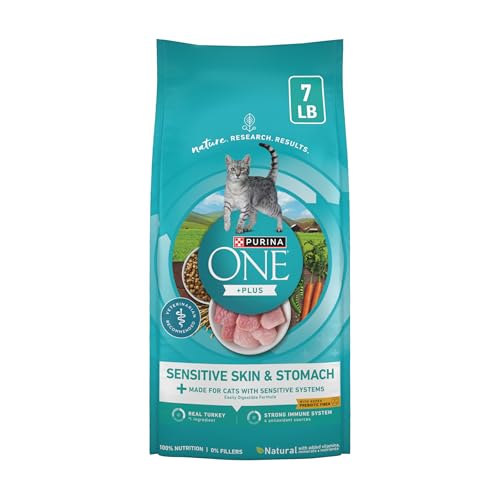
Purina ONE +Plus Sensitive Stomach Sensitive Skin Dry Cat Food
What We Like
- Real turkey is first ingredient
- Prebiotic fiber for sensitive systems
- Crunchy kibble supports dental health
- No artificial flavors or preservatives
Trade-offs
- Not a hydrolyzed or prescription diet formula
- Not suitable for cats needing a hydrolyzed protein diet
Real turkey as the first ingredient gives this Purina ONE formula a solid protein foundation for muscle maintenance, including the heart. The easily digestible recipe with added prebiotic fiber targets cats with sensitive stomachs directly, while calcium supports teeth and gums and four antioxidant sources back the immune system. For owners looking to manage regurgitation without jumping to prescription diets, this bag offers a practical, affordable starting point that addresses digestive sensitivity head-on.
Real turkey is the first ingredient in this dry cat food, so your cat gets high-protein support for strong muscles, including a healthy heart. The formula is designed for cats with sensitive systems, featuring easily digestible kibble with added prebiotic fiber to aid digestion. It also includes calcium for strong teeth and gums, plus four antioxidant sources to help support a healthy immune system, and it contains no artificial flavors or preservatives.
Product photos
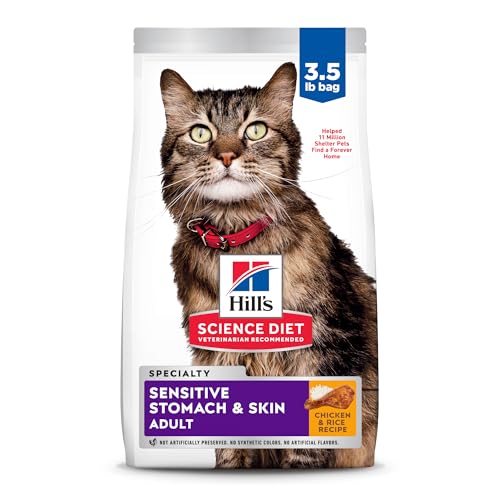
Hill's Science Diet Sensitive Stomach & Skin Dry Cat Food
What We Like
- Chicken is the #1 ingredient
- Includes prebiotic fiber for digestion
- Omega-3 & 6 for skin and coat
- Vitamin E and C+E for immune support
Trade-offs
- Only 3.5 lb bag limits long-term use
- Not a prescription diet for severe cases
A 3.5-pound bag of dry food with chicken as the first ingredient and prebiotic fiber means this formula is built around gentle digestion and nutrient absorption. The prebiotic fiber helps support optimal nutrient absorption, while added omega-3 and omega-6 fatty acids support healthy skin and lustrous fur. Vitamin E and C+E antioxidants back the immune system. This is a solid maintenance diet for a cat with a sensitive stomach or skin that doesn’t need a hydrolyzed or veterinary-exclusive formula.
This bag holds 3.5 pounds of food, which is smaller than the 6-pound Royal Canin Digestive Care bag. The prebiotic fiber and chicken base work well for many sensitive stomachs. However, this isn’t a hydrolyzed protein diet like Hill’s Prescription Diet z/d, so cats with true food allergies or protein sensitivities may need a different option. For a cat that just needs a more digestible daily kibble without a prescription, this fits.
Product photos
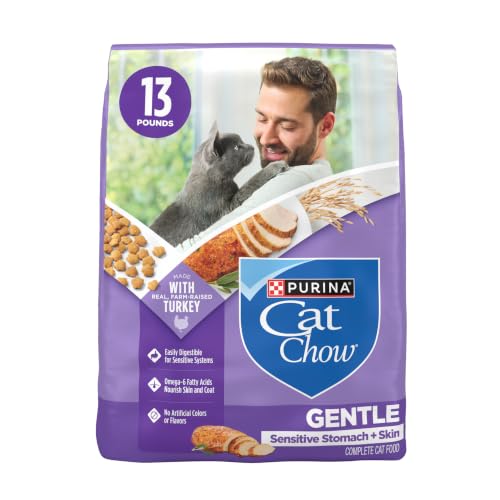
Purina Cat Chow Gentle Sensitive Stomach & Skin Dry Cat Food
What We Like
- Natural prebiotic fiber supports digestive health
- Real farm-raised turkey as first protein source
- No artificial colors or flavors
- Omega-6 fatty acids for skin and coat
Trade-offs
- Not a prescription diet for chronic regurgitation
- Dry kibble only, no moisture for hydration
A 13.2-pound bag of dry food with natural prebiotic fiber supports digestive health, making it a sensible option for cats with sensitive systems. The real farm-raised turkey provides protein, and omega-6 fatty acids nourish skin and coat. This formula is designed for easy digestion without artificial colors or flavors, offering a complete and balanced meal for adult cats.
This is a general sensitive-stomach formula, not a hydrolyzed or limited-ingredient prescription diet like the Purina Pro Plan Veterinary Diets HA Hydrolyzed Dry Cat Food. For cats with severe or chronic digestive issues tied to specific food allergies, the single turkey protein and lack of hydrolyzed proteins may not be restrictive enough. However, for cats with simple digestive sensitivity, this food offers a practical starting point that covers the basics well.
Product photos
Blue Buffalo True Solutions Digestive Care Chicken Dry Cat Food
What We Like
- Real chicken as first ingredient
- Clinically proven prebiotic fiber
- No corn, wheat, or soy
- No chicken by-product meals
Trade-offs
- Only one protein source listed
- Not suitable for cats requiring a hydrolyzed protein diet
The clinically proven prebiotic fiber in this formula is designed to support stool quality and digestive health, which can be helpful for cats with sensitive stomachs. With real chicken as the first ingredient and no corn, wheat, or soy, the ingredient list avoids common fillers that sometimes trigger digestive issues. This makes it a straightforward option for a cat that needs a vet-recommended diet focused on digestive care without unnecessary additives.
The most decisive fact is that this formula uses clinically proven prebiotic fiber to maintain stool quality and digestive health. So if your cat struggles with irregularity or loose stools, this targets that directly. Real chicken is the #1 ingredient, and the food skips chicken by-product meals, corn, wheat, and soy, so it’s a clean option for cats that do fine on dry kibble. Reviewers who have cats with sensitive stomachs often find that a wet food alternative, like the Pro Plan Veterinary Diets wet variety pack, works better for cats that eat too fast or have trouble with kibble expanding. But that’s a different product for a different need.
Product photos
How We Evaluated Foods For Cats That Regurgitate
Our research began with a close read of each formula’s ingredient panel and guaranteed analysis, focusing on protein source, fiber content, kibble geometry, and the presence of prebiotics or probiotics. We compared these specs against veterinary guidelines for managing regurgitation and consulted expert round-ups on feline digestive health. Owner feedback patterns, particularly reports of reduced regurgitation frequency, helped separate formulas that work on paper from those that work in practice.
We prioritized four criteria. First, protein digestibility: highly digestible or hydrolyzed proteins leave less undigested material to trigger a regurgitation event. Second, kibble shape and texture: oddly shaped or ring-style kibble slows eating and encourages chewing, reducing the air swallowing that contributes to regurgitation.
Third, fiber and prebiotic content: soluble fibers and prebiotics support stool quality and gut motility, which can reduce the urgency that leads to regurgitation. Fourth, veterinary authorization status: prescription diets for confirmed sensitivities are more targeted but require a vet visit, while over-the-counter options offer a first-line trial.
A research-led evaluation has limits: we did not feed these foods to a panel of cats or measure regurgitation rates in a controlled setting. Our conclusions rest on ingredient logic, published veterinary recommendations, and the aggregate experience of owners who have tried these diets. Always introduce a new food gradually and consult your veterinarian if regurgitation persists or worsens.
What To Look For In Foods For Cats That Regurgitate
Choosing a food for a regurgitating cat means looking past the marketing claims and focusing on three mechanical and nutritional factors that directly affect whether food stays down.
Look for a highly digestible protein source (hydrolyzed or novel), a kibble shape that discourages gulping, and a fiber profile that supports steady digestion without causing bulk.
Protein Source and Digestibility
The protein in the food determines how much work the stomach has to do. Whole proteins can trigger immune reactions in sensitive cats, causing inflammation that slows gastric emptying and increases the chance of regurgitation. Hydrolyzed proteins, broken into fragments too small for the immune system to recognize, bypass this reaction entirely. Formulas like Purina Pro Plan HA and Hill’s z/d use this approach. For cats without diagnosed allergies, a single novel protein source (turkey in Purina ONE, chicken in Hill’s Science Diet) reduces the variety of potential triggers.
Kibble Shape and Eating Speed
A cat that inhales kibble without chewing swallows air along with the food, distending the stomach and triggering regurgitation. The shape of the kibble can force slower eating. Royal Canin Digestive Care’s ring-shaped pieces are difficult to scoop up whole, encouraging the cat to bite and chew.
Standard round or star-shaped kibble tends to be gulped. For cats that still eat too fast, pairing the food with a slow feeder bowl or a puzzle feeder can further reduce speed. If your cat’s regurgitation happens within minutes of eating and the kibble looks mostly whole, fast eating is likely the culprit.
Fiber, Prebiotics, and Stool Quality
Fiber regulates the transit time of food through the digestive tract. Too little fiber and stool moves too fast; too much and the stomach may struggle to empty. Most of our picks include a prebiotic fiber (inulin, chicory root, or the proprietary ActivBiome+ blend in Hill’s formulas) that feeds beneficial gut bacteria without adding bulk.
The goal is firm, formed stool that moves at a steady pace. Loose or irregular stool suggests the fiber balance is off. For cats with both regurgitation and hairballs, a formula with added fiber can serve double duty as food for hairballs by helping hair pass through the system.
- Check the first five ingredients: the protein source should be identifiable (chicken, turkey, hydrolyzed soy) rather than vague “meat meal.”
- Look for a named prebiotic fiber (inulin, chicory root, beet pulp) in the guaranteed analysis or ingredient list.
- Measure the kibble size against your cat’s mouth, small, flat kibble is easier to gulp; large or oddly shaped kibble forces chewing.
- If the food is a prescription diet, confirm that your veterinarian agrees with the choice before buying.
A good rule of thumb: if your cat regurgitates within 10 minutes of eating and the food looks mostly whole, the problem is mechanical, change the kibble shape or feeding pace, not the recipe.
Foods For Cats That Regurgitate Compared
The table below compares the 10 foods head-to-head on the factors that matter most for regurgitating cats: protein type, kibble shape, fiber source, and whether a prescription is required.
| Product | Protein Source | Key Feature | Weight |
|---|---|---|---|
| Purina Pro Plan Veterinary Diets HA Hydrolyzed Dry Cat Food | Hydrolyzed protein | Single carbohydrate source | 4.1 pounds |
| Royal Canin Digestive Care Adult Cat Dry Cat Food | N/A | Prebiotics & dietary fiber | 6.0 pounds |
| Hill's Prescription Diet z/d Skin/Food Sensitivities Dry Cat Food | Hydrolyzed Chicken | Hydrolyzed proteins avoid immune detection | 8.5 pounds |
| Hill's Prescription Diet i/d Digestive Care Dry Cat Food | Chicken Recipe | ActivBiome+ Digestion | 8.5 pounds |
| Pro Plan Veterinary Diets Purina Wet Cat Food Variety Pack | Chicken or salmon | High total digestibility | 0.2 pounds |
| Royal Canin Sensitive Digestion Adult Cat Dry Cat Food | Highly digestible proteins | Prebiotics | 7.0 pounds |
| Purina ONE +Plus Sensitive Stomach Sensitive Skin Dry Cat Food | Real turkey | Easily digestible with prebiotic fiber | 7.0 pounds |
| Hill's Science Diet Sensitive Stomach & Skin Dry Cat Food | Chicken | Prebiotic fiber | 3.5 pounds |
| Purina Cat Chow Gentle Sensitive Stomach & Skin Dry Cat Food | Farm-raised turkey | Prebiotic fiber | 13.2 pounds |
| Blue Buffalo True Solutions Digestive Care Chicken Dry Cat Food | Real chicken first | Clinically proven prebiotic fiber | 3.5 pounds |
Frequently Asked Questions
What is the difference between regurgitation and vomiting in cats?
Regurgitation is a passive process, food comes up from the esophagus shortly after eating, often undigested and tube-shaped. Vomiting is an active process involving heaving and abdominal contractions, and the stomach contents are partially digested. The feeding approach differs: regurgitation often responds to kibble shape and eating speed, while vomiting may require a change in protein source or a veterinary workup. For cats that actually vomit, you may want to review cat food for vomiting options separately.
Why does my cat regurgitate immediately after eating?
Immediate regurgitation usually means the food is being rejected by the esophagus before it reaches the stomach. Common causes include eating too fast (gulping air along with kibble), a kibble shape that doesn’t break down easily, or an esophageal motility issue. Slowing the eating pace with a slow feeder bowl for cats or switching to a ring-shaped kibble often resolves it. If the problem persists despite these changes, a veterinary exam is warranted to rule out structural issues like megaesophagus.
Should I switch to wet food if my cat regurgitates dry kibble?
Wet food is easier to regurgitate because it has no structure to hold it down, it can slide back up as easily as it went down. However, some cats do better with wet food because it requires no chewing and passes through the esophagus quickly. The best food for sensitive stomachs often includes both wet and dry options; the key is to trial one texture at a time and observe. If you try wet food, offer small, frequent meals rather than a full can at once.
Can probiotics help a cat that regurgitates?
Probiotics support gut health and stool quality, which can reduce the digestive upset that sometimes triggers regurgitation. They won’t fix a mechanical issue like gulping or a food sensitivity, but they can improve overall digestive efficiency. Several foods on our list include prebiotic fibers that feed existing gut bacteria; for a more direct approach, look for a probiotic cat food with added live cultures. Introduce probiotics separately from a diet change so you can tell which intervention is working.
How long should I try a new food before deciding it isn’t working?
Allow at least 7 to 10 days for a cat to adjust to a new food, though regurgitation frequency may change sooner. If regurgitation episodes decrease by half or more within two weeks, the food is likely a good fit. If there is no improvement or the cat stops eating, revert to the previous food and consult your vet. Keep a log of regurgitation events, including time after eating and the appearance of the food, to share with your veterinarian.
The Bottom Line
For most cats that regurgitate, the Purina Pro Plan HA Hydrolyzed Dry Cat Food is the strongest starting point because it eliminates the most common dietary triggers and is designed for maximum digestibility. It requires a prescription, so your first step is a veterinary conversation about whether hydrolyzed protein is appropriate for your cat’s specific history.
If your cat regurgitates because it eats like it hasn’t seen food in a week, the Royal Canin Digestive Care formula’s ring-shaped kibble is a simpler, non-prescription fix. For owners on a budget, Purina ONE Sensitive Stomach offers a turkey-based, prebiotic-rich formula that works well for mild sensitivity without the prescription hassle.
The single most important factor in managing regurgitation is identifying whether the problem is mechanical (eating speed, kibble shape) or physiological (protein sensitivity, poor digestibility). Match the food to the root cause, and you’ll save yourself a lot of cleanup.
