
10 Best Food For Catfish in 2026
This post contains affiliate links. As an Amazon Associate, we earn from qualifying purchases.
For catfish keepers who want a durable wafer that supports natural scraping behavior, the Xtreme Aquatic Foods Scrapers Wafers earns our best overall pick with its fast-sinking 14mm discs and cellulose from Stinging Nettles. The Ken’s Fish & Pet Premium Catfish Pellets offer the best high-protein value for growth-focused owners, while the Fluval Bug Bites Bottom Feeder Granules provide a top high-protein formula without artificial fillers.
Catfish are not one-size-fits-all feeders. A pond-raised channel catfish needs a floating pellet with 32% protein, while a corydoras in a community tank requires a small, easily digestible wafer that softens quickly. Pick the wrong texture or protein level, and you risk wasted food, polluted water, or underfed fish.
This guide is research-based. We evaluated 10 products using manufacturer specifications, ingredient lists, expert round-ups, and patterns in owner feedback. Our goal is to help you match the right food to your catfish species, tank size, and feeding style without the guesswork.
Top 10 Foods For Catfish in the Market
Certain content that appears on this site comes from Amazon. This content is provided "as is" and is subject to change or removal at any time.
The Best Foods For Catfish, Reviewed
Xtreme Aquatic Foods Scrapers Wafers

What We Like
- Fast-sinking 14mm wafers for bottom feeders
- Firm texture for extended nocturnal feeding
- Cellulose from Stinging Nettles for natural scraping
- Diverse plant- and marine-derived nutrition
Trade-offs
- Firm texture requires hours to soften
- Not suitable for small or nano aquarium fish
A 2.5-pound tub of 14mm wafers that sink fast and stay firm for hours means nocturnal catfish and plecos get a long, natural grazing window after lights out. The cellulose from Stinging Nettles directly supports the scraping behavior these fish evolved for, while the blend of green peas, herring, kelp, shrimp, and spirulina covers both plant and marine nutrition in one wafer. That combination of feeding duration and ingredient diversity makes this a straightforward food for catfish keepers who want a single option that matches how their fish feed in the wild.
At 13-14mm, these wafers are built for larger bottom feeders, so smaller species may find them harder to handle. Compared to Ken’s Fish & Pet Premium Catfish Pellets, which come in a 1.75-pound jar, the Xtreme wafers are a larger, more durable disk. If your tank holds only tiny catfish, a smaller pellet format may be easier for them to manage; for others, the extended feeding window and nettle-based cellulose offer a complete option.
Product photos
Ken's Fish & Pet Premium Catfish Pellets
What We Like
- 35% crude protein supports growth
- Vpak supplement boosts disease resistance
- Highly digestible marine proteins reduce waste
- Trusted by hatcheries and universities
Trade-offs
- Only available in a 1.75 lb jar
- Not formulated for plecos or algae-eating bottom feeders
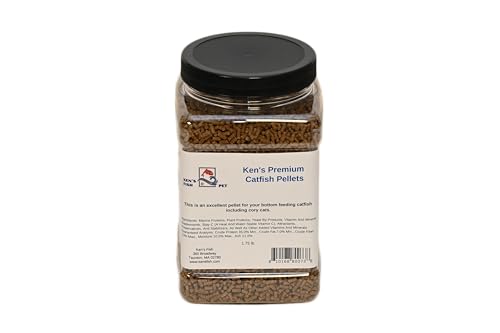
This pellet delivers a guaranteed 35% crude protein from marine sources, which the manufacturer states are highly digestible to reduce excreted waste. The Vpak supplement is an all-natural additive aimed at improving overall fish health and disease resistance, a detail that matters if you keep catfish long-term. This is a straightforward, no-nonsense formula for aquarists who want a high-protein staple without fillers or flashy marketing.
The trade-off is portion size: a 1.75-pound jar is a moderate amount for a single tank. But if you feed multiple catfish daily you will reorder sooner than with a bulk bag like Southern States Big Strike Catfish Feed. And while the pellets work for most tropical catfish, very small specimens might struggle with the particle size compared to the finer granules in Fluval Bug Bites. For the keeper who prioritizes protein content and ingredient transparency over convenience packaging, this pellet delivers exactly what the label says.
Product photos
Fluval Bug Bites Bottom Feeder Granules

What We Like
- No artificial fillers or preservatives
- Sinking granules target bottom feeders
- Fortified with vitamins and minerals
Trade-offs
- Two-minute feeding limit requires careful portioning
- Granules sized for small to medium fish only
The 1.6-ounce jar is compact, but you will reorder more often compared to larger containers like the 35-ounce Xtreme Scrapers Wafers. The 1.4-1.6mm sinking granules are designed for small to medium fish, so they suit modest-sized bottom feeders. If ingredient quality matters more than bulk quantity, this is a focused pick; for big tanks or large fish, bigger wafers make more sense.
Product photos
Hikari Sinking Wafers for Bottom Feeders
What We Like
- Fortified with vitamin C and minerals
- High vegetable matter for bottom feeders
- Wafers soften for smaller fish
Trade-offs
- Targeted to corydoras, not larger catfish
- Wafers soften too quickly for larger fish
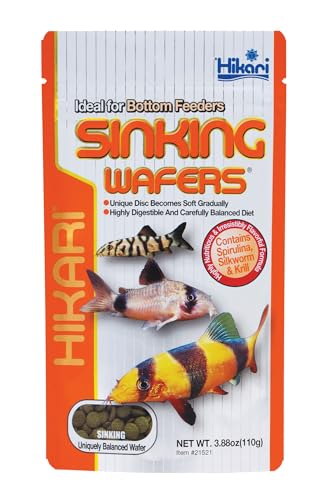
The trade-off is portion size. At 3.88 ounces, this bag won’t stretch far in a tank with multiple corydoras or larger catfish species. Compared to Xtreme Aquatic Foods Scrapers Wafers, which comes in a 35-ounce container, the Hikari is a more concentrated option for smaller setups. It’s also a good choice for dedicated corydoras keepers who want a formulation that includes spirulina, silkworm, and krill.
Tetra ShrimpWafers for Catfish

What We Like
- Sinking wafers target bottom feeders directly
- Shrimp proteins provide energy for catfish
- Stabilized vitamin source supports fish health
- Formulated specifically for omnivorous species
Trade-offs
- Supplemental use only for non-bottom feeders
These sinking wafers are made with shrimp proteins that act as an attractant, so they reach bottom-feeding catfish and loaches directly. Tetra formulated them for omnivorous bottom feeders, which covers most common catfish species that need both plant matter and animal protein. The stabilized vitamin source and guaranteed nutrient percentages support fish health over time. If you keep corydoras, loaches, or similar bottom-scavenging omnivores in a community tank, this is a straightforward daily option that matches their natural feeding behavior.
The 3 oz package is a starter size, not a bulk buy, so heavy feeders will need frequent repurchasing. Compared to Xtreme Aquatic Foods Scrapers Wafers at 35 oz, this is a smaller volume for the price. For a single-tank hobbyist feeding a few catfish, the small container is manageable and avoids waste. But if you have multiple tanks or a heavy bioload, you will run out quickly.
Product photos
NorthFin Cichlid Sinking Pellets

What We Like
- Whole Antarctic krill meal as first ingredient
- Slow-sinking 3mm pellets suit bottom feeders
- Filler-free, bi-product-free formula
- No added hormones or artificial pigments
Trade-offs
- Marine protein base not ideal for herbivorous species
The whole Antarctic krill meal as the primary ingredient tells you this isn’t a filler-heavy diet. Marine proteins are generally more digestible for carnivorous fish, meaning less waste in the tank and more nutrients actually absorbed. The slow-sinking 3mm pellet size targets bottom-dwelling catfish that prefer to feed off the substrate, and the absence of artificial pigments and hormones keeps the ingredient list clean. This is a straightforward, protein-forward option for catfish that need a sinking diet without the usual grain binders.
NorthFin Cichlid Sinking Pellets are formulated for carnivorous and omnivorous cichlids, so they are not intended for herbivorous species like algae-eating plecos. The 3mm pellet is a slow-sinking design, which gives bottom-feeding fish time to find it before it drifts away. Made in Canada, this food uses whole Antarctic krill meal as a marine protein base, and the manufacturer states it is free of fillers, bi-products, artificial pigments, and added hormones.
Omega One Sinking Shrimp Pellets
What We Like
- Naturally insoluble reduces water pollution
- No meals, hydrolysates, or digests
- Made with whole fresh shrimp from Alaska
Trade-offs
- 8mm pellets are too large for small or juvenile fish
- Feed only what fish eat in two minutes, limiting heavy feeders
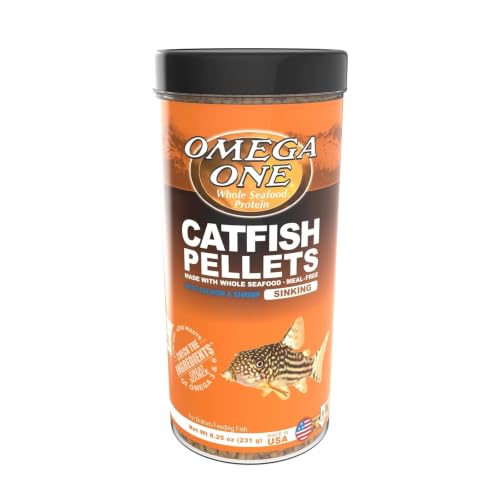
For catfish keepers who read labels the way I do, this is the kind of formulation that makes sense. It’s high protein, low starch, and naturally insoluble so it doesn’t cloud the water before your fish find it.
If your fish are on the small side, you might need to crush them or look elsewhere. But for medium to large catfish, the ingredient quality here is hard to beat among sinking options.
NorthFin Kelp Wafers Bottom Feeder Food
What We Like
- Organic kelp as first ingredient
- Whole Antarctic krill and spirulina included
- Sinking format supports natural grazing
- No artificial colors or added hormones
Trade-offs
- 14mm wafer size too large for small bottom feeders
- 33% protein too low for carnivorous catfish
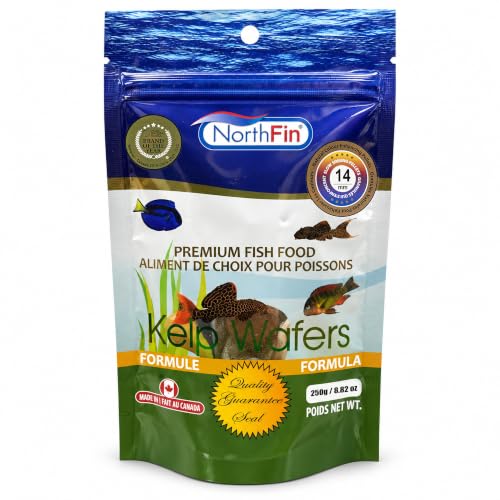
Organic kelp sits at the top of the ingredient list, not a grain or filler. That alone tells you this wafer prioritizes algae-based nutrition over cheap bulk. With 33% crude protein from whole Antarctic krill and spirulina, it delivers a nutrient-dense diet for herbivorous and omnivorous bottom feeders like plecos and catfish. The 14mm sinking wafer drops fast and stays put, letting fish graze naturally without competing for floating bits. If your catfish tank leans heavily on plant matter, this formula matches that need without artificial colors or hormones.
The 14mm wafer also assumes a certain fish size; smaller loaches or fry might struggle to break it down. For a tank of algae-grazing catfish and plecos, this is a clean, transparent formula. Just check your fish’s protein requirements before committing.
Southern States Big Strike Catfish Feed

What We Like
- Floating pellets reduce waste
- 32% protein supports lean growth
- Fortified with stabilized vitamins
- Formulated for easy digestion
Trade-offs
- Only suitable for pond surface feeding
- 40-pound bag is heavy to handle
A 32% protein level with balanced amino acids means this feed prioritizes lean growth over filler ingredients, which matters when you’re raising catfish for size or stocking a pond. The floating pellet design keeps every bite visible at the surface, so you can watch feeding activity and stop once the fish lose interest, typically within five to seven minutes. That visibility also cuts down on uneaten food sinking and decomposing, which is a common source of water quality headaches. This is a straightforward, no-nonsense feed for anyone running a pond who wants measurable growth without guessing whether the fish are actually eating.
This feed only works if your fish feed at the surface. For setups where sinking pellets are preferred, other products like Hikari Sinking Wafers are available. The 40-pound bag also assumes you have the space and appetite to go through it before the vitamins degrade, so smaller setups might find it more than they need. Stick with this if you have a pond and want a feed that floats, stays visible, and delivers a clean protein profile without marketing fluff.
Product photos
AQUATICBLENDEDFOODS Super Catfish Mix

What We Like
- Soft bits suit bottom-feeder mouths
- Developed by experienced Cory breeders
- 38-47% crude protein from whole fish and shrimp
Trade-offs
- Small 2 oz bag runs out quickly
- No single-protein option for sensitive fish
The inclusion of soft bits alongside 4.0mm krill and shrimp sticks also gives variety in texture, some fish prefer a softer sinker, others a firmer nibble. This is a mix that rewards label-readers who want to see real ingredients listed, not just vague ‘fish meal’.
The 2 oz package size is the main trade-off. For a single small aquarium it’s fine, but if you have multiple bottom-feeders or larger species, you’ll be reordering frequently compared to the 35 oz Xtreme Scrapers Wafers. The multiple pellet sizes also mean you might get separation in the bag, some fish pick out the soft bits first, leaving the harder sticks behind. That said, if you value ingredient transparency and a formulation built by breeders who actually keep Corydoras, this mix delivers a level of specificity most mass-market wafers don’t bother with.
Product photos
How We Evaluated Foods For Catfish
We started by reading ingredient labels and manufacturer nutrition data for each product. Protein content, primary protein sources, sinking speed, pellet or wafer size, and additive profiles all went into the comparison. We also cross-referenced expert recommendations from experienced breeders and hatchery nutritionists to understand what works for different catfish species in practice.
The three criteria that mattered most were protein level, sinking or floating format, and particle size. Catfish need a high percentage of protein for growth, and bottom feeders cannot eat surface food. A 14mm wafer is useless for a small corydoras. Ingredient transparency and the presence of fillers, artificial colors, or unnecessary binders were also considered.
A research-led evaluation has limits. We did not feed these foods to fish in a lab or track growth rates over months. Our conclusions are based on what the manufacturer states, what experienced keepers report, and what the ingredient list logically supports. We encourage you to check the bag against your own fish’s behavior.
What To Look For In Foods For Catfish
Choosing the right catfish food means matching the format, protein level, and ingredient quality to your specific species and tank conditions. Here is what matters most.
Sinking wafers or pellets are essential for most catfish. Check the protein percentage first, then match the pellet size to your fish’s mouth. Avoid foods with unnamed “fish meal” or artificial colors.
Protein Content and Source
Catfish are primarily carnivorous or omnivorous, and most species need a crude protein level between a third and two-fifths for healthy growth. The source matters more than the percentage alone. Whole Antarctic krill, fresh shrimp, and marine fish meals provide highly digestible amino acids. Plant proteins like soybean meal can fill out the formula, but they should not be the first ingredient for carnivorous species. The Ken’s Catfish Pellets hit 35% protein from marine sources, while the NorthFin Cichlid Sinking Pellets lead with whole krill as the first ingredient.
Sinking vs. Floating Format
Most catfish are bottom feeders with downward-facing mouths. A floating pellet that sits on the surface for an hour will never reach them. Sinking wafers and pellets drop directly to the substrate where catfish naturally graze. The exception is pond-raised catfish, which have been bred to surface-feed on floating pellets like the Southern States Big Strike Catfish Feed. For aquarium catfish, a fast-sinking wafer that stays intact for several hours, like the Xtreme Aquatic Foods Scrapers Wafers, is ideal for nocturnal feeding.
Pellet and Wafer Size
A 14mm wafer is appropriate for a full-grown pleco or a large channel catfish but will frustrate a small corydoras that cannot break it apart. Conversely, the 2mm granules in the Fluval Bug Bites formula are perfect for small to medium bottom feeders but will not satisfy a large fish that needs a substantial meal.
Match the particle size to the largest fish in the tank first, then supplement with smaller food for the smaller species. The Hikari Sinking Wafers soften as they absorb water, making them accessible to smaller mouths.
- Check the guaranteed analysis on the label for crude protein and crude fat percentages.
- Look for named protein sources like “whole Antarctic krill” or “fresh shrimp” rather than generic “fish meal.”
- Consider a variety mix like the AQUATICBLENDEDFOODS Super Catfish Mix if you keep multiple catfish species with different mouth sizes.
- For pond catfish, verify the pellet floats; for aquarium catfish, verify it sinks within seconds.
- Avoid foods with artificial colors, added hormones, or preservatives like ethoxyquin.
A good rule of thumb: if the food’s ingredient list reads like a chemistry set, your catfish probably should not eat it.
Foods For Catfish Compared
The table below compares the 10 catfish foods side by side on protein content, format, and best use case so you can see the differences at a glance.
| Product | Form | Key Ingredient | Weight |
|---|---|---|---|
| Xtreme Aquatic Foods Scrapers Wafers | Wafers | Cellulose from Stinging Nettles | 2.5 pounds |
| Ken's Fish & Pet Premium Catfish Pellets | Pellets | N/A | 1.75 lb |
| Fluval Bug Bites Bottom Feeder Granules | Granules | Black Soldier Fly Larvae | 1.60 Oz. |
| Hikari Sinking Wafers for Bottom Feeders | Sinking wafers | Spirulina, silkworm, krill | 3.88 oz (110g) |
| Tetra ShrimpWafers for Catfish | Sinking wafers | Shrimp proteins | 0.2 pounds |
| NorthFin Cichlid Sinking Pellets | Sinking Pellets | Whole Antarctic krill meal | 500g |
| Omega One Sinking Shrimp Pellets | Pellets | Real Shrimp | 8.25 oz |
| NorthFin Kelp Wafers Bottom Feeder Food | Wafers | Organic kelp | 250g |
| Southern States Big Strike Catfish Feed | Floating pellets | N/A | 40 pounds |
| AQUATICBLENDEDFOODS Super Catfish Mix | Mix | Krill, spirulina, shrimp | 2 oz |
Frequently Asked Questions
What is the best food for catfish in an aquarium?
The Xtreme Aquatic Foods Scrapers Wafers work well for most aquarium catfish because they sink fast, stay intact for hours, and provide diverse plant- and marine-derived nutrition. For smaller species like corydoras, the Hikari Sinking Wafers soften more easily.
Can I feed catfish the same food as my other fish?
Many community fish foods float or stay suspended, which bottom-dwelling catfish cannot reach. You need a sinking wafer or pellet designed for bottom feeders. A dedicated catfish feeding guide can help you adjust portions and timing so every fish gets fed.
How often should I feed my catfish?
Most adult catfish do well with one feeding per day in the evening, since many species are nocturnal. Feed only what they can consume within a few minutes. Remove any uneaten food after a couple of hours to prevent water quality issues.
What protein percentage does a catfish food need?
Growing catfish typically need a crude protein level of a third to two-fifths. The Ken’s Catfish Pellets offer 35% protein from marine sources, while the Southern States Big Strike Catfish Feed provides 32% for pond fish. Young fry may need a higher-protein starter feed.
Do catfish need sinking or floating food?
Most aquarium catfish need sinking food because they feed at the bottom. Pond catfish are an exception and will readily eat floating pellets. Check your species’ natural feeding behavior before choosing a format.
The Bottom Line
The Xtreme Aquatic Foods Scrapers Wafers is the best overall choice for most catfish keepers. Its firm, fast-sinking 14mm wafer supports natural scraping behavior over several hours, and the cellulose from Stinging Nettles provides a texture that bottom feeders can work on through the night. It is ideal for anyone who wants a durable, nutritionally diverse wafer that does not dissolve into mush in minutes.
If you are raising catfish for growth and want a high-protein formula with a clean ingredient list, the Ken’s Fish & Pet Premium Catfish Pellets offer proven results at a fair value. For pond owners, the Southern States Big Strike Catfish Feed delivers a floating, 32% protein pellet that minimizes waste. Small-tank keepers with corydoras should look at the Hikari Sinking Wafers, which soften quickly and are fortified with vitamin C.
The single most important buying factor is matching the food format to your fish’s feeding behavior. A sinking wafer for a bottom feeder, a floating pellet for a pond catfish, and the right protein level for the species you keep. Everything else, brand, price, bag size, comes second to that one question: will this food actually reach my catfish’s mouth?
