
10 Best Food For Bulldog Puppies in 2026
This post contains affiliate links. As an Amazon Associate, we earn from qualifying purchases.
The Royal Canin Bulldog Puppy Dry Dog Food earns our Best Overall pick because its uniquely shaped kibble makes eating easier for flat-faced puppies while prebiotics support their sensitive digestion. For large breed owners, the Diamond Naturals Large Breed Puppy Dry Dog Food offers a lamb-first recipe, and the Hill’s Science Diet Puppy Large Breed Dry Dog Food is the top veterinarian-recommended choice.
Bulldog puppies come with a distinct set of challenges: brachycephalic faces that make picking up kibble harder, sensitive stomachs that react to sudden changes, and rapid growth phases that demand precise calcium levels. The wrong food can lead to messy eating, digestive upset, or joint problems down the road.
This guide is based on a close look at ingredient lists, guaranteed analysis values, kibble design, and the patterns reported by bulldog owners. We compared breed-specific formulas against general large-breed options so you can match your puppy’s actual needs to the right bag.
Top 10 Food For Bulldog Puppies in the Market

Certain content that appears on this site comes from Amazon. This content is provided "as is" and is subject to change or removal at any time.
The Best Food For Bulldog Puppies, Reviewed
Royal Canin Bulldog Puppy Dry Dog Food

What We Like
- Breed-specific formula for bulldog puppies
- Unique kibble shape aids easy pickup
- Antioxidant complex supports immune development
- Prebiotics and proteins support digestive health
Trade-offs
- Only for purebred bulldogs, not other breeds
- No grain-free option mentioned
The kibble shape is designed so bulldog puppies can pick up and chew their food without struggling, a detail that sets this formula apart from many generic puppy foods. This food is built around the specific needs of purebred bulldogs from 8 weeks to 15 months, with an antioxidant complex including vitamin E to support immune system development during that critical growth window. For someone who wants a food tailored to the nutritional demands of a bulldog puppy, this is a targeted option.
The main trade-off here is that this food is designed specifically for purebred bulldogs, so if you have a mixed breed or a different large-breed puppy, you’re paying for features that won’t apply. Royal Canin includes prebiotics and precise minerals to support digestive health and bone and joint development, which makes sense if you’re committed to the breed, but it’s not a one-size-fits-all solution.
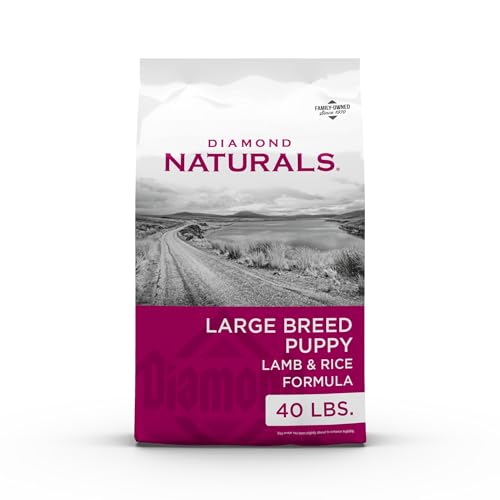
Diamond Naturals Large Breed Puppy Dry Dog Food
What We Like
- Real pasture-raised lamb is first ingredient
- DHA supports brain and vision development
- Formulated for large breed puppy needs
Trade-offs
- 40 lb bag is heavy to handle
- Not suitable for small or toy breed puppies
Real pasture-raised lamb as the first ingredient means this formula prioritizes animal protein over fillers, a detail that matters when you’re reading the back of the bag, not just the front. The protein and mineral levels are dialed in for large breed puppies, so growing bones and joints get support without excessive calcium that can cause problems down the road. DHA is included for brain and vision development, which is standard in better puppy foods but still worth checking. This is a straightforward, no-fluff recipe that focuses on what a large breed puppy actually needs, and the ingredient list backs up the claims on the label.
Lamb is the first ingredient, which means the formula relies on a single animal protein source. If your puppy has a sensitivity to lamb or prefers chicken, this bag won’t work. Compared to Royal Canin Bulldog Puppy, which is designed specifically for bulldog puppies, Diamond Naturals uses a conventional kibble shape. The 40-pound bag is heavy to handle and store, but it offers a large quantity for the price. For someone who wants a straightforward large breed puppy food with lamb as the first ingredient, this is a sensible pick.
Product photos
Hill's Science Diet Puppy Large Breed Dry Dog Food
What We Like
- Balanced minerals for growing bones and teeth
- DHA and fish oil for brain and eye development
- Antioxidant blend supports developing immune system
- High quality proteins fuel growing muscles
Trade-offs
- Chicken-based recipe not ideal for poultry-sensitive dogs
- Large breed puppies only, not suitable for small breeds
The 27.5-pound bag delivers a formula backed by balanced minerals for growing bones and teeth, plus DHA and fish oil to support brain and eye development during those critical early months. This is a food built around what a large-breed puppy actually needs, not flashy marketing claims, and it comes from a brand that US veterinarians recommend more than any other. If you want a straightforward, nutritionally complete option that prioritizes immune support and muscle growth without gimmicks, this fits the bill.
The trade-off here is that this is a large-breed-specific formula, so if your puppy runs on the smaller side, the nutrient levels might not align perfectly with their growth rate. Compared to Royal Canin’s Bulldog Puppy formula, which offers bone and joint support and specialized kibble for bulldog puppies, Hill’s takes a broader large-breed approach. That means you get a well-researched, vet-backed product, but you lose the breed-specific tweaks that some bulldog owners find useful.
Purina Pro Plan Large Breed Dry Puppy Food

What We Like
- Real chicken is first ingredient
- Glucosamine for developing joints and cartilage
- DHA from fish oil for brain and vision
- Formulated for appropriate large breed growth rate
Trade-offs
- Chicken-based, not ideal for dogs with poultry sensitivities
- 34 lb bag is heavy for small households
Glucosamine is the headline here, and for good reason: large breed puppies put serious strain on growing joints, and this formula includes it to support developing cartilage and joints directly. Real chicken leads the ingredient list, so you’re getting a high-protein base that matches what you’d expect from a growth-focused recipe. DHA from omega-rich fish oil rounds out the nutritional picture, supporting brain and vision development in those early months.
The catch is that this is a general large breed formula, not one tailored to a specific breed’s unique skull and bite mechanics. Unlike the Royal Canin Bulldog Puppy, which is formulated for bulldog puppies, Purina Pro Plan’s standard kibble might not be as comfortable for a brachycephalic pup.
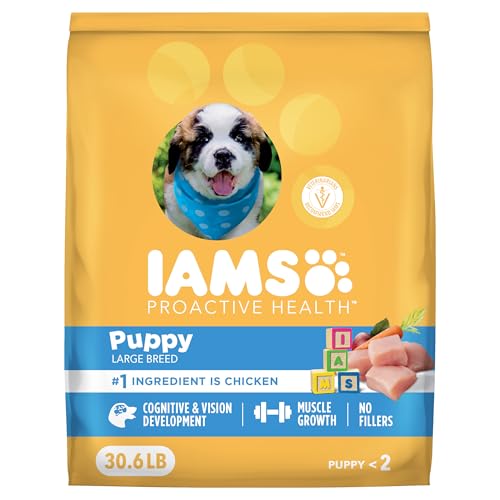
IAMS Proactive Health Large Breed Puppy Dry Dog Food
What We Like
- Real chicken is #1 ingredient
- Omega-3 DHA supports cognitive development
- Optimal calcium for bone and joint health
- Antioxidants Vitamin E and Selenium for immunity
Trade-offs
- Contains chicken, not for dogs with poultry sensitivities
- Bag weighs 30.6 pounds, heavy to carry
Real chicken is the first ingredient, which means the protein base is straightforward and recognizable, something I always look for before anything else on the bag. The Omega-3 DHA is the key here, formulated to support cognitive and vision development during those rapid early months. For a bulldog puppy, whose growth needs careful management, the optimal calcium levels are a practical touch, aimed at supporting healthy bones and joints without overdoing it. This recipe also includes Vitamin E and selenium for immune support, rounding out a formula that prioritizes foundational health over flashy additives.
This is a large breed formula, which may not be the perfect fit for every puppy if their breed falls outside the large category. For a puppy with a known chicken sensitivity, you will need to look elsewhere, as chicken is the primary protein. In contrast to the Royal Canin Bulldog Puppy formula, which is designed for bulldog puppies, this IAMS bag takes a broader large-breed approach. That makes it a widely available, ingredient-forward food with clear developmental benefits, but less specialized than a breed-specific recipe.
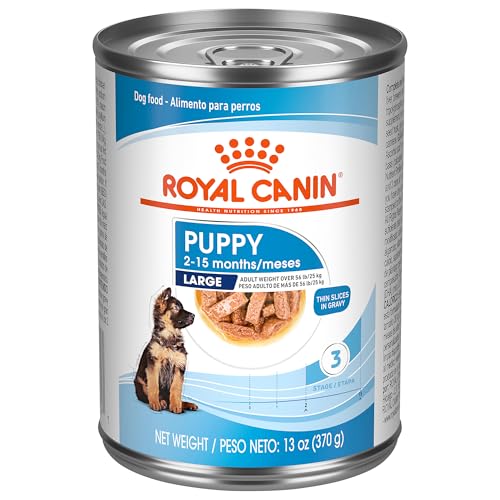
Royal Canin Large Puppy Wet Dog Food
What We Like
- Prebiotics support digestive microbiome balance
- DHA for brain development
- Antioxidants (E & C) for immune support
- Soft texture easy for growing puppies
Trade-offs
- Wet food only, no kibble variety in this pack
- Not formulated specifically for bulldog breeds
This wet food targets large breed puppies with an expected adult weight of 56 to 100 lb, so it’s designed for the nutritional needs of a growing large-boned dog, not a small-breed recipe. Prebiotics and highly digestible proteins help support a balanced intestinal microbiome, which can aid digestive health during the rapid growth phase. DHA, an omega-3 fatty acid, supports brain development, while the antioxidant blend of vitamins E and C helps the immune system keep up with a puppy’s energy. The thin slices in gravy provide a soft texture that makes it easy for a young puppy to eat.
For a large-breed puppy that needs digestive and immune support in a moist, palatable form, this wet food delivers exactly what the label says. If you prefer a mixed-feeding routine or a kibble option, you might consider a dry large-breed puppy food instead.
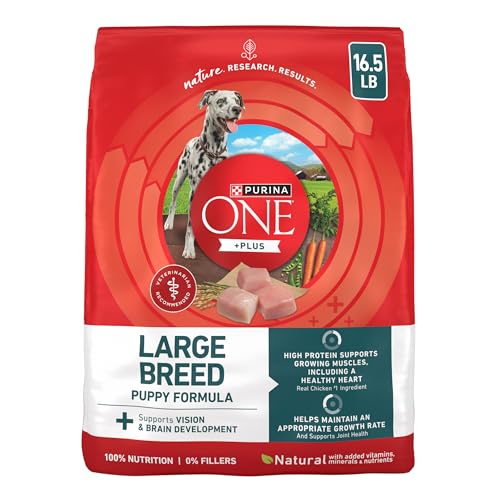
Purina ONE Plus Large Breed High Protein Puppy Food
What We Like
- Real chicken as first ingredient
- DHA supports vision and brain development
- Glucosamine for joint health
- Four antioxidant sources for immune support
Trade-offs
- Large breed formula, not bulldog-specific
- Not tailored to bulldog facial structure
Real chicken is the number one ingredient in this dry puppy food, providing a protein base to support strong muscle growth, including a healthy heart. The formula includes DHA, a nutrient found in mother’s milk, to support vision and brain development, plus glucosamine to help maintain an appropriate growth rate and support joint health. With four antioxidant sources for immune support, this is a straightforward recipe for owners who want high protein and joint support in a large-breed puppy food.
Real chicken is the first ingredient in this large-breed puppy food, so your growing dog gets the protein needed for strong muscles and a healthy heart. The formula includes DHA to support vision and brain development, plus glucosamine for joint health, which helps maintain an appropriate growth rate. It also packs four antioxidant sources for immune support and omega-6 fatty acids for a shiny coat. For a flat-faced puppy that struggles with eating, the specialized kibble in Royal Canin Bulldog Puppy might be more practical, but for a straightforward high-protein option with joint support, this delivers.
Product photos
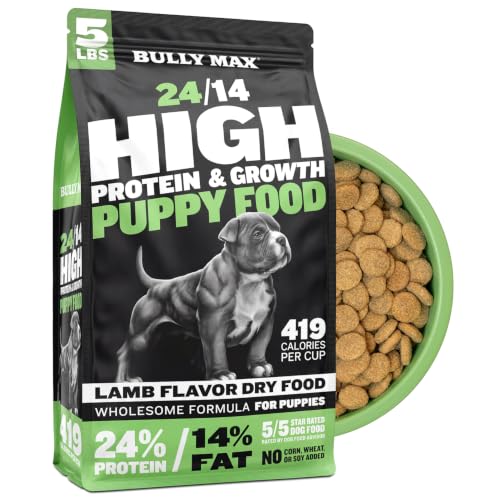
Bully Max Puppy Food High Protein Growth Formula
What We Like
- 419 calories per cup for growth
- Chicken-free lamb formula
- Postbiotics for gut and immune support
- Omega fatty acids for skin and itch relief
Trade-offs
- Higher calorie density requires careful portion control
At 419 calories per cup, this formula packs more energy per bite than most puppy foods on the shelf. For bulldog puppies who need steady fuel for rapid growth without eating huge volumes, that calorie density matters. The lamb-based, chicken-free recipe sidesteps a common allergen trigger, while added postbiotics and omega fatty acids support digestion and skin health, two areas bulldogs often struggle with. It’s a straightforward, no-nonsense option for owners who want a high-performance growth formula built around a single real meat protein.
A concentrated calorie load like this demands careful measuring, especially for a breed prone to packing on weight too quickly. While Royal Canin Bulldog Puppy offers bone and joint support and immune system support with high-quality proteins for bulldog puppies, this Bully Max formula takes a more general high-protein approach. If your puppy does fine with lamb and you’re comfortable dialing in portions, it’s a strong calorie-dense choice. If you prefer a breed-specific formula designed for bulldog puppies, the Royal Canin may be worth the extra cost.
Product photos
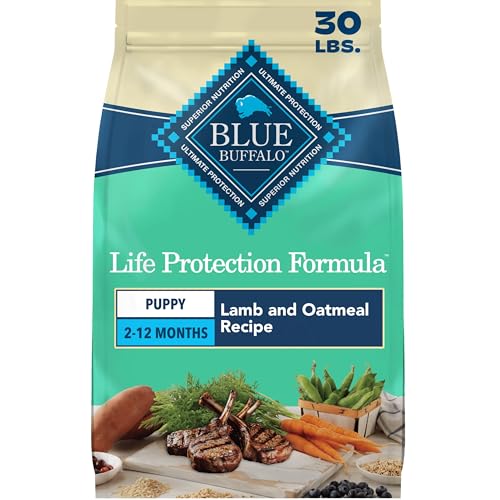
Blue Buffalo Life Protection Formula Lamb Puppy Dry Dog Food
What We Like
- Real lamb as first ingredient
- DHA and ARA for brain and eye development
- LifeSource Bits for immune support
- Wholesome grains for gentle digestion
Trade-offs
- Not tailored for bulldog-specific jaw shape
- Contains grains, not for grain-free diets
Real lamb is the first ingredient here, which means this formula puts muscle-building protein front and center for puppies from 2 to 12 months. The inclusion of DHA and ARA, fatty acids found in mother’s milk, supports brain and eye development in the early weeks. LifeSource Bits add a precise blend of antioxidants, vitamins, and minerals, heated at lower temperatures to keep them potent. If you want a lamb-based diet that covers the basics of growth without flashy marketing, this is a straightforward, nutritionally complete option.
The kibble shape isn’t designed for the unique flat face of a bulldog puppy, unlike the Royal Canin Bulldog Puppy formula which uses a specialized kibble for easier picking up. That said, Blue Buffalo’s inclusion of wholesome grains like oatmeal and brown rice supports steady energy and gentle digestion, which matters for growing pups prone to sensitive stomachs. It’s a solid lamb protein pick for owners who prioritize ingredient transparency over breed-specific kibble design.
Product photos
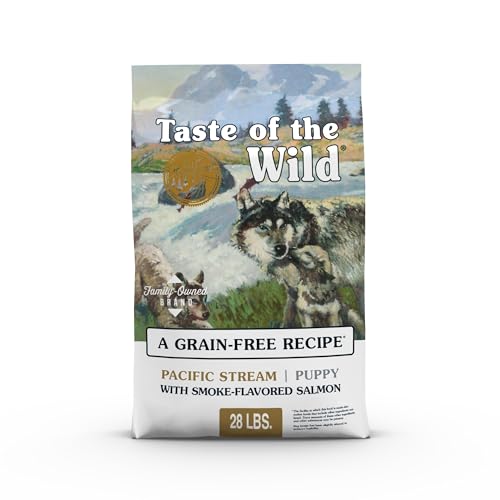
Taste of the Wild Pacific Stream Puppy Dry Dog Food
What We Like
- Real salmon is first ingredient
- Includes proprietary probiotics for digestion
- High protein content supports lean muscles
Trade-offs
- Not specifically formulated for bulldog puppies
A 27% protein content from real salmon as the first ingredient gives this puppy food a solid nutritional foundation for lean muscle development, while the K9 Strain proprietary probiotics target digestive health directly. This makes it a strong option for bulldog puppies with sensitive stomachs or owners who prioritize gut support over breed-specific kibble shapes. The recipe includes vitamins and minerals from superfoods and omega fatty acids for healthy skin and coat, supporting overall growth.
Real fish is the #1 ingredient in this puppy food, delivering 27% protein to help build lean, strong muscles in growing puppies and nursing or pregnant mothers. The smoke-flavored salmon recipe includes omega fatty acids for healthy skin and coat, plus species-specific probiotics to support digestion and immune health. Unlike the Royal Canin Bulldog Puppy formula, this bag isn’t tailored to a bulldog’s unique jaw structure or common breed-specific issues like flatulence.
Product photos
How We Evaluated Food For Bulldog Puppies
We started by reading the guaranteed analysis and ingredient panel on every formula, noting protein and fat percentages, calcium-to-phosphorus ratios, and the presence of DHA for brain development. Manufacturer documentation told us about kibble shape and size, critical for a bulldog’s flat face, while patterns in owner feedback revealed which foods actually stayed down and which led to loose stools.
Three criteria mattered most. Kibble geometry came first: a triangular or star-shaped piece is easier for a bulldog puppy to scoop up than a round one. Digestive support came second, since bulldogs are prone to gas and soft stool; we prioritized formulas with prebiotics, probiotics, or limited ingredient lists. Growth rate control came third, because large-breed bulldog puppies need moderate calorie density and balanced minerals to avoid skeletal stress.
A research-led evaluation has limits. We did not feed these foods to a panel of puppies, and individual tolerance varies. The best way to confirm a match is to transition slowly and watch your puppy’s stool, coat, and energy over two weeks.
What To Look For In Food For Bulldog Puppies
Bulldog puppies need a food that works with their anatomy, not against it. The right formula makes eating cleaner, digestion quieter, and growth steadier.
Choose a puppy food with a non-round kibble shape, a moderate calorie count, a named animal protein as the first ingredient, and a calcium level near 1.0% dry matter for large-breed puppies.
Kibble Shape and Size
A bulldog’s short muzzle and undershot jaw make round kibble frustrating. Look for triangular, star-shaped, or flat-edged pieces that a puppy can scoop with its tongue rather than chase around the bowl. Breed-specific formulas like the Royal Canin Bulldog line design their kibble this way, and many owners report less mess and faster mealtimes as a result. For more on why shape matters, check our detailed reviews of puppy foods.
Digestive Health Support
Bulldog puppies are notorious for gas, loose stools, and food sensitivities. Prebiotics like chicory root or beet pulp feed good gut bacteria, while probiotics add live cultures directly. A limited ingredient list with a single novel protein, lamb, salmon, or duck, can help if your puppy has a chicken sensitivity. The Taste of the Wild Pacific Stream formula includes proprietary probiotics that many owners credit with firmer stools.
Calorie Density and Growth Rate
Large-breed bulldog puppies grow fast, and too many calories can trigger rapid bone growth that stresses joints. Look for a moderate calorie range and a calcium level around 1.0% on a dry matter basis. The Bully Max formula packs 419 calories per cup, which is great for underweight puppies but requires careful portioning for normal-weight ones. For a closer look at portion strategies, see our guide on calorie-controlled puppy food.
- Check that the first ingredient is a named protein (chicken, lamb, salmon, not “poultry meal”)
- Confirm the kibble is small enough for a puppy mouth but shaped for a flat face
- Verify DHA is listed on the guaranteed analysis for brain and vision development
- Look for a balanced calcium-to-phosphorus ratio for large-breed puppies
- Avoid artificial colors, flavors, or preservatives that can upset sensitive stomachs
A bulldog puppy’s ideal food is one it can pick up easily, digest quietly, and grow into steadily.
Food For Bulldog Puppies Compared
The table below compares the ten formulas side by side, highlighting protein source, calorie density, and key digestive features so you can see which one fits your puppy’s needs at a glance.
| Product | Breed Size | Key Nutrients | Protein Source | Weight |
|---|---|---|---|---|
| Royal Canin Bulldog Puppy Dry Dog Food | Purebred Bulldogs 8 weeks to 15 months | Antioxidants (vitamin E), prebiotics, precise minerals | High Quality Proteins | 30.0 pounds |
| Diamond Naturals Large Breed Puppy Dry Dog Food | Large Breed Puppy | DHA for Brain & Vision | Real Pasture-Raised Lamb | 40 lb |
| Hill's Science Diet Puppy Large Breed Dry Dog Food | Large Breed | DHA, Fish Oil, Antioxidants | Chicken & Brown Rice | 27.5 lb |
| Purina Pro Plan Large Breed Dry Puppy Food | Large breed | DHA, Glucosamine | Real chicken | 34 lb |
| IAMS Proactive Health Large Breed Puppy Dry Dog Food | Large Breed Puppy | Omega-3 DHA, optimal calcium, Vitamin E & Selenium | Real chicken #1 | 30.6 lb |
| Royal Canin Large Puppy Wet Dog Food | Large Breed Puppies 2-15 mo | Prebiotics, DHA, Vitamins E & C | N/A | N/A |
| Purina ONE Plus Large Breed High Protein Puppy Food | Large breed | DHA, glucosamine | Real chicken #1 | 16.5 lb |
| Bully Max Puppy Food High Protein Growth Formula | Small and Large Breed Puppies | 24% Protein, 14% Fat, 419 Cal/Cup | Lamb | 5 lb |
| Blue Buffalo Life Protection Formula Lamb Puppy Dry Dog Food | Puppy (2-12 months) | DHA, ARA, Choline | Real Lamb | 30 lb |
| Taste of the Wild Pacific Stream Puppy Dry Dog Food | Puppy, Adult & Senior Dogs | 27% Protein, DHA, Probiotics | Salmon | 28lb |
Frequently Asked Questions
What is the best food for a bulldog puppy?
The best food for a bulldog puppy is one with a breed-specific kibble shape, moderate calorie density, and digestive support. The Royal Canin Bulldog Puppy Dry Dog Food meets all three criteria with its unique triangular kibble, prebiotics, and antioxidant complex. For large-breed puppies without a flat face, formulas like Diamond Naturals or Hill’s Science Diet work well.
Can bulldog puppies eat adult dog food?
No. Adult dog food lacks the higher protein, fat, and DHA that puppies need for brain development and muscle growth. It also has different calcium levels that won’t support proper bone formation. Feed a puppy formula until your bulldog reaches most of its expected adult weight, usually around 12 months.
How often should I feed a bulldog puppy?
Feed a bulldog puppy three times a day until about six months old, then transition to two meals per day. Frequent small meals reduce the risk of bloat and help manage the gas that bulldogs are prone to. Always measure portions by weight, not by volume, because calorie density varies between brands.
Is grain-free food safe for bulldog puppies?
Grain-free food is safe for most bulldog puppies, but it is not necessary unless your puppy has a confirmed grain allergy. The FDA continues to investigate a potential link between grain-free diets and canine dilated cardiomyopathy, so consult your veterinarian before choosing a grain-free formula. The Taste of the Wild Pacific Stream option is grain-free if that is your preference.
What ingredients should I avoid in bulldog puppy food?
Avoid artificial colors, flavors, and preservatives like BHA, BHT, and ethoxyquin, which can irritate sensitive stomachs. Also avoid unnamed meat meals (“meat meal” or “poultry meal”) because the source is unclear. For bulldogs with chicken sensitivities, skip any formula where chicken appears in the first five ingredients.
The Bottom Line
The Royal Canin Bulldog Puppy Dry Dog Food is the best overall choice for bulldog puppy owners who want a formula designed around their breed’s unique anatomy. Its specialized kibble shape, digestive prebiotics, and immune-supporting antioxidant complex address the three biggest challenges bulldog puppies face at mealtime.
If your budget is tighter or your puppy isn’t a purebred bulldog, the Diamond Naturals Large Breed Puppy formula offers a lamb-first recipe with DHA and a reasonable price per pound. For owners who want a veterinarian-recommended large-breed option, the Hill’s Science Diet formula provides balanced minerals and proven immune support.
The single most important factor is kibble shape. A bulldog puppy that can eat cleanly and comfortably will get more nutrition per meal and cause less mess. Start there, then match protein source and calorie density to your puppy’s specific growth needs.
