
2 Best Food For Boxers in 2026
This post contains affiliate links. As an Amazon Associate, we earn from qualifying purchases.
The best food for a Boxer is Royal Canin Boxer Adult Dry Dog Food, formulated specifically for the breed’s heart health and unique jaw structure. For owners focused on muscle density, Victor Bully Fuel Dry Dog Food delivers a calorie-dense, real-beef-first recipe. Both picks address the distinct needs of this muscular, deep-chested breed.
Boxers are prone to heart conditions like cardiomyopathy and need targeted nutrients such as taurine and L-carnitine. Their short snouts and strong jaws also make kibble shape surprisingly important for pickup and chewing ease. A generic food often misses these breed-specific details.
This guide is built from manufacturer specifications, ingredient analysis, and patterns in owner feedback. We compared protein sources, fat content, joint support, and kibble design to find two foods that match what Boxers actually need.
Top 2 Foods For Boxers in the Market
Certain content that appears on this site comes from Amazon. This content is provided "as is" and is subject to change or removal at any time.
The Best Foods For Boxers, Reviewed
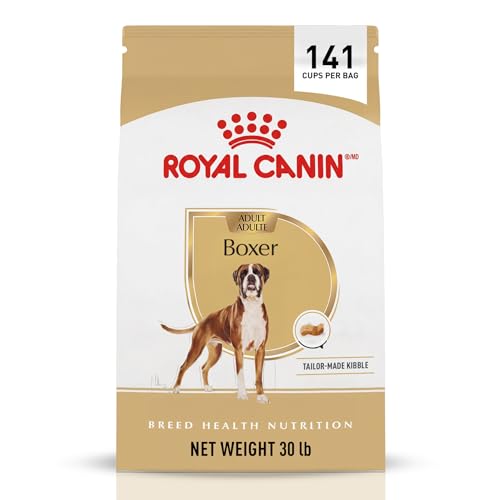
Royal Canin Boxer Adult Dry Dog Food
What We Like
- Protein and L-carnitine for muscle support
- Taurine, EPA, DHA for heart health
- Unique kibble shape aids pickup and chewing
Trade-offs
- Formulated only for purebred Boxers over 15 months
- Not for puppies or other breeds
The formula backs that with precise protein and L-carnitine aimed at maintaining the lean muscle mass Boxers are known for. It also includes taurine, EPA, and DHA to support heart function in a breed prone to cardiac issues.
This food is formulated only for purebred Boxers 15 months and older, so Boxer mixes and puppies are outside the intended range. Compared to Victor Bully Fuel, which uses a high-calorie beef-first formula for muscle support, Royal Canin focuses on one breed’s specific needs. That focus is ideal if you have a purebred adult Boxer, but limiting if you don’t.
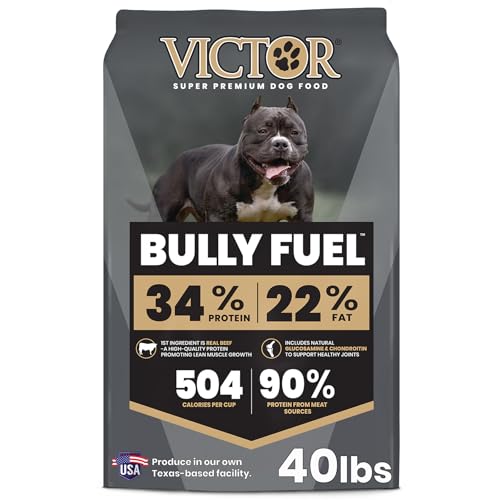
Victor Bully Fuel Dry Dog Food
What We Like
- Real beef as first ingredient
- High-calorie formula for muscle density
- Includes glucosamine and chondroitin for joints
- Omega 3 & 6 for skin and coat
Trade-offs
- No breed-specific kibble shape like Royal Canin Boxer
- Too calorie-dense for less active dogs
Real beef is the first ingredient here, which means the protein base is coming from a named animal source rather than a vague meal or by-product. The high-calorie density supports nutrient intake per bite, useful for active dogs that burn through energy quickly. Glucosamine and chondroitin are included for joint health, and omega 3 and 6 fatty acids support skin and coat condition. This is a straightforward formulation aimed at bully breeds, not a general-purpose kibble.
The trade-off is that this high-calorie profile works best for dogs that get regular exercise. If your dog is more of a couch companion, you might find yourself adjusting portion sizes more carefully than with a maintenance formula. Compared to Royal Canin Boxer Adult, which uses a breed-specific kibble shape, Victor Bully Fuel skips the shape feature and focuses purely on ingredient density.
Product photos
How We Evaluated Foods For Boxers
We started by reviewing each formula’s ingredient list and guaranteed analysis, focusing on the nutrients that matter most for Boxer health. Manufacturer documentation includes details on kibble shape, calorie density, and life-stage suitability. Patterns in long-term owner feedback helped confirm how well each food holds up in daily feeding.
Three criteria drove our evaluation. First, heart-support nutrients, taurine, EPA, DHA, and L-carnitine, are non-negotiable for a breed with known cardiac risks. Second, protein source and muscle support matter because Boxers are an athletic, muscular breed that needs sustained energy and lean mass. Third, kibble design affects how easily a Boxer picks up and chews food, especially given their brachycephalic (short-muzzled) jaw.
Our recommendations are based on what the specs and experienced owners consistently report.
What To Look For In Foods For Boxers
Choosing the right food means looking past the front of the bag. The ingredient list and guaranteed analysis tell the real story for this breed.
Look for named animal protein first, a guaranteed minimum of taurine, and a kibble shape that matches a Boxer’s short muzzle and strong jaw. Avoid fillers like corn gluten or unnamed meat meals.
Heart-Health Nutrients
Boxers are genetically predisposed to dilated cardiomyopathy (DCM). Taurine is the most critical amino acid for heart muscle function, and many vets now recommend foods with added taurine. EPA and DHA (omega-3 fatty acids) support heart health and reduce inflammation. L-carnitine helps convert fat into energy for the heart. Check the guaranteed analysis for taurine levels.
Protein Quality and Muscle Maintenance
This breed was built to work. A Boxer needs a high-quality animal protein as the first ingredient, chicken, beef, lamb, or fish. Look for a minimum crude protein level. For active dogs, a higher fat content provides dense energy. Avoid foods where corn, wheat, or unnamed meat meals appear before the protein source.
Kibble Shape and Size
A Boxer’s short snout makes standard kibble difficult to pick up. The best Boxer dog food uses a larger, uniquely shaped kibble that encourages chewing rather than gulping. This reduces the risk of choking and improves dental scraping. If a food doesn’t specify its kibble design, check owner photos to see if it’s appropriate for a brachycephalic dog.
- Look for a named animal protein as the first ingredient.
- Confirm taurine is listed in the guaranteed analysis or added ingredients.
- Choose a kibble shape designed for short muzzles (large, flat, or donut-shaped).
- Avoid foods with corn gluten meal, unnamed meat meal, or artificial preservatives.
- Match calorie density to your Boxer’s activity level, more active dogs can handle higher fat.
A Boxer’s food should prioritize heart and muscle support over flashy marketing claims.
Foods For Boxers Compared
The table below compares the two picks side by side, focusing on the criteria that matter most for Boxer owners.
| Product | Breed Target | Key Nutrients | Weight | Kibble Shape |
|---|---|---|---|---|
| Royal Canin Boxer Adult Dry Dog Food | Purebred Boxers 15+ months | Protein, L-carnitine, taurine, EPA, DHA | 30 lb | Unique shape for Boxer jaws |
| Victor Bully Fuel Dry Dog Food | Bully Breeds | N/A | 40 lb | N/A |
Frequently Asked Questions
What is the best food for a Boxer dog?
The best overall choice is Royal Canin Boxer Adult Dry Dog Food, a breed-specific formula with added taurine and L-carnitine for heart health and a unique kibble shape for easy pickup. For owners prioritizing muscle density, Victor Bully Fuel Dry Dog Food is a strong alternative with real beef as the first ingredient.
Can Boxers eat grain-free dog food?
Some Boxers do well on grain-free diets, but the FDA has investigated a potential link between grain-free legume-heavy formulas and DCM in breeds like Boxers. A grain-inclusive food with named grains like brown rice or oats is generally safer unless your dog has a confirmed grain allergy.
How much should I feed my adult Boxer?
Feeding amounts depend on the food’s calorie density and your dog’s activity level. Most adult Boxers need a few cups of dry food daily, split into two meals. Check the feeding chart on the bag and adjust based on your dog’s body condition, you should be able to feel ribs without seeing them.
Is puppy food different from adult food for Boxers?
Yes. Boxer puppies need a large-breed puppy food with controlled calcium and phosphorus levels to support proper bone growth without causing skeletal issues. Adult formulas like Royal Canin Boxer Adult are designed for dogs over 15 months and lack the growth nutrients puppies need.
What ingredients should I avoid in Boxer dog food?
Avoid foods with unnamed meat meals (e.g., “meat meal” or “poultry meal”), corn gluten meal as a primary protein source, and artificial colors or preservatives like BHA, BHT, and ethoxyquin. For Boxers specifically, ensure the food has added taurine, some cheaper formulas omit this crucial heart nutrient.
The Bottom Line
The Royal Canin Boxer Adult Dry Dog Food is the best overall choice for owners of purebred adult Boxers. Its breed-specific kibble shape and heart-support nutrient profile address the two biggest concerns for this breed: easy eating and cardiac health. If you have a purebred Boxer over 15 months, this is the most targeted option available.
For owners who want to build muscle density or have a very active Boxer, Victor Bully Fuel Dry Dog Food offers a high-calorie, real-beef-first formula with added glucosamine and chondroitin for joints. It works well for working dogs or those who need more calories to maintain weight, but it’s too rich for sedentary Boxers.
The single most important factor in choosing food for a Boxer is heart-health nutrient content, specifically taurine. Everything else, from protein level to kibble shape, comes second to protecting a breed with known cardiac risks.
