
10 Best Dry Dog Food For Sensitive Stomach in 2026
This post contains affiliate links. As an Amazon Associate, we earn from qualifying purchases.
The best dry dog food for sensitive stomach is Purina Pro Plan Sensitive Skin & Stomach Salmon & Rice. Real salmon comes first, oatmeal supports gentle digestion, and guaranteed live probiotics help maintain gut balance. For owners who want a vet-recommended formula, Hill’s Science Diet Sensitive Stomach & Skin Chicken Recipe is a strong choice, while Solid Gold Salmon Sensitive Stomach Grain Free leads in probiotic density.
A sensitive stomach can mean loose stools, vomiting, or a dog that simply stops eating. The problem is rarely one thing, it could be the protein source, the fiber type, or even the fat content. Owners need a formula that delivers digestible ingredients without triggering the same reaction meal after meal.
We built this guide by reviewing manufacturer specifications, ingredient lists, and expert round-ups on digestive nutrition. We also looked at patterns in owner feedback across dozens of formulas. The result is a focused list of dry foods that address different versions of the same problem, loose digestion, food sensitivities, and skin issues that often travel with stomach trouble.
Top 10 Dry Dog Foods For Sensitive Stomachs in the Market
Certain content that appears on this site comes from Amazon. This content is provided "as is" and is subject to change or removal at any time.
The Best Dry Dog Foods For Sensitive Stomachs, Reviewed
Purina Pro Plan Sensitive Skin & Stomach Salmon & Rice

What We Like
- Real salmon is first ingredient
- Oat meal is gentle on digestion
- Contains guaranteed live probiotics
- Omega-6 for skin and coat
Trade-offs
- Contains grains, not grain-free
- Only one protein source listed
Real salmon as the first ingredient means this formula puts animal protein front and center, which is exactly what you want when your dog’s digestion is the question. Oat meal instead of corn or wheat provides a gentle carbohydrate base that’s easier on a sensitive stomach. The guaranteed live probiotics back up the digestive support with something you can see on the label. That combination of a single novel protein, a mild grain, and added probiotics makes this a straightforward choice for owners who want to eliminate variables without going grain-free.
This isn’t a limited-ingredient diet, though, there’s more going on in the bag than just salmon and rice, so if your dog reacts to multiple things, you may need to drill down further. Compared to the Solid Gold Salmon Sensitive Stomach Grain Free, this one keeps grains in the mix, which some dogs tolerate better and some don’t. For most owners dealing with a mildly sensitive stomach, the probiotic support and oat base hit a practical sweet spot without overcomplicating the recipe.
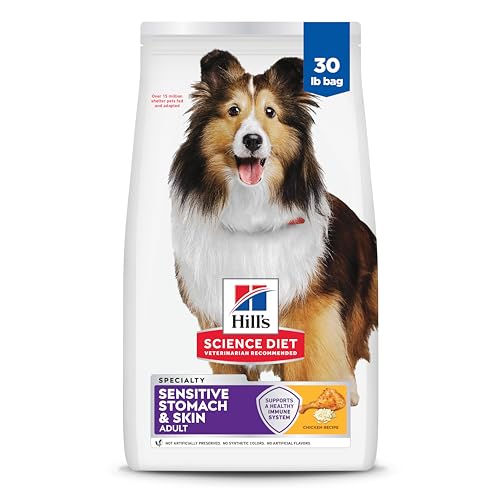
Hill's Science Diet Sensitive Stomach & Skin Chicken Recipe
What We Like
- Chicken is the #1 ingredient
- Contains prebiotic fiber for digestion
- Enriched with Omega-3 & 6 fatty acids
- Clinically proven antioxidants for immunity
Trade-offs
- Not suitable for dogs with poultry allergies
- Contains chicken, not for poultry-allergic dogs
With chicken as the first ingredient and a formula backed by 27 key nutrients, this is a food built around straightforward, digestible nutrition. The prebiotic fiber targets the stomach directly, while omega fatty acids and vitamin E support skin and coat. So you’re not just calming a sensitive gut, you’re also addressing the skin issues that often tag along. It’s the kind of complete package that explains why veterinarians frequently reach for it when a dog needs something reliable.
The chicken protein base is a plus for dogs that tolerate poultry well, but it won’t suit every dog. The Purina Pro Plan Sensitive Skin & Stomach Salmon & Rice uses salmon instead, so if your dog needs a different protein source, that option is available. The 30-pound bag provides a good supply for most households, but you’ll want to ensure you have adequate storage space.
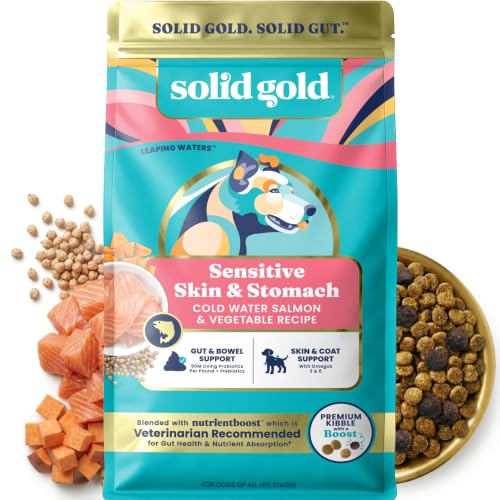
Solid Gold Salmon Sensitive Stomach Grain Free
What We Like
- 90 million probiotics per lb
- Single salmon protein source
- Grain and gluten free
- Omega 3 & 6 from salmon oil
Trade-offs
- 3.75 lb bag is small for large breeds
Ninety million probiotics per pound is the standout number here, packing serious gut-supporting bacteria into each serving. This salmon-based kibble is designed for dogs with sensitive stomachs, using a single protein source and skipping grains or gluten to keep digestion simple. It’s a good fit if your dog’s digestive system needs that probiotic boost.
The bag is just 3.75 pounds, more of a trial or travel portion than a household staple. For a small dog or a first-time buyer testing the waters, this is a low-commitment way to see if a probiotic-rich, grain-free salmon formula settles your dog’s stomach.
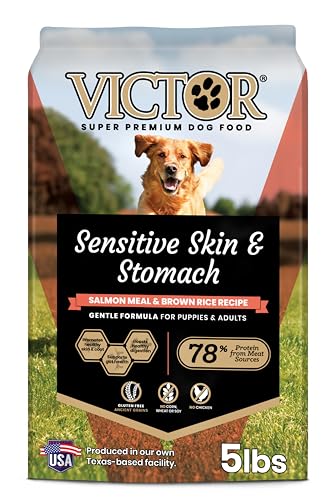
Victor Sensitive Skin & Stomach Salmon Meal & Brown Rice
What We Like
- Salmon meal as first ingredient
- Prebiotics and probiotics for gut health
- No chicken or gluten
- Omega 3, 6, and Vitamin E for skin
Trade-offs
- Contains grains, not grain-free
- Only one protein source (salmon)
Salmon meal is the first ingredient here, which means the protein base is both concentrated and easy to identify, useful when you’re trying to avoid the vague poultry blends that often trigger allergic reactions. This recipe skips chicken and gluten entirely, and adds prebiotics and probiotics to support digestion from the inside out. For a dog with known skin or stomach sensitivities tied to common proteins or grains, this formula addresses both fronts without relying on trendy additives or marketing fluff.
Because this is a grain-inclusive recipe, dogs that do better on a completely grain-free diet would need something like Solid Gold Salmon Sensitive Stomach instead. But for most dogs with allergies, the combination of a single novel animal protein, targeted gut support, and a straightforward ingredient list makes this a practical, no-nonsense option. It’s made in the company’s own Texas facility, which adds a layer of supply chain transparency that’s harder to verify with larger brands.
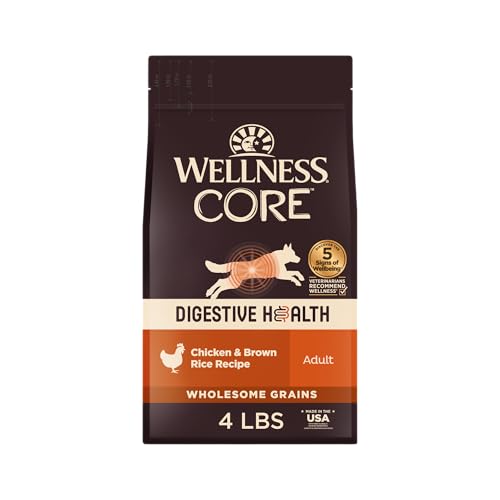
Wellness CORE Digestive Health Chicken Recipe
What We Like
- Probiotic-coated kibble supports gut health
- Prebiotic fibers and digestive enzymes included
- Omega fatty acids for skin and coat
- Non-GMO ingredients in own facility
Trade-offs
- 4 lb bag is small for large breeds
- Not suited for dogs with chicken allergies
The probiotic coating on every kibble means your dog gets a dose of gut-supporting bacteria with each bite, paired with prebiotic fibers and digestive enzymes to target the microbiome, where 70% of immune function resides. For a dog with a sensitive stomach, this recipe supports high digestibility and nutrient absorption. The chicken and brown rice formula includes omega fatty acids to support skin and coat health, a benefit often missing from basic digestive diets. It’s a focused option for owners who want more than just a bland diet.
The 4-pound bag means you’ll be restocking often if you have a large breed like a Labrador, especially compared to the 30-pound bags of Hill’s Science Diet Sensitive Stomach. For someone with a single small to medium dog, the probiotic-coated kibble with digestive enzymes and prebiotic fibers supports gut health without a huge commitment.
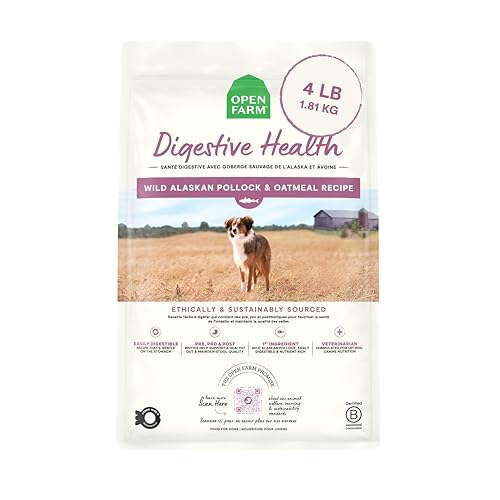
Open Farm Digestive Health Pollock & Oatmeal
What We Like
- First ingredient is wild Alaskan pollock
- Vet-formulated with probiotics
- 100% traceable ingredients
- Non-GMO fruits and veggies
Trade-offs
- Not suitable for owners who need a large bag for big breeds
- Only available in a single 4 lb bag size
Wild Alaskan pollock as the first ingredient is the kind of detail that tells you where the protein actually came from. Open Farm Digestive Health Pollock & Oatmeal is built around a single, easily digestible fish source, and the rest of the ingredients are non-GMO and fully traceable. That matters if you want to know exactly what goes into the bowl, not just a vague ‘fish meal’ or ‘poultry by-product’. The vet-formulated probiotics add targeted digestive support without loading the kibble with fillers or artificial additives.
The bag is small at 4 pounds, so for a large breed dog or a multi-dog household, you will be reordering often. Compared to the Purina Pro Plan Sensitive Skin & Stomach Salmon & Rice, which comes in a 30 lb bag, Open Farm gives you transparency but not volume. If you prioritize ingredient sourcing over bulk buying, this is a clean, straightforward option. Not ideal for owners who need a budget-friendly large bag for a big dog.
Product photos
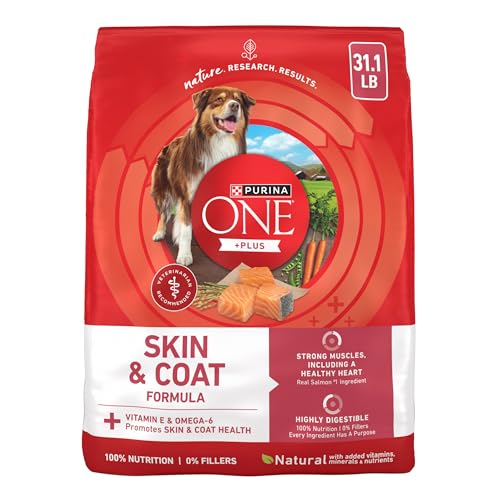
Purina ONE Plus Skin & Coat Sensitive Stomach Salmon
What We Like
- Real salmon is #1 ingredient
- Includes vitamin E and omega-6 fatty acids
- Four antioxidant sources for immune support
- No artificial colors, flavors or preservatives
Trade-offs
- Not a limited-ingredient diet formula
- Contains grains, not grain-free
The 31.1-pound bag offers a generous supply of a salmon-first, highly digestible formula designed to support skin and coat health with vitamin E and omega-6 fatty acids. That protein source, backed by those key nutrients, targets skin and coat health while the highly digestible recipe reduces the chance of an upset stomach. It suits owners who want a straightforward, no-filler kibble from a major brand with U.S. production and no artificial additives.
The 31.1-pound bag holds more food than the 30-pound Hill’s Science Diet Sensitive Stomach & Skin Chicken Recipe, so you’ll make fewer trips to the store. This isn’t a limited-ingredient or grain-free formula, so dogs with multiple protein sensitivities or strict grain allergies may need something narrower like the Solid Gold Salmon Sensitive Stomach Grain Free. For most dogs with general digestive sensitivity, though, the Purina ONE delivers a well-rounded recipe with real salmon as the first ingredient, plus vitamin E and omega-6 fatty acids to support skin and coat health.
Product photos
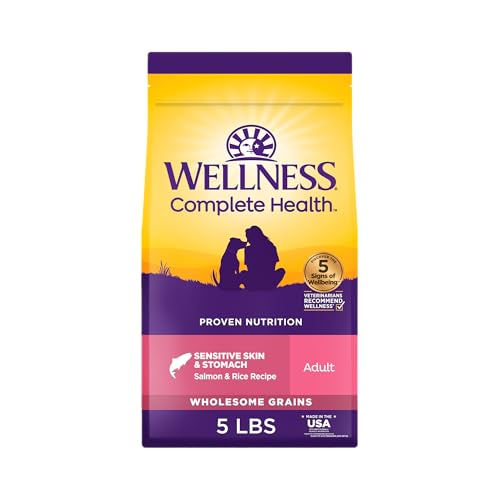
Wellness Complete Health Sensitive Skin & Stomach Salmon & Rice
What We Like
- Chicken-free recipe for sensitivities
- Contains probiotics and taurine
- Omega fatty acids for skin and coat
- No wheat, corn, soy, or artificial additives
Trade-offs
- Contains rice, not grain-free
- Limited protein variety (salmon only)
A chicken-free recipe with salmon and rice means this kibble skips the most common protein trigger while still providing whole grains for gentle digestion. The inclusion of probiotics supports gut health directly, and omega fatty acids address skin and coat issues that often accompany food sensitivities. This makes it a straightforward option for dogs that react poorly to poultry but tolerate grains well.
It sticks with rice as the grain source, so dogs needing a grain-free diet won’t find relief here. For owners whose dogs do fine with rice, this is a clean, no-fuss recipe that puts ingredient transparency first.
Product photos
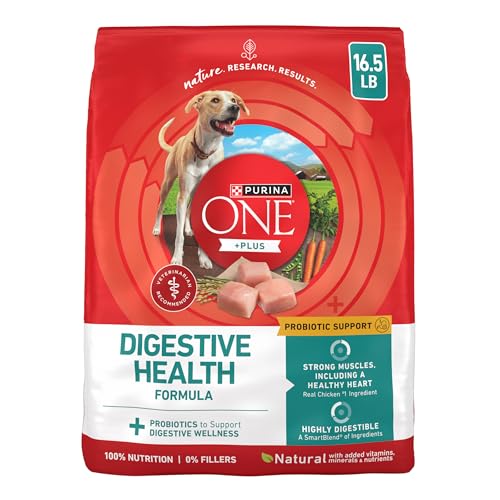
Purina ONE Plus Digestive Health Chicken
What We Like
- Real chicken is first ingredient
- Enriched with probiotics for digestive support
- No artificial flavors or preservatives
- Contains natural glucosamine for joint health
Trade-offs
- Not suitable for dogs with chicken allergies
- Lacks omega-6 fatty acids for skin and coat
Real chicken is the very first ingredient here, which means the protein base is straightforward and recognizable, something a label skeptic can actually see on the bag. That matters when you’re trying to avoid mystery meats or filler proteins that can trigger a sensitive stomach. The formula also packs probiotics directly into the kibble, so you’re getting digestive support with every scoop rather than relying on a separate supplement. This makes it a practical everyday option for a dog that needs steady, gentle digestion help without extra steps at mealtime.
At 16.5 pounds, the bag is noticeably smaller than the 30-pound bags you’ll see from Hill’s Science Diet or Purina Pro Plan in this same guide. Owners of large breeds or multiple dogs will be reordering more often. That said, for a single medium dog or someone who wants to try a probiotic-focused formula without committing to a giant bag, the smaller size is actually convenient, it keeps the kibble fresher. Just know the chicken base won’t work for every dog with protein sensitivities.
Product photos
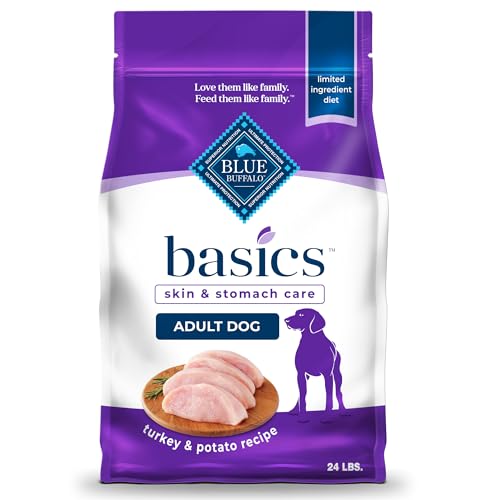
Blue Buffalo Basics Turkey Skin & Stomach Care
What We Like
- Real turkey is the #1 ingredient
- Limited ingredient diet for sensitive stomachs
- Contains Omega 3 & 6 for skin and coat
- No chicken by-product meals, corn, wheat, or soy
Trade-offs
- Contains wholesome grains, not grain-free
- 24 lb bag is smaller than some competitors' 30 lb options
Real turkey as the first ingredient means the protein source is straightforward and easy to identify, which is exactly what you want when you’re trying to narrow down what might be upsetting your dog’s stomach. This limited-ingredient formula skips the chicken by-product meals and common fillers like corn, wheat, and soy, so there’s less guesswork in figuring out what your dog can handle. The addition of LifeSource Bits, antioxidant-rich kibble pieces, gives the immune system a little extra support without complicating the ingredient list. For owners who prefer a simpler recipe that still delivers balanced nutrition, this is a straightforward choice that doesn’t rely on flashy marketing.
The 24-pound bag is smaller than the 30-pound bags of Purina Pro Plan Sensitive Skin & Stomach Salmon & Rice and Hill’s Science Diet Sensitive Stomach & Skin Chicken Recipe, so owners of large breeds will be buying more often. But this Blue Buffalo formula uses real turkey as the #1 ingredient and includes wholesome grains to support gentle digestion, plus Omega 3 and 6 fatty acids for skin and coat. For dogs that do well with grains and need a simple, turkey-based diet, this keeps things straightforward.
Product photos
How We Evaluated Dry Dog Foods For Sensitive Stomachs
Every pick in this guide started with the ingredient list. We looked for a single, recognizable animal protein as the first ingredient and avoided vague meat meals or unnamed fats. From there, we checked for added probiotics or prebiotic fiber, ingredients that directly support the gut microbiome rather than just avoiding triggers.
We also weighed the protein source against common allergies. Chicken is a frequent offender for dogs with sensitivities, so we made sure to include chicken-free options at several price points. Grain inclusion mattered too: many sensitive-stomach dogs do fine with rice or oatmeal, and grain-free formulas can sometimes lack the fiber those grains provide.
This is a research-led evaluation, not a feeding trial. We rely on what the label says, what veterinary nutritionists recommend, and what patterns emerge from owner reports. The best way to confirm a match is to check the bag in your own hands, and we encourage that. For a deeper look at how these formulas compare, our guide on best dog food for sensitive stomach breaks down the full list.
What To Look For In Dry Dog Foods For Sensitive Stomachs
The right formula starts with a single protein source and a digestible carbohydrate. Probiotics and prebiotic fiber are bonuses that turn a neutral food into an actively helpful one.
Protein Source
A single animal protein, salmon, turkey, or chicken, should be the first ingredient. Multiple protein sources increase the chance of a reaction. Dogs with known poultry allergies need a novel protein like salmon or pollock. Our guide on food sensitivities covers how to identify problem ingredients.
Digestive Support Ingredients
Look for guaranteed probiotics, prebiotic fiber (like beet pulp or chicory root), or both. Some kibble is coated with probiotics after cooking, which protects the live cultures. Formulas that list a probiotic strain by name, such as Bacillus coagulans, tend to be more reliable than vague “live cultures” claims.
Fat and Fiber Balance
Too much fat can trigger loose stools in sensitive dogs. Aim for moderate fat content and a fiber source that is gentle, oatmeal and brown rice are better than corn or wheat. For senior dogs, the balance shifts; our guide on senior dog sensitive stomach explains the adjustments.
- Check that the first ingredient is a named animal protein, not a meal or by-product.
- Confirm that probiotics or prebiotics are listed as guaranteed on the label.
- Avoid formulas with more than two protein sources if your dog has known sensitivities.
- Look for a single, digestible grain like oatmeal or brown rice if your dog tolerates grains.
A food that works for one sensitive dog may fail another. Buy a small bag first and transition slowly over seven to ten days.
Dry Dog Foods For Sensitive Stomachs Compared
The table below compares the dry dog foods for sensitive stomachs side by side, covering protein source, key digestive features, and best-use scenarios.
| Product | Protein Source | Key Additives | Weight |
|---|---|---|---|
| Purina Pro Plan Sensitive Skin & Stomach Salmon & Rice | Salmon | Probiotics | 30 lb |
| Hill's Science Diet Sensitive Stomach & Skin Chicken Recipe | Chicken | Prebiotic fiber | 30 lb |
| Solid Gold Salmon Sensitive Stomach Grain Free | Salmon | Probiotics | 3.75 lb |
| Victor Sensitive Skin & Stomach Salmon Meal & Brown Rice | Salmon Meal | Prebiotics & Probiotics | 5 lb |
| Wellness CORE Digestive Health Chicken Recipe | Chicken | Probiotics, Prebiotics, Enzymes | 4 lb |
| Open Farm Digestive Health Pollock & Oatmeal | Pollock | Probiotics | 4 lb |
| Purina ONE Plus Skin & Coat Sensitive Stomach Salmon | Salmon | Vitamin E, omega-6 | 31.1 lb |
| Wellness Complete Health Sensitive Skin & Stomach Salmon & Rice | Salmon | Probiotics | 5 lb |
| Purina ONE Plus Digestive Health Chicken | Chicken | Probiotics | 16.5 lb |
| Blue Buffalo Basics Turkey Skin & Stomach Care | Turkey | LifeSource Bits | 24 lb |
Frequently Asked Questions
What is the best dry dog food for a dog with a sensitive stomach?
The Purina Pro Plan Sensitive Skin & Stomach Salmon & Rice is our top pick. It uses real salmon as the first ingredient, oatmeal for gentle fiber, and guaranteed live probiotics to support gut health. It is widely available and works well for most dogs that tolerate grains.
Is grain-free dog food better for sensitive stomachs?
Not necessarily. Many dogs with sensitive stomachs digest grains like oatmeal and brown rice without issue. Grain-free formulas remove those carbohydrates but may replace them with legumes or potatoes, which can be harder on some digestive systems. Choose grain-free only if your dog has a confirmed grain allergy.
Can I switch my dog’s food immediately if they have an upset stomach?
No. A sudden switch often makes digestive upset worse. Transition over seven to ten days by mixing increasing amounts of the new food with the old. If your dog has ongoing vomiting or diarrhea, consult a veterinarian before changing the diet.
What ingredients should I avoid for a dog with a sensitive stomach?
Avoid artificial colors, flavors, and preservatives, which can irritate the digestive tract. Also avoid unnamed meat meals, multiple protein sources in one formula, and high-fat recipes. If your dog reacts to chicken, skip any formula that lists chicken, chicken meal, or chicken fat.
Should I feed wet or dry food for a sensitive stomach?
Both can work, but dry food is more convenient and helps with dental health. Wet food has higher moisture content, which can be helpful for dogs that struggle with hydration or need a softer texture. Our guide on wet dog food covers the best options for sensitive digestion.
The Bottom Line
The Purina Pro Plan Sensitive Skin & Stomach Salmon & Rice is the best overall choice for most dogs with sensitive stomachs. It balances a single salmon protein with oatmeal and live probiotics, making it gentle enough for daily feeding and easy to find at most retailers. It is not grain-free, but for dogs that tolerate grains, it delivers reliable digestive support.
If your dog has a poultry allergy, the Victor Sensitive Skin & Stomach Salmon Meal & Brown Rice offers a chicken-free salmon formula with prebiotics and probiotics. For owners who want maximum probiotic density in a grain-free bag, the Solid Gold Salmon Sensitive Stomach Grain Free packs 90 million probiotics per pound, just note the bag size is small.
The single most important factor is matching the protein source to your dog’s tolerance. Everything else, probiotics, grain choice, fat level, is secondary to feeding a protein your dog’s stomach does not reject. Start with a small bag, transition slowly, and watch the stool before committing to a 30-pound sack.
