
10 Best Dog Food To Prevent Scooting in 2026
This post contains affiliate links. As an Amazon Associate, we earn from qualifying purchases.
The best dog food to prevent scooting is Purina Pro Plan Sensitive Skin & Stomach Salmon & Rice, thanks to its real salmon, easily digestible oatmeal, and guaranteed live probiotics for gut health. For dogs needing a vet-trusted chicken option, Hill’s Science Diet Sensitive Stomach & Skin Chicken Recipe is our pick for Best Veterinarian Recommended. Owners of dogs who prefer wet food should look at Rachael Ray Nutrish Gentle Digestion Pate Wet Dog Food.
Scooting is often a sign of anal gland discomfort, which can stem from loose stools or food sensitivities. The right diet firms up stool, supports healthy digestion, and reduces the irritation that leads to scooting.
This guide is based on a review of ingredient lists, manufacturer specifications, expert nutrition round-ups, and patterns in owner feedback. We focus on the specific features that matter most for preventing scooting.
Top 10 Dog Foods To Prevent Scooting in the Market

Certain content that appears on this site comes from Amazon. This content is provided "as is" and is subject to change or removal at any time.
The Best Dog Foods To Prevent Scooting, Reviewed
Purina Pro Plan Sensitive Skin & Stomach Salmon & Rice

What We Like
- Real salmon as first ingredient
- Contains guaranteed live probiotics
- Oat meal is easily digestible
- Omega-6 for healthy skin and coat
Trade-offs
- 30-pound bag is heavy to lift and pour
Real salmon leads the ingredient list, giving this formula a solid protein foundation that supports muscle maintenance without relying on fillers. The addition of guaranteed live probiotics targets digestive health directly, which matters when you’re dealing with a dog that scoots due to GI discomfort. Oat meal provides a gentle carbohydrate source that’s easier on sensitive stomachs than corn or wheat, and the omega-6 fatty acids from sunflower oil help maintain skin integrity. This combination makes it a logical starting point for owners who want a straightforward, science-backed dry food that addresses both digestion and skin issues in one bag.
Real salmon is the first ingredient here, so your dog gets a high-protein start that supports muscle maintenance without fillers. The oatmeal base is easily digestible and gentle on the digestive system, which means less chance of an upset stomach for sensitive pups. Plus, the sunflower oil provides omega-6 fatty acids that help maintain a healthy skin and coat, so you might notice less scratching over time.
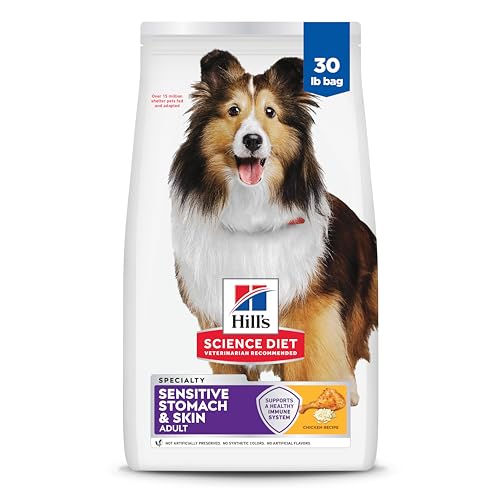
Hill's Science Diet Sensitive Stomach & Skin Chicken Recipe
What We Like
- Triple support for stomach, skin, immune system
- Prebiotic fiber for gentle digestion
- Omega-3 & 6 for healthy skin and coat
- Vitamin E and C+E antioxidants
Trade-offs
- Dry kibble only, no wet variety in this line
- Not suitable for dogs with poultry allergies
A 30-pound bag of a formula built around chicken as the number one ingredient, with prebiotic fiber and omega fatty acids already blended in. That combination targets the stomach-skin-immune axis directly, which is exactly what you want when scooting stems from digestive upset or skin irritation. It suits owners who trust a brand that vets frequently recommend and want a straightforward, complete kibble without hunting for supplements.
Chicken is the number one ingredient here, so dogs with poultry sensitivities may need a different option, like Purina Pro Plan’s salmon-based Sensitive Skin & Stomach formula. This kibble delivers complete and balanced nutrition with prebiotic fiber and omega fatty acids already blended in, supporting stomach, skin, and immune health in one bag.
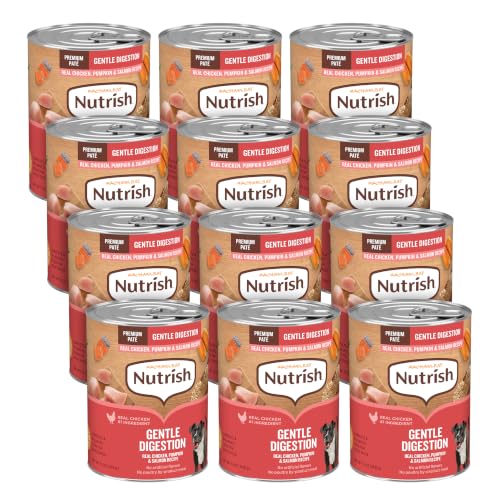
Rachael Ray Nutrish Gentle Digestion Pate Wet Dog Food
What We Like
- Real chicken as #1 ingredient
- Fiber from pumpkin, peas, carrots
- Natural with added vitamins, minerals
- No corn, wheat, or soy ingredients
Trade-offs
- Wet food only: shorter shelf life after opening
- Cans add weight and storage space
- Not a dry kibble for dental scraping
Real chicken is the first ingredient, and the fiber comes from pumpkin, peas, and carrots, not fillers or by-products. That’s the kind of label you want when digestion is the issue. This pate is designed as a complete meal or a topper, so you can ease a picky dog into a gentler routine without switching everything at once. The 13-ounce can size gives you enough for multiple servings per can, which helps keep the fridge organized.
Real chicken is the number one ingredient, so you know your dog is getting a protein source that’s easy to recognize and digest. The fiber from pumpkin, peas, and carrots is specifically included to support healthy digestion, which makes this a targeted option if your dog struggles with loose stools or gut sensitivity. Because it’s a wet food, it provides extra moisture that can help with hydration, especially for dogs that don’t drink enough water on their own.
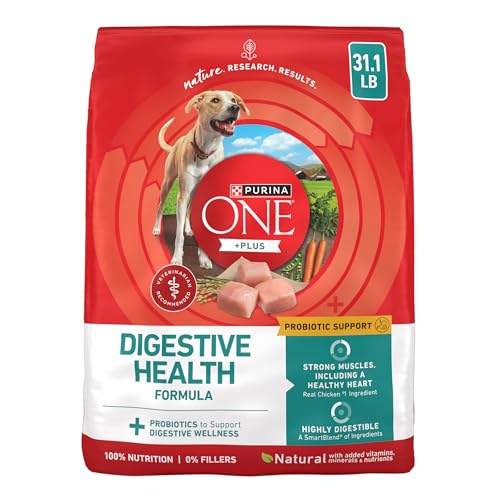
Purina ONE Plus Digestive Health Chicken & Rice
What We Like
- Real chicken is first ingredient
- Includes probiotics for digestive support
- No artificial flavors or preservatives
Trade-offs
- Only one protein source listed
- Not suitable for dogs with chicken allergies
Real chicken is the first ingredient in this high-protein dry dog food, which is a strong sign of quality for owners focused on digestive health. The formula includes added probiotics to support digestive function, and it’s made in Purina’s own U.S. facilities, so you know exactly where the kibble comes from. At 31.1 pounds, the bag is a practical size for households with a medium-to-large dog that eats regularly. For owners who want a straightforward, high-protein option with digestive support built in, this covers the basics without extra claims.
The trade-off is that this is a single-protein recipe, chicken only, so if your dog has a known poultry sensitivity, you’ll need to look elsewhere. Compared to the Purina Pro Plan Sensitive Skin & Stomach Salmon & Rice, which uses salmon as its first ingredient and includes prebiotic fiber, this Purina ONE formula uses probiotics for digestive support. That’s not a flaw, but it means the approach to digestion is different: probiotics introduce live bacteria, while prebiotics feed what’s already there. If your dog’s digestive issues stem from an imbalance rather than a sensitivity, this is a solid, no-nonsense starting point.
Blue Buffalo True Solutions Digestive Care Chicken
What We Like
- Clinically proven prebiotic fiber
- Real chicken is first ingredient
- No corn, wheat, or soy
- Veterinarian formulated
Trade-offs
The clinically proven prebiotic fiber in this formula is the key feature for owners dealing with scooting. It’s designed to support stool quality and digestive health directly, which is exactly what you want when your dog is dragging its rear across the carpet. Real chicken comes first in the ingredient list, and the recipe skips corn, wheat, and soy, so you’re not paying for fillers that might upset a sensitive gut. This is a targeted digestive care food from a brand that lets the ingredient list do the talking, and for a dog with a clear fiber-responsive issue, that specificity matters more than a vague ‘sensitive stomach’ label.
The 11-pound bag is a practical size for small to medium dogs or for owners who want to try the formula before committing to a larger quantity. If you have a large breed or multiple dogs, you will need to reorder more often compared to the 30-pound bags offered by some competitors like Purina Pro Plan Sensitive Skin & Stomach or Hill’s Science Diet Sensitive Stomach. However, for a dog that needs a clinically proven prebiotic fiber source, this formula’s specific digestive support is the key feature, not the bag size.
Royal Canin Digestive Care Wet Dog Food

What We Like
- Formulated for sensitive stomachs
- Supports optimal stool quality
- Highly digestible for digestive health
- Loaf in sauce texture
Trade-offs
- Wet food only, no dry option alone
- Designed for adult dogs only
Royal Canin’s Digestive Care Wet Dog Food is formulated for adult dogs of all sizes with a sensitive stomach, with a focus on supporting optimal stool quality. The highly digestible formula aids digestion and supports balanced intestinal flora, which promotes healthy stools. It comes as a loaf in sauce, a texture most dogs find palatable, and it’s designed to pair with the dry version if you prefer a mixed feeding routine. This is a wet food that targets digestive sensitivities, including poor-quality stools, without trying to cover every possible issue.
One downside is that this is strictly a wet food, so if you’re used to the convenience of kibble that stays fresh in a bowl all day, you’ll need to adjust your routine. Compared to Purina Pro Plan’s Sensitive Skin & Stomach dry food, which offers a similar digestive focus in a shelf-stable format, the Royal Canin requires more attention to portioning and spoilage. But for a dog with a sensitive stomach, the wet format can be a good option to support digestive health. It’s a targeted solution, not a one-size-fits-all kibble, and that narrow focus is its real strength.
Product photos
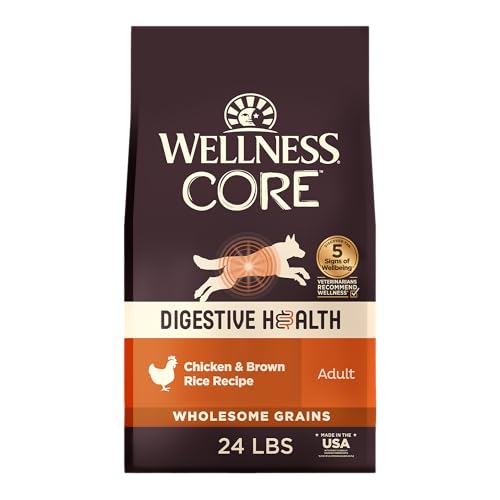
Wellness CORE Digestive Health Chicken & Brown Rice
What We Like
- Probiotic-coated kibble for gut health
- Prebiotic fibers and digestive enzymes
- Supports immune system and skin
- Made in USA facilities
Trade-offs
- Contains grains, not grain-free
- Not suitable for dogs needing grain-free diet
The probiotic coating on each piece of kibble is a key feature for supporting digestive health, alongside prebiotic fibers and digestive enzymes. This combination targets gut health from multiple angles, which is important because a healthy digestive system supports overall vitality. The chicken and brown rice base is highly digestible, and the inclusion of omega fatty acids helps maintain a lustrous coat and healthy skin.
The most decisive fact is that this kibble is coated with probiotics and includes digestive enzymes and prebiotic fibers, which means it actively supports gut health for overall vitality. Because 70% of a dog’s immune system is in the digestive tract, a healthy microbiome here helps immune function and can reduce excessive inflammation or itchy skin. The 24 lb bag is smaller than the 30 lb bags of some competitors, so owners of large breeds will need to restock more often.
Product photos
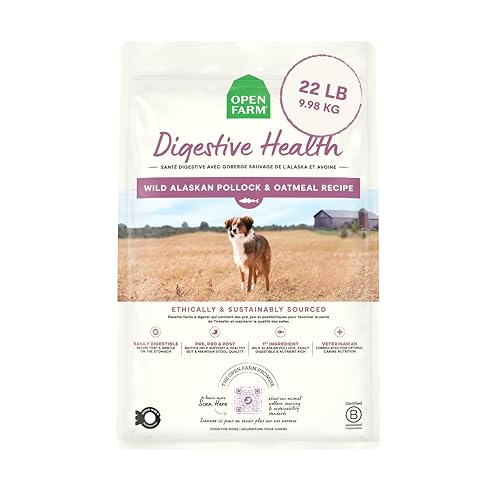
Open Farm Digestive Health Pollock & Oatmeal
What We Like
- 100% traceable ingredients
- Vet-formulated with pre, pro, and postbiotics
- No poultry, corn, wheat, soy, or legumes
- Wild Alaskan pollock as first ingredient
Trade-offs
- 22-pound bag requires more frequent reordering
- No poultry-free alternative for dogs with chicken allergies
The first ingredient here is wild Alaskan pollock, a lean, easily digestible protein that’s gentle on a dog’s stomach. That matters when you’re trying to stop scooting caused by digestive upset. Open Farm pairs it with prebiotics, probiotics, and postbiotics to support gut health and stool quality, all in a formula that skips poultry, corn, wheat, soy, and legumes. The entire ingredient chain is traceable from farm to bowl, so you can see exactly what went into the bag. For owners who want to know where every component comes from and prefer a fish-based diet over chicken or lamb, this recipe delivers on those priorities.
The ingredient transparency and three-tier gut support system, prebiotics, probiotics, and postbiotics, are what set this food apart for dogs with sensitive stomachs. Wild Alaskan pollock is the first ingredient, and every component is traceable from farm to bowl, so you can actually identify what your dog is eating. That traceability alone helps rule out mystery fillers if your dog has persistent food sensitivities. The 22-pound bag means you’ll reorder more often than with some larger bags, but the focus on digestive health ingredients is hard to match in this category.
Product photos
Pro Plan Veterinary Diets EN Fiber Balance

What We Like
- Unique soluble and insoluble fiber blend
- Prebiotic fiber supports GI microbiome balance
- Complex carbohydrates moderate glucose absorption
- Moderate calorie and fat content
Trade-offs
- Veterinary diet requires professional guidance
- Not suitable for dogs without digestive issues
A select prebiotic fiber paired with both soluble and insoluble fibers means this formula is built to address the mechanical and microbial sides of digestive health at once. That dual-action approach is what makes it a strong candidate for dogs whose scooting stems from inconsistent stool quality or gut imbalance. The moderate calorie and fat levels also help maintain lean body mass without encouraging weight gain, which matters when fiber adjustments are part of a long-term feeding plan.
A key limitation is that this is a veterinary-exclusive diet, so you’ll need a vet’s okay before buying. That adds a step compared to an over-the-counter option like Purina Pro Plan Sensitive Skin & Stomach, which also includes prebiotic fiber but is easier to access. If your dog’s scooting is tied to a diagnosed GI condition, the targeted fiber blend here offers more precision than a general sensitive-stomach formula.
Product photos
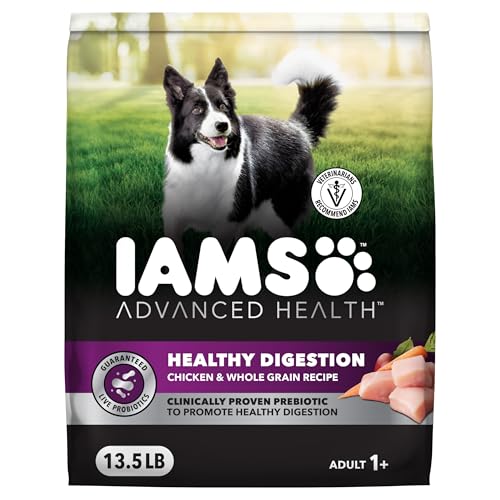
IAMS Advanced Health Healthy Digestion Chicken
What We Like
- Real chicken is #1 ingredient
- Natural fiber and prebiotics included
- Supports nutrient absorption
- No fillers in formula
Trade-offs
- 13.5 lb bag is smaller than many competitors
- Not suitable for dogs with grain sensitivities
The formula includes natural fiber and prebiotics to support regularity and healthy stools, with the brand promising ideal poop in 10 days. Real farm-raised chicken is the #1 ingredient, giving a clean protein base without fillers that might upset digestion. For owners wanting a dry food focused on digestive health and firm stools, this delivers a straightforward ingredient list and targeted fiber support.
The 13.5-pound bag is noticeably smaller than the 30-pound bags from Purina Pro Plan Sensitive Skin & Stomach or Hill’s Science Diet Sensitive Stomach, which means more frequent repurchasing if you have a larger dog. That said, the formula is designed to support ideal poop in 10 days with a blend of natural fiber and prebiotics, so it’s a targeted solution for digestive health rather than a bulk-value option.
Product photos
How We Evaluated Dog Foods To Prevent Scooting
Our evaluation started with the ingredient panel. We looked for named protein sources, digestible carbohydrates like oatmeal or brown rice, and added fiber sources such as pumpkin or prebiotic blends. We cross-referenced these against manufacturer nutritional data and expert commentary on canine digestive health.
The three criteria that mattered most were stool-firming fiber content, probiotic or prebiotic support, and protein digestibility. A food that delivers all three is more likely to produce consistent, firm stools and reduce the anal gland pressure that causes scooting. We also considered whether a formula was backed by veterinary formulation or clinical feeding trials.
An evaluation has limits. Individual results will vary based on your dog’s specific sensitivities. What we can do is show you which products are built on sound nutritional principles for digestive health.
What To Look For In Dog Foods To Prevent Scooting
The right food addresses the root cause of scooting: loose or inconsistent stool that fails to express anal glands naturally. Here is what to check on the bag.
Look for a named animal protein as the first ingredient, a digestible carbohydrate source, and added fiber from ingredients like pumpkin, beet pulp, or prebiotic blends. Probiotics or prebiotics should be listed on the guaranteed analysis or ingredient panel.
Fiber Content and Type
Fiber is the most direct tool for firming stool. Soluble fiber absorbs excess water in the digestive tract, while insoluble fiber adds bulk. A food that provides both, such as those containing pumpkin, oats, or a prebiotic blend like chicory root, helps produce stool that is firm enough to express the anal glands during a bowel movement.
Foods with a guaranteed crude fiber level between 3% and 6% are a reasonable starting point for most dogs. For dogs that need more targeted support, a high-fiber dog food may be worth discussing with your vet.
Probiotics and Prebiotics
A healthy gut microbiome is essential for consistent digestion. Probiotics introduce beneficial bacteria, while prebiotics feed the bacteria already present. Many of the foods on this list include guaranteed live probiotics or prebiotic fibers like chicory root or inulin. If your dog has a sensitive stomach, a probiotic kibble can provide steady, daily support without the need for a separate supplement. Foods that combine both probiotics and prebiotics offer the most comprehensive digestive support.
Protein Source and Digestibility
A highly digestible protein source reduces the amount of undigested material reaching the colon, which in turn reduces gas and loose stool. Salmon, chicken, and lamb are common options. Dogs with known food sensitivities may benefit from a novel protein like pollock or a limited-ingredient formula. If your dog’s scooting is accompanied by itching or ear infections, a protein sensitivity is a likely culprit.
- Check the first ingredient: a named animal protein (e.g., “salmon,” “chicken”) is a sign of quality.
- Look for a digestible carbohydrate like oatmeal, brown rice, or barley instead of corn or wheat.
- Confirm that the guaranteed analysis includes crude fiber and a statement about live probiotics if the food claims digestive support.
- Avoid foods with artificial colors, flavors, or preservatives, which can irritate sensitive digestive systems.
A food that firms stool, supports gut bacteria, and uses a digestible protein is your best bet for stopping scooting at the source.
Dog Foods To Prevent Scooting Compared
The table below compares the 10 best dog foods to prevent scooting, highlighting their key digestive features and best-use scenarios.
| Product | Protein Source | Key Digestive Support | Form | Weight |
|---|---|---|---|---|
| Purina Pro Plan Sensitive Skin & Stomach Salmon & Rice | Real Salmon | Guaranteed live probiotics | Dry | 30 lb |
| Hill's Science Diet Sensitive Stomach & Skin Chicken Recipe | Chicken #1 ingredient | Prebiotic fiber | Dry | 30 lb |
| Rachael Ray Nutrish Gentle Digestion Pate Wet Dog Food | Real Chicken (#1) | Fiber From Pumpkin, Peas & Carrots | Pate Wet Food | 13 oz Can, 12 Pack |
| Purina ONE Plus Digestive Health Chicken & Rice | Real Chicken | Probiotics | Dry | 31.1 lb |
| Blue Buffalo True Solutions Digestive Care Chicken | Real Chicken | Clinically Proven Prebiotic Fiber | Dry | 11 lb |
| Royal Canin Digestive Care Wet Dog Food | N/A | Optimal stool quality | Wet, loaf in sauce | 13.5 oz can, pack of 12 |
| Wellness CORE Digestive Health Chicken & Brown Rice | Chicken | Probiotic-Coated Kibble | Dry | 24 lb |
| Open Farm Digestive Health Pollock & Oatmeal | Wild Alaskan pollock | Pre, pro, and postbiotics | Dry | 22 lb |
| Pro Plan Veterinary Diets EN Fiber Balance | N/A | Select prebiotic fiber | Dry | 16.5 lb |
| IAMS Advanced Health Healthy Digestion Chicken | Real farm-raised chicken | Natural fiber & prebiotics | Dry | 13.5 lb |
Frequently Asked Questions
What causes a dog to scoot?
Scooting is most often caused by full or irritated anal glands. When stool is too soft, it does not put enough pressure on the glands during a bowel movement to empty them naturally. The dog then drags its rear across the floor to relieve the pressure. Allergies, parasites, and dietary sensitivities can also contribute.
Can changing dog food stop scooting?
Yes, switching to a food with higher fiber and better digestibility can firm up stool enough to allow natural anal gland expression. Many owners report that scooting stops within a week or two of switching to a food designed for digestive health. If scooting persists, a veterinary exam is warranted.
Is grain-free dog food better for dogs that scoot?
Not necessarily. Many dogs scoot because of loose stool, and grain-inclusive foods with digestible grains like oatmeal or brown rice can provide the soluble fiber needed to firm stool. Grain-free diets are sometimes lower in fiber and may not help. Focus on fiber content and protein digestibility rather than the grain-free label.
How much fiber does a dog need to stop scooting?
Aim for a crude fiber content between 3% and 6% on a dry matter basis. Too little fiber will not firm stool, while too much can cause gas and bloating. Foods that combine soluble and insoluble fiber sources, such as pumpkin, beet pulp, or chicory root, tend to work best for stool quality.
Should I add pumpkin to my dog’s food for scooting?
Plain canned pumpkin is a common home remedy because it provides soluble fiber that can help firm loose stool. It is safe for most dogs in small amounts, but it should not replace a complete and balanced diet. If your dog scoots regularly, a food formulated with fiber and probiotics is a more reliable long-term solution.
The Bottom Line
For most dogs that scoot, Purina Pro Plan Sensitive Skin & Stomach Salmon & Rice is the best overall choice. Its combination of real salmon, easily digestible oatmeal, and guaranteed live probiotics addresses the three most common dietary causes of scooting: protein sensitivity, poor digestibility, and imbalanced gut bacteria.
If your dog has a chicken sensitivity or you prefer a vet-recommended formula, Hill’s Science Diet Sensitive Stomach & Skin Chicken Recipe is a strong alternative. Owners of dogs that need a wet food for hydration or picky eating should consider Rachael Ray Nutrish Gentle Digestion Pate.
The single most important factor is stool consistency. A food that produces firm, regular stools will naturally reduce or eliminate scooting by allowing the anal glands to empty with each bowel movement.
