
2 Best Dog Food For White Dogs in 2026
This post contains affiliate links. As an Amazon Associate, we earn from qualifying purchases.
For white-coated dogs, the right food can make a real difference in coat brightness and tear stain management. Our best overall pick is Nature’s Protection Superior Care Adult White Fish, a grain-free formula with white fish as the first ingredient and small kibble built for small mouths. We also recommend the Nature’s Protection Puppy Food Dry & Training Treats Bundle for owners focused on tear stain reduction in growing pups.
White and light-coated dogs have unique needs that standard kibble doesn’t always address. Tear stains, skin sensitivity, and a dull coat are common complaints among owners of breeds like Maltese, Bichon Frise, and West Highland White Terriers. The protein source and ingredient quality in your dog’s bowl directly affect how their coat looks and how their skin reacts.
This guide is based on manufacturer specifications, ingredient analysis, and patterns reported by owners of white-coated breeds. We focused on formulas that support skin health, avoid common allergens, and include ingredients known to help manage tear staining. Here are the two options worth considering.
Top 2 Dog Foods For White Dogs in the Market
Certain content that appears on this site comes from Amazon. This content is provided "as is" and is subject to change or removal at any time.
The Best Dog Foods For White Dogs, Reviewed
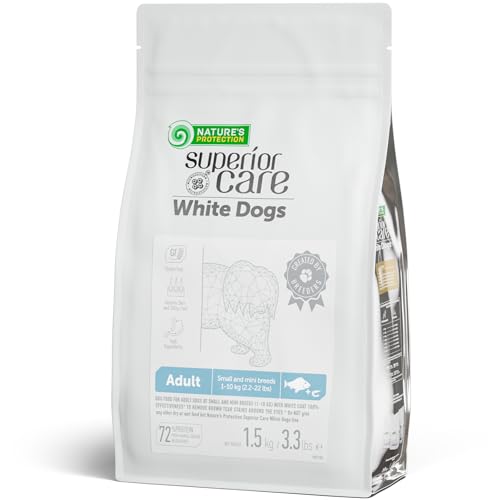
Nature's Protection Superior Care Adult White Fish
What We Like
- White fish is the #1 ingredient
- Grain-free for sensitive digestion
- Small kibble suits small mouths
Trade-offs
- Only for adult dogs, not all life stages
- No breed-size flexibility beyond small breeds
A white fish protein as the first ingredient means this formula skips the vague meat meals and focuses on a single, digestible animal source. That’s important for dogs prone to the yellowing or staining that plagues white coats. The grain-free, gluten-free recipe backs that up by removing common triggers for skin irritation and bloating, which can show up as dull fur or tear stains. For someone with a small, light-coated adult dog who reacts to typical chicken or grain-heavy foods, this is a targeted solution that doesn’t try to be everything to every dog.
The crunchy kibble shape is designed to encourage chewing, which helps keep small dog teeth clean during meals, though it’s not a substitute for regular brushing. Compared to the Nature’s Protection Puppy bundle, this adult formula skips the training treats and focuses purely on coat maintenance. So it’s a cleaner choice for a mature dog but not a one-stop shop for a household with both puppies and adults. The 3.3 lb bag is a convenient size for freshness and portion control, but owners with multiple white-coated dogs may find themselves reordering more often.
Product photos
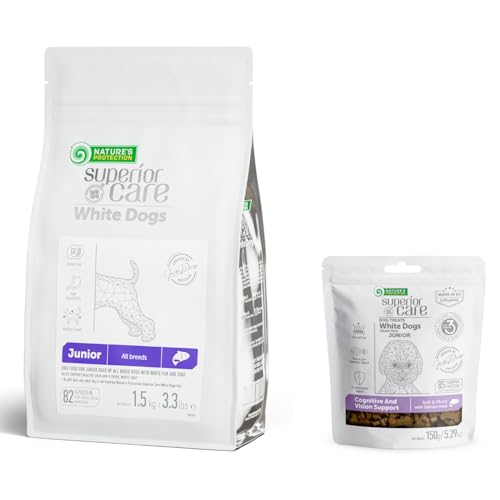
Nature's Protection Puppy Food Dry & Training Treats Bundle
What We Like
- Grain-free with no corn, soy, or artificial additives
- Hypoallergenic salmon protein for sensitive stomachs
- MicroZeoGen helps detoxify and improve nutrient absorption
Trade-offs
- Puppy-specific formula limits use to growing dogs
- Single protein source reduces variety for some diets
The trade-off is that this is a puppy-only product, so if your dog is already past the growth stage, you’d need to look at the adult version in the same line. Nature’s Protection Superior Care Adult White Fish, which is a grain-free formula with white fish, might be an alternative if your puppy has a specific fish sensitivity, though salmon is generally well-tolerated. The included training treats are convenient for early obedience work, but if you prefer to control every single ingredient in rewards, you’d be paying for something you might not use. For a puppy with a white coat, this bundle addresses the two biggest early concerns: stain prevention and training support.
How We Evaluated Dog Foods for White Dogs
We started by reading ingredient panels and guaranteed analyses from each manufacturer, looking for white fish or other novel proteins as the primary source. White fish is a lean, easily digestible protein that supports a bright coat without the staining some poultry-based diets can cause. We also checked for grain-free formulas since many white-coated breeds have sensitive digestion.
The three criteria that mattered most were protein source and quality, inclusion of ingredients that support skin and coat health, and the presence of additives or fillers that could contribute to tear staining. We prioritized formulas with no corn, soy, wheat, or artificial colors, common triggers for tear stains and skin irritation.
An evaluation has limits: individual results will vary based on your dog’s specific sensitivities and environment. What we can do is show you which ingredients and formulations have the best track record for white-coated breeds based on owner feedback.
What To Look For In Dog Foods for White Dogs
Choosing food for a white dog means looking past the front of the bag and reading the ingredient list with a skeptical eye. The right protein source, grain content, and additive profile all play a role in coat brightness and tear stain management.
Look for a named fish or novel protein as the first ingredient, avoid corn and soy, skip artificial colors and preservatives, and choose kibble size appropriate for your dog’s mouth.
Protein Source
White fish, such as cod, haddock, or pollock, is an excellent first ingredient for white dogs. It provides high-quality protein without the porphyrins found in red meats and some poultry that can darken tear stains. Many owners of white breeds report brighter coats after switching to a whitefish dog food formula. Salmon and other fatty fish are also good options, especially for dogs with skin sensitivity, since the omega-3 fatty acids support coat health from the inside.
If your dog has shown signs of food sensitivity, a single protein dog food makes it easier to identify triggers. Novel proteins like fish or venison are less likely to cause reactions than chicken or beef.
Grain Content and Fillers
Grain-free formulas are popular for white dogs because grains like wheat and corn are common allergens that can manifest as itchy skin, dull coats, or increased tear production. Look for a recipe that lists whole vegetables and legumes as carbohydrate sources instead of grain fillers. Avoid any bag that lists corn, soy, or wheat in the first five ingredients.
Additives and Tear Stain Triggers
Artificial colors, preservatives like BHA and BHT, and low-quality protein meals can all contribute to tear staining. Some owners find that switching to a limited ingredient diet with minimal additives clears up tear stains within a few weeks. A diet for skin health that includes omega fatty acids and probiotics can also help reduce inflammation around the eyes.
- Check the ingredient list for “no artificial colors or preservatives” on the bag.
- Look for added probiotics or prebiotics that support digestion and nutrient absorption.
- Verify the kibble size matches your dog’s breed, small kibble for small mouths.
- Confirm the formula is complete and balanced for your dog’s life stage.
A simple rule: if the ingredient list has words you can’t pronounce, your white dog’s coat might pay the price.
Dog Foods For White Dogs Compared
The table below compares the two Nature’s Protection formulas side by side, highlighting the protein source, grain content, and best use case for each.
| Product | Protein Source | Special Diet | Target Coat | Bag Size |
|---|---|---|---|---|
| Nature's Protection Superior Care Adult White Fish | White Fish (#1) | Grain-Free, Gluten-Free | White & Light Coats | 3.3 lb |
| Nature's Protection Puppy Food Dry & Training Treats Bundle | Hypoallergenic Salmon | Grain-Free | White-coated dogs | 3.3 lb + 5.29 oz |
Frequently Asked Questions
What is the best protein source for white dogs?
White fish is the top choice for white-coated breeds because it’s a lean, novel protein that supports coat brightness without contributing to tear stains. Salmon and other fatty fish are also excellent options, especially for dogs with dry or flaky skin. Avoid chicken and beef if your dog has shown signs of staining or sensitivity.
How does diet affect tear stains in white dogs?
Tear stains are caused by porphyrins, iron-containing molecules excreted in tears. When a dog eats ingredients high in iron or certain proteins, the porphyrin concentration in tears increases, making stains more visible on white fur. A hypoallergenic senior diet or single-protein formula can reduce the dietary triggers that worsen staining.
Can changing dog food improve my dog’s coat color?
Yes, switching to a food with a high-quality novel protein and omega fatty acids can make a white coat look brighter and feel softer. Owners often report visible improvements within four to six weeks of switching to a fish-based dog food formula. The change is about coat health and shine, not changing the dog’s natural pigment.
What ingredients should I avoid in food for white dogs?
Avoid corn, soy, wheat, artificial colors, BHA, BHT, and ethoxyquin. These ingredients are common allergens or irritants that can trigger skin issues and worsen tear stains. Stick to simple ingredient formulas with a short, recognizable ingredient list.
Is grain-free food better for white dogs?
Grain-free food can be beneficial for white dogs because many have sensitive stomachs or grain allergies that cause skin and coat problems. However, grain-free isn’t automatically better, what matters is the quality of the ingredients replacing grains. Look for whole vegetables and legumes rather than potato starch or pea protein concentrates.
The Bottom Line
For most owners of white-coated adult dogs, Nature’s Protection Superior Care Adult White Fish is the best overall choice. Its white fish first ingredient, grain-free formula, and small kibble size address the three most common concerns: coat brightness, sensitive digestion, and tear stain management. It’s a straightforward, no-frills recipe that puts nutrition ahead of marketing.
If you’re raising a white-coated puppy and tear stains are already a concern, the Nature’s Protection Puppy Food Dry & Training Treats Bundle is worth the investment. The MicroZeoGen technology and single salmon protein source give growing dogs a clean start without the additives that often trigger staining later in life.
The single most important factor in choosing food for a white dog is the protein source. Pick a named fish or novel protein, avoid common fillers and artificial additives, and your dog’s coat will show the difference.
