
10 Best Dog Food For Sensitive Dogs in 2026
This post contains affiliate links. As an Amazon Associate, we earn from qualifying purchases.
The best dog food for sensitive dogs is Purina Pro Plan Sensitive Skin & Stomach Salmon, which pairs real salmon as the first ingredient with guaranteed live probiotics for digestive and skin support. For those who prefer a veterinarian-recommended formula, Hill’s Science Diet Sensitive Stomach & Skin Chicken is a strong choice, while VICTOR Sensitive Skin & Stomach Salmon Meal & Brown Rice offers a gluten-free option.
A sensitive dog isn’t picky, their body is telling you something. Whether it’s loose stools, constant scratching, or a dull coat, the food you choose directly affects how they feel. The right formula can mean the difference between a dog that’s uncomfortable and one that’s thriving.
This guide is based on a close look at ingredient lists, guaranteed analyses, and manufacturer sourcing. We’ve sorted through the claims to find 10 foods that genuinely address the most common triggers for sensitive dogs, from protein sources to fiber types and fat content.
Top 10 Dog Foods For Sensitive Dogs in the Market

Certain content that appears on this site comes from Amazon. This content is provided "as is" and is subject to change or removal at any time.
The Best Dog Foods For Sensitive Dogs, Reviewed
Purina Pro Plan Sensitive Skin & Stomach Salmon

What We Like
- Real salmon as first ingredient
- Contains guaranteed live probiotics
- Omega-6 for skin and coat
Trade-offs
- 30 lb bag is heavy to handle
- Contains grains (oatmeal, rice)
- Not a limited-ingredient formula
A 30-pound bag of dry food built around real salmon as the first ingredient means this formula prioritizes animal protein over fillers, exactly what you want for a dog with a sensitive system.
The trade-off is that this is not a stripped-down limited-ingredient diet; it contains both oatmeal and rice, so if your dog reacts to multiple grains, you might need to look elsewhere. Compared to the Hill’s Science Diet Sensitive Stomach & Skin Chicken, the Purina Pro Plan uses salmon instead of chicken, which is less likely to trigger common protein sensitivities. The 30-pound bag is a practical size for a medium or large dog, but it’s heavy to lift and store. That’s worth considering if you have limited pantry space or a smaller breed that takes months to finish it.
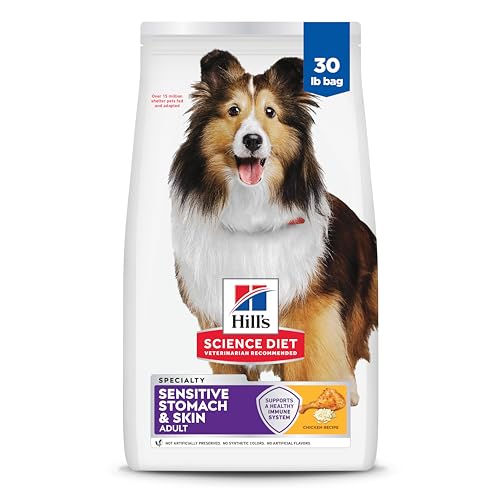
Hill's Science Diet Sensitive Stomach & Skin Chicken
What We Like
- Triple support for stomach, skin, immune system
- High quality chicken is #1 ingredient
- Clinically proven antioxidants Vitamin C+E
- Enriched with Vitamin E and Omega-3 & 6
Trade-offs
- 30 lb bag is heavy for small households
- Not suitable for dogs with chicken allergies
A 30-pound bag of dry kibble built around chicken as the first ingredient gives this formula a straightforward protein base, but what sets it apart is the triple-targeted support: prebiotic fiber for the stomach, omega fatty acids for the skin and coat, and clinically proven antioxidants for immune health. That combination makes it a strong fit for owners whose dogs need digestive gentleness without sacrificing overall nutrition, especially when a veterinarian’s recommendation carries weight in the decision. The 27 key nutrients cover the basics thoroughly, and the USA manufacturing adds a layer of trust for label readers.
The chicken protein is a straightforward choice for dogs without poultry sensitivities, but owners whose dogs need a different protein source will want to look elsewhere. The Purina Pro Plan Sensitive Skin & Stomach Salmon offers a salmon-based alternative, though both bags are 30 pounds and weigh the same. For anyone comfortable with chicken and looking for a vet-backed, multi-system sensitive stomach solution, this bag delivers a complete package without flashy marketing.
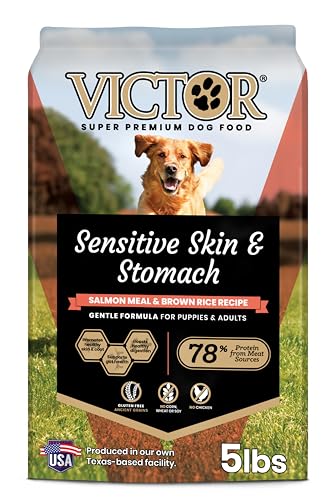
VICTOR Sensitive Skin & Stomach Salmon Meal & Brown Rice
What We Like
- Salmon meal as first ingredient
- Gluten free formula
- Includes prebiotics and probiotics
- No chicken for allergy prone dogs
Trade-offs
- Only available in 5 lb bag size
- Not suitable for dogs needing a grain-free diet
A salmon meal first ingredient means this recipe puts animal protein front and center, which is exactly what you want when you’re trying to avoid common allergens like chicken. The gluten free grain base and added prebiotics and probiotics target both skin and digestive sensitivities, making it a straightforward option for dogs that react to more typical formulas. If you’re reading labels and want a clear, no-fuss ingredient list that skips poultry entirely, this one checks those boxes without relying on trendy superfoods or marketing fluff.
The trade-off here is bag size: the 5 lb option is fine for trial runs or small dogs, but if you have a larger breed or multiple dogs, you’ll be buying frequently compared to something like the Purina Pro Plan Sensitive Skin & Stomach Salmon, which comes in a 30 lb bag. That said, the VICTOR formula’s focus on gluten free grains and probiotics gives it a narrower, more targeted approach for dogs with confirmed grain or chicken issues. It’s not a broad sensitive stomach recipe.
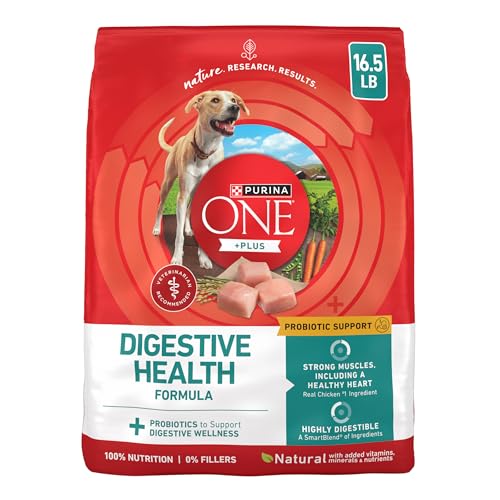
Purina ONE Plus Digestive Health Chicken
What We Like
- Real chicken is first ingredient
- Includes probiotics for digestive support
- Natural glucosamine sources for joints
- No artificial flavors, preservatives, or fillers
Trade-offs
- 16.5 lb bag is smaller than some competitors
- Not suitable for dogs with poultry sensitivities
Real chicken leads the ingredient list, which is a reassuring sign when you flip the bag over. This dry formula pairs that protein with a SmartBlend that includes probiotics aimed at digestive support, plus natural glucosamine sources for joint health. For an adult dog with a sensitive stomach, the combination of high digestibility and purposeful additives means you’re not just feeding, you’re addressing two common trouble spots in one bowl. It’s a straightforward recipe with no artificial flavors, preservatives, or fillers, and it’s made in Purina’s own U.S. facilities, so the supply chain is about as transparent as a mass-market brand gets.
Real chicken is the first ingredient in this high protein dog food, which includes natural glucosamine sources for joint health, so it supports both digestion and mobility in one bowl. The formula is enriched with probiotics for digestive support, making it a practical choice for adult dogs with sensitive stomachs. It contains no artificial flavors or preservatives and zero fillers, and it’s crafted in Purina-owned U.S. facilities by a veterinarian-recommended brand.
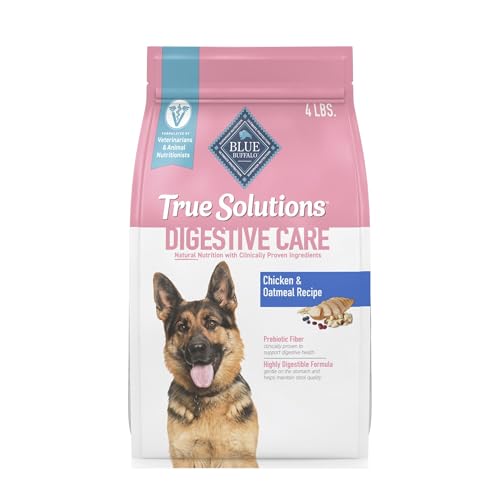
Blue Buffalo True Solutions Digestive Care Chicken
What We Like
- Clinically proven prebiotic fiber
- Real chicken is #1 ingredient
- No corn, wheat, or soy
- Veterinarian formulated
Trade-offs
- Not ideal for large breed owners needing larger portions
- Contains chicken, not suitable for chicken-allergic dogs
The clinically proven prebiotic fiber in this formula directly targets stool quality and digestive health, which is the core concern for dogs with sensitive stomachs. Real chicken leads the ingredient list, and the absence of corn, wheat, and soy removes common dietary triggers. This is a straightforward, science-backed option for owners who want a targeted digestive support food without filler ingredients.
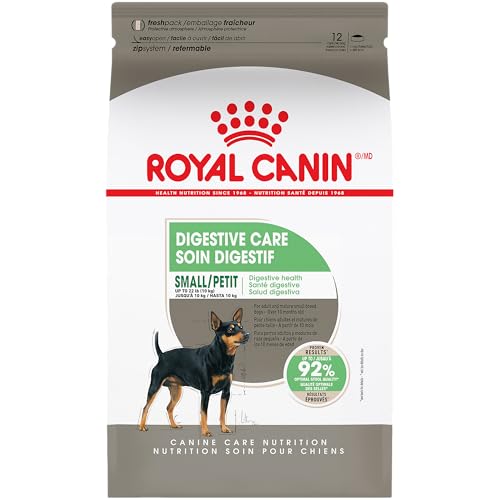
Royal Canin Small Dog Digestive Care Adult
What We Like
- Formulated for small dogs with sensitive stomachs
- Blend of highly digestible proteins and prebiotics
- Promotes optimal stool quality
- Developed by veterinarians
Trade-offs
- Designed exclusively for small breeds up to 22 lb
- Not suitable for dogs over 22 lb
A 3.5 lb bag of kibble is tailored specifically for small dogs weighing up to 22 pounds, with an optimal blend of highly digestible proteins, prebiotics, and dietary fibers to support healthy digestion. That means less guesswork about portion control or whether the formula is too rich for a tiny stomach. This food is a strong fit for owners of small-breed adults who want a veterinarian-developed recipe that targets stool quality and balanced intestinal flora without extra fillers.
Bag size is the main consideration: at 3.5 lb, it’s a compact package that may require more frequent purchases for a single small dog compared to larger bags from other brands. That said, the formula is purpose-built for small digestive systems rather than being a one-size-fits-all recipe scaled down. If your dog is under 22 lb and has a sensitive stomach, this delivers targeted digestive support in a compact package.
Product photos
Solid Gold Sensitive Stomach Wet Dog Food Chicken Salmon
What We Like
- Real chicken and salmon as protein
- Includes probiotics for gut health
- Grain free and gluten free
- Versatile as meal or topper
Trade-offs
- Small can size for large breeds
- Limited to wet food only
This canned dog food uses real chicken and salmon as protein sources, along with omega-3, probiotics, and superfoods to support gut health and sensitive stomachs. It is grain-free and gluten-free, made without corn, wheat, or soy, so it’s gentle on digestion. The soft pate texture works as a complete meal or a topper for dry kibble, giving you flexibility in feeding. For owners who want a soft, ingredient-focused wet food that skips fillers and artificial additives, this is a straightforward option.
Portion size is the main consideration: at 0.8 pounds per can, large-breed dogs may need multiple cans per meal, making it less convenient than a bag of dry food. Compared to the Purina Pro Plan Sensitive Skin & Stomach Salmon, which comes in a 30-pound dry bag, this Solid Gold wet food offers a different texture and moisture content but requires more frequent purchasing and storage. If your dog does well with pate and you prioritize gut-friendly ingredients over bulk, this is a practical choice. For owners who prefer a dry kibble for convenience, the Purina option might be a better fit.
Product photos
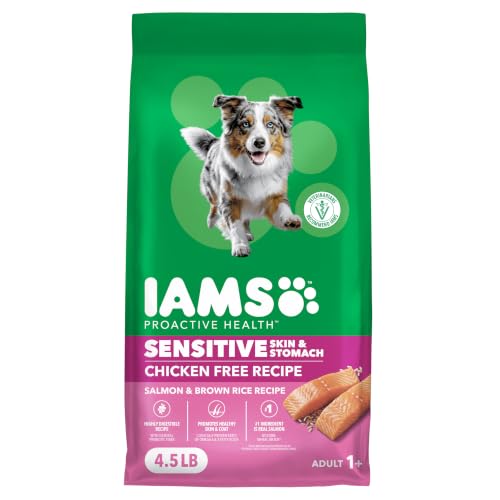
IAMS Proactive Health Sensitive Skin Salmon & Rice
What We Like
- Real salmon as first ingredient
- Chicken-free formula for sensitivities
- Prebiotic fiber supports digestion
- Omega fatty acids for skin and coat
Trade-offs
- Trace chicken possible from cross-contact
- Smaller 4.5 lb bag size
Real salmon is the first ingredient here, which means protein comes from a single, identifiable source rather than a blend of rendered meals. For dogs with chicken sensitivities, that matters: this formula is explicitly chicken-free, though the label honestly notes trace amounts from manufacturing cross-contact. The omega-6 to omega-3 ratio is built in to support skin and coat condition, and prebiotic fiber targets digestive health directly. It’s a straightforward, no-nonsense recipe that focuses on what the dog actually eats, not what the front of the bag promises.
Bag size is the main consideration: at 4.5 pounds, you’re buying more frequently than with a 30-pound bag of Purina Pro Plan Sensitive Skin & Stomach Salmon. That’s fine for a trial run or a small household, but if you have a large breed or multiple dogs, the smaller package means more trips to the store. Still, the ingredient list is clean and the nutritional priorities are right for a dog with known sensitivities. It’s a practical starting point for anyone who wants to see if a chicken-free salmon formula works before committing to a larger bag.
Product photos
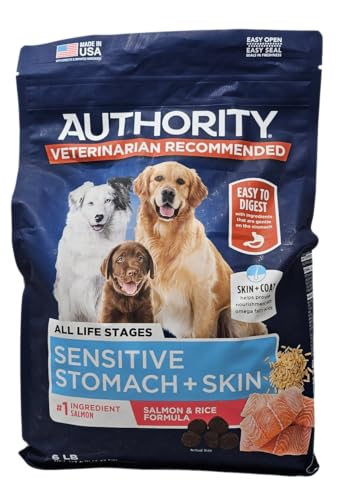
Authority Sensitive Stomach and Skin Salmon Rice
What We Like
- Real salmon is first ingredient
- Formulated for easy digestion
- Suitable for all life stages
- Resealable bag for freshness
Trade-offs
- No specific probiotic or fiber listed
- Only available in a 6-pound bag
Real salmon as the first ingredient signals this food prioritizes animal protein over cheap fillers, a reassuring sign when your dog’s stomach is picky. Authority Sensitive Stomach and Skin Salmon Rice is formulated to be easy to digest, and it’s made in the USA, which adds a layer of confidence for label readers like me. The fact that it’s designed for all life stages means you can feed it to a puppy or a senior without switching bags, simplifying your shopping list. The 6-pound resealable bag is practical for small households or trial runs.
The main trade-off here is portion size: at 6 pounds, this bag is noticeably smaller than the 30-pound bags you’ll see from competitors like Purina Pro Plan Sensitive Skin & Stomach Salmon. If you have a Great Dane or multiple dogs, you’ll be buying more frequently. That said, for a single small-to-medium dog or someone wanting to test a salmon-based sensitive formula without committing to a huge bag, this is a sensible, no-nonsense option. It’s straightforward, transparent, and skips the marketing fluff, just what a skeptical label-reader appreciates.
Product photos
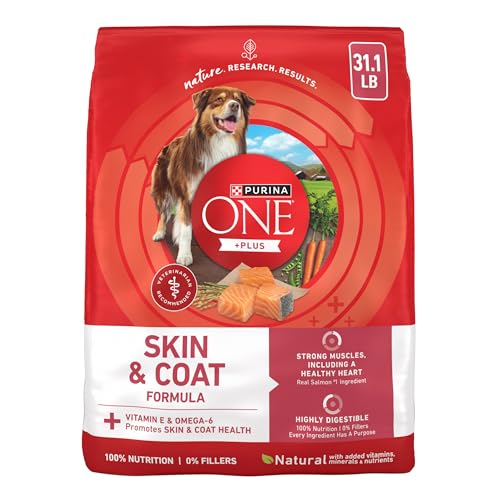
Purina ONE Plus Skin & Coat Sensitive Stomach Salmon
What We Like
- Real salmon as first ingredient
- Vitamin E and omega-6 for skin and coat
- No artificial colors, flavors, or preservatives
- Contains natural glucosamine for joint health
Trade-offs
- Contains grains, not grain-free
- Not suitable for grain-free diet dogs
Real salmon is the number one ingredient here, which gives this food a solid protein base for muscle maintenance and heart health. The addition of vitamin E and omega-6 fatty acids directly supports skin and coat condition, making it a logical pick if your dog’s sensitive stomach comes with dry, flaky skin or a dull coat. Purina also includes natural glucosamine sources for joint support and four antioxidant sources for immune function, all in a highly digestible formula with no artificial colors, flavors, or preservatives.
The main trade-off is the bag size: at 31.1 pounds, it’s a substantial commitment in storage and lifting, especially for smaller households. Compared to the Purina Pro Plan Sensitive Skin & Stomach Salmon, which also uses real salmon and omega-6s, this Purina ONE formula includes vitamin E and omega-6 fatty acids for skin and coat health. If your dog’s primary issue is skin and coat health, this is a well-targeted option; if digestive support is the bigger concern, the Pro Plan might be worth considering.
Product photos
How We Evaluated Dog Foods For Sensitive Dogs
We started by reading ingredient panels, not the front-of-bag marketing. For each food, we identified the protein source, the type and amount of fiber, the fat content, and any added probiotics or prebiotics. Manufacturer documentation on guaranteed analysis and calorie density was cross-referenced with expert round-ups and patterns in owner feedback from large retail platforms.
Four criteria mattered most. First, protein source and quality: a novel or single protein reduces the chance of a reaction. Second, digestive support: we looked for specific probiotics, prebiotic fibers, or highly digestible carbohydrate sources like rice or oatmeal. Third, fat content: too much fat can trigger loose stools in sensitive dogs. Fourth, ingredient transparency: vague terms like “meat meal” or “animal fat” were red flags.
A research-led evaluation has limits. We read what the manufacturer says, what owners report in aggregate, and what veterinary nutrition experts generally agree on. The final call is yours, your dog’s reaction to a food is the only test that matters.
What To Look For In Dog Foods For Sensitive Dogs
Choosing a food for a sensitive dog means reading past the “sensitive” label on the bag. The ingredients list tells you what’s actually in the bowl.
Look for a single, named protein source (salmon, chicken, or lamb) as the first ingredient, a specific fiber source like brown rice or oatmeal, and a guaranteed probiotic or prebiotic. Avoid vague fats, artificial colors, and unnamed meat meals.
Protein Source
The protein is the most common trigger for food sensitivities. A named, single protein, “salmon,” “chicken,” “lamb”, lets you control what your dog eats. Salmon is a common choice for sensitive dogs because it’s less likely to cause reactions than beef or dairy, and it provides omega-3 fatty acids for skin health.
Chicken works well for dogs that tolerate it, but it’s a frequent allergen. If you’re unsure, a salmon-first or chicken-free formula is a safer starting point. For more on choosing the right protein, see our guide on food for dogs with sensitivities.
Digestive Support Ingredients
A sensitive stomach needs more than just a bland protein. Look for guaranteed live probiotics (like those in Purina Pro Plan), prebiotic fibers (such as beet pulp or chicory root), or highly digestible carbohydrates like brown rice or oatmeal. These ingredients help regulate stool quality and reduce gas. Avoid foods with unnamed “fiber sources” or excessive fat, as high fat can trigger loose stools in sensitive dogs. Our guide on sensitive stomach food covers this in more detail.
Skin and Coat Support
Skin issues and digestive issues often go hand in hand. Omega-3 and omega-6 fatty acids from salmon, fish oil, or flaxseed support skin barrier function and reduce inflammation. Vitamin E is another key ingredient, it acts as an antioxidant that helps maintain healthy skin. If your dog scratches constantly but has no fleas, the food may be the cause. A salmon-based formula with added omega fatty acids is often the fix. Read more about food for sensitive skin for additional options.
- Check the first ingredient: it should be a named protein (salmon, chicken, lamb), not “meat meal” or “by-product.”
- Look for a guaranteed probiotic or prebiotic on the label, not just “natural fiber.”
- Avoid foods with high fat content if your dog has loose stools.
- Choose a grain-inclusive formula unless your dog has a confirmed grain allergy, grains like rice and oatmeal are highly digestible.
A dog with a sensitive stomach and skin issues needs a single-protein, probiotic-rich food with moderate fat and named grains, not a trendy grain-free formula with exotic proteins.
Dog Foods For Sensitive Dogs Compared
The table below compares the 10 foods side by side, so you can see at a glance which formula fits your dog’s specific needs.
| Product | First Ingredient | Protein Source | Key Additives | Weight |
|---|---|---|---|---|
| Purina Pro Plan Sensitive Skin & Stomach Salmon | Real Salmon | Salmon | Probiotics | 30 lb |
| Hill's Science Diet Sensitive Stomach & Skin Chicken | Chicken | Chicken | Prebiotic fiber, Omega-3 & 6 | 30 lb |
| VICTOR Sensitive Skin & Stomach Salmon Meal & Brown Rice | Salmon Meal | Salmon Meal | Prebiotics & Probiotics | 5 lb |
| Purina ONE Plus Digestive Health Chicken | Real Chicken | Chicken | Probiotics, Glucosamine | 16.5 lb |
| Blue Buffalo True Solutions Digestive Care Chicken | Chicken | Chicken | Prebiotic Fiber | 4 lb |
| Royal Canin Small Dog Digestive Care Adult | N/A | N/A | prebiotics, dietary fibers | 3.5 lb |
| Solid Gold Sensitive Stomach Wet Dog Food Chicken Salmon | Real Chicken & Salmon | Real Chicken & Salmon | Omega 3, Probiotics, Superfoods | 0.8 lb |
| IAMS Proactive Health Sensitive Skin Salmon & Rice | Real Salmon | Salmon | Omega-3 & Omega-6 | 4.5 lb |
| Authority Sensitive Stomach and Skin Salmon Rice | Real salmon | Salmon | N/A | 6 lb |
| Purina ONE Plus Skin & Coat Sensitive Stomach Salmon | Real salmon | Salmon | Vitamin E, omega-6 fatty acids | 31.1 lb |
Frequently Asked Questions
What is the best dog food for a dog with a sensitive stomach and skin?
The Purina Pro Plan Sensitive Skin & Stomach Salmon is the best overall choice. It combines real salmon as the first ingredient with guaranteed live probiotics for digestion and omega-6 fatty acids for skin and coat health. For a veterinarian-recommended option, Hill’s Science Diet Sensitive Stomach & Skin Chicken offers triple support for stomach, skin, and immune system.
Should I choose a grain-free food for my sensitive dog?
Not necessarily. Most dogs with sensitive stomachs tolerate grains like rice and oatmeal well, these are highly digestible carbohydrates that help firm up stool. True grain allergies are rare in dogs. Unless your veterinarian has confirmed a grain allergy, a grain-inclusive formula like Purina Pro Plan or Hill’s Science Diet is often the better choice.
What ingredients should I avoid in dog food for sensitive dogs?
Avoid unnamed meat meals, animal fat, and artificial colors or preservatives. Also steer clear of vague “fiber sources” and excessive fat content. If your dog has a known chicken allergy, avoid chicken as the first ingredient and choose a salmon or lamb-based formula instead. Cross-contamination with chicken is possible in some facilities, so look for chicken-free labels.
How do I transition my dog to a new sensitive stomach food?
Gradually mix the new food with the old food over 7 to 10 days. Start with a small amount of new food and mostly old food, then increase the new food every few days. A sudden switch can cause digestive upset even with a sensitive stomach formula. Monitor your dog’s stool quality and skin condition during the transition.
Can wet food help a dog with a sensitive stomach?
Yes, wet food can be easier to digest for some dogs because of its higher moisture content and softer texture. Solid Gold Sensitive Stomach Wet Dog Food Chicken Salmon is a good option, it’s grain-free, gluten-free, and contains probiotics. Wet food can also be used as a topper over dry kibble to encourage picky eaters. For more options, see our guide on wet food for sensitive stomach.
The Bottom Line
The Purina Pro Plan Sensitive Skin & Stomach Salmon earns the best overall spot because it checks the most boxes for sensitive dogs. It has a single, named protein, guaranteed probiotics, and omega fatty acids for skin and coat, all at a reasonable price point. It’s the right choice for most owners who want a complete formula without needing a grain-free or limited-ingredient diet.
If your dog needs something more specific, the award picks have you covered. Hill’s Science Diet Sensitive Stomach & Skin Chicken is the best veterinarian-recommended option for dogs that tolerate chicken. For a gluten-free formula, go with VICTOR Sensitive Skin & Stomach Salmon Meal & Brown Rice. And for small breeds, Royal Canin Small Dog Digestive Care Adult is formulated specifically for dogs under 22 pounds.
The single most important thing you can do for a sensitive dog is read the ingredient list, not the front of the bag. A named protein, a specific fiber source, and a guaranteed probiotic will do more for your dog than any marketing claim. Trust the label, and trust your dog’s reaction.
