
2 Best Cat Food For Thyroid Problems in 2026
This post contains affiliate links. As an Amazon Associate, we earn from qualifying purchases.
For cats with hyperthyroidism, Hill’s Prescription Diet y/d Thyroid Care Dry Cat Food is our best overall pick, it is clinically proven to reduce thyroid hormone levels in three weeks when fed exclusively. The wet version of the same formula earns our Best Thyroid Management award for cats who prefer canned food. Both require a veterinary prescription and must be the sole diet to work.
Hyperthyroidism raises a cat’s metabolic rate, causing weight loss despite a ravenous appetite. The key to managing it through diet is strict iodine restriction, the thyroid gland needs iodine to produce excess hormone, so removing it from the food starves the problem at its source.
We evaluated these options by reviewing manufacturer clinical data, ingredient specifications, and patterns in veterinary recommendations and owner experiences. This guide explains how the diets work, what to expect during the transition, and which format suits different feeding preferences.
Top 2 Cat Foods For Thyroid Problems in the Market
Certain content that appears on this site comes from Amazon. This content is provided "as is" and is subject to change or removal at any time.
The Best Cat Foods For Thyroid Problems, Reviewed
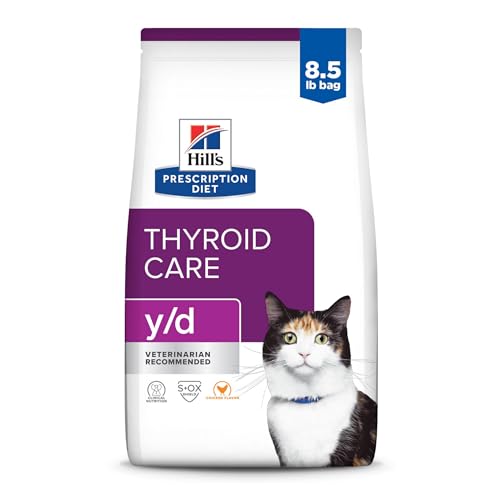
Hill's Prescription Diet y/d Thyroid Care Dry Cat Food
What We Like
- Clinically proven to reduce thyroid hormone in 3 weeks
- Controlled phosphorus and sodium for kidney and heart support
- Omega-3 and omega-6 fatty acids for skin and coat health
- High L-carnitine to maintain lean muscle mass
Trade-offs
- Requires exclusive long-term feeding for full effect
- Only available through veterinary prescription
The only clinically proven nutrition to decrease thyroid hormone production in three weeks when fed as the sole source of food, that is the central claim here. For a cat with hyperthyroidism, that single fact makes this the most targeted option on the shelf. The formula also adds controlled phosphorus and reduced sodium to support kidneys and heart, which are often stressed by thyroid disease. Plus omega-3s from fish oil and high L-carnitine help keep muscle mass from wasting away. Hill’s Prescription Diet is the #1 US Vet Recommended therapeutic pet food.
The trade-off is commitment: this food only works if you feed it exclusively and consistently for the long haul, no mixing with other foods or sneaking in treats. That is a harder sell for cats who turn up their nose at dry kibble or for households with multiple cats where separate feeding is a chore. The wet food version from the same line offers a texture alternative, but it comes in smaller cans and carries the same strict feeding rules. If your cat will eat it and you can stick to the program, this is the most direct dietary tool for managing thyroid hormone levels without medication alone.
Hill's Prescription Diet y/d Thyroid Care Wet Cat Food

What We Like
- L-carnitine helps maintain lean muscle mass
- Controlled phosphorus and reduced sodium
- High levels of L-carnitine to maintain lean muscle mass
Trade-offs
- Requires exclusive feeding for full effectiveness
- Prescription needed; not available over-the-counter
- Long-term consistent feeding is critical for results
The trade-off is that this food cannot be mixed with other diets. It requires exclusive, consistent long-term feeding to achieve the thyroid-lowering benefit, which means no treats or table scraps. Compared to the dry version of the same line, the wet form comes in 5.5-ounce cans sold as a 24-pack, so storage and daily portioning are more involved than with a bag of kibble. The dry option is sold in an 8.5-pound bag and may suit owners who prefer a different feeding routine, though the wet food provides a different texture and moisture content.
Product photos
How We Evaluated Cat Foods For Thyroid Problems
Our evaluation focused on the specific nutritional mechanism required for dietary hyperthyroidism management. We examined manufacturer clinical data on iodine restriction, along with published veterinary guidance on how prescription diets achieve their therapeutic effect for hyperthyroid cats. Owner feedback patterns helped us understand real-world palatability and transition challenges.
Three criteria mattered most. First, the diet must restrict iodine to levels low enough to suppress thyroid hormone production, this is the central requirement that separates therapeutic diets from regular food. Second, the formula must support kidney and heart function, since hyperthyroidism puts stress on both organs. Third, palatability and acceptance during the exclusive-feeding transition determine whether a cat will actually eat the diet long enough to see results.
A research-led evaluation has limits. We cannot claim to have tested these foods in a clinical setting, and individual cats respond differently based on their disease stage, other health conditions, and personal taste preferences. Always work with your veterinarian when choosing and monitoring a thyroid management diet.
What To Look For In Cat Foods For Thyroid Problems
Choosing a food for a hyperthyroid cat means understanding what makes a therapeutic diet work and why regular cat food cannot do the job.
Look for veterinary prescription diets that restrict iodine to therapeutic levels. Avoid regular commercial foods, which contain enough iodine to fuel thyroid hormone production. Confirm that the diet supports kidney function with controlled phosphorus and sodium.
Iodine Restriction
The entire premise of dietary hyperthyroidism management rests on iodine restriction. A normal cat food contains enough iodine for a healthy thyroid to function normally. A therapeutic diet drops iodine to levels low enough that the overactive thyroid cannot produce excess hormone. This is why low-iodine cat food must be the exclusive diet, any other food or treat introduces iodine and undermines the effect.
Exclusive Feeding Requirement
Therapeutic diets only work when fed as the cat’s sole nutrition source. A single treat, a bowl of another cat’s food, or even flavored medications can provide enough iodine to keep thyroid hormone levels elevated. This strict requirement is the most common reason owners see poor results. If you have multiple cats, feeding a hyperthyroid cat exclusively becomes logistically harder; in a multi-pet household, it requires separate feeding stations or microchip-activated bowls.
Kidney and Heart Support
Hyperthyroidism increases blood flow through the kidneys and speeds up the heart rate. A well-designed therapeutic diet accounts for this by controlling phosphorus to protect kidney function and reducing sodium to ease cardiovascular strain. The Hill’s y/d formula includes both adjustments, which is important because many hyperthyroid cats are also in early stages of chronic kidney disease.
- Check that the diet has controlled phosphorus levels, aim for below 1.0% on a dry matter basis
- Confirm reduced sodium content to support heart function
- Verify that the food is labeled for exclusive feeding, not supplemental use
- Ask your vet about transitioning slowly over 7-10 days to reduce digestive upset
- Monitor your cat’s weight and thyroid levels with follow-up blood work after 3-4 weeks
The most important rule: no cheats. A single non-prescription treat can undo a week of dietary management.
Cat Foods For Thyroid Problems Compared
The table below compares the two Hill’s Prescription Diet y/d formulations side by side, highlighting their shared clinical approach and their key format differences.
| Product | Form | Key Feature | Protein Focus | Weight/Size |
|---|---|---|---|---|
| Hill's Prescription Diet y/d Thyroid Care Dry Cat Food | Dry kibble | Clinically proven to lower thyroid hormone in 3 weeks | Chicken recipe | 8.5 lb bag |
| Hill's Prescription Diet y/d Thyroid Care Wet Cat Food | Wet canned food | Clinically proven to lower thyroid hormone in 3 weeks | Chicken | 5.5 oz cans, 24-pack |
Frequently Asked Questions
Can I feed my hyperthyroid cat regular cat food alongside a prescription diet?
No. Therapeutic thyroid diets only work when fed as the exclusive diet. Any other food, treat, or supplement containing iodine will provide enough of the mineral for the thyroid to continue producing excess hormone. This includes other cats’ food, dental treats, and flavored medications.
How long does it take for a prescription thyroid diet to lower thyroid levels?
Hill’s y/d is clinically shown to reduce thyroid hormone levels within three weeks of exclusive feeding. Your veterinarian will typically recommend a follow-up blood test at that point to confirm the diet is working. Some cats respond faster or slower depending on their starting hormone levels and how strictly the diet is followed.
Is there a non-prescription cat food for thyroid problems?
Non-prescription cat food cannot reliably restrict iodine to the therapeutic levels needed for hyperthyroidism management. Commercial diets must meet minimum iodine requirements for general feline health, which are far higher than what a thyroid-restricted diet provides. Over-the-counter “senior” or “weight management” foods are not formulated for this purpose.
Should I feed wet or dry food to a cat with hyperthyroidism?
Both formats work when they are the same therapeutic formula. Wet food for hyperthyroidism offers higher moisture content, which supports kidney function. That’s a common concern in older hyperthyroid cats. Dry food for hyperthyroidism is more convenient and may be easier to feed in multi-cat households. Choose based on your cat’s preference and your vet’s guidance.
What happens if my cat stops eating the prescription thyroid diet?
If a hyperthyroid cat refuses the diet for more than 24 hours, contact your veterinarian. The cat’s thyroid hormone levels will begin rising once they consume food with normal iodine content. Your vet may recommend appetite stimulants, a different format of the same diet, or alternative treatment options such as medication or radioiodine therapy.
The Bottom Line
Hill’s Prescription Diet y/d Thyroid Care Dry Cat Food is the best overall choice for cat owners seeking a clinically proven dietary solution to hyperthyroidism. It works by restricting dietary iodine to levels that starve the overactive thyroid, and it includes kidney and heart support that many hyperthyroid cats need. This is the right pick for owners who can commit to exclusive feeding and have veterinary guidance throughout the process.
If your cat refuses dry kibble or needs the extra moisture that supports kidney health, the wet version, our Best Thyroid Management pick, delivers the same therapeutic iodine restriction in a canned format. Both formulations require the same commitment to exclusive feeding and veterinary oversight.
The single most important factor in dietary hyperthyroidism management is consistency. No food works if it is not eaten exclusively. Choose the format your cat will actually accept, work closely with your veterinarian, and do not bend the rules for treats or table scraps.
